Thursday, August 20, 2009
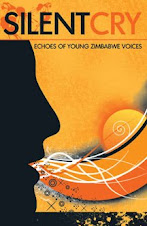
Silent Cry: Echoes of Young Zimbabwe Voices available outside Zimbabwe

Saturday, August 15, 2009
The Contribution of John Eppel and Julius Chingono to Human Rights Recognised


The work of Zimbabwean poets John Eppel and Julius Chingono has been recognized by the inclusion of their work in Fire in the Soul: 100 Poems for Human Rights, published by New Internationalist, with the support of Amnesty International. There are a hundred poems from a hundred different poets from across the world, published from the beginning of the twentieth century until today. Other poets featured in the collection include Ken Saro-Wiwa, Margaret Atwood, Rita Ann Higgins, Luis Enrique Mejía Godoy and Pablo Neruda. The Director of Amnesty International UK, Kate Allen says that ‘these poems have grown out of horrifying circumstances, yet they succeed in being a heart-warming testament to the resilience and creativity of the human spirit.’
Sunday, August 9, 2009
Enjoying Long Time Coming: Emmanuel Sigauke

So these short writings from Zimbabwe are really short, the length of the standard flash fiction, snippets of life in contemporary Zimbabwe. We have Petina Gappah writing about a dying bridegroom, a story that wows you with its humour and musicality, but sends you to tears with the grimness of its subject; Ignatius Mabasa, writing about a man who has forgotten his name in "Some Kind of Madness", a story that echoes Charles Mungoshi, but retains Mabasa's signature treatment of the theme of madness; there is the expected Chris Mlalazi (he has an intrusive voice that will uncover the filth and beauty of Bulawayo in a sweep of fast-paced prose; in most of his stories people are always running, long-bladed knives are brandished, and he will describe braai in a way that makes you think of firing up the grill); Thabisani Ndlovu is searing in "Stampede", a satirical voice that stings (first there is pain, then there is more pain, but still, there is laughter, albeit bitter laughter).
Two Batswana writers compassionately deal with the subject of Zimbabwean immigration; in one story a Zimbabwean wife-turned-breadwinner-and-carer of her husband resorts to prostitution in Botswana to get whatever money she can, but most importantly to afford medication for her husband back home; John Eppel, one of the most prolific writers of Zimbabwe, graphically portrays the subject of Murambatsvina in "The Award Ceremony"; as in most of Eppel's poetry and fiction, there is a no-holds-barred treatment of the politics of the country.
Brian Chikwava treats us to a story dealing with a truant boarding school boy who tells fiction to avoid punishment; you read and you know what he is doing, you know where the story is going, but you read on because you can't believe how funny the story, in its simple way, is.
This is not a review, of course, but I will say that in some of the stories ("Bus Fare", "The Chicken Bus", "Arrested Development", and others), the emotion driving the story is so strong that the craft is sacrificed, but, in most cases, the reader does not complain - the joy is in reading the story of Zimbabwe told from different angles, and in realising that it's one story these writers are sharing, the connective tissue that enables a volume like Long Time Coming, which for me, is a way to understand what really happened?
Tuesday, July 28, 2009
'amaBooks Books at the San Francisco International Poetry Festival


Monday, July 20, 2009
Extract of an interview with Memory Chirere


Currently, I am reading what others have just published. I want to go like that for a stretch. I am reading Petina Gappah’s An Elegy for Easterly. I think she is wonderful. Her descriptions of childhood reminds me of Shimmer Chinodya. Her very honest oral touch reminds me of Chenjerai Hove, especially Ancestors and her story about a mad law student has Vera’s intensity. My comment should not make Petina cry! I have just read Long Time Coming and I think that you have in there the immensely fresh and talented writers like Judy Maposa, Sandisile Tshuma, Linda Msebele and Thabisani Ndlovu who leave you wondering, even crying: where have these gems been hibernating all along? Very soon I will be reading Harare North by Brian Chikwava. I have also just read Wonder Guchu’s new short story book, ‘My Children, My Home’. I do not know why he does not do many copies of it. It is very simply written that you realise it was not easy to write. The kind of feeling you have when you look into a tank of very clear waters that you see to the bottom. I still believe that Zimbabwe is a short country.
wordsetc article

The article below appeared in the First Quarter 2009 edition of the South African Literary Journal words etc.
Publishing in a Zimbabwe under strain
’amaBooks couldn’t have chosen a worse time to start a publishing house. It was 2000 and the Zimbabwean economy had just started its steady decline to today’s ludicrous situation where a teacher’s salary for a month might just buy a loaf of bread. So buying a book, although many would like to, is seen as a real luxury and, understandably, the purchase of a loaf of bread wins every time.
’amaBooks didn’t start as the result of many months of planning but as a result of a fluke. In an effort to raise money for the Bulawayo branch of the charity Childline, the Bulawayo based writer John Eppel, winner of the Ingrid Jonker Award for his first volume of poetry Spoils of War and the MNet prize for his first novel D.G.G. Berry’s The Great North Road donated a collection of his poems to be published to raise money. The task of publishing the book fell to the novices Brian Jones and Jane Morris, the former a professor of mathematics and the latter a clinical social worker, albeit with a university background in the study of literature.
We were fortunate in being guided in the process of publishing this first book by a patient printer who explained, in simple terms, such foreign concepts as page layout, filmwork and ISBNs to us. The collection, John Eppel: Selected Poems 1965 – 1995, sold out in a short space of time. We were heartened and, having enjoyed the process, and with the offer of two of John Eppel’s novels, decided to start a company to publish works in the English language, concentrating on creative writing, but not so hardline that we wouldn’t consider anything else interesting that came along. It didn’t take us long to come up with a name – we were to be an English language publisher in an Ndebele area, so a corruption of ‘books’ in Ndebele seemed a good idea. And so ’amaBooks was born.
‘amaBooks, a small independent publisher, is based twenty-five kilometres outside the city of Bulawayo, in Matabeleland in the South-West of Zimbabwe. Bulawayo, a city with the feel of a small town, used to be the industrial centre of Zimbabwe, but many of its industries have now closed and, like the rest of Zimbabwe, the majority of its people are unemployed. Matabeleland, five hours drive from the capital Harare and the seat of power, has long experienced lack of development and marginalization.
Our office is a room in our home. The staff of ’amaBooks are just the two of us, so we do whatever needs doing to keep ’amaBooks going - selection, proofreading, editing, origination, page design, advertising, PR, distribution, accounting…
The area around our home is beautiful, with stunning views to the distant Matopo Hills, but is far enough away from the city for service delivery to be erratic. The telephone has always been a problem – often off for weeks at a time during rainy seasons – but has worsened as fuel became difficult to obtain and foreign currency became too rare to import spare parts. So we’ve had no phone at all for the last four months.
Then there is the electricity supply. In January 2008 we were working on the computer on a quiet sunny afternoon when there was a ‘clunk’ – a sudden power surge and the power supply and motherboard on the computer were gone. Anxious days before finding that the files could be recovered, and anxious weeks before we could raise the funds to get the machine repaired, and to get a laptop for backup. ‘Load-shedding’ has also meant hours without electricity for many days each week for most in Zimbabwe, and the frequent breakdowns over the distance to us from the city has often meant no power for a week at a time.
The postal service in Zimbabwe also has problems – we just don’t know if books we’ve posted will arrive, and those that do get there, many don’t, can take months – even to Harare. Even a trip to the post office can turn in to an adventure. How much will it cost to send a book today? A hundred times last week’s cost? In what currency must we pay? We recently turned up at our local post office to find it was no longer there, it had closed as had many of the local offices, they could no longer afford to pay the rent.
Nature often doesn’t help – we were hit by a ferocious storm in January 2009, with a lightning strike on the house blowing every light bulb, surge protectors (sensibly purchased following the previous disaster), the computer and the printer. The office equipment still awaits replacement.
So how does a publisher work with rare electricity, no phone and an unreliable postal service? We have batteries that we charge up whenever there is electricity so that we can at least use a laptop in the long dark periods. The Culture Trust Fund of Zimbabwe have donated a generator to ’amaBooks. And we have friends in the city, to whom we travel a couple of times a week to send and receive emails to try to keep in communication with writers, reviewers, booksellers etc. And we have friends who travel outside the country and post books for us. But everything takes so much longer to sort out when you can’t pick up the phone, turn on the computer to send an email or check something on the internet, or just post a letter.
Life in Zimbabwe has become progressively more difficult over the last year, and so has publishing. There are few bookshops left in Zimbabwe and those there are often concentrate on stocking set schoolbooks. The number of books that are sold in Zimbabwe has obviously gone down with the economy. When inflation grew to millions of percent, by the time money from sales in shops reached us, it was not enough to cover the cost of going into the bank to get it. Then came price controls, forcing shops to halve their prices despite rampant inflation. So the shops stopped taking books, and the shelves got emptier and emptier, and many shops closed down. Now ‘dollarisation’ is with us, and goods, including books, may be sold in foreign currency. But very few people have any significant foreign currency, or sufficient quadrillions of Zimbabwe dollars to exchange for foreign currency.
So why do we carry on publishing? We enjoy it, we feel it important to encourage creative writing during these difficult times, to record what is happening now. And there have been some real highs. The book launches have often been celebrations, with enthusiastic crowds attending to hear the writers, even if few can afford to buy a book. Seeing people sitting around reading one of our books remains stimulating, as does passing strangers in the streets of Bulawayo who nod towards you, smile and call out: ‘amaBooks’. Other highs: reading reviews of the books in the press or on the web (on the rare occasions we have electricity, phone and internet connectivity at the same time); working with new writers; winning prizes at the Zimbabwe Book Publishers Association awards and at the Zimbabwe National Arts Merit Awards.
We can smile now at some incidents that have occurred: having insufficient lighting during a packed launch of a poetry collection so that poets struggled to read their work with torches; an attentive row of people in dark suits and dark glasses during a launch in Harare; the breakdown of the binding machine at the printers that was fixed just in time for the books to be ready for the launch.
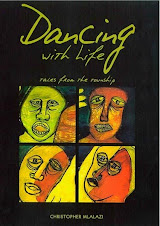
Working with new writers has been a significant part of our work as publishers. At the outset we decided that we wanted to provide an opportunity for new writers to get published, as when we started most Zimbabwean publishers were tending to concentrate on the better-known writers. We thought a good way to give the new writers a platform was in the Short Writings series, using their pieces alongside those from the more established authors. To date we have published 86 writers, among them those who have gone on to have books of their own published by us. Christopher Mlalazi’s Dancing with Life: Tales from the Township recently won a Zimbabwean National Arts Merit Award for Outstanding First Creative Published Book, as did another writer whom we first published, Deon Marcus, with his poetry collection, Sonatas.
We also wanted to publish writers from different backgrounds, races, experiences and ages; and we have been successful in attracting contributions to the Short Writings series from all of the communities of Bulawayo, from across Zimbabwe, from those in the diaspora, and from those who have simply visited Zimbabwe – all tell stories and all deserve to have their voices heard.
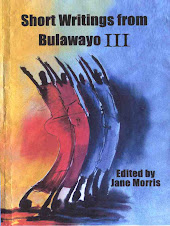
Despite the difficulties of publishing in Zimbabwe, it is a fertile environment for writers, in a country where truth is often stranger than fiction. Arguably the most vibrant writing form and the most suited to the Zimbabwe situation is the short story form, as exemplified in the Short Writings series - Short Writings from Bulawayo I, II and III, and the most recent in the series, Long Time Coming: Short Writings from Zimbabwe. The collections of short stories and poems offer snapshots of life in a deteriorating world. Writers are reflecting what they see around them on a daily basis – they vividly portray the human face of the everyday struggles of Zimbabweans. This writing documenting everyday lives is often more accessible than history, and is able to capture the human story. The story of family and friendship, of dreams and aspirations, of leaving home, of adapting to a changing environment, of loneliness, of fear and death, of growing old and of love; but in these books the story is set in a collapsing country, where basic services have crumbled, where shops have no food, taps no water, banks no money, hospitals no drugs, bars no beer. The writers also look at issues often hitherto avoided: the abuse of power, violence and oppression, the destruction of dreams. But there are lighter moments in the collections and moments of hope: in some of life’s simple pleasures, in the coming of the rains, in the wink and the smile of a stranger, in the times when the resilience of the people shines through.
Writers have generally been very forthright in their criticisms of the situation in Zimbabwe and of the leadership, though there has been, sensibly, some self-censorship. Any disparaging comment about the top leadership can lead to a lengthy prison sentence. We, as publishers, also wish to avoid this fate but to date have had no problems reaching agreement with the writers without compromising artistic freedom.
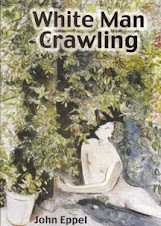
John Eppel, the third director of ’amaBooks, has made a significant contribution, particularly through his writing, from the lyricism of his poetry, even when expressing outrage at the present situation, to the biting satire of his prose. The ’amaBooks collections of his work, The Caruso of Colleen Bawn and Other Short Writings and White Man Crawling, continue our tradition of combining poetry and prose in the same volumes. His satirical novels The Curse of the Ripe Tomato, The Holy Innocents and Hatchings, that target black and white alike, have added a different dimension to ’amaBooks’ output.
As well as the poems in the various short writings collections and in Deon Marcus’ Sonatas, we recently published Intwasa Poetry. This was a culmination of our work with the literary arts sector of the Intwasa Arts Festival koBulawayo, featuring fifteen poets, from within and outside Zimbabwe, who have read from their work at the festival. The diversity of the poetry in the book can be seen by looking at a few examples, the overtly socially committed poems of Véronique Tadjo and Ignatius Mabasa; the introspective deeply personal poems of Deon Marcus; the ironic playfulness of Julius Chingono; the lyrical beauty of Owen Sheers.
Literary arts have generally been the biggest sector in the Intwasa Festival over the past few years, with packed enthusiastic audiences for many of the events. The literary component of the festival takes place, as do the majority of ’amaBooks launches, at the National Gallery of Zimbabwe in Bulawayo, an elegant restored colonial building in the centre of the city. Launches attract audiences of several hundred people, drawn to the party atmosphere generated by readings from the book, by the opening of an art exhibition that often accompanies a launch, and by local music. Events tend to finish as darkness falls; transport back to the outer suburbs becomes erratic and expensive after dark.
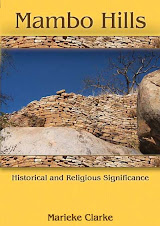
Our other interest, outside of creative writing, is that of the culture of the area, and we have published Pathisa Nyathi’s Zimbabwe’s Cultural Heritage, Elspeth Parry’s The Rock Art of the Matopo Hills, Zimbabwe, and Marieke Clarke’s Mambo Hills: Historical and Religious Significance.
Without support from donors, ’amaBooks would have shut up shop. Our website (www.amabooksbyo.com) was sponsored by the Alliance Française de Bulawayo as part of a wider scheme of promoting the arts in Bulawayo. Other sponsors (including HIVOS, The Culture Fund of Zimbabwe Trust, SABDET, British Embassy) have helped by sourcing equipment, sponsoring launches and helping with printing costs.
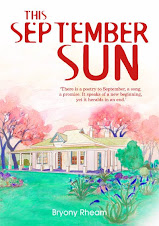
The future? In Zimbabwe it is always very difficult to know what tomorrow might bring. On the drawing board at the moment are a first novel, This September Sun, by Bryony Rheam, another writer who has progressed from the Short Writings series, and Silent Cry: Echoes of Young Voices, the second collection of short stories and poems by young people, a British Council initiative as part of their Identity and Diversity project.
Some of our publications have now become available outside of Zimbabwe through the African Books Collective and some bookshops in South Africa stock our books. There has been interest from publishers in Europe in co-publishing books of Zimbabwe writing. A number of the writers that we first published have now left the country in search of a better future for themselves and their families. But many of the young writers that we have come across show promise, and, perhaps, others will return to record the recovery of Zimbabwe.
As we write, electricity is so unreliable that the surge protectors do not allow us to use many of our appliances – thank goodness for the laptop. If nothing else, ’amaBooks has taught us to dance with life.
Wednesday, July 8, 2009
Mambo Hills launched in Oxford

The United Kingdom launch of Marieke Clarke’s Mambo Hills: Historical and Religious Significance took place in Oxford during the Britain Zimbabwe Research Day on 20 June 2009. Professor Terence Ranger of St Anthony’s College spoke at the launch.
Mambo Hills: Historical and Religious Significance (2008, ISBN: 978-0-7974-3589-6) considers the sacred site to the north-east of Bulawayo that is also known as Intaba zi ka Mambo or Manyanga. Officials of the Mwali Religion that is practised there took leading roles in the War of the Red Axe of 1896, which nearly ended British South Africa Company rule in Southern Rhodesia.
In this path-breaking study, Marieke Clarke draws on oral tradition as well as archival material to write the history, up to recent times, of this area that has importance across Zimbabwe.
Review from Britain Zimbabwe Society Newsletter
by Dr Joost Fontein, University of Edinburgh
Zimbabwe’s landscapes are littered with archaeological and historical sites. These range in scale from the truly monumental, such as Great Zimbabwe and the other 200 or more stone-walled ruins associated with it by style or history, to the more ephemeral, recent remains of abandoned homesteads and settlements, such as Old Bulawayo; and in age from the ancient rock art of innumerable caves to the much more recent remains of the Rhodesian misadventure. Sacred places and religious sites too pepper the landscape, ranging just as hugely in scale and age as archaeological and historical sites and indeed, unsurprisingly perhaps, more often than not the two coincide and overlap. Yet so much popular, and indeed academic, writing seems overly focused on only the most massive and monumental of such places; a point perhaps best illustrated by the huge presence of Great Zimbabwe and the cult shrines of the Matopos in the archaeological and religious literature respectively. Yet these two places are in many ways unusual. As Ranger has noted, if Great Zimbabwe has witnessed an overabundance of archaeology, then the Matopos has been marked by an abundance of ritual – here archaeology and ritual seem mutually exclusive, as if a landscape of historical significance could or should not also be of spiritual importance. This artificial, indeed normative, separation is probably a function of the public attention these two great places have received – the separation of the religious and the historical/archaeological being an perverse result, in both places, of the huge cultural significance that has been attached to them. Only latterly have archaeologists and heritage managers begun to become aware of the violence they contribute by such separations and artificial distinctions.
But what about the many, many other historical and sacred places scattered thickly across Zimbabwe’s contested terrains? Many of such places have become subject to serious research in the past decade. Just scanning recent literature and work I come across the sacred streams of Chishanga in Mazarire’s epic thesis; the Marumbi rain cult in Gutu that Mujere has discussed; the groves and mountains of Kaeresi in the Eastern Highlands (Moore); the trees and graves of north Matabeleland’s dark forests (Alexander, McGregor & Ranger); the caves and hills of the Matopos (Ranger; Lynette Nyathi); stories of the white baboon of the Chinoyi caves; the sacred pools of the Zambezi river that Tonga and other ‘river people’ displaced by Kariba continue to recall in McGregor’s almost published new book; and the continuing struggles between managers and rainmakers around Domboshava (Pwiti); and contested local memories and identities at the ruins of Hwange (McGregor). This recent body of work joins and builds an older body of literature (by for example Ranger; Lan; & Daneel) that explored how many sacred places, ritual practices and ancestors came together during Zimbabwe’s first and second chimurengas.
With this burgeoning weight of scholarly attention it is surprising to note that only recently have National Museums and Monuments returned their attention to the multitude of smaller, even everyday, sacred and historic sites among and alongside which so many Zimbabweans dwell, with public pronouncements and meetings with chiefs and local leaders across communal areas, and now resettled farms, about the need to list and protect countless, dare I say ‘everyday’, sacred places. A shift in focus from the few monumental places to the many smaller and medium scale sites, alongside a greater awareness of entanglement of past and present, the sacred and the political, may engender a new sensitivity to the complexities and depth of human, and particularly Zimbabwean, interrelations with landscape; linking biography, geography, memory and place in new understandings of the spacial and spiritual dimensions of peoples’ lives. Although Marieke Clark claims none of this as motivation for her wonderfully unpretentious, accessible yet sophisticated account of the historical and religious significance of the Mambo Hills in Matabeleland North, this is the terrain into which her writing strides with understated confidence.
Indeed, in Marieke Clark’s hands there is nothing ‘everyday’ about the Mambo hills, or Manyanga, that she describes. Occupying a site 3 miles long and 6 miles wide, these hills in eastern Bubi district have been witness to, and embroiled in so much of Zimbabwe’s great depth of history, that it is little surprise they were recognised as National Monument by the Rhodesian state in 1952. Containing both stone age rock art and ‘Zimbabwe culture’ stone walling, the site probably dates back to the Torwa State that succeeded the Great Zimbabwe state, and became of greater religious and spiritual significance later as a Mwali cult site during the Rozvi Changamire polity that was finally defeated by Mzilikazi’s Ndebele armies in the late 1830s. Manyanga’s religious significance did not diminish, because, as Clarke’s informants make clear, Mzilikazi and later Lobengula insisted Mwali cults shrines in the Matopos, Njelele and at Manyanga be respected. Even after Lobengula’s disappearance, the awosana and amanxusa of the Mambo Hills continued their work, perhaps with new freedom, unrestrained by the Lobengula’s tight controls, as the awosana rain bringers were able to tour the land, kraal to kraal collecting gifts for Mwali, the bringer of rain. In the rebellions of the first chimurenga, the ‘war of the red axe’, the Mambo hills too played their part, perhaps in response to white settlers refusal to respect Mwali’s rainmakers. Not only does Clarke show how the Mwali shrines in the Mambo hills must have allowed the revolts to take place, several of its key characters, particularly Mkwati and his wife Tenkela, were actively involved, and after 800 white troops captured the caves of the Mambo hills on 5th July 1896, they discovered large quantities of loot taken from killed settlers, as well as the very oracular caves from which Mwali voice had once spoken.
But the shrines’ role in the struggle against white invaders was not entirely un-ambiguous. Earlier in the 1890s, the Mwali shrines in the Matopos and at Manyanga had advised Lobengula and others to avoid bloodshed with the whites. This is an important detail which Clarke is right to bring to the fore, because it illustrates something of the complexity of the social and political roles of cult shrines and their accolytes. Perhaps constructive engagements with the invading ‘men without knees’ was at first understood as offering new possibilities for the shrines, out of the bounds of Ndebele control, or perhaps more likely, it was seen as an inevitability. Similarly, when the extent and aberrations of white rule became apparent later, amidst failing crops, drought and rinderpest, maybe Mkwati and others had no choice, maybe then Mwali insisted upon revolt. Marieke Clarke’s narrative is to be congratulated for refusing to simplify, to set in a straight line, a story that is inevitably complex, contradictory, ambiguous and open ended. This is good history because it does not detract from understanding present circumstances, but rather adds nuance and complexity to more recent events that are otherwise too often and too easily reduced to single dimensions.
This short booklet ends by pointing to recent events. Although the Mambo hills were appropriated within the confines of Thomas Meikles ranch, Clarke cites evidence that suggests Mkwati’s wife, Tenkela, (who was probably of ‘higher birth’ and greater significance at the time than her husband, and than history remembers) continued to live and conduct rituals at the shrines long after 1896 and well into the 20th century. She suggests that it is possible her and Mkwati’s daughter continued the live near and venerate the hills into the 1940s. Thereafter, despite land clearances and white occupation, the hill’s sacred significance continued to be recognised. ZAPU cadres visited the site but not the shrines, and in the 1980s dissidents respected the shrines but the notoriously murderous 5th brigade did not; perhaps, as Pathisa Nyathi says in his introduction, because they were not aware of the great depth of its past, pre-Ndebele, significance. In the 1990s, when Clarke did much of the research for this booklet, new characters and biographies began to entangle with the deep history of the Mambo Hills and its shrines. A new Mwali priest emerged in the form of Andrew Siborani Moyo, an ex-Zapu driver, and rainmaking rituals were once again taking place within its shrines. Clarke’s story ends in the mid 1990s, four years after Andrew Moyo’s death in 1992, but that of the Mambo Hills remains wonderfully open, and indeterminate, and the reader is left wondering what new biographies, histories and political events continue to intersect with the long past of these enigmatic hills. In this booklet Marieke Clarke has done much to show how place, history and biography inevitably entangle across Zimbabwe’s wider landscapes, and not just at a few, monumentalised and highly celebrated sites, magnificent as they maybe.
Review from Prehistory Society of Zimbabwe Society Newsletter 139
by Rob Burrett
If you were hoping for a book on the archaeology or the monument, Ntabazikamambo, and its contestation as a heritage site this publication is not for you. In fact I don’t think this was ever the author’s briefing and instead we have a particularly valuable contribution on Mkwati and the broader family and cult relationships in which this important figure of the 1896-7 anti-colonial campaign featured. Surprisingly, there are few detailed histories of this man despite his importance in the anti-colonial and post-colonial historical discourse. Unlike Zezuru mediums of Nehanda and Kaguvi, Mkwati has hitherto been a bit of an enigma; mentioned only when necessary to bring Matabeleland into nationalist historiography and with the odd building named after him, but he not really known by most people unlike his Mazowe Valley counterparts.
Discussed briefly in that all-important book that has shaped Zimbabwean historiography, Terrance Ranger’s (1967) Revolt in Southern Rhodesia, Mkwati is presented as a regional instigator of the insurrections of 1896 in Matabeleland. Relatively few details are however given and he is depicted as much the same as the more northern spirit mediums of the Shona heartland. Mkwati is further short-changed in later nationalist publications where he becomes a mere adjutant to events in Mashonaland. In fact that bastion of nationalist “history” A.S. Chigwedere relegates him to the mere status of a mujibha (runner) for some mystical central leader (Murenga) who supposedly instigated events across the entire modern nation (Chigwedere 1991). Chigwedere’s blatant Shonaisation and reinterpretation of events to suit current political patronage should always be remembered.
Clarke now presents a more a thorough picture of Mkwati and his part in regional events outside of modern nationalist concerns. He was not local, being born a Leya in the Zambezi Valley who was captured in his youth by Ndebele raiders. As one of Lobengula’s “Black ants” he rose to importance through his marriage to Tenkela, the all important iwosana, messenger of Mwali, in this area of central Zimbabwe who acted as the local voice and transmitting of information for the Mlimo Cult based in the Matobo Hills. The importance of Mkwati was therefore not as a Shona medium, in the sense of Nehanda, but it was it association with Tankela and her family. It seems that the influence of the Mlimo Cult may have expanded further in the post-Ndebele era as people tried to come to terms with the intrusion and impact of colonialism. Mkwati would have spoken out and encouraged the local events of 1896 but he was not some cog of a massive nation-wide conspiracy against the colonial regime. I recommend reading this book to get a better understanding of the man and events of that era.
My main quibble about the book is the dearth of solid information on the Mambo Hills. We never get to know the broken hilly area which is after all the landscape in which these events were set and which, through its heritage associations with the past (the last Mambo and the once all powerful Rozwi State), determined who was living there, why and their actions. The ruin of Ntabazikamambo is shown on the cover but there is scant detail on it. Its being one of many Khami-type ruins in this part of central Zimbabwe could have been analysed more thoroughly. Clarke comments as to Zhizo and Leopard’s Kopje rock art (p.1) are curious and one can only assume that the fault lies with uninformed informants. I don’t know any other serious researcher who would think that the art can be attributed to these farming community groups.
I was also very disappointed with the lack of adequate comment on the events that post date 1896. The hills were alienated as white farmland. How was this done, what were the relationships between the settlers and the locals and did they change through time? Access to the site was not restricted at all times and the competing interests of different parties who all lay claim to the site and its said spiritual associations could have been better analysed.
Clarke places too much emphasis on the interpretations and heritage explanations of one group, the Mambo Cultural & Sacred Places of Zimbabwe Advisory Committee of the late A.S. Moyo. There are other groups and individuals who are involved who dispute the legitimacy of this organisation. In this book there is an overreliance on a few commentators, sometimes a failure to separate contemporary concerns from those that may have counted in the past and the complex multivocality and the contested nature of the hills and the heritage site is not adequately covered by Clarke. More recent events in the Rhodesian Bush War or Chimurenga II in the 1970s and the Gukuruhundi of the 1980s would also have been very informative. Pathisa Nyathi in his foreword hints as much but the author seems to have avoided the issues completely.
All in all this is an interesting and important work that focuses on local areas and agency rather than broad sweeping panoramas. The author and publishers are also to be congratulated on ensuring that it is made available locally. Too often now our history is written and published elsewhere, so that we at home are denied access to it; we are studied and written about but the results are never shared with the actual people involved. May this trend initiated by Clarke continue.
References
Chigwedere, A.S. 1991. The Forgotten Heroes of Chimurenga I: the archives speak. Harare: Mercury Press.
Ranger, T.O. 1967. Revolt in Southern Rhodesia. London: Heinemann.


.jpg)







.jpg)