Wednesday, July 6, 2011

Zimbabwe's literary kinsmen: Together

From the National European Literary Scene: Examiner.com

(http://www.examiner.com/european-literary-scene-in-national/zimbabwe-s-literary-kinsmen-together-review)

Part I –Julius Chingono and the text Together

Genres: Poetry and short stories in one collection

Literary Elements: Irony, imagery, simile, pathos

Comfort Level: Easy reading (*but…be not deceived)

Synopsis: This collection permits the reader to gain an introduction into the art of Julius Chingono, a Zimbabwean poet and writer. As a political writer, unabashedly, he wrote of the times in which he lived. He wrote of the trials of his people. And often, one will find that his sentiments and findings are universal. For example, in this collection, there is a poem entitled ‘Curiosity’ which nearly ‘protrudes’ from the pages of this text onto today’s headlines. This poem is about a man who hears gun shots outside his home. He opens his door…only to become a victim of his own curiosity. The current Arab Spring has claimed many victims or bystanders in the same manner. The short story ‘We Waited’ is timely too. Chingono writes of people waiting for justice. The people wait in the same manner as those in Samuel Beckett’s Waiting for Godot. As you know, no one could recognize Godot--even if he appeared in the play. No one would even know--if he had appeared. Justice is just as aloof and unrecognizable by the waiting masses in Chingono’s text. They await the opportunity to declare injustice and to claim justice. Justice never comes. In fact, tragedy awaits those who linger too long. In accordance with contemporary events, this selection of Chingono is too true. The Arab Spring has not brought justice to most who declared injustice.

The reader may shift gears and examine something a bit more personal in the‘I Lost a Verse’ poem. It’s about an interruption in verse. This selection may be illuminating because of the general trials that interrupt our own creativity and concentration. There is solace in knowing that Julius Chingono has suffered the same fate. But, he regained his tempo and wrote… once more.

Educators will enjoy the fact that Together permits you to teach the poems and short stories in installments. Readers, you will enjoy the fact that you can learn about Julius Chingono through his poetry and his short stories.


Critique: For those that enjoy the simple wisdom of Chinua Achebe, you will find itin Together. There are those who realize the cultural candor to be found in Langston Hughes and his ‘Simple’ short stories. You will find it in Together too. Sadly, Julius Chingono died too soon. There is much I would have asked him about his work and his life. But, Together will have to answer those questions…for now. I truly recommend this work.

By

European Literary Scene Examiner

Dr. Rosetta Codling is a literary scholar and critic. Her critiques of African and African-American literature have appeared in numerous journals throughout the world. Her latest critiques appears in The Journal of African Literature, Literary Criticism (IRACLC), The African Quarterly, and the CIEA7 World African Conference (2010). This year, she has served as a panelist at conferences in Puerto Rico, Peru, Portugal, and Spain. She is Education Editor for G&G Magazine, writing a column for educators. She is most currently composing her own book of short stories focusing on America's indigenous people. A graduate of CUNY, New York University, and Teachers College/Columbia University, Dr. Codling earned her doctorate degree from Bircham International University (Madrid). Professional honors have been awarded to her by U.S. Senator Charles Schumer and Congressman Gregory Meeks of New York.


Monday, July 4, 2011

Response to the xenophobic killing of Farai Kujirichita - from NoViolet Bulawayo's blog

picked….

“We too bleed through our eyes, our severed heart cries, with our mouths...ask why? Why? OH! Why? As we try to register yet another black on black carnage! Where is the love?” Fungai Oliver Maboreke.

This project was inspired by the death of Farai Kujirichita whose murder was made too raw and intimate by the fact that it was captured on camera so that I, like many, lived Farai’s dying moments here. Farai is not the first, and he will not be the last; the Xenophobic killings of immigrants continues in South Africa’s shanties, their unfortunate deaths an injustice that cracks the shell of our humanity. After watching the video I made an appeal to facebook friends to respond to the xenophobic murders in writing; we join hands in poetry, pain and prayer in the following creative quilt.

Many thanks to these poets and writers for their participation: J.S. Makokha (Kenya), Deejay Busang (South Africa), Fungai Oliver Maboreke, the late Julius Chingono, Barbara Mhangami, Sandi Tshuma, Fungai Machirori, Novuyo Tshuma, Emanuel Sigauke, and NoViolet Bulawayo (Zimbabwe).

Picked (for South Africa)

Dream I:
In the land of the humane Bishnoi
a land distant, ancient, in holy India,
old sands sing in chambers of arid winds
about the beauty of life, as a lone woman
in sari scarlet, feeds a gazelle kid, her triplets
too, with milk drops off two big but lean breasts.
Life here, human or beast, a source of peace...
.
.
.
Dream II:
In another land, one antique too,
a land inside us all, kids of africa,
new winds howl in chambers of arid hearts,
about the beauty of death, as yet a human
on a liquid shroud of innocent blood, his own...
dies, under weights of whispers in another mob justice.
Life here, a nightmare-come-true, in any Bishnoiland....
.
.
.
Dream III:
In the land of poetry
, now home of emotion,
a place where words live before life on earth;
here, where divine voices explaining all truth
are born in vast nests of vast galaxies divine;
here, where all words are born that become life,
planting seeds of life as genesis, across blue planets,
all the Gods are silent now...as another innocent life
is lost, on a shanty street in adolescent Mandelalands....

Where they are picked
maimed by mines
crossing borders
from troubled nations.
They are picked across the border
murdered in the streets
where they are squatters.
They are picked
at boundaries
picked by flooded rivers
attempting to swim
across borders.
They are picked
by crocodiles
crossing borders
that are rivers.
They are picked
across the border
picking their lives
in trash bins
picking comfort
in drain pipes.
They are picked
in foreign lands
picketing host politicians
who cannot
accommodate them anymore.
They are picked, singing sad songs,
Hear them sing, hear:

Song 1:
The hounds of hell nip at my feet.
I run, I slip, I fall on the street.
My knees are scraped, crunching on gravel,
My breath is fast and burns my lungs, my airways.
I run, I slip, I fall on the street.

I look up, eyes beseeching,
My brother, myself, help me!
He walks by, his face unspeaking, his eyes unsmiling.
I run, I slip, I fall on the street.

I tug at her skirt, my hand is bleeding
I am cut, I am hurt.
My sister, help me I entreat
She shakes me off and hastily retreats.
I run, I slip, I fall on the street.

I am broken, my spirit fails me.
My eyes meet hostility, the hatred suffocates me,
Assails me, pummels my body, my soul.
Long before the sharp searing slice of the machete,
Way before the dull thud of stones on my flesh
The crackle of sticks on my bones, I have died.
The merciless have killed my hope,
The merciless have strangled my strength to run,
My desire to survive, my hunger to live.
I don’t run, I give in to the merciless, on the street.

My blood, which stains stones and quenches the thirsty earth, your blood.
The tears flooding my soul are your tears.
The screams caught in the back of my throat are your screams.
Blood is red, it is not a foreigner,
Tears of pain and pain itself are not foreigners.
Death who is common to all, is not a foreigner.

Here I succumb to the stench of poverty
Stench of depravity
Stench of viciousness
Stench of sickness,
Stench of hatred
I succumb, a brother’s
prayer in my ears:

Song II:
I do not want to die and so if you do this I will run. Through the grimy, untarred sewage strewn streets of this township, past runny-nosed, barefoot children too young to see the sky turn black, I will run. And as you chase after me chanting words full of poison, hate and ugliness, I the kwerekwere, the insufferable brother born to another mother, will run from the shack I call home that you in your rage will have set ablaze. Then, as Thabo, John, Tshepo and Mandla join in the senseless chase, I will falter for just a moment, stunned at the vicious treachery of people who have lived with me as friends, not just neighbours. But what is this? What does it mean? Does it mean nothing to you that I have been here at your side day after day, queuing at the taxi rank, drinking at our secret spot and debating if ‘Amakhosi’ or ‘Ama-Buccaneer’ will win the Soweto derby this football season? As my feet pound on the dirt, my eyes will see not the way ahead, but fleeting images of walking this very route just yesterday with you and you and you, tired after a long day at work in the city that promised us gold but has eaten our souls instead. Tearing past Aus’ Lulu’s spaza shop, where I bought matches to light my paraffin lamp just the other day, I will hope briefly for this warm-hearted woman to offer me protection and talk you out of your insanity… This rock of a woman, who has smiled and offered me credit on her delicious warm vetkoeks that have sustained me and saved me from the grip of hunger, will not smile at me today. Today she will not see in me a faithful customer. Her own suffering and torture forgotten, Lulu will become an enabler and the catalyst of the worst day of my life. She will not use the position of respect and favour she holds amongst the rabid pack that bays for my blood to plead my case for mercy. Oh no. She will choose rather to swing her motherly arms out to throw paraffin on the back of my shirt. As the warm slipperiness clings to my skin and I inhale noxious vapours I will ask myself, What have I done?


What have I done? what
are you killing me for? who will,
tell my mother, tell my father tell
my people? what will you tell your children?
what will this do for you? how will you
look at yourselves tomorrow, standing
in front of mirrors gazing at your eyes
like mine, face like mine, at skin, black
like mine? What will you say, tomorrow?

Tomorrow, I can still hear myself shouting, singing,

I can still hear myself sayin 'f*ckof, This is not your home'

All I thought was, 'we just are threatening them' until...

Until I saw objects being thrown at him..

Until I saw him being kicked everywhere..

Until I saw blood running out of his nose, ears, eyes, arms, legs

Then reality hit me and I began to realise...

This is not a threat, but inhumanity


I backed off trying to gather all this ...don't even know what to call it

I saw him lying down; I saw his eyes wide open, yet closed and crying blood

I heard his voice crying 'No please, I'm sorry'

I felt his heart saying 'please tell them to stop'

I felt a tear burning my heart and I couldn't do anything .. Or that's what I thought 


If I stop them, they'll be on me

They'll be crucifying me together with him

Now...now I wish they did, and this regret won't be there

The guy who use to do my garden, shoes, hair was being killed

If only I........If only I fought as an African,

If only I stopped the petrol from ... from reaching his African soul,

Then things would be different

I saw the guy next to me making a flame out of a stick

The stick that was thrown to the petrolled African

I saw the flame all over his bruised body, mouth still crying and heart saying
'Please tell them to stop'


I saw his family through his flame crying, 'we losing our only bread winner

We losing our dad, we losing our uncle, we losing our teacher, we losing our husband, we losing our....we losing our black brother


Please someone tell me how to forget this, how

to rewind things, how to bring him to life again

All I want is just to say....I'm sorry

I'm sorry I betrayed you as an African

I'm sorry I was not firm enough to stop it

I'm sorry for being influenced against you

I'm sorry for.....
I guess it's too late now.

Dream IV:
And in a land of rage and rainbows
brothers and borders, flowers and flames
a dead cow rises to chew the cud,
the aftertaste is burned bitter blood
I know why I remember this land,
this is where we came to sit down
by bloodied rivers, dipped tired feet
in the mouths of sad poets singingpraying:

Give me the softest petals to cover this patch of reddened South African soil, give me milk for these weeping wounds, give me balm for the unheard cries, give me silk for these tears, bring out a dress of stars for this soul. Do not play Nkosi’ sikelel’ iAfrica while I find the words with which to tell Farai’s mother how her son was not mauled by animals of the wild, how her beautiful black son was butchered by black children black boys black girls black men black women, no he was not butchered by beasts. I’ll tell her, Mai Fari, he was not from there, he was wrong there, he was not wanted there, he did not belong there, he was hated there. There there there that place where Zimbabwean blood has been spilled there, has quenched greedy machetes there, has flowed like rivers there, has decorated leaves and grass and stones there, where Zimbabwean bodies have burned there, have roasted there. I’ll tell her he died because they forgot he was made in the image of God there, that he was innocent there, that he was just a perfect mother’s boy there, they forgot they forgot they forgot they forgot they forgot Farai’s life was sacred there.

And they forgot again when they struck that stick of matches and let it catch flame against bare black skin. Did you see him fall to his knees – that man on fire scorching blacker than the hearts that watched?

Give me the petals from the flower that grows from the soils his ashes feed…Yes, give me its petals so that I may wipe his mother’s tears with them and bind the wounds festering in the hearts of his brothers and sisters. But no, do not sever the plant’s roots. Let his ashes feed the earth. Let the flower grow there, but do not leave its petals in bloom, for this is what it is to be foreign – to grow in distant soils but always bring your glory back home so we may –

Sing song sung for many suns
Sung in fluttering hearts,
dying in glare of sun
Speak up speak up! Yet –
Soft sound cedes to Serpent hisssss
Sweat – red as blood – seeps through hatred sores
Sows seeds of Sorrow
That
Sway in wind like stalks in
Mourning
Speak up speak up! Yet –
Several Suns later here we are
…..Once more
Slopping through soapy waters of
Sorrow
Sun Shines Shanty like Silver
Beneath
Chanting masses Fisted Hands
(Pamberi! – Have we been here before?)
Punch in Gut
Insipid stares
As
Death Dances
In Delightful Seduction
....(Varoyi Naked on Grave)....
Sing song sung for many suns
Sung in fluttering hearts dying in glare of sun
For when new sun rises on the morrow
To stain sky with pale-lit sorrow
We shall – you and I –
Have forgotten
Have forgotten
The man we watched die on the brow
Bludgeoned black by Brutes we saw before
Bitter day Back in ’08—

Sunday, July 3, 2011

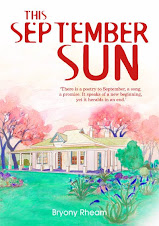
'This September Sun' reviewed by Barbara Mhangami-Ruwende

This September Sun is a searing account of family and “the ties that bind” as told from the perspective of a young woman trying to find her place within her family, her country and her world at large. The story is set in Rhodesia/ Zimbabwe and begins in dramatic fashion: “On the 18th of April 1980, my grandfather burnt the British flag. I remember because it was my sixth birthday and he ruined it.” From this point on, Rheam reels the reader in to a heady tale of love, hate, deceit and betrayal, laughter and tears, anger and joy, destruction and renewal. Born into a family full of secrets, young Ellie quickly becomes aware of the coldness and the heavy, unarticulated emotions between her grandmother Evelyn and her grandfather Leonard. She is also aware of the tension between her mother Francie and her grandmother and is often bewildered, angered and terrified by the outburst of pure, inexplicable rage such as she witnessed from her grandmother towards her grandfather on the 18th of April, 1980. Traumatized by the divorce of her grandparents and threatened by her gran’s new love Miles, Ellie’s existence is one filled with insecurity, self doubt and unanswered questions, punctuated by occasional episodes of happiness.

Upon completing her A levels, Ellie leaves for England, convinced that she will find herself, her place in the grand scheme of things and finally attain that state of serenity that has so far eluded her. However she soon discovers that: “It is not enough just to travel, if one wishes to change who one is. The greatest journey we go on is inward towards ourselves, rather than outwards and away. You cannot change who you are unless you know who you are and what you are capable of, and that is what I had never known and why, finally, I couldn’t move on.”

Ellie shuttles back and forth between Zimbabwe and England, a troubled young woman who is at once comforted and disturbed by how some things back home do not seem to change. Her restless spirit continues to battle with the business of finding her place and she completes a bachelor’s, a master’s and embarks on a PhD degree.

The news that her grandmother has been brutally bludgeoned to death in her home in Suburbs marks the beginning of another phase in her journey which ultimately leads her into a quagmire of secrets and revelations that help to answer some of the questions along her journey to finding herself. Her grandmother’s diaries hold the missing pieces to a very complex puzzle, one which her family had protected her from as an only child. She learns who her grandmother Evelyn really is, how she came to what was then Southern Rhodesia in 1946 and how she ended up married to Leonard, her grandfather. She unravels the mystery around the death of her uncle Jeremy and how this singular event irrevocably changed the family dynamics from what it was to what she was born into.

Rheam’s brilliance lies in her ability to weave what seem like two completely different stories into a seamless work of art that is both evocative and entertaining. The attention to detail in her historical accounts of pre independence Rhodesia, along with the characters operating in this colonial era of cups of tea, morning and afternoon, sundowners, country clubs and exotic flower gardens, evokes and captures vivid images of what this era was like for the colonials and their civilized black stewards.

The story is told in beautiful prose, peppered with old world verse and philosophical musings. Her characters are sometimes funny, foolish, tragic, selfish and downright irritating. All are bound together masterfully in the messy business of living, and searching, adjusting and moving forward. In the hands of a lesser writer, this powerful story would have been lacklustre and tedious to read. However it is told by a true craftswoman, whose style, tempo and artistry in her use of language is outstanding and therefore the story simply shines.

Barbara Mhangami-Ruwende was born and raised in Zimbabwe. She left home at the age of eighteen and worked in Germany before embarking on her undergraduate studies at the University of Glasgow, Scotland. Barbara moved to the United States in 1997, where she resides with her husband and 4 daughters. She is passionate about raising her daughters, reading good literature, writing and running marathons.

Barbara's short story Christina the Colourful is to appear in the forthcoming 'amaBooks short story anthology Where to Now?

Wednesday, June 29, 2011

Together launched in Bulawayo - from The Mail

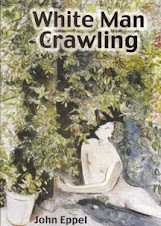
The Mail online reports the Bulawayo launch of John Eppel and the late Julius Chingono's story and poem collection Together.

http://www.mailonline.co.zw/index.php?option=com_content&view=article&id=1016:together-launched-in-bulawayo&catid=93:books&Itemid=1108


Monday, June 27, 2011

Geosi Reads interviews Bryony Rheam, author of This September Sun

From: http://geosireads.wordpress.com/2011/06/27/bryony-rheam-author-of-this-september-sun-interviewed/

Brief Biography:
Bryony Rheam was born in Kadoma in 1974 and lived in Bulawayo from the age of eight until she left school. She studied for a BA and an MA in English Literature in the United Kingdom and then taught in Singapore for a year before returning to teach in Zimbabwe in 2001. She was part of the British Council sponsored Crossing Borders creative writing project and has had short stories published in several anthologies, including all three volumes in the Short Writings from Bulawayo series and inLong Time Coming: Short Writings from Zimbabwe. Bryony won the Intwasa Arts Festival koBulawayo Short Story Competition in 2006. Also, her first novel, This September Sun was released from ‘amaBooks in 2009.

Geosi Reads Interviews Bryony Rheam:

GEOSI READS: I begin with what John Eppel said of your book, ‘This September Sun brilliantly evokes the ennui of the pre-Independence settler community who measure out their lives in cups of tea, sundowners, and illicit affairs. In this absorbing debut novel, Bryony Rheam has produced a work worthy of a place in the bibliography of post-colonial writings in Africa.’ What is it about the tea ritual we encounter in your novel?

BRYONY RHEAM: Tea making is actually a positive ritual in the novel. I consider myself to be something of a tea connoisseur; tea should be made in a certain way: the pot must be warmed first and the tea left to brew for a certain time before it is poured. Most people don’t have time for this and simply use a teabag in a mug – that’s modern life. Evelyn belongs to a different generation and the way she makes tea – including the use of teacups and saucers and the setting of the tray – all serves to create a certain atmosphere, and emphasize that her way of life is fast-disappearing.

GR: This September Sun is your first novel but before the novel came out, you used to be writing short stories. Were the short stories a preparatory mode of a sort? Did the writing of short stories influence the writing of your novel in any particular way?

BR: I can’t say that they did, except that having them published gave me the confidence to complete my novel.

GR: Take us through the process of writing ‘This September Sun’. How long did it take you to complete it? Do you write longhand?

BR: When I lived in London in 1997/98, I had an exercise book in which I used to write down anything interesting that I had seen or heard or thought of and some of these later became Ellie’s experiences. When I moved to Singapore in 2000, I joined a writers’ group and had to produce a piece of work each week, which was really good for me as I tend to lack self-discipline! I wrote the first chapter and then thought right, what do I do now? I had a story with grandparents who didn’t like each other and had to think why. Mostly I wrote longhand and then transferred it on to computer. The letters, especially, I had to write out as proper letters so that I actually got a feel for the character.

GR: Does it matter to you where you write your stories? Where was your book written? BR: Yes, it does matter. I have to be in a room where I feel comfortable and I have to sit at a table. I can’t write outside and I can’t write lying down! My book was written on various tables in various houses I have lived in!

GR: You wrote your story in a powerful first person narrative style. What informed your decision to employ this particular style? Did you so much trust your narrator to convey the appropriate story to readers?

BR: I really love a first person narrator. It’s something that’s becoming increasingly common at the moment, whereas at one time most books were written in third person. A book which influenced me greatly in this regard is The Great Gatsby – how different it would be told in third person! I feel using a first person narrator makes the situation more immediate than it would be otherwise and feelings are much rawer as well. Of course, you can’t trust this type of narrator one hundred per cent, so it’s good to also bring in other voices which may counter that strong main one.

GR: Is it appropriate to label your book as semi – autobiographical, considering the fact that you share some similarities with Ellie, the narrator?

BR: A lot of people ask me this, and I feel some people are even disappointed when I tell them it’s not a true story! I wonder if it’s because of the popularity of memoirs, especially of white writers, which abound at the moment. I cannot say that any character or event in the novel is ‘true’, although I may have drawn on certain characteristics of people I have met or things that have happened. My mother did have an Uncle Cadwallader who was an architect, but there the similarity ends. There are parallels between my life and Ellie’s, such as going to the UK to study, but I have never worked in a book shop and I didn’t begin a Phd. Miles, Tony and Mark are entirely fictional. Having said that, it’s probably true to say that I am like Ellie in character, although not as extreme, but then I am also like Evelyn in some ways.

GR: At a point in time, Ellie was keen to seek a life beyond what the small Bulawayo offered her and the country she eventually relocated to happened to be England. In her own words, she says to her Grandmother, ‘I’ll die, Gran, if I stay here. I’ll shrivel up and die.’ (p83) In Mugabe’s Zimbabwe of today, is it likely to see citizens yearning to relocate to other countries? If yes, why do you think that is so?

BR: Yes, I think most school leavers want to leave the country and, in fact, it has become the norm to do so. One of difficulties I’ve had to face being a teacher, is that most of the pupils I teach don’t want to stay in Africa and many a time I have felt I am educating people to go and enrich another country. When I wanted to leave, it was to explore the world a bit, but now I think that young people just don’t see any future in Zimbabwe. There’s a whole generation missing (people in their twenties). I think when you’ve travelled a bit and if you’ve got a family, you might come back later because it’s still quite a safe place and the pace of life is so much slower than it is in the developed world.

GR: Would you suggest Tony’s pronouncement as the major setback confronting the growth of Zimbabwe? I may want to quote what Tony said to Ellie, ‘We both want to be in control…both black and white. The problem in Zimbabwe is that whites want to live first world lives in a third world country… The problem with blacks is that they want to do things their way…’ (p187)

BR: I think it’s one of a number of obstacles that Zimbabweans have to deal with. I find a lot of people saying that things shouldn’t be this way or that way, because it isn’t like that in the UK or America. While this point is often a valid one, I don’t always feel it’s a very helpful one. Things happen differently in Africa and that’s what we all have to accept. By this, I don’t mean that we accept corruption and violence. I’m talking more about a way of life and a way of thinking. There has been a great break down in black African life because of the merging of two very different cultures. We see the breakdown of the family, especially the extended family, as well as a general spiritual and moral decline. It was once the white community which I would have said was in trouble, now I think it’s the other way around. I reckon Africa has to find an African solution to its problems. Western ideas don’t really work here.

GR: To whom is your novel intended for? Is it for white Zimbabweans or black Zimbabweans or both or for anybody at all?

BR: Just before the book was published, I was worried that it would appear to be very much a ‘white’ novel; after all, the majority of characters are white. However, I am pleased to say that I have probably had more feedback from black readers than from white. A couple of these readers have commented on how much they identified with Ellie, despite the obvious racial differences, which has been great. I never really thought who the book was intended for when I wrote it.

GR: What are some of the challenges you encountered in writing ‘This September Sun’?

BR: Time! I’ve come to realize that you need to treat writing as a job if you intend to make any money out of it. You have to have set times that you write and you have to be consistent. However, until you actually have a book published, it’s often hard to be taken seriously, or even to take yourself seriously, so you tend to waver with your discipline. I couldn’t afford to give up my job to write, so unfortunately teaching took up a lot of time, especially all the preparation and marking.

GR: You have received some special prizes in the course of your writing career. For instance, you won the Intwasa Arts Festival koBulawayo Short Story Competition in 2006 and the Zimbabwean Book Publishers Award for 2010. Do prizes matter to you in anyway? Does it have any influence on your writing career?

BR: I think the most important thing you gain from winning a prize is a boost of confidence. It makes you feel that you are on the right track and that someone out there likes your work. It’s all promotional as well, so you hope that someone might read your work because they heard it won a prize. I feel it would great to be at least nominated for a major prize – I’m sure most authors do.

GR: One of my favorite moments in your novel has to do with Tony’s words to Ellie. I quote, ‘Africa is Africa… Accept it and move on.’ (p249) Do you think the post – Independence Africa we see today is just too unbearable for its own citizens to carry on living?

BR: Well, some people don’t have much choice, do they? This comes back to what I was saying earlier, if you keep comparing Africa to other places, you will always be disappointed. If you compare life now to life in the past, you are unlikely to be disappointed as well. But this is something we seem to spend a lot of time doing. When I lived in Zimbabwe, I felt a lot of people talked about the past – things they used to do and they way life used to be – but when you suggested that there were some things they could still do, they didn’t want to do them! Everyone, from the poorest person on the street to the richest in town, can make a difference, but we’ve developed this mindset that it’s someone else’s problem.

GR: How did you meet your publishers? Was it tough haunting for publishers to publish your novel?

BR: I answered an advert looking for short stories for a collection back in 2002. I had a couple of stories published by amaBooks before I asked them if they would be interested in looking at it. It has been hard finding a publisher for the novel outside of Zimbabwe. It was very difficult getting a foot in the door and just getting someone to read it.

GR: You have on many platforms talked about how much you’ve loved the ‘The End of the Affair’ by Graham Greene and ‘Mrs. Dalloway’ by Virginia Woolf. Were these books useful to you in the writing of your novel? In other sense, are you often influenced by the kinds of books you read?

BR: ‘The End of the Affair’ definitely was an influence. I had a problem with writing Evelyn’s diary entries because they had to become more than just usual entries, and so I read the diaries in this novel a couple of times. It also helped me to ‘become’ a woman in the 1940s. Virginia Woolf influenced me in the sense that Ellie is very sensitive and self-conscious as many of Woolf’s female characters are.

GR: Is it appropriate to say that black Zimbabweans dominate the house of Zimbabwean letters? I am tempted to believe so because only a few names of white Zimbabwean writers come to mind or perhaps I may be wrong. Names like John Eppel and Doris Lessing comes to mind upon reflection. Is that so?

BR: Yes, I think they do and that’s only natural. Doris Lessing may be a famous writer, but I don’t think she’s the first name that springs to mind when you think of Zimbabwean writing.

GR: Can you help with a few names – just to enlighten us a bit?

BR: Tsitsi Dangarembga, Dambudzo Marachera (I actually feel drunk when I read his work!) and Chenjerai Hove. These I feel are the ‘old masters’ of Zimbabwean writing. There are white writers like Peter Godwin and Alexandra Fuller, but they don’t live in Zimbabwe anymore and so that seems to remove them somewhat.

GR: Do you read reviews of your book? How do you take it if you read an unfavorable review?

BR: I read all the reviews, and am happy to say that I haven’t really read anything negative so far. I think as a writer you have to realize that some people just aren’t going to like your work, but if there are some that do, then it’s great.

GR: Characterization in novels is one critical area most readers look out for. How do you choose the names of your characters? From where did you get character names like Ellie or Evie Saunders?

BR: Ellie is a name I have always liked, which is why my younger daughter is also named Ellie. I considered changing the name after we had given it to her as the book hadn’t been published at this point, but the character had grown so large in my mind, I didn’t feel I could change it! I got the name Evelyn from an old trunk I bought for $100 (when it couldn’t buy you a loaf of bread). The lettering on the trunk read: Miss Evelyn Saunders, Passenger to Southern Rhodesia. I do have to think about names as they must suit the character.

GR: In recent times, publishers are introducing e-books into the book industry. Your novel is also available as an e-book. Are you enthusiastic about e-books?

BR: Not really. I fear normal books may die out, which will be a great shame. There is nothing better than shelves full of books!

GR: Do you read your work out loud while you are working on it?

BR: Yes, I do. I also have conversations aloud, which must seem rather strange to anyone looking in the window. I can’t write dialogue without speaking it aloud.

GR: Have you ever revisited your novel and wish you had a line or paragraph changed?

BR: Yes, just recently I had cause to do so, and I thought I would probably cut some bits out. I see that the novel works without those bits, but at the time I thought they couldn’t.

GR: Did you know as a child that you wanted to be a writer? Take us through how you ended up a writer?

BR: I’ve always wanted to be a writer, ever since I was very young. My dad bought me a second-hand typewriter when I was about eleven and I used to write stories about a dog called Merlin. It wasn’t until I did a creative writing workshop when I was at college that I really started writing though. I’ve always had lots of thoughts, but haven’t put them down. The tutor was very encouraging and I started writing articles for a college magazine. Then I lived in London and kept the exercise book of notes that I told you of.

GR: I read somewhere that your next novel is going to be about murder. How true is this?

BR: It’s true! I’ve already started writing it. It’s about five very different people who are drawn into solving the mystery of who murdered a Bulawayo woman found dead in her house. I just hope I don’t take another ten years to write it!

Thursday, June 23, 2011

Chingono & Eppel Come Together in Print (from Zimbo Jam)

When the late Julius Chingono met John Eppel at the Intwasa Arts Festival in 2007, an instant bond of friendship began to form and the two writers decided to work on a collaborative project. That project will be launched in Bulawayo this afternoon and unfortunately only one of the two contributors will be there to witness it.

Chingono, who died in January this year, will not be there to see this latest work, titled Together, and featuring short stories and poems by him and Eppel.

The 154 page book, an ‘amaBooks project, was published by the University of Kwazulu-Natal Press in South Africa, by UNO Press in North America and by ‘amaBooks in Africa and Europe.

Drew Shaw from Zimbabwe’s Midlands State University met the two writers at the Harare International Festival of the Arts in 2009, two years after their initial Intwasa meeting. Shaw writes in the introduction to the book that their literary liaison was odd in that ‘Eppel is a self-conscious stylist, steeped in Western literary tradition’ while Chingono was an ‘an anti-stylist, who does not follow any literary mentors.’

And yet the two men had great respect for each other. Shaw, who interviewed both of them, asked Chingono what connected him to Eppel and the reply was “humour and realism” while Eppel said he had found his new friend to be, “a warm-hearted man with a mind like a razor-blade.”

Chingono was born in 1946 on a commercial farm near Harare and spent most of his life working in mines as a rock blaster. He had five published books and wrote poetry and prose in Shona and English and won awards for poems written in both languages.

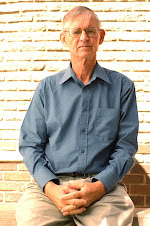
Eppel is one of Bulawayo’s most prolific writers. Born in 1947, he was raised in the city where he still lives, teaching English at Christian Brothers College a few kilometres down the road from his alma mater, Milton High School. He has six published novels, numerous poetry and short story collections and has won many awards for his work.

The stories and poems in Together take us on a journey through Zimbabwe as it goes through political, economic and social turmoil.

One story by Chingono begins with words that sum up the very thing that these two writers did not believe should represent Zimbabwe; “He was our boss. We feared him. We did not respect him. One of the reasons was that he used his right boot to send his instructions home.”

And a short poem byEppel brings home the very thing that is keeping the ideal at bay; “Governing in Africa/ Is like sweeping leaves/ On a windy day.”

In Together we see Zimbabwe through two sets of eyes; two view points that are united in the underlying hope that common purpose will one day bring the nation together as it did these two men from different races, different backgrounds and of different literary styles.

- Fungai Tichawangana for Zimbo Jam

Tuesday, June 21, 2011

Through the Eyes of Julius


THROUGH THE EYES OF JULIUS

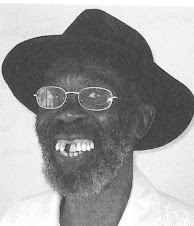
In memory of Julius Chingono(passed on 02.01.11)

We were miniscule caricatures

Split between the rims of his glasses

Each one of us

Stuffed shirts and too serious

To gather laughter in our stride

He stitched simple paisleys

On our foreheads

That told the world

We were “tighter than

thief’s anus”

All we needed was just a fart

To remind us we are human

After all.

By Batsirai E Chigama

04.01.2011