Saturday, February 18, 2012

Tribute to Julius Chingono - from Mgcini Nyoni

Insanity

Insanity is
trudging the same
old path
bearing the same
old words
in search
of the same
old poisoned well
that has led
to the growth
of the ARV industry

For Julius Chingono


Poem reproduced with the permission of Mgcini Nyoni. The poem was read, as were the other poems on this blog entitled Tribute to Julius Chingono, at the tribute to Julius in Harare organised by the Embassy of Spain to Zimbabwe.

Thursday, February 16, 2012

Tribute to Julius Chingono - from Mbizo Chirasha

Tribute to African Writers

For I wrote so long a letter to Mayombe and Anowa

That I will marry when I want

For the beautiful ones are not yet born

While we wait for the rain

In the coming of the dry season

Behind the anthills of savannah,

Milking the cows of Shambati, gathering good bits of wood,

And the fortunes of Wangarini, in the forests with a thousand demons

A sleep walking land, for things had fallen apart

We faced the wrath of the ancestors, bones and shadows

For it was not any easy walk to freedom

With Farai’s girls, Nehanda and the son of the soil,

In that long journey of popynongena, we met Matigari,

And the tycoon from Peter Maritzburg, and the poor Christ of Bomba

We saw the devil dangling on the cross and his blooming petals of blood

We had the arrows of God

We wanted to kill the mangy dog

In the river between was this a war of freedom?

Indaba my children

We sang the song of Lawino and Ocol

Walking down Second Avenue

Fighting to decolonize the minds of the people

We became the house of hunger

In the country of our own

The butterfly was burning

In the burning summer season, we never ate the grain of wheat

For we harvested thorns and nervous conditions

Cry my beloved country, country of my skull

Nehanda still snores even after the struggle of Zimbabwe.

Wednesday, February 15, 2012

Tribute to Julius Chingono - From Murray McCartney

A passage:

Had it not been for the shortage of mealie-meal caused by the shortage of land that we were in the process of repossessing, we would have drunk our alcohol on stomachs full of sadza, thick white sadza, and we would not have been as wasted as we were. Sovereignty had replaced sadza. Alcohol taken on a stomach full of sovereignty tended to make us aggressive.

Vintage Chingono. It’s all there: the playful imagination, the narrative lilt, the satirical wit.

Weaver Press published that story – ‘Kachasu: a killer’ – in our 2005 anthology, Writing Now. Prior to that, we published ‘Maria’s Interview’ in Writing Still. Prior in turn to that, his name first crossed our radar ten years earlier, when the South African publisher of a volume of his poetry asked us to help promote it.

Our first response was: Julius who? But we didn’t remain in the dark for long.

It was the start of a warm and productive friendship.

The first piece we asked him to write, wasn’t a poem; it wasn’t a story. As the editor of Poetry International’s Zimbabwe website, Irene had been asked to submit to them a Poet’s Diary. She asked Julius to write it.

‘A diary?’ he asked. ‘What’s a diary?’

‘Well, each day, for a week, you write down what you did, and your thoughts, and your feelings …’

Julius fell to the task with slightly bemused vigour. The result appeared on the web in December 2001, and promptly became the stuff of literary legend: a week in the life of a rock-blasting Mufundisi – urban squalor, hyperinflation, crowded combies, family arguments, bones for supper. And it spread like a virus. Anyone googling ‘explosives’ could have found it, for instance, and we had responses from as far afield as a Michigan mineworkers’ union.

One thing leads to another. In 2004 Julius was invited to the Poetry International festival in Rotterdam. It was his first time out of Zimbabwe. Another Diary emerges, this time with new themes: strange food; late evening sunlight; being addressed as a poet; window shopping; explaining Zimbabwe; buying new glasses for reading on stage.

Julius brought his characteristic good humour to the event. Whether during readings, or over breakfast, or in the bar, he charmed everyone, from literary editors, to a future Poet Laureate – drinks with Carol Ann Duffy – to students from the city.

Impish charm isn’t enough, though. It may get you to the gate, but it won’t on its own get you through it.

Julius took his writing seriously, just as seriously as he took his sermonising and his dynamite: it was work, and had to be imagined, and drafted, and redrafted. In his relations with his publishers, he didn’t look up to them, or down on them: he looked them straight in the eye.

We delighted often in this straightforwardness, this ease of friendship. It’s a long haul from Norton to Emerald Hill at the best of times, and we knew Julius through the worst of times as well. But in he would drop, for a coffee, for a sharing of news, for the recitation of tales and adventures and highs and lows. Then off he would go again, through corruption-scented air and traffic, back to his wife, to put food on her table, and nag her about the ironing of his priestly robes.

He was one of a kind.

Thank you.

Tribute to Julius Chingono - from Virginia Phiri


Ode to Julius Chingono


Death a thief that steals right in front of our eyes

Without Fear

Remorse

Or Shame


We could sell the earth to get your last

Performance

Laugh

And Dance


Julius, fly higher and higher till you touch the heavens

Tribute to Julius Chingono - from Chirikure Chirikure


For all seasons

(to Julius Chingono)


little, innocent souls

receive with bright smiles

right at the peak of summer

wonderful presents from loved ones

clothing in right designs and colours

but turning out to be meant for winter


little, innocent souls

spend days, weeks and months

praying that their bodies don’t grow big

and that seasons move fast and smooth

bringing along the appropriate season

to parade the clothes in the ghetto streets


fortunate and glad we are

to receive your magnificent gift

without having to spend days in prayer

for the appropriate weather to embrace us

to snuggle and chuckle in your words of wisdom

as your poetic fabrics are for all seasons

Barbara Mhangami-Ruwende interviewed by Pamela Stitch


Barbara Mhangami-Ruwende, whose short story Christina the Colourful was published in Where to Now? Short Stories from Zimbabwe, is interviewed by Pamela Stitch on:

http://www.pamelastitch.com/books/381-talking-diasporan-stories-wtih-barbara-mhangami-ruwende.html

This month, we found ourselves within the realm of short story narratives and who best to speak with but short story author - Barbara Mhangami-Ruwende who is Zimbabwean but based in the United States. It was a fun interview, as we got to talk about life, stories, books and much more.

Why don’t we have your books here in the United States? How did you start writing?

It is because right now I am working on a collection of short stories and I am also working on a novel. My first born is 10, I have an 8 year old and I have twins. So, I am trying to manage my home and my writing life. I started writing at the end of 2010, it was actually Sarah Ladipo Manyika that was actually very instrumental in my starting to write. Sarah has been telling me that I need to write. For some reason in 2010,I actually started. It was in the midst of the craziness that I started putting down my first piece. When I gave it to Sarah, she said, oh my goodness, I can’t believe that you are not writing. Since, I started writing, I have been published in several anthologies. You can find some of my work in Where to Now? Short Stories from Zimbabwe, published by ‘amaBooks and an online journal called Story Time. I have two others which are due out soon in two separate anthologies - one called Liquid Gold and I have another story coming out that was commissioned by a photographer in the UK. I am currently working on a collection of short stories.

What will these short stories be about - will it be about life in the UK, Diaspora or Africa?

I mixmatch of all those things but my life is rooted in the experiences that I’ve had in Zimbabwe, UK, it is an eclectic mix of stories, urban Zimbabwe, rural Zimbabwe and there are some diaspora pieces featuring Nigerian films. I have Gambians, Sierria Leonians, people from all over the continent. So I feel I am more African than Zimbabwean.

I know that you went home to Zimbabwe recently, how was it?

From my personal perspective, there is no place that I’d rather be than in Zimbabwe. What I experienced back home was a greater appreciation of my people than I ever had. Zimbabweans are very hardworking people. Wherever I visited, be it in urban areas or in the rural areas -everyone was emphasizing what to do to make a living. People do not want handouts, they want to work for their money. That has stuck to me and in my own spirit there was a shift from why anyone will want to go to this place to a why not. My love for Zimbabwe is so big.

What was your first story?

The first story I wrote when I seriously started writing was called Christina the Colourful. It was about the life of a young girl. She's the misfit. Her mom and her father had four girls prior to her. In having her, they were attempting to have a boy. She knows immediately that she is unwanted. In this story, she talks a lot in her mind. She tells the story of her favorite aunt who is her father's sister and also the black sheep of the family. She adores her aunt and is fascinated by her. So they try to arrange a marriage for this aunt to tame her and the aunt does the most unheard of thing which makes it impossible for her to come back to the village. You have to get the book to find out what happens.

Your stories seem to be women forward ...

Another thing that I am is a hard core feminist. Always have been. My feminism is an organic type. It is not one bought or adopted from an ideology. I have gotten a lot of criticism from people who tell me that it is adopted. My feminism comes from the fact that I have always refused to be treated less because I am a girl. That has always infuriated me. I am known in the village as someone who could go into a rage if I am treated differently because of my gender. For a long time, I refused to wear skirts and dresses. I don’t know anyone in my family that is like that - in my family I am known for being this way. Another reason that I say that it is an organic kind of feminism is because the women I grew up around were everything that I didn’t want to become. A lot of my uncle’s had second, third wives and a small house. I remember that I saw women that were mere shadows. I remember that I wanted to be a nun because they seemed to be the only ones that seemed to have some form of autonomy. To me marriage meant being caged in, loss of freedom, abuse, and I remember that I didn’t want that.

So what changed:


Nothing changed but as I walked my walk, someone came that loved me the way I was and so there was nothing to change. He has no issues with me. We have been married for 14 years, so that validated who I am. That being pro women and being militant about being pro women doesn’t mean that I can’t be married. You know being a feminist doesn’t necessitate not being married, it is about choice, it is about being able to choose and live with your choices and exercise your choices in freedom. That for me is feminism. 


What will your novel be about?

The novel is set in post colonial Zimbabwe, a middle class family. Not one of those typical African stories. It seems to be out there that the acceptable literature for African writers is the literature of poverty, war and women being abused. So it’s success might be questioned in terms of literary success and readership. I believe I am writing another African story that doesn’t get more play, because a lot of the stories out there are about war. It is really about family life post independence.


What African author inspires your writing?

My mentor - Sarah Ladipo Manyika. She is of grace, beauty. Tsitsi Dangarembga and her Nervous Conditions, Yvonne Vera, Ama Atta Aidoo, Buchi Emecheta. For me those are women that inspire me. They wrote stories that to this day, I can go back and reread. On current authors, Chimamanda Ngozi Adichie, when I read her writing, I seriously need to lie down, get comfortable, get something good to eat and then read. That’s my ultimate my pleasure. Another author is Lola Shoneyin. Her book blew me away but when I picked up her poetry ahhh, this woman has haunting poetry. Other people that I have mentioned, I read, Helon Habila - Oil on Water, and his writing is the kind that relaxes you, it is not verbose. His descriptions are tight, so succinct and his story moves at a pace that I liked. His is a nice pace. You envision it and you go to that place that he is talking about. Tricia Nwaubani- I Did Not Come To You By Chance. Chris Abani, On Becoming Abigail which is a novel.


Writers in Zimbabwe?


I have to give kudos. There are two publishers that are doing a lot to push African writers. One is ‘amaBooks, another is Weaver Press. I think that they do an amazing job in trying to put together an anthology of Zimbabwean writers and they encourage young Zimbabwean writers in Zimbabwe. I really think that’s against all odds, they are trying to keep literature alive and the love of reading. I think writers, publishers, parents in particular have to encourage people to have a love of reading. My prayer is that the written word doesn’t die out. If you have a society of non reading people, it can only put the society at a disadvantage.


What challenges did you face?


Time. You know being a mother of small children, you do not have much of a support system here. I might not write everyday but in my mind I write. Working in my mind is what I have learnt to do as I watch my kids, cook, you know that I have learnt to be super efficient with my time. I walk around with a notebook. Everything is working out in support of my writing. My husband is completely supportive of it. My children love it and they want to be the main character of my writing.

What word of encouragement will you give people who want to be like you?

You know I have been asked this question so many times. If you are passionate about this and you want to write. Get a piece of paper, get a pen and start writing. Another thing, that I will advise is to read other people's works. Read other writers. You are already half way there if you are a reader. Know your voice. Everyone has a story to tell and it is about finding your unique voice to tell it. You will be surprised that if you put those words to paper, you hear the voice that’s you. Submit your work. For the longest time I would write and keep stuff, there is nothing in this world as good as having someone out there validate your writing. Don’t be scared of rejection. Don’t give up.

Tuesday, February 14, 2012

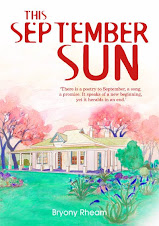
This September Sun to be launched in the UK in May


Parthian Books in the United Kingdom discuss their forthcoming publication, Bryony Rheam's novel This September Sun.

Other good news concerning This September Sun is that the book has been chosen as a set book in Zimbabwe for Zimsec 'A' level Literature in English.


Read on for a sneak preview of some of Parthian's 2012 titles...

http://www.parthianbooks.com/content/forthcoming-2012-titles

The rise of the book club continues this year, with Waterstone’s beginning their own online group, the continuing efforts of Richard and Judy, and the ongoing popularity of summer reads. Our forthcoming May title This September Sun would make an excellent book club choice. Winner of the Best First Book Award at the Zimbabwe Book Publishers Association awards in 2010, we anticipate every success for its British publication. This September Sun was suggested to us for publication by 'amaBooks, a Zimbabwean publishing house run by Brian Jones and Jane Morris, who is originally from Ebbw Vale and comes back to visit whenever she can.

This September Sun follows the story of Ellie, a shy girl growing up in post-Independence Zimbabwe, longing for escape from the confines of small-town life. When she eventually moves to Britain, her wish seems to have come true. But life there is not all she imagined. And when her grandmother Evelyn is brutally murdered, a set of diaries are uncovered – spilling out family secrets and recounting a young Evelyn's passionate and dangerous affair with a powerful married man. In the light of new discoveries, Ellie begins to re-evaluate her relationship with her grandmother, and must face up to some truths about herself in the process. The novel is set against the backdrop of a country in change, and Ellie – burdened by the memories and the misunderstandings of the past – must also find a way to move forward in her own romantic endeavors.

Not only is This September Sun a thoroughly enjoyable read, but Bryony Rheam also bravely addresses the political and social situation of White Zimbabwe from the 1940s to the present day, addressing current affairs relating to Mugabe’s rule and the history of what once was Rhodesia. The novel stretches back to describe Evelyn’s doomed marriage to a soldier, and subsequent move to Zimbabwe, his home country, after his death. The doom and gloom of the economic situation has certainly evoked some of the wartime spirit, and this is reflected in the current popularity of many of the novels – and serialisations of them – set in this time. We also anticipate there continuation of the literary trend for African writing. Author Bryony Rheam is based in Ndola, Zambia and Bulawayo, Zimbabwe. We hope that This September Sun will sit alongside novels such as Adiche’s Half of a Yellow Sun, but with a different and intriguing angle.