Thursday, May 31, 2012

Call for Submissions: Kwani? Manuscript Project


To celebrate the African novel and its adaptability and resilience, Kwani Trust announces a one-off new literary prize for African writing. The Kwani? Manuscript Project calls for the submission of unpublished fiction manuscripts from African writers across the continent and in the Diaspora. The prize seeks fresh, original work that explores and challenges the possibilities of the novel.

The top 3 manuscripts will be awarded cash prizes:
1st Prize: 300,000 KShs (equivalent to $3500)
2nd Prize: 150,000 KShs
3rd Prize: 75,000 KShs

In addition Kwani? will publish manuscripts from across the shortlist and longlist, including the three winning manuscripts, as well as partnering with regional and global agents and publishing houses to create high profile international publication opportunities.

Winners will be announced in December 2012 at the Kwani? Litfest.

For more information go to: http://manuscript.kwani.org/

Submission Guidelines:
•       Deadline 20th August 2012.
•       Word count 60,000-120,000 words
•       Submissions should be adult literary or genre fiction (in the sense of not being ‘children’s fiction’)
•       The work should be in English or ‘Englishes’
•       The manuscript must be ‘new’ in the sense that it is ‘unpublished in book form’ (we will accept previously published submissions if circulation has been under 500 copies and limited to one national territory)

More Success for This September Sun


'amaBooks cover

Parthian Books cover
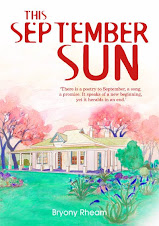
Bryony Rheam’s first novel This September Sun was published this week in the United Kingdom by Parthian Books. The novel has also recently been selected for ZIMSEC ‘A’ level Literature in English as a set book in the African Literature section until 2017. The novel was first published by ’amaBooks in 2009 and was chosen at the Zimbabwe Book Publishers Association awards as Best First Book in 2010.
Established in 1993, Parthian has risen to become one of the most respected publishers in Wales – and one with an international reputation for quality. Their authors have won many awards, including The Dylan Thomas Prize, The Betty Trask Award, the Wales Book of the Year, the Orange Futures Award, The Rhys Davies Prize and The Stonewall Award.
This September Sun will be available through many outlets across the United Kingdom, including Waterstones and Tesco. Pre-release orders for the book have already reached 500.
This September Sun is now available in several school book specialist outlets across Zimbabwe, including Baroda Trading, Best Books, Textbook Sales, Vignes and Z&N, as well as in The National Gallery shops in Harare and Bulawayo, Induna Arts, Tendele Crafts, Indaba Book Cafe, Harare Book Cafe, Avondale Bookshop, Tambira Gallery and Blackstones Books.

Tuesday, May 29, 2012

The Song of the Carnivores - World Premiere


The world premiere of Song of the Carnivores, featuring over 500 performers - choirs of schoolchildren from across Bulawayo as well as local and international musicians, took place at Bulawayo's Large City Hall on Thursday 24 May as part of the Bulawayo Music Festival. The music was composed by Richard Sisson and the event was compered by Petroc Trelawny.
Unfortunately, towards the end of the second performance that night, Petroc was called off the stage and arrested for volunteering his services towards the event without a work permit. He later fell while in police custody, fracturing his arm, and was transferred under guard to hospital on 26 May. On 29 May, it is reported that charges have been dropped and that he is to be released.
The concert is part of the wider Song of the Carnivores project, which brings together poetry, music, art and conservation. The first stage was a poetry competition, organised by 'amaBooks, some of the words from the winning entries being incorporated into the lyrics. A series of talks on the five carnivores - Lion, Leopard, Wild Dog, Hyena and Cheetah - followed. An art competition amongst schoolchildren is in progress, and a choral version of Richard Sisson's composition will be performed during the Intwasa Arts Festival koBulawayo in September.


Drew Shaw's video of the first performance can be seen on YouTube (http://www.youtube.com/watch?v=bWbqC74xrgU)

Wednesday, May 16, 2012

The Caine Prize, the Tragic Continent, and the Politics of the Happy African Story


Written by Carmen McCain in the Weekly Trust, 12 May 2012 (reproduced by permission)


On 23 April 2012, the chair of judges for the Caine Prize for African Writing, British-Nigerian writer Bernadine Evaristo wrote a blog post about selecting the soon to be released short-list: “I’m looking for stories about Africa that enlarge our concept of the continent beyond the familiar images that dominate the media: War-torn Africa, Starving Africa, Corrupt Africa - in short: The Tragic Continent. [… W]hile we are all aware of these negative realities, and some African writers have written great novels along these lines (as was necessary, crucial), isn’t it time now to move on?” Her critique of “stereotypical” African stories is similar to those made by other African writers, such as Kenyan writer Binyavanga Wainaina in “How To Write About Africa” and Nigerian-American writer Teju Cole in “The White Savior Industrial Complex.” Her opinion piece also invokes previous critiques of the Caine prize. Last year columnist Ikhide R. Ikheloa wrote, “Aided by some needy ‘African’ writers, Africa is being portrayed as an issues-laden continent that is best viewed on a fly-infested canvas.”
I share these concerns about dehumanizing images of Africa. When living and teaching in the U.S., I tried to “enlarge” my American students “concept of the continent” by emphasizing exciting current trends in African fashion, music, and movies, as well as the daily lives of ordinary people. My aim was much like that of Samantha Pinto, one of the other Caine Prize judges who blogged this week: “I hope as a teacher that my students learn to carry some of these beautifully crafted stories into a much larger conversation about Africa than the one that exists in mainstream American media.” My own scholarly interest in Hausa popular literature and film began precisely because I was enchanted by the love stories and tales of everyday life consumed by popular audiences but largely ignored by African literary scholarship preoccupied with grand narratives of the nation.
However, I admit that as I read Evaristo’s comments, I felt a tension between her impatient charge to “move on” past representations of suffering, and the context of currently living in northern Nigeria, where people leave their homes daily knowing that they could be blown up or shot at by unknown gunmen. Only two weeks ago in Kano, an attack on churches that met on Bayero University’s old campus killed dozens of university students and professors, the very cosmopolitan middle class often celebrated by writers abroad, and more bombs were found planted around campus. Suffering is not limited to bombs, as I was reminded when recently attending a church in Jos. Pointing to a dramatic decrease in tithes and offerings as evidence of hard times, an elder sought prayer for those who lost their livelihoods in the Plateau State’s demolition campaign of “illegal structures” and would lose more in the recently-announced motorcycle ban.
Kaduna-based writer Elnathan John wrote in a conversation with other African writers on Facebook (quoted by permission), “When I am told to tell a happy African story, I ask, why? Where I live, EVERYTHING is driven by fear of conflict, bomb blasts, and daylight assassinations unreported by the media. Every kilometer of road has a checkpoint like those in the Occupied Palestinian Territories. Now, I am a writer writing my realities. […]Our problems in Africa will not disappear when we stop writing about them.”
While not every place in Nigeria is bomb-torn and certainly not every story from as big and complex a continent as Africa must reflect such tragedies, a predicament remains that Kano-based writer Abdulaziz A. Abdulaziz identified in a Facebook conversation with me. While agreeing with Evaristo on the need to move past stereotypes, he wrote, “There is a dilemma here; what do Africans have to export again. For me, African contemporary artists have no better theme than corruption and bad governance as the main issues dominant in our everyday life[…]”
Elnathan John continued, “A lot of the Happy Africa story activists live outside the continent. Not that I begrudge them anything, but it is easier to dictate to people living a reality when you don’t know or live that reality. […] Every Sunday morning (in many Northern States), we expect a bomb or a shooting spree. People who live in Maiduguri even have it worse. Their entire lives are ruled by violence and chaos. Nigerians, like Zimbabweans (and many other African countries suffering decay and violence) do not have the luxury of Always writing about beach house romances. Our problems are too real, too present, too big to be wiped out from our stories.”
Thus, while we can all identify with Evaristo’s frustrations in how Africa is misread by the West, her first flawed assumption seems to be that African writers who write out of tragic settings are not writing of their own experiences but rather pandering to a Western audience that expects to hear about tragedy. To say we must “move on” past stories of hardship suggests to those who are suffering that their stories don’t matter—that such stories are no longer fashionable. Writers who live amidst suffering are in the unfortunate position of inhabiting an inconvenient stereotype. They are silenced by threats of terrorists inside the country and by the disapproval of cosmopolitan sophisticates outside.
Such literary prescription begins to feel like Dora Akunyili’s erstwhile rebranding campaign—a luxury of those who do not want to be embarrassed while abroad, which does little to solve the problems on the ground. Although Evaristo asks, “are too many African writers writing for the approval of non-African readerships”?, her admonition to avoid stories of suffering seems to be just as implicated in seeking the approval of  those “big, international markets in Europe and America”. Directly after she asks “to what extent does published African fiction pander to received notions about the continent, and at what cost?” , she argues “For African fiction to remain more than a passing fad on the world stage, it needs to diversify more than it does at present. What about crime fiction, science fiction, fantasy, horror, more history, chick lit?”
Now, I love science fiction, fantasy, historical fiction et al, and know of African writers, including Evaristo, who are doing exciting things with these genres, especially in African languages, but Evaristo’s focus on the “world stage” reveals her second problematic assumption—that the most important readers of African literature reside outside of Africa. It is a reminder that though the Caine prize is awarded to “African writing”, it is still based in London.
Last week, overwhelmed by the attacks on Bayero University, I printed reader responses to an earlier article on film rather than writing about the tragedy. Afterwards, one of my readers chastened me for writing about film rather than about what the “army are doing to our people.” While, like Evaristo, I defend my right to talk about a diversity of subjects, the comment reminded me that there is a large reading public here in Nigeria looking for writing that is relevant to their lives. It also made me think of my dear friend, Hausa novelist, Sa’adatu Baba Ahmad’s refrain that “literature is a mirror to society.” That every conversation these days seems to return to bombs and shootings does not mean that people do not laugh or joke or gossip or dream or love.  Indeed, I believe that the best writing captures the humour, the humanity, and the gossip alongside the backdrop of suffering.
So, by all means let us, as Evaristo appeals, have new genres, new styles, that are “as diverse as, for example, European literature and its myriad manifestations.” Let us have “thousands of disparate, published writers, with careers at every level and reaching every kind of reader.” But let us also be true, let us be relevant. And let us not, in pursuit of a global recognition, erase the voices of ordinary people, who so often bear up under immense suffering with grace and humour. For it is these stories of survival that give us the most direction in how to navigate an increasingly terrifying world.


For further discussions on the issue, please look at http://carmenmccain.wordpress.com/

Tuesday, May 1, 2012

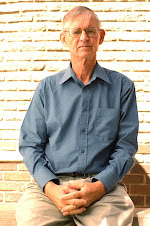
Another Award for John Eppel

John Eppel has won the Literature Award at the 2012 Zimbabwe Achievers Awards, announced in London on Saturday 28 April, for his short story Triptych.
John won the MNet Prize for his first novel DGG Berry's The Great North Road and the Ingrid Jonker Award for his first poetry collection Spoils of War. His second novel, Hatchings, published by 'amaBooks in 2004, was shortlisted for the MNet Prize and was selected for the Times Literary Supplement series on 'the most significant novel to have come out of Africa'.
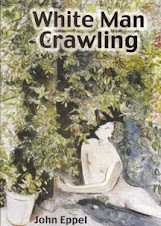
His other publications with 'amaBooks include the novels The Curse of the Ripe Tomato and The Holy Innocents, the short writings collections The Caruso of Colleen Bawn and White Man Crawling, and his most recent publication, Together, stories and poems by John and the late Julius Chingono.
John has also had stories and poems in Short Writings from Bulawayo I, II and III and in Long Time Coming: Short Writings from Zimbabwe, five poems in Intwasa Poetry and a short story in Where to Now? Short Stories from Zimbabwe. His work is being increasingly studied at postgraduate level in universities in Zimbabwe and elsewhere.
Prior to the establishment of 'amaBooks, we were involved with John in the publication of John Eppel Selected Poems 1965-1995, all proceeds from which were donated to help establish the children's charity Childline in Bulawayo.

Saturday, April 28, 2012

Togara Muzanenhamo to represent Zimbabwe at "the biggest gathering of poets in world history".


Togara Muzanenhamo has been chosen to represent Zimbabwe at what is being called the biggest gathering of poets in world history, the 2012 Poetry Parnassus in London, where it is hoped a poet will participate from each of the countries taking part in the London Olympics. Togara studied in France and The Netherlands. After his studies he returned to Zimbabwe and worked as a journalist, then moved to an institute dedicated to the development of African screenplays. Muzanenhamo's first collection of poems, Spirit Brides, is published by Carcanet Press. He is based on his family farm near Norton outside Harare. Prior to the sad death of Julius Chingono and the publication of Together, the collection of stories and poems by Julius and John Eppel, Togara was of considerable assistance to 'amaBooks in communicating with Julius and in the organization of Julius’ poems.
From Ireland's Nobel laureate Seamus Heaney to Kim Jong-il's exiled former court poet Jang Jin Seong, hundreds of poets from around the world are set to gather on the banks of the Thames this summer in an attempt to recreate the poetic spirit of the ancient Olympic Games.
Thousands of nominations were received from the public for the best poet in their country, with a panel including the poet Simon Armitage and other experts whittling this down to find one poet from each of the 204 competing Olympic nations. One hundred and forty poets, from Kazakhstan's 24-year-old Akerke Mussabekova to 83-year-old Anise Koltz from Luxembourg, have already confirmed attendance at the festival.
The writers will appear at Poetry Parnassus, a week-long series of poetic events at the end of June led by the Southbank Centre's artist-in-residence Armitage and artistic director Jude Kelly and inspired by epinicians, poetry commissioned as part of the ancient Olympic Games in Greece. It will see poets, rappers, storytellers and praise singers reading their work in more than 50 languages, from Haitian creole to Maori, with the event to open as 100,000 poems are dropped from a helicopter on to the waiting crowd. Many of the poets will be travelling to the UK for the first time.
Heaney was picked for Ireland, while his fellow Nobel prize winner Wole Soyinka is representing Nigeria. Former poet laureate Kay Ryan will be speaking for the US, Bill Manhire for New Zealand and John Kinsella for Australia. Lesser-known names at the festival range from North Korea's Jang, a former court poet to Kim who fled the country after becoming disillusioned with the regime, to Albania's Luljeta Lleshanaku, who grew up under house arrest as her parents opposed the former communist regime in the country. Nicaragua's poet Gioconda Belli was forced into exile in Mexico after time as a Sandinista revolutionary, while Didier Awadi, representing Senegal, is a rapper and political activist.
"Poetry's a broad church and the further you go globally the broader it is. Some countries' entire poetic tradition is in spoken word form and we wanted to represent that variety," said Armitage. "There will be everything from the learned literary academic poets to one writer who describes himself as a spoken word and tattoo artist, which would be a dangerous combination after a few drinks. And there are voices of protest and dissent – at the outset we knew we wanted a poet from North Korea but we imagined we would end up with a puppet poet sent by the government, whereas in fact we have got a dissenting voice who used to be a court poet and made his escape."
Each poet will also be contributing a poem to an anthology, The World Record, out on 26 June from Bloodaxe Books. Poetry Parnassus is part of the finale of the Cultural Olympiad, and will take place at the Southbank Centre in London from 26 June to 1 July.


http://www.guardian.co.uk/books/2012/apr/17/poetry-parnassus-poets-olympic-nation

Monday, April 9, 2012


Four of the five shortlisted writers for the Literature Award at the 2012 Zimbabwe Achievers Awards had stories published in the 'amaBooks collection Where to Now? Short Stories from Zimbabwe.
Novuyo Rosa Tshuma was first published by 'amaBooks in Echoes of Young Voices, and subsequently in Silent Cry: Echoes of Young Zimbabwe Voices.
Mzana Mthimkhulu's short stories have appeared in each of the earlier 'amaBooks short writings collections: Short Writings from Bulawayo I, II and III, and Long Time Coming: Short Writings from Zimbabwe.
John Eppel's publications with 'amaBooks include the novels The Curse of the Ripe Tomato, The Holy Innocents and Hatchings; the short writings collections The Caruso of Colleen Bawn and White Man Crawling; poems in Intwasa Poetry; and poems and short stories in each of the books in the Short Writings series. His latest publication is the collection of short stories and poems with the late Julius Chingono, Together.
Barbara Mhangami-Ruwende's first published story is that in Where to Now? Short Stories from Zimbabwe.

The fifth shortlisted writer for the award is Lloyd Matowe. The winner will be announced at the Zimbabwe Achievers Awards ceremony on 28 April.