Friday, January 25, 2019

This September Sun at the Cairo International Book Fair

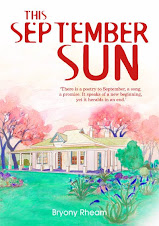
LOCAL author Bryony Rheam’s novel, This September Sun, was launched at the ongoing Cairo International Book Fair on Wednesday after it was translated into Arabic, NewsDay Life & Style has heard.


The novel was first published in 2009 by amaBooks in Bulawayo, while a second edition was published in 2012.

Brian Jones, an amaBooks Publishers director, said the book was published by an Egyptian publishing company Al Arabi, which launched 43 other titles at the book fair.
“Al Arabi will also distribute the Arabic version of the book across the Arab world, where the English version is already available through the Jordan-based website jamalon.com. The rights to the novel have been acquired for Kenya, Tanzania, Uganda and South Sudan by Longhorn Press, and for the United Kingdom by Parthian Books. The book topped the United Kingdom Amazon charts, as an ebook, in June 2013,” he said.
This September Sun won the Best First Book Award at the Zimbabwe Book Publishers Awards and was a Zimbabwe Schools Examinations Council ‘A’ Level Literature in English setbook between 2013 and 2017.
Egyptian publisher, Sherif Bakr described This September Sun, which is one of the longest novels at the fair, as “huge, but beautiful”.
Rheam is an ardent fan of Agatha Christie, a passion inherited from her grandmother. As testimony to this enthusiasm for Christie, she won the international Write Your Own Christie competition, which involved writing a chapter of a novel in the style of Agatha Christie, following on from chapters of previous winners.
Her eagerly anticipated second novel, All Come to Dust, is undergoing final edits before being published by amaBooks in Zimbabwe in a few months’ time.
In 2018, Rheam was awarded a Morland Writing Scholarship to support her while she was writing her third novel, The Dying of the Light, set in Bulawayo just as some of her previous novels.

This article, written by Sharon S Sibindi, appeared in NewsDay on 25 January 2019.
https://www.newsday.co.zw/2019/01/local-author-at-egyptian-fair/


Wednesday, January 16, 2019

TL Huchu's Speculative Fiction

By Stan Mushava
https://www.thestandard.co.zw/2019/01/06/tl-huchus-speculative-fiction/
Tendai Huchu
The Zimbabwean canon is not traditionally known for its speculative fiction, but TL Huchu, Ivor Hartmann, Masimba Musodza, Tendai Machingaidze and others have been spreading their footprints in space, the underworld and dystopian futures for a while now.
Late last year, the third volume of the Hartman-curated Pan-African speculative fiction anthology, Afro-SF, dropped, featuring the stories, Njuzu by Huchu and The Interplanetary Water Company by Musodza.
Although the trio boasts notable achievements in the genre -- Musodza's Shona science fiction novel, Muna Hacha Maive Nei, Huchu's 2018 Nommo Award-winning short story, The Marriage Plot, and Hartmann's several gongs and proprietorship of speculative fiction outlets -- it is Huchu's thread that I have been able to sit down to recently.
Who is TL Huchu, by the way? A quick investigation shows TL distancing himself from "his evil twin, Tendai," the author of The Hairdresser of Harare as well as The Maestro, The Magistrate and The Mathematician. But a visit to the registrar shows that the Tendai and TL are one and the same twin.
 It's all a speculative ruse. TL, I assume, is simply Mr Huchu's genre fiction cover. His stories have appeared in Space and Time Magazine, Interzone, Ellery Queen Mystery Magazine and a lot more spaces.
Of the speculatively inclined stories, I have only been able to read The Library of the Dead in the 2017 amaBooks anthology Moving On and Other Zimbabwean Stories, The Sale in the first Afro-SF anthology, and The Marriage Plot and HostBods in the Omenana journal.
I inboxed him to understand where his new thread is going. Although he is interested in different genres, Huchu believes science fiction is an accurate reflection of the world today than is generally credited. "I think the world we live in is already more 'sci-fi' than anything fiction can conjure," he tells the columnist.
"You have ancient religions co-existing with touchscreen phones; cutting edge technology broadcasting signals at the speed of light, while people read news stories about money-spitting snakes; rovers landing on Mars, just as folks in my rural home farm with ox-drawn ploughs. My fiction is but a pale simulation of an infinitely more complex world."
Some of his pieces are, in fact, driven by economic and political verisimilitude. In The Sale, an Asian economic giant is overseeing a hostile takeover of this country, thanks to a bad debt. The citizens are routinely dozed into docility, unable to resist.
Although this story came out a few years back, it is only recently that we have witnessed more sustained discussion about the implications of countries mortgaging national assets and resources, sometimes for prestige projects of questionable developmental value.
When I erroneously credit Huchu as the first Zimbabwean writer to get a speculative fiction-specific award for his Marriage Plot, he is quick to register disapproval.
"I have a particular aversion to the cult of the 'first xxxx', unless it actually refers to something significant. When I see someone called the 'first xxxx' for something trivial, I think it reveals a culture of mediocrity as opposed to the celebration of real merit," Huchu said. 
"Genres been here for hundreds of years, and I'm not the first at anything, rather, I'm remixing pre-existing forms in the same way a deejay doesn't make music, but in the course of his set enables the listener to approach the music in a different way, and [if the deejay is any good] understand it in new ways."
In The Marriage Plot, Huchu's future self lands to advise him not marry a certain woman lest he mess forever-after up for both of them. Another split-persona trick. The only problem with Mr Future Self is that his extra-terrestrial wisdom changes by the minute, so that he comes back two more times with conflicting prognoses of married life, first with missing teeth (presumably at the hands of a mean-spirited alternative bride), second with an unflatteringly rearranged nose.
Whether they made peace with the occupational hazards of the marriage plot, and whoever they ultimately married, Huchu's selves at least got an award for their pains. Hopefully, Huchu's 2017 Nommo Award sparks more Zimbabwean activity in the genre.
In The Library of the Dead, mapped around patriotic Harare, the protagonist falls in love with a sentient book in some underworld at the national shrine. Yeah, bizarre as it gets. Anyway, it all ends badly in a passion suicide. The thing is you never know what to believe in literal suicide reports, much less literary ones.
I ask about the miracles of the righteous twin's conversion to science fiction.
"I didn't covert. I was reading this stuff throughout primary and secondary school. Spec-fic covers the whole gamut from the tsuro nagudo tales your grandma tells you about, all the way to pulp fiction, and, I dare say, even fables from the big book your priest/pastor shoves down your throat every Sunday. I'm not sure it's brought me any 'miracles', but it's a great petri dish for playing with different ideas," Huchu said.
He is currently working on an urban fantasy novel called Ghostalker.
"It's a delightful romp with a girl who talks to ghosts for a living, villainous villains like the Midnight Milkman, childhood for sale, and scientific magic. I'm having an awful lot of fun with it and I hope to have the latest draft back with my agent soon."

Moving On and Other Zimbabwean Stories and The Maestro, The Magistrate and The Mathematician are available through amaBooks in Zimbabwe, Parthian Books in the United Kingdom and the African Books Collective elsewhere.


-->

Friday, December 21, 2018

The front cover of the Arabic version of 'This September Sun'


The front cover of the translation into Arabic of Bryony Rheam's This September Sun, to be launched by Al Arabi Publishing and Distribution at January's Cairo International Book Fair.

Monday, December 17, 2018

'This September Sun' in Arabic


Bryony Rheam's novel This September Sun has been translated into Arabic by Al Arabi Publishers and will be launched on 23 January, 2019, at the Cairo International Book Fair. It is going to be one of our longest fiction books this year at the fair. We are excited at the prospect of the Arabic cover, which has not been finalised.


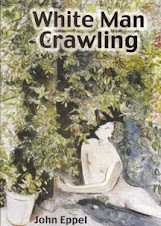
“White Man Crawling”: Time, Race and Power in John Eppel’s Depiction of Middle-aged and Elderly Whites during the Zimbabwean “Crisis”

This article, by Thabisani Ndlovu in the Journal of Literary Studies, applies Bakhtin’s concept of the chronotope, in conjunction with a rights-reading approach, to John Eppel’s fiction, with particular reference to Eppel’s depiction of middle-aged and elderly whites during the Zimbabwean “crisis”. Taken at one level to mean the organisation of value-laden space-time in a literary text, and also at another level, the spatio-temporal relationship between a text and its socio-historical context, the chronotope emerges as a useful concept in analysing polarised racial relationships that characterised Zimbabwe during its “crisis” period. While the Chimurenga chronotope is a cyclical representation of time whose racialising strategy depersonalises whites as constant foes and strangers rendered in a permanent war narrative, Eppel responds in his fiction, particularly through the chronotopes of ageing and reversal, by delineating an array of white subjectivities characterised by physical infirmity and loss of socio-political power, to challenge the homogenisation and vilification of whites.


The full article appears in the Journal of Literary Studies, Volume 34, 2018 - Issue 4: Exploring the Dynamics of Time in Literary Texts, pages 80-96 
(https://www.tandfonline.com/doi/abs/10.1080/02564718.2018.1538081)

Thabisani Ndlovu, of Walter Sisulu University, carries out research in literary studies and human rights, particularly in the areas of race, gender and ethnicity. As a creative writer, he has had stories published in most of the amaBooks Short Writings series and translated the anthology of short stories Where to Now? into Ndebele as Siqondephi Manje?.


White Man Crawling, The Caruso of Colleen Bawn and other amaBooks publications of John Eppel are available through amaBooks or, outside of Africa, through www.africanbookscollective.com.

Wednesday, December 12, 2018

Why I Read: Mzana Mthimkhulu

As an eight year old, my hero was the swashbuckling picture magazine jungle man Samson the Lion Heart.  I believed that when I grew up, like my hero, I was going to be: ‘strong as an elephant, brave as a lion and fast as a striking mamba.’

So, whilst waiting to grow up, I read and studied everything my hero did. The two weeks I had to wait for the next instalment of True Africa magazine was too long. I filled in the time with other comic magazines – Dandy, Beano and The Archies. Today I often cringe with embarrassment when I read the lofty names of the writers read by other writers in their youth. Not a single classic writer features in my early reading list.

One day after glancing at the first picture of a story in Dandy I made a painful decision – it was time I stopped reading comics. The moment I saw the picture I closed my eyes and recited the whole story. I had read it ten years earlier and still recalled it. The Dandy writers must have believed that the kids who had read the earlier story were no longer reading comics and so it was safe to reprint it. Like Samson after defeating a villain, it was time I moved to the next adventure.

Fortunately by then I had broadened my reading diet. From Njube Library, I borrowed books by the Drum generation of the fifties. I now was reading books by Ezekiel Mphahlele, Can Themba, Bloke Modisane and Lewis Nkosi. These writers spoke to my experience as a boy growing up in the townships. I notice that the writers are now sometimes described as ‘classic.’ May I therefore raise my pedigree as a writer?
For old time sake, I once went  back to Njube Library. I perused and read a few books. A ten year old stared at me in awesome wonder. ‘Look,’ he said to a friend, ‘an adult in the library.’

Recently I renewed my membership at the British Council Library. ‘So, when did you first join the library?’ the librarian asked me.  ‘We may still have your details.’
‘I first joined in 1983 in Harare, and then transferred to Bulawayo library in 1989.’
‘Oh, then you have to give us your details again. I was born in 1996.’

I wonder why I’m taking so long to state why I read. I read because for me it is the greatest source of entertainment and information. Books are my best friend. I laugh, cry, smile and curse in the world of books. Further, writing is a profession in which you are forever an apprentice. I read so that I know what and how others are writing. I then try to adapt the best and avoid the bad.

Mzana Mthimkhulu.  11 December 2018 


Mzana Mthimkhulu was born on Martin Luther King’s twenty-fifth birthday and was educated at Matshayisikhova and Kuredza Primaries, Inyathi Secondary, Edinburgh College and the then Polytechnic of North London. His short stories have appeared in the amaBooks anthologies Short Writings from Bulawayo III and IIILong Time ComingWhere to Now?Siqondephi Manje? and Moving On, and his short stories and poems have appeared in other anthologies, newspapers and magazines in Southern Africa, United Kingdom and online. An enthusiastic culture activist, Mzana is also a newspaper columnist and a playwright.

Mzana and his wife Naume have three biological children and several other traditional ones. 

Mzana Mthimkhulu has a blog ourevolvingculture.home.blog  


Wednesday, November 21, 2018

This Mournable Body available in Zimbabwe


Tsitsi Dangarembga's novel This Mournable Body is now available in Zimbabwe through amaBooks.

In this third book in the series, Tsitsi Dangarembga returns to the protagonist of her acclaimed first novel, Nervous Conditions, to examine how the hope and potential of a young girl and a fledgling nation can sour over time and become a bitter and floundering struggle for survival.


"Heartbreaking and piercing. ... This is a smartly told novel of hard-earned bitterness and disillusionment." - Publishers Weekly 


"A haunting, incisive, and timely glimpse into how misogyny and class strife shape life in post-colonial Zimbabwe." - Kirkus


Available in Bulawayo at Book and Bean, Dusk Home and National Gallery, elsewhere via amabooksbyo (at) gmail.com.