Showing posts with label Ake Festival. Show all posts

Wednesday, November 16, 2016

5 Minutes with Tendai Huchu

Interview with Femi Aregbesola for Nigeria's pmenaija.com

Tendai Huchu is a Zimbabwean author best known for his novels The Hairdresser of Harare and The Maestro, The Magistrate & The Mathematician. He is heavily involved in the annual Ake Arts and Book Festival which is happening at Abeokuta from the 15th to the 19th of November, 2016.


Hello Tendai, introduce yourself
I am a dude from a small mining town called Bindura in Zimbabwe, who happens to have written two novels, The Hairdresser of Harare and The Maestro, The Magistrate & The Mathematician (the latter is published in Nigeria by Farafina).

When did you know, you would become a writer?
By my early 20s I sort of knew I wanted to produce stories to engage with ideas that fascinate me. I never called myself a writer, I just wrote, and, for me at least, the practice is more important than any labels that can be attached to it. I only started using the term for myself long after other people had started calling me that.
What would you say inspires your writing process?
Life inspires me, the act of turning the mundane and extraordinary into art is a great source of pleasure. I also draw energy from reading and engaging with the works of other writers. I have said before I consider myself 99% a reader and only 1% a writer.
What has been the highlight of your career thus far?
I honestly can’t point to a single thing, but I believe the ultimate triumph resides in the will to get up in my garret most mornings and sit at my desk for hours creating. The act, the doing of the thing, the solitary striving that happens when no one else is watching, is the most important part of what I do. What matters to me is the art form, anything else outside of that is mere noise.
Being part of the Ake festival, what do you hope the festival achieves in enabling reading in our communities?
Lola Shoneyin and her team have done a fantastic thing in bringing together so many artists and readers together in a space that encourages the exchange of ideas. Anything that makes literature more visible at the forefront of public consciousness is a great thing, particularly in a digital age where there are so many other distractions. The festival actively engages with schools and I think this dimension is very, very important, because if we can win over the kids then we can have a base to grow in the future. I am a guy who makes up things for a living, and I can only marvel at the sort of organizational challenges that the guys at Ake face to bring about something of this magnitude and complexity. We should all celebrate this remarkable achievement.
What impact do you hope your books and writings have in Africa and the world at large?
I am skeptical of claims that literature still has any overt influence in society. Zimbabwe pre-1890 was not a literate society and I view the written word as an alien art form, just one that I happen to have adopted and am passionate about. I can only hope that my work, at a basic level, gives some pleasure to some readers – anything outside of that is a bonus.
Who are your role models in the literary sector?
Writers of all stripes (novelists in particular) make for very poor role models. If you are interested in my creative influences, the list is too long to mention, but chief among them is the Russian author Fyodor Dostoevsky.
Words of advice to young and aspiring writers?
Do your own thing. Do not care too much about what other people think or what they are doing. This thing is a solo-sport – you alone versus the white blank page, day after day. Love what you do. Dare to be different. Fail, fail and fail again, you have nothing to fear. May the Force be with you.


Monday, November 14, 2016

Zimbabwean Literature takes the stage in Nigeria

Tendai Huchu at Africa Writes (BAS News and Events)


NoViolet Bulawayo (courtesy of Ake)
Zimbabwean literature is well represented at this year's Ake Arts & Book Festival, which takes place this week in Akeokuta, Nigeria, with Zimbabwean writers Tendai Huchu, NoViolet Bulawayo and Panashe Chigumadzi taking part. Ake Festival is ‘five days of cultural immersion'. Its aim is to develop, promote and celebrate creativity on the African continent. This, the fourth edition, will feature 18 authors in 'Book Chats', as well as panel discussions, interviews, workshops, concerts and a night of poetry. Other writers taking part include Ngugi wa Thiong'o, Helon Habila, Chinelo Okparanta, Lidudumalingani, Teju Cole, Yewande Omotoso and Zukiswa Wanner. Lidudumalingani, a South African, won this year’s Caine Prize for African Writing with his story, ‘Memories We Lost’. The Caine anthology is published in Zimbabwe by amaBooks.

Ngugi wa Thiong'o (courtesy of Ake)
A panel discussion, moderated by academic Dr Ranka Primorac, will consider 'From the Land of the Flame Lily: New Fiction from Zimbabwe', with panellists Tendai Huchu, Panashe Chigumadzi and NoViolet Bulawayo. NoViolet Bulawayo is well known, through winning the Caine Prize for African Writing and through her Booker Prize shortlisted novel We Need New Names, while Zimbabwe-born Panashe Chigumadzi's debut novel Sweet Medicine has recently been published in South Africa. Tendai Huchu's debut novel The Hairdresser of Harare achieved international success, and his second novel The Maestro, The Magistrate & The Mathematician has already been published in Zimbabwe, the United States, United Kingdom, Germany and in Nigeria. Ranka Primorac is a lecturer at the University of Southampton and is the author of The Place of Tears: The Novel and Politics in Modern Zimbabwe.

Each of the writers above will talk about their recent work in 'Book Chats' that take place throughout the festival. As well as the panel discussing Zimbabwean fiction, Tendai Huchu will take part in a panel on 'Flying Dreams and Alien Nightmares: Speculative Fiction in Modern African Writing'.  


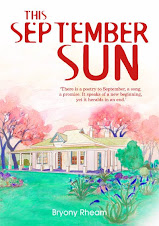
Last year, Bulawayo-based writer Bryony Rheam was at Ake. Her debut novel, This September Sun, has been published in Kenya, Tanzania and Uganda, as well as in Zimbabwe and the United Kingdom. There are a growing number of literary festivals across Africa bringing readers in contact with the writers.

Friday, May 8, 2015

Bryony Rheam interviewed on Courrier des Afriques


http://www.courrierdesafriques.net/2015/05/interview-bryony-rheam-africa-is-far-far-behind-in-terms-of-care-of-the-environment

Bryony Rheam was born in Kadoma, Zimbabwe. Her first novel, This September Sun, was published by amaBooks in 2009. And she is currently living in Ndola, Zambia.

Ake Review: Does African literature exist?
Yes, I think there is a type of literature that would fall under this category, but some books are not always easy to categorise!  Perhaps it’s any novel where the perspective is an African one – the novel may be set in New York or Harare.  Unfortunately, categories tend to be quite limiting at times.  Labels suggest expectations.  For instance, I don’t particularly like science fiction so I may not read a book found in this section of a book shop.  I am making a judgement based on my expectations of that genre.  However, my expectations are affected by what is probably a limited experience of this type of writing.  If I had seen the book in another section, I might have decided to read it.

Name one privilege of being a creative person?
I think you are able to see the world in a slightly quirky mode.  It can often lend you a humorous outlook on life.

Do you engage in any rituals to stimulate creativity?
Washing up, tidying up and any kind of cleaning in general.  I don’t know why I find this works, but I do feel more able to sit down and carry on with my writing afterwards.  Chaos doesn’t help me!


If there is reoccurring theme in your creative work, what is it and why is it important to you? 
Loneliness, probably, especially as one gets older.  I think the world can be a very lonely place for the elderly and it tends to be forgotten that they were young once and that they also have a story to tell. Getting old is one of the most cruel aspects of life, not least because you become invisible.


You’ve been invited to join a handful of other African authors on a special literary performance on the moon. What say you?
I’m not sure about the moon, although I am certain it would be incredibly pretty.  Maybe, as we watch the Earth spinning so far away beneath us, we will realise how ridiculous all these categories that humans divide themselves into really are!

If Africa was a fruit, which one would it be and why?

Probably something like a pomegranate, which doesn’t look too enticing from the outside, but which is rich and red and juicy inside.  I’ve lived in Africa most of my life, but I know of other people who have found it hard to adjust to life here first of all and then don’t ever want to leave!

Name two books you think every African should read and why?
Things Fall Apart by Chinua Achebe, because I think he looks at the advent of colonialism in a very interesting way, showing how insidious colonisation was; The Grass is Singing by Doris Lessing, because it is just such a moving book which highlights the tension between black and white people at that time in history.

What invention do you think would change the lives of Africans?
Litter bins!  I just don’t understand how people can live with litter all around them and not do anything about it !  Africa is far, far behind in terms of care of the environment.

So, you’re not reading or writing, what are you doing?
Gardening or spending time with my children. I love the 1920s, 30s and 40s so I watch any film set in those ages.

What’s your Africa?
Warm, friendly people, long journeys on dusty roads, beautiful flowers that explode out of nowhere, heat and rain and the crickets at night.


Ake Review (Nigeria)


Saturday, March 7, 2015

Bryony Rheam Interviewed on Steppes in Sync

THIS KADOMA, ZIMBABWE-BORN NOVELIST, MOM OF TWO, TEACHES US THE VALUE OF NETWORKING EACH TIME SHE CROSSES INTRA-AFRICAN BORDERS

MARCH 2, 2015 STEPPES IN SYNC

No one ever expects to actually know a writer. Well, not a good writer anyway. Writers are faraway people who sit in some distant land penning novels surrounded by the mists of secrecy. A writer is not your next door neighbour, nor your colleague at work or your customer buying a litre of milk and a loaf of bread.

As part of our African Literature as Creative Enterprise series, Brian Jones and Jane Morris of amaBooks talk to Bryony Rheam whose short stories they have published quite a few.

Last year Kadoma, Zimbabwe-born Bryony travelled north-west to Abeokuta, Nigeria to talk about her This September Sun [Get your copy] at the Ake Festival, one of Africa’s largest literary events. Two and a half years before that, back in May 2012, this novel by a well-travelled Zimbabwean — currently residing close to the border with DRC in Solwezi, Zambia — topped the Amazon Kindle sales and is now an A level set book for schools in Zimbabwe.


Here is how Bryony Rheam describes her experience of work on the novel, Zimbabwe being gripped by a complete economic and political chaos at the time:

Researching the past, even if it is only the 1940s is not as easy in Zimbabwe as it may be in a place like Britain.

..and marketing it at a literary event almost a decade afterwards:

What I found was that many people bought my book after hearing me discuss it.

Your debut novel This September Sun has done well, being chosen as a set book for 'A' level study in Zimbabwe and selling well as an ebook in the United Kingdom. But you are still working as a teacher. Do you think it is possible for a Zimbabwean novel writer to make a living from writing while being based in Africa, or is moving to the United Kingdom or the US to promote your work the only option?

From what I gather, it is also difficult to be a full-time writer in a country such as the UK. I don’t think it is necessary to actually move countries; it’s really a question of getting my work on the market. In some ways, that may be easier from Africa where there is less competition. However, I have discovered that connections are very important in the writing world and these may be easier to find in more cosmopolitan places such as London.

What is the biggest barrier to your writing?

Having to have another job is definitely a barrier because it is so time-consuming.

We have noticed that a number of African writers are diversifying into genres such as sci-fi and romance. What is you view on this?

I think it is great. The African venture into different genres is long overdue. Many people feel that African literature is a little boring or stuck on the same old themes. They don’t see themselves reflected in the writing so I feel more people in Africa would read African novels if the themes were diversified.

In the past year, you have been a participant in the Caine Prize workshop in Zimbabwe and in the Ake Festival in Nigeria. Has either of these raised your profile as a writer? Are there ways in which such events could be improved to help raise your profile, and help sell your writing?


Yes, I think being invited to both these events has helped raise my profile as a writer. They are good ways to network and meet other writers. If your name comes up a couple of times, people remember it and it might make them reach for your book the next time they see it on sale, thinking ‘Oh, I’ve heard about her.’ I think being invited to these events has also made people in my more immediate environment sit up and take notice of me. The students I teach were quite impressed, although some of them thought I was going to Nigeria to star in a Nollywood movie!


There are a number of new writing prizes being introduced on the African continent. Do you see this as a positive development?

Yes, I think the prize money helps authors to be self-sufficient and dedicate themselves to their writing. It also elevates the art of writing above the norm. I suppose there is a danger that these prizes will become too commonplace, but I think we are a long way from that at the moment!

Do you think that collaborations between writers from different regions of Africa help to promote an awareness of common interests and experiences?

Definitely. It’s great to meet writers from all over Africa and exchange stories and experiences. I think many writers face the same challenges within the publishing industry. For example, many writers feel the West expects a type of story from Africa. For black writers it may be one of poverty and hunger; white writers are usually confined to memoir and nostalgia. [See report citing similar stereotyping in Darwin, Australia’s northernmost city]

What writers would you consider have influenced your writing?

I love Virginia Woolf and F Scott Fitzgerald for their flowery, descriptive prose. It’s so beautiful and engrossing and I’d love to be able to write like that. I also love Agatha Christie, who is completely different in her style of writing. She concentrates much more on plot. I like the puzzles that she creates and trying to outwit her. An author can be very manipulative, which I like. The Murder of Roger Ackroyd is a good example of that.

What is the last book you read?

I recently finished The Mysterious Affair at Styles, which I was given for my birthday last year. It is Agatha Christie’s first novel and quite different to her later ones. At this stage I think she still belonged to the late Victorian age – the novel has echoes of Conan Doyle. Christie was a prolific writer who ushered in the modern crime novel as we know it today.

Who is your favourite fictional character and why?

It’s definitely Nick, the narrator in The Great Gatsby. I was in love with him by the end of the novel! Why? He is perceptive and sensitive and he sticks by Gatsby when everyone else deserts him. While there are many Daisys and Toms, and even Gatsbys, there aren’t many Nicks in this world!

What are working on at the moment?

I am currently working on a crime novel which is set in Bulawayo at the present time. An affluent white woman is murdered in her home and various characters are drawn into the investigation for different reasons. I’d like to think of it as a philosophical detective story. Each character has some problem that they have to come to terms with or work through. It’s been great writing it and I have learnt a lot about the process of writing a crime novel.

This September Sun can be bought from:
African Books Collective, USA
amaBooks, Bulawayo
Amazon, UK
Amazon, USA
Baroda, Harare
Best Books, Bulawayo
Best Books, Harare
Blackstone Books, Harare
Book Cafe, Harare
Clarkes, Cape Town
Indaba Book Cafe, Bulawayo
Independent Publishers Group, USA
Induna, Bulawayo
Innov8, Harare
National Gallery, Bulawayo
National Gallery, Harare
Parthian Books, UK
Renaissance Wellbeing Clinic, Ndola, Zambia
Tambira, Harare
Tendele, Bulawayo
The Figtree Cafe in Kabwe, Zambia, the birthplace of the South African best-selling novelist Wilbur Smith
Thurbas, Victoria Falls
Vignes, Bulawayo
W H Smith, UK
Waterstones, UK
Xarra, Johannesburg

Z&N, Bulawayo


From steppesinsync.com


Friday, January 23, 2015

Bryony Rheam: The Ake Festival 2014: Meeting Friends and Making Contacts

Africa is a big place.  Really big.  When you fly over it, you get a sense of its immenseness; everything from cities to mile upon mile of open ground.  In turn, it is easy to feel very small and insignificant, a mere dot on the landscape.

As a writer in Africa, it is also easy to feel a sense of that aloneness.  I live in a small mining town called Solwezi in north-western Zambia.  If there are any other writers here, I certainly have not met them and I am not sure how I would.  There are no writers’ groups advertised, no literary events take place - and no one seems to be particularly perturbed. After all, why should they be?  Writing is a solitary job, isn’t it?  It’s just you and your notepad or your laptop.  What else do you need?
I am sure there are many writers who do write in isolation, either through circumstances or choice.
 The stereotypical writer is something of a recluse who refrains from talking about their work or giving interviews and generally detests the limelight.  In many ways, I fit this category.  I am naturally shy, I feel embarrassed talking about myself in anything but a self-effacing manner and I tend to introduce myself as a teacher rather than as an author.  However, more and more these days it is incumbent upon the author to organise their own publicity.  It is necessary to have a blog and a Facebook page and Twitter account and to use these for publicising one’s work.

Again, sitting in small town Solwezi, it is difficult to know who reads this information besides friends and family and maybe a one-time school mate who has wondered what happened to you in the last twenty years and googled your name just for fun.  A lack of bookshops means that is difficult to read the works of other authors; ironically, it is often more difficult to find books by African writers than it is by Western writers.

I was therefore quite excited to be asked to the Aké Arts and Book Festival in Abeokuta, Nigeria, which was held in November of last year.  An all-expenses paid trip was offered in return for me participating on two discussion panels. My only reservation was that I was so out of touch with contemporary African writing that I would not be able to say very much.  I must also admit I feared that every discussion would degenerate into the rather worn ‘What is African Literature?’ question that seems to occupy so much time and debate.

However, I was pleasantly surprised.  The discussions were interesting and were an excellent way of promoting my work.  Aké offers a bookshop with a fairly comprehensive range of books on offer, yet for someone browsing for an interesting book, what is going to make one stand out more than the other?  What makes a book look more interesting than the rest?  What I found was that many people bought my book after hearing me discuss it.  I was also quite surprised at how many people approached me after the discussions to talk about issues that I had raised, especially after the second panel I was on, entitled Celebrating Otherness in Modern Africa.

It was great meeting other writers as well – talking about different writing strategies or experiences with having books published.  The best thing was not being something of an oddity.  I always feel a little self-conscious telling people that I am a writer.  Writers, for some reason, are not supposed to be known, they are not supposed to be real people.  It was wonderful to be able to talk to like-minded people without having to explain myself.  What was even better was that I didn’t feel so isolated anymore!

However, let’s be honest, many of these festivals – and quite a number have sprouted in Africa in the last few years – are really about networking.  The literary discussions are all very interesting and they give the four days a focus, but what we are really there to do is meet each other.  This is not meant as a criticism at all. Networking is as important as keeping a regular blog and posting pictures of your book on Facebook.

Some of the writers I met seemed to have spent the year travelling from one literary festival to another.  There were arrangements made to meet up in Kampala or Cape Town and I was asked a couple of times whether I had ‘done the Zanzibar one’ or if I was going to be in Harare the following week. Unfortunately, the fact that I am not a full time writer means that I cannot take a lot of time off work to travel the continent.  I am not sure, anyway, if I would like to.  Perhaps the novelty would wear thin?

What came home to me most at the Festival is that African Literature is changing and, more than anything, expanding.  We have crime writers, we have science fiction writers, children’s writers and romance writers.  It’s really quite exciting.  When I look at a lot of contemporary Western fiction, it seems to focus on disillusioned middle class people who have lost faith in modern life.  That becomes quite mundane after a while.   On the first panel I was on – Representations of Africa in New Fiction - one of the writers commented that modern Africa is too bourgeois for a revolution.  There isn’t a Marechera equivalent today because no one wants to go without their cell phone or sleep on a park bench and not wash for days all in the pursuit of some glorious ideal.  I agree – but I also think it’s time for other things and that’s what makes the present an exciting time. 

from bryonyream.blogspot.com