Showing posts with label Beaven Tapureta. Show all posts

Tuesday, October 14, 2025

Celebrating the Launch of Ignatius Mabasa' s ‘The Mad’

Reproduced from https://munyori.org/2025/10/mad-about-mabasa-a-celebration-of-the-mad/


by Beaven Tapureta


In the cool evening of October 10 a gathering of ‘the mad’ writers, publishers, artists, arts journalists, academics, friends and family enjoyed the memorable official launch of The Mad, a newly co-published English translation of Ignatius T Mabasa’s 1999 Shona novel Mapenzi, a classic.

A charming mood prevailed at the National Art Gallery of Zimbabwe as mbira songbird Hope Masike livened up the event with her spiritually powered music.

Although the waiting for the new baby is now over, the story behind it is of a devoted team of ‘doctors’ that withstood the hiccups yet cherished some positive experiences in its process of birth.

Guest speaker Aaron Chiundura Moyo, who is a renowned writer, playwright and actor, left everyone in stitches as he congratulated The Mad author Mabasa for drawing a crowd of ‘the mad’ in the room.

Speaking after Mabasa’s wife, Conelia, had told of how the Mapenzi draft manuscript became Ignatius’  ‘bait’ to win her love, Chiundura Moyo said artists in their budding years generally do that. One can imagine the young Mabasa walking up to the girl with that special ‘I am-a-writer-babe’ pride, flashing the manuscript in front of her like a sweetener, giving his all for love.

But Mrs. Mabasa’s story reminded Chiundura Moyo of a time he also once lured and excitedly shared one of his manuscripts with a girl who never returned it. Nobody knows if she read it and worse still, she never mentioned she loved him too! 

Chiundura Moyo went on to touch on very serious issues pertinent to the business of translation, warning that in the absence of a clear cultural understanding of the original language, translators may kill our literature instead of promoting it globally.

Though the needs of non-Shona speakers must be considered, the translated version must have oneness of the original aura, the intrinsic value of the original language, he said.

He applauded Mabasa for his commitment to the preservation of African culture through language and Joyce Tsitsi Mutiti, The Mad translator for demonstrating that translation is not completely an academic exercise but also an activity done out of passion.

The major challenge generally faced by translators is how best a translated book, targeting a new audience, can balance with the inspiration that produced the original. Writers or artists are known to have personal habits in their work of creating. These habits are inseparable to their creations, they are a part of the unwritten context.

Indeed, a translator is not a re-writer, yet, without certain knowledge, some contextual meanings are lost when word-by-word translation is unnecessarily stuck to.

For instance, said Chiundura Moyo, an owl (zizi in Shona) could have considerable symbolical meaning when viewed from an African viewpoint whereas for a foreign audience, it’s simply a bird.

Culture, however, he said, should not be a limitation for translators, only that a certain alertness of the original purpose is demanded of those involved in the translation.  

For writer and publisher Samantha Vazhure (Carnelian Heart Publishing Ltd), it was a great honour to be asked by the long-established amaBooks to co-publish The Mad with them.  

Ignatius Mabasa could not help introducing himself to the gathering through a gripping story from his next novel which he said is titled Death of a Storyteller.

He re-traced the path Mapenzi has walked since the days he authored it when he was a student growing among ‘the radicals’ at the University of Zimbabwe.

His reflection of Mapenzis ups and downs, before and after it was published, was enough to justify the decision to avail it internationally.

At one time writer, Tendai Huchu was engaged to do the translation while publisher Irene Staunton and celebrated literary critic and researcher Flora Veit-Wild helped with ideas and suggestions. Although Huchu completed the translation, it was Tsitsi Mutiti’s translation completed a few years before Huchu’s that spoke to Mabasa’s heart.

Speaking at the launch, the translator Mutiti said she was intrigued by Mabasa’s style of characterization which very well captures the social milieu.

“I fell in love with Hamundigone’s personality who (Memory) Chirere describes as uncensored and sometimes utterly warm and likeable. I loved Bunny’s and Magi’s introspection. I loved all the characters because they are so relatable. These are not people to be pitied but strong people living their lives the best they can. They are people making the most of whatever resources are available to them to live their lives,” said Mutiti.

As reiterated by Chiundura Moyo in his presentation, that language is the backbone of a culture, likewise Mutiti discovered the inherent power of mother languages. 

“The other thing I learned is how much we take our mother language for granted. Its words are so deeply imbedded in our minds that we usually don’t really think about the concepts these words represent. When translating, this analysis becomes necessary so that a fitting word or phrase can be found. Sometimes this is a simple process, other times it’s a wrestling match. Language is a patchwork made with words, culture and other beliefs peculiar to the speakers of language,” she said.

Mutiti’s engagement with The Mad was enlightening especially in matters to do with ‘cultural differences between original audience and target audience’.

“Language and culture are so closely intertwined that any work in a particular language is also a reflection of that culture.  A culture likely to be foreign to the targeted reader. This presents a problem of how to handle these cultural differences. I think writers of sci-fi and fantasy who create worlds that have their peculiar cultures and rules also experience the same problems of how to convey these worlds to their readers in a way that the readers will understand,” said Mutiti. 

Later, an open discussion led by writer Memory Chirere was held to give those present a chance to ask Mabasa and Mutiti some questions. Wisrod, a registered microfinance company, sponsored the book launch.


Thursday, April 21, 2022

Novelist Bryony Rheam on Winning Path

 Reproduced from the newsletter of the Writers International Network of Zimbabwe: 

WIN LITERARY NEWSLETTER, VOL 2, ISSUE 19, which celebrated the winning writers from the 2022 Zimbabwe National Arts Merit Awards.

by Beaven Tapureta


Bryony Rheam shows her recent accolade from the 2022 NAMA Awards.
Her second novel All Come To Dust won the Outstanding Fiction Book award.


EVERY writer dreams of success and success usually happens when one commits him/herself to art. Many writers have fallen by the wayside after their books failed them. No sales, no recognition, no reviews.

But while winning matters, one has to consider working hard with a heart of faith. Writing is an act of faith, so said someone.

For Bryony Rheam, recognition gauges the reader response for a book. And when a book keeps on winning, she says it shows that readers are connecting with the themes tackled. 

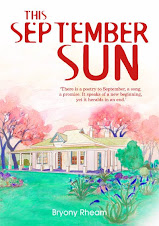
After her debut novel This September Sun (2009, AmaBooks) won the Best First Book at the Zimbabwe Book Publishers Association Awards in 2010, she was in 2014 winner of the International ‘Write Your Own Christie’ Competition, a competition dedicated to the international writer Agatha Christie whom Bryony has put on top of her favourite writers list.

“I have been an Agatha Christie fan for a very long time. I enjoy the books because the focus is on the mystery, not the murder. I like solving the puzzle. Modern crime writers focus more on the murder and enjoy lots of gory details, but the actual mystery is not that exciting,” said Bryony. 

This September Sun went on to be selected as set text for ZIMSEC Advanced Level Literature in English in Zimbabwe from 2012 to 2017.

WIN once published a comment by a literature student who said she remembers one day her teacher shed tears while reading to the class a touching passage in the novel. Indeed, such is the power of Bryony’s words as a story-teller.


All Come To Dust (2020, AmaBooks), her second and recent novel, has joined the winning streak.

Late last year it scooped a literary award at the Bulawayo Arts Awards and this February it won the Outstanding Fiction Award at the NAMA Awards.

Bryony told WIN how she feels about the overall success of her books.

“I feel both my novels have been successful, especially in Zimbabwe. Their success shows that readers are connecting with the issues they raise,” she said.

All Come To Dust is a crime thriller, falling in the class of another African novel Five Nights Before The Summit (2019, Weaver Press) by USA-based Zambian author Mukuka Chipanta.

There seems to be an attempt by writers to fill in the gap of crime fiction in English. For example, Sinister Motive by South Africa-based Zimbabwean emerging writer Wellington Mudhluri also uses the crime fiction genre which was once popular with Shona novelists of yore.

However, the use of various genres by Zimbabwean writers to speak about local issues is what Bryony applauds.

“I feel there is a need for Zimbabwean writers to explore different genres and use them as ways to reflect life in this country,” said Bryony.

Her words confirm what renowned writer NoViolet Bulawayo said last month in The New York Times: “We have to insist on imagining the worlds that we want to see.”  NoViolet was speaking about her new book Glory which one critic described as ‘a modern African Animal Farm’, meaning it explores a different ‘Animal Farm approach’ to highlight certain issues affecting Zimbabwe.

Truly, by using the imagination and exploring various forms of writing, writers can deal with issues troubling our motherland.

 (Read an interview with Bryony published in our previous issue, DOWN MEMORY LANE )

Saturday, June 6, 2015

WIN-Zimbabwe on the launch of 'Textures'

 The Writers International Network of Zimbabwe newsletter, issue no 90 of 5 June 2015, covers the launch of John Eppel and Togara Muzanenhamo's poetry collaboration Textures.

from: http://win-zimbabwe.blogspot.com/ 

The Harare launch of ‘Textures’ (2014, amaBooks) an anthology of poetry written by the duo John Eppel and Togara Muzanenhamo did have the classic feel of writerly openness coupled with rare and significant background detail which is never revealed in the written work. The launch of ‘Textures’ took place at the Book CafĂ© in Harare on Thursday May 21. 

JOHN EPPEL’S ADVICE TO BUDDING POETS


(An excerpt from his interview with Beaven Tapureta (WIN) on the sidelines of the book launch)

“Young poets write in English because that’s how they feel they will get acknowledged or noticed but they do not have enough grasp of the language to use it in poetry. They can use it in prose but it’s different in poetry. Poetry is very subtle. There are some young poets who are starting to achieve profound poetry…. Problem with our children in this country is that they don’t read. You have to build up a basis, a tradition for yourself to be a writer. You have to read and know your poets…. If you want to write in English, read great poets who have written in that language. If you want to write in Shona, read great Shona poets…. Youngsters today are controlled by the digital world, television and internet – they hardly read. When you read something, it’s an effort, you take in material.” - John Eppel.


LAUNCH OF ‘TEXTURES’ IN PICTURES
Photographs courtesy of WIN-Zimbabwe


Togara Muzanenhamo and John Eppel pose with their 'Textures' after the launch


Eppel autographs a copy of 'Textures' for a reader

Togara happily signs autographs

The silence of 'Textures' speaks between thoughtful Togara Muzanenhamo and David Mungoshi 

A meeting with Jane Morris (centre) of amaBooks, publishers of 'Textures', is always lively and inspirational. Here she is enjoying the launch with established writers David Mungoshi (on her right) and Memory Chirere (on her left)

Ignatius T Mabasa probes the poets
ZIBF Events Coordinator Mrs. Shato also came to listen to the poetry and discussion


Rumbi Katedza, distinguished film maker, chats with David Mungoshi

British Council (Zimbabwe) Director Samantha Harvey delivers her speech

From left: Jackie Cahi, Brian Jones and Jane Morris participate in a dramatic poem led by poet Togara Muzanenhamo (not in the picture)
Writer and publisher Ignatius Mabasa (right) in conversation with Togara

John Eppel (right) answers a question asked by Mabasa

Eppel reading his poem from 'Textures'


Thursday, February 14, 2013

Spanish Book Club discussion of 'This September Sun'


Beaven Tapureta reports for WIN Zimbabwe on the Spanish Book Club discussion of Bryony Rheam’s This September Sun

from http://win-zimbabwe.blogspot.com/2013/02/win-newsletter-issue-no-64.html


The discussion was led by writer Eresina Hwede


Full participation in any discussion of a work of creative writing is guaranteed by the participants' reading and understanding of the text for criticism. As this is possible where books are readily available for such purpose, it then calls for organizers of book clubs or discussions to device strategies that ensure the club members read the book before the day of the discussion.
At a discussion of the novel 'This September Sun' held on February 12 at the Spanish Embassy Book Club it was apparent that a few writers had read the novel and the rest were familiar with the novel through blurb and reviews.

However, the group discussion at the Embassy was thought-provoking as various questions were raised on story structure, characterization and themes, proving that a book is like a multi-faceted stone reflecting light in different shades. Different readers tend to have different views.
While the blurb describes the book as mainly about family secrets and history, writers at the discussion explored certain ‘overtones’ about the relationships of black and white characters in the novel.
Eresina Hwede, who led the discussion, said she was most struck by the loneliness of the characters, whom she said were but drifters, people who lack a sense of belonging and dissociate themselves from family. Each character that dies in the story, dies with regrets, she said.
On another note, she said comments made particularly about the black characters in the novel reflected no association of blacks and whites during the time the story happens.
“I wonder why few black characters that are in the novel appear briefly and they are portrayed as servants of white characters. Mr. Mpofu, who is not a servant but a lawyer, appears for a short moment towards the end of the story,” said Eresina.
Roger Stringer, a librarian and publishing consultant said as a white person, he saw the book from a completely different standpoint, arguing that the novel is not about blacks and white people's relationships but about a family. The novel is not a social story but a personal story about the relationship between a girl and her grandmother, he said.
"What strikes me in the story is the mystery, like a detective story, where one discovers what was unknown before," Roger added.
While Eresina and a few other writers maintained that although 'This September Sun' is known to be about family secrets, it exposes the political uncertainty of the historical period it covers. The burning of the Union Jack (soon after independence) which resulted in grandma sustaining a tea-pot-shaped scar which, the writers said, resembles the map of Zimbabwe, and various incidents in the story metaphorically carry political overtones.
However, Roger felt it would be unfair to pick out three pages out of a book of so many pages and give it such particular weight as the author only concentrated on family relationships.
Tinashe Mushakavanhu however saw Zimbabwean fiction in general as having little or no interaction at all between blacks and whites.
Beatrice Sithole, also present but had not read the book, said the fact that the book stirs such debate could explain why it is being studied at ‘A’ level as a literature set book in Zimbabwe. It having so many layers of meaning makes the novel worthwhile for critical study, she said.
 The discussion was also graced by renowned writer Virginia Phiri and other writers. 'This September Sun' was written by Bryony Rheam and published in 2009 by AmaBooks in Bulawayo. It won Best First Book Prize at the 2010 Zimbabwe Book Publishers Association Awards.