Showing posts with label Brian Chikwava. Show all posts

Monday, October 7, 2019

'Gonjon Pin' a must-read on a long journey

The Herald, 6 October 2019
https://www.herald.co.zw/gonjon-pin-a-must-read-on-a-long-journey

‘Gonjon Pin’ a must-read on a long journey

-->

by Memory Chirere 

Published by amaBooks of Zimbabwe and several other publishers, The Gonjon Pin and Other Stories is a collection of short stories by African writers shortlisted for the Caine Prize 2014 and from the Caine Prize annual writing workshop held in Vumba, Zimbabwe, during the same year.
On receiving this anthology just before the Harare launch, I quickly noticed that it was a massively solid book.
I was intimidated. I am used to reading the usually thin volumes normally associated with short books in Africa. But since these are stories from one of the most prestigious awards in African literature today, I hoped that quality will pay for the volume.
I do not remember the last time I felt like this about a book. I did not want to start with the shortlisted stories. I wanted to make my priorities right. I had been invited to anchor the discussion at the Harare launch, where some writers would also give readings.
I am attracted to the Zimbabwean stories.
Having been raised on the short stories of Luis Honwana, Charles Mungoshi and other writers from the Southern African sub-region, I find Lawrence Hoba’s “Pam Pam” a very comfortable landing pad. Due to my background, this is the story that speaks most directly to me.
The sensitive child is snooping into the seemingly unusual world of the grown-ups, who are also trying to come to terms with the most “weird” in their midst. Muffled voice. Understatement. Power play. A surprise ending. Hoba’s deft engineering- one soft word on top of the other…and on top of the other, almost like bricks, tells me that this was not easy to write.
“The Sonneteer” must be the “craziest” story in this book! I am hoping that somebody will agree with me. I love the deluge of sonnets towards the end because it is a clever way of flourishing out after such a deep rendition on the tumultuous Zimbabwean condition. The story ends in successive loud spurts like a gas canister unleashed onto a hapless crowd.
I like stories like this one, driven by silences — especially by what characters do not say to one another.
We are no longer reading, but are also writing the story alongside Philani Nyoni. The language is vigorously God forsaken and its rigours remind me of the late Dambudzo Marechera.
Later, at the launch itself, I was impressed by Isabella Matambanadzo’s views.
Her “All The Parts of Mi”, just like Abubakar Adam Ibrahim and Chinelo Okparanta’s stories, is about betrayal, intimacy and courage. During the discussion, I asked Matambanadzo about what she thinks about the use of the erotica in stories. Her candid answer sent the audience roaring in approval. It took us a while to return to silence.
“The Intervention” by Tendai Huchu is part of the Caine 2014 short list. It confirms my thoughts about his previous stories, especially the one which I have been struggling to translate from one language to the other. Here is a writer who has an eye for dramatic irony and the incongruence of human character. His stories challenge the reader to work from many points of view.
In “The Murder of Ernestine Masilo” by Violet Masilo, the protagonist dies slowly from the first time you meet her. Her death is not shocking, but why she dies is riveting.
You are left with a feeling that a flower has withered before anyone could pluck it and place it in a vase. If only there was enough love. Typical character in typical circumstances.
“Music From A Farther Room” by novelist Bryony Rheam is a story filled with utmost colours and sounds and wide spaces. It is a piece of painting or tapestry.
If it were a piece of cloth, this story would flutter in the wind like a kite, landing on its nose until somebody picks it and throws it back into the sky just in order to see it and shout like a toddler! I read it over and over for the sheer serenity that it gives me.
Barbara Mhangami-Ruwende’s “Blood Work” is filled with a delicate tension right from the statement “I don’t like black people” up to the end and you are always on the edge. I hope I am not being prescriptive, but this looks like my favourite story in this book, at least for now.
I then hurry to the winning story itself, “My Father’s Head”. I had read elsewhere that it is a story filled with sad memories. I do not disagree, but I discover that it is full of sweet sadness with more of sweet. Sad but not depressing.
The kind of balance associated with kopjes. On the second and even third reading, I begin to feel that this is about a daughter’s celebration of a father’s not so happy life. The language is syrupy, describing expanses of time and dwelling on tiny-tiny details of life like the paw of a dog and the flutter of a butterfly. I agree with the judges. It was right that this story won. Maybe it is not a story after all. It is life.
Among the shortlisted stories, I also have lots of respect for Billy Kahora’s “The Gorilla’s Apprentice”. Loneliness of people, and of animals too?
A unique and unfulfilled camaraderie between victims from different communities? This story could just have won.
However, in just a few of these stories here, adjectives tend to pile on top of one another; adverbs trip over each other. Colons clog the flow of even short paragraphs, and the plethora of semicolons often cause the reader to throw up his hands in exasperation.
If you are able to forgive the very few overwritten pieces, The Gonjon Pin and Other Stories is something to carry on a journey.


........................


The 2019 Caine Prize anthology, soon to be published in Zimbabwe by amaBooks, celebrates 20 years of the competition with the inclusion of all the winning stories, including those of the Zimbabwean winners Brian Chikwava and NoViolet Bulawayo. It includes an introduction by Ben Okri.

Thursday, February 4, 2016

'Lusaka Punk', the 2015 Caine Prize anthology, reviewed in Harare News

Brian Chikwava - previous Caine Prize winner

Every year local book lovers look forward to ’amaBooks Publishers latest anthology of short stories based on the Caine Prize for African writing. This year, the volume is named Lusaka Punk, after Zambian-born Efemia Chela’s story based on ‘teenage angst’ and a gap year spent in the internet cafés and night clubs of Lusaka. In all, there are 17 short stories, including the five short-listed authors, and 12 other writers who took part in this year’s workshop in Ghana.

The Caine Prize for African Literature was established in 1999 by Baroness Nicholson, in memory of her husband, Sir Michael Caine. Sir Michael, a larger than life character, was an executive of Booker PLC, a group of companies involved in food distribution and agribusiness. It was his love books and reading that lead him in 1968 to create the Booker Prize for fiction, soon to become Britain’s most prestigious literary award.

Thanks to Baroness Nicholson, the Caine Prize for African writing provides an opportunity for writers linked to the vast continent of Africa to have their voices heard, to give shape and form to their creativity and to delight readers everywhere with extraordinary and diverse narratives. At the Zimbabwe International Book Fair in the Harare Gardens in 2000, the first ever winner of the award was announced as Leila Aboulela, for her story ‘The Museum’. Born in Egypt and brought up in Khartoum, Aboulela shows how a young Muslim student studying in Aberdeen adjusts successfully to culture, society and life in a cold climate.

In 2004, Zimbabwe hit the headlines again, when Bulawayo-born Brian Chikwava won the £10,000 prize with his story, ‘Seventh Street Alchemy’. Set in Harare’s once notorious Avenues, Fiso, an ageing prostitute, copes with the daily uneven fight for survival. Her struggles with bureaucracy and inability to obtain either a birth certificate or a passport will seem all too familiar to many readers.

A few years later, in 2011, NoViolet Bulawayo’s ‘Hitting Budapest’, chronicling the emotive, sometimes tragic, escapades of a gang of six underprivileged children, won the Caine Prize. While their mothers are busy with ‘hair and talk’ and the men play draughts under the jacaranda trees, the children raid gardens in wealthy suburbs, in search of adventure, and for guavas, to ward off hunger pains.

In 2012, Zimbabwean Melissa Myambo’s short story, ‘La Salle de Depart’, was shortlisted as a possible winner, but Nigerian writer Rotimi Babatunde wowed the judges with Bombay’s Republic, a darkly humorous narrative about Nigerian soldiers fighting in Burma during the second world war. Kenyan writer Okwiri Oduor won the prize in 2014, with ‘My Father’s Head’, a surreal story about a young woman coming to terms with her father’s death.

This year the panel of judges, headed by South African writer Zoe Wicomb, were presented with 153 entries. Brian Chikwava, now an established writer in London, returned to the Caine Prize as a 2015 judge. He described the ‘pleasant agreement and disagreement’ involved in selecting the shortlisted writers. ‘Being a good writer alone is not enough to guarantee a place on the short list’ he said. ‘One also needs luck. Plenty of it.’

The winning entry, ‘The Sack’, by Zambian Namwali Serpell, was described by the judges as a ‘truly luminous’ story. The surreal tale about an uncomfortable relationship between two men who loved the same woman, now deceased, relies heavily on the claustrophobic image of a sack. Serpell says that inspirations for ‘The Sack’ came from a disturbing dream she had at age seventeen about being in a sack, and from a 1999 Japanese psychological horror film, ‘Audition’. In an interview with The Guardian, Serpell said she was ‘really pleased that the Caine Prize is honoring something so strange’.

Judges and past winners can shed some light on what is deemed essential in a winning story, but bear in mind that the panel changes every year. Bernadine Evaristo, the 2012 chair of judges, looks for a ‘strong, original streak’, ‘a risk taker’, a story that is ‘provocative and unsettling’. Conversely, for Leila Aboulela, who acted as a tutor at this year’s writers’ workshop in Ghana, a stand out story would be ‘one I would want to pass on to friends’.

Many shortlisted authors and winners of the Caine Prize no longer reside in their native countries, but their link to Africa remains strong, a necessary element for the mindset and creativity displayed in the latest anthology. It is time for another Zimbabwean winner of the Caine Prize, so whether you are in Pote Primary School in Goromonzi, St John’s College in Harare, or reading English honours at UZ, pursue your love of reading, start writing and make a start on that short story that will change your life.


Lusaka Punk and Other Stories is published by ’amaBooks.

Reviewed by Diana Rodrigues
http://www.hararenews.co.zw/2015/10/lusaka-punk-and-other-stories-the-caine-prize-for-african-writing-2015/

Saturday, October 5, 2013

A Memory This Size: The Caine Prize for African Writing 2013 reviewed in the Financial Gazette


Kaleidoscope Of Adventures, Experiences From Africa


Diana Rodrigues 3 Oct 2013
Fame may be the spur for many of Zimbabwe’s aspiring and established writers, but the Caine Prize for African Writing offers winning authors not only book readings, book signings and press releases, but prize money worth GBP10 000. The first prize giving ceremony for this prestigious award took place in Harare in 2000, at the Zimbabwe International Book Fair, when the winner was Leila Aboulela, who grew up in Khartoum. In 2004 Bulawayo-born Brian Chikwava won the coveted prize for his short story Seventh Street Alchemy, and in 2011 NoViolet Bulawayo was declared winner for Hitting Budapest.
Established in 2000, the same year as The Caine Prize, amaBooks, an independent Bulawayo publisher, opened its doors to budding and published writers, with the intention of promoting creative writing not only in Bulawayo but throughout Zimbabwe and the region. Their latest offering is an anthology of stories shortlisted for the Caine Prize 2013, entitled A Memory this Size and Other Stories, a volume that includes this year’s winning contribution, Miracle, by Tope Folarin of Nigeria. Tales from the remaining short-listed writers make up the anthology and represent a kaleidoscope of experiences and adventures from Sierrra Leone, Uganda, Kenya, Malawi, Botswana and Zimbabwe.
Born in Utah and living in Washington DC, Folarin may not appear to be typically African — he describes himself as ‘a writer situated in the Nigerian diaspora’, and feels both American and African. If the judges and chair of the prize committee, Gus Casely-Hayford, felt any qualms about awarding the prize to Folarin, the light touch, narrative skill and humour in the story of a young man singled out by a Nigerian holy man for healing in an evangelical church in Texas, convinced them that he was a worthy winner.
Nigerian Rotimi Babatunde who lives in Ibadan, and won last year’s Caine Prize for Bombay’s Republic, the tale of a veteran who ‘went to Hitler’s War as a man and came back a spotted leopard’, was shortlisted this year for Howl, the tale of a puppy called Jack ‘that had a baby’s eyes’ and improbably grew up to be a paediatrician.
Yet another Nigerian writer, Elnathan John, made the Caine Prize short list, so it would appear that Nigeria sets great store by literature, values its writers and provides fertile ground for creative writing. Trained as a lawyer, Elnathan lives in Abuja. When he’s not writing short stories he dispenses free legal and social aid through his project, Legal Aid. His shortlisted story, Bayan Layi, is about a gang of street kids who fight, take drugs and ‘boast about the people they have killed’.
Short-listed author Chinelo Okparanta was born in Port Harcourt, the chief oil refining city in Nigeria and is familiar with the petroleum industry. In the short story America, her protagonist, who is a science teacher, laments the damage the oil industry has wrought on the ecosystem. Fishermen in Gio Creek fail to catch any fish, but come out of the water ‘harvesting Shell oil on their bodies’. Okparanta has a deft and easy way with words as she describes the science teacher’s enduring love affair with another woman and her parents’ disappointment that they will be without grand children, her ambition to study environmental engineering in America, and vivid insights into the customs, food and people of Nigeria.
Zimbabwean Melissa Myambo is once again short-listed for the Caine Prize, this time for Blood Guilt, a complex psychological story of a liberation war matriarch known as Gogo, whose authority and family are threatened when a damaging video of her interrogation of her ex-comrade Beatrix ‘goes viral’.
Also on the short list again this year is Malawian Stanley Kenani who is an accountant for The Lilongwe Water Board. An avid reader of fiction, whenever he is not ensuring the smooth running of the utility company he works for, he is writing poetry, working on a novel entitled The Auditor, or dreaming about the plot of the next short story to win the Caine Prize. This year’s entry, Clapping Hands for a Smiling Crocodile, describes the perils involved when a government official forces a fishing village on the shores of Lake Malawi to allow an oil drilling company access to the ‘shimmering waters’ of the lake.
amaBooks and other Zimbabwean publishers are seeing the fruits of their efforts, as the country’s literacy rate improves and an increasing number of local writers are encouraged to hone their writing skills and give free rein to their creativity.
Reproduced from the Financial Gazette

http://www.financialgazette.co.zw/kaleidoscope-of-adventures-experiences-from-africa/

A Memory This Size: The Caine Prize for African Writing 2013 is available in Zimbabwe from:
in Harare - National Gallery of Zimbabwe, Grassroots Xarra at the Book Cafe and Avondale Bookshop
in Bulawayo - National Gallery of Zimbabwe, Induna Arts, Tendele Crafts, BooksEtc, Indaba Book Cafe, Z&N Bookshop

Sunday, December 2, 2012

African Violet reviewed in the Financial Gazette


African Violet and other stories

'amaBooks, 228 pp., 2012, 978-0-7974-5069-1

 Africa’s leading literary prize, the Caine Prize for African Writing, was won this year by Rotimi Babatunde from Nigeria, for his short story ‘Bombay’s Republic’. Besides receiving GBP10, 000, Babatunde will take up a month’s residence at Georgetown University Washington DC, as writer-in-residence. In September he will appear at the Open Book Festival in Cape Town, followed in November by a series of events at the Museum of African Art in New York.

Babatunde’s unusual tale appears in African Violet, a volume of short stories published by ‘amabooks of Bulawayo. The four other authors shortlisted with the Nigerian for the award, are Malawian Stanley Kenani, South African Constance Myburgh, Billy Kahora from Kenya and Zimbabwean Melissa Tandiwe Myambo. Stories from ten other African writers who attended a Caine Prize writers’ workshop in South Africa this year, are also included in the anthology.

There is a perception that literature emanating from Africa will always deal with corruption, political violence, rape, poverty and conflict. Most of the continent’s 54 countries have been through political upheaval and suffered varying degrees of drought and famine: but the engaging stories in African Violet offer an outlook on life in Africa that is witty, thoughtful and positive.

Colour Sergeant Bombay, the hero of the winning story, is thoroughly likeable as the ‘veteran… who went off to Hitler’s War as a man and came back a spotted leopard.’ Rotimi Babatunde’s humour and easy style lead us through the adventures of the soldier who battled with the leeches that scarred his body in the Burmese jungles, and Japanese forces that chopped up African cadavers in the belief that ‘black soldiers resurrect’. Returning home, the war hero declared the new Republic of Bombay, raising a flag of a spotted leopard over the old jailhouse. There he remained until ‘death finally unseated him from office’.

In Love on Trial by Malawian Stanley Kenani, law student Charles Chikwanje is discovered by the village gossip, Kachingwe, in flagrante delicto with another young man, in the village toilet. For a tot of kachasu, Kachingwe will provide salacious details of the encounter to curious villagers. The law takes its course, and although Chikwanje’s defence is dignified and articulate he is sentenced to 12 years with hard labour. The domino effect, when angry international donors cut aid, is felt by everyone, including Mr Kachingwe, who has lost the ability to solicit free drinks.

Ex-Arundel schoolgirl Melissa Myambo impresses with her writerly skills in La Salle du Depart, a tale of gender and family obligations set in Dakar. Having spent time in Senegal Myambo has absorbed the culture and atmosphere of this vibrant, largely Moslem country. Readers will look forward to an equally powerful story set in her native Zimbabwe.

The judge’s panel for this year’s Caine Prize, now in its 13th year, included Zimbabwean performance poet and cultural consultant, Chirikure Chirikure. Full of praise for the encouragement it affords African writers, he expressed the hope that the Caine Prize ‘would remain as bold and solid as the baobab tree.’
Previous Zimbabwean winners of this prize include Brian Chikwava (2004) and NoViolet Bulawayo (2011).


Reviewed by Diana Rodrigues
http://www.financialgazette.co.zw/weekend-gazette/15143-chirikure-judges-at-caine.html

Friday, October 8, 2010

Brian Chikwava's love-hate history with Zimbabwe


brian_chikwava
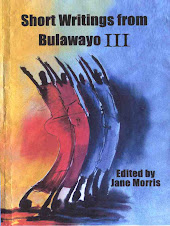
Brian Chikwava, who has contributed short stories to Short Writings from Bulawayo III and Long Time Coming: Short Writings from Zimbabwe, is interviewed in The Zimbabwean about a forthcoming lecture on the theme 'The Past is Another Country':

"I love it for innumerable things, but loathe it for the way it has ceased to care about the plight of its poor and less fortunate."


http://w
ww.thezimbabwean.co.uk/index.php?option=com_content&view=article&id=34625:chikwavas-love-hate-history&catid=57&Itemid=37