Showing posts with label The Herald. Show all posts

Saturday, October 25, 2025

Mabasa, Vazhure carry Zimbabwean art to the world

Elliot Ziwira's article in The Herald on the launch of Ignatius Mabasa's The Mad and the opening of Samantha Vezhure's exhibition Nzwisa.

https://www.heraldonline.co.zw/mabasa-vazhure-carry-zimbabwean-art-to-the-world/


THERE are moments when Zimbabwe’s creative spirit refuses to be contained; instants when its words, colours and rhythms transcend borders, languages, and the limits of genre.

The past two weeks offered two such moments.

These are the launch of “The Mad”, Ignatius Mabasa’s English translation of his 1999 Shona classic “Mapenzi” in Harare on October 10, and the opening of “Nzwisa”, the debut solo exhibition by bilingual writer and painter Samantha Rumbidzai Vazhure, a week later.

Though different in medium, with Mabasa’s in the printed word and Vazhure’s in textured acrylic, both events celebrate the same thing. It is the unrelenting will of Zimbabwean artists to speak in their own voices, on their own terms, and to the world at large.

The artists insist that literature and art are not parallel roads but intersecting paths in the ongoing conversation about identity, collective memory, and belonging.

When Mabasa stood before the audience at the launch of “The Mad” book lovers knew that he was not simply introducing a translation. He was introducing a movement.

For a man who did his Doctor of Philosophy (PhD) thesis at Rhodes University, South Africa, in Shona to “decolonise knowledge” and let it “speak to the people,” the translation of “Mapenzi”, his audacious, surrealist exploration of post-independence disillusionment, into English is not a retreat from that principle.

Rather, it is its extension.

Mabasa began writing “Mapenzi” as a student at 22, during the radical ferment of the 1990s at the University of Zimbabwe. Those were the years of radicalism, when students dared to dream of a freer world and writers sought new idioms.

The novel’s title, “The Mad” captured that spirit. It is a kind of madness that equates to rebellion—madness as muse, madness as resistance, and madness as truth-telling.

It reflects on how mental illness, though sensitive and serious an issue, emerges beyond affliction to become a metaphor within the imaginative and often anarchic world of artistic expression.

For both spectacle and insight, artists, especially modernists, like Mabasa, find something almost seductively resonant in the idea of losing one’s mind. 

Madness, in the creative consciousness, is not simply a breakdown of the rational self. It is a way of seeing, an alternative mode of perception that unveils hidden truths.

It offers the artist a lens through which to dissect a diseased society, peel back the veneer of order, and expose the chaos bubbling beneath. In this light, madness is not a condition but a commentary.

As critic Kizito Muchemwa (2002) puts it, “Sanity is a very strange commodity in the fictional world created by the new generation of storytellers.”

This strangeness is rooted in the dissonance between the polished appearance of modern life and its deeper, more fractured reality. To speak truthfully about the human condition today, its loneliness, alienation, and existential disillusionment, artists often turn to madness, both as a theme and a symbolic tool.

Modernists are obsessed with fracture, loss, and dislocation. Their worlds are dream-like, fragmented, sometimes terrifying, and often riddled with the psychic debris of failed utopias.

In Zimbabwean literature, this obsession is profoundly felt. Writers like Memory Chirere, Ignatius Mabasa, Shimmer Chinodya, Clement Chihota, Robert Muponde, Stanley Mupfudza, and Brian Chikwava, among others, channel modernist impulses to probe national identity, despair, and deferred hope.

Their literary worlds are littered with ghosts of colonialism, war, economic quagmire, and betrayed dreams.

That is why Tsitsi Mutiti’s translation of Mabasa’s “Mapenzi” is crucial. 

In “The Mad”, rendered into English by Mutiti after earlier efforts by Tendai Huchu, the madness is not lost but is rather reimagined.

Mutiti explained that her task was “to ferry the spirit of the book,” not just its words.

That phrase alone captures the soul of literary translation: the delicate act of carrying tone, rhythm, and cultural memory across linguistic borders without draining it of its pulse.

Mabasa confessed that early translation drafts felt “too clean, too careful,” stripping away the absurdities that gave “Mapenzi” its wild energy. 

However, in the final version the balance between fidelity and freedom is restored. The English language becomes a new drumbeat for the same song: raw, unpredictable, and deeply Zimbabwean.

Memory Chirere called Mutiti’s translation of “Mapenzi” a “great piece of work” that stands “on its own the way an original piece does”.

He added: “Mutiti’s work is amazing when you realise that she is coming from the sciences, and has little or no training in translation.”

Therefore, the launch of “The Mad” marks more than a literary milestone.

It positions Zimbabwean literature squarely within the global conversation on translation, identity, and decolonial aesthetics. For too long, African literature in English has been framed through the gaze of the outsider—what Chimamanda Ngozi Adichie once called “the single story.”

Mabasa’s act of translating his work, guided by his own vision, asserts agency over that narrative.

It tells the world that Zimbabwe’s stories do not need to be discovered. They only need to be heard.


On October 17, another Zimbabwean voice spoke across continents. This time in colour, texture, and rhythm. In the tranquil setting of PaMoyo Gallery in Harare, Samantha Rumbidzai Vazhure unveiled “Nzwisa”, her debut solo exhibition which ends today.

The title itself, “Nzwisa”, invites the audience into a meditative space where art becomes a form of hearing as much as seeing. Vazhure, a self-taught painter and bilingual author, merges the sacred landscapes of Zimbabwe with the pastoral quiet of the Welsh countryside where she now lives.

In her canvases, past and present, home and exile, converge like echoes in a valley.

Each painting carries a story through visual poems that speak to identity, spirituality, and love.

In “Munhu Wangu” (2025), she captures tenderness and intimacy as communion rather than possession, while “Iwewe neni” delves into togetherness beyond the physical, suggesting a spiritual tether that defies space and circumstance.

Her piece “In the Embraces of Struggle” (2025) revisits Dambudzo Marechera’s “The House of Hunger”, turning his haunting words into a visual metaphor of intertwined histories in which black and white, coloniser and colonised, are locked forever in an unfinished embrace.

Yet, as in Marechera’s prose, there is resilience in the chaos.

In “Vapfuri Vemhangura” (2025) Vazhure honours skilled artisans of ancient Zimbabwean societies. The artwork celebrates craftsmanship, labour, and ingenuity, positioning metallurgy as both cultural heritage and a symbol of human inventiveness through the transformation of raw elements.

In traditional lore, the Soko Vhudzijena clan are praised as expert iron smelters (mhizha) who migrated from Hwedza, Mashonaland East. Similarly, the Shumba clan are said to have travelled from Mutoko through Hwedza to settle in Chivi—possibly Soko descendants who adopted the Shumba totem for strategic reasons.

Drawing inspiration from these ancestral migrations, which coincided with the southward spread of Iron Age farming, the painting depicts three men departing an iron-smelting site under the watchful protection of Chapungu, the sacred Bateleur eagle.

Though modest in scale, “Silence” (2024) communicates deep emotion through texture and tone. Set against a warm yellow background, the composition features a pair of lips—still, yet echoing the weight of words left unspoken. To one side, a mosaic of orange, red, mauve, and violet-blue textures evoke the richness and intricacy of African artistic expression.

The contrast between the vivid detailing and the muted backdrop creates an atmosphere of quiet intensity, suggesting that silence itself can carry strength, depth, and layered meaning beyond what speech can capture.

“Ziroto” (2025) speaks powerfully to Zimbabwe’s cultural psyche. Inspired by the prophecy of Chaminuka, who foresaw the coming of Europeans (those without knees), the artwork becomes a lament for historical silence.

“Who controls remembrance?” the painting seems to ask. “What happens when even our descendants no longer recognise us?”

Vazhure’s art, much like Mabasa’s writing, is an act of remembrance. It is a reclamation of the narrative from erasure. That her limited-edition prints are made from 3D scans of original paintings speaks symbolically to preservation; the attempt to retain texture and authenticity even in reproduction.

Her journey, from literary activist, author and publisher to painter since 2022, testifies to the interconnectedness of Zimbabwe’s creative spheres. Just as Mabasa moves between orality, prose, and translation, Vazhure moves between page and canvas, word and colour, as well as past and future.

Placed side by side, Mabasa’s “The Mad” and Vazhure’s “Nzwisa” demonstrate that Zimbabwe’s arts are entering a new epoch that refuses to separate literature from visual culture, intellect from emotion, or the local from the global.

Both artists confront the politics of visibility. Mabasa translates himself into English not for validation, but to occupy space in a language that once claimed ownership of his world.

On the other hand, Vazhure paints the landscapes of her memory, transforming nostalgia into resistance. In both cases, art becomes both expression and reclamation.

Their works explore a growing recognition that Zimbabwe’s literary and artistic output cannot thrive in isolation.

Collaboration between writers, translators, painters, musicians, and cultural institutions is what builds sustainable creative economies. Live music by Hope Masike at “Nzwisa” provides a sensory bridge between sound and sight—a fitting echo of Mabasa’s call for knowledge that “speaks to the people.”

Both events are crucial cultural signposts, showing how Zimbabwean art is reinventing itself as both local and global, traditional and experimental, as well as reflective and confrontational.

When one listens carefully, as “Nzwisa” urges, and reads deeply, as “The Mad” demands, one realises that both Mabasa and Vazhure are engaged in the same sacred act of translating Zimbabwe’s soul.

Indeed, creativity, like memory, is never static. It shifts form, crosses oceans, and speaks in tongues. Whether through a translated novel that carries the rhythms of Shona madness into English syntax, or through brushstrokes that merge ancestral prophecy with modern abstraction, the message is the same.

Zimbabwe’s stories still matter, and they are still being told, boldly, beautifully, and in full colour.

Even though the applause may fade at book launches and gallery openings, the larger work continues. The collective task is to sustain spaces like the National Gallery of Zimbabwe and PaMoyo Gallery to nurture publishers like Carnelian Heart, to support translators and editors such as Mutiti who make language porous, and to celebrate writers who, like Mabasa, keep pushing the boundaries of possibility.

In the end, every page turned and every canvas unveiled carries a quiet command—listen. Listen to the voices of those who dare to translate dreams into being. Listen to the madness that births meaning, and listen to Zimbabwe speaking to both itself and the world.


The Mad is co-published in Zimbabwe and the United Kingdom by amaBooks Publishers and Carnelian Heart Publishing.

Copies of the book are available in Zimbabwe through Book Fantastics (contact through @bookfantastics on Instagram, or @Book_Fantastics on X) and in the UK through Amazon (https://www.amazon.co.uk/Mad-Ignatius-T-Mabasa/dp/1914287967/) or through carnelianheartpublishing.co.uk. It will be available next year in North America through the University of Georgia Press.


Wednesday, May 15, 2019

African literature disrupting what Western presses prize


By Jeanne- Marie Jackson
From The Herald, 15 May 2019
Jeanne-Marie Jackson
African literature is the object of immense international interest across both academic and popular registers. Far from the field’s earlier, post-colonial association with marginality, a handful of star “Afropolitan” names are at the forefront of global trade publishing. Books like Chimamanda Adichie’s “Americanah” and “Half of a Yellow Sun”, Teju Cole’s “Open City”, Taiye Selasi’s “Ghana Must Go” and Yaa Gyasi’s “Homegoing” have confounded neat divisions between Western and African literary traditions. The Cameroonian novelist Imbolo Mbue captured a million-dollar contract for her first book, “Behold the Dreamers”. That’s even before it joined the Oprah’s Book Club pantheon this year.
Such commercial prominence, though, has attracted considerable and unsurprising push back from Western and Africa-based critics alike. Far from advancing narratives with deep roots in local African realities, such critics fear, many of Africa’s most “successful” writers hawk a superficial, overly diasporic, or even Western-focused vision of the continent.
NoViolet Bulawayo
The most visible of these critiques has been directed at the Zimbabwean writer NoViolet Bulawayo’s “We Need New Names” (2013). The Nigerian novelist Helon Habila worried in a review in the London Guardian that it was “poverty-porn”. The popular Nigerian critic Ikhide Ikheloa (“Pa Ikhide”) frequently makes a similar point. Fellow Nigerian writer Adaobi Nwaubani critiqued the West’s hold on Africa’s book industry in a much-circulated New York Times piece called “African Books for Western Eyes”.
Such debates about African writing could, and likely will, go on forever. Questions about Africa’s place in the current global literary marketplace broaden some of the most urgent queries of the postcolonial era. Who gets to document African realities? Who are the “gatekeepers” of African publishing traditions?
It goes on: To what sort of audience does African writing cater? What is the role — and what should it be, if any — of Western institutions in brokering cultural prestige?
All these issues merit concern.
Between the default poles
Too often, though, African writing ends up volleyed between two default poles of “corporate global” and “activist local”. Some onlookers, as in a recent essay by the Canadian scholar Sarah Brouillette, go as far as to name the biases of even Africa-based print outlets. Kenya’s Kwani Trust is exposed as “Western-facing” due to a web of donor relations. “West” here is code for neoliberal. “Western-facing” is for complicity with a market that skews toward British and American interests.
Faced with a “world system” argument like Brouillette’s, African literature would seem trapped between a rock and a hard place.
But, in fact, this tells only a small part of the story of how African writing now makes its way through the world. It is incomplete to the point of being outdated, given the boom over the past five years in new, globally conscious small US literary presses collaborating with African writers.
A “West subsuming Africa” brand of critique works fine for scholars with no real skin in the game of literary publishing. It also denies real agency to a lot of African writers and other literary professionals. On the ground the literary field is far more forward-thinking and diverse.
There is an entire new body of African writing that escapes this closed circuit of damning truisms. A wave of new or recently galvanised independent literary presses in the US and the UK are working in tandem with some of Africa’s most generative outlets. Together they are publishing and promoting work by young and adventurous African writers.
Labours of love
Books published originally by presses like Umuzi (South Africa), amaBooks (Zimbabwe) and Kwani (Kenya) find second lives with international publishers working to defy the constraints of profitability. They’re mostly labours of love with skeleton staffs that speak to a transcontinental commitment to innovative African writing.
Here are a few key examples of African texts published by independent American outlets — “independent” here refers to presses beyond the “Big Five” US trade publishers (Hachette Book Group, HarperCollins, Macmillan, Penguin Random House and Simon and Schuster.
These include Jennifer Nansubuga Makumbi’s Ugandan epic “Kintu” which was originally launched by Kwani. It was the first Anglophone novel put out by the brand-new Transit Books based in Oakland, California. The press seeks maximum visibility for translated fiction alongside texts originally written in English. They advocate for more ethical legal and financial dealings with translators, as well as international writers.
A number of similarly tiny, ambitious ventures have published some of the most acclaimed recent African writing in translation. Deep Vellum Publishing was behind the English translation of Fiston Mwanza Mujila’s Etisalat Prize-winning “Tram 83”.
Also dedicated exclusively to works in translation, LA-based Phoneme Media in 2016 published the first ever Burundian novel in English, Roland Rugero’s deeply contemplative “Baho!”. Phoneme’s tagline, fittingly, is “curious books for curious people”.
In a similar vein, Brooklyn’s Restless Books was founded to combat “parochial, inward-looking, and homogenised trends in American publishing”. Among their forthcoming titles, translated from the French is Naivo’s “Beyond the Rice Fields”. It’s the first novel from Madagascar to see its way to English.
Veteran nonprofit press Archipelago Books is also in Brooklyn. In 2015, it published the translation from the Portuguese of Angolan writer Jose Eduardo Agualusa’s “A General Theory of Oblivion”.
Every one of these throws a wrench in a clear, cynical sense of what kind of novel Western presses prize. That is not to mention the many African writers, publishers, and editors working in concert to promote these same texts.
Small, focused channels
It applies to the Anglosphere too. Books that offer a decidedly more locally textured experience than those of the “Afropolitan” rock stars have made their way abroad through small, focused channels.
These works might include Tendai Huchu’s “The Maestro, the Magistrate, and the Mathematician” (published originally by amaBooks, and in the US by Ohio University Press); Imraan Coovadia’s “Tales of the Metric System” (from Umuzi, and again by Ohio University Press); and Masande Ntshanga’s “The Reactive” (also Umuzi; in the US by family-run Two Dollar Radio.
Clearly, this collection just scratches the surface. But what these works have in common is an investment in stylistic and structural experimentation that confounds rather than caters to an international taste for “digestible” fiction, or to mostly Western points of cultural and institutional reference.
This counter-current of transnational African literary life complicates the equation of culture, geopolitics and economics in more useful ways than stale materialist critiques.
As such titles and presses continue to gain acclaim and recognition by an international readership that is aware of and hostile to shallow representations of Africa — and who crave engagement with challenging fiction, regardless of its origin — critics will need to rethink some of their orthodoxies.
There is more to both African literature and Western publishing than meets an eye too practised in its suspicion. If literature is doomed only to echo the failings of globalisation, then why bother? On the contrary, a new generation of writers and publishers deserve our awareness of the “global literary marketplace” as a meaningfully multidimensional space. — Africa Conversation.


Wednesday, August 15, 2018

Textures reviewed in The Herald


Stanely Mushava, Literature Today, The Herald
Book: Textures
Authors: John Eppel & Togara Muzanenhamo
Publishers: amaBooks (2014)
ISBN: 978-0-7974-9498-5
When the muses refuse to smile on a poet, he runs out of inspiration but when a woman refuses to smile on him, a creative current carries him along. If not for this irony of deprivation, Dante, John Keats and Thomas Hardy may never have attained half their stature, and poetry would have been poorer for the equilibrium. John Eppel’s impassioned reminisces for lost love in “Textures” make for a Zimbabwean version of the deprivation theory.

“Textures”, the dual effort by highly regarded poets Togara Muzanenhamo and John Eppel, is a league apart for its classical forms, musical cadences and cosmopolitan depth of field.
Zimbabwean poetry, often politically themed, thrives on immediacy, rejects classical forms, branding them synonymous with colonial tradition, utilises the canon of cultural decolonisation and is almost uniformly set to free verse.
Muzanenhamo and Eppel’s joint anthology is an apparent revolt against the post-colonial canon and fares exceptionally as a new aesthetic school.
As if to confirm John Keats’s wager: “The poetry of the earth is never dead,” “Textures” won the National Arts Merit Award (Nama)’s main literary accolade this year, the second consecutive time a poetry collection has landed the honour.
With poetic thoroughbreds like David Mungoshi and Emmanuel Sigauke hunched over their keyboards this year, poetry may be bound for a third consecutive honour in the previously prose-dominated category.

Eppel’s Bulawayo sequence is set to sonnets, odes, sestinas, villanelles and Romantic references, while Muzanenhamo employs modernist frame and a cosmopolitan depth of field.
Irony of history, loss of love, sense of mortality, appreciation of beauty, invocation of forgotten feats line and the debilitating trail of war line the thematic taskbar of the two poets for the most part.
The trouble with the anthology, however, is the poems are often densely pixilated and cryptic to a fault.
While both poets ably set forth their scenes and provide the musical ambience, their ideas are sometimes buried in the aesthetics.
On first reading, the meaning flies over your head, on second attempt the jigsaws seem to come together, third time you want to be sure you got it right, and so forth.
If this is a flaw, though, then it has its side benefits. It makes the anthology more durable than the immediate ones which the reader stacks away after reading them once because there is nothing deeper.
With this anthology, after gleaning the alluvial nuggets in the beautifully structured stanzas, you have a conviction that what you see is not all there is to know and you keep coming back for more.
The esoteric tendencies of Muzanenhamo and Eppel are perhaps the occupational hazard of being too style-conscious.
In an interview with Drew Shaw, then a lecturer at NUST, Eppel explains the paradox faced by lyric poets “where they actually want to get rid of words, but the only way they can get rid of words is by using words. So there’s this movement from sense to dominating to sound dominating.”
That could explain how the reader can resonate with the flow and the scenery but still not come away wiser for the exercise.
Sometimes, especially in Muzanenhamo’s case, you feel that imagist economy could have worked neater but potency of diction eventually carries the day.
Texture is generally defined as the feel, appearance, or constancy of a surface or a substance but has different renderings in music, visual art and textiles.
“Both poets considered musical metaphors for the title of this collection but chose the more visual name ‘Textures’, which is appropriate, Eppel said, ‘because the word text is from the Latin texere, which basically means to weave hence the word textile… and the idea of the woof and the warp is appropriate for poets who are interweaving their texts in one book’,” Shaw relates.

Some of Eppel’s poems are double-layered where you have a visual sequence preceding a personal emotion.
And because “none throws away the apple for the core”, as John Bunyan said, each layer is meticulously attended sensory stimuli retaining appeal to the point of emotional disclosure.
The opening poem, for example, sets out a suburban setting, lonely but for the routine ambience of nature, in the first stanza. The second stanza, switched to another rhyme scheme, seems to recall lost love and the departed companion is imagined “smiling at him the way you smiled at me”.
“Only Jacarandas” seems to give a nod to the resilience of natural beauty; whereas displays are set for other forms to shine, “jacarandas/ can take their reflection/ from the dull sky of tarmac”.
The elderly poet is at it again in his sonnet sequence, “The Hillside Dams in Bulawayo,” reminiscing about lost love with more “you sections”.
One recalls Hardy (I gather some place that he is Eppel’s favourite poet) in his futile quest for Emma and the beautiful poetry occasioned, among listless sceneries, by his recollections of the “woman much-missed”.
The third entry in “Four Villanelles” and third poem, “Looking for You”, also seems to recall his Beatrice, Emma or Fanny, although the poet’s esoteric tendency does not allow for solid grounds.
The first villanelle on man’s conquest of woman has a political drift. “Davids are Goliaths in waiting/the corrupting effect of power/it’s a maxim worth restating”, the poet observes.
“In Beauty is Truth, Truth Death”, the poet reflects of the brevity of beauty, its subservience to the cycle of seasons, and in that thread, invokes a sense of mortality.
“Appropriating the Land”, a colonial reconstruction satirises a minority dispensation closer to nature than to the people, hence “bossy warnings/with words like ‘forbidden’ / and ‘only…’”
Suburban Eppel only ever gets out of Bulawayo with the poem “Dorothy Recollects”, a reconstruction of the Romantic poets William Wordsworth and Samuel Coleridge.

By contrast, young Muzanenhamo is cosmopolitan, globalist and modernist. His settings are as varied as USA, UK, Norway, France, Peru, Mozambique, Somalia and Zimbabwe, almost as an afterthought.
Muzanenhamo articulates the universality of human experience and the transcendence of literature, a view also espoused by Dambudzo Marechera and Wole Soyinka.
“It fascinates how similar people are,” Muzanenhamo says in an interview with Dr Shaw. “You go to any country and find that we all possess the same emotions; we speak different languages, and there’s a different landscape, but the baseline of all humanity strums at the same rhythm.”
“Gondershe”, a poem about a child soldier surrounded by his dead comrades on a Somalian beach, himself waiting to die is a forceful indictment on war.
“Having never fired a gun before, he held the rifle/as though the weapon were a dying child about to say something/ only they could share… Come dawn there would be no escape/He would die. Even the sea would burn,” Muzanenhamo relates.
“Zvita”, an anatomy of death, is singularly unsettling. Whereas December is the cropping season, synonymous with new life, Muzanenhamo appropriates the last month as a symbol of the end of life.
In “Mercantile Rain”, Muzanenhamo reconstructs the vagaries of war. Through a war that came with “loud with every death, dark with every monstrous fear”, a surviving soldier will never get over the loss his wife and family.

Unfortunately, Muzanenhamo occasionally comes across as gross, sometimes too enigmatic. But he has already staked his claim as one of the most sophisticated Zimbabwean poets writing today.

Monday, April 30, 2018

Three Men, Three Stories, One Novel

Tendai Huchu's The Maestro, The Magistrate & The Mathematician reviewed in The Herald


Tanaka Chidora Literature Today
https://www.herald.co.zw/three-men-three-stories-one-novel/
Tendai Huchu

“The Maestro, The Magistrate and the Mathematician” is a dense novel. It’s that kind of novel whose publication makes you assume that the author has written his last book and would go on an eternal sabbatical.
It’s written in a way that makes you think that the author wanted to tell many stories at once: the story of Zimbabwe, the story of Edinburgh, the story of the Magistrate, the story of the Mathematician, the story of the Maestro, the story of a man trying to come to terms with all the books he has read and the emptiness of existence.
It is a novel that mixes soccer and bohemian excesses with very deep philosophies like those of Deleuze, Lefebvre, Derrida, Walter Benjamin and many other prominent thinkers, writers, politicians, artists and so on, sometimes without necessarily directly referring to them.
During the course of reading it, I had to visit some of the philosophies that the Maestro, one of Tendai Huchu’s intriguing characters, reflected on. My suspicion is that Huchu did a lot of research before writing this novel.
The novel is a story of three men who, throughout the course of the narrative, predominantly live separate lives.
The author seems to have no intention of making them meet, but when they finally do, the author makes sure that the meeting is mentioned in a nonchalant way, as if the author had not foreseen it, as if the meeting is of no consequence.
The covers of the Nigerian, German, American and Zimbabwean versions of the book
I actually liked this part. I liked the idea of three lives not being forced to be intertwined for the sake of telling a story. This makes it truer to life and less affected. I don’t like affectation. I don’t like it when I am watching soccer. I don’t like it when I am listening to the news. I even look forward to its absence in prayers and sermons. Lol!
So, we have these three men living in Edinburgh: one is a former Magistrate who, even though he is aware of the irony of the continued use of the title after his downward class traffic to the abject spaces of caregiving, has no qualms with being addressed as the Magistrate.
He is in a continuous search for somewhere to firmly plant his feet (physically and symbolically), an exercise that keeps him wandering, physically and mentally, along obscure paths of migrant life.
He only finds a modicum of purpose when he gets involved in the politics of the home he left behind, but this too is just fallacious.
We also have the Maestro: an enigma even to himself. His profuse love for books and cryptic philosophies makes those pages dedicated to him a thesis into the various philosophies that attempt to explain human life.
These philosophies are so deep that in the mind of the Maestro they even become more cryptic so that one day, the Maestro himself burns all the books and curls himself to sleep.
Then we have my favourite, Farai, a young man who dabbles in academic life and the bohemian mental and physical pleasures that it offers, especially when that academic life involves being a PhD student with research grants pouring into his account and rich parents back home (anxious about their son who is studying abroad) sending lots of money to him.
He is a likeable character, Farai. His presence in this novel allows Huchu to experiment with social media typography in a narrative of serious literary merit.
Another major highlight (for me) in the narrative of the Magistrate is that of occupying physical and symbolic spaces of Edinburgh by invoking the music of the home he left behind (Chibadura, James Chimombe, etc) and pasting it on the Craigmillar Rises of Edinburgh.
This demonstrates a level of creativity that comes when the writer is a reader.
To conquer vast swathes of space by just connecting rhythm to landscape is one of this novel’s major selling points.
Here is how the Magistrate does it: “He got on the bus, switched on his Walkman and caught a song halfway through. He laughed at the irony of Chimombe singing, ‘Zvikaramba zvakadaro, ndinotsika mafuta, ndiende Bindura, handina zvinoera.’
“Now this song would fix his memory to the 14 going past the Craigmillar high rises, which stood at the edge of the estate, a stone’s throw from Peffermill” (p. 71).
His sense of landscape does not only require this exercise, but also demands walking: “Travelling on the bus, he did not feel quite the same intensity traversing the city as he did while walking. It altered his perception of space at a mental and physical level.
“On his morning walks, he felt tiredness in his muscles, the full topographical awareness of how he was oriented on a gradient, a connectedness not possible at the same level of consciousness on the bus” (p. 48).
Huchu pulled this off effortlessly to the effect that I still suspect that he might have studied such philosophical iterations like those of Lefebvre, De Certeau and Walter Benjamin before writing this story.
I love reading narratives by writers who read and the truth is that Huchu is completely on another level. He reads. He writes.
My friend’s favourite is Alfonso. Alfonso is everything. He is the man to go to when you need a job in the UK. He is the man to go to when someone dies and no one knows what to do with the body.
He is the kind of man who turns up at your doorstep with a bottle of brandy in his pocket at a time when you are craving for some brandy. And oh, he is also capable of getting slain in the spirit and rattling of in that cryptic language of divine fervour right there in front of his drinking buddies whose wives can testify that Deacon Alfonso is a man of God. Lol!
I had read (and enjoyed) “The Hairdresser of Harare” before reading this 2014 offering. But the narrative strength and depth of “The Maestro, The Magistrate  and the Mathematician” came as a surprise.
This one is a completely different narrative and the way it was handled demonstrates Huchu’s versatility.


Monday, November 21, 2016

When maestro, magistrate and mathematician meet

The Herald, November 21, 2016          www.herald.co.zw

Tendai Huchu, photo courtesy of 2016 Ake Festival


I don't know why I initially found it difficult to find time to do a nonstop read through Tendai Huchu's second novel, The Maestro, The Magistrate and The Mathematician. Months! Going. Stopping. Going. Stopping. Then I was happy to be finally going on forever for a week.

I was even emotionally flattered to learn that there is a character in The Maestro, The Magistrate and The Mathematician itself, who reads, like me, two or more novels at the same time! But unlike me, he starts to lose his bearings and decides to burn books! That is the maestro for you. The reason: after reading many books nonstop, he finds that “each of these books was just a jumble of words with which he had no connection…” And after burning them, “he curled up on the carpet and cried himself to sleep.”  

There is a way in which The Maestro, The Magistrate and The Mathematician asks you to go slowly, crosschecking details, underlining whole passages for closer reading in another time and another place.This novel allows you to use the page marker and do other things, read other things even, until you are able to 'return to the source' and take another dose to last you another whirl wind tour. The references to Geography, Music, History, Architecture, etc, are laden with nuggets that demand further contemplation and investigation.  

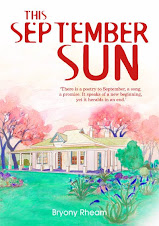
What I am telling you is that this novel is compact. I had a similar experience with Bryony
 Rheam’s This September Sun and Allende’s The House of The Spirits. The book tells you: You can’t deal with me in one gulp because I was written slowly, over time and you can never really go away forever from me.

Now that I have finished reading it, I feel that I have been paid. I chat with friends at home and abroad about this novel and they marvel at the comments I make. I admire the parallel process arrangement of this novel. Three separate stories running together like three fine novellas from one shelf, only ‘confluencing’ together at the very end. Running dutifully together like three weaving cords. Maybe in that regard, this is the first novel of its type by a writer from my country, Zimbabwe.

Now that Alfonso is not exactly what I thought he was in the beginning, I have learnt a lot about the power of holding out a key detail. I must now go through this whole story again, mentally, laughing at myself for having been led down the garden path. Alfonso is not exactly that drunken fool who enters the novel through the Magistrate’s door one morning. Through him, you learn that this novel does not underestimate what the establishment in Zimbabwe can achieve, miles and miles away. That is why I am still laughing every time that I read the very last page of the novel. Alfonso! O, Alfonso!

At the heart of this story are three Zimbabwean men, residing in Edinburgh, Scotland, far away from Harare and Bindura. They are named the Maestro, the Magistrate and the Mathematician. The way these men think and go is typically Zimbabwean. Although they are far away from it, turbulent Zimbabwe of the around the year 2000 is their recognizable fulcrum. Their thoughts on Zimbabwean politics are not bitter but careful. 

But the Maestro is my man. Through him, Tendai Huchu makes the most poignant contribution to Literature and Philosophy: “I went on a journey of discovery, trying to find the meaning of life, he said. I discovered that it is many things to many people at many times, and that , for me, and for me only, because you can only discover the meaning of your own life and no one else’s, that the meaning of life lies in giving a bit of yourself to someone else…. And he lay there and told her everything: wide open spaces, blue skies, laughter and the sound of sweet rain falling on zinc metal sheets, the brown puddles the rain makes, splashing in the puddles under the moonlight, cups of tea in the sunshine, cricket pavilions, of time that is measured not by the tick-tock of a clock but by its nearness to eternity, how the crickets sing their song in the night and birdsong picks up the refrain at dawn, all these things and more…”

Here is a man who goes far away from home searching for his lost soul. Then he starts to read book after book after book, until he discovers that if a book contains an idea, then it contains something of the writer’s soul… 

I must add that I enjoy disliking the Magistrate. It is because despite his huge social loss that comes through leaving Zimbabwe and the privileges he used to enjoy, he still has the holier than thou air around him, like most government officers everywhere whom I have learnt to loathe. His wandering around Edinburgh, taking in the environment and dreaming of little and far away Bindura, tells you that here is a bully from Zimbabwe, looking for a new pedestal to sit on in order to start to bully other people all over again. I am startled that the opposition sees method in him! I can reveal that I like it when that fatherly pride of his is constantly punctured for him by his no longer submissive wife and unsympathetic daughter. However, I catch myself wallowing in and enjoying his deep appreciation of Zimbabwean music. He turns all the remembered songs into a map of his good and bad memories of Zimbabwe. I am also like that.

I don’t know what to do with the young Mathematician and what finally happens to him. I honestly think that he wanted opportunity to find meaning out of life, love, sex and friendship.

Tendai Huchu’s second novel is a serious work of art, meant to accompany you through three different mental journeys of travellers from one country to a foreign city. This is a novel about cities through the eyes of newcomers. I think you may want me to say that this is a novel about migrants and how they peer into their souls from behind totally new cultures and infrastructure. But I will add: you come closest home when you travel further and further from home!

Memory Chirere

memorychirereblogspot.com