Showing posts with label Thomas Pringle Award. Show all posts

Monday, July 24, 2017

Why I Write: Sandisile Tshuma


“So what’s your guilty pleasure?” my brother asked one day out of the blue. We had spent the day in my little apartment and I suspect that, as he looked around the barebones space filled with books, CDs and conspicuously missing a television set, he was worried I had no life. “Um, I get my locs treated and go to the spa for a deluxe pedicure?” I ventured, posing my response as a question because I was pretty sure there was a right answer and a wrong answer to his question. “No, that’s basic grooming. You have to do that. What’s a thing that you do that you don’t need to do but that you love to do just for the pure enjoyment of doing it?” Failing to find an answer to a question so simple as “what do you enjoy in life?” I weaseled out of the conversation by offering him another beer from the fridge. But the question lingered in the recesses of my mind for years afterwards.

One day I wrote a blog post about how my inability to put down roots and stick to a single place or activity for long had evolved. I was not supposed to write that post. I was supposed to be working on an assignment for school due the next day. But there is a land called Procrastinatoria and I am their queen. Instead of ten pages on voluntary medical male circumcision, I toyed with the idea of finding myself by doing less and being more. I wrote and wrote and wrote and wrote. Then when my eyelids were so heavy with exhaustion that I could barely keep them open as I clicked on the Publish button, the answer to my brother’s question came to me. I was tired but completely satisfied. I had been so absorbed in what I was doing that I hadn’t noticed time slipping past and the sleep creeping in. I had stolen time from my education and spent it on my immediate happiness. Instant versus delayed gratification. An indulgence. A guilty pleasure, one might say.


Nothing relaxes me the way writing does. Nothing else feels so effortless even when the results aren’t perfect. Nothing validates me the way writing does. Writing gives me wings. My writing needs no audience. It bears witness to itself. I write because it makes me feel alive and significant. I write because I express myself best that way. My brain moves so fast that my mouth can’t keep up. So writing is my one chance at taking what’s on the inside of my mind and manifesting it in the material realm.  In a world with so many distractions that exact a heavy toll on introverts like me, writing is my refuge, a welcome escape. It’s my happy place, my soft place to land. I write because there’s nothing else I would rather do, ever. They say you shouldn’t need a lover; you should want one. So sure, I don’t need to write. I want to write. But I want it badly. I want it all the time like a hot new crush. In my universe, writing is bae.


Sandisile Tshuma is a Zimbabwean storyteller, health, development and human rights practitioner who has studied molecular and cellular biology, public health, disaster management and acting from the University of Cape Town (South Africa), the University of the Witwatersrand (South Africa), the National University of Science and Technology (Zimbabwe) and the London Academy of Music and Dramatic Art (United Kingdom).
Sandisile has a professional background in monitoring, evaluation and communication in sexual and reproductive health programmes with the United Nations and other International Organizations in East and Southern Africa. She is an award winning short story writer, the founding editor of AntuAke online magazine, and has curated a personal blog for five years. Sandisile's short stories, "Arrested Development" and "The Need" were published by amaBooks Publishing in two anthologies of Zimbabwean short stories. "Arrested Development" won an Honourable Mention for the 2010 Thomas Pringle Award in the short story category, has been translated into a number of languages and is included in an anthology titled "When The Sun Goes Down", a set book in the Kenyan English language curriculum at secondary school level. The Need has been translated into isiNdebele. Her first full length book, "Dandelion Dreaming," tells the story of marginalised youth in South Africa using the "photo-voice" methodology. 

Wednesday, January 11, 2017

Why I Read by Sandisile Tshuma


Hi. My name is Sandisile Tshuma and I am an information junkie. More than ten years ago I underwent the Clifton strengths finder assessment as part of a team building exercise at the youth-focused HIV prevention organisation I had just joined.  The test revealed that one of my top five strengths was something called Input. Input was defined as having a craving to know more and people with Input like to collect and archive all kinds of information. While I normally like to convince myself that I am “a riddle, wrapped in a mystery, inside an enigma,” I had to admit that the test was spot on.  

I read because I like to know things. I love knowledge for its own sake and I hoard it in my mind, my electronic devices, journals, notebooks and a book shelf that is so heavily overloaded it teeters precariously on the verge of collapse under the weight of all manner of books, lovingly collected over years.  My insatiable appetite for information and ideas in the form of words is well documented. I can’t help myself. Reading let’s me know things and discovering new things fills my heart with unadulterated joy. Literacy is the greatest gift my parents gave me.


When I was a child my parents kept an old school trunk full of books well older than I. That black trunk was a treasure trove of books, all classics. My mind traveled from The God of Small Things and Coriolanus, to Harvest of Thorns and Petals of Blood, from Gray’s Anatomy to Toohey’s Medicine for Nurses, Charles Mungoshi to William Blake. One day while digging through the old black trunk I found a tatty old exercise book in which my father had written the first few chapters of an autobiographical creative fiction book. I knew it had to be something he wrote in his youth because the pages were almost disintegrating and the ink was faded and blurred making it hard for me to read some of his flawlessly scripted cursive. He had never once mentioned this work or expressed the desire to write. He was a military man, a man of science, a businessman, anything but an author. And yet he wrote beautifully. Lyrically. He was reflective and generous in his descriptions. I was mesmerized. We never discussed it but it completely changed the way I saw him. He revealed his complex layered thoughts and helped me understand my own dark, broody complexity. I recognized myself not only in his words but also even in the very act of writing out his life, documenting his story for an audience of unknown existence.
I read to rekindle the feeling I got when my father unknowingly shared his life with me, as do so many other authors I love. In a world where it’s hard to feel anchored my love for reading showed me a new connection to the source of my being. I read because this is a privilege.


Sandisile Tshuma is a Zimbabwean storyteller, health, development and human rights practitioner who has studied molecular and cellular biology, public health, disaster management and acting from the University of Cape Town (South Africa), the University of the Witwatersrand (South Africa), the National University of Science and Technology (Zimbabwe) and the London Academy of Music and Dramatic Art (United Kingdom).
Sandisile has a professional background in monitoring, evaluation and communication in sexual and reproductive health programmes with the United Nations and other International Organizations in East and Southern Africa. She is an award winning short story writer, the founding editor of AntuAke online magazine, and has curated a personal blog for five years. Sandisile's short stories, "Arrested Development" and "The Need" were published by amaBooks Publishing in two anthologies of Zimbabwean short stories. "Arrested Development" won an Honourable Mention for the 2010 Thomas Pringle Award in the short story category, has been translated into a number of languages and is included in an anthology titled "When The Sun Goes Down", a set book in the Kenyan English language curriculum at secondary school level. The Need has been translated into isiNdebele. Her first full length book, "Dandelion Dreaming," tells the story of marginalised youth in South Africa using the "photo-voice" methodology. 

Sandisile has a special interest in young people, particularly those made vulnerable by HIV and AIDS, and is involved in supporting the work of  Aluwani and COPESSA. Currently, she works in leadership development as the South Africa country manager of the Emzingo Group aiming to inspire responsible leadership, prepare individuals to tackle global challenges and connect business to society.

Monday, March 14, 2011

Sandisile Tshuma interviewed by Beaven Tapureta for WIN-Zimbabwe


New Literary Female Voice on the Horizon

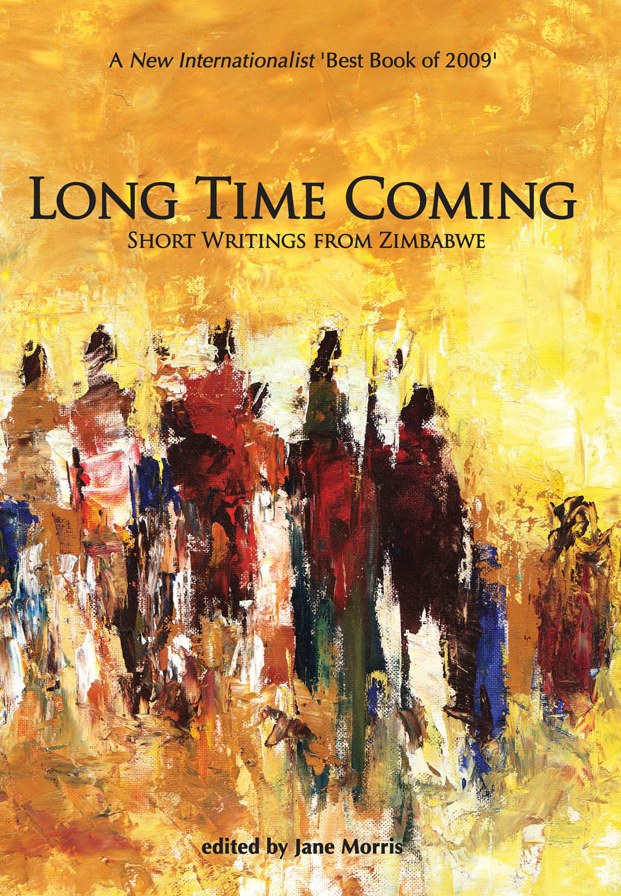
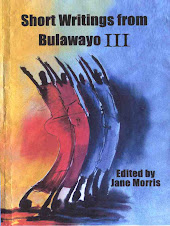
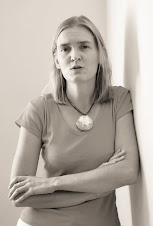
The past decade has seen the emergence of the young Zimbabwean female voice in the writing arena, with some of them winning awards in various categories. Ethel Kabwato, Blessing Musariri, Bryony Rheam, Sympathy Sibanda are some of the names making waves in the poetry and fiction genres. Recently, Linda Msebele, from Bulawayo, has just had her story 'The Chicken Bus' translated into German and published in the German quarterly journal, 'Literaturnachrichten'. Another Bulawayo-born writer, Sandisile Tshuma (pictured), won an Honourable Mention at the 2010 Thomas Pringle Awards for her first published short story Arrested Development. The prestigious awards aim to reward best short story published in a journal, magazine or newspaper in Southern Africa over the past two years. The winner of the award was Stephen Watson for his short story Buiten Street, which appeared in the magazine New Contrast. The Thomas Pringle Award judges described Arrested Development as a ‘beautifully observed story of a journey – both literal and figurative’. Arrested Development first appeared in the anthology Long Time Coming: Short Writings from Zimbabwe (Amabooks) and the story was further published in various journals such as Wordsetc. Jane Morris of Amabooks described Tshuma’s achievement as an encouragement for other women to break new literary ground. She said, “I think her example will give young writers encouragement to write and to try to get their work published.” Beaven Tapureta (BT), a literary journalist, had the privilege to speak to Sandisile Tshuma (ST) who now lives in Johannesburg, South Africa, to find out who she is and what she feels about winning the Honourable Mention as a new writer.

BT: What does the recent accolade mean in your writing career?

ST: Being shortlisted for the Thomas Pringle Award is an honour I was immensely delighted about. Receiving an Honourable Mention for Arrested Development was a singularly gratifying experience. The recognition is an affirmation of the gift that God has given me and serves to encourage me to nurture and develop my passion for the written word. With this in mind I recently started writing a blog in an attempt to get into the habit of writing and hopefully find my own style and voice as a writer. I have also started studying with the London School of Journalism and am looking forward to increased output as my technique improves and I truly come into my own.

BT: Which awards/prizes have you won before?

ST: I remember performing very well in local literary competitions when I was still in school. The performance of Arrested Development in the award administered by the English Academy of Southern Africa is all the more special for me because this is my first published work.
BT: When did you start writing, and where exactly?

ST: Hillside Junior School in Bulawayo had a strong ethos of nurturing various talents and skills amongst pupils so we were always encouraged to participate in local writing eisteddfods and the like. So I have essentially been writing creatively since childhood.

BT: Lots of writers have their model writers whom they try to emulate, who are your influences?

ST: Given that I am still trying to define my own style as a writer I don't feel as though I have arrived at a position where I can single out specific influences. I read very widely and am moved by different writers. I always appreciate writing that is crisp, uncluttered and effortless to read. I admire writers who are able to convey complex or polemic themes using satire, humour and simple language, as well as writers who are able to draw me into completely unfamiliar territory and defy the traditional models of prose writing. Writers whose work I have particular fondness for include Ahmadou Kouruma who unfortunately passed away in 2003, Salman Rushdie, Vikas Swarup, Markus Zusak and Alex Garland. Being somewhat of a TV baby I have a strong appreciation for the work of the writers of the ABC series Grey's Anatomy. Anyone who can make me laugh one moment and shed actual tears the next sure can tell a story! The narration is accessible, reflective and easy to relate to. I also have a great love for the poetry of Charles Mungoshi, Pablo Neruda and Rainer Maria Rilke.

BT: What is your vision as a writer?

ST: In the short to medium term my vision is to be able to do some feature writing on subjects that are important to me such as health, human rights, music and personal development. In the long term I would like to write literature for children as well as young adults. My vision is to be able to use my talent, experience and imagination to inspire young people, entertain them and subtly provide them with some of the psychological tools they need to navigate their way through a rapidly changing and highly demanding world. I want my work to stretch their horizons beyond the confines of whatever circumstances they happen to be born to so that the whole world opens up before them and they can know and understand their rightful place "in the family of things" as the poet Mary Oliver says in “Wild Geese”.

BT: You work as Programme Associate for the UNESCO East and Southern Africa EDUCAIDS programme, how does job link with your writing ambitions?

ST: The work I do is aimed at supporting the education sector in providing comprehensive age appropriate HIV and AIDS, sexuality and sexual and reproductive health education for young people from primary school right through to tertiary level. I have always been passionate about improving the health outcomes of people in underdeveloped communities. This is the sort of work whose rewards may not be immediately tangible but if we get it right could quite literally save lives and empower people to make healthy choices for themselves. My work requires the ability to look at situations with fresh eyes, to think analytically and creatively, and ultimately to communicate effectively. I find that attention to detail and the ability to analyze ideas through a creative lens are invaluable as a writer.
BT: How do you describe the status of the writing industry in Zimbabwe?

ST: Zimbabwe has some exciting writers both at home and outside her borders. I am encouraged by the resilience of publishers such as AmaBooks who have bravely supported local writing in what can at best be described as "a difficult environment." While I am not exactly plugged in to the "writing community" at home, I like the fact that such a community exists and that there is support for the craft even if only amongst peers.

BT: Thank you very much Sandisile, we wish you the best in all your writing endeavors.