Tuesday, October 11, 2011

Where to Now? reviewed in Newsday


Where to Now? — Short Stories from Zimbabwe
REVIEWED BY CYNTHIA R MATONHODZE - Oct 11 2011 06:43
Editor: Jane Morris
Publisher: ‘amaBooks, Bulawayo, 2011, 146pp

The anthology Where to Now? Short Stories from Zimbabwe features a mixture of 16 Zimbabwean writers, some new and others well known, among them 2011 Caine Prize winner NoViolet Bulawayo and 2011 World Summit Youth Awards runner-up Fungai Rufaro Machirori.
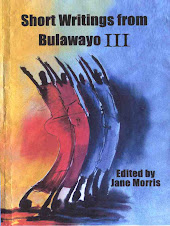
Published by ‘amaBooks, it is the fifth book in a series of short story writings the first being Short Writings from Bulawayo (2003)* and the most recent one Long Time Coming: Short Writings from Zimbabwe (2008).
Where to Now? casts autobiographical tales of life and living in Zimbabwe’s lost decade when the economy crumbled, inflation reached dizzy heights, violence replaced the rule of law and most people fled the country.
What is autobiographical about these stories is different Zimbabwean authors delivering narratives that speak of events, phases, characters and images that are conspicuously Zimbabwean, creating a lingering reflection which prompts the reader to ask: Where to now? From the black purchasing manager who struggles with whether or not he is a true African — when a fellow colleague accuses him of being a sell-out for eating isitshwala with a fork and knife and only using the company fuel allocation he needs in Mzana Mthimkhulu’s I am an African, am I? to the couple that goes to the UK, each assuming another identity, to work and send money home to build their dream house only to be swindled by a relative who had been sending them pictures of someone else’s house in Blessing Musariri’s Sudden Death — each story tickles the memory to recall that period and sometimes even crafts out a memory that will have you sad, in stitches, inspired, disillusioned or even questioning yourself.
For example, Raisedon Baya’s Her Skin is a Map and Novuyo Rosa Tshuma’s Crossroads, both writers tell the story of migrating to South Africa. One traces the events that lead most to leave while the other sketches out the tedious humiliating process many Zimbabweans went through for the promise of a better life, only to have that hope shattered by reality. Etched in these tales are themes such as violence, corruption, family disintegration, desperation, hope and disillusionment. Baya uses nature and the park to lament and trace the deterioration of human relationships in society, in Zimbabwe.
“The park has changed. The grass is no longer entwined together like lovers. The grass is gone, replaced by an angry gold that attacks the eyes. The trees look unhappy, betrayed. If they could walk they would have left the park a long time ago.” (p56). Now, “The people that come to the park now are not lovers with spirits, they are not families that want a day out, but unemployed people who are hungry and tired of hunting for jobs and are here to rest and hide from prying eyes,” (p58).
Baya remembers happier times where as a little boy they would have a picnic in the park at Christmas with his family, everything joyous with the promise of independence. Now when he takes his own family to the park they end up being badly beaten up by riot police who suspect that they are striking teachers. Then and there he makes up his mind to leave with his family for Durban.
Tshuma creates a vivid image of the process of migrating in a young woman’s journey from Zimbabwe to South Africa in the hope of getting a job and saving up enough money for university. In Zimbabwe – no water, no electricity (depending on where you stay), a never-ending queue at the South African Embassy with enterprising individuals that sell their positions in the queue.
At the border — never ending queues, rude and indifferent immigration officers, stories of having been robbed in South Africa and the public toilets that read:

Toilet paper only
To be used in this toilet
No cardboard
No cloth
No Zim dollars
No newspaper p (69)

Baya and Tshuma clearly and skillfully capture memories of that sad period in Zimbabwe’s history, painfully personal for most. There are some lighter stories like Mapfumo Clement Chihota’s A Beast and a Jete which is a story within stories of clever women that out smart their husbands.
Other stories include themes such as xenophobia, poverty, marriage, lost hope, infidelity, love, misplaced hate, the new generation of women, a dishevelled society, loneliness, the pain of remembering, death, coming home, the born-frees, political machinations, life in limbo and black and white relations.
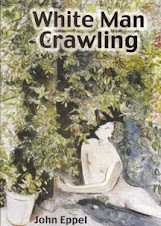
Other contributors include Barbara Mhangani-Ruwende, Thabisani Ndlovu, Bryony Rheam, Nyevero Muza, Christopher Mlalazi, Diana Charsley, Murenga Joseph Chikowero, John Eppel and Sandisile Tshuma.

Saturday, October 8, 2011

Owen Maseko, from NoViolet blogs


Zim visual and installation artist, Owen Maseko, makes a visual interpretation of a scene from NoViolet Bulawayo's "Snapshots" at the Byo launch of "Where to Now?" by amabooks on 09-24-2011. Maseko is of course one of our most renowned artists, but he has also been persecuted by the Zimbabwean government for his Gukurahundi exhibition, a reminder that as Zim artists, we are not free. Below is a poem I wrote during his incarceration in 2010.

----------
they say Owen Maseko
be causing trouble—like,
undermining the authority
of the president, like
brushes and colors in hand,
he be painting truth, making truth, like,
shedding dark blood, digging old skulls
unburying the murdered, imagine that,
like giving them bright-red voices,
after all these years - almost 30 solid,
saying their names, hanging the dead
on a clothesline for all to see,
like nobody didn’t teach him - didn't tell him
Zim is a land of silent silence,
where they edit expression on final cut pro
with police whips and guns and prisons
people living hand to mouth,
famished for rights, for freedom,
for the sound of their own true voices
see us walk like zombies in Zim, like
paralyzed by fear of the state in Zim
we could flee our shadows in Zim,
we see nothing, we hear nothing in Zim
let them silence us, beat us in Zim, like
what does freedom matter in Zim?, like
we have Owen Maseko to show, right
now here’s staring at a blank cell
reading the writing on the wall
scribbled in blood, left hand too,
“Jestina Mukoko was here” like
we have Gukurahundi to show
we have murambatsvina to show
we have persecuted whites to show
we have the 2008 election to show
but you can’t ask us nothing coz
we won’t say nothing, but like,
in our dreams though, we roar with rage,
wave bloodied shirts in the wind,
wave Gukurahundi skulls and femurs,
we knock down prisons, like, we throw
rocks at police, we gut jails, like,
we protest until they free Owen Maseko,
in our dreams we are almost brave, and
the president is an old man who fears our power. © NVB

Where to Now? reviewed on www.examiner.com


Where to Now? Short Stories from Zimbabwe
Edited by: Jane Morris
Reviewed by Rosetta Codling
European Literary Scene Examiner, www.examiner.com
October 6, 2011

Synopsis: This work is a collection of complex, human dramas focusing upon the realities of Zimbabwean and African life. The writer Mzana Mthimkhulu contributes to this collection an intriguing question and excerpt entitled I am an Africa, am I? This African-Cartesian question is not easily answered in this short story. Mark, a colleague of Timothy, the protagonist, raises this question to his friend. Mark’s query resonates throughout the selection. Timothy is a successful man. He adheres to the guidelines in his Western workplace. In doing so, is he betraying something? Tradition vs. Modernity is the conflict…here…and always in Africa.
Blessing Musariri’s contribution entitled Sudden Death is a ‘brief’ about trust and kinship. The hopes and dreams of several women in the story become entwined upon a literal ‘cross’ borne by one man. Was it wrong to place such a burden of trust upon a person? Was it foolish not to assume that repercussions would occur?
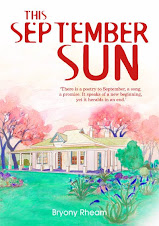
The selection The Piano Tuner, by Bryony Rheam, stirs the reader’s imagination. The main character, Leonard Mwale, is a Zambian piano tuner by trade. He goes to luxurious homes and tunes things into shape. Many patrons send a car for him and offer him a free meal in addition to his fee. For, Leonard Mwale is a skillful man. Tragic are the many ailments in the household that he services in this selection.
In summary, there are no ‘nicely constructed’ plots or storylines in this collection. However, the readings will challenge your imagination and your concept of ‘self.’

Critique: This is the best collection of short stories from Jane Morris so far! I did enjoy the stories and the complex plots. The African literary tradition is illustrated and represented well by these writers and stories. This is a collection for every lover of African literature. Educators and sociologists take note and get a copy!

Thursday, September 29, 2011

Where to Now? Short Stories from Zimbabwe launched in Bulawayo


The Zimbabwe launch of 'amaBooks’ new title Where to Now? Short Stories from Zimbabwe took place on Saturday September 24 as part of the Intwasa Arts Festival koBulawayo at the National Gallery of Zimbabwe in Bulawayo.
The collection, the fifth in the Short Writings series, features sixteen Zimbabwe writers – Raisedon Baya, NoViolet Bulawayo, Diana Charsley, Clement Chihota, Joseph Chikowero, John Eppel, Fungai Machirori, Barbara Mhangami-Ruwende, Christopher Mlalazi, Mzana Mthimkhulu, Blessing Musariri, Nyevero Muza, Thabisani Ndlovu, Bryony Rheam, Novuyo Rosa Tshuma and Sandisile Tshuma.
As well as readings from the book by John Eppel and Christopher Mlalazi, the artist Owen Maseko did a ‘live’ sketch as an excerpt from NoViolet Bulawayo’s story Snapshots was read.

More photographs taken during the launch can be seen on the 'amaBooks Facebook page https://www.facebook.com/media/set/?set=a.174435625968972.44269.127285080684027

Conversations with Writers: Omen Nyevero Muza

From: http://conversationswithwriters.blogspot.com/2011/09/interview-omen-muza.html

THURSDAY, SEPTEMBER 29, 2011

[Interview] Omen Muza

Omen Nyevero Muza holds an MBA and runs a financial advisory firm he co-founded in Harare.

He is also a financial columnist with a local daily newspaper.

One of his short stories appears in the anthology, Where to Now? Short Stories from Zimbabwe (amaBooks, 2011).

He writes and plays guitar in his spare time.

In this interview, Omen Muza talks about his concerns as a writer:

When did you start writing?

My first serious attempt at writing was while waiting for my O-Level results. I cobbled together a collection of poems which was, however, never published.

Before that, I recall that my Grade 7 teacher put my name to something I didn’t write and submitted it to some obscure publication. Perhaps as some form of poetic justice, the publication misspelt my name to something entirely unrecognizable so in the end it was never attributed to me anyway. I am sure my beloved teacher meant well and obviously had a soft spot for me but I wonder whether she was aware that she was making me an accessory to an act of plagiarism. I certainly wasn’t aware!

How would you describe your writing?

Intermittent and undisciplined.

Although I have attempted a novel before, I now tend to focus only on short stories because they are less demanding, time-wise. The rigour of full-time work and contributing a weekly newspaper column on banking and finance does not leave room for much else, apparently.

I have never consciously thought about who my audience is or should be. I just write, really. Sometimes your audience can come from the most unlikely quarters so it may not be wise to have pre-conceived notions about who constitutes it.

In the writing you are doing, which authors influenced you most?

My pool of influence is quite an eclectic mix. However, if I have to name one person I consciously sought to emulate during my formative years, it would have to be none other than Dambudzo Marechera. With the benefit of hindsight, I was trying to emulate his lifestyle, not his writing style.

And have your own personal experiences influenced your writing in any way?

I would say extensively.

Most of my creative work is based on my personal experiences, sometimes to the point of being crudely autobiographical, I must say.

What are your main concerns as a writer?

To write in a manner that is believable... to be authentic... to write in a manner that people can relate to.

Perhaps this explains why I only write fiction when I have to. I no longer write for the sake of writing.

Like Nhamo, the character in "The Poetry Slammer", from the collection Where to Now? Short Stories from Zimbabwe, my biggest challenge is the balancing act between finding time to write while working full-time in the financial services sector. It’s never an easy road.

Do you write every day?

I don’t write every day but I read every day. And when I write it is never structured - there is no formula. I let the chips fall where they may. At any given time, I usually have several incomplete stories that I am working on.

I haven’t published a full book yet but I have published a number of stories in various online and print media.

My latest short story, "The Poetry Slammer" was published in early August as part of amaBooks' latest collection of short stories, Where to Now? Short Stories from Zimbabwe. I cannot remember how long it took me to write the story but because I wrote it for submission to a literary competition, the story can’t have taken much time to write.

An earlier short story of mine had been one of the top ten stories in the Intwasa Short Story Writing competition in 2007 organized by amaBooks in Bulawayo, so amaBooks was the natural destination for "The Poetry Slammer".

Though largely fictional, "The Poetry Slammer" draws significantly from real events and places. Under those circumstances, the challenge was to be faithful to the zeitgeist – the true spirit of those events and places because some people who went through the experiences on which the short story is based may read the story one day. I had to do quite a bit research in order to deal with that concern. For instance, when I was writing the short story, I actually visited the Book Café for the House of Hunger Poetry Slam in order to get into the right groove, and I remember chatting to Chirikure Chirikure one night in the Mannenberg Jazz Café.

I enjoyed writing every bit of "The Poetry Slammer", not only parts of it. I wanted it to be different from anything I had written before in terms of style, plot and characterization.

What will you be working on next?

Interestingly, or maybe strangely, it will not even be a work of fiction. It will be a collection of my NewsDay banking and finance articles written over a period of more than a year, tentatively titled Banking Insights from an Economy in Transition.

What would you say has been your most significant achievement as a writer?

Not giving up on writing... staying true to my craft in spite of the odds heavily staked against writing.

Monday, September 26, 2011

Conversations with Writers: Novuyo Rosa Tshuma

Conversations with Writers

[Interview] Novuyo Rosa Tshuma

http://conversationswithwriters.blogspot.com/2011/09/interview-novuyo-rosa-tshuma.html

Novuyo Rosa Tshuma is a Zimbabwean writer currently studying at the University of Witwatersrand, South Africa.

In 2009, she won the Intwasa Short Story Competition.

Her short stories have been featured in anthologies that include The Bed Book of Short Stories (Modjaji Books, 2010); A Life In Full and Other Stories: Caine Prize Anthology 2010 (New Internationalist, 2010), African Roar: an Eclectic Anthology of African Authors (StoryTime, 2010) and Where to Now? Short Stories from Zimbabwe (amaBooks, 2011).

In this interview, Novuyo Tshuma talks about her concerns as a writer:

Which authors influenced you most?

The novels of Orhan Pamuk, Chimamanda Ngozi Adichie, Arundhati Roy, Sembene Ousmane, Naguib Mahfouz, Tsitsi Dangarembga, James Baldwin.

A particular piece of short writing which comes to mind is Yvonne Adhiambo Owuor’s "Kin la Belle: In the clear light of Song and Silence" which was featured in the Pilgrimages Project and was about her pilgrimage to Kinsasha. I love descriptive writing, writing that engages one’s surroundings, and in this piece a stark, out-of-the-box creativity merges with the writer’s experiences to create an intensely sensual reading. Absolutely beautiful.

I read an online excerpt of Yvonne Vera’s Butterfly Burning where landscape merges with the emotional state of the protagonist in an intense poetic prose that is just awesome.

Brian Chikwava’s "Seventh Street Alchemy" is a read filled with memorable scenes painted with linguistic prowess.

The short fiction is endless.

Why did these particular writers have this influence? For me, they each offered something new in their readings, something beautifully executed, something I had not previously encountered in my readings.

Arundhati Roy’s gymnastic linguistics in The God of Small Things showed what was possible with language in literature, how words could be bended, stretched, rearranged and created to form a rich literary mosaic. Naguib Mahfouz’s Palace Walk offered intense characterization, as did Tsitsi Dangarembga’s Nervous Conditions.

In Palace Walk I found myself in an intricate love-hate relationship with many of the characters, the father-figure who was the true depiction of chauvinism, his wife Amina who had an irritating blandness, and their son Yasin who embarked on the most mischievous escapades. I formed a complicated bond with these characters, irked often by their complexities, disappointed by their short comings, in love with their 'humanness'.

Nyasha in Tsitsi Dangarembga’s Nervous Conditions is a beautifully complex character with acute perceptions and an original flair.

Orhan Pamuk’s novels offer philosophical characters set in plots that give a great view of the complexities which have plagued Turkey at different points of its history; a lot of tugging between fundamentalism and secularism/westernization.

I became fascinated with Nigerian dishes after tasting them in Chimamanda Ngozi Adichie’s Purple Hibiscus.

There is always something new, something refreshing offered in the memorable reads.

How have your personal experiences influenced your writing in any way?

Hmmm ... I have said before that I like to keep it 'purely fiction'. However, pieces of oneself, one’s experiences are invariably interweaved in one’s writings.

I like to explore characters who may be removed from my direct self, but perhaps whose bits of experiences here and there, are my own. Taking, for instance, my story "Crossroads" in the Where To Now anthology ... it is a fictionalized piece and yet the descriptions at the border are details of characters I have observed, conversations I have overheard and so forth.

It helps in a piece of work to be familiar with setting and to be able to capture the atmosphere of a place, its edge or its bluntness. So, for me, personal experiences function well for setting and atmosphere.

I like to experiment with characters who are not directly linked to me as a writer, characters who I may feel do not exhibit too much of myself. I do not like too much self-examination in a piece of fiction; one becomes self-conscious as a writer, and rather apprehensive of this idea of self-depiction.

People may, nevertheless, link a character to the writer. I have had people read a story and then come to me, agape, and say, "You really did that?!" The excitement lies in stepping into the shoes of a fictionalized character and capturing such a character as though it were you, which then becomes, on some level, a humanizing of the self.

What are your main concerns as a writer?

The biggest, I would say, is the apprehension about one’s writing, capturing a story as best you can. One is ever aware of how much one is yet to learn, how much one does not know. These apprehensions are most easily tackled by ever writing, ever reading, ever exploring.

The biggest challenge is finding a home for your work. One gets more rejections for one’s work than acceptances. Some publications don’t reply. So one needs a persevering spirit.

I remember when I first started sending out my work. I was very bold and persistent in my letters. Got many rejections. I always kept sending.

Another challenge is fighting inertia ... it is important to ever grow in your writing, especially as a young writer. It is crucial to step out of one’s comfort zone and experiment, in order to discover the things one may be able to do in and with one’s writing. Some experiments fail. But that is part of the learning process, isn’t it? To discover what works and what doesn’t. Writing is a constant state of patience.

Do you write everyday?

Not every single day. I would say four to five days a week for several weeks, and then reading takes over for the next week or two and so forth. Some days are busier than others.

The trick, I find, is to allocate writing its space in your life, and to ensure that others respect that space. I usually write early morning, as that is when I feel sharpest.

My sessions usually begin by reading the previous session’s work. This helps me get into the mode of my work. Some editing usually takes place during this time. After reading, one simply delves into the writing. Many times, particularly with first drafts, one feels that one is writing a lot of rubbish – it is as though one is feeling for a thread in the dark, searching for the vein of a story.

Many first drafts end in despair! I find I have many first drafts of different scenes, different stories, and usually the stories that I finish at a point in time are alterations from first drafts written a while ago, which when perused with a fresh eye, offer a gem or two worth pursuing. And so that is how it goes.

If it is during a morning where I have to attend lectures, then time constraints end my sessions. You find that when you have had a good writing session that must end before you want it to, the story stays in your mind, and you ponder sentences and scenes as you go through your day. When you feel you have a particularly good hunch, you are impatient to get back to your writing.

If it is on a day when I do not have lectures, my sessions can carry through the day, which then becomes an intermittent act of writing and revising, and a lot of editing. This is on a good day, when one has tapped into the vein of a story.

Usually such sessions end because one is tired, and feels satisfied with the work one has managed to do on that particular day. And success on any given day is not judged by quantity but by quality – writing is a constant state of patience (unless one is working with a deadline and needs to balance number of words and the quality of the wording.

Time constraints sometimes pull the writer out of a surreal state where all writing can take place forever! So one may write three thousand words, and only a thousand of that three may feature in the final story.

Some sessions end in despair, when one is struggling with a scene, a story, a character. Usually when this happens I just grab a book and read – it helps to calm the mind.

My sessions usually begin and end in solitary space. I deliberately live alone, as I find the space invaluable for the writing. Growing up, I always used to crave the idea of a space to write, as there was always a lot going on around, interruptions and the like. The act of writing is ultimately an act of solitude. So it is good to have a space where you can just wake up and begin writing, and not have to entertain disruptions.

When did you start writing?

I began writing stories for fun when I was nine, thereabouts.

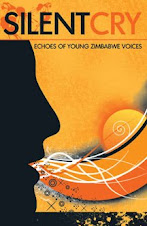
Influences change. It was during the Echoes of Young Voices young people’s anthology project with British Council and amaBooks publishers in 2006 that I acquired an inclination towards what you would call 'African Writing' ... I was eighteen at the time.

How would you describe the writing you are doing?

Realist fiction.

Who is your target audience?

Everybody who loves to read ... but this statement itself carries preconceptions, whether even subconsciously, of what our generic readership is, based on the common culture many of us consume or are invariably exposed to, through technology and other mediums.

It is interesting how the idea of Western influence (through, say, its preconceptions) becomes the focal point around which a reaction is lodged, whether towards or against it. Is the idea of a target audience presupposed by the idea of a commercial concern?

It is interesting ... in certain reviews you hear reference to what we, the readers, think; how we may view this and this, and one wonders who this we is. In lumping a generic readership, the question is, who or what informs the tastes of this readership? From where do the influences stem? And what of the other readership, take the rural masses who may 'love to read' but who do not have the commercial viability? Who or what shapes whatever literature they have access to? The relationship between writer-reader can be a complex one.

What would you say has been your most significant achievement as a writer?

Hmmm ... Achievement ... That word. I am skeptical of it.

There have been wonderful isolated moments, which I would not call achievements: My first story ever to be published. The very act itself of being published. Working with publishers on a piece of work at an intimate level, such as Jane and Brian of amaBooks. Mixing with writers on a whole other 'political' level at the Caine Prize Workshop, and building friendships there. Learning from writers I greatly admired at the Farafina Workshop. Growing, from these workshops and these interactions, into a more solid writer. Interacting with writers online and meeting some great people I hope will be lifelong friends.

I guess the idea of achievement goes back to a question: What is it that one sets out to achieve as a writer? Hmmm ... Interesting question, that.

The more obvious ideas of achievement are just that, too obvious, and therefore immediately boring.

I do know one thing though, which is that probably, this achievement in writing and I, shall always play a cat and mouse game.

Why?

Because it always feels I have not captured what it is I would like to capture in this thing called writing because the element to be captured is ever evolving. There is always a better way to capture a story, a new story to be told, a new story idea to try. The more one reads, the more one meets with freshness, and the more one’s critical horizons are expanded.

I am a young writer, I really cannot speak of achievement, whatever this suspicious thing called achievement is, and whatever it should mean to a writer. There is much work to be done, much writing to do, so little that has been done. The focus is on the future, spurred on by past and present writings.

Long Time Coming Review, from www.examiner.com


New African Writing: [A] Long Time Coming

Rosetta Codling, European Literary Scene Examiner

http://www.examiner.com/european-literary-scene-in-national/new-african-writing-a-long-time-coming-review

September 24, 2011

Title: Long Time Coming, 'amaBooks Publishers, 2009

Edited by: Jane Morris

Synopsis: Jane Morris assembles another collection of short stories from the best contemporary writers of Zimbabwe today entitled Long Time Coming. Julius Chingono, John Eppel, and Brian Chikwava are noted contributors to this work, but there are additional Zimbabwean writers that are equally talented too. Sandisile Tshuma’s selection Arrested Development serves as an introduction to all. This first-person narrative is an account of the trials of a young lady attempting to go from point ‘A’ to point ‘B’ via the unreliable, temperamental transport system of Zimbabwe. Self described, our narrator rants: “I am not hard to spot in this crowd at the barely functioning filling station. I am the sore thumb of a twenty-something year old woman wearing high-end sunglasses and trendy jeans, carrying minimal luggage and standing in a statuesque pose…” And indeed our narrator is the typical, young, mobile, and affluent one seeking a better route and a better trip out of Africa. The banter and the despair of Zimbabweans resonate well in this short ‘snapshot’ of their lives.

The writer Mathew Chokuwenga creates an expose on life that reads like an African version of Henry James’ Washington Square. This is a complicated, many tiered story about complicated people and complicated lives. The title of the work is Lanigan Avenue. The residents of Lanigan Street and Washington Square share many secrets, intrigues and little love.

One of John Eppel’s contributions to the collection is entitled The Awards Ceremony. Eppel’s selection pairs well with the poem My Country by his (deceased) comrade Julius Chingono. The medium of satire is often illustrated in John Eppel’s writings. The Awards Ceremony is a short creation of the author that satires a farce within the hypocrisy of a government award ceremony. There is some dark humor in this one. A reader will find overt humor supplied by the ample wife of the Minister too. The poem of Julius Chingono pairs so well with The Awards Ceremony because it focuses upon the same theme. My Country is a cry from Julius Chingono. He bemoans the reality of his cosmetically attractive... but barren... homeland reduced to a disposable state that… “leads to a rubbish dump/by the cemetery.” Powerful is the word. Readers will find that this book contains short writings requiring extensive deliberations.

Critique: I was enthralled, mesmerized, intrigued, and enamored with this collection. Zimbabwean writers deserve the center of the literary stage. I have reviewed several works from this genre and my fascination and appreciation continues. I truly know that educators in the fields of language and history will find this collection useful for adult education. The readings flow easily and well, but the issues are suited for mature readers. I recommend this book to all!