Sunday, May 19, 2013

Worldreader in Bulawayo

Silent Cry on KGVI Kindle


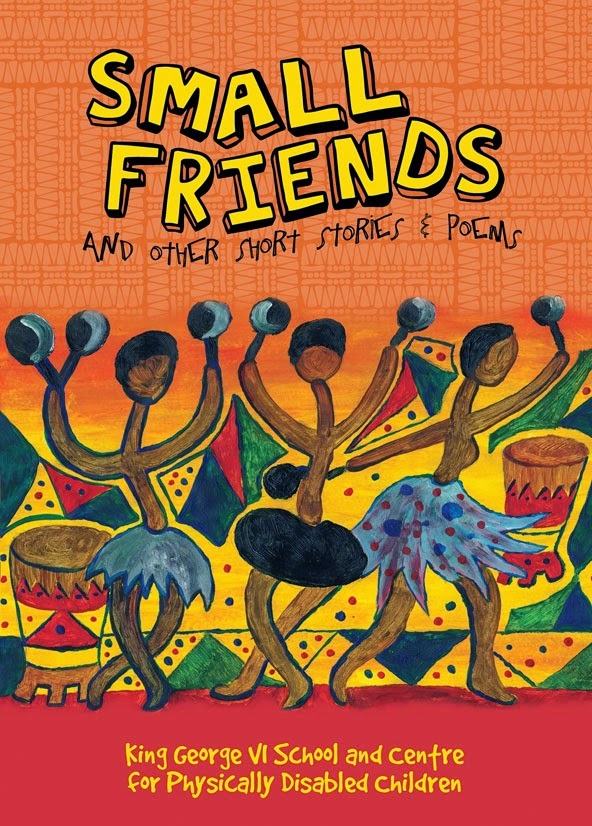
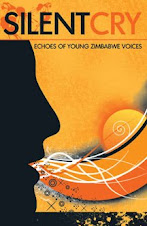
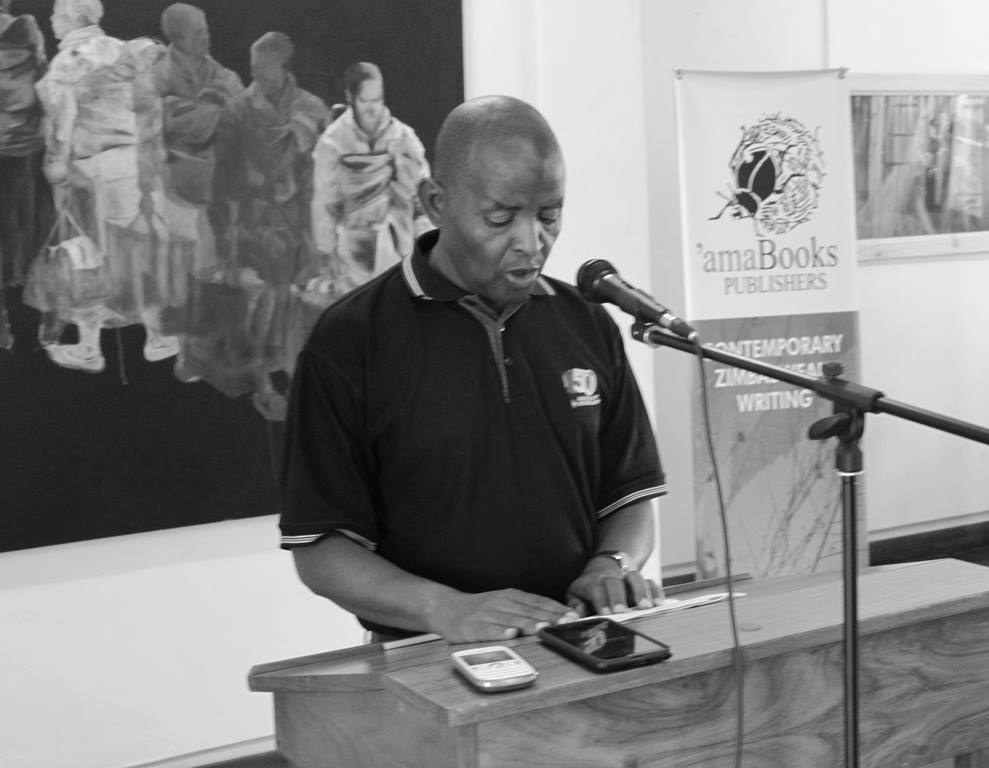
The first Worldreader project in Zimbabwe, providing e-readers and access to over 6000 ebooks to King George VI school, was launched in Bulawayo last week. The event was organised by KGVI, with Michael Smith and Nadja Borovac of Worldreader. Staff and students at the school have been trained in the use of the Kindles, so that they can read books on the devices, half of which are African books. ’amaBooks are the first publisher in Zimbabwe to partner with Worldreader, so that Zimbabwean fiction titles can already be accessed by students. Worldreader have similar existing projects in India and in several other African countries – the most popular ’amaBooks title with Worldreader so far being Silent Cry: Echoes of Young Zimbabwe Voices.

The guest of honour at the event was the Minister of Education, Sport, Arts and Culture, Senator David Coltart.


Jane Morris of 'amaBooks being taught how to use a Kindle
Explaining about ebooks

The Head Boy at KGVI

Learning how to use a Kindle


KGVI choir

Entertainment - the joys of reading

KGVI choir

The Minister of Education speaks

Photographs courtesy of Worldreader.

Wednesday, May 8, 2013

No place quite like Bulawayo, by Bongani Ncube-Zikhali

Bongani Ncube-Zikhali is a writer, poet, youth activist and a fan of Dr Sheldon Cooper. He is passionate about the written word and has been published in two anthologies by Amabooks. In 2010 he was awarded the Dr Yvonne Vera Award by the Zimbabwean Intwasa Arts Festival. He currently lives in Paris where he is studying computer science.

Bongani's stories are available outside of Zimbabwe in print or as an e-book in Silent Cry: Echoes of Young Zimbabwe Voices through www.africanbookscollective.com/publishers/amabooks

-----------------------------

        Street life in Bulawayo. (Flickr/Julien Lagarde


It's been four years since I last lived in Zimbabwe, four long years during which I strolled along the Mediterranean beaches in Algiers, ate Middle Eastern food, danced to Rai music and, like the rest of the world, observed the country of my birth from the other side of the looking glass. We are a country not exactly famous for positive headlines and I admit that I too have been sucked into negativity. Perhaps that explains the little pang of regret I feel as the bus crosses the Limpopo river and approaches the Beitbridge border post.

The differences are almost immediate when you enter Zimbabwean territory. The lights, for one, seem dimmer this side, the buildings older, the flag that stands at the entrance of the border post seems to be reminding itself of better days when its edges were less tattered. For a moment I wonder why I am going back when it seems so many are ignoring crocodiles, electric fences and the oh-so-insignificant fact that they don't have passports to go in the opposite direction. But it is time: the bus stops and we descend to begin the appeasement of the bureaucratic god that lies in wait at every border post. It hits me almost as soon as I step out into the crisp morning air. Perhaps it's the freshness of the air, the excited buzz of passengers as they contemplate that their journey is almost at its end. I don't know what it is but almost at once I feel glad to have arrived back home. It's an amazing feeling to walk into a passport office and have the crest on your passport match the one on the Ministry of Home Affairs logo, to not have to explain where you are going and how long you are going to stay there. It's an even greater feeling to hear the hawkers selling Buddie airtime, their voices insistent, belying the fact that they've probably been up all night. The bureaucratic god is appeased with a cursory glance at my passport. He bangs a stamp on it and we board the bus again, waiting to depart. After a five-hour delay at customs, which I am assured is not that bad a wait, we are on our way. The people around me have become livelier. The relative calm is punctuated by occasional snoring. Some men behind me are talking about a man in Makokoba who has taken his mother for his lover. The woman next to me shows me photos of her children. She is working so that she can buy a house for her family. She likes living in South Africa, she says, but she misses home terribly. She asks me what I do.  I lie and say I am a student at Wits. I have discovered that is the best way to avoid barrages of questions about the Middle East, Islam and why on earth I would go and study there in the first place. (When I was offered a scholarship to study French and computer science there four years ago, my main thought back then had been that the journey would involve a plane.) Five long hours later the bus finally arrives in the former capital of the Ndebele Kingdom, a city built by a king fleeing the murderous wrath of another king and named after the slaughter that occurred there so many decades before I was an idea in God's mind. None of that is evident as I look out the window. All I see are scenes that had once been part of my every day, scenes I had taken for granted as I went on my way to school or to church. The tree-lined avenues of Bulawayo that will come October burst into a purple glory matched by few other cities; the vendors selling airtime at the robots; the kombis dodging through traffic, filled almost to bursting point with people on their way to work. Life had continued while I was away but for the most part the city is the same as it was when I left it. And it seems the headlines have not touched Bulawayo's heart; forget them all. There is nothing like being where you know you will always belong. There is nothing like being able to speak in your mother tongue without having to resort to English-accented French or stuttering Arabic. Even my English can return to its default setting – here a traffic light is a robot, any soft drink is Coca-Cola, all toothpastes are Colgate and names like Priority are as commonplace as Matthew and Jacob. Here I can walk down the street with absolutely no fear of being stopped to show my ID, a practice that annoyed me in Algeria as much as it did in South Africa. And even when the Zimbabwe Electricity Supply Authority demonstrates its loose definition of the word 'supply', it can be a calming thing to sit in the candle light and talk about anything and everything under the sun. And some things never change. The wind is (kombi conductors) still hang half their bodies out of their vehicles; they stand at taxi ranks screaming at the top of their lungs for passengers. The old ladies still sit in the flea markets waiting to convince customers that their vegetables are the freshest and the cheapest. Youth still loiter on the streets during the day, dressed to the nines in the latest offerings of the Jo'burg and New York fashion world. I come to realise that people have lived out their lives through a water supply crisis, an infamous economic collapse and a notorious Government of National Unity. The sun has risen and set on the townships and suburbs of Bulawayo all these years and people have gone about their days with smiles still reaching the sides of their faces, enduring the harsh, dark realities with bittersweet stoicism. From afar the news headlines may have been accurate but they never told the full story. I realise that you can never be right whilst standing on the other side of the looking glass; you have to step through as I did and realise, as I did, that there is no place like home.

From Bulawayo24,   http://bulawayo24.com/index-id-opinion-sc-columnist-byo-29862.html

Publishers Weekly reviews 'This September Sun'


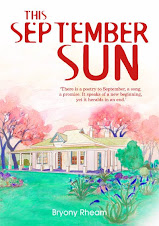
This September Sun was positively reviewed in the April 29, 2013 issue of Publishers Weekly. The complete review is below and is available online via the link.


This September Sun
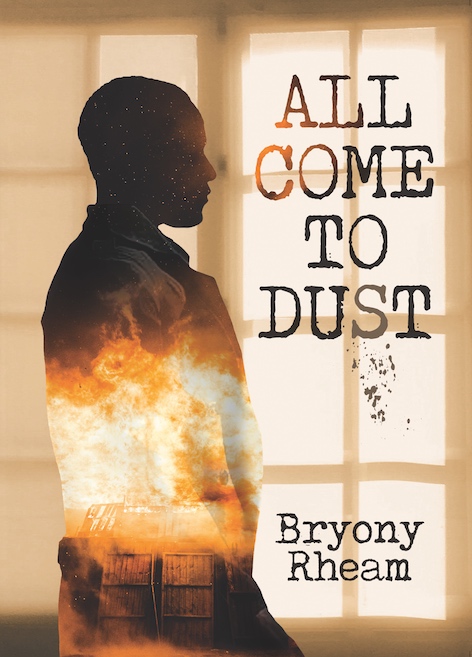
Bryony Rheam.  $14.95 (420p) ISBN 978-1-906998-53-0
Rheam's debut novel follows Ellie, a shy, bookish girl growing up in Zimbabwe while navigating personal and political drama. The novel opens on Ellie's sixth birthday, a momentous day in her life as it marks two events: Zimbabwe 's independence from Britain , and Ellie's grandmother, Evelyn, leaving her grandfather to live on her own. While Ellie's grandfather feared that independence meant "The end was near" for White settlers like themselves in Zimbabwe, Evelyn embraces the changes as a headstrong woman unafraid of her own freedom. Through her adolescence, Ellie grows closer to her grandmother who encourages her to continue her education in England . After Evelyn dies, Ellie returns to Zimbabwe and discovers a series of diaries her grandma kept that reveal an illicit affair she had carried on throughout her marriage. As she uncovers Evelyn's secrets in the diaries, Ellie is forced to reconsider her relationship with her family and also to reexamine how she lives her own life. The lengthy novel feels repetitive at times as we experience events firsthand from Ellie's perspective and then again as reflected upon in Evelyn's diaries. Still, it's the personal moments and conflicts that drive this narrative of family secrets and forgiveness.

This September Sun is distributed in the USA by IPG, the Independent Publishers Group

Wednesday, April 24, 2013

Eppel’s acid satire finds new purchase in Zim


from South Africa’s Mail&Guardian, 5 April 2013

Dismissed as a 'settler' in the early decades in Zimbabwe’s independence, the Bulawayo-based writer has started to resonate with young Zimbabweans.


Given the exotic flowers in his oeuvre, especially in the poems, it is surprising to find John Eppel’s garden in the crackle-dry suburb of Hillside, Bulawayo, dominated by the indigenous Portulaca hereroensis. This fast-growing fleshy plant has all but devoured the property’s steel strand perimeter fence, and seems bent on taking Eppel’s ramshackle (his word) home too.
That’s a mild exaggeration. The effect of the portulaca is more insulation than threat — protection from the outside world. And one soon learns not to make light of botanical matters in Eppel’s company.  The 65-year-old writer was in his kitchen breaking a chocolate bar into a bowl when I brought up a controversial new book on white identity in Zimbabwe by the American anthropologist David Hughes.
“Yes, I’ve read it,” Eppel said, then waved that claim away with, “Well, no, I didn’t get through it, but a friend sent me the section where he refers to my poetry.”
The reference isn’t a happy one. Hughes accuses Eppel of fetishising “crocuses, the Matopos hills and so on” to the exclusion of black Zimbabweans and in doing so folds the Bulawayo-based writer in with the Bulawayo-based Rhodesians Evelyn Waugh encountered on a visit in 1960. They, wrote Waugh, “come [to the Matopos] to picnic, fish, catch butterflies and photograph the game”, and seemed to him to be “morbidly incurious about native customs and beliefs”. It is a charge Eppel dismisses.
“Hughes made those comments particularly in relation to a poem I wrote called I and the Black Poet, in which my persona identifies with crocuses but discovers that they don’t grow well in Africa. It’s clearly self-mockery and Hughes deliberately — he can’t be stupid, can he? — misreads it, construes its apologetic tone for an assertive one,” says Eppel, displaying a flair for the counterattack that can only come of much practice.
Scrolling back through the reviews that his 13 books, making Eppel Zimbabwe’s most prolific author, have attracted, it becomes clear that Eppel has fought the same battle over and over. Take, for example, the judgment handed down on his second book of poems, Sonata for Matabeleland (1995), by the Zimbabwean poet and academic Musaemura Zimunya, in a review that was tellingly titled “Zimbabwean poet reviews Rhodesian poets”: “John Eppel’s Sonata for Matabeleland promises a lot in its title ... Inevitably, though, the vision remains ethnically white — one hesitates to say ‘settler’ for fear of perpetuating the emotive.”
Eppel’s first novel, DGG Berry’s The Great North Road, also received the kiss of death when an influential Zimbabwean critic labelled it racist.
“That particular academic’s sense of satire was so undeveloped,” says Eppel, “that he objected to the fact that I called my fictional village Umdidi, which means arsehole in Ndebele. So I’m a racist because I used a rude word? And the big joke, of course, is that the book is a satire against white people in the first place.”
The acid comments don’t seem to square with Eppel’s beseeching blue eyes, the bowl-cut silver-grey hair. Eppel is a full-time English teacher at a private Bulawayo high school and looks the part. One wonders: Which came first, Eppel’s acerbic attitude, or the rubbishing of his work? And are these dismissals as unjustified as Eppel believes, and, if the evidence he brings to his defence is compelling, where should one position Eppel today?
There is no doubting that Eppel was the product of a “settler” culture. He is the first to admit it. “When I was very young, my parents emigrated from South Africa to the Zimbabwean mining town of Colleen Bawn, an extremely conservative place.”
His lifelong friend Fred Simpson described in an email how Eppel “loved opera, Jack London, flowers, animals (especially chickens) and classical music”, but insisted such refined tastes did not make him an outsider. “On the contrary, his outrageous sense of humour, as well his considerable talent in sport, ensured that he always had a following,” wrote Simpson.
The desire to write registered when Eppel was 12 and bound up with his “feeling uneasy about white privilege” but, given that his teachers hailed from England, Eppel learned about the form and craft of poetry from Keats, Hardy, De la Mare and Shakespeare, and how to ridicule savagely the things he did not like from Dickens, Swift, Chaucer and Pope. Like many a Euro-African poet suckled on the Western canon, his first poems fixed on the natural rather than the sociopolitical world and, given the close proximity of the beautiful Matopos hills, there was plenty to work on.
When Eppel did eventually become politically conscious — “it happens late or never in a rugby and braai culture” — the identity crisis that ensued was compounded by his participation in the Zimbabwe War of Liberation, or Rhodesian Bush War, on the side of the internationally maligned Rhodesian Security Forces.
“It left me quite preoccupied with guilt and self-loathing,” Eppel confesses. Great North Road, written while the country was at war in 1976, is his searing apologia. It is the fragmented biography/autobiography of a seriously maladjusted white Rhodesian male called Duiker Berry, whose major life achievement is the invention of an ointment that freshens farts. The satire is intensely focused on racist white Rhodesian (“Rhodie”) culture; on men such as “Mr Reg Bench, narrow of hip, brow and outlook”. The book is not racist — it caricatures racist people. But, given that its author grew up among the subject group, the humour is frequently in-house. That could explain why, together with a print run of just 500 copies published only in South Africa, it failed to make a splash in ­Zimbabwe.
Eppel’s poems from the same years are less flagellatory, more a probing for meaning than a damning of what he describes in Our Last Night in Colleen Bawn as “a time that never quite got started/ and, clearly, will not have the grace to die”. Published under the title Spoils of War by the tiny and now defunct South African press, Carrefour, Eppel’s poems impressed several high-profile South African poets and academics, who lauded the poet for transcending his historical anxiety (Guy Butler), for being “faithful to the complexities of his rootedness” (Dan Wylie), and for having “nothing to do with white nostalgia for the colonial period” (Stephen Watson). The debut collection was awarded the Ingrid Jonker Prize, the debut novel the M-Net fiction prize — accolades in South Africa that evidently carried little weight across the border.
In the introduction to Songs My Country Taught Me, a collection of three decades of his poems, Eppel recalls how his “love of the sound of poetry before its sense” put him in opposition to those poets “who consider sound (linked to form) subordinate to sense (linked to content)”. It was during this time, he writes, that he decided that form and content should merge, “not as a compromise but as a kind of golden mean”, and that the form of his poetry would be “thoroughly European”, the content “thoroughly African”.
To help the merging, Eppel began increasingly to parody the European forms he had learned to love at school. He has long maintained that his critics have missed that his use of form “is a deliberate form of self-mockery, an accusation of the culture that produced it”.
Through satirical novels, Eppel continued to channel his outrage at what his favourite author, Dickens, called “humbug” and, by the late 1980s and early 1990s, there was much in addition to colonial arrogance to be angry about. The Gukurahundi — the massacre of approximately 20 000 Ndebeles by North Korea-trained Zimbab-wean soldiers — had been exposed by brave activists, among them Eppel’s ex-wife Shari (maiden name deliberately withheld), and the new black middle class had proved to be as corrupt and gluttonous as its colonial antecedent. “We learned quickly that the Davids of this world are merely Goliaths in waiting,” says Eppel.
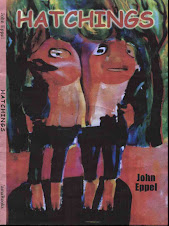
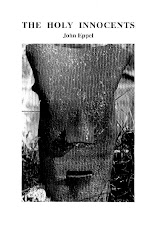
In his novels Hatchings, The Giraffe Man, The Curse of the Ripe Tomato, The Holy Innocents and Absent: The English Teacher, the newly powerful are often found literally and figuratively in bed with the colonials, who fade from prominence at a rate roughly commensurate with the waves of post-independence emigration of Zimbabwean whites to South Africa, the United Kingdom and elsewhere.
Asked recently by the Zimbabwean academic Drew Shaw why he is drawn to satire, Eppel answered with questions of his own: “How else could I write about a chartered company called Rhodesia? And, more recently, a limited company called Zanu-PF? Where’s the romance? Where’s the mythology? It’s all to do with money, this unholy alliance of multinationalism and corrupt governance.”
But, when the new millennium dawned, Eppel was still roaming Zimbabwe’s literary wilds, co-founding amaBooks in 2000 with his friends Brian Jones and Jane Morris with a view to publishing two of his own novels. But Zimbabwe was on the brink of economic collapse, a calamity for most Zimbabweans, including the whites, though one in which Eppel was able to perceive a silver lining.
 “I have noted — not being a farmer/ or a businessman — noted with relief,” he records in his poem Whites Only: A Decasyllabic, “the rapid falling away, like cutis/ from an unregenerative limb, of/ privileges: access to publication,/ scholarships, promotion in the public/ service, parcels from Mrs Jellyby …”
By 2008, Eppel’s teacher’s salary had been rendered worthless by inflation. Supported by a friend from overseas, he took a year off to write and in three months produced Absent: The English Teacher, the story of Bulawayo-based English teacher George J George’s fall from grace, indentured servitude (under the mistress of the minister of child welfare, sweets and biscuits) and eventual death. Mr George is very similar to the principal characters in Eppel’s other novels, whom Eppel describes as “obsolete white male losers, trapped in the dialectic of Europe and Africa”. But, unlike the previous novels, Absent was a hit, both outside Zimbabwe and at home, where it attracted glowing reviews from senior academics such as Kizito Muchemwa and Robert Muponde.
Perhaps most satisfying was the response of younger Zimbabwean writers. The poet Tinashe Mushakavanhu, for example, explained in an email that “John Eppel’s virulent antiestablishmentarianism resonates with a lot of young people, especially his cynicism, his disillusionment with authority and the prevailing system. He dares to speak on issues other writers (both black and white) gossip about in get-togethers but never really engage with in their fiction.”
Eppel wasted no time in recycling these sentiments. “The ‘born frees’,” he proclaimed in an ill-tempered 2010 essay, Writing in Times of Crisis, “don’t seem to have a problem with my sociopolitical liabilities.”
But what had changed? Was it Eppel’s writing, or had the hardships stemming from the so-called “Zimbabwean crisis” fomented a taste for Eppel’s acid satire?
A bit of both, it seems. Ten years before, the inversion of colonial roles at the heart of Absent (Eppel’s white teacher becomes a “houseboy”) would have been an absurd and possibly unacceptable joke but by 2009 Muchemwa could write that “if there is a whiff of improbability [to Absent], it must be remembered that … the so-called real world has recently been shaped by what most people would understand as the incredible and unimaginable”.
The dilution of white privilege was so advanced by this time it had almost made them credible objects of sympathy. Additionally, the targets of Eppel’s satire — Zimbabwe’s rapacious ruling elite — had become such living grotesques that Eppel’s caricatures could not have failed to resonate widely.
And where Eppel’s previous novels were unremittingly dirty (“scurrilous” is the word critics have used), Absent: The English Teacher morphs, near its end, into a tragicomedy — “more palatable for most readers”, Eppel believes. Eppel also turns Mr George’s lessons into a clear-eyed meditation on the place of English literature studies in Africa. It is probably this that prompted Muchemwa when he applauded Absent for “an openly ethical approach to literature [which] occurs when the writer takes off the chèvril gloves, a new development that brings him closer to other African writers of commitment”.
It is, however, as Shaw pointed out in his introduction to their interview, “impossible … to deter Eppel from speaking his mind, from courting controversy”, and his period of acceptance may be temporary, especially because Eppel has begun to question, in interviews and in unpublished manuscripts, the achievements of Dambudzo Marechera and Yvonne Vera, respectively the authors of the The House of Hunger (1978) and Butterfly Burning (2000) and the darlings of post-colonial Zimbabwean literature. The establishment will not be pleased.  
But, then again, the wilds are where Eppel is happiest, at least in the physical sense, and he remains at his best as a writer when limning the landscapes around Bulawayo.
There were still some hours of daylight left when we finished our conversation and, when I asked Eppel how he would use them, his answer was casually poetic. “You must visit the Matopos, of course. It is better to go later, and to come back at twilight, because you might see, if you are lucky, a leopard. It’s the only time I’ve ever seen a leopard. When the sun has gone down, the crepuscular animals come out.”
I visited the Matopos as suggested and they are, to use two words that recur again and again in Eppel’s writing and speech, ineffable, epiphanic.

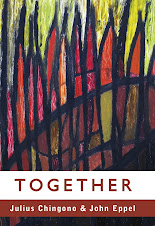
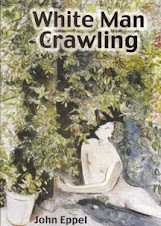
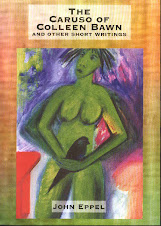
John Eppel's publications with 'amaBooks include the novels The Curse of the Ripe Tomato, The Holy Innocents and Hatchings, the collections of stories and poems The Caruso of Colleen Bawn and White Man Crawling, the poetry collection Selected Poems 1965-1995, and, his most recent publication, the collection of stories and poems with Julius Chingono, Together.

Thursday, April 18, 2013

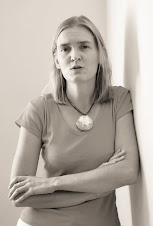
Bookshy Meets ... Bryony Rheam


bookshy: an African book lover
http://bookshybooks.blogspot.co.uk/2013/04/meet-bryony-rheam.html
Wednesday, 17 April 2013

Meet ... Bryony Rheam


The 'Meet' Series will be a chance for me to interview anyone I would love to meet that is involved with African literature.

So I absolutely love Zimbabwean literature, and I really, really loved this novel when I read it a few months ago. So I am extremely happy to announce the next person in the series is Bryony Rheam author of This September Sun, published by amaBooks in Zimbabwe and Parthian in the UK. Enjoy!!! 

Can you tell us a little bit about yourself (where you’re from, what you do, interests and hobbies, any fun details)
I was born in Kadoma in Zimbabwe and spent my early years moving around the country quite a bit.  My dad was in mining and in 1982 we moved to a mine near Bulawayo.  I went to school in Bulawayo until I left Zimbabwe in 1993, after completing my A levels.  After that I spent some time travelling and working in the UK and then went back to study there in 1994.  When I finally finished university, I worked for a year in Singapore and then returned to Zimbabwe where I worked for the next seven years.  My partner and I moved to Zambia in 2008, which is where I currently live. 

I have two children who take up most of my time (in a good way!) but of course I enjoy getting some time to myself.  I have always loved reading and my idea of a perfect day is to spend it absorbed in a book. 

I love anything to do with the 1920s, 30s and 40s.  I enjoy collecting old bits of furniture from this period and things like crockery and books.  I was certainly born in the wrong age and often wish I could escape into the past, where I believe I live my parallel existence!  For exercise, I do yoga which I thoroughly enjoy.

What was the first piece you ever wrote?
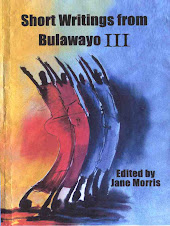
If by ‘ever’ you include my childhood, it was probably a story about fairies.  I have always wanted to be an author so I used to write quite a bit as a child.  When I was about eleven, I wrote a book of short stories about a mischievous dog called Merlin.  My first published piece was a children’s story in The Chronicle – a Bulawayo based newspaper when I was about 13. It was about a Warthog named Winston.  My first published story as an adult was ‘The Queue’ in Short Writings From Bulawayo in 2003.

What draws you to writing?
I really don’t think I can answer that question!  I’ve always been a very shy person and found a way of expressing myself through my writing.  People are often surprised that I am the author behind my work.  When you are quiet, people often underestimate you.

What do you do when you are not writing?
I am an English teacher, for my sins.  I’d love to be a full-time writer.


On Publishing, Being an Author, and African Literature

Can you tell us about your challenges in getting your first book published?
I must say I think I was quite lucky in this regard.  I knew Jane Morris and Brian Jones of ‘amaBooks because they had published various short stories of mine.  They were quite interested in reading the manuscript of This September Sun and thought it had potential.  Finding the finance to publish the book was a consideration though and I am indebted to The Culture Fund of Zimbabwe and the Beit Trust for their assistance. 

I have, however, not found it so easy to find a publisher outside of Zimbabwe.  South African publishers, in particular, have shown little interest as they seem to want a particular story from Zimbabwe. 

As an author, what’s the toughest criticism and best compliment you have received?
I think the worst criticism I have had so far of This September Sun is that it is ‘insular’, focusing on a white, middle class world, instead of mentioning politics in every two sentences.  The best compliment came from a woman who came to see me after I had given a talk about the novel in which I had said it wasn’t a true story.  She said that for her it would always be a true story and that’s the way she’d like to think of it.  I’ve found numerous people very disappointed when they’ve found out it isn’t true!

As a white Zimbabwean author, are there any obstacles or challenges you particularly face in writing about Zimbabwe, or even Africa?
If you are white in Africa, it will always be assumed that you had a privileged upbringing, and because of that, somehow you have no right to write about it.  If you write anything that isn’t to do with poverty, AIDS, corruption or racial issues then somehow it is ‘lacking’ and this can only be attributed to the fact that you are white and haven’t suffered enough!

I also think that a certain type of writing is expected from white writers.  It used to be the ‘anti-apartheid’ novel, usually featuring a white character who gets drawn to a ‘black world’ and realises how insular their life has been.  At the moment it’s the ‘African memoir’ – my days growing up in Africa and how it made me the person I am.  They’re perfectly acceptable; I enjoy reading them myself.   The key, however, is that the writer does not live here anymore.  
I don’t know why, but the Western publishing world doesn’t seem to like white writers who still live in Africa or who consider it their home.

I am a great lover of African literature, could you suggest a book, new or old, that people should read?
'Things Fall Apart' by Chinua Achebe.  I remember when I first read this and when I put it down, I was completely in awe of this writer who had captured a specific turning point in history so well.  He revealed how insidious the process of colonisation was and how, for it to work, it must also bring benefits.


On This September Sun

How would you describe your debut novel This September Sun?
I’m not quite sure!  It’s not quite a romance or a mystery.  Drama?

What inspired you to write This September Sun?


I did my Masters in Postcolonial Writing, a course which I enjoyed very much, but one that also frustrated me.  I read a lot of what is termed ‘colonial’ writing – Out of Africa and A Passage to India – and lots of postcolonial stuff, but I never saw ‘myself’ in any of it.  White characters were often polarised into ‘good’ (the idealist) or ‘bad’ (the racist/colonial administrator).  No one was ‘real’.  I began to think about writing a novel and I had already got a few bits and pieces that I had written before I did my Masters.  However, I did NOT write the novel to prove a point or anything along those lines.  The most important thing to me is a story, not a message!


This September Sun felt so real. I related so much with Ellie’s character, and even Evelyn seemed like she was a real character. Did personal experiences or people you may know inspire the characters in your novel?
I did my Masters in Postcolonial Writing, a course which I enjoyed very much, but one that also frustrated me.  I read a lot of what is termed ‘colonial’ writing – Out of Africa and A Passage to India – and lots of postcolonial stuff, but I never saw ‘myself’ in any of it.  White characters were often polarised into ‘good’ (the idealist) or ‘bad’ (the racist/colonial administrator).  No one was ‘real’.  I began to think about writing a novel and I had already got a few bits and pieces that I had written before I did my Masters.  However, I did NOT write the novel to prove a point or anything along those lines.  The most important thing to me is a story, not a message!


This September Sun also has a very strong historical element, and it gives a great sense of what life in Rhodesia in the 1940s and 50s would have been like. What was it like researching it?
I really enjoyed it!  Basically, most people love having someone to talk to, especially about the past.  I spoke to a number of elderly people, who were always very willing to chat.  Doing that gave me more of a feel for the past than just researching facts.  I think most of us have a conventional idea of a time such as the 1940s, and would be quite surprised to hear some of the stories of what went on.  Affairs, especially during the War, were very common and many men came home to find that they had children they couldn’t possibly have fathered, but they generally seemed to accept it.

Writing about the past is difficult though.  You have to make sure you get all your facts correct, including minor details such as expressions people used that they might not do now and vice versa.

What was your favourite chapter (or part) to write and why?
I really enjoyed writing about Ellie’s time in London, probably because it was so real to me.


On Being a Booklover (Questions I’ve always wanted to ask authors)

What are you reading right now?
Agatha Christie’s autobiography.  I’m quite a fan of hers. 
Is there any particular author (living or dead) or book that influenced you in any way either growing up or as an adult - and why?
I love The Great Gatsby.  I love the way it is narrated.  I like books where the story is told by one of the characters.  I also like Mrs Dalloway by Virginia Woolf, again because of the narrative technique and because it is so beautifully written. 

Which, novel or character in a novel do you wish you had written?
The Great Gatsby.

Have you ever judged a book by its cover (i.e. bought a book based on its looks)? Which?
I can’t really think of a particular occasion.  I tend to know something about the author or the novel before buying it.
           
Hard copy or e-book? Bookstore or Amazon?
I’m old-fashioned and can quite honestly say that I have never read an e-book.  I have used Amazon, but I’d much prefer to be able to walk into a bookstore.

Final Question – I promise
What’s next after This September Sun?
I’ve started writing another novel, but at the moment I have put it on hold in order to finish some short stories which have been bothering me!  I need to get them down and finished so that I can carry on with other things.

Thank you very much for taking the time to answer these questions. I really appreciate it. 

Sunday, April 14, 2013

Ebooks on phones, from www.forbes.com


This Simple App Could Put E-Books On Millions Of Phones In The Third World

It sounds counterintuitive, but in certain developing nations it’s easier to get hold of a cell phone than a good book.
More than one in three adults cannot read in sub-Saharan Africa, yet almost every home there has access to at least one mobile phone, according to USAID. Developing nations are among the fastest growing mobile markets in the world, but literacy is still a big problem.
David Risher, a former executive at Amazon and c0-founder of non-profit organization Worldreader, thinks there’s an obvious answer here: offer free books through all those cell phones.
On Wednesday Worldreader Mobile comes out of “beta” mode. About a year ago it partnered  with biNu, a mobile app platform for feature phones in developing countries, so that its Worldreader Mobile app would appear on the home screen.
Richer says that in the last year, 10% of biNu’s 5 million-user base have accessed the Worldreader Mobile app. That’s about 500,000 people. Risher hopes to get that number to 1 million by the end of 2014.
Worldreader’s biggest readers are in India (nearly 107,000 users), with 60,800 in Nigeria and 33,100 in Ethiopia.


A screenshot of one of the titles on offer through Worldreader Mobile

Most of them are using low-end, pre-pay Nokia phones with physical buttons, that cost about $50. They will typically spend about $2-3 a month on their data plans. Out of the 6.4 billion active mobile phones in the world today, 5.4 billion are so-called features phones like these, according to Worldreader statistics sourced from Analysys Mason.
The books they’re reading are short, typically taking up 150 screenshots. Though men are early adopters, women are the “power readers,” Worldreader says, reading an average 17 books a month.
The most popular books are romance novels. Among the top five most popular books in the last month, the No. 1 was a children’s book about school, the second an basic algebra book, and No.’s 3 and 4 were entitled My Guy and Can Love Happen Twice?
Risher says it’s not unnatural in sub-Saharan African culture to see people hunched over reading their cell phones for long periods at a time. So pervasive have mobile device become that some elementary schools in Ghana have even started banning them, he notes.
Most of the books on Worldreader Mobile are in English, with a few in local languages like Swahili, French and Spanish, though the number of books overall is increasing. Currently there are 1,200 titles available, donated by local and English-language publishers.
“I think the single biggest thing that will get more people reading is putting more book on there,” says Risher. “Everything form the Bible and Koran, to romance novels.” Books on mobile phones are another way to get health information to people in rural communities, who often have access to pharmacies and relatively cheap, generic drugs, but encounter pharmacists with little sound medical knowledge.
While accessing a book is free, it might cost users 5-10 cents from their data tariff to read. With the program, users don’t download entire books but download a single page at a time, largely to save the cost of data and because low-end phones don’t have much memory to begin with.
“The books are highly compressed,” says Risher, adding that the biNu platform is designed to be thrifty with data consumption.
Readers need a constant 2G data connection to get through a book, but Risher says that basic cell phone coverage is pretty good across Africa. He sees a strong use case for spreading books and literacy through mobile phones, not least because his own service has been picked up so quickly.
“It’s this classic case where the free market isn’t going to solve this problem on its own. Books don’t cost much, they’re heavy, they go out of date,” he says. “I’ve gone to Ghana and on the shelf of a school there I’ll see the a book on the history of Utah. It’s not only easier to get a cell phone, the books that do arrive are often completely irrelevant.”
Risher founded Worldreader with his colleague Colin McElwee, in 2010, after Fisher spent time volunteering in an Ecuadorian orphanage. Initially Worldreader donated Amazon Kindles to schools in sub-Saharan Africa, giving 3,000 children access to digital books. Part of the challenge of that program now is training teachers and children to use the e-readers.