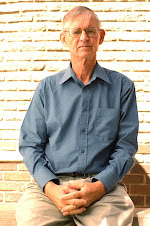
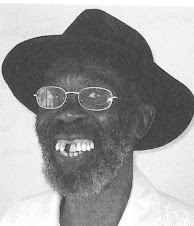
This is probably the first time you hear from Tendai Huchu in 2015 — and Scotland’s best Zimbabwean author vows to drop postmodern narrative artifices by 2034
From: steppesinsync.com
Steppes in Sync’s own Andy Kozlov @KozlovAndy talks to Zimbabwe’s Scotland-based writer Tendai Huchu about the newly released novel The Maestro, The Magistrate & The Mathematician (Get Print Copy on Amazon).
The author of The Hairdresser of Harare explains why he went with a Bulawayo-based publishing boutique, amaBooks.
Together we uncover the quintessential quixotic character in African literature and Tendai tries to imagine how his Scotland-set novel would be different if it was set in Zimbabwe, and if he was to publish it at 52 and not 32.
A Character Question
Your Maestro is a quixotic character. Can you think of a quintessential quixotic character in African literature before your novel graced the bookshelves around the world?
No one beats John Eppel’s ultra-ridiculous George J. George from Absent: The English Teacher. Few contemporary writers equal Eppel [who teaches English at Christian Brothers College in Bulawayo, Zimbabwe] in terms of technical skill and comedic ear. In George J. George you have a character who mistakes his white Ford Escort for the moon (think Don Quixote and the windmill) and everything goes downhill from there.
A Setting Question
Many a culture buff considers Scotland’s capital Edinburgh one of the world’s capitals of culture. Epitomising this image: The Edinburgh Festival. By singling out a mathematician over a nurse or a physicist, do you maybe hope that the number of Zimbabwean mathematicians attending the Edinburgh Festival will surge, inspired by the adventures of their colleague in your novel?
You’re taking the piss, right?
An Alternative Setting Question
If the novel was set in Zimbabwe’s capital Harare — an urbs that you have ‘documented’ in your previous magnum opus – how would the maestro, magistrate and mathematician be different? Would they be émigré Scots, for starters?
Every novel is a complex algorithm with numerous variables. You change one factor and the whole thing becomes something else. Remember, this text doesn’t work in a vacuum – there have to be alterations to do with the social, political, environmental, legal, cultural, technological, economic… in fact every aspect of life you can think of has to change, which alters the language, character interactions, etcetera. This is almost an impossible question to answer; because of the scale of transformation the book would have to undergo we might as well be talking of two different novels.
A Medium Question
Zimbabwe like most nations on the African continent is seeing a tremendous rise in mobile internet consumption. Do you have something like an ebook or a novel-dedicated Android app in the pipeline?
There is an online platform called Mazwi which makes Zimbabwean literature available to mobile users. My first novel The Hairdresser of Harare is already available there. [At USD1.99], it is the cheapest novel they sell, because I waived my royalties in order to bring the costs down. Such is my desire for my fellow countrymen to be able to access my work.
A Publisher Question
I know the fabulous amaBooks duo personally — Brian Jones and Jane Morris, are the two directors of amaBooks. But still why did you go with this Bulawayo-based publisher?
I had a lot of starts, stops and false hopes with this novel. It’s an emphatic departure from my earlier work. However, working with my editor Jane Morris from amaBooks has got me turbo charged. She understood the scope of my ambition, and helped me fine tune and hone my craft. In the process, she has given me essential skills to improve my work.
I consider the year I spent editing it with her as the most important period in my writing life. In that same year I sold short fiction in my three favourite genres — literary fiction, crime and sci-fi — to leading journals around the world (The Manchester Review, Ellery Queen’s Mystery Magazine, Interzone), which I believe was influenced to a great extent by that apprenticeship. I am extremely grateful for the partnership I’ve had with Jane Morris and Brian Jones at amaBooks.
A Sponsor Question
The Culture Fund of Zimbabwe Trust sponsored the publication. So really, what does a Zimbabwean writer need to have achieved to end up being chased by high-profile sponsors like the Culture Fund of Zimbabwe?
I wasn’t chased. My publishers put in an application for funding, and, fortunately, the CFoZ deigned to cover part of the printing costs. I think this is more reflective of the fact that sales of fiction in Zimbabwe are so poor publishers need a subsidy to make the production viable. The nature of my work naturally disqualifies me from the school textbook market, meaning it’s highly unlikely my publisher will recoup their investment from the domestic market. That’s the f*cking reality.
A Research Question
How much time did it take you to research for the novel? What were the major unknowns for you as you embarked on the research?
This was a three-year project. Research was ongoing; right up until the editor was like “enough”.
A Lost-in-Translation Question
Judging from previous experience, do you expect any localized creative spins that publishers in Germany will have to come up with to translate The Maestro, The Magistrate & The Mathematician to the German-speaking reader and to promote the novel in German content-consuming markets?
The question for the German publisher is: How do I sell this book by a relatively unknown author from Africa, who has won no awards and has no marketable hook/gimmick? Yahweh only knows what the answer to that might be.
Such-a-Random Question
Try to imagine: how would your novel be different if you were to publish it at 52 and not 32?
I would hope 52 year old me is more skilled and has less need for tricks and postmodern narrative artifices to mask his deficiencies. He/She (if I have a sex change) would perhaps be better at sentence construction, suspense, scene setting, characterisation, plotting… what I am trying to say is — Insha’Allah — he would be a superior craftsman. Early Huchu vs late Huchu – how pompous does that sound?!
Tuesday, January 6, 2015

Tuesday, December 16, 2014
Textures, poems by John Eppel and Togara Muzanenhamo published

The collaboration between two of Zimbabwe's foremost poets, John Eppel and Togara Muzanenhamo, has been published.
Textures weaves together poems from the two poets, "weaving words, making some sort of music.” Drew Shaw in his introduction to the collection notes that 'To read Textures is to see how Eppel and Muzanenhamo are
in many ways similar yet also interestingly different. What connects them is
meticulous attention to the craft of poetry, particularly to its musical
elements. As Eppel explained, “there’s this kind of paradox with lyric poets
where they actually want to get rid of words, but the only way they can get rid
of words is by using words. So there’s this movement away from sense dominating
to sound dominating.”'
Muzanenhamo's 'Engine Philosophers' begins:
The smell of steel and oil is the
incense of our labour.
In fields shot green with growth,
brittle with grain,
or bare as anvils – we extend our hands
over the iron altar.
Sometimes visions are lost through the
slip of a spanner,
a misplaced nut collapses a thought
like a faulty jack.
But no real workman worth his salt
jumps in straight off the bat
to rotate a shaft or turn a bolt. Down
to changing a wheel,
a moment’s silence honours an
established principle.
Aptly one of Eppel's poems is titled, 'Christmas in Bulawayo':
A hallelujah of Heughlin's robins
wakes me from a troubled sleep,
troubled not
by regrets or misgivings but by
hymns,
hymns of mosquitoes,
high-pitched; prick
of crickets, strident cicadas,
squirrels
bickering; and the blessing of
soft rain
on a tin roof.
Textures is available at outlets in Harare and Bulawayo, as well as online through www.african bookscollective.com, and, soon, through megabooks.co.za in South Africa.
Wednesday, December 10, 2014
Tendai Huchu's 'The Maestro, The Magistrate & The Mathematician' Published in Zimbabwe

Set
mainly in the Scottish capital Edinburgh, The Maestro, The Magistrate & The Mathematician introduces us to the
three Zimbabweans of the title who each struggle to find a place for themselves
far from home and the world they knew. The Magistrate tries to create new
memories and roots, fusing a wandering exploration of Edinburgh with music. The
Maestro, a depressed, quixotic character, sinks out of the real world,
preferring novels and fantasy. The Mathematician, a youthful character, follows
a carefree, hedonistic lifestyle, until the universes of the three main
characters collide.
In this carefully crafted, multi-layered novel, Tendai Huchu, with his inimitable humour, reveals much about the Zimbabwe story as he draws the reader deep into the lives of the three main characters.
The publication of The Maestro, The Magistrate & The Mathematician was supported by the Culture Fund of Zimbabwe Trust.
Tendai’s
first novel, The Hairdresser of Harare,
was published in Zimbabwe and the UK, and was translated into French, German and
Italian. This year, Tendai’s short story, ‘The Intervention’, was shortlisted
for the Caine Prize for African Writing. The story was first published in the
Indian magazine Open Road Review and
is available in Zimbabwe in the Caine Prize anthology The Gonjon Pin and other stories, published by ’amaBooks. The
Bulawayo-based publishers are the Zimbabwean publishers of the annual Caine
prize anthologies. The collections are published across Africa by other
publishers and also in the UK.
Tendai
Huchu’s short fiction and nonfiction has been published in magazines all over
the world and the quality of his writing has been recognized by his receiving a
Hawthornden Fellowship and a Sacatar Fellowship.
'An unusually astute and unflinching writer' The Guardian
'Tendai Huchu illustrates universal notions well' The Examiner
'Tendai Huchu seems to be the great-grandchild of Jonathan Swift with many voices in his head' Frankfurter Allgemeine Zeitung
Saturday, December 6, 2014
Together reviewed in Harare News
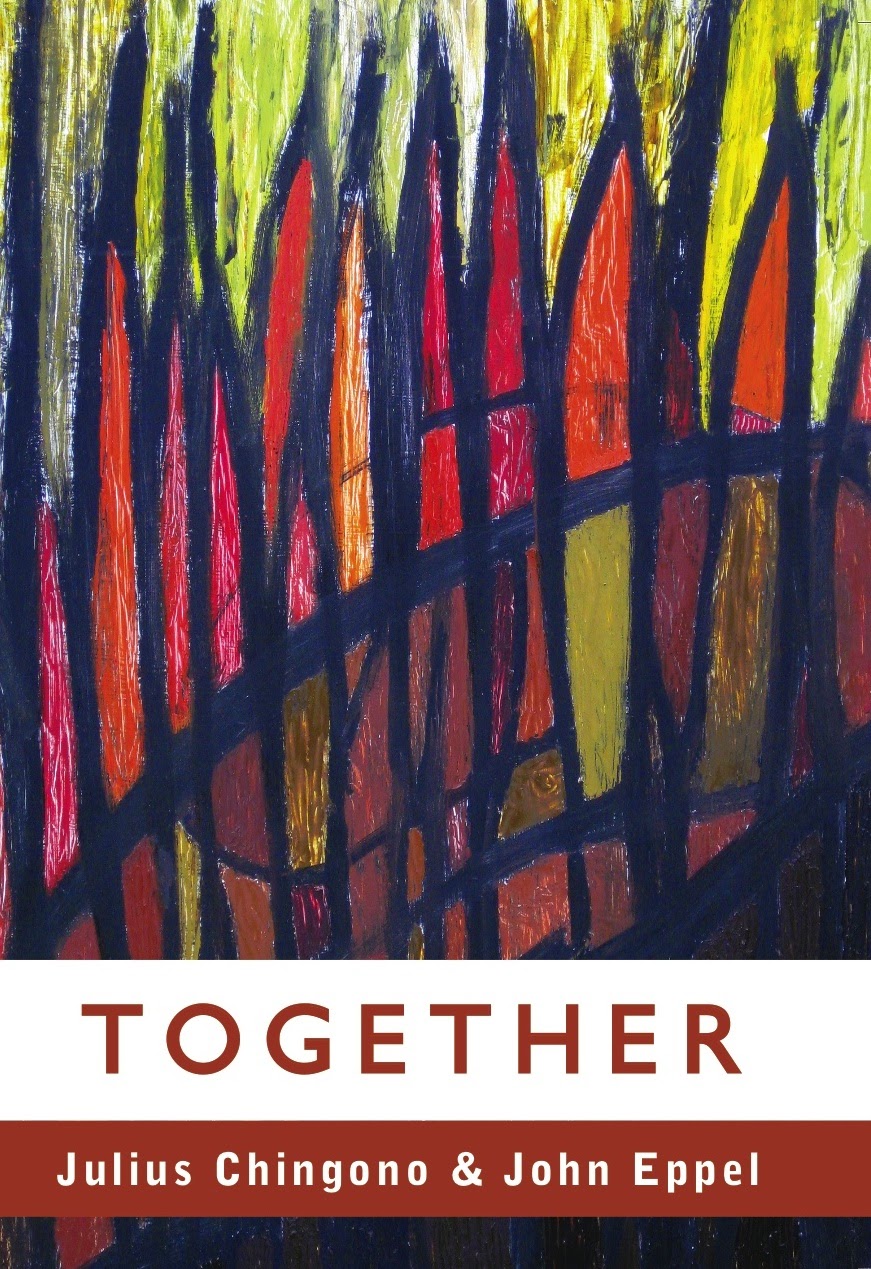
Together celebrates the writing of two of Zimbabwe’s veteran authors, the late Julius Chingono and John Eppel. In Together, the Bulawayo-based publishers, ’amaBooks bridge the gulf between the black and white literary traditions. Interestingly, it is the crisis of the past decade that seems to have revealed elements of shared experience across racial lines.
Chingono brings a distinctive humour to his stories and poems about a country in the grip of an economic and political crisis. In the poem, 20-044L, he writes:
The number on my door
reads 20-044L,
but it is not the number
of my house.
The scrap metals
that make the door
include
a motor car number plate.
 He exhibits an uncommon ability to laugh at the absurd that now passes for the norm; a supposedly revolutionary party that imposes election candidates and arrests party supporters who question such practices, a lifestyle built around waiting where shortages are commonplace, the predatory behaviour of public toilet cleaners who practically rob the public, and more.
In the story Shonongoro, a harmless-looking public toilet cleaner gently taps into traditional Shona speech registers between in-laws to trap a patron to part with a few dollars! In Chingono’s world, there are few saints!
Read Murehwa, the story of an old bachelor who dies without ever engaging a lover and discover Chingono’s hilarious narration of the sahwira’s prescription to “fix” the dead man’s stubbornly erect male member.
John Eppel is master of satire. His short stories and poems are more overtly political, displaying a certain anger at the turn of events. In Broke-Buttock Blues, Eppel reminds the reader of the violence of past elections:
They burned all our mealies, our chickens, our dog,
they burned all our mealies, our chickens, our dog;
my uncle, they hit him to death with a log.
 |
| Photograph courtesy of Tswarelo Mothobi |
Who Will Guard the Guards? is an hilarious take on what happens when law enforcers become victims of an economic downturn. A benevolent Zimbabwean offers free accommodation to a desperate young policeman, who later apparently steals the good Samaritan’s belongings. When the victim visits the police station, he finds the senior police officer investigating the crime actually wearing his stolen belt!
All is not gloom and doom for Eppel. He pays homage to ordinary Zimbabwean women of WOZA in Song for WOZA who stand up to tyranny:
Women of this land arise,
fling your windows open wide,
let the breeze of change, denied,
let it take you by surprise.
Amandla omama!
Taken together, Chingono and Eppel’s writings complement each other beautifully. They challenge the reader to reflect on Zimbabwe’s lost decade. Together is a delightful – sometimes painfully delightful – read worth every penny that reflects on some of Zimbabwe’s most pressing contemporary issues in surprising ways. It also is a volume that begs one to rethink how Zimbabwean literature has been read and theorized over the years.
With thanks to Dr Joseph Chikowero, University of Wisconsin-Madison
from: http://www.hararenews.co.zw/2014/12/book-review-together/
Tuesday, November 18, 2014
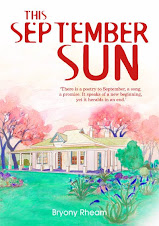
"Stories are far more important than facts": Bryony Rheam on researching and writing This September Sun
.jpg)
Looking back on my debut novel, This September Sun, I
am conscious of how ambitious a project it was. It is a long book and it took a
long time to write, but it also needed a fair amount of research. Researching
the past, even if it is only the 1940s, is not as easy in Zimbabwe as it may be
in a place like Britain. There are not many books either written about or set
in the time. Those that are, tend to be political history which, although
relevant to a certain degree, are often rather tedious to read. Film coverage
is not that easy – actually it is fairly impossible – to come by and I had to
rely on newspapers in the archives and interviews with some now quite elderly
people.
The former are fascinating. I could lose myself all day in
old newspapers. They speak of fundraising balls, teas and fetes. They advertise
luxury accommodation at hotels with porters and cars meeting each train, film
reels at the cinema, a list of who’s in town and who’s staying where and
groceries, goods and clothes that were impossible to get in ration-strapped
Britain. There is also news about the war and the small ads include the
inevitable death notices of young men lost in battle.
As a child, I loved listening to both my grandmothers talk
about their lives and the places they had been to. Most people like to talk
about themselves and I found a lot of elderly people very amenable to talking
about their lives. Many related hardship and loss, but there were also stories
of parties, lovers, New Year celebrations and life in general during the War.
What emerged was a picture of a fairly hedonistic time. On
the surface of it, colonial society was fairly bland and conservative. Yet the
undercurrents of change and insecurity are evident. The War, however far off it
was on the other side of the world, gave life that unsteady edge. Moral values
were challenged by the War: the absence of those who went off to fight and the
added presence of soldiers from afar. The RAF base in Salisbury brought in an
influx of men who no doubt appeared more exciting and worldly wise in
comparison to the average Rhodesian. Salisbury was still a small place then and
it was generally quite safe to walk around at night. With parties going on on a
regular basis, it was quite common for young servicemen to walk into a party
off the street and ask if they could join in.
One lady told me how common it was for young wives to have
affairs. With their husbands gone for two, sometimes three years, it was
inevitable that they may find comfort in the arms of another. There were many
soldiers who came home to find they had children who couldn’t possibly be
theirs but, as I was told, they were often accepted without much questioning.
Perhaps the war also allowed for a reciprocal forgiveness, for who knows what
those soldiers themselves got up to abroad.
From these anecdotes and pieces of information, I was able
to get a number of ideas for Evelyn’s story. Sometimes, just a little snippet
such as a description of the boarding houses that many young, single women
lived in, was enough for me to develop into something more. I was very
conscious of not getting any of the historical details wrong, but I was also
aware that a lot of the information was subjective and that memory can be
inconsistent with fact.
There are those, I am sure, who will shake their heads and
declare the times were never like that at all and that’s why I am glad I can
turn to them and quote my sources. It is also interesting to see what people
remember. One of the questions I asked the people I interviewed was whether
they could remember a scandal or a murder or anything particularly exciting
that happened and every time I got a ‘no’, but what would then subsequently
emerge are the very stories I was looking for.
In This September Sun, one of the characters tells a
story about a family who lost four of their sons during the war and how,
because of this, the fifth son was not sent into active combat, but kept as a
trainer in the Air Force. Tragedy struck when he was killed in an aircraft
accident and his parents lost their sixth son. This story is actually a true
one told to me by one of the people I interviewed. I didn’t use all the
information I was given. Some I thought fit for something else further down the
line. Ultimately, I learnt more from my ‘real-life’ sources than I could have
from any book. People have a way of bringing the past to life in an interesting
and inimitable way. Stories are far more important than facts.
Reproduced from http://www.parthianbooks.com/authorsblog
Reproduced from http://www.parthianbooks.com/authorsblog
Wednesday, November 12, 2014
Novuyo Rosa Tshuma's 'Shadows' longlisted for Etisalat Prize
 |
| Photograph courtesy Fungai Machirori |
Novuyo Rosa Tshuma's debut
novella and short story collection, Shadows,
has been longlisted for the 2014 Etisalat Prize for Literature. Novuyo's
stories have appeared in several anthologies, including the 'amaBooks
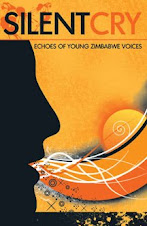
anthologies Silent Cry: Echoes of Young Zimbabwe
Voices and Where to Now? Short
Stories from Zimbabwe. Shadows
contains Novuyo's short story, 'Crossroads', which was previously published in Where to Now? and, in isiNdebele, in Siqondephi Manje?Indatshana zaseZimbabwe.
Where to Now? was co-published with
Parthian Books in the United Kingdom.
This is the second year of the Etisalat Prize, the first recipient of the award was NoViolet Bulawayo for her novel We Need New Names. Both Novuyo and NoViolet come from Bulawayo.
Novuyo first came to the attention of 'amaBooks as a participant in
the British
Council's ‘Identity and Diversities’ Project, which culminated in us publishing
the young people’s anthology Silent Cry:
Echoes of Young Zimbabwe Voices, in which Novuyo was first published. At
nineteen, her short story, 'Scattered
Hearts', published in this anthology, was described by Dr Petros
Ndlovu as ‘beautiful and powerful prose which fosters an appreciation of the
personality of the young author who is so gifted in thought, analysis,
problem-solving as well as English expression’. Novuyo went on to represent the
project at the Identities and Diversities Youth Summit in Lusaka, Zambia 2007,
and later at the Global Change-makers Africa Youth Summit in Cape Town, South
Africa 2009.
Shadows is a winner of the 2014
Herman Charles Bosman Prize. bookshybooks.blogspot.com, in her
review of the Etisalat longlist, commented, 'With this debut novella and
collection of short stories the reader is introduced to a startling new voice
in African literature. Novuyo Tshuma sketches, with astounding accuracy, the
realities of daily life in Zimbabwe and the peculiar intricacies of being a
foreigner in Johannesburg. Vivid, sparse and, at times, tragically beautiful.'
Monday, November 10, 2014
Togara Muzanenhamo on the BBC and at the Aldeburgh Poetry Festival

Zimbabwean poet, Togara Muzanenhamo, whose forthcoming poetry collaboration with John Eppel, Textures, is to be published by 'amaBooks, read his short story, 'The Silt Path', on BBC Radio 4 on 10 November, and participated in the Aldeburgh Poetry Festival the same weekend.
You can listen to the short story, for the next four weeks, on:
http://www.bbc.co.uk/programmes/b04nqv74
Togara's poetry, below, was featured on the 'Ink, Sweat and Tears' website as part of ‘Poetry & Disobedience’ at the Aldeburgh
Poetry Festival 2014
(from: http://www.inksweatandtears.co.uk/pages/?p=7720)
Posted by Kate Birch on
Nov 6, 2014
from Lyra
He could smell the ocean. Almost hear the
water
rushing up against the rocks. Great sprays of salt
banking up then falling back. Red carcasses of ships
rusting all across the shoreline. He clutched his hip.
The brass fragment jutting out – an ‘S’ with a bolt
loose at its upper most tip. He stopped. The sputter
rushing up against the rocks. Great sprays of salt
banking up then falling back. Red carcasses of ships
rusting all across the shoreline. He clutched his hip.
The brass fragment jutting out – an ‘S’ with a bolt
loose at its upper most tip. He stopped. The sputter
of an engine. Looking over his shoulder he
could
see a small black dot trailed by a tail of dust. Fuck.
The cliff face was bare and steep, his body pressed
flat against it, black like an ant. He was at the most
difficult point of the climb. Here he judged the rock-
face jutting out above him, a large shelf he would
see a small black dot trailed by a tail of dust. Fuck.
The cliff face was bare and steep, his body pressed
flat against it, black like an ant. He was at the most
difficult point of the climb. Here he judged the rock-
face jutting out above him, a large shelf he would
have to scale using only the strength of his
arms.
Pain tore through his body, his legs cycling the air
as his arms trembled above his weight. He pulled
himself up onto the top part of the shelf, crawled
for a bit, then just lay there on his belly, sucking air.
Beneath him, because the sand was already warm,
Pain tore through his body, his legs cycling the air
as his arms trembled above his weight. He pulled
himself up onto the top part of the shelf, crawled
for a bit, then just lay there on his belly, sucking air.
Beneath him, because the sand was already warm,
all he saw was fresh blood creeping out. A red
stain
growing silently. He looked up, ahead. The mouth
of the cave gaped back at him. Black. He slithered,
angry with pain, towards the entrance, rowing hard
on his elbows. In the cave: cool air, a thin footpath
disappearing deep into the distant sound of rain.
growing silently. He looked up, ahead. The mouth
of the cave gaped back at him. Black. He slithered,
angry with pain, towards the entrance, rowing hard
on his elbows. In the cave: cool air, a thin footpath
disappearing deep into the distant sound of rain.
*
The smell of water over stone fell heavy with
iron.
A constant trickle riding away, deep to where colour
knew no other colour than black. The sound of a fire
crackled and spattered. The light at first vermilion
on the dome of the cave, then a whole riot of crystal
sparks revealing wet constellations: reds, purples,
blues – bright for a second or two – became alluvial
shadows, smoke cloaked. Incandescent. His people’s
A constant trickle riding away, deep to where colour
knew no other colour than black. The sound of a fire
crackled and spattered. The light at first vermilion
on the dome of the cave, then a whole riot of crystal
sparks revealing wet constellations: reds, purples,
blues – bright for a second or two – became alluvial
shadows, smoke cloaked. Incandescent. His people’s
words ran through his mind in rapid, furious
bursts
of prayer. He could hear every whisper. Soft trickles of
water flowed along cold walls, compelling his thirst.
An arm cradled his head. Dregs of sediment and rough
indefinable grains seeping into the froth of his beard.
A woman’s voice echoed. A constant stream of cool
water flowed over his forehead. The cave’s colourful
display washing in waves. Its walls wet and fissured.
of prayer. He could hear every whisper. Soft trickles of
water flowed along cold walls, compelling his thirst.
An arm cradled his head. Dregs of sediment and rough
indefinable grains seeping into the froth of his beard.
A woman’s voice echoed. A constant stream of cool
water flowed over his forehead. The cave’s colourful
display washing in waves. Its walls wet and fissured.
*
If it’s them, they’re coming down the south
tunnels.
Sound carries deeper there. There were others though.
Others in the caves. They would hear the shouts echo
through the water corridors. Horrible screams. They’ll
kill us all. We have to leave him! He lay stretchered.
Water neck high. Oily rainbows beneath the dirty flame
slithering in their wake. Ahead the black passage stared
back at them like a lair. Deep, cold and uncertain.
Sound carries deeper there. There were others though.
Others in the caves. They would hear the shouts echo
through the water corridors. Horrible screams. They’ll
kill us all. We have to leave him! He lay stretchered.
Water neck high. Oily rainbows beneath the dirty flame
slithering in their wake. Ahead the black passage stared
back at them like a lair. Deep, cold and uncertain.
*
For hours. Nothing. The cold on their skin
like a numb
suit. Darkness echoing off the wet rock. They held still.
Occasional voices. Movement in other tunnels. The hum
of a fan powering some sort of machine. They held still,
huddled like eels in the cramped recess. The machine
humming closer with the slow swish of wading. The light
growing stronger on the cave’s wet walls, almost bright
as day, then suddenly brighter. Cold. Clinical. Clean.
suit. Darkness echoing off the wet rock. They held still.
Occasional voices. Movement in other tunnels. The hum
of a fan powering some sort of machine. They held still,
huddled like eels in the cramped recess. The machine
humming closer with the slow swish of wading. The light
growing stronger on the cave’s wet walls, almost bright
as day, then suddenly brighter. Cold. Clinical. Clean.
Subscribe to:
Posts (Atom)


.jpg)







.jpg)