Wednesday, August 30, 2017

Why Read? by Lauri Kubuitsile

    Serendipity. We have been running a series on our blog, 'Why I Read' and, today, we read Lauri Kubuitsile's column 'It's All Write' in Mmegi, where she asks other writers 'Why Read?'. Lauri kindly agreed for us to post the column here.

In interviews and when I’m on panels at literary festivals I’m often asked about the importance of reading, especially for writers. For me it seems crazy that a person would choose not to read, especially fiction. From as soon as I learned to read I knew that books held thousands and thousands of lives that I could step into just by opening the covers. I’ve never understood a person who would choose to live a single life when they could live hundreds of different lives. And as for a writer who doesn’t read—or me that’s a person who can’t be taken seriously. Books are your school. You can attend as many writing workshops and MFA programmes as you like, but if you don’t read, your writing will show it. It makes no sense to me.
            I decided to ask some of my writing friends the question: “Why read?” Below are their beautiful answers.
“To develop a critical skeleton. As someone who struggles to read recreationally — preferring theory or critical opinion driven writing — I read because it keeps me thinking of multiple approaches to subjects. However, when I do sit with a casual book, it also adds to my conception of self and my library of imagery, metaphors, and expressions. It gives me the opportunity to discover how other people express things that I have felt or experienced but never had the words to use. That's why, for me, reading is necessary.” - Katlego K Kol-Kes, poet, performer, and writer
“Reading is mind-food, and the only key to the encyclopaedia of life. One must read, the same way one eats nutrients. Without a nutritious diet, malnutrition sets in, and so it is with the mind; it deteriorates for lack of feeding. Today’s healthy & successful lifestyle is in the written word; that’s our life manual for raising children, successful relationships, wellbeing, wealth creation etc.
Your mind has limitless growth for success when you read, but when deprived of such feeding, it only grows into a vegetable. Reading is an acquired excellent habit that is easy to develop; start slowly and watch your interest grow.  -Andrew Sesinyi, writer
 "I read stories to widen my ears to the lives I've never lived. Because a person is only given one lifetime, but that does not stop us from living  through the eye's of others." - Tiah Beautement, writer

 “I've been to France under Louis the XVI; the Carribean in the late 19th Century; India in the glory days of the Maharajas; America as it was "discovered" and Botswana before it was a Protectorate of the British Crown. I have also been to the future. And yet I was born in 1976. 
Why read? 
Because reading carries you to lands unknown in the past and worlds not yet seen in the future. In the present though, reading takes you to countries you may not be able to afford to go to and then you realize how we all love, laugh, hurt and ache. Reading shows you that the other may just not so much be another but a lot like you. That someone somewhere has experienced the struggles you have which you assume are unique to you. I read because I seek to understand.”- Zukiswa Wanner, writer
“Reading is especially imperative for writers for the simple reason that you can’t write if you don’t read. Writers must be readers and they must do so intensely… and extensively!”- Barolong Seboni, poet and writer
“Reading is an escape that allows me to travel anywhere in the world and intimately know a people, culture, food and walk with the locals. It is a great workout for the brain, entertaining and greatly increases knowledge”. - Caiphus Mangenela, writer

“Read to understand yourself and others, to investigate human nature, to experience the full spectrum of human emotion, to develop empathy and compassion, to see different perspectives, to learn new things, to explore new places and to stay sane in an insane world.” -Cheryl Ntumy, writer

 Lauri Kubuitsile is an award-winning writer living in Botswana. She has numerous published books for both kids and adults, across various genres, and her short stories have been published around the world. She has won the Pan-African prize for Children's Writing, The Golden Baobab (twice), the Bessie Head Literature Award for short story, the 2007 AngloPlatinum Short Story Contest, and the Botswana's Department of Arts and Culture, 2007 Botswerere Award for Creative Writing. Lauri was shortlisted for the 2011 Caine Prize. 

Monday, August 21, 2017

Poetry, Wine and Togara Muzanenhamo in Slovenia


If you are interested in poetry and wine, and happen to be in Slovenia this week, why not pop along to the 'Days of Poetry and Wine Festival', featuring, amongst others, Zimbabwean poet Togara Muzanenhamo.

On Tuesday 22 August, Togara will read from his work with China's Ouyang Jianghe and India's Sharmistha Mohanty at the Villa Podvin in Radovljica from 19.00 to 22.00.
As well as poetry, there will be tasting of Marof wines, with dishes by Chef Uros Stefelin.
Entrance: 5 EUR, includes 2 glasses of wine.


On Friday 25 August at 8pm, there will be another reading by Togara, this time with America's Ani Gjika and Mexico's Pura Lopez Colom, at Franc Ksavar's Meska Ormoz Library, again as part of the 'Days of Poetry and Wine Festival'.


Tuesday, August 15, 2017

Why I Read: Raisedon Baya


My first serious read was a strange one – very strange for a young boy living right in the middle of the township. I was in Form 1 at Sobukhazi Secondary School and had just joined the Mzilikazi Community Library’s senior section. Why I joined the library when most of my friends and young boys my age were not members, and not interested in becoming members of the library, I don’t know even up to this day. Some of my friends and peers even went to their graves without seeing the inside of a public library.

Books were not the in thing for young boys growing up in Makokoba then. Young boys my age played hard, smoked hard, gambled hard, and hustled hard. There was no time to waste, no time for books and what many called girlish activities. The decision to join the library changed the course of my life and steered me away from danger and early death.

So there I was in the library, moving from one shelf to another looking for my first serious read. The library was always a cool place. The place had a good air conditioner that tirelessly blew a soft breeze around the room. Its floors were always sparkling clean as if the building didn’t belong in the township. You entered the building and immediately forgot that you were in the middle of Mzilikazi Township. After walking around, marvelling at the stacks and stacks of books neatly covered in plastic, I stopped at the African Section. This section was to become my favourite corner of the library for many years.

I remember picking a few titles before I saw it. I don’t know what drew me to the book but I remember holding Buchi Emecheta’s The Joys of Motherhood in my hands and feeling very excited. A strange choice for a young boy you might think. Why this particular title I have always wondered. I was just a boy, and very adventurous too, so why was I attracted to The Joys of Motherhood? My mother was not a joyful woman or mother then – she had too much to do and too many children to look after for her to sit down and savour the real joys of motherhood. Perhaps I took the book because it was the kind of book I wished her to read – just so that for a moment she could feel some happiness for contributing to the human race. (The basis of the novel is the necessity for a woman to be fertile, and above all give birth to sons – and my mother has six sons!)

Whatever the reason, I took the book home and plunged into the world of literature. My love for words and my serious flirtation with literature began that week. I was also very lucky to have a big brother who was an avid reader as well. My brother read anything printed. He ate words for breakfast, lunch and supper. He devoured books, in all their sizes, shapes and smells. He introduced me to the likes of Desmond Bagley, Robert Ludlum and to naughty writers like James Hadley Chase and Nick Carter. I remember him trying to hide Nick Carter's novels from me but I always found them.  I learnt to read faster so as not to get caught or to avoid him taking the books back before I finished reading.

In books I discovered a lot. I discovered priceless treasures. I discovered things neither my parents nor friends and peers could tell me. I discovered a world bigger and much better than Makokoba, Mzilikazi and the other townships I knew. I discovered that words could give me wings, wings I used to fly to places far and beyond. Books took me to countries I never imagined, books introduced me to many cultures. I travelled to Nigeria, South Africa, Ghana, Kenya, Cameroon, Senegal and other African countries – countries I didn’t even know where to place on the world map – through the eyes of writers like Ngugi, Es’kia Mphahlele, Njabulo Ndebele, Ousmane Sembène, Kalu Okpi, Micere Mugo, Can Themba, Grace Ogot, Nadine Gordimer, Wole Soyinka, Miriama Bâ and Chinua Achebe. I travelled to Europe and America on the pages of works by the likes of Agatha Christie, Desmond Bagley, Jeffrey Archer, Len Deighton, Leo Tolstoy and many, many others. Long before I knew what a passport was I had crossed borders. I was introduced to fascinating characters by these writers, some of these characters have stuck with me to this day.

I discovered that I could temporarily escape the poverty and monotony of township life through the pages of a book. Books became some form of escapism. With the years I realized the more I read the more better I became at seeing the world. The more I read the more I saw possibilities of getting out of the township. The more I read the more I wanted to write, to share my own stories – stories about where I came from and the people around me. I suddenly wanted my life, my friends’ lives and the world I lived in to also be on pages of books. Reading inspired me to write. 


Now I read for pleasure. I read to escape the harsh realities of my surroundings. I read to expand my horizons and knowledge base.  I read to feed my insatiable brain. Sometimes I read just to experience the sumptuous taste of good words strung joyfully together into beautiful phrases and sentences. – remember writing is like cooking, it’s art. I read because there is nothing that uplifts my spirits better than good literature. I read because there is so much joy wrapped up in ink and paper and this joy is much better than pizza, a box of chocolates or a bottle of wine. And so today I say enough respect to all writers and storytellers of the world. Thank you for writing and keep the stories coming.


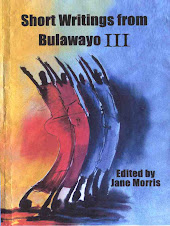
Raisedon Baya is a leading playwright, theatre director and festival manager based in Bulawayo. He has published a novel, Mountain of Silence, an anthology of plays, Tomorrow’s People, and features in an anthology of folktales, Around The FireFolktales from Zimbabwe. Some of his stories appear in Short Writings from Bulawayo II and III, and Where to Now? Short Stories from Zimbabwe, and his short story 'The Initiation' is to appear in Moving On and Other Zimbabwean Stories.
A former teacher and National Arts Council employee who worked at ZBCtv as a producer and commissioning editor, he has written over a dozen critically acclaimed and award-winning plays for television and stage. Several of his plays have toured Africa and Europe.
Two of his plays, Super Patriots & Morons and The Crocodile of Zambezi, are banned in Zimbabwe. In 2009 Raisedon Baya was a recipient of the Oxfam Novib/PEN Award for Freedom of Expression. He writes a weekly arts column for The Sunday News.

Wednesday, July 26, 2017

Why I Read: Thabisani Ndlovu


I read because of two main reasons – the little pamphlets of short stories in IsiNdebele that used to be distributed at our primary school, and love for my Grade Six teacher. The first reason is perfectly safe to write about, but the second needs clearing from the Mrs. I hope to obtain “ethical” clearance sometime today.

When I went to Manyewu Primary School in Bulawayo, between Grades 3 and 4, there was a company that used to distribute little newsprint pamphlets of folktales, written in IsiNdebele. Perhaps some were in English, but I doubt. Anyhow, the illustration, as far as I recall, was great because you could follow the story by merely looking at the pictures.  Then either the teacher or some great readers in class would read out a folktale, normally when we were outside the classroom, awaiting our turn to go inside a classroom occupied by another grade. This system was called “hot sitting” and designed to share not only classroom space but books as well. In short, it meant going through the syllabus in half the required time as students alternated attending school in the morning and the afternoon. There was a waiting period to go inside the classroom and it was this moment when stories of hare and baboon, the man and the leopard, the chameleon and the gecko and many others were read out loud. I was hooked. I read and re-read each one of these stories on my own and started my own library. The booklets were affordable, something like five cents I think. I sacrificed some of my “break” money to buy these. I do not remember volunteering to read or being asked to by my teachers. I was too quiet and probably looked stupid as one teacher once said. But I had read all of those booklets and had started experimenting with reading longer writings.

But those pamphlets come a distant second to my Grade Six teacher. She was called Miss Ndebele. I loved Miss Ndebele because she was beautiful and smelt great. She also wore high-heeled shoes and had a smile to outshine the brightest summer sun. She is the very first woman that I fell in love with not only for her looks but also because she noticed my love for reading and encouraged it. So I loved her desperately like any Grade Six boy would – not really knowing what that meant and completely clueless what I would do with her if she had said, “Here I am, love me.”  We had by then, at Ntabeni Primary School, a “Corner Library” – a small bookshelf really – packed full of abridged English “classics” and other writings. Most of these were under the Ladybird Series. It was Miss Ndebele who noticed that I was a good reader of English and an even better writer of compositions in the language. The more I read out loud in class, the more I practised in private – both silently and loudly. I could not disappoint Miss Ndebele. Then my compositions started being paraded in our class, in other classes and ultimately taken to the Headmaster! And Miss Ndebele said she was very proud of me. Then she started directing my reading. Had I read Treasure Island? How about The Black Tulip? Around the World in Eighty Days was another fine book, she once said. Whatever she recommended I read, until there was no book I had not read in that Corner Library.

Then I joined Njube Library and spent most of my Saturdays immersed in books there. No wonder I made friends with two of the librarians who allowed me to borrow more than the two stipulated texts. Some of these were not even recorded but I returned all of them. In spite of, or because of, my love for Miss Ndebele, I regret to say that there were some books from the Corner Library that I borrowed permanently.  The redemption lies in that I lent these to friends. Together (we would call ourselves the Chopper Squad, after an Australian TV series that used to air on ZTV – go ahead and laugh), we delighted (note this very English word), in trying out the expressions we picked up from these books. Words and expressions like, “Oh dear!” (I know, but it was once quaint to me and the rest of Chopper Squad), “what the blue blazes”, “bamboozle”, “helter-skelter”, and “sixes and sevens.” These were good for composition writing and even better for public speaking. To add more muscle to our vocabulary, we obsessed over the Students’ Companion and learnt, for example, that instead of saying you visited someone, you could say you darkened that person’s door. And so, yes Ngugiites, I became thoroughly colonised, if of course, you forget or ignore that I was equally good in my mother language, IsiNdebele.

As I got older, what drove me to read more was my association with fellow bookworms. I remember James Mabhunu introducing me to James Hadley Chase. I read those greasy over read books and got titillated like hell. As if that was not enough, then entered the Pace Setters, with their fast pace and African setting. After these, special mention must be made of two writers, Ayi Kwei Armah and Charles Mangua for introducing me to soft porn. I think I became aware of these two via John Kantompeni or the late Rainous Sibanda, I am not so sure now. I challenge anyone who read Why Are we So Blest? at sixteen or so and did not return to the sex scenes, to raise his/her hand. Ah, Mangua’s Son of a Woman excited me beyond the love of words.  This marked my first “serious” attempts to write. As you might predict, the stories were steeped in “love” with sprinklings of erotica. My secondary school friends loved these.  It was mostly girls who loved my stories and, when they asked to keep them, I would pretend to think hard about it, before saying yes. I wrote so many of those and gave them away. Then I continued reading, in order to improve my writing and to wow my readers and, of course, to attract girls and to share with fellow avid readers from my high school days what I had read. There was nothing as good as listening to someone relate their special episode in a book. James Mabhunu and John Kantompeni were masters at this. It was like reading the whole story all over again, and sometimes even better because some of the expressions that had escaped me took on new significance. Talk of an effective revision strategy for our literature course, this was better than a study guide. So I read carefully, all the more to make a detailed contribution during these narration sessions.

My infatuation with reading blossomed into love and I became an English major, which is to say, I majored in English and did not turn into an English man (to some extent, this is true).  So, I had to read fiction at university in order to be certificated.  There, I got to know the late Ruzvidzo Stanley Mupfudza, Memory Chirere, and others who would become fellow writers. These were the heady days of Zimbabwean writing and it was no surprise that we met at Chenjerai Hove’s sessions on creative writing. Those sessions opened up vast worlds of literature and it became fashionable for some of us to read beyond and deliberately outside the English Department syllabus as a form of rebellion against what we considered to be a lean and conservative reading list and way of criticising literature.  For some of us then, evening soirees in residences or at drinking places turned out to be animated discussions of literature fueled by cheap wine of the student variety like “Late Harvest”.  I did not want to look and sound like an idiot, so I read more, drank more cheap wine and talked more literature.

So, I read now because it is my job. I need to publish journal articles, present at conferences and teach literature. As a writer though, I read in search of that story that leaves me transfixed, in a special kind of “silence”.  The kind of story that sucks you in and when you read the last word, you seem to float in a twilight zone.  You wonder about many things, including how come there are so many splinters of yourself in a stranger’s story. You are also stunned by the story line and artistry. You think, how does (how dare, indeed) someone find those kinds of words and line them up like that to produce this? In many ways, such stories remind me of wordsmiths like my mother. When she is done telling a story, even a real-life one, there is always a moment of silence forcing her to ask, “Are you ok?” Sometimes I laugh as she is narrating a sad story and when she says, “There is nothing funny here, by the way”, I tell her it is how she finds the most expressive words that always leaves me in utter disbelief. Good writing is like that and I keep reading to have those moments that are like an addict’s proper “fix”.  I’ve had many such fixes but the latest one has to be reading Petina Gappah’s stories in Rotten Row (2016). Incredibly artistic without calling attention to their artifice, these stories leave me in that moment of silence.

So, there it is. I clearly read for different reasons and these cannot be divorced from the earlier contexts or reasons for reading. I will never forget Miss Ndebele, that one is for sure. I will never forget my friends who shared smutty novels with me and I will always remember the nights of cheap wine and literary discussions and at times, “live” reading of segments from texts. Amazing what cheap wine and impassioned fellow university students can achieve. I am also appreciative of verbal artists like my mother who have made me read for beauty (overall effect and individual expression), and writers who create that moment of silence at the end of their story.

Thabisani Ndlovu is a senior lecturer of English and Cultural Studies at Walter Sisulu University. Before that, he was Deputy Director and lecturer at the International Human Rights Exchange at the University of the Witwatersrand. His short stories have appeared in various anthologies including Creatures Great and Small, Short Writings from Bulawayo III, Long Time Coming: Short Writings from Zimbabwe, The Caine Prize for African Writing 2009 and Where to Now? Short Stories from Zimbabwe. Other stories have appeared in online journals and magazines. His short story, 'When We Were Kings', will appear in Moving On and Other Zimbabwean Stories. Thabisani has also translated Where to Now? Short Stories from Zimbabwe into isiNdebele – Siqondephi Manje: Indatshana zaseZimbabwe. In 1992 he won first prize for isiNdebele poetry in the Budding Writers Association National Competition and, in 2005, the inaugural Intwasa koBulawayo Short Story Competition. If he is not writing fiction or poetry, Thabisani carries out humanist-inspired research. If not doing any of those things, he is likely to be thinking about the beautiful and terrible things in life, and trying to find words for them.


Tuesday, July 25, 2017

Fiction and Life

Courtesy of Read Farafina on Facebook.

Farafina (Kachifo Limited) published The Maestro, The Magistrate and The Mathematician in Nigeria in 2015.

Monday, July 24, 2017

Why I Write: Sandisile Tshuma


“So what’s your guilty pleasure?” my brother asked one day out of the blue. We had spent the day in my little apartment and I suspect that, as he looked around the barebones space filled with books, CDs and conspicuously missing a television set, he was worried I had no life. “Um, I get my locs treated and go to the spa for a deluxe pedicure?” I ventured, posing my response as a question because I was pretty sure there was a right answer and a wrong answer to his question. “No, that’s basic grooming. You have to do that. What’s a thing that you do that you don’t need to do but that you love to do just for the pure enjoyment of doing it?” Failing to find an answer to a question so simple as “what do you enjoy in life?” I weaseled out of the conversation by offering him another beer from the fridge. But the question lingered in the recesses of my mind for years afterwards.

One day I wrote a blog post about how my inability to put down roots and stick to a single place or activity for long had evolved. I was not supposed to write that post. I was supposed to be working on an assignment for school due the next day. But there is a land called Procrastinatoria and I am their queen. Instead of ten pages on voluntary medical male circumcision, I toyed with the idea of finding myself by doing less and being more. I wrote and wrote and wrote and wrote. Then when my eyelids were so heavy with exhaustion that I could barely keep them open as I clicked on the Publish button, the answer to my brother’s question came to me. I was tired but completely satisfied. I had been so absorbed in what I was doing that I hadn’t noticed time slipping past and the sleep creeping in. I had stolen time from my education and spent it on my immediate happiness. Instant versus delayed gratification. An indulgence. A guilty pleasure, one might say.


Nothing relaxes me the way writing does. Nothing else feels so effortless even when the results aren’t perfect. Nothing validates me the way writing does. Writing gives me wings. My writing needs no audience. It bears witness to itself. I write because it makes me feel alive and significant. I write because I express myself best that way. My brain moves so fast that my mouth can’t keep up. So writing is my one chance at taking what’s on the inside of my mind and manifesting it in the material realm.  In a world with so many distractions that exact a heavy toll on introverts like me, writing is my refuge, a welcome escape. It’s my happy place, my soft place to land. I write because there’s nothing else I would rather do, ever. They say you shouldn’t need a lover; you should want one. So sure, I don’t need to write. I want to write. But I want it badly. I want it all the time like a hot new crush. In my universe, writing is bae.


Sandisile Tshuma is a Zimbabwean storyteller, health, development and human rights practitioner who has studied molecular and cellular biology, public health, disaster management and acting from the University of Cape Town (South Africa), the University of the Witwatersrand (South Africa), the National University of Science and Technology (Zimbabwe) and the London Academy of Music and Dramatic Art (United Kingdom).
Sandisile has a professional background in monitoring, evaluation and communication in sexual and reproductive health programmes with the United Nations and other International Organizations in East and Southern Africa. She is an award winning short story writer, the founding editor of AntuAke online magazine, and has curated a personal blog for five years. Sandisile's short stories, "Arrested Development" and "The Need" were published by amaBooks Publishing in two anthologies of Zimbabwean short stories. "Arrested Development" won an Honourable Mention for the 2010 Thomas Pringle Award in the short story category, has been translated into a number of languages and is included in an anthology titled "When The Sun Goes Down", a set book in the Kenyan English language curriculum at secondary school level. The Need has been translated into isiNdebele. Her first full length book, "Dandelion Dreaming," tells the story of marginalised youth in South Africa using the "photo-voice" methodology.