by Pauline
Dodgson-Katiyo
[Paper presented at
the European Association for Commonwealth Literature and Language Studies (EACLALS)
Conference Performing the Urban,
University of Oviedo, Spain April 2017]
Tendai Huchu’s novel,
The Maestro, The Magistrate & The
Mathematician, like the model on which it is loosely based, Fyodor Dostoyevsky’s
Demons, tells three inter-connected stories.
The main characters are three Zimbabwean men living in Edinburgh. The Maestro,
a young, white Zimbabwean combines a job at Tesco’s supermarket with the
activities of running, reading and thinking in a quasi-solitary existence. The
Magistrate is a middle-aged man living with his wife and daughter. The
Mathematician, Farai, is a research student from an affluent family who lives
and socialises with other young people. Each man walks, runs through, journeys
through or dreams the city while remembering his past life in Zimbabwe so that
the city is transformed into a text that possesses the characters and the
reader.
 |
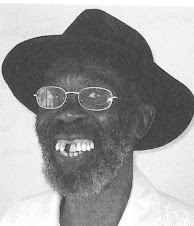
| Tendai Huchu (Caine Prize) |
This simple
transformation, though, may be deceptive. In an interview, Huchu has said that
he “envisioned The Maestro, The
Magistrate & The Mathematician as a book of illusions, which, while it
presents itself as one thing, constantly undermines that position” (Huchu in
Cousins and Dodgson-Katiyo 2016, 203). He adds that he intended to take readers
on a “wild goose chase”, dragging them in the wrong direction to show how the
“political and ideological world is ‘inescapable’” (209).
In this paper, I
argue that the city and the past are both performed in the novel through
fragmentation. Fragments – descriptions, stories, memories, emotions - either
connect, creating more than is at first visible, or they fail to connect, and
leave gaps, absences, even relics.
Writing on memory,
story and space in The Practice of
Everyday Life, Michel de Certeau suggests that like birds that lay their
eggs in other birds’ nests, “memory produces in a place that does not belong to
it”. Memory, he argues, “derives its interventionary force from its very
capacity to be altered – unmoored, mobile, lacking any fixed position” (1988, 86).
We create stories when we walk through spaces in which “unmoored” memories settle.
De Certeau further claims that:
“Stories about places
are makeshift things. They are composed with the world’s debris…. things extra
and other (details and excesses coming from elsewhere) insert themselves into
the accepted framework, the imposed order ….The surface of this order is
everywhere punched and torn open by ellipses, drifts, and leaks of meaning: it
is a sieve-order.” (107)
I’ll give two
examples of how this works in the novel. In the opening pages, the Magistrate
goes on his ritual morning walk round the city, confident that “ his mental
side [is] free to wander far and
wide, to traverse through the past, present and future, free from limits,
except the scope of his own imagination.” He can adversely compare the cold,
distant sun in Edinburgh with the “all-powerful and magnificent” sun in
Bindura, the small town in Zimbabwe where he lived and worked (Huchu 2014, 9). However,
memory does not always work in the way he might want it to. In Holyrood Park,
looking over the roofs across the city, “he felt like a colossus striding over
the narrow world” but melancholy soon sets in:
“Right then the
saudade hit him pretty bad, and, he could see Bindura, the low prospect, the
giant mine chimneys in the distance, but the memory was like a flicker from an
old videotape that had been dubbed over. He could only hold the image in his
mind for a brief second before it vanished into the mist hovering over the
Forth.” (13)
Similarly, when the
Maestro listens to the roar of traffic outside his flat, “images from the past
… [try] to stream into the present.”
He thinks the traffic “sounded like a river and, if he closed his eyes,
he could see it, a wide river, powerful like the Zambezi”. But “he could only
hold this picture in his mind a short while, then it vanished” (134).
Kizito Muchemwa, writing
on the Zimbabwean writer Brian Chikwava’s London-set novel, Harare North, claims that the “exilic
experience is one of retrieving fragments from memory to re-assemble home”
(2010, 141). In Huchu’s novel, this emphasis on fragmentation, ellipses and transience
co-exists with larger stories and histories which weave in and out of the
narrative. Moreover, the punching through and tearing open of the imposed order
reveal the faultlines and contradictions within these larger stories.
One of the stories is
the discourse propagated by President Mugabe and his party ZANU-PF that Zimbabwe
is still fighting an anti-colonial war and that only those who accept the
primacy of the liberation struggle have the right to inherit and rule Zimbabwe.
In this discourse, those who have left the country to come to Britain are
represented as colonial lackeys and emasculated victims of racism. President
Mugabe in a speech given on Independence Day 2006 mocked Zimbabweans who work
in the care industry: according to Mugabe, “They are letting the country down
by going to England where they are looked down on and given dirty menial jobs,
they scratch the backs of old people in homes in England” (“Zimbabweans in the
diaspora” 2006). This feeds into
other stories around the ways in which Zimbabweans see themselves in Britain.
The sociologist Dominic Pasura, drawing on interviews he carried out among
Zimbabweans in England (although not Scotland), argues that Zimbabweans “give a
variety of meanings to their conditions and experiences in the diaspora” (2010,
1458). For some, being in the UK
is a form of reverse colonization (we’re here because you were there). For others, their time in the UK can be
described in the biblical terms of Babylon and Egypt, a period of exile and
suffering. It can also be compared to wenela,
the historical migrant system in which Zimbabwean men went to South Africa to
work under bad conditions for poor pay. And, in some cases, the UK can also be
home, the place where they have now legally settled.
The Magistrate’s story
traverses the diverse meanings that Pasura’s respondents gave to their experiences
in Britain. He suffers in exile. He wants to return to Zimbabwe where he had an
important, respectable role and help to rebuild the country. He keeps “this
hope alive in his heart, a warm ember cocooned by despair” (Huchu 2014, 28) but
also fears that he is ‘long forgotten, a useless relic from the past” (94).
Embarrassed because his wife is working and he isn’t, a condition which Pasura
suggests is common among older Zimbabwean men in the diaspora, the Magistrate
takes an agency job in a care home which for him is demeaning, menial work below
his status. His friend, Alfonso, arranges it for him, telling him that work for
immigrants in the UK is “a system … [of] voluntary slavery”, like wenela. Alfonso suggests there is no
point in the Magistrate applying for legal work because, given media
representations of Zimbabwe, people will ask: “‘How can you practice law here
when you couldn’t even preserve the rule of law in your own country?’” (32). The
care-home work is physically demanding but that isn’t what most upsets the
Magistrate. He remembers the backbreaking work he did in his grandfather’s
fields when he was young. However, this, he is certain, is “a different kind of
pain”:
“In the fields with
the soft earth beneath your feet and the open sky above, you hardly felt the
strain. It was massaged by the soothing voices of family, banter, the gossip
about the neighbours, and the satisfaction that your labour was meaningful.
There was nothing like watching your seedlings grow, tending them until they
matured. It was different from this, this cultivating the field of death, the
living dead groaning in their cots.” (53)
Culturally and
environmentally, the Magistrate finds it difficult to adapt to a way of life
which is different from the communal life he remembers in Zimbabwe and which is
one of which he disapproves. He can’t find satisfaction in caring for old
people who, as he sees it, have been abandoned by the relatives who should look
after them. Walking to work and seeing that “everything ahead of him was a
mixture of stone, mortar and glass, with hedges and the green foliage of trees
poking out in what spaces they could find’, he misses the sense of
expansiveness he experienced at home: “The absence of space he felt was because
everything here was owned, subdivided, surveyed, for sale, catalogued for use”
(74). The contrast between the Scottish city and Zimbabwean open space is, to
some extent, nostalgic, even illusory, but it represents the Magistrate’s idea
of home and his belief that he is now a captive in an alien land.
The sense of
unbelonging is heightened by another larger story, the way the West sees
Zimbabwe. The Mathematician, Farai, can handle this. He knows the key words
most of the Western media use: “DESPOT, BASKET CASE, DICTATORSHIP, ONCE
PROMISING, WHITE FARMERS” (85) and so on. He listens to Fox News: He “trusts
Fox in the same way he trusts the ZBC [Zimbabwe Broadcasting Corporation]. His
awareness of the subtle distortions, the bending of facts to fit certain
angles, means he feels safer watching it than he does with the so-called
objective news channels” (151). Farai doesn’t fit into Pasura’s diaspora
definitions. He intends to finish his PhD and return to Zimbabwe to start a
business. He plays the Zimbabwe stock exchange and he believes Zimbabwe’s
economic problems are “very minor from a grand historical perspective. Every
nation goes through these cycles” (189). However, the Magistrate feels
differently. He is pained by the way Western media represent his country:
“The country never
featured when there was real news. It seemed to him that Zimbabwe was a filler
used when something about dystopian Africa was needed for comic relief. … His
country ticked all the boxes for a sensational African story: add one dictator,
a dash of starving kids, a dollop of disease, sprinkle a little corruption, stir
in a pot of random, incomprehensible violence, and voilà, the stereotypical
African dish.” (27-28)
Yet, although he says he wants his body
to be returned to Zimbabwe after his death, the Magistrate does start to settle
in Edinburgh even if only hesitantly and without any sense of commitment or
consistent movement forward. He decides that he wants “to make a map of the
city using music to pin it to his memory” (98) but in the map he sees “a city
that he dared not call home” (261). When he visits the Law Chambers “the old masonry held no
memories for him and, in his despair, he failed to see that, even without
music, he could and was in fact creating new ones one brick at a time” (207). He
finds meaning in becoming involved with the local branch of the Zimbabwean
opposition party, the Movement for Democratic Change (MDC), although he fails
to see that Alfonso is a government agent who has infiltrated the branch. Perhaps
most optimistically, when his teenage daughter, Chenai, gives birth to a daughter,
Ruvarashe, the rukuvhute (umbilical
cord) is buried in the family’s Edinburgh garden “binding Ruvarashe and, by
extension, themselves to this place” (241). Thus, in the person of the
Magistrate alone, there are different, seemingly contradictory meanings to what
it means to live outside your country and make somewhere else your home.
Also embedded in the
novel, though, are discourses around Scotland. The novel was first published in
2014, the year of the Scottish independence referendum, which was narrowly won
by those who wanted to remain in the United Kingdom. Subsequently, in the 2016 referendum on whether the UK
should remain in the European Union or leave, the UK as a whole voted to leave
while Scotland voted to remain by a large majority. As the UK prepares to leave
the EU, the Scottish National Party (SNP) now argues again for Scotland to be
independent, to have political autonomy, to have the right to define its own
identity as a nation – demands commensurate with those made by the nationalists
before Zimbabwe’s independence in 1980 and re-iterated since in Mugabe’s
rallying cry, “Zimbabwe will never be a colony again” (see Willems 2013). In this discourse, Scotland represents
itself as a colonized country and appears to have forgotten that it was once a
colonizer. This puzzle is intriguingly framed in the questions Silke Stroh asks
in her recent book Gaelic Scotland and
the Colonial Imagination: “Is Scottish political and cultural nationalism
similar to anticolonial resistance overseas? Or are such comparisons no more
than Scottish patriotic victimology, attempting to mask complicity in the
British empire and justify initiatives to secede from the United Kingdom?” (2017,
12) There is no doubt that, historically, the Scots were colonizers. The
historian Andrew Thompson expresses this complicity starkly: “Of all the
peoples of the United Kingdom, it is the Scots’ contribution to the British
Empire that stands out as disproportionate. They were the first peoples of the
British Isles to take on an imperial mentality, and possibly the longest to sustain
one” (quoted in MacKenzie and Devine 2011, 19).
In the novel, Farai and two friends are sitting
near the National Monument of Scotland which is also known by various nicknames
including Edinburgh’s Shame. The monument was built between 1826 and 1828 and
is dedicated to the sailors and soldiers who died during the Napoleonic wars.
However, it was left unfinished because of lack of private subscription; hence
Edinburgh’s Shame. The friends sit:
“in the shade of
Edinburgh’s shame. … On Calton Hill, the city’s delusion of being the
Athens of the North lingers in hard stone. Farai thinks the monument a thing
of beauty. There is something in the unfinished acropolis, a ruin
before it became a ruin, eaten by moss on the lower fringes which he finds
compelling. Stacey is indifferent. He thinks her perspective is tainted by history,
while he, the outsider, can see things with a little more clarity. The city’s
near universal rejection of the monument perhaps lies in the embarrassing fact
that it was modeled on the Parthenon, with grand ambitions. Almost the
same embarrassment the Scots feel about the ’78 Argentina World Cup
debacle. Both share the same aetiology, a small nation with overinflated
ambitions.” (Huchu 2014, 79)
Stacey’s perspective
may be tainted by history but the representation of Farai’s mocking of Scotland
is certainly informed by the contradictions in Scottish history. Edinburgh, or
the Athens of the North, was the centre of the Scottish Enlightenment in the
18th century. However, as Cairns Craig (2011) has argued, the Enlightenment was
partly the outcome of Scottish migration, with Scots in America and Canada
creating and disseminating many of the ideas associated with the Scottish
Enlightenment. Moreover, the philosopher David Hume, one of the key figures in
the Enlightenment, wrote an infamous footnote to his essay “Of National
Characters” which begins “I am apt to suspect the negroes to be naturally
inferior to the whites” (1987, 208). Thus, there are contradictions in the idea
that Scotland has a progressive, enlightened history separate from British
colonialism and imperialism and the quoted passage brings this out.
Stroh is right when
she states that Scotland has an “ambiguous historical position as both
intra-British colonized and overseas colonizer” (2017, 249). Nevertheless, as
part of the argument for independence, the SNP represents Scotland as
outward-looking, pro-European, non-racist, welcoming to immigrants. A novel
structured around the experiences of three Zimbabwean immigrants will, to some
extent, be read in the light of this self-fashioning. In the novel, on New
Year’s Eve, a skinhead grabs Farai and asks him where he’s from. When Farai
nervously says Zimbabwe, the response he gets is: “’Nah, you alright, pal. It’s
those English bastards ah cannae stand” (Huchu 2014, 237). Edinburgh is internationally known as a
city of festivals, literature, culture and architecture and the novel plays
with this view of Edinburgh. Farai
sits in a quaint café “which became famous when some woman wrote a children’s
book about wizards” (22) and where an old man can be mistaken for that famous Rhodesian-born
Edinburgh resident Alexander McCall Smith.
Edinburgh is also,
though, a city of crime, poverty, drug-taking and AIDS and the novel represents
this facet of Edinburgh too. Farai notes that toilet attendants in clubs are
always African immigrants: they “have cornered this aspect of the British
night-time economy” (238). The Maestro lives in a flat described as “shanky” or
sleazy, on the kind of estate where, according to a police officer, the
neighbours won’t know if you die or go missing. He chooses to run through parts
of the city where there are run-down estates:
“Though the Maestro
was grateful for the comforts and protection of the city, he wasn’t ready to
give in to its seductions and charms, and to love it. So he sought to observe
closely the dark underbelly, the grotesque sector that never made it to postcards
in tourist shops.” (110)
Towards the end of
his life, he gives away his possessions and spends months living on the streets
and in the parks of Edinburgh. He sees buses passing on North Bridge and knows
that a “dark force there attracted suicides who jumped and splattered on the
roof of Waverley Station” (217). He visits many cemeteries. He finds that Dalry
cemetery is overgrown and neglected, with rubbish strewn everywhere and some of
the gravestones “so worn that the names were no longer legible. Time had erased
them from history” (215). Running along this graveyard is Coffin Lane, incidentally
the location for a murder in Ian Rankin’s detective novel Let It Bleed. In the
famous Greyfriars cemetery, the Maestro sees “the ancient vaults and tombs,
some of which were protected by iron railings to deter the resurrection men
who’d made their living selling fresh corpses to the medical school” (216).
Here again, it’s a paradox that Enlightenment practice, finding out more about
the human body through dissection, is reliant on the grim crime of body
snatching. Ironically, after the Maestro’s death, no one is sure what to do
with his body. Is it Scotland’s responsibility to dispose of it or Zimbabwe’s? Should
he be repatriated to Zimbabwe or cremated in Scotland?
Within the “planned
city” of Edinburgh, there is “a ‘metaphorical’ or ‘mobile’ city” (De Certeau
1988, 110). The Scottish David
Livingstone, whom Craig refers to as “the iconic figure of Victorian
imperialism” (2011, 96) wrote about and mapped parts of Southern Africa in his
book Missionary Travels and Researches
in South Africa. He also attempted to change and name
what he saw, planting a garden in an island, now named Livingstone Island, on
Victoria Falls. Tendai Huchu, a Zimbabwean living in Scotland, writes of
Zimbabwean lives within a very detailed topography of Edinburgh, in order to
tell stories which allow us to see what the nationalist poet, Hugh McDiarmid, refers
to as “all the loose ends of Scotland” (quoted in Huchu 2014, epigraph). This could be seen as a colonization in
reverse, which goes beyond what we used to call ‘writing back’ to show how
Scotland and Edinburgh can be possessed by people who weren’t born there. Towards
the end of the novel, a Zimbabwean government official says to Alfonso, “I take
it you left no loose ends?” (270). One could argue that the three Zimbabwean
stories have reached an ending, although not, I think, closure given that they
are open to interpretation. We have been taken on “a wild goose chase”; what we
thought was a postmodern comedy of everyday life has turned out to be a story about
murder, intrigue and mystery.
The novel finishes in
London, so perhaps there is also an ending to the Scotland story. However, I
don’t think this is the case. The Scotland story in my view now has an afterlife
and it is this afterlife that empowers the reader. I return to de Certeau again. He argues that the reader:
“insinuates into
another person’s text the ruses of pleasure and appropriation: he poaches on it, is
transported into it, pluralizes himself in it …. this production is also an
“invention” of the memory. Words become the product or outlet of silent
histories…. The thin film of writing becomes a movement of strata, a play of
spaces. A different world slips into the author’s place.” (1988,xxi)
As I listen to
debates on Scottish independence, memories of phrases and passages from The Maestro, The Magistrate & The
Mathematician come into my mind; as I reread the novel, I remember
fragments of discourse about contemporary politics. When I read the words used
to describe Farai’s outsider view of Edinburgh’s Shame, I insert into it a
world perceived by my outsider view of Zimbabwe including the stone city of
Great Zimbabwe known as the Zimbabwe Ruins, hyperinflation, over-ambition, and either
anger at, or shame of, being seen as a failed nation. Muchemwa argues that “exile
challenges writers to reconfigure geographies of identity … and contest
ideologies of place” (2010: 135). This is what The Maestro, The Magistrate & The Mathematician does in
relation to Zimbabwe but also in relation to Scotland. The Maestro preferred to
read several books “in parallel, hoping that this way of reading would make it
easier for him to see the cross connections he sought between each universe” (Huchu
2014, 171-2). I think the reader can see some of the cross connections in this
one book.
Works Cited:
Chikwava, Brian. Harare North. London: Jonathan Cape. 2009.
Cousins, Helen and
Pauline Dodgson-Katiyo. 2016. “‘Zimbabweanness Today’: An Interview with Tendai
Huchu.” African Literature Today 34
(2016): 200-210.
Craig, Cairns.
“Empire of Intellect: The Scottish Enlightenment and Scotland’s Intellectual
Migrants.” In Scotland and the British
Empire. Eds. John M. MacKenzie and T.M.
Devine. Oxford: Oxford University Press. 2011. 84-117.
De Certeau, Michel. [1984].
The Practice of Everyday Life. Berkeley
and Los Angeles: University
of California Press. 1988.
Dostoyevsky, Fyodor. [1871-2].
Demons: A Novel in Three Parts. London: Penguin. 2008.
Huchu, Tendai. The Maestro, The Magistrate & The
Mathematician. Bulawayo: ’amaBooks. 2014.
Hume, David. “Of
National Characters.” [Revised version. 1777]. Essays, Moral, Political
and Literary. Rev.ed. Ed. Eugene F. Miller.
Indianapolis, IN: Liberty Fund. 1987.
Livingstone, David. Missionary Travels and Researches in South
Africa. London: John Murray. 1857.
MacKenzie, John M.
and T.M.Devine. “Introduction.” In Scotland
and the British
Empire. Eds. John M. MacKenzie and T.M. Devine.
Oxford: Oxford University Press.
1-29. 2011.
Muchemwa, Kizito Z. “Old and New Fictions: Rearranging the Geographies of Urban Space and
Identities in Post-2006 Zimbabwean Fiction.” English Academy
Review: Southern African Journal of English Studies
27.2 (2010): 134-145.
Pasura, Dominic. “Competing
Meanings of the Diaspora: The Case of Zimbabweans in
Britain.” Journal of Ethnic and Migration
Studies 36.9 (2010): 1445-1461.
Rankin, Ian. Let It Bleed. London: Orion. 1995.
Stroh, Silke. Gaelic Scotland in the Colonial Imagination:
Anglophone Writing from
1600 to 1900. Evanston, IL: Northwestern University
Press. 2017.
Willems, Wendy.
“Zimbabwe Will Never Be a Colony Again: Changing Celebratory Styles
and Meanings of Independence.” Anthropology
Southern Africa
36.1-2 (2013): 22-33.
“Zimbabweans in the diaspora unhappy
with Mugabe’s mockery.” 2006. http:
www.zimbabwejournalists.com/story.php?art_id=302&cat=1 [Accessed 15
September 2007].
(reproduced with the permission of the author)
Pauline Dodgson-Katiyo was formerly Head of English at Newman University and Dean of the School of Arts and Letters at Anglia Ruskin University. She has research interests in African literature, particularly Zimbabwean and Somali, and contemporary women's writing. She is co-editor of Rites of Passage in Postcolonial Women's Writing (with Gina Wisker) and Emerging Perspectives on Yvonne Vera (with Helen Cousins).


.jpg)








.jpg)