Showing posts with label Michael Sears. Show all posts

Sunday, September 18, 2022

Agatha in Africa - The International Agatha Christie Festival 2022

South Africa writers Michael Sears and Stan Trollip, with Zimbabwean writer Bryony Rheam on Agatha Christie's visit to Southern Africa, recorded as part of the 2022 International Agatha Christie Festival.

Bryony Rheam is the author of the double award-winning crime novel All Come to Dust. Michael Sears and Stan Trollip (writing as Michael Stanley) are the authors of the Detective Kubu series.

To watch, please use the link:

https://www.youtube.com/watch?v=kbQqDDPGCqs&t=21s


Sunday, June 26, 2022

Bryony Rheam to talk at the 2022 Agatha Christie Festival

 Reproduced from The Standard (https://thestandard.newsday.co.zw/2022/06/26/rheam-to-take-part-on-agatha-christies-trip/)


AWARD-WINNING Bulawayo author Bryony Rheam (pictured) is preparing to give a speech on Agatha Christie’s 1922 trip to Southern Rhodesia, which is part of the Agatha Christie Festival 2022. Rheam, a winner of the international Write Your Own Christie competition, is an enthusiast for the writing of Agatha Christie.  The event will be held on September 15 at the Spanish Barn, Torquay at 12.30, admission is free.

“In September of this year, I will be giving a talk on Agatha Christie’s 1922 trip to Southern Rhodesia,” Rheam told Standard Style. “Earlier this year, I was contacted by a South African writer, Michael Sears, who, together with his co-author, Stanley Trollip, had been invited to give a talk on Agatha Christie’s trip to South Africa (as part of the same trip).“As he knew, I had written on Agatha Christie’s trip to Rhodesia, Sears asked me if I would like to join them in the talk.”

She said not many people know that Agatha Christie came to Rhodesia and many people just lump Rhodesia/Zimbabwe with South Africa.“I am really excited to be shedding light on this part of her journey and making people aware of the fact that Rhodesia/Zimbabwe and South Africa are two different countries,” Rheam said.

Zimbabwe cover

.
“My interest in Agatha Christie began when I was a child. “My grandmother loved reading her books and I would go to the library for her to change her books so I knew all the covers and the titles. We used to watch all the series and films as a family and so they were very much a part of my life growing up. I was excited to discover that one of her lesser-known books, The Man in the Brown Suit, was partly set in Southern Rhodesia, mostly in Bulawayo and Victoria Falls.”
UK cover

Rheam added: “I then set out to investigate her journey and see if I could find any evidence that she had been here.  I wrote about this in my blog.”


All Come to Dust is Rheam’s second book,  written in the style of a Christie detective storyThe novel is set in modern day Zimbabwe, but it also looks back to the time just before independence.


Tuesday, April 5, 2022

Agatha and I


Agatha and I, by Bryony Rheam, is reproduced from https://murderiseverywhere.blogspot.com/2022/03/agatha-and-i.html


Bryony Rheam

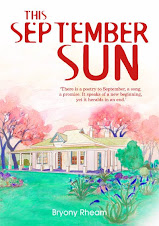
Bryony Rheam is a Zimbabwean author who lives with her family in Bulawayo. Her debut novel This September Sun won Best First Book award in Zimbabwe and went to #1 on Kindle in the UK. Her new book, All Come to Dust, also an award winner, was chosen as one of ten top African thrillers by Publishers’ Weekly who described it as a “stunning crime debut”. I loved the book, and it was my pick of mysteries set in Africa for 2021. Paula Hawkins (author of The Girl on the Train) clearly felt the same way, describing the protagonist, Chief Inspector Edmund Dube, as “a fictional detective as memorable as Hercule Poirot”.

That would have made Bryony’s day because of her long association with Agatha Christie’s books. Here she tells us about that and how it motivated All Come to Dust.

Welcome Bryony to MurderIsEverywhere. Michael Sears


In preparing what to write for this blog, I looked back on some old blogposts of mine where I discussed the importance of Agatha Christie in my life. One of the lines stands out for me and seems to have taken on a deeper meaning than I meant at the time. I had just finished researching Agatha Christie’s trip to Rhodesia in 1924, a trip that resulted in her writing her third novel, The Man in the Brown Suit, and I had delighted in being able to follow her on part of her journey to Bulawayo and Victoria Falls. I wrote: ‘When I began my research, I thought I was following Agatha Christie on part of her journey, but now I wonder if the journey hasn't become my own.’

My journey with Agatha Christie began many years ago with my maternal grandmother. She was a lovely lady: very clever, well-read and funny. Having left school at the age of fourteen, she was largely self-taught. She loved to read, and she read anything and everything, but, in particular, she loved Agatha Christie. On Friday afternoons, I would take her books to the library for her, and I would exchange one lot of Agatha Christies for another.

She must have read them all; she must have read them two or three times, but it did not bother her. As an adult, and as an ardent fan of Christie’s myself, I now understand part of this desire to read and reread her novels. My grandmother was brokenhearted - she had lost her son in a car accident when he was twenty-one. She struggled, but she could not overcome severe depression and grief. All reading provides an escape, but with Christie it was so much more.

Agatha Christie

Agatha Christie is considered the "Queen of Crime". Although not alone in doing so, she is credited with the development of the crime novel into what we know today and its growth in popularity. She is best known for a "closed murder" story in which the crime can only have been committed by a limited number of people, each with their own particular motive for doing so. Everyone is a suspect and usually it is the least obvious person who "dunnit".

The murders are not gory; there are no detailed descriptions of prolonged deaths, the pain and injuries inflicted or the mutilated body. That is not important. What is, is the method and the motivation. The planning behind the murders is always meticulous: the murderer knows who will be where when, how many minutes he or she has to cross the garden and enter the study window, how important it is that the poison is administered with the bedtime cocoa and not the after-dinner coffee, or how the drinks on the tray must be arranged just so in order that the victim chooses the correct one.

Of course, they make other errors which eventually lead to their downfall. Yet it is this absolute attention to detail that I believe makes Christie novels so intriguing. It’s the puzzle that’s important and puzzles can eventually be solved. All the pieces are there; the reader just has to put them together correctly – which of course we rarely, if ever, do – and that’s exactly where Christie’s genius lies.

Despite her upper-middle class background, Agatha Christie always felt like something of an outsider, which likely accounts for two of her most famous detectives, Hercule Poirot and Miss Marple, being on the margins of society: Poirot is a foreigner and Marple is elderly. As such, they are able to bring attention to both the idiosyncrasies and the shortcomings of English society.

But there is another way in which Christie undermines the very essence of Englishness, and, in doing so, also undercuts the stereotypes associated with it. Her books capture that beautiful feel of an orderly life: the clock ticking in the drawing room, the letters on the breakfast tray, the train arriving at exactly three minutes past four. Her characters who lead such orderly lives are well-spoken, polite and know which spoon is for the soup and which for the dessert. The undermining of all this is what unsettles us so much. How could the vicar’s wife devise a murder so clever and with such calculation that it takes the powers of a super sleuth to detect the flaws? How could the murderer have written such hateful letters in the beautiful library; how could they have thought of putting poison in the tea served so punctually at four o’clock on the terrace?

It unsettles us. Christie takes us into the dark areas of the places we consider safe. More than that, the very things that add to that lovely slow rhythm of conventionally English life - trains that run on time, tea at four o’clock, an efficient postal system - seem to have been used against us. If these things, these people, these places are unsafe, then where is not? We would feel less vulnerable on the streets of New York or in the ganglands of Glasgow. As readers, we feel we have got into the car of the stranger our parents always warned us about. But they were smiling, they were welcoming, they had double-barrelled surnames we say – and so we seal our doom.

The good thing, of course, is that she rescues us. The detective arrives, the plot is worked out and the murderer is caught. Except perhaps for Murder on the Orient Express, everything is sorted out and any loose ends are firmly tied up. The puzzle is solved and the dark places dissolve. Once again, the calm ticking of the clock is restored. That is what I find so satisfying and that is what appealed so much to my grandmother. She had come to fear life. Her experience told her that anything can be taken from you at any time, even people you love with your entire self. Being a good person, living a good life – what did it mean? It was no guarantee that you wouldn’t be dealt a terrible hand. But if the dark places were not made light in her own life, at least they were in fiction.


Bryony with Matthew Pritchard

In 2014, I was a winner of the Write Your Own Christie competition organised by AgathaChristie.com.  The prize was dinner with Agatha Christie’s grandson, Matthew Pritchard, and her publisher at HarperCollins at Greenway, her home in Devon.  It was an emotional moment for me, one that linked the little girl who spent afternoons listening to her grandmother’s stories of life in India and Persia to the adult with a longing to write a crime novel of her own.


Outside Agatha Christie's House in Greenway

Yet it was to be another six years before this became a reality. All Come To Dust was published in Zimbabwe in November 2020, the UK in September 2021, and in the US this month. When I sat down to write it, I wanted to follow the structure of a classic Christie novel. However, there were some very obvious differences that I had to negotiate: present day Bulawayo is very different to the England that Christie wrote of from the 1920s to the 1970s. A closed murder seemed unlikely; in fact, it felt claustrophobic. The more I thought and planned, the more that it became apparent that many of the conventional tropes of the western crime novel would not work.

Zimbabwe’s police force is riddled with corruption.  It is also generally quite inefficient and there would certainly be very little forensic investigation into a death. However, I still decided to use a policeman to investigate the murder. He is also an outsider, a man who wants to do good in a world that seems overwhelmingly corrupt. He spends his time typing up traffic offences, trying to put the world to rights through the meticulous recording of events that will probably be settled by the payment of a bribe to someone on the force.

The lack of forensic investigation was a bonus for me as I, like Agatha Christie, could concentrate on the puzzle and not get weighed down by having to bring in technical detail. Nor did I go into any great description of the murder itself for I do not feel the need to do so. This is probably one of the reasons why reviewers often describe All Come To Dust as ‘an old-fashioned’ murder.

Yet this would suggest a ‘happy ending’ and, while it is true, that the mystery itself is solved, there is also a strong sense that any form of justice in Zimbabwe is not administered in the conventional way.  The sense of restored order evident at the end of an Agatha Christie novel is also not present. The peace is hesitant, wary, aware always that it is under threat.

Modern Day Bulawayo

I might not have set out to undermine the archetypal crime novel, but it became increasingly clear that the structure did not sit well in an African setting. It seemed obvious therefore to try and highlight this disconnect rather than ignore it. In doing so, I was able to explore modern Zimbabwean society through an eclectic range of characters, each bound in some way to the past and fearful of the future.

When I finished writing All Come To Dust, I decided that I would not write another crime novel. I had set myself a challenge and I had completed it. But now I see crime writing offers so many opportunities to explore the inconsistencies evident in Zimbabwean life. And so it is that the quest to follow Agatha Christie’s journey has led me to a journey of my own. I can only be excited of what lies ahead.


Bryony is to participate, with Michael Sears, at this year's International Agatha Christie Festival.

Monday, December 6, 2021

Michael Sears interviews Bryony Rheam about her new murder mystery


From: https: //www.timeslive.co.za/sunday-times/books/news/2021-12-06-michael-sears-interviews-bryony-rheam-about-her-new-murder-mystery/

Originally from The Big Thrill (1/12/21) Africa Scene: Bryony Rheam

Bryony Rheam is a Zimbabwean who lives in Bulawayo. Her debut novel This September Sun was named Best First Book in the Zimbabwe Book Publishers Association Awards and went to number 1 on the UK Kindle chart. She was one of the five Africans chosen for a Morland scholarship in 2018.


Rheam’s new book, All Come to Dust, was chosen as one of 10 top African thrillers in Publishers Weekly, who described it as a “stunning crime debut.” Paula Hawkins, author of The Girl on the Train, said it was “an intriguing, twisting murder mystery, a witty combination of old-fashioned detective story and keenly-observed portrait of life in suburban Bulawayo,” and chief inspector Edmund Dube was “a fictional detective as memorable as Hercule Poirot”.

In the story, Marcia Pullman is discovered dead in her Bulawayo home with a letter opener sticking out of her chest, but there’s not enough blood and it’s obvious that she was dead before she was stabbed. Edmund goes to the scene, having to wheedle a lift from Craig Martin, who is at the police station arguing a speeding fine. The pathologist, a friend of Marcia’s husband, says she died of natural causes, and the senior officers at the police station seem intent on thwarting Edmund’s efforts to get to the bottom of the case.

Superficially, the book seems to follow the tropes of the detective story genre, but soon we see it’s nothing like that. The rich characterisations and subtle surprises remind one more of PD James than Agatha Christie.

In this interview with The Big Thrill, Rheam shares further insight into her latest release and teases what she is working on next.


Bryony Rheam

Although your first book, This September Sun, also involves a murder, All Come To Dust is more of a murder mystery. Initially, the story seems to follow the framework of a typical detective story — the smart detective who is committed to the solution of the crime against the odds, the cast of suspects, the unreliable witnesses. It even has the final gathering of the suspects where everything is to be revealed. But you turn everything on its head. Was that always your plan, or did the context drive you in that direction?

I am a great Agatha Christie fan and always wanted to write a crime novel. Like Christie, I am not a great fan of a lot of violence; to me, unravelling the mystery is the most important thing. However, the classic Christie-type plot belongs very much to a time and a place, and it was obvious it would not work in Zimbabwe, despite our little English eccentricities that have survived 40 years after independence.

Many of the characters have some link to a type of crime writer: Craig, for example, reads an author called DP Radley (a fictional author) who chases fast cars and is surrounded by beautiful women; Mrs Whitstable reads Inspector Morse; Edmund reads The Saint. Yet none of these detectives seem to fit the location. They all seem to fall short in some way.

I suppose this is a reflection of the fact that I couldn’t use that same model of the detective story in the context of Bulawayo. The police are very unhelpful in Zimbabwe, and there is little in the way of forensic investigation, so I couldn’t rely on bringing in certain information in the same way. As I was writing, I became increasingly aware that the novel was not going to fit a certain model, and so I decided to undermine it instead.

Chief inspector Dube is an intriguing character. He’s smart and committed to solving the crime, but his back story suggests he has many deep issues of his own. We follow his childhood in Rhodesia as the son of a live-in maid whose apparently kindly white employers help him go to a good school and even with his homework every afternoon. How did you conceive him and his role in the novel?

A flame tree-lined street in Zimbabwe


The Zimbabwean police are not well-known for being either efficient or useful. During the Robert Mugabe days, they were synonymous with corruption. I thought there must be someone in the force who wanted to do a good job, someone who signed up with good intentions. That’s where Edmund came in.

The classic detective novel focuses on the crime at hand: who did it and why. There is not much detail about the investigator’s life. More recent crime novelists often present the investigator/police officer as a lonely person, someone who has given their life to solving crimes as an escape from the chaos of a dysfunctional family life, an unhappy marriage, or an inability to connect to others on a social level. In some ways, Edmund falls into this category as his marriage is not a happy one. However, he is also isolated at work, he is not taken seriously and is constantly put down. This forces him to go off on his own and work independently of the police force.

I am always drawn to the idea of an outsider. Edmund has never fitted in. He was one of a small group of black children who were let in to formerly white-only government schools in 1979. This was a very difficult time in the country’s history as it began to transition to majority rule. Edmund’s mother’s employers believe they are doing the right thing for Edmund by sending him there but are unaware of the challenges he faces. Later on in his life, Edmund again feels he does not belong when he joins the police force and is forced to take part in activities he does not agree with.

Edmund is intelligent and sensitive. He wants to do right in a country where everyone is very obviously doing wrong. He craves order and structure, hoping to put the world right by typing traffic offences and making sure forms are completed properly, yet outside is chaos and corruption. There is no room for people like him. It was very important for me to develop his back story and show how he came to be the sort of person he is. I liked the idea that he was solving a crime, and yet was also part of an unsolved mystery.

A house in Zimbabwe where the Pullmans may have lived


Marcia Pullman is the victim, but she and her husband are most unpleasant characters. Marcia dies in the first chapter, yet much of the book is about her and her impact on the people around her. By the end, we feel we know her well. Was it hard to build her character only through the eyes of the people who knew her?

I suppose in some ways I was unfair with Marcia, as, apart from the very beginning of the book, I don’t show her point of view. Everything the reader learns of her is through other people. However, I feel she is more symbolic than anything else. There is a new type of corruption in Zimbabwe which in some ways is quite difficult to explain. For years, people have pointed at the government as the main source of corruption, the implication being anyone else is not corrupt. I feel many white people in particular are like this. People fail to see how they themselves are drawn into the web of corruption. If they do acknowledge it, it is with the sense of “well, everyone else is doing it” or “how else are we supposed to survive?”

Perhaps ironically, there is no racism in this new type of corruption. Nigel Pullman teams up with the police, Marcia buys valuable antiques off old people (who would be mainly white) and gives them nothing for them.

Another view of the house

I based Marcia on someone I met who did this very thing. Back in 2000, when many people were leaving the country due to the farm invasions, she would buy up lots of valuable antiques and ship them to the UK. Many people had beautiful furniture that had been in their families for generations, but they did not really know what they were worth, tending to view them as old rather than antique. The same thing happened with old cars. You used to see lots of Morris Minors around, for example, typically driven by old ladies who had had them for years and years. Then buyers came from places like SA and bought them for a song. It was criminal.

Edmund identifies a cast of suspects: Marcia’s husband; the Pullmans’ maid and gardener; the peculiar neighbour; Janet Peters, who was bullied by her, and Janet’s invalid mother; a mysterious woman interested in her old records; and Craig Martin, who has threatened her. Each seems, in a way, to illustrate a different aspect of modern life in Bulawayo. Was that part of your plan for the novel?

Yes, it was. As well as writing a crime novel, I also wished to explore modern-day Zimbabwean society. We have all become increasingly isolated and lonely. This is due to politics and also the dire economic situation. There are those, like Marcia Pullman, who look after themselves at the expense of others, and there are those, like Dorcas, the maid, and like Janet Peters, who cannot stand up for themselves.

Craig is a handyman with poor business skills and low self-esteem. Edmund dragoons him to help with the investigation—staking out suspects, driving him around. Despite their wide differences, they seem to have features in common both in their adult lives and in their childhood pasts. Is this a yin and yang situation?

Craig and Edmund have much in common. They both had a traumatic event happen in their childhoods, and they are both essentially quite lonely characters, unable to connect to others.  However, Edmund is definitely much more organized and focused than Craig, who really is very lost. Somewhere along the line, they help each other. When Edmund asks Craig to do some investigating for him, it gives his life a sense of purpose, and he, in turn, can be of more practical help to Edmund.

Much of the story takes place in a historically white suburb near where the Pullmans live. Several of the inhabitants are hard up after the runaway inflation, but those that have access to hard currency—in one way or another—are doing much better. Did you set out to explore the effects of this modern dichotomy in the country?
Yes, definitely. Life in Zimbabwe has been very difficult over the last twenty years. Hyper inflation wiped out life savings and pensions for many people. The transition to the US dollar was very clumsily done as well, and many people lost money that way, too.  Sometimes it feels that almost everyone is doing something dodgy in order to earn US dollars! There is very little appeal in doing a conventional job as the salaries are so low. I think the older generation have been very badly hit. They struggle to survive on ridiculously small pensions, and really battle to understand the value of the currency as there is the official government rate of exchange and then the black market rate, which varies considerably. The divide between the haves and the have nots is widening considerably.

Would you tell us something about what you are working on now?

I have finished my third novel, The Dying of The Light, and it is at the editing stage. It is set in Bulawayo in the late 1930s and is told from the perspective of a house servant who works for a wealthy lawyer and his wife. I have started a book for young adults called Going Up.  It is set in modern-day Bulawayo and concerns a young man who has gotten into drinking and drugs. His wealthy grandfather gives him an ultimatum to get himself sorted out and hands him the responsibility of evicting vendors from an old department store that he owns and wishes to knock down. However, the young man soon begins to develop other plans for the building and sets out to restore it to its former glory.

Just lately, I have been thinking of another crime novel, and may even bring Edmund Dube back, this time as a private investigator. I think the crime genre is a perfect one in which to explore the decay at the heart of Zimbabwean society.


Michael Sears writes with Stanley Trollip under the name Michael Stanley. Their award-winning mystery series with Detective Kubu is set in Botswana, a fascinating country with magnificent conservation areas and varied peoples. The first book in a new series featuring Kubu as a young detective is Facets of Death, set when Kubu first becomes a detective and is faced with solving a diamond heist at the world’s richest diamond mine, Jwaneng. They also have a thriller Shoot the Bastards, which introduces Minnesotan environmental journalist Crystal Nguyen. Set mainly in South Africa, it has as backstory the vicious trade in rhino horn.

Michael has lived in South Africa, Kenya, Australia and the US.He now lives in Knysna on the Cape south coast of South Africa. 


All Come to Dust is published in Zimbabwe by amaBooks, co-published in the UK by amaBooks and Parthian Books and is available elsewhere throough the African Books Collective.