This year’s Caine Prize anthology, The
Daily Assortment of Astonishing Things has just been published in Zimbabwe
for the local market by Bulawayo-based publisher, amaBooks.
The publication of this collection, the fifth of the Caine anthologies
published by amaBooks, the anthology, packed with accomplished story-telling,
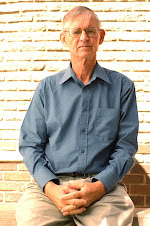
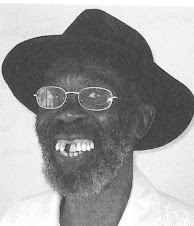
includes pieces by two Zimbabwean writers. NoViolet Bulawayo, who won the Caine
Prize in 2011, is featured in the book, as is Bongani Kona with his
short-listed short story, “At Your Requiem”, from this year's anthology.
The Weekend Post this week spoke to Kona to about his newly found fame.
Below are excerpts of the interview.

Q: Can you tell us who Bongani Kona is?
A: Firstly, thank you so much for the interview. I’m a writer and editor
based in Cape Town. I was born in 1985 and I grew up in Hatfield, Harare, and I
lived there until I was 18. When I completed my A’ Levels at Prince Edward
School I left Zimbabwe to go and study in South Africa and I worked as a
freelance journalist for few years before I decided to go back to the
University of Cape Town to study for a Masters in Creative Writing.
Q: Congratulations on being short-listed for the Caine Prize this year,
it is quite an achievement. How did it feel to be catapulted onto the literary
scene?
A: Thank you. It was really an unexpected gift but one that came at the
right time. I think all beginning writers need encouragement. You fail more
times than you succeed and it’s important just to keep at it.
Q: Your short-listed story, ‘At Your Requiem’, which appears in the
Caine Prize collection for 2016, The
Daily Assortment of Astonishing Things, will be available to readers in
Zimbabwe through the publication by local publishers, amaBooks. Is this your
first publication in your home country? Is it particularly significant for you
to have your work available to a Zimbabwean audience?
A: Yes, and it’s an incredible thing that the anthology is available for
sale to Zimbabwean readers, and for me personally it means so much. No Violet Bulawayo,
who is one of my favourite writers, also has a story in the collection.
Q: I understand that you are presently studying for a Masters degree in
Creative Writing at the University of Cape Town. There has been a lot of
discussion of late about the usefulness to writers of creative writing
programmes. Do you think your studies have played a major part in improving
your writing?
A: Yes, I’m currently studying for an MA in Creative Writing at UCT and
to be honest, I don’t think anybody will ever be able to give a definitive
answer on the usefulness of creative writing programmes.
We’re all different and you know best what you need. I’d been working as
a freelance journalist for many years and I signed up to the programme because
I wanted to explore writing fiction. And in that respect, it’s helped develop
my writing and it’s what I needed to do.
Q: What gave you the idea for ‘At Your Requiem’? It is a dark, painful
story.
A: I wrote the story in November 2014 and I’d spent the first seven months
of that year documenting cases of sexual violence for an NGO in Cape Town. And
I think some of those experiences subconsciously worked their way into the
story. But the spark for the story came from a poem with the same title. I
don’t remember who wrote the poem, but I found it in an old copy of New
Contrast, a South African literary journal. I was really moved by it, and
everything else followed from there.
Q: Do you think that writing as a journalist has helped prepare you for
being a writer of fiction? Are there any particular lessons that you have
learnt as a journalist that you see yourself using in your creative writing?
A: Definitely. One of the most important things that journalism teaches
you is to be observant and curious about how other people live and that’s been
really useful.
Q: It’s probably a question you have been asked before but here it is again
– what advice would you give to an aspiring writer?
A: I would say read as much as you can and just write. Even if a word of
what you write never gets published, it doesn’t mean you’re wasting your time.
Q: Are there any particular Zimbabwean writers you particularly admire?
A: I’m a big fan of Petina Gappah and NoViolet Bulawayo. I also admire Brian
Chikwava, Panashe Chigumadzi, Tendai Huchu, Percy Zvomuya and of the older
writers, Charles Mungoshi, Yvonne Vera and Dambudzo Marechera.
Q: What about in Africa?
A: There are too many but perhaps one way to limit the scope of the question
is to say, from the books that I’ve read in the last year, which do I
recommend? The Reactive by Masande Ntshanga, The Woman Next Door by Yewande
Omotoso, Dust by Yvonne Adhiambo Owuor, Tales of the Metric System by Imraan
Coovadia and Tram 83 by Fiston Mwanza Mujila.
Q: What are you working on at the moment?
A: I'm working on multiple projects at the same time and I’m afraid I can’t
say more than that.
Q: I’m sure that being short-listed for the Caine Prize resulted in you
being interviewed on numerous occasions. Is there one question that stands out
in your mind as being a tough one to answer? If so, how did you answer it?
A: Actually, I've been lucky enough to have pretty straightforward questions
thrown at me and none stands out as difficult to answer.
Q: Your parting shot?
A: Thank you very much for interview Jeffrey and again, it’s really amazing
that The Daily Assortment of Astonishing
Things is available to Zimbabwean readers. It's a great collection of short
stories by writers from diverse parts of the continent.


.jpg)







.jpg)