|
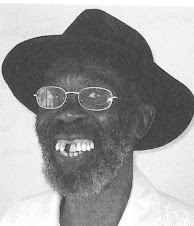
| photo of Soul Jah Love by T. Ndabambi/zimbojam.com |
The two most significant
musical movements to challenge Sungura’s dominance in Zimbabwean popular
culture have been Urban Grooves and, what at one time could have been seen as
its appendage, Zim Dancehall.
While Urban Grooves had a
head start, getting heavy rotation on the airwaves after Jonathan Moyo’s 70%
local content decree, it now lags behind Zim Dancehall in terms of influence. I
suspect this has to do with the origins and development of the two forms.
Urban Grooves looks
towards American hip-hop and rap, both are powerful forms in their own
right-but while that music is enjoyable in its original form, the message does
not translate well to the average Zimbabwean.
Zim Dancehall has its
roots (I will argue later that it has moved on) in Jamaican reggae and ragga
music. These forms have their party music, but reggae has a strong ‘conscious’
component, especially in popular artists like Sizzla, Capleton, Buju Banton and
so on.
In its initial
conception, thinking of Potato and Major E, Zim Dancehall suffered from the
same derivativeness and crass imitation which still infect Urban Grooves. But
it has forged its own independent identity and this is the main reason for its
ascendance.
I’ve spent a long time
thinking about Zimbabwean music. One of the central themes in my new novel, ‘The Maestro, The Magistrate & The Mathematician’ is the development of sungura and how the
message is an absolutely central component of that genre. By this I mean, while
instrumentals are important, Zimbabwean listeners place a high premium on what
the artist has to say in his lyrics. This is where Zim Dancehall has excelled,
because, arguably, their instrumentals, in the main, are reminiscent of low
quality, synthesized productions from 90’s Jamaican ragga.
Zim Dancehall is,
indisputably, the one area of Zimbabwean popular culture that is doing the most
interesting stuff when it comes to use of the Shona language.
Its top artists now rival
Sungura masters in terms of lyrical dexterity and the coining of fresh
metaphors, pushing the language in new directions. Take the man of the hour,
Tocky Vibes, for example. Mr Vibes dispenses with the awkward ‘toasting’ of his
predecessors and simply sings on his tracks.
The phraseology of the
average Tocky Vibes track is replete with cross references to tsumo nemadimikira(proverbs/idioms), occasional slips into Shona lullabies,
biblical allusion, all the while maintaining a freshness derived from his
incredible lyrical penmanship.
In Tocky Aenda Nenyika he manages the feat of praising God (not a bad choice for a
Christian audience) and bigging up his mom, as if with ease, producing
something deep from what should otherwise have been a run-of-the-mill bragging
track so popular in urban culture.
This ability to hover
over that thin line between frivolousness and profundity is key in the way the
music is malleable and can tap into diverse audiences.
Take Souljah Love’s Nguva YeZhizh for example. Again, here we have a track that should be about
babes in batty riders and bikini tops then, boom, you’re hit with a line that
goes:
“Yanguvayekugova zvatakasima/
pataizvirima isu zvichirema/ taitorarama kuchitonhora/ … / Yanguva yezhizhandangonzwa ruzha
vachitenda mhofu mazvita mhizha."
The song has a
disorienting effect to the ear, like Shakespeare has been mixed with urban
slang. But who can argue with the sheer beauty, wit and magnificence of its
hook? You could lift it into a Sungura song by any of the late greats and no
one would blink an eye. Nothing in Urban Grooves can compare.
Too often you listen to a
song in Urban Grooves and think, why are these kids forcing a language to
express things in a way it obviously cannot? Conversely, when you hear
something in Zim Dancehall, you cannot envisage it being said in another
language. This is to say Zim Dancehall has achieved a level of authenticity,
which its counterpart has failed to do.
Urban Grooves might
reinvigorate itself through collaborations as has already been happening with
artists like Nox, Stunner and Trevor Dongo hooking up with their Zim Dancehall
counterparts. We might yet see a resurgence here.
I’m not an early adopter
of this music, in fact I used to sneer at it. My Pauline conversion was through
a friend, Tinofireyi Mandaza, based in Edinburgh, at the time of Winky D’s Vashakabvu. I
expressed my surprise at the referencing of Dembo, Tuku and Mukanya in the
song. Mandaza explained to me (and it is largely his oral argument that I
plagiarise for your edification in this article) that there was a huge
difference between Urban Grooves and Zim Dancehall. In his view, the Zim
Dancehall artist spoke straight to the heart; most of them are kids from the
ghetto, whose life experience is shared by many of us.
In Mandaza’s own words: “Matune
aya anotaura nyaya yaunonzwisisa inezvirunga mutauro. You listen to elderly talk being dished out ne tempo yaunonzwisisa and can relate to. You can only dismiss Zim Dancehall if you
haven’t listened to it with a fair ear.”
An area of contention is
the explicit lyrical content of some of the songs. The most obvious example
being Lady Bee whose
provocative, invective laden music maybe too much to stomach for some Christian
conservatives. It is not this author’s intention to take a position on
morality, and a counter argument can be made that this subgenre is edgy and
within the artists’ right toself-expression. But one can’t help but see that in
a country that still has a censorship board, this may yet be a contested area
in future.
The inclusion of female
vocalists in this popular genre has had a very positive effect. This is
something Sungura has failed to do after so many years. Zim Dancehall has at
least allowed artists like Lady Squanda, Ninja Lipsy, Bounty Lisa and Juwela to
stake a claim in the genre and battle with male artists on various riddims.
Empress Shelly, who reads Shona novels for inspiration, created one of the most hauntingly delicious
lines this year: “Vanodiridza hupenyu hwavo
nemisodzi yangu, vanhu ava (They
water their lives with my tears, these people)…” It remains to be seen if any of these ladies can claim
superstardom in her own right.
Music can do so much;
capturing thoughts, emotions, expressing ideas both at a personal and societal
level. The writer in me is impressed by the lyricism of the best Zim Dancehall
artists, but they have done so much more by capturing a nation’s heart.
I certainly wish they
would do something about the consistence of instrument quality and videos which
can often be crappy. But more importantly we wait to see what new directions
this music takes us in. In a StarFM interview, available on YouTube, Tocky Vibes states that
his wish for the music in the future is for it to be like a big tree, with many
branches, so that whoever wants to come in to the shade on a sunny day can find
a spot to stand in. (Trust me that phrase is so much more beautiful in his Shona).
With artists like Sniper Storm, Spiderman, Freeman, Ras Pompy, Shinsoman, Seh
Calaz, Missle, Tipsy and many others, we can see that tree is growing, and even
those of us in the diaspora enjoy its shade.
from zimbojam.com
Huchu’s first novel, The Hairdresser of Harare, was released in 2010 to critical acclaim and has been translated in several languages. His short fiction and nonfiction have appeared in The Manchester Review, Ellery Queen’s Mystery Magazine, Gutter, AfroSF, Wasafiri, Warscapes, The Africa Report, The Zimbabwean, Kwani? and numerous other publications. In 2013 he received a Hawthornden Fellowship and a Sacatar Fellowship. He was shortlisted for the 2014 Caine Prize. His new novel, The Maestro, The Magistrate, & The Mathematician, has just been released in Zimbabwe.
 Mbira Music


.jpg)







.jpg)