Showing posts with label Wales Arts Review. Show all posts

Wednesday, February 21, 2024

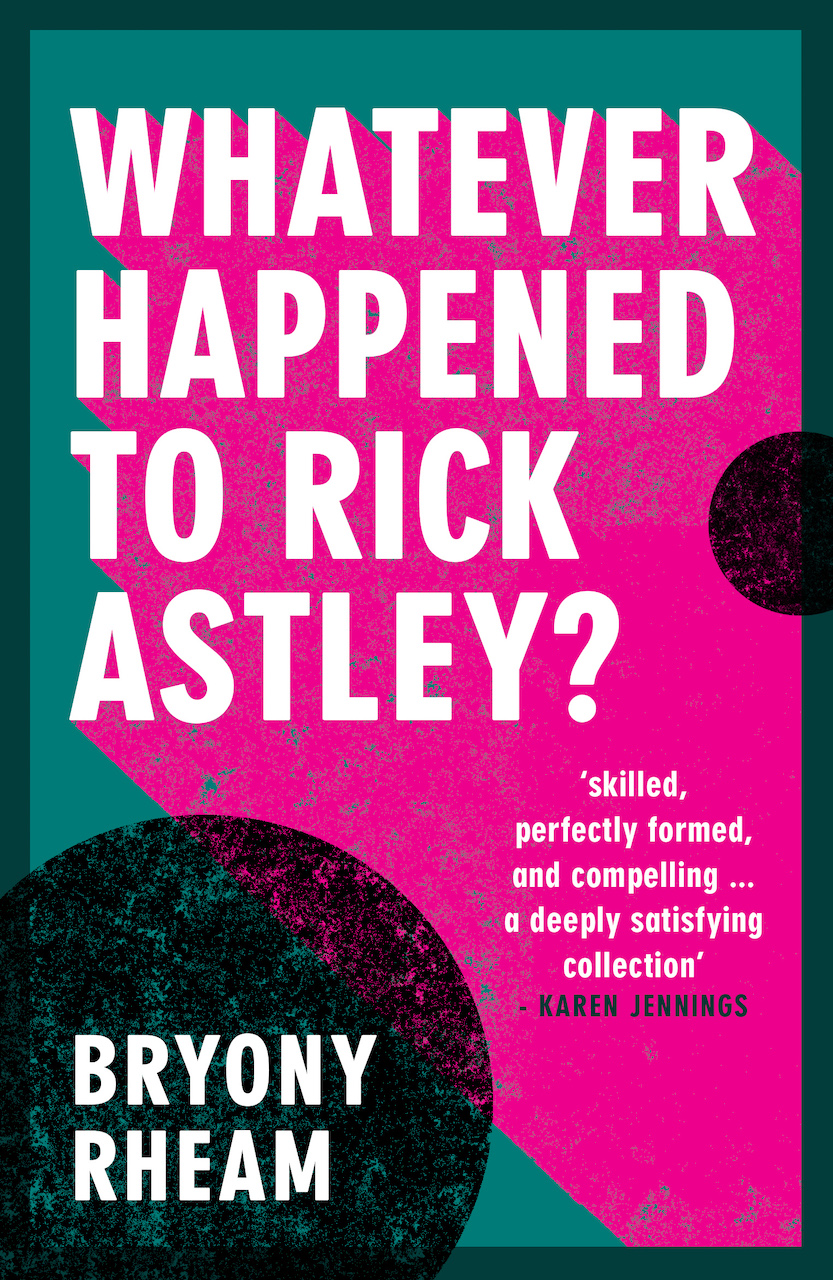
'Whatever Happened to Rick Ashley?' nominated for National Arts Merit Award


Bryony Rheam's short story collection Whatever Happened to Rick Astley? has been nominated for the Outstanding Fiction Book category of Zimbabwe's premier arts awards, the National Arts Merit Awards. The awards celebrate the achievements of artists across a wide array of categories, from music, literature and visual arts to film, theater, dance, and journalism. This year, for the 22nd edition, a record-breaking 1,280 entries were received. The winners will be announced at the awards ceremony, to be held in Zimbabwe's second city of Bulawayo on 24 February. 

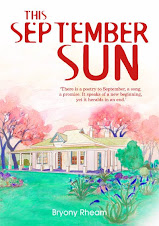
Whatever Happened to Rick Astley? is co-published by Zimbabwean publisher amaBooks and Welsh publisher Parthian Books. The two publishers have cooperated in publishing four other titles: two short story anthologies, Where to Now? and Moving On and Other Zimbabwean Stories, and two novels by Bryony Rheam, This September Sun and All Come to Dust. This September Sun won Best First Book at the Zimbabwe Book Publishers Awards, and All Come to Dust won the best fiction categories in both the Bulawayo Arts Awards and the Zimbabwe National Arts Merit Awards.
Reviews of Whatever Happened to Rick Astley? have all been positive including that of Eluned Gramich in Wales Arts Review: 'Rheam writes beautifully and skilfully about people whose lives have been affected by waves of migration and immigration; of the generational ebb and flow of people coming to, and leaving, Zimbabwe.' 
Derek Workman of The Kalahari Review, writes: 'Bryony Rheam’s collection of short stories, Whatever Happened to Rick Astley?, is a stunning group of stories that shows the Zimbabwean writer’s range and formidable control of language and tone. The stories move through situations that are at once so real and palpable that you can feel a hot road beneath your feet and smell flowers in the garden. Yet they are sprinkled with the small serial thoughts and moments that make up our lives.' 
And in Zimbabwe's NewsHawks, Ignatius Mabasa adds: 'This is a very important voice in Zimbabwean literature. Through her sensitivity to race and class struggles she allows African readers to see white people struggling with the very same issues that also affect black people. The stories therefore become a window and an intercultural dialogue of some sort.'

Bryony Rheam is currently working on her third novel, The Dying of the Light, which is set in Bulawayo at the time of the rise of the Rhodesian Front.

Tuesday, December 19, 2023

Wales Arts Review of Bryony Rheam's 'Whatever Happened to Rick Astley?'

Reproduced from https://www.walesartsreview.org/whatever-happened-to-rick-astley-by-bryony-rheam/


Eluned Gramich reviews a vibrant new collection of short stories from one of Zimbabwe’s leading writers in the form, Bryony Rheam.

‘The afternoon hangs suspended in the drowsy heat of late October. The house is quiet with the softness of sleepers.’ So begins ‘Music from a Farther Room’, one of sixteen stunning stories in Zimbabwean writer Bryony Rheam’s collection, Whatever happened to Rick Astley? The themes of the story are echoed throughout the book: isolation, loss, and a profound dislocation; of not knowing whether it’s the place or the people that truly create a sense of belonging. This particular story focuses on Julia, an elderly woman sharing a house with her son and English daughter-in-law, newly arrived in Zimbabwe from the UK. It moves deftly between the two women’s perspective, full of curiosity and understanding for both points of view. It’s not simply a generational divide that complicates their relationship, but cultural and social differences too, leading to a profound loneliness for both of them. Rheam’s smooth, resonating prose captures the increasing solitude thus: Julia’s ‘children are scattered throughout the world, not one on African soil. They’ve all asked her to live with them … but she always shook her head and gave a little laugh. Gradually, they stopped asking.’

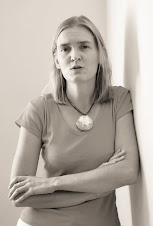
Bryony Rheam

Rheam writes beautifully and skilfully about people whose lives have been affected by waves of migration and immigration; of the generational ebb and flow of people coming to, and leaving, Zimbabwe. One story in particular, ‘The Last Drink at the Bar’, sees a man visiting his homeland over the years from his job teaching in Wales, and each time he feels as though he is being pushed away, alienated, from the culture and community in which he was raised. His old drinking mates are suspicious of his desire to return; after all, shouldn’t he have everything he wants in the UK? Rheam explores the idea of belonging and un-belonging further by revealing the tensions in travel and tourism: ‘His was the oblivion of the tourist who sees only himself, the pivotal figure around which everything else revolves’, she writes of one character during his visit to Bristol, heavy with its history of the slave trade, its ‘Whiteladies Road’ and ‘Black Boy Hill’. In ‘The Fountain of Lethe’, a woman insists on bringing her family to a beloved holiday spot in Bulawayo, but the visit does not turn out to be what she had hoped: ‘What was it, that particular feel of hotel rooms? That mixture of holiday excitement and disappointment one wavered between.’ There are countless moments like these in the collection: sentences, wonderfully wrought, that illuminate everyday life.


This is Rheam’s third publication in Wales – following two successful novels This September Sun and All Come to Dust, both of which received major prizes. I enjoyed her novels, which are expansive and wide-ranging, but entering into the compact, complex, emotionally layered world of her stories, I was amazed by Rheam’s ability to move, and to create a deep sense of place, and character, in only a few pages. For me, one of the strongest stories is ‘Dignum et Justum est’, which follows two immigrant English teachers in Bulawayo as they travel towards very different fates: the story spans decades, yet it succeeds in giving a detailed portrait of the lives of these teachers, and the society to which they adapt – or fail to adapt. Rheam does this by employing a ‘light touch’; by never saying too much, or too little, which shows what a consummate writer she is. As for what happened to Rick Astley, you will have to read the collection, right to the last story, to find out.

Whatever Happened to Rick Astley? is available to buy in the UK here.


Whatever Happened to Rick Astley? is co-published by amaBooks and Parthian Books.


Wednesday, August 2, 2023

Whatever Happened to Rick Astley? a 'summer read' for Wales Arts Review

 (https://www.walesartsreview.org/wars-summer-reads-2023-fiction/)

WAR’S SUMMER READS 2023: FICTION


While the weather may not be offering much in the way of sunshine right now, Wales Arts Review is here to brighten your summer with our top picks for your summer reads 2023. First up, we take a look at the fiction titles set to take bookshelves by storm this summer. From novels, to short stories, to historical fiction and magical realism, there’s plenty to capture your imagination over the coming weeks.

Whatever Happened to Rick Astley? by Bryony Rheam (Parthian Books/amaBooks)

From Bryony Rheam, the award-winning author of All Come to Dust and This September Sun, comes a collection of sixteen short stories shining a spotlight on life in Zimbabwe over the last twenty years. The daily routines and the greater fate of ordinary Zimbabweans are represented with a deft, compassionate touch and flashes of humour. From the potholed side streets of Bulawayo to lush, blooming gardens, traversing down- at-heel bars and faded drawing rooms, the stories in Whatever Happened to Rick Astley? ring with hope and poignancy, and pay tribute to the resilience of the human spirit.

Neon Roses by Rachel Dawson (John Murray Press)

A queer working-class love story, inspired by the film Pride, this coming-of-age novel is set in Wales and explores the history of the 1984 miners’ strikes, the impact of Thatcherism on working-class communities as well as the role of the LGBT+ community in the protests.

Things Found On the Mountain by Diana Powell (Seren Books)

Set in the Black Mountains, this is a historical novel takes place around the time of the First World War. Farmer’s daughter Beth is utterly at one with the rugged landscape on which she tends her family’s sheep, but change is coming to the valley. Grieving for her brother, who was lost in action during WWI, Beth’s solitude is interrupted by the arrival of a colony of artists led by the charismatic Eric Gill, among them Gabriel. Just as she learns to embrace change, she is faced with a heart-wrenching choice. The mountains, or the one she loves.

The Finery by Rachel Grosvenor (Fly on the Wall Press)

Tyranny is in the air in the city of Finer Bay, but Professor Wendowleen Cripcot would like to be left alone, thank you very much. The memories of the last one hundred years are quite enough to be getting on with, if only these young upstarts from the sinister government body, The Finery, would stop trying to control her every move. With the eyes of a dictator upon her, there are not many places to hide. Wendowleen may be old and cantankerous, but she is also daring, brave and wise. As this totalitarian government starts to tighten its procedures, Wendowleen may be the only woman who can put its leader in his place. A literary debut coming later this summer, The Finery, promises to combine magical realism with a dystopian setting.

Vulcana by Rebecca F. John (Honno Press)

Vulcana is a fictional telling of the real story of Victorian ‘Kate Williams (born 1874 starting when she runs away from home at 16 to travel with the love her life, William Roberts. They perform in music halls as Atlas and Vulcana the climax of their act is that Kate can lift William over her head. She and William present themselves to the public as brother and sister as they travel the world because William is already married, and William’s wife brings up Kate’s children with her own. Kate is driven by love for William, for her children, for performing, and for life in this tale of a brave and unconventional woman.

Whaling by Nathan Munday (Seren Books)

1792. Nantucket whalers are invited to found the port of Milford Haven in Wales. What does the arrival of these hardy Quakers – immigrants to America a century before – mean for the local people? And what is the meaning of the beached whale that preceded them? Two cultures rub against each other and distrust grows, driven by the local preacher. As this historical fiction novel unfolds, concern swerves into hysteria against the incomers and the preacher plans a grotesque, Jonah-inspired fate for the whalers.

Tiding by Siân Collins (Honno Press)

During the Great Freeze of 1963, Eleanor O’Dowd, a middle-aged piano teacher, is found bludgeoned to death. As the freeze takes hold, there is a brutal reckoning for the residents of Glanmorfa, who are caught in the grip of an ancient curse. Or so it appears to the vicar’s daughter, Daphne Morgan, who finds herself engulfed in the currents of the adult world and mysteries far deeper than she expected in this chilling story about the power of imagination. Set in the fictional Carmarthenshire town of Glanmorfa, Collins draws inspiration from her own childhood to craft her exploration of how children can sometimes become victims of adult power.

One Afternoon by Siân James (Republished by Persephone Books)

Originally published in 1975, One Afternoon has just been reprinted by Persephone Books, following the death of Welsh writer Siân James in 2021. The novel, the first to be written by James, dives into the life of a woman who is trying to rebuild her life having been widowed with three young children. This republished edition also contains a preface by Wales Arts Review’s Editor, Emma Schofield.

Wednesday, July 26, 2023

Read 'Potholes', from 'Whatever Happened to Rick Astley?', in Wales Arts Review


 'Potholes', from Bryony Rheam's short story collection Whatever Happened to Rick Astley?, is reproduced in Wales Arts Review.

Please click here to read the story 

If you enjoy this story, the collection of 16 short stories can be bought in the UK through Parthian Books, in North America through the African Books Collective and through the Orange Elephant in Bulawayo.


Thursday, November 26, 2015

'The Maestro, The Magistrate & The Mathematician' reviewed in Wales Arts Review


After the success of his debut, The Hairdresser of Harare (2010), Tendai Huchu’s second novel, The Maestro, The Magistrate and The Mathematician is a cleverly written, multi-layered narrative about the lives of three Zimbabwean men residing in Edinburgh, Scotland. It is set in the early-to-mid 2000s, with its characters following the political unrest in Zimbabwe under the Mugabe Regime, all the while mapping out new lives in Edinburgh.

The chapters alternatively follow each character’s story; three different novellas are interweaved together. The Magistrate, a middle aged, once well-respected man of law, now trying to adjust to a new life in Edinburgh where his qualifications and titles mean little. While his wife has secured a job, the Magistrate remains without one, straining their relationship, all the while trying to come to terms with a teenage daughter growing up in an alien culture.

The second narrative follows Farai, the Mathematician. A PhD student writing his thesis on hyperinflation in African economies, who comes across some extremely important papers during his research. Farai closely follows the political upheaval in Zimbabwe too, having strong ties and family still there. Coming from a wealthy background, he is an opinionated character, who interprets the world through a self-assured judgement that the reader may often question. In his early twenties, Farai is representative of ‘laddish culture’ with his male flatmates and their casual sexism. Arguably a flawed character, Tendai Huchu somehow still makes Farai a likeable one to the very end of the novel.

The last but not least is the Maestro, a man immersed entirely in literature, working in a menial position at a superstore. The Maestro is intensely withdrawn, representing the ‘outsider’ who feels and sees everything deeply on another level. There is a dose of pessimism to the way he sees the world, yet many of his thoughts are reflective of our thoughts as the Maestro contemplates existential philosophy, from Sartre to Nietzsche, all the while spiralling downwards psychologically. The idea that, thinking is good, overthinking is bad, applies to the Maestro, who arguably becomes a nobody, yet representative of everybody at some point in their life. He is also the most mysterious character of the novel, as the reader reads on hoping to find out the events or family connections that may explain his isolated and dejected character, afraid of letting people in.

Connecting these three is Alfonso, a seemingly buffoon of a character and fellow Zimbabwean in diaspora Edinburgh. Despair leads the Magistrate to Alfonso, who gets him a job at a nursing home as a carer, while also introducing him to the MDC in Scotland, the political opposition to ZANU-PF. Alfonso plays a key role in interweaving these narratives and bringing the characters together, as well as being a catalyst for the events that take place. The reader may easily undermine him, only to be proven otherwise later on.

Against the backdrop of Edinburgh, the idea of the city in relation to the characters is a predominant one, as illustrated by the cover. Through the Magistrate’s long walks and bus rides we encounter the city. He becomes a flâneur figure, physically mapping out the urban city around him with every stride while listening to Zimbabwean music, as though trying to adapt to the unfamiliar with the help of the familiar. Influences of psychogeographical texts are evident here.

The Maestro, The Magistrate and The Mathematician is a very self-conscious novel, and to label it as one that simply depicts the estranged immigrant experience in a foreign country would be rudimentary and limiting to what it has to offer to the reader. It is about that, yet so much more. Written in eloquent yet humorous prose, its characters experience and consider ideas that are very relatable and universal. With its theme of class and the irony of downward social mobility, as opposed to upward that the characters seek through migration, there is a clear distinction between each of their narratives. Tendai Huchu depicts the way they talk, their worldviews and their lives in a very real, authentic manner. From the Maestro’s intensely lyrical block text to Farai’s free indirect colloquial speech, their energy bounces off the pages. Tendai Huchu himself makes a humorous appearance at one point, as the annoying writer character that Farai encounters at a party, who starts talking about his writing.

Arguably, there are influences of the postmodern in the novel’s fragmentation and the themes of belonging, loss and identity and focus on the localised, individual story. As Alfonso states to the Magistrate, “when all is said and done, all anyone will ever care about is your story”. And it does just that by leaving a lasting impression on the reader. Yet the novel is a different one at the end to the one that the reader begins with. There are no ‘loose ends’ in the carefully structured plot, and the surprise ending makes the reader want to go back and reread it again in a new light.


With its knitting together of languages and political history, The Maestro, The Magistrate and The Mathematician flows well even for a reader unfamiliar with Zimbabwean culture. The surprise ending and the variations in the style of writing might throw some readers off, while for others, add to the richness of the novel. Books allow us to reach places and experience lives we otherwise would not, and this one does just that. A literary fiction that isn’t afraid to tackle issues and is bold yet playful in doing so, this one is a must read.

by Durre S. Mughal, http://www.walesartsreview.org/