Tuesday, March 1, 2022

Bryony Rheam wins the Zimbabwe National Arts Merit Award for Outstanding Fiction


The Zimbabwean writer Bryony Rheam has added to her list of accolades by being awarded the Zimbabwean National Arts Merit Award in the category Outstanding Fiction. The award is for her novel All Come to Dust, which was initially published in Zimbabwe before being co-published by Parthian Books and amaBooks in the UK. The National Arts Merit Awards are the premier award given by the National Arts Council of Zimbabwe in recognition of outstanding achievements in the arts and culture. The inaugural award ceremony was held in February 2002. Since then, the award ceremonies have been held in February each year to recognise artists who had excelled in the previous year. The exception is this year's awards, which, because of Covid 19 restrictions, considered the work of artists from the previous two years.


All Come to Dust  was previously recognised in November 2021 by winning the Bulawayo Arts Award for Outstanding Literary Work (Fiction). 

Her novel, in which Detective Chief Inspector Edmund Dube investigates the suspicious death of socialite Marcia Pullman with the assistance of the ‘mullet hairstyled’ Craig Martin, can be considered a long-simmering, intriguing, twisting murder mystery. But it is also an incisive depiction of life in present-day  Bulawayo and of how the injustice and privilege of the past are still baked into everyday life.

Bryony Rheam commented: 

'I'm delighted that All Come to Dust is doing so well. Winning these two Zimbabwean awards is a reflection of the fact that local readers can identify with the plot and the issues it raises. It is a great honour to be recognised in my own country and this gives me the impetus to carry on. 
However, the book is not confined to Zimbabwean readers. I have been heartened by the number of reviewers and other readers who have said that they learned something about Zimbabwe and its history through reading the book. I believe that place and time affect the feel of a book, but characters are generally universal and they are what interests readers most. I didn't initially intend to write another crime novel, but now I see it as an interesting way to explore society. The African crime novel is different to the Western one for a number of reasons and I think that makes it quite an exciting genre to be exploring right now.'


Thursday, February 10, 2022

All Come to Dust shortlisted for the Outstanding Fiction Book category of the Zimbabwe National Arts Merit Awards


Following her success at the Bulawayo Arts Awards for Outstanding Literary Work: Fiction, congratulations to Bryony Rheam for her novel All Come to Dust being selected by the adjudicators of the Zimbabwe National Arts Merit Awards as one of the three nominees for Outstanding Fiction Book for the two year period 2020 and 2021.


Congratulations to the other shortlisted writers in this category:  

 Leroy Mthulisi Ndlovu for Sirens:Tales of Youth and Love and Abraham Makamera for Mboni.


Tuesday, February 1, 2022

Britain Zimbabwe Society Review of All Come to Dust

 Reproduced from www.britainzimbabwe.org.uk/wp-content/uploads/2022/01/BZS-Review_Dec21.pdf


British Zimbabwe Society Review: Issue 21/4 December 2021


Pat Brickhill on a Bulawayo-based detective story 


All Come to Dust, by Bryony Rheam 


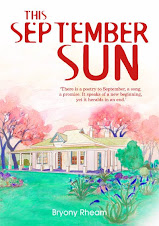
Bryony Rheam has written a ground-breaking book – a captivating detective story set entirely in present-day Bulawayo, Zimbabwe. Rheam explores a different writing style from her debut novel, This September Sun, and presents the reader with a story that is more than the traditional detective genre (and which perhaps embraces several genres). The novel opens as we meet Chief Inspector Edmund Dube shortly after a murder has been committed in the leafy inner suburbs of Bulawayo. Marcia Pullman, a wealthy but unpopular socialite, has been discovered dead in her bedroom. Dube, who is an apparently high-ranking policeman, is in on the case (despite a lack of co-operation from his colleagues) . Reminiscent of Agatha Christie All Come to Dust is reminiscent of Agatha Christie’s work, as Bryony Rheam leaves tantalising clues and red herrings, leading the reader down several cul-de-sacs. The initial pace of the novel was slow but I enjoyed the book more as the pace increased. Chief Inspector Dube meets Craig Martin on the day of the murder and commandeers his battered Renault to reach the scene of the crime. Martin is destined to play a central, sometimes comical role. The eccentric Edmund Dube appears even more of an enigma than Agatha Christie’s Hercule Poirot. At times it was difficult to fully accept his role as the protagonist and, in spite of the difficulties he grappled with as a child and now as an adult, I struggled to feel compassion or much fondness for him. On the other hand, the oddball Craig Martin is far more developed as a character. He almost demands our attention as we find out about his struggles with life. Flashbacks reveal both men’s childhood experiences: Edmund Dube has grown up straddling two cultures, and feels unaccepted by both the black and white communities, while Craig Martin has survived an unhappy and sometimes tragic childhood.  

I applaud the author’s decision to weave social commentary through her story. She refers to the realities, inequalities and prejudices familiar to anyone who grew up in Rhodesia and after 1980 Zimbabwe when, among other changes, facilities previously reserved for whites were opened to all races. Bryony Rheam shares her knowledge of the majestic Bulawayo landscape with striking portrayal of the everyday life and struggles that have affected so many Zimbabweans, especially in the last 20 years. She handles her subject sensitively, though strongly enough to make the reader aware that all was not well in society when Edmund Dube was a boy. This state of affairs affected not only his immediate family (his father goes to join the struggle and his mother has to support him by working a domestic worker in town) but also the country as a whole. Edmund, fairly unusually, is taken into the home and under the wing of a Scottish couple, the MacDougals, who employ his mother. They appear to do all they can to provide opportunities which, otherwise, he might not have had. Archibald MacDougal is also a policeman, a Detective Inspector, and this seems to provide the inspiration for Edmund’s later career choice. Another legacy of the MacDougals is Edmund’s unusual passion for fictional and television British detectives. 

Very cleverly, the reader is left guessing, almost to the end of the book, as to the reason for the crime or identity of the murderer. Edmund Dube – like Poirot – gathers the potential murderers together and questions each in turn to identify the real culprit. Bryony Rheam’s story telling is gripping, very clever, sometimes sad, often amusing, but very occasionally I felt was not totally credible. I found the closing pages of the book as she tied up all the loose ends a little too neatly and the convenient connections slightly unconvincing – perhaps because she presented us with rather too many potential murderers and a victim without a single redeeming quality. While this may not be have been completely my cup of tea, I congratulate Bryony Rheam on her achievement and I am sure we have not seen the last of this Zimbabwean writer. I think fans of the traditional detective story will enjoy this book. 


NB Magazine Review of All Come to Dust

 Reproduced from NB Magazine's January Crime Fiction Round Up


All Come to Dust by Bryony Rheam


An intriguing Zimbabwean murder mystery, Rheam’s Bulawayo set crime novel is at once comforting for its cosy crime scenario but also disturbing for its subversion of the associated tropes creating a more complex and relevant read. The writing is easy, hinting at a golden age style tale of skulduggery, opening with a woman found dead in her bedroom, stabbed with a letter opener. However, this is Zimbabwe not Surrey and Rheam explores themes of racism and the colonial legacy and how those things haven’t changed enough while policing has got harder and poorer.

Marcia Pullman of 274 Clark Road does all her own cooking for her little social gatherings, there is one today. She deems the ‘girl’ Dorcas useless and the gardener, Malakai, had to be fired for incompetence and laziness. Food prepared, Dorcas sent out for the afternoon, Marcia lies down for a rest before book club. Later when the first guest arrives and Dorcas returns they are surprised there’s no sign of Marcia downstairs. Eventually venturing to the mistress's bedroom Marcia’s body is found.

Chief Inspector Edmund Dube of the Bulawayo central police station is grappling with another report, there are no Ss or Rs on his typewriter. He dreams of solving a real crime so, when a constable comes looking for super Detective Inspector Khumalo, Edmund jumps in to take the case. A white woman in the suburb has been killed and the missing gardener is the prime suspect. Edmund has to get a lift to the crime scene from a citizen outside the station. When Dorcas sees the commandeered driver she says he is the killer, she saw him argue with Marcia before, Edmund will have to follow that up. Meanwhile, Mr Pullman is indignant that the very clever detective Khumalo isn’t on the case but Edmund holds his ground. The strange thing is that Marcia was found inside a locked house and there are no unaccounted for keys. She was also dead when the would be killer stabbed her. A mystery indeed.

There are several interesting characters, a healthy dose of humour, often arising from misinterpretation, misunderstanding and jumping to conclusions. There’s also the serious aspects of modern Zimbabwe’s troubled society and its past trauma. This is genuinely subversive and fun.

https://nbmagazine.co.uk/the-verdict-january-crime-fiction-round-up/


All Come to Dust is published in Zimbabwe by amaBooks, and in the UK by amaBooks and Parthian Books, where it is available through www.parthianbooks.com/products/all-come-to-dust .


Goodreads reviews of All Come to Dust


Crime fiction with a central detective character is a favourite staple on the bookshelves. All Come To Dust by Bryony Rheam takes the stereotypes, shakes them out of the box and upends expectations. The first few pages take the reader into an “other” place, familiar yet strange. The colours, smells and the noises of suburban Bulawayo are woven throughout this book, creating an atmosphere that leaves a lingering smell of hot concrete, bright bloom bursts and a coating of orange dust on the tongue. A post colonial world that has aged relics from Britain trying to cling on to an outdated way of life while the pulse and chaos of modern Zimbabwe strains to burst through underneath.

Chief Inspector Edmund Dube is a diligent police officer who works methodically with a razor sharp instinct for the truth. Polite, deferential and softly spoken, he’s a man who puts up with the broken typewriters, scuffed shoes and the down at heel environs of his shabby Bulawayo police station. He realises not only is he the wrong person for the job, he is in the wrong place at the wrong time. Forced to ask for a lift from a stranger because the only working police car is being used elsewhere, he is light years away from his cherished schoolboy reading book world of traditional English policing.

At first slightly comical and almost pathetic – we soon come to realise that Edmund Dube is a sharp observant operator.

He is no Adam Dalgleish, Morse or even Poirot but could stand shoulder to shoulder with those literary detective creations as he starts his crime solving. The novel flits between present day and Dube’s 1970s upbringing in a world that has slowly disappeared. A bright African schoolboy, Dube’s childhood memories provide clues to his personality and deliver an intriguing mystery story arc.

Victim Marcia Pullman is the typical suburban social climber, a bully and a snob. Her murder – behind the closed security gates of a house staffed with sullen servants and an obnoxious husband – sparks a classic detective whodunnit. Bryony Rheam deftly draws a colourful cast of believable characters that have flaws, secrets and many human failings.

Chief Inspector Dube has to battle against corruption, ingrained racism and class prejudice as he works his way to the book’s conclusion. Bryony Rheam has created a richly detailed, hugely enjoyable and satisfying crime novel, dense with clues, twists and turns. It’s no surprise that this book has already gained prestigious awards in her native country.

A murder mystery with an African aura that refreshingly skews traditional reference points for English language crime fiction.

Sue Lewis

----------------------------------------

Bryony Rheam's well-crafted murder mystery takes a hard look at life in contemporary Zimbabwe. Much of the story takes place in a historically white suburb of Bulawayo. Several of the inhabitants are hard up after the runaway inflation, but those who have access to hard currency – in one way or another – are doing much better. The latter include Marcia Pullman and her husband who run a tour operation, but they clearly have many lucrative side interests.

Then Marcia is discovered dead in her home with a letter opener sticking out of her chest. Chief Inspector Edmund Dube goes to the scene, having wheedled a lift from a man at the police station who is arguing about a speeding fine. Dube realizes that there’s not enough blood and it’s clear that the victim was dead before she was stabbed. The pathologist, a friend of Marcia’s husband, agrees and says she died of natural causes. Nevertheless, the question of why she was stabbed remains. The crime is laid at the door of the recently dismissed gardener, but Edmund believes there's a lot more to it than that. However, the senior officers at the police station seem intent on thwarting his efforts to get to the bottom of the case.

Edmund identifies a cast of suspects: Marcia’s husband; the Pullmans’ maid and gardener; the peculiar neighbor; Janet Peters who was bullied by her, and has an invalid mother; a mysterious woman interested in Marcia's old records; and Craig Martin, who has publicly threatened her.

Superficially, the novel seems to follow the usual tropes of the detective story genre, but as the author delves into Edmund's past, the book's rich characterizations and subtle surprises remind one more of PD James than Agatha Christie. Nothing is as it seems.

My pick for the best African mystery of 2021.

Michael Stanley

------------------------------------

Marcia Pullman was preparing for her book group when she felt a headache coming on and decided to lie down. When Janet, a member of the group, arrives she finds Marcia in her bed with a letter opener protruding from her chest. The coroner determined that she was dead of natural causes before being stabbed, but why stab a corpse? Chief Inspector Edmund Dube takes the call reporting the death and arrives to investigate. Dube was influenced to become a policeman from the images of investigators in novels and movies, but he is soft spoken and overlooked by everyone at his station. Marcia’s husband has connections with the police and Dube is soon warned off. Determined to find answers, he continues to investigate on his own. The story builds slowly as Dube questions Janet, Marcia’s husband, her maid Dorcas, Craig Martin, a man who recently threatened her, and her neighbor Roland. Each time he reaches out to them he learns more of their connections and history with Marcia and realizes that she had a hold over each of them and they all hated her.

Set in a primarily white suburb in Zimbabwe, this is a contemporary mystery that deals with the faltering economy and racial relations in a post-colonial society. Bryony Rheam builds her story slowly until the final third of the book, which moves rapidly to the conclusion. In a Poirot-like confrontation, Dube gathers his suspects together and reveals their secrets and his conclusions with a truly surprising twist. All Come to Dust is a lengthy mystery that is beautifully written and well worth the time that it takes to follow Chief Inspector Dube’s quest for the truth.

Jean Kolinofsky

---------------------------------------


A fabulous combination of eclectic Bulawayo characters with strong character development, vivid writing, and a great murder mystery to boot. 

Absolutely loved this.

Margie Rees


Monday, December 6, 2021

Michael Sears interviews Bryony Rheam about her new murder mystery


From: https: //www.timeslive.co.za/sunday-times/books/news/2021-12-06-michael-sears-interviews-bryony-rheam-about-her-new-murder-mystery/

Originally from The Big Thrill (1/12/21) Africa Scene: Bryony Rheam

Bryony Rheam is a Zimbabwean who lives in Bulawayo. Her debut novel This September Sun was named Best First Book in the Zimbabwe Book Publishers Association Awards and went to number 1 on the UK Kindle chart. She was one of the five Africans chosen for a Morland scholarship in 2018.


Rheam’s new book, All Come to Dust, was chosen as one of 10 top African thrillers in Publishers Weekly, who described it as a “stunning crime debut.” Paula Hawkins, author of The Girl on the Train, said it was “an intriguing, twisting murder mystery, a witty combination of old-fashioned detective story and keenly-observed portrait of life in suburban Bulawayo,” and chief inspector Edmund Dube was “a fictional detective as memorable as Hercule Poirot”.

In the story, Marcia Pullman is discovered dead in her Bulawayo home with a letter opener sticking out of her chest, but there’s not enough blood and it’s obvious that she was dead before she was stabbed. Edmund goes to the scene, having to wheedle a lift from Craig Martin, who is at the police station arguing a speeding fine. The pathologist, a friend of Marcia’s husband, says she died of natural causes, and the senior officers at the police station seem intent on thwarting Edmund’s efforts to get to the bottom of the case.

Superficially, the book seems to follow the tropes of the detective story genre, but soon we see it’s nothing like that. The rich characterisations and subtle surprises remind one more of PD James than Agatha Christie.

In this interview with The Big Thrill, Rheam shares further insight into her latest release and teases what she is working on next.


Bryony Rheam

Although your first book, This September Sun, also involves a murder, All Come To Dust is more of a murder mystery. Initially, the story seems to follow the framework of a typical detective story — the smart detective who is committed to the solution of the crime against the odds, the cast of suspects, the unreliable witnesses. It even has the final gathering of the suspects where everything is to be revealed. But you turn everything on its head. Was that always your plan, or did the context drive you in that direction?

I am a great Agatha Christie fan and always wanted to write a crime novel. Like Christie, I am not a great fan of a lot of violence; to me, unravelling the mystery is the most important thing. However, the classic Christie-type plot belongs very much to a time and a place, and it was obvious it would not work in Zimbabwe, despite our little English eccentricities that have survived 40 years after independence.

Many of the characters have some link to a type of crime writer: Craig, for example, reads an author called DP Radley (a fictional author) who chases fast cars and is surrounded by beautiful women; Mrs Whitstable reads Inspector Morse; Edmund reads The Saint. Yet none of these detectives seem to fit the location. They all seem to fall short in some way.

I suppose this is a reflection of the fact that I couldn’t use that same model of the detective story in the context of Bulawayo. The police are very unhelpful in Zimbabwe, and there is little in the way of forensic investigation, so I couldn’t rely on bringing in certain information in the same way. As I was writing, I became increasingly aware that the novel was not going to fit a certain model, and so I decided to undermine it instead.

Chief inspector Dube is an intriguing character. He’s smart and committed to solving the crime, but his back story suggests he has many deep issues of his own. We follow his childhood in Rhodesia as the son of a live-in maid whose apparently kindly white employers help him go to a good school and even with his homework every afternoon. How did you conceive him and his role in the novel?

A flame tree-lined street in Zimbabwe


The Zimbabwean police are not well-known for being either efficient or useful. During the Robert Mugabe days, they were synonymous with corruption. I thought there must be someone in the force who wanted to do a good job, someone who signed up with good intentions. That’s where Edmund came in.

The classic detective novel focuses on the crime at hand: who did it and why. There is not much detail about the investigator’s life. More recent crime novelists often present the investigator/police officer as a lonely person, someone who has given their life to solving crimes as an escape from the chaos of a dysfunctional family life, an unhappy marriage, or an inability to connect to others on a social level. In some ways, Edmund falls into this category as his marriage is not a happy one. However, he is also isolated at work, he is not taken seriously and is constantly put down. This forces him to go off on his own and work independently of the police force.

I am always drawn to the idea of an outsider. Edmund has never fitted in. He was one of a small group of black children who were let in to formerly white-only government schools in 1979. This was a very difficult time in the country’s history as it began to transition to majority rule. Edmund’s mother’s employers believe they are doing the right thing for Edmund by sending him there but are unaware of the challenges he faces. Later on in his life, Edmund again feels he does not belong when he joins the police force and is forced to take part in activities he does not agree with.

Edmund is intelligent and sensitive. He wants to do right in a country where everyone is very obviously doing wrong. He craves order and structure, hoping to put the world right by typing traffic offences and making sure forms are completed properly, yet outside is chaos and corruption. There is no room for people like him. It was very important for me to develop his back story and show how he came to be the sort of person he is. I liked the idea that he was solving a crime, and yet was also part of an unsolved mystery.

A house in Zimbabwe where the Pullmans may have lived


Marcia Pullman is the victim, but she and her husband are most unpleasant characters. Marcia dies in the first chapter, yet much of the book is about her and her impact on the people around her. By the end, we feel we know her well. Was it hard to build her character only through the eyes of the people who knew her?

I suppose in some ways I was unfair with Marcia, as, apart from the very beginning of the book, I don’t show her point of view. Everything the reader learns of her is through other people. However, I feel she is more symbolic than anything else. There is a new type of corruption in Zimbabwe which in some ways is quite difficult to explain. For years, people have pointed at the government as the main source of corruption, the implication being anyone else is not corrupt. I feel many white people in particular are like this. People fail to see how they themselves are drawn into the web of corruption. If they do acknowledge it, it is with the sense of “well, everyone else is doing it” or “how else are we supposed to survive?”

Perhaps ironically, there is no racism in this new type of corruption. Nigel Pullman teams up with the police, Marcia buys valuable antiques off old people (who would be mainly white) and gives them nothing for them.

Another view of the house

I based Marcia on someone I met who did this very thing. Back in 2000, when many people were leaving the country due to the farm invasions, she would buy up lots of valuable antiques and ship them to the UK. Many people had beautiful furniture that had been in their families for generations, but they did not really know what they were worth, tending to view them as old rather than antique. The same thing happened with old cars. You used to see lots of Morris Minors around, for example, typically driven by old ladies who had had them for years and years. Then buyers came from places like SA and bought them for a song. It was criminal.

Edmund identifies a cast of suspects: Marcia’s husband; the Pullmans’ maid and gardener; the peculiar neighbour; Janet Peters, who was bullied by her, and Janet’s invalid mother; a mysterious woman interested in her old records; and Craig Martin, who has threatened her. Each seems, in a way, to illustrate a different aspect of modern life in Bulawayo. Was that part of your plan for the novel?

Yes, it was. As well as writing a crime novel, I also wished to explore modern-day Zimbabwean society. We have all become increasingly isolated and lonely. This is due to politics and also the dire economic situation. There are those, like Marcia Pullman, who look after themselves at the expense of others, and there are those, like Dorcas, the maid, and like Janet Peters, who cannot stand up for themselves.

Craig is a handyman with poor business skills and low self-esteem. Edmund dragoons him to help with the investigation—staking out suspects, driving him around. Despite their wide differences, they seem to have features in common both in their adult lives and in their childhood pasts. Is this a yin and yang situation?

Craig and Edmund have much in common. They both had a traumatic event happen in their childhoods, and they are both essentially quite lonely characters, unable to connect to others.  However, Edmund is definitely much more organized and focused than Craig, who really is very lost. Somewhere along the line, they help each other. When Edmund asks Craig to do some investigating for him, it gives his life a sense of purpose, and he, in turn, can be of more practical help to Edmund.

Much of the story takes place in a historically white suburb near where the Pullmans live. Several of the inhabitants are hard up after the runaway inflation, but those that have access to hard currency—in one way or another—are doing much better. Did you set out to explore the effects of this modern dichotomy in the country?

Yes, definitely. Life in Zimbabwe has been very difficult over the last twenty years. Hyper inflation wiped out life savings and pensions for many people. The transition to the US dollar was very clumsily done as well, and many people lost money that way, too.  Sometimes it feels that almost everyone is doing something dodgy in order to earn US dollars! There is very little appeal in doing a conventional job as the salaries are so low. I think the older generation have been very badly hit. They struggle to survive on ridiculously small pensions, and really battle to understand the value of the currency as there is the official government rate of exchange and then the black market rate, which varies considerably. The divide between the haves and the have nots is widening considerably.

Would you tell us something about what you are working on now?

I have finished my third novel, The Dying of The Light, and it is at the editing stage. It is set in Bulawayo in the late 1930s and is told from the perspective of a house servant who works for a wealthy lawyer and his wife. I have started a book for young adults called Going Up.  It is set in modern-day Bulawayo and concerns a young man who has gotten into drinking and drugs. His wealthy grandfather gives him an ultimatum to get himself sorted out and hands him the responsibility of evicting vendors from an old department store that he owns and wishes to knock down. However, the young man soon begins to develop other plans for the building and sets out to restore it to its former glory.

Just lately, I have been thinking of another crime novel, and may even bring Edmund Dube back, this time as a private investigator. I think the crime genre is a perfect one in which to explore the decay at the heart of Zimbabwean society.


Michael Sears writes with Stanley Trollip under the name Michael Stanley. Their award-winning mystery series with Detective Kubu is set in Botswana, a fascinating country with magnificent conservation areas and varied peoples. The first book in a new series featuring Kubu as a young detective is Facets of Death, set when Kubu first becomes a detective and is faced with solving a diamond heist at the world’s richest diamond mine, Jwaneng. They also have a thriller Shoot the Bastards, which introduces Minnesotan environmental journalist Crystal Nguyen. Set mainly in South Africa, it has as backstory the vicious trade in rhino horn.

Michael has lived in South Africa, Kenya, Australia and the US.He now lives in Knysna on the Cape south coast of South Africa. 


All Come to Dust is published in Zimbabwe by amaBooks, co-published in the UK by amaBooks and Parthian Books and is available elsewhere throough the African Books Collective.


Wednesday, November 10, 2021

Bryony Rheam wins a 2021 Bulawayo Arts Award for All Come to Dust


All Come to Dust has won the Outstanding Literary Work – Fiction category at the 2021 Bulawayo Arts Awards. 


The Bulawayo Arts Awards are multi-disciplinary arts awards that recognise and honour exceptional individuals and collaborative artistic efforts in the city of Bulawayo, Matabeleland North and South, as well as those from the region who are practicing arts elsewhere in the world.

This year there were over 24,000 submissions across all the categories of the awards, and Bryony is especially delighted to win the outstanding fiction award given the strength of all four of the shortlisted writers in that category.


The novel is published in Zimbabwe by amaBooks and is available in Bulawayo at Inganu Bookshop at the Orange Elephant, 12th Avenue Extension and in Harare at Bindu Books, 37 Victoria Drive, Newlands.


In the United Kingdom, it is co-published by amaBooks and Parthian Books and is available through all good bookshops as well as through www.parthianbooks.com/products/all-come-to-dust and online book outlets.

In North America and Australia/New Zealand it is available through www.africanbookscollective.com or Amazon.


The Full List of Award Winners:

Outstanding Literary Work – Fiction: All Come To Dust by Bryony Rheam

Outstanding Literary Work – Non-Fiction: Our Food, Our Heritage, Our Culture by Makhosi Mahlangu

Outstanding Ndebele Literary WorkNgubani Owabulalala uDube by Mihla Sitsha

Outstanding Song of the Year‘For Me’ – DJ Zandimaz

Newcomer of the Year (All Genres)Sandra Sibanda

Outstanding Male Artist of the YearMsizkay

Outstanding Female Artist of the YearVuyo Brown

Outstanding Hip Hop Artist/ActAwa

Outstanding Kwaito/House/Gqom ActMawiza

Outstanding Alternative MusicThandy Dlana

Outstanding Gospel Artist/ActMai Mwamuka

Outstanding Imbube/Acapella Group/ActFocus Accapella

Outstanding Tshibilika/Rhumba ActInsimbi Zezhwane

Outstanding Music ProducerNashville 

Outstanding Music Video‘Induku Enhle’ – X Mile

Outstanding Radio DJNomalanga Nyathi – ZIFM

Outstanding Club DJDJ Mzoe

Outstanding Dance EnsembleGeek Twins

Outstanding Female DancerDorcas Ngwenya

Outstanding Male DancerHebson Ncube

Outstanding Arts JournalistMthabisi Tshuma – The Chronicle

Outstanding Arts PhotographerSadee LensWorks

Outstanding Online MediaEkasi Magazine

Outstanding Theatre ActressMusawenkosi Sibanda

Outstanding Theatre ActorCadrick Msongelwa

Outstanding Theatre ProductionBhalagwe Is Burning by Victory Siyanqoba

Outstanding ComedianZwe Hlabangana

Outstanding PoetDesire Moyo

Outstanding Fashion Designer/HouseA Tribe Called Zimbabwe

Outstanding ModelBen Chest

Outstanding Ambassador (worldwide)Vusa Mkhaya

Outstanding TV Production/ProgrammeMjolo FM – Byo Memes

Outstanding Short FilmFigure It Out – Nkosilesisa Ncube

Outstanding Film/TV ActressLee Mchoney – Wadiwa Wepamoyo

Outstanding Film/TV ActorLeroy Mthulisi Ndlovu – Figure it Out

Life Achievement AwardEbba Chitambo

People's Choice AwardMai Mwamuka