Wednesday, May 15, 2019

African literature disrupting what Western presses prize


By Jeanne- Marie Jackson
From The Herald, 15 May 2019
Jeanne-Marie Jackson
African literature is the object of immense international interest across both academic and popular registers. Far from the field’s earlier, post-colonial association with marginality, a handful of star “Afropolitan” names are at the forefront of global trade publishing. Books like Chimamanda Adichie’s “Americanah” and “Half of a Yellow Sun”, Teju Cole’s “Open City”, Taiye Selasi’s “Ghana Must Go” and Yaa Gyasi’s “Homegoing” have confounded neat divisions between Western and African literary traditions. The Cameroonian novelist Imbolo Mbue captured a million-dollar contract for her first book, “Behold the Dreamers”. That’s even before it joined the Oprah’s Book Club pantheon this year.
Such commercial prominence, though, has attracted considerable and unsurprising push back from Western and Africa-based critics alike. Far from advancing narratives with deep roots in local African realities, such critics fear, many of Africa’s most “successful” writers hawk a superficial, overly diasporic, or even Western-focused vision of the continent.
NoViolet Bulawayo
The most visible of these critiques has been directed at the Zimbabwean writer NoViolet Bulawayo’s “We Need New Names” (2013). The Nigerian novelist Helon Habila worried in a review in the London Guardian that it was “poverty-porn”. The popular Nigerian critic Ikhide Ikheloa (“Pa Ikhide”) frequently makes a similar point. Fellow Nigerian writer Adaobi Nwaubani critiqued the West’s hold on Africa’s book industry in a much-circulated New York Times piece called “African Books for Western Eyes”.
Such debates about African writing could, and likely will, go on forever. Questions about Africa’s place in the current global literary marketplace broaden some of the most urgent queries of the postcolonial era. Who gets to document African realities? Who are the “gatekeepers” of African publishing traditions?
It goes on: To what sort of audience does African writing cater? What is the role — and what should it be, if any — of Western institutions in brokering cultural prestige?
All these issues merit concern.
Between the default poles
Too often, though, African writing ends up volleyed between two default poles of “corporate global” and “activist local”. Some onlookers, as in a recent essay by the Canadian scholar Sarah Brouillette, go as far as to name the biases of even Africa-based print outlets. Kenya’s Kwani Trust is exposed as “Western-facing” due to a web of donor relations. “West” here is code for neoliberal. “Western-facing” is for complicity with a market that skews toward British and American interests.
Faced with a “world system” argument like Brouillette’s, African literature would seem trapped between a rock and a hard place.
But, in fact, this tells only a small part of the story of how African writing now makes its way through the world. It is incomplete to the point of being outdated, given the boom over the past five years in new, globally conscious small US literary presses collaborating with African writers.
A “West subsuming Africa” brand of critique works fine for scholars with no real skin in the game of literary publishing. It also denies real agency to a lot of African writers and other literary professionals. On the ground the literary field is far more forward-thinking and diverse.
There is an entire new body of African writing that escapes this closed circuit of damning truisms. A wave of new or recently galvanised independent literary presses in the US and the UK are working in tandem with some of Africa’s most generative outlets. Together they are publishing and promoting work by young and adventurous African writers.
Labours of love
Books published originally by presses like Umuzi (South Africa), amaBooks (Zimbabwe) and Kwani (Kenya) find second lives with international publishers working to defy the constraints of profitability. They’re mostly labours of love with skeleton staffs that speak to a transcontinental commitment to innovative African writing.
Here are a few key examples of African texts published by independent American outlets — “independent” here refers to presses beyond the “Big Five” US trade publishers (Hachette Book Group, HarperCollins, Macmillan, Penguin Random House and Simon and Schuster.
These include Jennifer Nansubuga Makumbi’s Ugandan epic “Kintu” which was originally launched by Kwani. It was the first Anglophone novel put out by the brand-new Transit Books based in Oakland, California. The press seeks maximum visibility for translated fiction alongside texts originally written in English. They advocate for more ethical legal and financial dealings with translators, as well as international writers.
A number of similarly tiny, ambitious ventures have published some of the most acclaimed recent African writing in translation. Deep Vellum Publishing was behind the English translation of Fiston Mwanza Mujila’s Etisalat Prize-winning “Tram 83”.
Also dedicated exclusively to works in translation, LA-based Phoneme Media in 2016 published the first ever Burundian novel in English, Roland Rugero’s deeply contemplative “Baho!”. Phoneme’s tagline, fittingly, is “curious books for curious people”.
In a similar vein, Brooklyn’s Restless Books was founded to combat “parochial, inward-looking, and homogenised trends in American publishing”. Among their forthcoming titles, translated from the French is Naivo’s “Beyond the Rice Fields”. It’s the first novel from Madagascar to see its way to English.
Veteran nonprofit press Archipelago Books is also in Brooklyn. In 2015, it published the translation from the Portuguese of Angolan writer Jose Eduardo Agualusa’s “A General Theory of Oblivion”.
Every one of these throws a wrench in a clear, cynical sense of what kind of novel Western presses prize. That is not to mention the many African writers, publishers, and editors working in concert to promote these same texts.
Small, focused channels
It applies to the Anglosphere too. Books that offer a decidedly more locally textured experience than those of the “Afropolitan” rock stars have made their way abroad through small, focused channels.
These works might include Tendai Huchu’s “The Maestro, the Magistrate, and the Mathematician” (published originally by amaBooks, and in the US by Ohio University Press); Imraan Coovadia’s “Tales of the Metric System” (from Umuzi, and again by Ohio University Press); and Masande Ntshanga’s “The Reactive” (also Umuzi; in the US by family-run Two Dollar Radio.
Clearly, this collection just scratches the surface. But what these works have in common is an investment in stylistic and structural experimentation that confounds rather than caters to an international taste for “digestible” fiction, or to mostly Western points of cultural and institutional reference.
This counter-current of transnational African literary life complicates the equation of culture, geopolitics and economics in more useful ways than stale materialist critiques.
As such titles and presses continue to gain acclaim and recognition by an international readership that is aware of and hostile to shallow representations of Africa — and who crave engagement with challenging fiction, regardless of its origin — critics will need to rethink some of their orthodoxies.
There is more to both African literature and Western publishing than meets an eye too practised in its suspicion. If literature is doomed only to echo the failings of globalisation, then why bother? On the contrary, a new generation of writers and publishers deserve our awareness of the “global literary marketplace” as a meaningfully multidimensional space. — Africa Conversation.


Monday, March 18, 2019

amaBooks at the Earth Cafe


We are excited to be doing an event at Earth Cafe in Bulawayo organised by Hubbard's Historical Tours. As well as talking about our publishing journey there will be readings by three writers, John Eppel, Mzana Mthimkhulu and Bryony Rheam. 

John will be reading poems from three amaBooks collections: Caruso of Colleen Bawn, White Man Crawling and Textures.  John's readings will be accompanied by the acclaimed young cellist, Emma Price. 

Bryony Rheam will read from her forthcoming novel All Come to Dust and Mzana Mthimkhulu from his humorous story, 'What's in a Name?' from the amaBooks collection, Moving On.

Books will be sold at reduced prices on the night. Tickets for the event, which includes a two-course dinner, can be booked through Liz at Earth Cafe on 0712 209 565.

The event is supported by Alliance Francaise de Bulawayo.

amaBooks congratulate our Welsh partner, Parthian Books, on winning Wales Publisher of the Year at the London Book Fair


Parthian Books at the London Book Fair
Gathered together amongst fellow independent presses on
 the IPG stand, the Parthian team cheered with delight last 
Wednesday, as the regional winner for Wales was announced.
 To be part of this new (and long overdue) category feels 
exciting enough, but to bag the title was brilliant.
Richard Davies, Publishing Director at Parthian, reflected on
the victory with the following comment, "We're delighted to 
receive this inaugural award. We've had a really positive year
with great books such Hummingbird by Tristan Hughes 
winning the Wales Book of the Year People's Choice Award 
while we also had a genuine bestseller in John Martin's 
Raid Over Berlin which went into the Sunday Times 
bestseller list at Christmas."

Parthian have previously published three amaBooks titles
 - Where to Now? Short Stories from Zimbabwe, Bryony 
Rheam's This September Sun and Tendai Huchu's The 
Maestro, The Magistrate and The Mathematician, and, 
next month, they will be publishing Moving On and 
Other Zimbabwean Stories in the United Kingdom. 


Monday, March 4, 2019

Bryony Rheam's story longlisted for the Short Story Day Africa Prize


Bryony Rheam. Photo courtesy of Violette Kee-Tui

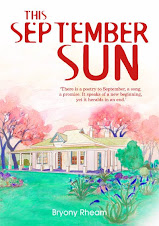
2019 has started well for Bryony Rheam. The Arabic translation of her debut novel This September Sun has been published by Al Arabi and launched at the Cairo International Book Fair, and now her short story ‘Supping at the Fountain of Lethe’ has been longlisted for the 2018 Short Story Day Africa Prize for Short Fiction. Bryony's second novel All Come to Dust is to be published by amaBooks later this year. Congratulations to Bryony, to the other Zimbabwean longlisted writer Chido Muchemwa, and to the other 19 longlisted writers from across Africa.


The longlist was released through the Johannesburg Review of Books (https://johannesburgreviewofbooks.com/2019/03/04/the-jrb-daily-2018-short-story-day-africa-prize-longlist-announced/)


The longlist for the Short Story Day Africa Prize for Short Fiction has been announced.
The prize was founded in 2013, and is open to any African citizen or African person living in the diaspora.
SSDA awards prize money of US$800 (about R11,000) for first place, $200 for second place, and $100 for third place. The previous winners of the prize are Tochukwu Emmanuel Okafor, Sibongile Fisher, Cat Hellisen, Diane Awerbuck and Okwiri Oduor.
This year’s prize theme is ‘Hotel Africa’:
The resulting anthology from the longlisted entries, Hotel Africa: New Short Fiction from Africa, will be edited by Helen Moffett, who will select three editing fellows to work alongside her as part of the SSDA/Worldreader Editing Mentorship, now in its third year.
‘This year’s longlist was particularly difficult to decide’, SSDA Executive Editor Rachel Zadok says. ‘Like last year, the slushpile was read by a team of professional editors with an eye on development, so that no talent, no matter how raw, was overlooked. Instead of looking simply to the most polished stories to make up the list, we looked at the originality of the story. We looked for that sparkle in a writer’s voice that’s almost impossible to define, but when you see it, it creates a buzz in your brain. Of course, this doesn’t mean that there are no polished writers on the list, just that the playing field was more equal. The stories on the longlist each explore the theme in unique and fascinating ways.
‘We’re pleased to see that quite a few stories come from writers who attended the Flow Workshops, and that writers who have previously been longlisted and have participated in Flow Workshops and the Development Editing Process, like Harriet Anena and Lester Walbrugh, have come so far in their storytelling. They’ve gone from “good” to ‘”wow, fantastic!”
‘We’re also seeing a greater number of stories from previously under-represented countries. It’s wonderful to be publishing writers like Adam El Shalakany from Egypt, who has entered the SSDA Prize in the past but has never been placed. His story “Happy City Hotel” was one of the unanimous decisions, of which there were only six out of the twenty-one. After months of reading, which culminated in three and a half hours of deliberation, arguing and tears, each of us walked away a little heartbroken for the favourites we had to sacrifice. So to the writers who didn’t make the list this year: don’t give up. We’ve got our eyes on you.
‘We want to extend express thanks to our sponsors, the Goethe-Institut, the Miles Morland Foundation, Worldreader and the Beit Trust, and our publishing partner New Internationalist.’
Congratulations to the twenty-one long listed writers!
The 2018 Short Story Day Africa longlist
  • ‘The Satans Inside My Jimmy’ by Harriet Anena (Uganda)
  • ‘The Jollof Cook-off’ by Nkiacha Atemnkeng (Cameroon)
  • ‘The Last Resident’ by Jayne Bauling (South Africa)
  • ‘Mr Thompson’ by Noel Cheruto (Kenya)
  • ‘The Layover’ by Anna Degenaar (South Africa)
  • ‘A Miracle In Valhalla’ by Nnamdi Fred (Nigeria)
  • ‘Of Birds and Bees’ by Davina Kawuma (Uganda)
  • ‘Maintenance Check’ by Alinafe Malonje (Malawi)
  • ‘Why Don’t You Live in the North?’ by Wamuwi Mbao (South Africa)
  • ‘Slow Road to the Winburg Hotel’ by Paul Morris (South Africa)
  • ‘The Snore Monitor’ by Chido Muchemwa (Zimbabwe)
  • ‘Outside Riad Dahab’ by Chourouq Nasri (Morocco)
  • ‘Broken English’ by Adorah Nworah (Nigeria)
  • ‘Queens’ Children’s Little Feet’ by Godwin Oghenero Estella (Nigeria)
  • ‘Door of No Return’ by Natasha Omokhodion-Banda (Zambia)
  • ‘An Abundance of Lies’ by Faith Oneya (Kenya)
  • ‘The Match’ by Troy Onyango (Kenya)
  • ‘Supping at the Fountain of Lethe’ by Bryony Rheam (Zimbabwe)
  • ‘Happy City Hotel’ by Adam El Shalakany (Egypt)
  • ‘The Space(s) Between Us’ by Lester Walbrugh (South Africa)
  • ‘Shithole’ by Michael Yee (South Africa)
SSDA is one of the most successful short story organisations on the continent, with all of its previous anthologies receiving significant critical acclaim. Two stories from the 2013 anthology, Feast, Famine & Potluck, were shortlisted for The Caine Prize for African Writing, with that year’s SSDA winner, Okwiri Oduor, going on to win the award. Terra Incognita (2014) and Water (2015) also received wide praise, including reviews from the Los Angeles Review of Books, the Sunday Times and the Financial Mail.


Thursday, February 28, 2019

Al-Arabi publisher Sherif Bakr looks back on this year's Cairo International Book Fair and Bryony Rheam's This September Sun


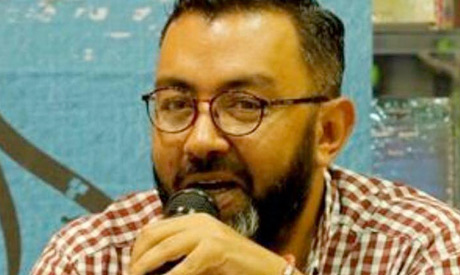
Sherif Bakr

For over 40 years, Al-Arabi Publishing and Distributing has exhibited at the Cairo International Book Fair (CIBF), with titles mainly in politics and mass media. For the past decade, however, it is translated titles, mostly fiction, that have attracted readers to this particular publishing house.
According to Al-Arabi publisher Sherif Bakr, this was a good year, with book fair visitors showing a true interest in learning more about the world.
“We did well; our new titles of translated novels and books in general were very well received with people being very happy to go through piles of books that bring to them ideas from Finland, Serbia, Austria, Zimbabwe and many other countries,” Bakr said.

The Al Arabi September Suns
One of this year’s newly translated titles for Al-Arabi is the Arabic version of Bryony Rheam’s “This September Sun,” the gratifying novel that came out in late 2009, examining layers of the lives of the “settlers” of Rhodesia that continue to haunt Zimbabwe’s grandchildren.

This is the first Africa-centred novel translation for Al-Arabi that has otherwise, over the past four decades, brought to its readers a wide range of political readings on Africa, including the Arabic translation of Wolfgang Bauer’s “Stolen Girls: Survivors of Boko Haram tell their story,” which came out in 2017.

Meanwhile, Bakr is hoping to bring out a translation of “Thirteen Cents,” a novel that approaches the shadowy side of life in Cape Town.
“I am hoping it will come out this year but it might have to be for the book fair next year, because translation does take a long time to be done properly,” Bakr said.

Bakr affirmed that he would like to bring more writers from Africa. “The trouble there is that African writers are either very well known (and those are usually the writers whose work is published in European countries that once colonised Africa) or are very difficult to trace. We are usually looking to get our readers acquainted with the less known rather than the well-known,” he said.

“I was, for example, very lucky to have met the Zimbabwean publishers of “This September Sun” at the Frankfurt book fair, so I learned about the book. I keep looking for African writers or otherwise for books written about Africa,” Bakr said.
“But yes, when we look at the map we have in the office, where we pin the countries that we had brought books from, we do feel that we still have so much to do on Africa,” he said.

Meanwhile, Bakr is happy to have seen the attention this year's book fair brought to Al-Arabi’s translation of “Purge,” a Finnish novel by Sofi Oksanen that looks at the political and social impact of the occupation of Estonia by the Soviet Union during World War II. The novel has been translated into near 40 languages.
“We translated from the English version, as we have been doing with a considerable number of titles, because usually it is easier to find literature translators who work from English into Arabic, and also because usually the English translation is a very good one,” Bakr said.

When he started off his translation section a little under 10 years ago, Bakr created a small team that was essentially translating and editing from English. Today, the team has expended and it is now working on translations from several European languages.
“Translation is usually a very taxing job, especially translation of literature. But we have a rule at Al-Arabi: we are making a translation that has to be an easy and enjoyable read, so we are not held captive to the exact, literal translation. I think this has been essential to our success in getting our readers acquainted with literature from all the continents,” he said.

This year, for CIBF, Al-Arabi issued 24 literary translations that they have been working on for over two years.
“Sometimes one thinks it would be easy, but things become slow. Like this year, we have a translation of an Armenian novel and we thought it should be an easy going process, given the large Egyptian Armenian community. But it took quite a bit of time to put the translation on the right path,” Bakr said.
According to Bakr, “Purge” is one of this year’s best selling for Al-Arabi. Another very well received book is the Arabic translation of “The Devil’s Workshop” of Czech novelist Jachym Topol, that examines the history of concentration camps in Belarus.
“With this book we had to spend over a year on the translation and editing, and inevitably we needed to invite the author for the revision of the final version of the book. It sometimes has to be this way. But it does not matter how long time it takes, so long as we come up with a good translation,” Bakr said.

Al-Arabi focuses on translating fiction. “I think of the books we translate, we do roughly 80 percent fiction and 20 percent non-fiction,” Bakr said. “I guess people are more interested in reading fiction. Actually, our readers are mostly young and are more into fiction generally,” he added.
Al-Arabi, Bakr said, is continually seeking titles that would attract younger readers. Currently, he added, Al-Arabi is working on the Arabic translation of an Australian novel, “Life on the Refrigerator,” that tells the story of a mother and daughter who end up communicating through sticky notes put on a fridge.
Bakr expects that this will be one of the novels to attract the "young adult" constituency of readers, which he says constitute a big audience for literature.
Al-Arabi is also behind three Arabic fiction titles for this year: “Tamar” by May Khaled; “Frames of Emptiness” (Otor min Faragh) by Amr Afiyah and “The Prisoner of Muscat” (Sagine Mascat) by Al-Sherbiny Ashour.
“One should never underestimate the impact of literature on people’s lives. It induces them to think of things and feel things that might be life-changing, literally and not metaphorically,” Bakr said.


From: http://english.ahram.org.eg/News/325262.aspx