Showing posts with label John Eppel. Show all posts

Sunday, November 23, 2025

John Eppel at the Bulawayo Book Club


John Eppel will be at the Bulawayo Book Club on 29 November to discuss his novel Hatchings.

It is New Year in Bulawayo, and anybody who is anybody is out celebrating.

Based on Alexander Pope's dictum that 'those who are ashamed of nothing else are so of being ridiculous', Hatchings sets out to ridicule people of all races who abuse power - behind the pulpit, the podium, and the paint brush.

The novel, whose central metaphor is baby-dumping, is set on New Year's Eve for good reason: it's the time when powermongers are at their most self-indulgent, most exposed. It is precisely the time when we see how much alike they are. In Hatchings, this similarity between the left and the right, between church and state, between black and white - so obsessed with their own moral worthiness, so quick to inflict their sanctimony on us all - is demonstrated by the fact that they all, quite literally, dance to the same tune.

'Beneath the scurrility, this is a profoundly romantic novel, it tells of a touching love story between a young white couple who are saved from the prevailing Philistinism and corruption by two things - a love of English literature and a love of the Matopos.'
Terence Ranger in The Zimbabwean Review

'The book is about exploitation, meanness; and it's about loveliness'
Southern African Review of Books


amaBooks are fortunate to have published two novels, Hatchings and the translation into English of Ignatius Mabasa's Mapenzi as The Mad, that were chosen in the Times Literary Supplement as two of 'the most significant novels to have come out of Africa.


Sunday, February 26, 2023

Togara Muzanenhamo wins the 2022 Luschei Prize for African Poetry


Togara Muzanenhamo has won the 2022 Luschei Prize for African Poetry for his book Virga published by Carcanet. 
To read the Luschei Prize's guest judge @matthewshenoda's comments and learn more about the finalists, visit: https://t.co/ZmT2CiuYVn 

Togara's poetry was published in Zimbabwe by amaBooks in the anthology Textures, together with poetry from John Eppel.  Textures won the Zimbabwe National Arts Merit Award for Outstanding Fiction in 2016. It is available in Zimbabwe through Inganu Bookshop at the Orange Elephant, River Estate, 12th Avenue Extension, Bulawayo (WhatsApp +263 772 851 609)   and in the United Kingdom and North America through  the African Books Collective (https://www.africanbookscollective.com/books/textures).


Tuesday, February 21, 2023

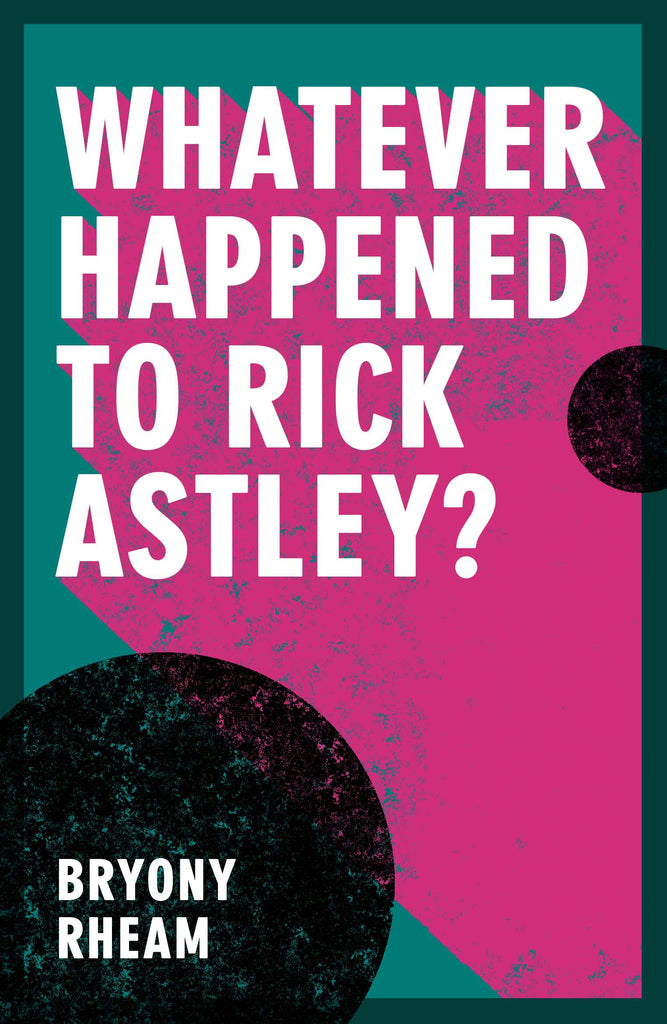
Bryony Rheam's short story collection to be published in July 2023


'Bryony Rheam’s short stories are skilled, perfectly formed, and compelling; the characters are largely outsiders – whether geographically, culturally or emotionally – and completely realised, inhabiting detailed and believable worlds. In all, Whatever Happened to Rick Astley? is a deeply satisfying collection.' Karen Jennings

'Whatever Happened to Rick Astley?, Bryony Rheam’s brilliantly titled and wonderful collection of short stories, deals with loss—loss of identity, loss of memory, loss of country, loss of someone you love. While the theme seems to be a heavy one, the stories capture the beauty and the magic of the ordinary. There is nostalgia here for what once was, but there is also a lot of hope for what could be. Anything that can give us hope in today’s day and age is truly amazing—and that is what this collection is.' Siphiwe Ndlovu

'Bryony Rheam's wry humour is a bridge that connects genre fiction to literature. These beautifully crafted stories will satisfy all expectations.' John Eppel


Whatever happened to Rick Astley? She imagined that he was happily married with children. A record producer, perhaps? That was the usual way with singers, wasn’t it?

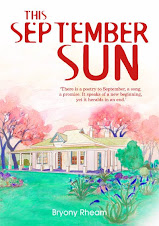
From Bryony Rheam, the award-winning author of All Come to Dust and This September Sun, comes a collection of sixteen short stories shining a spotlight on life in Zimbabwe over the last twenty years. The daily routines and the greater fate of ordinary Zimbabweans are represented with a deft, compassionate touch and flashes of humour.


From the potholed side streets of Bulawayo to lush, blooming gardens, traversing down- at-heel bars and faded drawing rooms, the stories in Whatever Happened to Rick Astley? ring with hope and poignancy, and pay tribute to the resilience of the human spirit.

Whatever Happened to Rick Astley? is due to be published by Parthian Books and amaBooks in the UK in July and by amaBooks in Zimbabwe at a date to be announced.

Bryony says of the collection that: 'Each story reflects something of my life in Zimbabwe over the last twenty years. It has not been an easy time for this country, but it is also not one without hope and joy.'

Monday, December 19, 2022

Bulawayo's Reading Africa Panel Discussion


Bulawayo writers discuss their writing, Zimbabwe's reading culture and their new projects as part of Catalyst Press' Reading Africa Project.

The recording is available through the link below:

Bulawayo's Reading Africa Panel 

Monday, June 6, 2022

How do authors create their characters - with John Eppel, Violette Kee-Tui, Siphiwe Gloria Ndlovu and Bryony Rheam

 Four Bulawayo novelists John Eppel, Violette Kee-Tui, Siphiwe Gloria Ndlovu and Bryony Rheam in discussion about how they create characters in their novels with Dr Drew Shaw. 

Recorded at The Orange Elephant in Bulawayo, with the support of The Centre for English Excellence and The Orange Elephant.

The links to the three sections of the discussion are below:

Section One

Section Two

Section Three


Monday, March 18, 2019

amaBooks at the Earth Cafe


We are excited to be doing an event at Earth Cafe in Bulawayo organised by Hubbard's Historical Tours. As well as talking about our publishing journey there will be readings by three writers, John Eppel, Mzana Mthimkhulu and Bryony Rheam. 

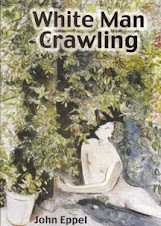
John will be reading poems from three amaBooks collections: Caruso of Colleen Bawn, White Man Crawling and Textures.  John's readings will be accompanied by the acclaimed young cellist, Emma Price. 

Bryony Rheam will read from her forthcoming novel All Come to Dust and Mzana Mthimkhulu from his humorous story, 'What's in a Name?' from the amaBooks collection, Moving On.

Books will be sold at reduced prices on the night. Tickets for the event, which includes a two-course dinner, can be booked through Liz at Earth Cafe on 0712 209 565.

The event is supported by Alliance Francaise de Bulawayo.

Monday, December 17, 2018

“White Man Crawling”: Time, Race and Power in John Eppel’s Depiction of Middle-aged and Elderly Whites during the Zimbabwean “Crisis”

This article, by Thabisani Ndlovu in the Journal of Literary Studies, applies Bakhtin’s concept of the chronotope, in conjunction with a rights-reading approach, to John Eppel’s fiction, with particular reference to Eppel’s depiction of middle-aged and elderly whites during the Zimbabwean “crisis”. Taken at one level to mean the organisation of value-laden space-time in a literary text, and also at another level, the spatio-temporal relationship between a text and its socio-historical context, the chronotope emerges as a useful concept in analysing polarised racial relationships that characterised Zimbabwe during its “crisis” period. While the Chimurenga chronotope is a cyclical representation of time whose racialising strategy depersonalises whites as constant foes and strangers rendered in a permanent war narrative, Eppel responds in his fiction, particularly through the chronotopes of ageing and reversal, by delineating an array of white subjectivities characterised by physical infirmity and loss of socio-political power, to challenge the homogenisation and vilification of whites.


The full article appears in the Journal of Literary Studies, Volume 34, 2018 - Issue 4: Exploring the Dynamics of Time in Literary Texts, pages 80-96 
(https://www.tandfonline.com/doi/abs/10.1080/02564718.2018.1538081)

Thabisani Ndlovu, of Walter Sisulu University, carries out research in literary studies and human rights, particularly in the areas of race, gender and ethnicity. As a creative writer, he has had stories published in most of the amaBooks Short Writings series and translated the anthology of short stories Where to Now? into Ndebele as Siqondephi Manje?.


White Man Crawling, The Caruso of Colleen Bawn and other amaBooks publications of John Eppel are available through amaBooks or, outside of Africa, through www.africanbookscollective.com.

Tuesday, September 18, 2018

All Come to Dust in Bulawayo

Photos courtesy of Violette Kee-Tui
Last week, Bryony Rheam read from some of her published short stories and from her forthcoming novel, All Come to Dust, at Middys Coffee Shop in Bulawayo. The novel follows Chief Inspector Edmund Dube as he investigates the suspicious death of Marcia Pullman. As the investigation unfolds so does the story of Dube's life from his early years as he begins to put the pieces together of why the Scottish couple, for whom his mother worked, left the country in a hurry and Dube with an abiding sense of abandonment.  

The readings at Middys were well attended, with a scattering of other writers published by amaBooks, including Mzana Mthimkhulu, John Eppel and NoViolet Bulawayo. The event was organised by Hubbard's Historical Tours.
NoViolet Bulawayo and Bryony Rheam


John Eppel and friends


Mzana Mthimkhulu

Bryony is an ardent fan of Agatha Christie, a passion inherited from her grandmother. As testimony to this enthusiasm for Christie, she won the international Write Your Own Christie competition, which involved writing a chapter of a novel in the style of Agatha Christie, following on from chapters of previous winners. She was also runner-up for a previous chapter she wrote.
As her prize Bryony travelled to London to have dinner with Christie's grandson and the detective novel writer's British and American publishers. It will be up to Bryony's readers to judge whether she is able to follow in Christie's footsteps and weave as tangled a web as the best-selling author did in her many works.

All Come to Dust, to be published by amaBooks in November 2018, will be available in Zimbabwe through amaBooks and elsewhere through the African Books Collective.

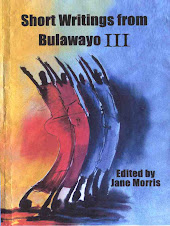
Bryony's short stories have appeared in several anthologies published by amaBooks: Moving On and Other Zimbabwean Stories, Where to Now?, Long Time Coming and Short Writings From Bulawayo I, II and III. Short stories by Mzana Mthimkhulu and John Eppel have also been published in the anthologies, and John Eppel has had several novels, poetry and short story anthologies published by amaBooks. A story by NoViolet Bulawayo was published in Where to Now?.


Wednesday, August 15, 2018

Textures reviewed in The Herald


Stanely Mushava, Literature Today, The Herald
Book: Textures
Authors: John Eppel & Togara Muzanenhamo
Publishers: amaBooks (2014)
ISBN: 978-0-7974-9498-5
When the muses refuse to smile on a poet, he runs out of inspiration but when a woman refuses to smile on him, a creative current carries him along. If not for this irony of deprivation, Dante, John Keats and Thomas Hardy may never have attained half their stature, and poetry would have been poorer for the equilibrium. John Eppel’s impassioned reminisces for lost love in “Textures” make for a Zimbabwean version of the deprivation theory.

“Textures”, the dual effort by highly regarded poets Togara Muzanenhamo and John Eppel, is a league apart for its classical forms, musical cadences and cosmopolitan depth of field.
Zimbabwean poetry, often politically themed, thrives on immediacy, rejects classical forms, branding them synonymous with colonial tradition, utilises the canon of cultural decolonisation and is almost uniformly set to free verse.
Muzanenhamo and Eppel’s joint anthology is an apparent revolt against the post-colonial canon and fares exceptionally as a new aesthetic school.
As if to confirm John Keats’s wager: “The poetry of the earth is never dead,” “Textures” won the National Arts Merit Award (Nama)’s main literary accolade this year, the second consecutive time a poetry collection has landed the honour.
With poetic thoroughbreds like David Mungoshi and Emmanuel Sigauke hunched over their keyboards this year, poetry may be bound for a third consecutive honour in the previously prose-dominated category.

Eppel’s Bulawayo sequence is set to sonnets, odes, sestinas, villanelles and Romantic references, while Muzanenhamo employs modernist frame and a cosmopolitan depth of field.
Irony of history, loss of love, sense of mortality, appreciation of beauty, invocation of forgotten feats line and the debilitating trail of war line the thematic taskbar of the two poets for the most part.
The trouble with the anthology, however, is the poems are often densely pixilated and cryptic to a fault.
While both poets ably set forth their scenes and provide the musical ambience, their ideas are sometimes buried in the aesthetics.
On first reading, the meaning flies over your head, on second attempt the jigsaws seem to come together, third time you want to be sure you got it right, and so forth.
If this is a flaw, though, then it has its side benefits. It makes the anthology more durable than the immediate ones which the reader stacks away after reading them once because there is nothing deeper.
With this anthology, after gleaning the alluvial nuggets in the beautifully structured stanzas, you have a conviction that what you see is not all there is to know and you keep coming back for more.
The esoteric tendencies of Muzanenhamo and Eppel are perhaps the occupational hazard of being too style-conscious.
In an interview with Drew Shaw, then a lecturer at NUST, Eppel explains the paradox faced by lyric poets “where they actually want to get rid of words, but the only way they can get rid of words is by using words. So there’s this movement from sense to dominating to sound dominating.”
That could explain how the reader can resonate with the flow and the scenery but still not come away wiser for the exercise.
Sometimes, especially in Muzanenhamo’s case, you feel that imagist economy could have worked neater but potency of diction eventually carries the day.
Texture is generally defined as the feel, appearance, or constancy of a surface or a substance but has different renderings in music, visual art and textiles.
“Both poets considered musical metaphors for the title of this collection but chose the more visual name ‘Textures’, which is appropriate, Eppel said, ‘because the word text is from the Latin texere, which basically means to weave hence the word textile… and the idea of the woof and the warp is appropriate for poets who are interweaving their texts in one book’,” Shaw relates.

Some of Eppel’s poems are double-layered where you have a visual sequence preceding a personal emotion.
And because “none throws away the apple for the core”, as John Bunyan said, each layer is meticulously attended sensory stimuli retaining appeal to the point of emotional disclosure.
The opening poem, for example, sets out a suburban setting, lonely but for the routine ambience of nature, in the first stanza. The second stanza, switched to another rhyme scheme, seems to recall lost love and the departed companion is imagined “smiling at him the way you smiled at me”.
“Only Jacarandas” seems to give a nod to the resilience of natural beauty; whereas displays are set for other forms to shine, “jacarandas/ can take their reflection/ from the dull sky of tarmac”.
The elderly poet is at it again in his sonnet sequence, “The Hillside Dams in Bulawayo,” reminiscing about lost love with more “you sections”.
One recalls Hardy (I gather some place that he is Eppel’s favourite poet) in his futile quest for Emma and the beautiful poetry occasioned, among listless sceneries, by his recollections of the “woman much-missed”.
The third entry in “Four Villanelles” and third poem, “Looking for You”, also seems to recall his Beatrice, Emma or Fanny, although the poet’s esoteric tendency does not allow for solid grounds.
The first villanelle on man’s conquest of woman has a political drift. “Davids are Goliaths in waiting/the corrupting effect of power/it’s a maxim worth restating”, the poet observes.
“In Beauty is Truth, Truth Death”, the poet reflects of the brevity of beauty, its subservience to the cycle of seasons, and in that thread, invokes a sense of mortality.
“Appropriating the Land”, a colonial reconstruction satirises a minority dispensation closer to nature than to the people, hence “bossy warnings/with words like ‘forbidden’ / and ‘only…’”
Suburban Eppel only ever gets out of Bulawayo with the poem “Dorothy Recollects”, a reconstruction of the Romantic poets William Wordsworth and Samuel Coleridge.

By contrast, young Muzanenhamo is cosmopolitan, globalist and modernist. His settings are as varied as USA, UK, Norway, France, Peru, Mozambique, Somalia and Zimbabwe, almost as an afterthought.
Muzanenhamo articulates the universality of human experience and the transcendence of literature, a view also espoused by Dambudzo Marechera and Wole Soyinka.
“It fascinates how similar people are,” Muzanenhamo says in an interview with Dr Shaw. “You go to any country and find that we all possess the same emotions; we speak different languages, and there’s a different landscape, but the baseline of all humanity strums at the same rhythm.”
“Gondershe”, a poem about a child soldier surrounded by his dead comrades on a Somalian beach, himself waiting to die is a forceful indictment on war.
“Having never fired a gun before, he held the rifle/as though the weapon were a dying child about to say something/ only they could share… Come dawn there would be no escape/He would die. Even the sea would burn,” Muzanenhamo relates.
“Zvita”, an anatomy of death, is singularly unsettling. Whereas December is the cropping season, synonymous with new life, Muzanenhamo appropriates the last month as a symbol of the end of life.
In “Mercantile Rain”, Muzanenhamo reconstructs the vagaries of war. Through a war that came with “loud with every death, dark with every monstrous fear”, a surviving soldier will never get over the loss his wife and family.

Unfortunately, Muzanenhamo occasionally comes across as gross, sometimes too enigmatic. But he has already staked his claim as one of the most sophisticated Zimbabwean poets writing today.

Monday, May 14, 2018

'Textures' published in North America


Textures, poetry by John Eppel and Togara Muzanenhamo, is now available across North America through Canadian publisher Guernica Editions.

Textures was published in Zimbabwe by amaBooks in 2014, and is available elsewhere in the world through the African Books Collective. The book won a Zimbabwe National Arts Merit Award for Outstanding Fiction.

Dan Wylie, Professor of English at Rhodes University, in his review of Textures, commented that:


"In a way, the two poets are united by so high a degree of craft that almost every poem – they are not all equally weighty or felicitous – serves as a kind of meta-meditation upon poetry itself."
Togara Muzanenhamo reads 'Gondershe' from Textures, with Leo Svirsky.
Togara Muzanenhamo:
Born in 1975, Togara Muzanenhamo studied Business Administration in the Netherlands and in France. He has worked as a journalist and a film script editor. His poems have appeared widely in international magazines, journals and anthologies. In 2006 his debut collection of poems, Spirit Brides, was published by Carcanet Press and shortlisted for the Jerwood Aldeburgh First Collection Prize. The Times Literary Supplement welcomed the poet as a young writer of solid distinction: ‘he can be “cool” but seldom “light”. His best writing makes no reference to itself, does not allow itself to be damaged by over exuberant metaphor.’ In 2012 Muzanenhamo was chosen to represent Zimbabwe at Poetry Parnassus in London, ‘the biggest gathering of poets in world history’, where he read at the gala event with Seamus Heaney, Kim Hyesoon, Bill Manhire, Kay Ryan and Wole Soyinka at the Royal Festival Hall. Poetry Parnassus was part of the Cultural Olympiad that preceded the 2012 Olympic Games. His second collection, Gumiguru, is published by Carcanet Press. Muzanenhamo's short story 'The Silt Path' is published in Moving On and Other Zimbabwean Stories (2017).


John Eppel reads 'A Suburban Night in August' from Textures
John Eppel:
John Eppel is an award-winning poet and novelist. His first novel, D.G.G. Berry’s The Great North Road (1992), won the M-Net Prize in South Africa. His second novel, Hatchings (1993), was short-listed for the M-Net Prize and his third novel, The Giraffe Man (1994), has been translated into French. His other novels are The Holy Innocents, The Curse of the Ripe Tomato, Absent: The English Teacher and Trafickings.
His first poetry collection, Spoils of War (1989), won the Ingrid Jonker Prize, and his collection Landlocked was recently published in the UK. His short story and poetry anthologies are The Caruso of Colleen Bawn, White Man Crawling and Together (with Julius Chongono). Other poems have been featured in anthologies that include The Heart in Exile: South African Poetry in English 1990-1995 (1996) and Intwasa Poetry (2008), while his short stories have appeared in anthologies that include Short Writings from Bulawayo (2003), Short Writings from Bulawayo II (2005). Writing Now: More Stories from Zimbabwe (2005), Short Writings from Bulawayo III (2006), Laughing Now (2008), Long Time Coming: Short Writings from Zimbabwe (2008), Where to Now? (2012) and Moving On and Other Zimbabwean Stories (2017). 


Monday, November 27, 2017

'Together' one of 'The Best Books of the Mugabe Years'

Together: Stories and Poems by Julius Chingono and John Eppel has been chosen by Sarah Ladipo Manyika for her list of the ten best books of the Mugabe years.


She comments: 'In some ways, the two authors featured in this collection could not be more different: Chingono, now deceased, was a black Zimbabwean who worked as a rock blaster in the mines, whereas Eppel is a white Zimbabwean who taught English literature. Both, however, were born in the 1940s and lived through every decade of the Mugabe era. In their works of fiction and poetry, one sees their shared love of language, a deep concern for the poor and, in spite of hardships, a great sense of humor. Together, Zimbabwean.'


Together has had many excellent reviews, including from Liesl Jobson of Fine Music Radio:

'‘Together’ is perhaps the most remarkable book I’ve read in the last year, lending credence to the certainty that stories insist on being told, especially those stories that the authorities deny... It will shake you to your core, exploring as it does the travesties of justice done to the authors’ fellow countrymen and women under the rule of Robert Mugabe.' 

from Philo Ikonye on Pambazuka:
'Many women – as Eppel shows so clearly – and men too, have had the worst that could have ever happened to them, and so it is time to acknowledge and congratulate those who would still write and act without fear. Eppel and Chingono deserve every attention.'
from Hazel Barnes in The Witness:


'The stories and poems in this ­brilliant volume will hit you in the gut with horror even as you relish their intelligent analysis and ­cogent wit.'
from the Mid-West Book Review:

'two writers in Zimbabwe who come together to share different world perspectives, united in their disgust at the abuse of power for greed and hopes for their people. A fine assortment of fiction and poetry, highly recommended.'


Sarah Ladipo Manyika's list can be found at http://www.ozy.com/good-sht/from-zimbabwe-the-best-books-of-the-mugabe-years/82285#.WhQXpt8NoT4.facebook