Showing posts with label Thabisani Ndlovu. Show all posts

Thursday, July 20, 2023

The Bulawayo Launch of Bryony Rheam's Whatever Happened to Rick Astley?


All welcome at the launch of Whatever Happened to Rick Astley? in Still Haven, Lawley Road in Suburbs, Bulawayo this Saturday 22 July at 10am. Books will be available to buy, Bryony will read from her book of 16 stories, and you'll enjoy the coffee and cake.


As a taster, please watch the video of the online UK launch of the book, with Bryony in conversation with Professor Thabisani Ndlovu. (https://www.youtube.com/watch?v=XBycfqxAzTo)


Wednesday, July 12, 2023

Whatever Happened to Rick Astley? The UK Launch of Bryony Rheam's Short Story Collection


 The launch video features a conversation between Bryony Rheam and Professor Thabisani Ndlovu of Walter Sisulu University in South Africa.

The book is available in the UK through https://www.parthianbooks.com/products/whatever-happened-to-rick-astley as well as in good bookshops and many online stores.

It is available internationally (but not in the UK or Zimbabwe) through https://www.africanbookscollective.com/books/whatever-happened-to-rick-astley 

It will be launched in Zimbabwe on July 22 2023, details to follow.


Monday, December 17, 2018

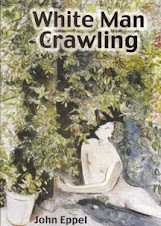
“White Man Crawling”: Time, Race and Power in John Eppel’s Depiction of Middle-aged and Elderly Whites during the Zimbabwean “Crisis”

This article, by Thabisani Ndlovu in the Journal of Literary Studies, applies Bakhtin’s concept of the chronotope, in conjunction with a rights-reading approach, to John Eppel’s fiction, with particular reference to Eppel’s depiction of middle-aged and elderly whites during the Zimbabwean “crisis”. Taken at one level to mean the organisation of value-laden space-time in a literary text, and also at another level, the spatio-temporal relationship between a text and its socio-historical context, the chronotope emerges as a useful concept in analysing polarised racial relationships that characterised Zimbabwe during its “crisis” period. While the Chimurenga chronotope is a cyclical representation of time whose racialising strategy depersonalises whites as constant foes and strangers rendered in a permanent war narrative, Eppel responds in his fiction, particularly through the chronotopes of ageing and reversal, by delineating an array of white subjectivities characterised by physical infirmity and loss of socio-political power, to challenge the homogenisation and vilification of whites.


The full article appears in the Journal of Literary Studies, Volume 34, 2018 - Issue 4: Exploring the Dynamics of Time in Literary Texts, pages 80-96 
(https://www.tandfonline.com/doi/abs/10.1080/02564718.2018.1538081)

Thabisani Ndlovu, of Walter Sisulu University, carries out research in literary studies and human rights, particularly in the areas of race, gender and ethnicity. As a creative writer, he has had stories published in most of the amaBooks Short Writings series and translated the anthology of short stories Where to Now? into Ndebele as Siqondephi Manje?.


White Man Crawling, The Caruso of Colleen Bawn and other amaBooks publications of John Eppel are available through amaBooks or, outside of Africa, through www.africanbookscollective.com.

Wednesday, July 26, 2017

Why I Read: Thabisani Ndlovu


I read because of two main reasons – the little pamphlets of short stories in IsiNdebele that used to be distributed at our primary school, and love for my Grade Six teacher. The first reason is perfectly safe to write about, but the second needs clearing from the Mrs. I hope to obtain “ethical” clearance sometime today.

When I went to Manyewu Primary School in Bulawayo, between Grades 3 and 4, there was a company that used to distribute little newsprint pamphlets of folktales, written in IsiNdebele. Perhaps some were in English, but I doubt. Anyhow, the illustration, as far as I recall, was great because you could follow the story by merely looking at the pictures.  Then either the teacher or some great readers in class would read out a folktale, normally when we were outside the classroom, awaiting our turn to go inside a classroom occupied by another grade. This system was called “hot sitting” and designed to share not only classroom space but books as well. In short, it meant going through the syllabus in half the required time as students alternated attending school in the morning and the afternoon. There was a waiting period to go inside the classroom and it was this moment when stories of hare and baboon, the man and the leopard, the chameleon and the gecko and many others were read out loud. I was hooked. I read and re-read each one of these stories on my own and started my own library. The booklets were affordable, something like five cents I think. I sacrificed some of my “break” money to buy these. I do not remember volunteering to read or being asked to by my teachers. I was too quiet and probably looked stupid as one teacher once said. But I had read all of those booklets and had started experimenting with reading longer writings.

But those pamphlets come a distant second to my Grade Six teacher. She was called Miss Ndebele. I loved Miss Ndebele because she was beautiful and smelt great. She also wore high-heeled shoes and had a smile to outshine the brightest summer sun. She is the very first woman that I fell in love with not only for her looks but also because she noticed my love for reading and encouraged it. So I loved her desperately like any Grade Six boy would – not really knowing what that meant and completely clueless what I would do with her if she had said, “Here I am, love me.”  We had by then, at Ntabeni Primary School, a “Corner Library” – a small bookshelf really – packed full of abridged English “classics” and other writings. Most of these were under the Ladybird Series. It was Miss Ndebele who noticed that I was a good reader of English and an even better writer of compositions in the language. The more I read out loud in class, the more I practised in private – both silently and loudly. I could not disappoint Miss Ndebele. Then my compositions started being paraded in our class, in other classes and ultimately taken to the Headmaster! And Miss Ndebele said she was very proud of me. Then she started directing my reading. Had I read Treasure Island? How about The Black Tulip? Around the World in Eighty Days was another fine book, she once said. Whatever she recommended I read, until there was no book I had not read in that Corner Library.

Then I joined Njube Library and spent most of my Saturdays immersed in books there. No wonder I made friends with two of the librarians who allowed me to borrow more than the two stipulated texts. Some of these were not even recorded but I returned all of them. In spite of, or because of, my love for Miss Ndebele, I regret to say that there were some books from the Corner Library that I borrowed permanently.  The redemption lies in that I lent these to friends. Together (we would call ourselves the Chopper Squad, after an Australian TV series that used to air on ZTV – go ahead and laugh), we delighted (note this very English word), in trying out the expressions we picked up from these books. Words and expressions like, “Oh dear!” (I know, but it was once quaint to me and the rest of Chopper Squad), “what the blue blazes”, “bamboozle”, “helter-skelter”, and “sixes and sevens.” These were good for composition writing and even better for public speaking. To add more muscle to our vocabulary, we obsessed over the Students’ Companion and learnt, for example, that instead of saying you visited someone, you could say you darkened that person’s door. And so, yes Ngugiites, I became thoroughly colonised, if of course, you forget or ignore that I was equally good in my mother language, IsiNdebele.

As I got older, what drove me to read more was my association with fellow bookworms. I remember James Mabhunu introducing me to James Hadley Chase. I read those greasy over read books and got titillated like hell. As if that was not enough, then entered the Pace Setters, with their fast pace and African setting. After these, special mention must be made of two writers, Ayi Kwei Armah and Charles Mangua for introducing me to soft porn. I think I became aware of these two via John Kantompeni or the late Rainous Sibanda, I am not so sure now. I challenge anyone who read Why Are we So Blest? at sixteen or so and did not return to the sex scenes, to raise his/her hand. Ah, Mangua’s Son of a Woman excited me beyond the love of words.  This marked my first “serious” attempts to write. As you might predict, the stories were steeped in “love” with sprinklings of erotica. My secondary school friends loved these.  It was mostly girls who loved my stories and, when they asked to keep them, I would pretend to think hard about it, before saying yes. I wrote so many of those and gave them away. Then I continued reading, in order to improve my writing and to wow my readers and, of course, to attract girls and to share with fellow avid readers from my high school days what I had read. There was nothing as good as listening to someone relate their special episode in a book. James Mabhunu and John Kantompeni were masters at this. It was like reading the whole story all over again, and sometimes even better because some of the expressions that had escaped me took on new significance. Talk of an effective revision strategy for our literature course, this was better than a study guide. So I read carefully, all the more to make a detailed contribution during these narration sessions.

My infatuation with reading blossomed into love and I became an English major, which is to say, I majored in English and did not turn into an English man (to some extent, this is true).  So, I had to read fiction at university in order to be certificated.  There, I got to know the late Ruzvidzo Stanley Mupfudza, Memory Chirere, and others who would become fellow writers. These were the heady days of Zimbabwean writing and it was no surprise that we met at Chenjerai Hove’s sessions on creative writing. Those sessions opened up vast worlds of literature and it became fashionable for some of us to read beyond and deliberately outside the English Department syllabus as a form of rebellion against what we considered to be a lean and conservative reading list and way of criticising literature.  For some of us then, evening soirees in residences or at drinking places turned out to be animated discussions of literature fueled by cheap wine of the student variety like “Late Harvest”.  I did not want to look and sound like an idiot, so I read more, drank more cheap wine and talked more literature.

So, I read now because it is my job. I need to publish journal articles, present at conferences and teach literature. As a writer though, I read in search of that story that leaves me transfixed, in a special kind of “silence”.  The kind of story that sucks you in and when you read the last word, you seem to float in a twilight zone.  You wonder about many things, including how come there are so many splinters of yourself in a stranger’s story. You are also stunned by the story line and artistry. You think, how does (how dare, indeed) someone find those kinds of words and line them up like that to produce this? In many ways, such stories remind me of wordsmiths like my mother. When she is done telling a story, even a real-life one, there is always a moment of silence forcing her to ask, “Are you ok?” Sometimes I laugh as she is narrating a sad story and when she says, “There is nothing funny here, by the way”, I tell her it is how she finds the most expressive words that always leaves me in utter disbelief. Good writing is like that and I keep reading to have those moments that are like an addict’s proper “fix”.  I’ve had many such fixes but the latest one has to be reading Petina Gappah’s stories in Rotten Row (2016). Incredibly artistic without calling attention to their artifice, these stories leave me in that moment of silence.

So, there it is. I clearly read for different reasons and these cannot be divorced from the earlier contexts or reasons for reading. I will never forget Miss Ndebele, that one is for sure. I will never forget my friends who shared smutty novels with me and I will always remember the nights of cheap wine and literary discussions and at times, “live” reading of segments from texts. Amazing what cheap wine and impassioned fellow university students can achieve. I am also appreciative of verbal artists like my mother who have made me read for beauty (overall effect and individual expression), and writers who create that moment of silence at the end of their story.

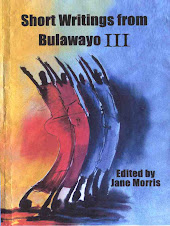
Thabisani Ndlovu is a senior lecturer of English and Cultural Studies at Walter Sisulu University. Before that, he was Deputy Director and lecturer at the International Human Rights Exchange at the University of the Witwatersrand. His short stories have appeared in various anthologies including Creatures Great and Small, Short Writings from Bulawayo III, Long Time Coming: Short Writings from Zimbabwe, The Caine Prize for African Writing 2009 and Where to Now? Short Stories from Zimbabwe. Other stories have appeared in online journals and magazines. His short story, 'When We Were Kings', will appear in Moving On and Other Zimbabwean Stories. Thabisani has also translated Where to Now? Short Stories from Zimbabwe into isiNdebele – Siqondephi Manje: Indatshana zaseZimbabwe. In 1992 he won first prize for isiNdebele poetry in the Budding Writers Association National Competition and, in 2005, the inaugural Intwasa koBulawayo Short Story Competition. If he is not writing fiction or poetry, Thabisani carries out humanist-inspired research. If not doing any of those things, he is likely to be thinking about the beautiful and terrible things in life, and trying to find words for them.


Wednesday, May 6, 2015

Where to Now? Short Stories from Zimbabwe reviewed in Harare News

http://www.hararenews.co.zw/2015/04/where-to-now-short-stories-from-zimbabwe/

Where to Now? is a collection of 16 stories by Zimbabwean writers, published at the time of the inclusive government, hence the title. The Zimbabwean publishers ’amaBooks co-published the anthology with the UK publisher Parthian Books. The collection has been translated into isiNdebele by Thabisani Ndlovu and is titled Siqondephi Manje? Indatshana zaseZimbabwe.

Some of the stories look back to the decade of economic collapse and political conflict, and some look at wider, longer term issues, such as the position of women in Zimbabwean society and the conflict between traditional culture and more modern ways. What is particularly noticeable in this collection is the skill of the writers in bringing a smile to the reader’s face while dealing with serious issues.

There are some well-known names amongst the writers, including NoViolet Bulawayo, John Eppel, Christopher Mlalazi, Raisedon Baya, Blessing Musariri and Bryony Rheam, but new names – to me – are certainly not disgraced. Nyevero Muza’s ‘The Poetry Slammer’, for example, tells of a writer who invents the story of a poetry slammer, X, whose poems tell of ‘the struggle’, and who then joins ‘the struggle’ in an accidental way. Barbara Mhangami’s ‘Christina the Colourful’ illustrates the oppression of women through the tale of an unmarried woman returning to her rural home. The family tries to force her into marriage, but she successfully resists. Thabisani Ndlovu’s powerful ‘Making a Woman’ continues with the issue of the position of women and the pressures placed upon them in society, with Mongi, a woman with hearing difficulties, being abused at the behest of her father, with horrific consequences. NoViolet Bulawayo’s ‘Snapshots’ draws smiles and tears as she tells of a young girl growing up in the time of inflation, until her father’s death and her mother’s expulsion from the family home changes her life forever.

Half of the writers in the anthology are now based outside Zimbabwe and some of the stories are also located elsewhere. Sandisile Tshuma’s ‘The Need’ looks at the horror of xenophobia in South Africa as a Zimbabwean woman finds herself fatally assaulted by those she considered her neighbours and friends. The people who attacked the woman forgot their humanity in the frenzy, and how afterwards, “This is the ugly part, where the adrenalin has worn off, your rage has subsided and the collective brain that told you that foreign is bad, that foreign steals jobs, that your brother is your enemy and that ‘they’ all deserve to die because your suffering is yours alone, will have no idea why it thought that in the first place.”

Another story set in South Africa, ‘Crossroads’ is by Novuyo Rosa Tshuma, who was longlisted for the 2015 Etisilat Prize. This gives the reader a look at the reality of a young Zimbabwean woman’s attempt to find new opportunities in Johannesburg, but things don’t work out as she had hoped. The relative she stays with warns her, “Things around here are hard. It’s hard if you don’t have any papers and you don’t have any money. All that crap about things being easy here that you hear back home, forget it.”

A third woman writer, Blessing Musariri, in her story ‘Sudden Death’, has her protagonist working in a home for the elderly in the UK. She has a beautiful writing style and certain sentences demand to be re-read. The protagonist and her husband work long, arduous hours to make enough to have a house built back home but their dreams are shattered by an unexpected telephone call from home.
Space does not allow me to mention all the stories here, but this a gem of an anthology. I have read the collection on a number of occasions and still delight in the variety and quality of the offerings found in Where to Now?


Where to Now? is published by ’amaBooks, Bulawayo, 2011.

Tuesday, April 8, 2014

Siqondephi Manje? launched in Bulawayo


The launch of the translation of ’amaBooks collection of short stories Where to Now? Short Stories from Zimbabwe into the isiNdebele version Siqondephi Manje?Indatshana zaseZimbabwe  took place at the National Gallery of Zimbabwe in Bulawayo on Saturday March 29.
The book launch was supported by Bulawayo Agenda and coincided with the Zimbabwe International Book Fair taking place at the Large City Hall. The audience were welcomed by Voti Thebe, Director of the Gallery, and Debra Mabunda, chair of the board of Bulawayo Agenda.
The book was introduced by the co-director of ’amaBooks, Brian Jones, who explained that the collection is the fifth in the series of short writings that the company have published to date, but that it was the first of their titles to be translated into isiNdebele. The translator of the work, Dr Thabisani Ndlovu, spoke about the process of literary translation and how it is an exacting job to capture the essence of what the writer wanted to say. He went on to discuss how many words that are currently used by people when speaking isiNdebele have been incorporated from other languages but ‘Ndebele-ised’. He felt it important that literature was produced that reflected common usage so that young people could identify with it and want to engage in reading. The language used by the translator should depend on context, for example: a teacher in school would tend to use more formal language than two young men talking in a beer garden.
Dr Ndlovu spoke of the diversity of the pieces in the book that came from a variety of cultures and were written in a number of styles. This diversity is what helps to make Where to Now? such an interesting read, and this is reflected in Siqondephi Manje?.
Following readings from the book by Mzana Mthimkhulu and Thabisani Ndlovu, who have stories in the anthology, and by Pathisa Nyathi and Sithandizile Dube, who read from stories by Sandisile Tshuma and NoViolet Bulawayo respectively, there followed a lively discussion, moderated by Butholezwe Nyathi, about the state of the isiNdebele language, its future and writings in isiNdebele.
The event concluded with a brief explanation by Itai Zimunya of the role of the Open Society Initiative for Southern Africa, the partner with ‘amaBooks for the translation of Where to Now?.
Amongst the audience of about 100 people were academics, students, writers and members of the reading public. It was a well supported event and clearly demonstrated the interest in works in isiNdebele.

The book will be available in outlets throughout Zimbabwe, as well as through www.megabooks.co.za and www.africanbookscollective.com.

Photos courtesy of Mgcini Nyoni (Poetry Bulawayo) and 'amaBooks


Monday, March 24, 2014

Launch of Siqondephi Manje? Indatshana zaseZimbabwe


with readings from their stories by Raisedon Baya, Mzana Mthimkhulu and Thabisani Ndlovu, and a reading of NoViolet Bulawayo's story by Sithandazile Dube.


Tuesday, March 11, 2014

"Giant Leap for Zimbabwean Literature in Ndebele" - KwaChirere

Thabisani Ndlovu of Witwatersrand University has translated 'Where to Now? Short Stories from Zimbabwe,' from English to Ndebele. It becomes: 'Siqondephi Manje? Indatshana zaseZimbabwe.' 

The translation, like the original collection of 2011 by ’amaBooks of Bulawayo, features stories by sixteen writers: Raisedon Baya, NoViolet Bulawayo, Diana Charsley, Mapfumo Clement Chihota, Murenga Joseph Chikowero, John Eppel, Fungai Rufaro Machirori, Barbara Mhangami-Ruwende, Christopher Mlalazi, Mzana Mthimkhulu, Blessing Musariri, Nyevero Muza, Thabisani Ndlovu, Bryony Rheam, Novuyo Rosa Tshuma, Sandisile Tshuma. The original was compiled and edited by Jane Morris.


Preface to Siqondephi Manje?

One of the key aims in undertaking this translation is to contribute towards the development of the isiNdebele language by encouraging writers to write in this language. As such, it was a most opportune moment to translate some of the most well-written Zimbabwean stories in English to isiNdebele.  In English, the stories are riveting.  They take one through a journey of mixed emotions – laughter, sadness and concern.  They all demonstrate immense creativity.  Some flout rules of punctuation whereas others use various forms of narration except the linear. I tried to capture all this creativity in the isiNdebele translation. Those who read the translation will be happy to know that not much was lost.  That is because, like a doctor with a stethoscope, I took a long time listening to the heartbeat of each story. As such, you will find that the language used for each story is appropriate for the setting, content and style. It is also current language. 
Of course, some will criticise this translation, as inevitably happens with a project like this. I can almost hear some saying, “That is an English word and not an isiNdebele one,” or, “In isiNdebele, that order of letters is impermissible.”  Some are likely to say, “There are some impolite words where euphemisms should have been used.”  Here are a few examples.   All speakers of isiNdebele know ‘ifriji’ (fridge).  No one refers to it as ‘ikhabothi yomqando’ (cold cupboard) or any such ridiculous term.  Is there anyone who calls it ‘ifiriji’?  That becomes a Shona pronunciation once we insert an ‘i’ after the ‘f’.  Similarly, we say ‘iphaspoti’ and  ‘iplastiki’.  You will also find words such as   ‘hlanza’ (vomit), ‘izibunu’ (buttocks) and others like them. These words are not used gratuitously.  Using euphemisms in their place would have distorted the tone and meaning of some stories resulting in a stilted and terrible translation. That would have resulted in substandard work, ruining the beautiful stories. Then what would I claim to be the value of the work I would have done?  In any case, words that some of us say should not be part of written isiNdebele, are words we use every day, irrespective of audience.  Let us take ‘izibunu’ (buttocks). It is common to hear people say of children with inadequate clothing, “abantwana bahamba ngezibunu egcekeni” (children wear worn-out clothes that show their buttocks). Likewise, “olezibunu ezinkulu ngolezibunu ezinkulu; ongalazo kalazo” (whoever has big buttocks is said to have such and the same for small or smaller buttocks) – that is how Ndebele people speak without any profanity implied in most contexts.  Why then should we change this when we write? I am thinking specifically about events and contexts in the stories contained here.  For example, an angry character should appear as such through the language he or she uses.  Needless to say the language should suit that character.  As a translator, one of my key duties is to make sure that the translation is as close to the original text as possible, having of course, taken into account the cultural context of the Ndebele people
Times change and so do people and their languages. That is how English grew – borrowing words and quickly incorporating them into the English lexicon. Some people say isiNdebele is dying.  What I agree with them is that we have a dearth of books in the language, publications of such being too few and far between. But the language itself is very much alive and vibrant.  Current isiNdebele is not the same as isiNdebele of twenty years ago.   There are words we should accept as isiNdebele words. Examples include ‘skulufizi’ (school fees), ‘eralini’  (at a rally), ‘iklasi’ (class/ classroom), ‘ukudiza’ (to pay a bribe),  ‘drayiva’ (driver/to drive), and  ‘khastoma’ (customer).  It is a good thing to want ‘proper’ isiNdebele words such as ‘umtshayeli’ (driver) or ‘tshayela’ (drive).  But how many people use these words in everyday speech? Thus, we can enter ‘umtshayeli’ in the context of driving a vehicle as old use or an archaic word, and next to it, indicate the recent and most widely used form, ‘drayiva’.  For a language not to die and for it to be appealing even in its written form, it has to be a language that people are familiar with, not stilted and archaic. I am not implying in any way that all old words should be thrown away.  All I am saying is that words must suit the specific contexts in which they are used. We should, by the same token, be aware of new unavoidable vocabularies. People speak of ‘istayila’ (style), ‘ukungena  ku-intanethi’ (surfing the net), ‘ukuhlaba ijini’ (wearing jeans). All of this is isiNdebele proper.
People of the Mthwakazi nation, I think I have said enough.  A language that grows is one that is in constant and creative use, whose lexicon evolves with time. In its written form, such a language should reveal the creativity of the people who speak it and in particular, the novel ways in which those people capture experiences.  Once this is achieved, it will inspire other writers to be even more creative. I hope this translation will not only inspire writing in and reading of isiNdebele, but also pride in speaking this colourful language with a rich heritage.

Thabisani Ndlovu
Johannesburg 2014


Monday, March 10, 2014

Siqondephi Manje?, the translation into Ndebele of Where to Now?, published

Siqondephi Manje? Indatshana zaseZimbabwe is the translation, by Dr Thabisani Ndlovu of Witwatersrand University, into Ndebele of Where to Now? Short Stories from Zimbabwe.
The collection features stories by sixteen writers: Raisedon Baya, NoViolet Bulawayo, Diana Charsley, Mapfumo Clement Chihota, Murenga Joseph Chikowero, John Eppel, Fungai Rufaro Machirori, Barbara Mhangami-Ruwende, Christopher Mlalazi, Mzana Mthimkhulu, Blessing Musariri, Nyevero Muza, Thabisani Ndlovu, Bryony Rheam, Novuyo Rosa Tshuma, Sandisile Tshuma.

The translation was supported by the Open Society Initiative for Southern Africa, and the original publication by the Beit Trust.


Siqondephi Manje? is available in South Africa through Mega Books (http://megabooks.co.za/product/siqondephi-manje-indatshana-zasezimbabwe/) and outside of Africa through the African Books Collective (http://www.africanbookscollective.com/books/siqondephi-manje-indatshana-zasezimbabwe).
It will be launched in Zimbabwe at the end of March 2014, and will be available as an ebook in the near future.

Indatshana eziqoqwe lapha ziyasinda, zizwisa usizi lobuhlungu, kanti zibuye zihlekise. Zonke zithathela kusimo esibi esake saba khona eZimbabwe esaziwa ngokuthi “iminyaka elitshumi eyalahlekayo.” Kwakuyisikhathi sokuphela kwemali amandla lokuqonga kwentengo okungakaze kubonakale; isikhathi sodlame lobudlwangudlwangu; esokutshabalala kwenotho yelizwe kanye lokuphuma kwabantu ngobunengi besiya phephela kwamanye amazwe. Ngemva kwalokho bonke abantu beZimbabwe sebezibuza – Siqondephi Manje? Bonke abalendatshana lapha yizizalwane zeZimbabwe. Noma nje abanye babo beloba bephandle kwelizwe, ugqozi lwabo luphuma khona eZimbabwe, lendatshana zabo zikhuluma ngalo leli lizwe.
Emakhasini alolugwalo uzahlangana lolondindwa onyomuka emjibileni wabanewakhe okumendisa engafuni; umama owendileyo ophunyuka ecaleni lokulala lenye indoda; iqhawe eligqxumukela embizeni enkulu yamasese lifele lapho; imbongi engatholi sikhathi sokuhaya inkondlo yayo. Azipheleli lapho. Zikhona ezinye ezinengi.
Reviews of Where to Now? can be found elsewhere on amabooksbyo.blogspot.com.

Thursday, March 6, 2014

Intwasa Short Story Competition 2014


CALL FOR SHORT STORY ENTRIES

INTWASA SHORT STORY COMPETITION 2014

The Intwasa Short Story competition enters its 10th year this year, 2014. The competition was inaugurated in the first year of the festival and is an annual literary event seeking to promote original creative writing talent in English. The competition also seeks to promote Zimbabwean narratives from Zimbabwean writers, be they in Zimbabwe or living in the diaspora. In 2011 the award for the winner was renamed the Yvonne Vera Award, after the late Dr. Yvonne Vera. Dr. Vera was a literary genius whose works include Why Don’t We Carve Other Animals?, Nehanda, Without a Name, and Butterfly Burning. The Yvonne Vera award carries a $500 cash prize.

The rules of the competition are as follows:
- There is no particular theme
- Entries must be written in English
- Entries should be previously unpublished
- Only one entry per person
- All work must be original
- Entries must be typed.
- Maximum words are 3000 words.
- The competition is open to all Zimbabwe citizens and residents
- Entries must be submitted by June 30, 2014
- Late entries will not be accepted.
- Only the short-listed candidates will be personally notified 

The Intwasa Short Story Competition is one of the very few literary writing competitions in Zimbabwe and continues to encourage and promote the original Zimbabwean narrative. Last year the competition was won by Bulawayo resident, Sipho Mpofu, with his story A Balance of Power.

Previous winners of competition:
Thabisani Ndlovu was the first winner of the competition. At the time Thabisani was a literature teacher at Falcon College. He describes the effects of his story Cold Careless Hands winning the competition as ‘reviving my interest in creative writing and being a challenge to produce even better work.’
Since winning the competition, Dr. Ndlovu has been awarded a PhD in African Literature in English from Witwatersrand University and has held the post of Deputy Director of the International Humans Rights Exchange there.

Bryony Rheam won the competition in 2006 with her story The Reunion, which concerns a woman who is consumed with jealousy at a party where she thinks she sees someone she went to school with who appears to be more successful and beautiful. Winning Intwasa, ‘gave me the confidence to carry on writing. I enjoy writing short stories and it’s great to know that others might also enjoy them.
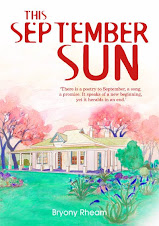
Bryony has had short stories in many Zimbabwean anthologies and her first novel The September Sun, published by amaBooks in Zimbabwe and Parthian Books in the United Kingdom, won Best First Book at the 2010 Zimbabwe Book Publishers Association Awards and the e-book recently topped the ‘Best Seller’ list for books sold in the United Kingdom on Amazon. Bryony has a BA and MA in English, and presently works as a teacher of English in Zambia.

Novuyo Rosa Tshuma won the competition in 2009, which had then been renamed the Yvonne Vera Award, with You in Paradise, about the peculiarities of being an immigrant in Johannesburg. The story is also featured in her novella and short story collection, Shadows, which was recently published by Kwela in South Africa She comments, ‘Winning the Yvonne Vera Award was a major boost to my writing confidence. I was young – 21 – and still in the process of formulating my writing vice. It motivated me to see where the story goes.’ She is presently a Maytag Fellow pursuing an MFA in Creative Writing at the University of Iowa.

Violette Kee-Tui won with her story Tattered Cloth. The story explored interracial relationships and had the judges singing her praises, especially about her use of language and imagery. Violette Kee-Tui is a former editor of the Edgars Store’s Club Magazine. As well as being a teacher of English, Violette writes articles for a number of magazines.

Mbonisi Pilani Ncube took the award in 2012 with his story Chanting Shadows. Mbonisi Pilani Ncube lives and writes from South Africa.

The other winners are Chaltone Tshabangu, the only writer to have won the short story competition twice, and Bongani Ncube.

Writers are invited to submit their stories to:
403 LAPF House
Jason Moyo Street
8th Avenue
Bulawayo


Saturday, October 12, 2013

This September Sun reviewed in The English Academy Review

This September Sun


Dr Thabisani Ndlovu, of the International Human Rights Exchange at the University of the Witwatersrand, reviews Bryony Rheam's novel This September Sun in the
English Academy Review: Southern African Journal of English Studies, Volume 30, Issue 2, 2013.


Tuesday, July 30, 2013

Where are they now? - some winners of the Intwasa Short Story Competition


Reproduced, with permission, from the Intwasa Arts Festival koBulawayo Newsletter July 2013

https://docs.google.com/file/d/1-O6cSLtg9P_YfZfh0o_5dPJoSI_eSQ64Lcn0UGH-t5AfBFBesMjr93NxL2EE/edit