Reproduced with the permission of James Arnett

[speech given by James Arnett at Pamberi
Trust's 'Celebration of Yvonne Vera,' Harare, National Gallery, October 3, 2017]
In Memory
There is no question that Yvonne Vera’s work holds a special place in both Zimbabwean and African literature. But by virtue of her lyricism, her ambition to depict a broad sweeps of histories otherwise swept under the rug, her literature is a truly world literature – uncovering common humanity, carving out a space for the experience of women under colonial violences, revealing and reevaluating, too, the societies meant to give black African women rights and shelter. She spares no one, but her voice is not overwhelming or condemning. Like Nonceba’s survival in The Stone Virgins, there is a way through history, a way to live with and past the terrible violences that continue to haunt contemporary Zimbabwe.
In this way, I see a tremendous affinity between Vera’s work and those of the American Nobel laureate Toni Morrison. Her mother, Ericah Gwetai, makes mention of the fact that Vera re-read The Bluest Eye every year on her birthday; that novel, about the essential confusion about growing up black and abused, in a world that fetishized whiteness and power, has clear echoes all across Vera’s work, which poignantly looks at the racial dynamics intertwined with colonial dynamics in Rhodesia’s, and then Zimbabwe’s, 20th century. Both women write of the heinous violences inflicted on the most vulnerabled – and I use this in the past tense to foreground that vulnerability to violence is anything but essential, but rather something ideologically imposed. And both women skirt the usually bland celebratory bromides about women’s strength.
In October 2017, I attended
the Women, Wine, and Words event as part of Bulawayo’s Intwasa Arts Festival.
Five talented female poets from Zimbabwe, Zambia, South Africa, and the UK came
together to perform their work. One of the common threads that ran through
almost all of the poets’ work was this: “I’m tired” – tired of many things – of
being underappreciated and rhetorically overvalued, denigrated and vaunted
simultaneously. Indigo Williams’s take on this theme was particularly poignant;
she began by talking about how, paradoxically, it is frustrating and wonderful
to be taken as a “strong black woman.” But what of the days, she wondered, when
it was hard to get out of bed? What of the times when her vulnerability was at
the fore, and strength something hard to muster? How does one live in between
strength and vulnerability without being consumed?
Vera’s work, like Morrison’s, isn’t afraid of boasting of the resilience of women and also depicting their vulnerability. Vera gives us women that fight as much as they can – as much as can be expected – and break, too. No one can stand the onslaught of dehumanizing violence without cracking, and Vera’s lyrical novels assemble those broken pieces into something like stained glass – illuminating and awe-inspiring.
We Need New Names
“Muzhanje is the name of a fruit from Chimanimani, in the eastern highlands, whose seed this man has brought stuck to the bottom of his pocket, then planted it in her mouth like a gift, days and days after they have met. She has stopped considering time and only considers him.” (Stone Virgins 43)
The passion with which Vera writes characters whose lives have already been – or about to be – ruthlessly scarred by violence and by history – serves as a tonic to run-of-the-mill arguments that representations of violence are abstractly dehumanizing. The way Vera writes violence does precisely the opposite – it renders their humanity palpable and real, not dominated by their place in history, but continuous with history, running alongside it, occasionally, cruelly, pierced by it.
The opening section of The Stone Virgins – the lull before the violence consumes us – depicts Kezi, and the Thandabantu Store, and Thenjiwe, and her lover. Thenjiwe hones in on her lover, full of him: “She brings home the man who gives her all her hips, who embraces her foot, who collects her shadow and places it right back in her body as though it were a missing part of herself, and she lets him gaze into her eyes till they both see stars through their tears. In the deep dark pool of her eyes the man sees places he has never been, she has never been” (SV 43). He has brought this strange fruit to her – the muzhanje, the name Thenjiwe chooses for her dream child, impossibly conceived in mind only.
She understands this native fruit – native, unlike the “Host of eucaplytus trees redolent; their scent euphoric,” or the jacarandas casting their blooms over Bulawayo’s streets, or the “fusion of dahlias, petunias, asters, red salvia and mauve petrea bushes” in Centenary Park, each of these plants an importation, a colonial transplant from the Antipodes and Caribbean and the reaches of the British Empire (SV 10). There can be a beauty in these transplants, Vera observes, but the muzhanje is the fruit that ignites Thenjiwe’s fascination. It is local and not – brought from a distant within, exotically local.
The colonial place names that open The Stone Virgins, its catalogue of Selborne, Fort, Main, Grey, Abercorn, Fife, Rhodes, Borrow streets, depict Bulawayo as it could officially be known and indexed, not unlike the catalogue of imported flowers that brighten Centenary Park. But that Bulawayo is one that is ultimately condemned to living as the past, a town prey to the homogenizing urban forces that render cities similar. Instead, Thenjiwe’s lover wants to taste the real place, not ‘Rhodesia,’ but Zimbabwe: to see “more than Bulawayo, after coming all the way from Chimanimani he wanted to see the Mopani shrubs, the Mtshwankela, the Dololenkonyane, the balancing Matopo Hills, the gigantic anthills of Kezi.” (45)
Colonialism didn’t make Africa go away, not under its gridded streets and imported street names, nor under its imported jacaranda trees. Africa lived alongside imperial Africa, contained in the places whose names are not forgotten, nor replaced, the flora native and indigenous and resilient. The work of reclaiming spaces, Vera writes, is only partially about effacing the names of the colonizers who controlled and wrangled and dictated. It is also about recognizing that the old names were always thenames, no matter what dressing was applied.
Strange Fruit
There is much strange fruit in Vera’s work – fruit that is literally strange, that compels consumption, like the native-but-distant muzhanje fruit. Thenjiwe wants to know all about it, suspects that there is something important, resilient, productive in it. “She rises...to ask him on what soil the muzhanje grows, how long before each new plant bears fruit, how fertile its branches, how broad its leaf. She rises to ask what kind of tree the seed comes from, the shape of its leaves, the size of its trunk, the shape of its branches, the colour of its bloom, the measure of its veins” (46). The muzhanje, Thenjiwe believes, may give her access to tradition and place in a way that street signs misdirected and obfuscate. She, like Alex Haley’s displaced Africans in America, wants to understand roots – literal and figurative. “Thenjiwe knows that the roots of trees have shapes more definite than leaves,” Vera writes in The Stone Virgins. The surface is merely coincidental to the way that the tree grows in ground, rooted in place. Thenjiwe, before the violence that forecloses her life, seeks the strength of rootedness, of rediscovering place, and of forging a real relationship to it, grounded in loving and knowing.
This phrase “strange fruit” has a particularly American history; it is the name of the famous Billie Holliday song, penned by Abel Meeropol, it decries the American practice of extradjudicial killings of black men – a practice we historically call lynching, but these days I fear we just call “policing.” It metaphorized the lynched bodies of black men, darkly describing the methods of white supremacy to control and subjugate populations of color. Chester Himes, the African-American writer, remarked that “no one, no one, writes about violence the way Americans do. As a matter of fact for the simple reason that no one understand or expresses violence like the American civilians do. American violence is public life, it is a public way of life, it became a form...” But that isn’t exclusively true – black Zimbabwean writers have managed to develop a sophisticated language to describe the unspeakable, and Vera’s associative novels leave the reader breathless in the wake of horror, not unlike this moment in The Stone Virgins, the prevision of finality that afflicts Thenjiwe suddenly: “Muzhanje. Thenjiwe flicks the seed to the roof of her mouth and pushes the man aside, way off the bed. She has been hit by an illumination so profound, so total, she has to breathe deep and think about it some more. She wants to lie down, in silence.” (SV 44)
But there is other strange fruit, too, in Vera, as in the grisly tableau that opens Butterfly Burning, of the mass hanging of men...”The dead men remain in the tree for days. Their legs tied together, their hands hanging close to their stomachs. Toes are turned down to the ground as though the body would leap to safety. The foot curls like a fist, facing down. The feet of dancers who have left the ground. Caught. Surprised by something in the air which they thought free. The limbs smooth and taut, of dancers in a song with no words spoken. A dance denied. A blossom in a wind. A dark elegy” (BB 11). It takes great creativity and fortitude to render such a horrific scene so approachable and, dare I say, beautiful. It is not a beauty that celebrates violence or death in any way, but one that, as I argued before, humanizes its victims. In this passage, seventeen men are lynched in 1896, strange fruit overripe, cut short by the overzealous, overreaching, paranoiac violence at the heart of the founding of Rhodesia. “It is not a place with large trees,” Vera writes with dismay and wonder, “This tree, like these deaths, is a surprise. Away from the Umguza River which sings a lullaby each morning whatever the season, there are no trees” (BB 12).
Terence Ranger recalls of Vera their trip to the Cyrene Mission outside of Bulawayo, where she went to see the art and murals, and where Vera “saw for the first time the enlarged version of the photo of African men, captured in 1896 [during the Second Matabeleland War, as the English call it; the first Chimurenga as it should be known], hanging from a tree. She was astonished that the photograph fitted so exactly with her description of hanging men at the beginning of Butterfly Burning, the sense of the men swimming in the air, being as vivid in the photograph as in the book” (Petal Thoughts 90). Vera’s historical imagination was strong enough to conjure the horror of the scene, so in touch was she with history and culture, and with what Toni Morrison in Beloved, calls “re-memory.”
Rememory
In Morrison’s Beloved, when Sethe is escaping the unthinkable violence of her slave plantation, seeking to give birth to her last child in freedom, she encounters the kindly Amy Denver, who massages her feet, and remarks, “Anything dead coming back to life hurts,” a painful description and a prophecy. Vera writes, continuing the gruesome scene, “[The women] are not allowed to touch the bodies. They do not grieve. It is better that the murdered are not returned to the living: the living are not dead. The women keep the most vital details of their men buried in their mouths” (BB 12). The women of Vera’s novel know that there is no live return from the space of the dead, no amelioration or respite, just names and impressions held silently until mourning breaks. Vera is also haunted by the permanence of violence, as if linked to troubled spots, crossroads of tribal, colonial, and nationalist violence.
One of the things most relished and valued about Morrison’s work – and the work of most canonical African-American writers – is its unflagging attention to historical truths, revealing the dark side of the American colonial enterprise, with its attendant slavery; Vera’s refusal to shy away from these historical violences makes her kin to Morrison. Sethe, in Beloved, ruminates, “I was talking about time. It's so hard for me to believe in it. Some things go. Pass on. Some things just stay. I used to think it was my rememory. You know. Some things you forget. Other things you never do. But it's not. Places, places are still there. If a house burns down, it's gone, but the place—the picture of it—stays, and not just in my rememory, but out there, in the world. What I remember is a picture floating around out there outside my head. I mean, even if I don't think it, even if I die, the picture of what I did, or knew, or saw is still out there. Right in the place where it happened.” Vera’s affirming discovery of the photo of the hanged men demonstrates the vital power of rememory – the resurgence and reality of violence in places where trauma has occurred, where the attempt to efface or move beyond that violence is fraught with its perpetual recurrence. Vera is the guardian of Zimbabwean rememory, holder of truths that are, in some cases inconvenient, or disappointing, or regrettable.
Why Don’t You Carve Other Animals?
Her short story “Why Don’t You Carve Other Animals” gives insight, I think, into the difficulty of the work of writing Zimbabwe. The conversation between street artists - a carver and a painter - illuminates the differences between two-dimensional art, where you can add, revise, cover over, and three-dimensional art, like sculpture, that achieves a finished form that is true, even if it isn’t accurate. The painter, on the one hand, “puts the final touches on the image of the Victoria Falls which he paints from a memory gathered from newspapers and magazines. He has never seen the Falls. The water must be blue,” he thinks. He relies on this hodgepodge of hearsay and observation, but gives beauty and control the uppermost, inductively reasoning that the Falls must be blue – if water on maps is blue, if the sky is blue. He “realizes that a lot of spray from the falls must be reaching the lovers, so he paints off their heads with a red umbrella. He notices suddenly that something is missing in the picture, so he extends the lovers’ free hands, and gives them some yellow ice cream. The picture is now full of life,” he thinks (73). The painter and writer can revise, can insert, can alter and shift and move around, staying true to inductive principles but honoring beauty.
But beauty is not the only end, and while Keats encourages us to believe that beauty is truth, and truth beauty, and that’s all we need to know, Vera knows better. Art is also the purview of dream and imagination. “The carver has never seen the elephant or the giraffe that he carves so ardently,” her story observes, placing him in the same category of unknowing as the painter. But unlike the painter, who aims to achieve beauty through reason and truth, the sculptor knows there are other avenues for art. “He picks up a piece of unformed wood. Will it be a giraffe or an elephant? His carving is also his dreaming” (73). Like his dreaming, each carving is different, unique; spoiled, even, like his giraffe whose paint has run, and whose neck is comically short. He may seem the lesser artist by strictly aesthetic standards, but there is no question that he is an honest man, making honest art. The “unformed wood” is the wholecloth of history, the unknowable archive of all that has been, and the writer’s access to truth is contingent on honouring the materials she works with. The two artists – the painter and the sculptor – represent the collaborative pull between beauty and honesty, between pleasure and pain, thinking and dreaming.
I was doing research last year at the Harry Ransom Center at the University of Texas at Austin. I wasn’t looking for Vera’s work, but I found among Charles Larson’s papers a copy of Vera’s final, unpublished work, Obedience. I was at the end of my stay at the library – quite literally; it was to close for the weekend in an hour and I was scheduled to leave town just after. But I couldn’t help but open up and thumb through the manuscript – which begins, indelibly, with a description of the stone birds of Great Zimbabwe. These birds don’t look exactly like an extant bird – but this is not the point at all, even if it might have been a good-faith effort at mimesis. Instead, they simply are: they endure, they are beautiful. In spite of colonial thefts, an independent Zimbabwe achieved their return; they roost once more at the site of rememory, presiding near the complex stone ruins that have fascinated throughout history.
The painter asks the carver in the story, “Why don’t you carve other animals?...Why do you never carve a dog or a cat? Something that city people have seen. Even a rat would be good there are lots of rats in the township!” (73). Why didn’t Vera write her stories and novels exclusively about the fascinating life she saw unfolding before her in the present? – a present that Zimbabwean readers could recognize immediately as their own? Why instead did she lyrically inhabit the past, the full sweep of local history?
Probably because she understood that the greatest foundations of art lie not in the mimetic transcription of things exactly as they are now, but rather in the imaginative flight through the past into the present and back again. Rememory exists anywhere where trauma, pain, violence, extremity has occurred, and there is no place where that is not true. Petina Gappah, a vital contemporary Zimbabwean writer, recently swore in a talk at the Open Book Festival in Cape Town that she was done with writing contemporary Zimbabwe after her impressive Rotten Row appeared in print – she wanted to explore the possibilities of writing elsewheres and elsewhens, to delve into history and unearth new old stories. These modes are not mutually exclusive, but this move reverberates with Vera’s temporal rangings, and describes the difficulty and ambivalence about approaching contemporary Zimbabwe without also attending to its past.
In Rememory
The Harry Ransom Center holds another crucial Zimbabwean manuscript – the unfinished manuscript of Doris Lessing’s novel “The Memorykeepers.” Tendai Huchu, in a story just published in the 2017 anthology Moving On and Other Zimbabwean Stories by amaBooks in Bulawayo, recounts this piece of local folklore: “The Great Zimbabwe Empire was built by kings under the instructions of the Memorykeepers. You have heard of them, no? Of course not. It is an old – for lack of a better word – guild that has been there for as long as our people have been around. The Memorykeepers’ task is to remember everything.” The Memorykeepers are entrusted with the whole sweep of time, of remembering all that has been in order to inform what is to come.
Memorykeepers are rare indeed; not even every African literature has such an honest, exposed, and vulnerable writer. Indeed, not every African literature is capable of absorbing the persisting, the inconvenient truths. There will always be those who seek to wrest the past in service of a future that they desire, instead of honouring the past for the truths it has produced, in spite of its violences. Such manipulators of truth and history – regardless of their position or power – should never supplant those brave enough to tell us unpalatable truths about ourselves. There is no honor in easy deceit, in palatable fictions. If, as Huchu worries, “now there are fewer Memorykeepers than at any stage in the past and they cannot hold all the new knowledge that flows from the four corners of the world,” we must learn to celebrate those who have walked amongst us – giants like Vera – and those few who remain, who have access still to rememory in an era where information deceives, and truth slides, and lives nevertheless hang in the balance, feebly swimming against the wind.
REFERENCES
Gwetai, Ericah. Petal Thoughts. Gweru, Mambo Press, 2008.
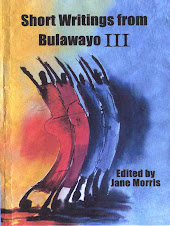
Morris, Jane, Ed. Moving On and Other
Zimbabwean Stories. Bulawayo, amaBooks, 2017.Morrison, Toni. The Bluest Eyes. New York, Holt, Rinehart and Winston, 1970.
--. Beloved. New York, Knopf, 1987.
Vera, Yvonne. Butterfly Burning. Harare, Baobab, 1998.
--. The Stone Virgins. Harare, Weaver Press, 2002.
--. Why Don’t You Carve Other Animals? Toronto, TSAR, 1992.
--. Beloved. New York, Knopf, 1987.
Vera, Yvonne. Butterfly Burning. Harare, Baobab, 1998.
--. The Stone Virgins. Harare, Weaver Press, 2002.
--. Why Don’t You Carve Other Animals? Toronto, TSAR, 1992.
 |
| James Arnett |
James Arnett is a Fulbright Core Teaching/Research Fellow to Zimbabwe, 2017-2018. Will teach at the National University of Science and Technology in Bulawayo, Zimbabwe, and conduct research on the city's literary history, its cultural infrastructure, and its outlets for creative writing.