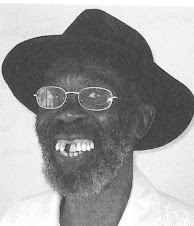
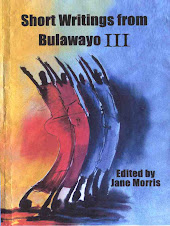
Owen Sheers has been published several times by amaBooks - his poetry in Intwasa Poetry and in Short Writings from Bulawayo III, and a short story, 'Safari', in Long Time Coming: Short Writings from Zimbabwe. He has visited Zimbabwe on several,occasions, and The Dust Diaries, his creative non-fiction account of the life of his great uncle, the 'maverick missionary' Arthur Shearly Cripps, is mainly set in Zimbabwe. His new novel is 'I Saw a Man'.
from The Guardian, 13 June 2015
http://www.theguardian.com/books/2015/jun/13/owen-sheers-interview-with-contemporary-literatures-renaissance-man
From a distance, Owen Sheers’s new novel
appears to be missing a title; the cover looks bare but for the image of a
flight of stairs, black against a backdrop of bilious yellow, and it’s not
until you have the book in your hands that you make out the words lacquered
over the top. Tip it to the light and “I Saw a Man” gleams into view like heat
haze over tarmac. Put the book back on the shelf and it sinks back into the
picture, leaving you wondering whether you saw anything at all.
The title is taken from the opening verse
of Hughes Mearns’s well-known “Antigonish”, which Sheers quotes at the
beginning of his novel: “Yesterday, upon the stair,” it goes, “I met a man who
wasn’t there./ He wasn’t there again today/ I wish, I wish he’d go away…” It’s
a queer little poem, shifting back and forth between witty epigram and soured,
creepy nursery rhyme, and the cover realises it beautifully. But it’s also a
neat metaphor for the provisional, ambiguous story Sheers has written.
The curtain lifts on the borders of
Hampstead Heath on a torpid summer afternoon, at the moment when a man,
believing his neighbours’ house to be empty, steps inside. Michael Turner has
drifted to London following the sudden death of his wife; in the blank
aftermath of the tragedy, he finds himself caught in an oddly accelerated
friendship with the family next door. Through the details of their connected
lives, interspersed with snapshots of Michael’s inching progress through the
house, the novel establishes a network of cause and effect that reaches all the
way around the world, from the sub-prime mortgage crisis in the US, which sees
a father lose his job in London, to the drone operator in a bunker in Nevada
who obliterates a man feeding chickens in Pakistan. It twists and turns and
plays its cards close to its chest, showing its full hand only in the final
pages, when we are forced to reassess everything that has gone before.
The ambiguity that makes Sheers’s novel so
compelling is there in him, too: as a writer, he’s impossible to pin down. He
started life as a poet, publishing his first collection fresh out of
university, but despite racking up great reviews, a clutch of prize
shortlistings and a tour with Carol Ann Duffy, Sheers decided that his next
move would be to up sticks for Zimbabwe to research the life of his
great-great-uncle, Arthur Cripps. The book that arose from his story, The Dust
Diaries, blended fact, fiction and conjecture to the extent that it’s sold as
non-fiction in some countries and a novel in others; either way, it snagged him
the first of many awards (Wales Book of the Year 2005) and the praise of no
less an authority thanDoris Lessing. From there, he doubled back to publish a
second poetry collection,Skirrid Hill, followed that up with a one-man play on
the life of the poet Keith Douglas, then brought out his debut novel,
Resistance – a crowd-pleasing historical epic that sold more than 50,000
copies. The book before I Saw a Manwas Pink Mist, a verse-drama on the Afghan
conflict, a stage version of which will have its world premiere at the Bristol
Old Vic this July. When we meet he has the first draft of a new play “still
warm off the printer. Like a fresh kill” in his bag. And this is just the
whistle-stop tour: other highlights include an anthology of British landscape
poetry (and a TV series to accompany it), a three-day Passion play co-created
with Michael Sheen and a stint as the Welsh Rugby Union’s writer in residence.
Truly, he’s contemporary literature’s renaissance man.
With a CV like that, his “natural
opposition to categorisation” is unsurprising, but when pressed he concedes
that in the past he’s called himself “a poet who writes in other forms”. It was
only with I Saw a Man that he consciously sought to change the label; here, for
the first time, he “wanted, in quite a geeky way, to feel like a novelist
writing a novel”. The fictional elements of The Dust Diaries had given him the
taste for invention, but his first novel, which tells the counterfactual story
of Wales under Nazi occupation, didn’t ultimately allow him its full licence.
“Resistance was based on a piece of history that didn’t happen,” he says, “but
to portray it with credibility, every room needed to be properly furnished.
This time, I wanted to invent something from scratch.”
I Saw a Man arose entirely from that single
striking image of a man easing open his neighbours’ back door, which dropped
into Sheers’ head fully formed, “the first time that’s happened to me. Of
course it led to a load of questions: who is he, why is he entering like that,
where’s he at in his life?” In the end, he borrowed from his own backstory to
fill in the blanks: the setting is based on a real street in Hampstead, where
Sheers “rented a couple of flats at a time when, like Michael, I was pretty
nomadic”, and the book, which he wrote between other projects over seven years,
teases out some of the questions he was grappling with in his own life. “When I
started it,” he says, “the idea of family felt very distant; I couldn’t work
out how people did it.” Three times, he got to 10,000 words before beginning
again, “which was a big psychological kick in the teeth; it’s much easier when
a poem doesn’t work. But it did mean that by the time I found the right voice,
that possibility of the domestic was much closer. My final deadline was my
wedding.”
These days, Sheers is a father as well as a
husband, and (like Michael and his wife in I Saw a Man) has lately left London
for Wales’s Black Mountains. Although he was born in Fiji, where his parents
were working for the Ministry of Overseas Development, he did the bulk of his
growing up in a small village in Abergavenny, one of just 14 children at the
local primary school. Wales – and specifically, that bleak, beautiful corner of
it – has been lodestone and muse for him: the Black Mountains’ furthest outlier,
Skirrid Hill, provides both title and unifying metaphor for his gorgeously
elegiac second poetry collection, and Resistance is set in one of the area’s
most remote valleys. Yet though its influence runs through his work, for the
duration of his professional life he has lived elsewhere, only recently finding
his way home again. Oxford and the University of East Anglia’s creative writing
course came first; it took him a long time to find his feet (“There were more
kids from Eton in my college than had gone to Oxbridge from my school for a
decade, and there seemed to be a secret rule book that everyone else had access
to”), and his affinity for his homeland was enhanced through his absence from
and longing for it.
By the time he left UEA, he was “skint. So
I applied for [TV production company] Planet 24’s graduate programme and ended
up working onThe Big Breakfast”. I goggle; he laughs. The contrast with UEA’s
rarefied environment was marked; suddenly, he found himself “in a living
version of Martin Amis’s Money, inventing puns and booking novelty acts at four
in the morning and researching Arthur Cripps in the afternoon. It was a very
odd split life.” In the end, a rupture was forced. Arts Council Wales offered
him a grant to work on The Dust Diaries, so he quit his job and moved into his
parents’ caravan on the Pembrokeshire coast for a winter, where “the day’s main
event was walking along the cliffs. The grand idea was that I was going to
write and surf, but there weren’t any waves that winter. So I got on with
writing.”
The Dust Diaries made a minor impact, but
it was with Skirrid Hill that Sheers really hit his stride. As well as
cementing his reputation as a writer of Wales, it sowed the seed of what would
become his other essential subject. The opening poem, “Mametz Wood”, visits the
scene of one of the first world war’s bloodiest battles, where “even now the
earth stands sentinel, / reaching back into itself for reminders of what
happened”. War – its tolls, its terrors, its physical and psychological scars –
has haunted his work ever since; it wasn’t, he says, something he set out to
write about, but one poet led him to another, one conflict to the next. He
followed up his radio play on Douglas with a second on Alun Lewis, the Welsh
poet whose centenary is this year, and approached the task from a novelist’s
perspective in Resistance. Then he moved on to contemporary conflicts,
publishing The Two Worlds of Charlie F, a play “based on the experiences of
very recently wounded service personnel” in 2012, and Pink Mistin 2013.
“Post-9/11 conflicts have run in exact parallel with my writing life,” he
explains, “and you feel as though you want to reflect that, even if it’s
through historical prisms. Plus, growing up where I did, I knew kids who
entered the army at 15. Britain’s the only EU country that allows you to join
the army as a child soldier. It’s scandalous, and I wanted to make people aware
of that. I keep saying I want to stop, though. I’m quite warred out.”
He hasn’t quite managed this with I Saw a
Man: war and Wales still feature, but their retreat from the foreground marks a
new stage in Sheers’s career – and might explain why he gives the impression of
being faintly bemused by his latest creation. “Before this, if you’d asked me
which two books I’d never write, I’d have said, a book set in Hampstead and a
novel about novel writing, which this turned out to be. Both tend to drive me
mad. But having lived in temporary places in Hampstead surrounded by that sense
of establishment, there was a tension that I found I wanted to explore. And I
did end up thinking, what’s the point in writing in a form if you’re not going
to interrogate it? It’s a negotiation, obviously; the book also has to be an
absorbing read. The novels I really love are both. I hope,” he frowns slightly,
“this is, too.”
It is. I Saw a Man is Sheers’s most mature
and coherent work to date; taut as a thriller, but resonant with motifs of
intimacy and distance, guilt and redemption, and the nature of stories and
storytelling. The only shame is that his name doesn’t appear on the cover.


.jpg)







.jpg)