Showing posts with label Silent Cry. Show all posts

Sunday, May 19, 2013

Worldreader in Bulawayo

Silent Cry on KGVI Kindle


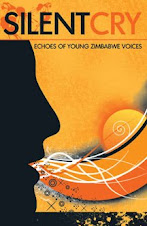
The first Worldreader project in Zimbabwe, providing e-readers and access to over 6000 ebooks to King George VI school, was launched in Bulawayo last week. The event was organised by KGVI, with Michael Smith and Nadja Borovac of Worldreader. Staff and students at the school have been trained in the use of the Kindles, so that they can read books on the devices, half of which are African books. ’amaBooks are the first publisher in Zimbabwe to partner with Worldreader, so that Zimbabwean fiction titles can already be accessed by students. Worldreader have similar existing projects in India and in several other African countries – the most popular ’amaBooks title with Worldreader so far being Silent Cry: Echoes of Young Zimbabwe Voices.

The guest of honour at the event was the Minister of Education, Sport, Arts and Culture, Senator David Coltart.


Jane Morris of 'amaBooks being taught how to use a Kindle
Explaining about ebooks

The Head Boy at KGVI

Learning how to use a Kindle


KGVI choir

Entertainment - the joys of reading

KGVI choir

The Minister of Education speaks

Photographs courtesy of Worldreader.

Wednesday, May 8, 2013

No place quite like Bulawayo, by Bongani Ncube-Zikhali

Bongani Ncube-Zikhali is a writer, poet, youth activist and a fan of Dr Sheldon Cooper. He is passionate about the written word and has been published in two anthologies by Amabooks. In 2010 he was awarded the Dr Yvonne Vera Award by the Zimbabwean Intwasa Arts Festival. He currently lives in Paris where he is studying computer science.

Bongani's stories are available outside of Zimbabwe in print or as an e-book in Silent Cry: Echoes of Young Zimbabwe Voices through www.africanbookscollective.com/publishers/amabooks

-----------------------------

        Street life in Bulawayo. (Flickr/Julien Lagarde


It's been four years since I last lived in Zimbabwe, four long years during which I strolled along the Mediterranean beaches in Algiers, ate Middle Eastern food, danced to Rai music and, like the rest of the world, observed the country of my birth from the other side of the looking glass. We are a country not exactly famous for positive headlines and I admit that I too have been sucked into negativity. Perhaps that explains the little pang of regret I feel as the bus crosses the Limpopo river and approaches the Beitbridge border post.

The differences are almost immediate when you enter Zimbabwean territory. The lights, for one, seem dimmer this side, the buildings older, the flag that stands at the entrance of the border post seems to be reminding itself of better days when its edges were less tattered. For a moment I wonder why I am going back when it seems so many are ignoring crocodiles, electric fences and the oh-so-insignificant fact that they don't have passports to go in the opposite direction. But it is time: the bus stops and we descend to begin the appeasement of the bureaucratic god that lies in wait at every border post. It hits me almost as soon as I step out into the crisp morning air. Perhaps it's the freshness of the air, the excited buzz of passengers as they contemplate that their journey is almost at its end. I don't know what it is but almost at once I feel glad to have arrived back home. It's an amazing feeling to walk into a passport office and have the crest on your passport match the one on the Ministry of Home Affairs logo, to not have to explain where you are going and how long you are going to stay there. It's an even greater feeling to hear the hawkers selling Buddie airtime, their voices insistent, belying the fact that they've probably been up all night. The bureaucratic god is appeased with a cursory glance at my passport. He bangs a stamp on it and we board the bus again, waiting to depart. After a five-hour delay at customs, which I am assured is not that bad a wait, we are on our way. The people around me have become livelier. The relative calm is punctuated by occasional snoring. Some men behind me are talking about a man in Makokoba who has taken his mother for his lover. The woman next to me shows me photos of her children. She is working so that she can buy a house for her family. She likes living in South Africa, she says, but she misses home terribly. She asks me what I do.  I lie and say I am a student at Wits. I have discovered that is the best way to avoid barrages of questions about the Middle East, Islam and why on earth I would go and study there in the first place. (When I was offered a scholarship to study French and computer science there four years ago, my main thought back then had been that the journey would involve a plane.) Five long hours later the bus finally arrives in the former capital of the Ndebele Kingdom, a city built by a king fleeing the murderous wrath of another king and named after the slaughter that occurred there so many decades before I was an idea in God's mind. None of that is evident as I look out the window. All I see are scenes that had once been part of my every day, scenes I had taken for granted as I went on my way to school or to church. The tree-lined avenues of Bulawayo that will come October burst into a purple glory matched by few other cities; the vendors selling airtime at the robots; the kombis dodging through traffic, filled almost to bursting point with people on their way to work. Life had continued while I was away but for the most part the city is the same as it was when I left it. And it seems the headlines have not touched Bulawayo's heart; forget them all. There is nothing like being where you know you will always belong. There is nothing like being able to speak in your mother tongue without having to resort to English-accented French or stuttering Arabic. Even my English can return to its default setting – here a traffic light is a robot, any soft drink is Coca-Cola, all toothpastes are Colgate and names like Priority are as commonplace as Matthew and Jacob. Here I can walk down the street with absolutely no fear of being stopped to show my ID, a practice that annoyed me in Algeria as much as it did in South Africa. And even when the Zimbabwe Electricity Supply Authority demonstrates its loose definition of the word 'supply', it can be a calming thing to sit in the candle light and talk about anything and everything under the sun. And some things never change. The wind is (kombi conductors) still hang half their bodies out of their vehicles; they stand at taxi ranks screaming at the top of their lungs for passengers. The old ladies still sit in the flea markets waiting to convince customers that their vegetables are the freshest and the cheapest. Youth still loiter on the streets during the day, dressed to the nines in the latest offerings of the Jo'burg and New York fashion world. I come to realise that people have lived out their lives through a water supply crisis, an infamous economic collapse and a notorious Government of National Unity. The sun has risen and set on the townships and suburbs of Bulawayo all these years and people have gone about their days with smiles still reaching the sides of their faces, enduring the harsh, dark realities with bittersweet stoicism. From afar the news headlines may have been accurate but they never told the full story. I realise that you can never be right whilst standing on the other side of the looking glass; you have to step through as I did and realise, as I did, that there is no place like home.

From Bulawayo24,   http://bulawayo24.com/index-id-opinion-sc-columnist-byo-29862.html

Monday, October 15, 2012

'amaBooks and Worldreader


'amaBooks are working with Worldreader to help make good creative writing available to young people across Africa and elsewhere.


As a first step, stories from Silent Cry: Echoes of Young Zimbabwe Voices, and selected stories from other 'amaBooks collections, are available to read free of charge on mobile feature phones using the Worldreader App.


With the first-ever book application available for feature phones, Worldreader is turning on its head the notion that reading e-books requires an e-reader, tablet or smart phone.


In order to achieve this ground-breaking feat, Worldreader has partnered with biNu, an App developer based in Sydney. biNu’s patented technology effectively turns a feature phone into a smart phone—enabling millions of people in the world’s poorest places access to Facebook, Twitter, Local News, Google—and, now, the Worldreader Book App, and so to stories from Zimbabwean writers.
To give you an idea of the enormous scope and potential: feature phones are the largest and fastest growing segment of the global mobile market, with over 60% of the global mobile market share of almost 5 billion mobile subscribers. As of April 27 2012, the Worldreader App is on 3.9 million mobile phones, mostly in India and Africa, and Worldreader hope to reach 10 million by the end of 2012.
As well as stories from the collection being available through feature phones, Silent Cry: Echoes of Young Zimbabwe Voices will be available on e-readers as part of Worldreader programmes.

Silent Cry: Echoes of Young Zimbabwe Voices is a book of twenty-eight stories and fourteen poems, written by thirty-three young people from Zimbabwe’s second city, Bulawayo. The pieces cover many issues, including family, gender, relationships, race, alienation, disability, AIDS, border jumping and the struggle to survive in Zimbabwe.

Silent Cry: Echoes of Young Zimbabwe Voices is available on a print-on-demand basis or as an ebook through the African Books Collective http://www.africanbookscollective.com/books/silent-cry


More information about the Worldreader programme can be found at http://www.worldreader.org


Photographs of children in school benefitting from the presence of e-readers are reproduced courtesy of Worldreader

Wednesday, August 29, 2012

Intwasa shortlists 10 stories for the Yvonne Vera Award


10 short stories have been shortlisted for the Intwasa Short Story Competition (Yvonne Vera Award) with eight from Bulawayo and the remaining two from Harare. This year there were 81 short stories submitted for the competition, a 26 percent drop from last year’s number of 110. There were 60 males and 21 females who entered the competition.
The competition was inaugurated in the first year of the festival and is an annual literary event seeking to promote original creative writing talent in English.
In 2011 the award was named the Yvonne Vera Award and carries a $500 cash prize.
He said as organisers they were impressed by the quality of stories submitted.
“Forty-four per cent of the entries were from Bulawayo, seventeen per cent from Harare with the rest coming from across Zimbabwe, with one entry from South Africa and one from Algeria. Sixty submissions were from males and twenty-one from females,” said Baya.
He said there were a variety of short stories that were submitted, from love stories to stories about rural life.
It was encouraging to see a wide variety of subject areas in the stories, from teenage love stories to stories of traditional rural life. The judges were also pleased to see the use of humour, which enlivened many of the submissions, and, generally, the good command of language,” said Baya.
However, he said some plots were too complex and the characters were poorly developed.
“There was an overuse of descriptive passages at the expense of moving the story forward. In good fiction a writer will ‘show and not tell’. In several of the stories there were too long descriptions of the main character’s state of mind and emotions,” said Baya. “Several of the plots were overly complex and the characters poorly developed. The endings of many of the stories were unconvincing.”
“Writers do also need to check the spelling, punctuation and general grammar before submitting their work, whether to a competition or to a publisher,” said Baya.
The shortlist will be trimmed to five nominees on 7 September. Intwasa Arts Festival KoBulawayo will run from 18 to 22 September under the theme Bulawayo Blooming.

Below is the list of the 10 writers whose short stories have been shortlisted:

Blessing Hungwe    Coming Out
Violette Kee-Tui    Tattered Cloth   
Mandla Khumalo-    Fading Memories   
Sipho Mpofu    A Congenial Man   
Mahluli Ndlovu    It's Not a Man's World   
Nixon Nembaware    The Rain God of Nyatanga Hill   
Babusi Nyoni    Foolishness
Mgcini Nyoni    Crying Still       
Khotso Sibanda    Not Guilty as Charged   
Chaltone Tshabangu     Scheherazade of a Sort

Three of the shortlisted writers have been previously published by 'amaBooks: Babusi Nyoni in Silent Cry: Echoes of Young Zimbabwe Voices, Mgcini Nyoni in Intwasa Poetry and Chaltone Tshabangu in Long Time Coming: Short Writings from Zimbabwe.

(from www.chronicle.co.zw)

Monday, March 12, 2012

amaBooks on Kobo and Kindle


Several amaBooks titles are now available as ebooks at $9.99 on the Kobo and Kindle websites (www.kobobooks.com and www.amazon.com/kindlestore).

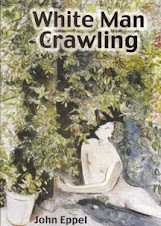
The titles are Short Writings from Bulawayo I, II and III, Intwasa Poetry, Silent Cry: Echoes of Young Zimbabwe Voices, Hatchings, White Man Crawling and Zimbabwe's Cultural Heritage. More to follow.

Thursday, February 3, 2011

Novuyo Rosa Tshuma interviewed on Geosireads

Novuyo Rosa Tshuma is interviewed about her writing on http://geosireads.wordpress.com/2011/02/02/in-an-interview-with-zimbabwe-writer-novuyo-rosa-tshuma/.

Novuyo was first published in the 'amaBooks collections Echoes of Young Voices and Silent Cry, and has gone on to have short stories published in several other anthologies.

Saturday, September 25, 2010

Bongani Ncube-Zikhali wins the Intwasa Short Story Competition


Bongani Ncube-Zikhali has won the 2010 Intwasa Short Story Competition, following in the footsteps of other 'amaBooks writers: Thabisani Ndlovu, Bryony Rheam, Chaltone Tshabangu and Novuyo Rosa Tshuma.
Three of Bongani's short stories have so far been published by 'amaBooks: Just Trust Me in Echoes of Young Voices; Freedom and The Face of Truth in Silent Cry: Echoes of Young Voices II. All three of the stories appear in the combined collection Silent Cry: Echoes of Young Zimbabwe Voices, which is available through online bookstores throughout the world. The Echoes of Young Voices project was supported by British Council Zimbabwe.