Showing posts with label Worldreader. Show all posts

Friday, March 28, 2014

Caine Prize Writing Workshop 2014: Interview with Publisher, Jane Morris

amaBooks holds a lot of significance for me, personally, as the first publisher to accept my work aged 22. Every time Jane Morris (amaBooks co-founder) and I meet, the exchanges are effervescent and full of laughter. Here, I interview her ahead of the currently ongoing Caine Prize for African Writing Workshop. Read an article about the workshop here.
Fungai Machirori (FM): How  is business in the publishing sector lately? What factors are influencing this?
Jane Morris (JM): Our impression is that the general economy of Zimbabwe is in a poor state at the moment, and obviously the book industry is affected by this. People having less disposable income results in less money being spent on buying books. Unfortunately reading, outside school or college syllabi, is not a priority for many people in Zimbabwe. ’amaBooks are publishers of Zimbabwe fiction and there is a very small market for most fiction titles.
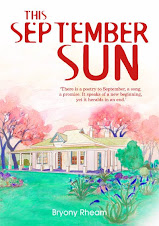
However, there are positives – success stories such as NoViolet Bulawayo’s (We Need New Names)or Bryony Rheam’s (This September Sun) have stimulated an interest in local literature, and the availability of short-run printing in the region means we can continue to make books available even if their sales are fairly limited.
FM: Are you receiving manuscripts? Are they good? Do you have the capacity to publish?
JM: We are receiving manuscripts, and some are of a good standard. Unfortunately with the limited sales for fiction we have to be very selective in what we choose to publish. There have been occasions when we have enjoyed a manuscript and would have liked to accept it for publication but did not have the requisite resources at that time. However, the publishing world is changing. Publishing used to depend on litho printing, which required a large print-run in order to keep unit costs low – hence a large initial investment. New technology has helped in that respect; a smaller print-run is now possible, meaning that publishers can take a chance on books that are not likely to sell in big numbers, including fiction and poetry. e-books add another dimension, with that, and print-on-demand, books can remain in circulation even when numbers selling are small.
FM: Are you selling many copies locally, and why or why not? Are all the books nationally available?
JM: Our books are available in the main centres of Bulawayo and Harare and a limited number in Mutare. We would love our books to be available in the smaller centres, such as Gweru and Kwekwe but most outlets only buy school text books. They are not a great number of bookshops in Zimbabwe and we make an effort to get our books into other outlets, such as shops selling crafts. Anyone having difficulty getting hold of one of our titles can contact us directly. The biggest market for our books still remains Zimbabwe. There are people in the country who do buy new books, but the number of such buyers is limited and discerning. Efforts are being made to encourage an interest in literature through literary events, competitions, reading clubs, workshops and launches
We are endeavouring to enter into co-publishing, or rights selling, arrangements to make our titles more readily available outside Zimbabwe. Most of our books are available outside of Zimbabwe, on a print-on-demand basis through African Books Collective.
FM: You have turned some books into e-books. Are they being bought? Why do you think this is the case? What are you most popular titles currently?
Most of our books are available as e-books on a number of platforms. Outside of Zimbabwe, e-books do seem a good proposition cost-wise for our fiction titles, given the high cost of distribution or the high cost of print-on-demand. Certainly, e-books sales are on the increase, we have been heartened at some of the recent sales figures. It has also been good to be able to bring some of our older titles back as e-books. The good news locally is that a local company, Open Book, will soon be up and running, selling e-books both for the standard e-readers and for cell phones that do not need to be too smart. The option to sell either complete books and individual stories or poems is very exciting and innovative. Worldreader are working in a similar way to promote a reading culture, distributing Kindles in projects in schools and elsewhere across Africa. Worldreader recently launched in Zimbabwe at King George VI School for Children living with Physical Disabilities in Bulawayo, and we are just about to publish a collection of stories and poems by the students there, which will be available as an e-book.
The most successful e-book title we’ve had is Bryony Rheam’s This September Sun, which topped sales on Amazon in the United Kingdom in mid-2013 and remains consistently in the top 100 of Women’s Literary Fiction.
FM: You just translated ‘Where To Now’ into Ndebele? How easy/ hard was it to get backing for this? How do you intend to distribute this version?
JM: We have been encouraged to take the step of publishing in isiNdebele by many writers and academics and we hope that the publication of Siqondephi Manje? will lead to a greater interest in reading literature for pleasure. The emphasis of publishing in indigenous languages again seems to have been on the school market.
Literary translation is a highly skilled activity and we’ve been fortunate in having Dr Thabisani Ndlovu, who is a well-regarded creative writer and academic, to translate the work. Feedback from the writers in the collection about the standard of the translation has been very positive. The funding for the translation was part of a wider project supporting literature in Zimbabwe.
We will distribute the book through our usual outlets, and we hope that local libraries will show an interest in the anthology.
FM: Has the partnership with the Caine Prize in co-publishing the Caine Prize Anthology boosted your profile and profitability?
JM: We are delighted to be the publishers of the Caine Prize anthology in Zimbabwe – we have always been enthusiastic about partnerships across Africa. We wanted to bring some of the best writers from the continent to the attention of Zimbabwean readers and this seemed an ideal opportunity. We would also like our books to be more readily available in other African countries and are pursuing this possibility through selling rights. Publishing the Caine Prize anthology does raise our profile across the continent, though, with the economic situation in Zimbabwe, sales of such collections are limited.
FM: There are prolific writers of fiction in Zimbabwe but most are published first outside of Zimbabwe. Why do you think this is? And how easy/ hard is it to get local publishing rights?
JM: Certainly many of the best-selling fiction writers outside of Zimbabwe are those that are published outside of the country – not surprisingly given the promotion by their international publishers, and given the exodus of so many of the educated population and the writing community. The most prolific Zimbabwean writers are those who tend to be published within the country – John Eppel, Christopher Mlalazi and Shimmer Chinodya spring to mind. With dollarization, it is becoming easier to bring titles from outside the country to Zimbabwean readers, but the situation again means low numbers sold.
FM: What are your hopes for Zimbabwe’s literary sector?

JM: These are exciting times for publishing across the world – with technological changes leading to much more open and varied access to publishing. Zimbabwe has special challenges, due to the economic climate, and to the exodus of many of those who write and who would purchase literary fiction. e-book technology does seem to offer a way of distributing content at fairly low cost to potential readers, but we must ensure that there remains a vibrant local publishing industry that provides high quality local literary content. There are good Zimbabwe writers, both in Zimbabwe and in the diaspora, and we think that the future is safe in their hands. We have always been keen to publish new writers and the ideal platform has been the series of short writings we have published. A number of these writers have gone on to publish their own books – Novuyo Rosa Tshuma, Bryony Rheam, Christopher Mlalazi, Mzana Mthimkhulu, Raisedon Baya, Deon Marcus and we understand that a number of others are working on books. We hope that this gives encouragement to new writers following on. It is really exciting as a publisher when a manuscript from a new writer appears on your screen, and you think … Yes. Initiatives to encourage writing, such as the Yvonne Vera Award and the Writers International Network Zimbabwe manuscript assessment programme are initiatives that support and encourage writing and there is certainly the need for more of these.


http://fungaineni.com/2014/03/28/caine-prize-writing-workshop-2014-interview-with-publisher-jane-morris/

Friday, October 18, 2013

Authors, Publishers, Techprenuers Converge In Byo

From the Financial Gazette 17 October 2013

http://www.financialgazette.co.zw/authors-publishers-techprenuers-converge-in-byo/

by Admire Kudita


“There have been dramatic changes in the publishing industry over the last few years due to new technology and it is important that writers are aware of the different ways in which they can publish their work in order to make an informed decision. publishersThere are many factors to consider and what may suit one writer may not be the best approach for another,” said Jane Morris of amaBooks Publishers, an independent publishing house, at a recently held workshop at Selbourne Hotel in Bulawayo.
The meeting which saw about fifty established and aspiring writers converge at the local hotel, was held under the auspices of the major arts festival and funded by the British Council. This would be the third time that the workshops have been run in as many years. The workshop weighed the pros and cons of traditional and self-publishing. Traditional publishing has its advantages of allowing the author to concentrate on their core competency: writing, and has no financial risk accruing to the writer.These benefits are juxtaposed against those of self-publishing in that authors have creative autonomy,control, less bureaucracy and a larger percentage of the profit.
The last few years have witnessed a number of developments that are altering the publishing landscape. These are eBooks which are read on e-readers and devices such as Kindle and other cutting edge communication devices, on demand printing, short run printing, Amazon shorts (short books) and importantly, crowd-funding. Interestingly, there are also innovations that enable eBook authors to receive feedback from readers. 
At the workshop it was my honour to meet a very smart Zimbogeek called Tafadzwa Makura from Harare. Okay, here is why he deserves mention on this platform: the tech wiz is the conceptualiser of Mazwi. Mazwi is a ‘revolutionary platform’ built around a simple application. It is an all in one mobile book market place that lets local writers and publishers share and sell stories in digital form directly to mobile devices. 
The groundbreaking innovation was conceived to help mitigate the increasing costs of printing, distribution and marketing for writers and publishers in emerging markets. 
“We are making premium local stories from local writers and publishers available to over a billion mobile internet users across the world on most mobile devices for a fraction of the cost. We are calling it a revolution because it is,” states the Mazwi innovators.
The system works like this: authors and publishers approach Mazwi and sign agreements that allow them to submit final drafts for uploading on to the Mazwi server. Book lovers can download the Mazwi app for free   to their phones, tablets and computers. They can then pay for the book via Ecocash, PayPal and Visa after which it is downloadable to the  communication device. The seller takes 30 percent and the rest goes to the author or copyright holder. Potential uses for the app is in e-learning, literacy programmes and digital libraries among others. Currently, the content partners of the company are Weaver Publishers (the local publishers of NoViolet Bulawayo), amaBooks and Innov8. The institutional and technological partners of the company are British Council, Alliance Francaise, biNu, iWayAfrica, TechZim and Worldreader.
Significantly, the diffusion of innovations i.e. the internet, smart phones and tablets has impacted negatively on the market for printed books. Rather than ignore the reality, authors and publishers are  being given an opportunity to adapt and profit from platforms such as Mazwi.
How extensively and speedily the innovation diffuses into the targeted emerging world markets will have a lot to do with the activation and sustenance of the reading culture of peoples in those same markets.
To my mind, the Mazwi application, being downloadable free of charge to mobile communication devices just like the popular Whatsapp application, is a sterling example of the creativity of Zimbabweans in meeting contemporary challenges.
Interested authors, publishers and book lovers can access the platform on www.openbook.ziguru.com

Thursday, June 6, 2013

Telling Zim story through literature


 from Daily News. Sunday May 19, 2013

BULAWAYO‑BASED co‑director of amaBooks Publishers Brian Jones believes they have made a contribution to Zimbabwe's literature industry for the past decade despite a decade of economic hardships in the country.

AmaBooks is one of the few publishing houses in the country that have given space to both upcoming and established writers and the chance to expose their talents.

Daily News on Sunday's Jeffrey Muvundusi spoke to Brian Jones (BJ). Below are excerpts of the interview:

JM: May you briefly tell us about your organization and yourselves?

BJ: AmaBooks Publishers is a Bulawayo‑based book publishing company run by myself and Jane Morris. I am an astrophysicist and presently a Professor Emeritus of Applied Mathematics at the National University of Science and Technology in Bulawayo. Jane's background is in literature, social work and training. She is the editor of AmaBooks.

Brian Jones and Jane Morris
JM: How did you start this project?

BJ: AmaBooks started in 2000, by accident. Jane was involved with training volunteers for the charity Childline in Bulawayo, and the publication of a book of poetry was suggested as a way of raising funds.
The award‑winning Bulawayo poet John Eppel offered a selection of his work, and his Selected Poems. 1965‑1995 was published, with all proceeds going to Childline. It sold well, and so ‘amaBooks was born.

JM: How many books have ‘amaBooks published to date?

BJ: Since then we have published 26 books including novels and collections of short stories, which feature a total of 123 writers.

JM: How do you rate your organisation?

BJ: We have done well despite the economic challenges. Some of he books have won awards, including National Arts Merit Awards and Zimbabwe Book Publishers Association awards.

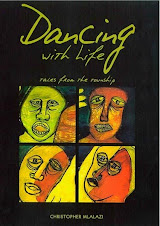
Some have had recognition on a wider scale ‑ Christopher Mlalazi’s short story collection ‘Dancing with Life’ and Sandisile Tshuma's story ‘Arrested Development’ winning honourable mentions in The Noma Award for Publishing in Africa and the Thomas Pringle Awards respectively and ‘Long Time Coming. Short Writings from Zimbabwe’ being selected by the ‘New Internationalist’ as one of their best two books from across the world in 2009.

JM, What are your challenges?

BJ: The reality is there is a small book buying public and over the years the book industry, like any other industry, suffered due to the poor performance of the economy.

People often do not read for pleasure but towards success in their academic studies or for professional purposes.

JM: So what can you say is the major objective of this project?

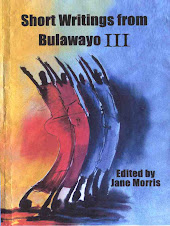
BJ: One of our aims was to give a voice to Zimbabwe writers who had previously been unpublished, publishing them alongside more established authors. We achieved this through the Short Writings series, of which five have been published to date, the first being Short Writings from Bulawayo and the most recent,Where to Now? Short Stories from Zimbabwe.

JM: What's your take on Zimbabwean authors?

BJ: There are many excellent Zimbabwe writers out there, each with wonderful stories to tell. As ‘amaBooks, we wanted these stories to be available to people across Zimbabwe, and across the rest of the world.

JM: What are you doing in terms of uplifting the book industry?

BJ: We have recently entered into co-publishing and rights agreements with several publishers in other countries.
We recently entered into an agreement with World Reader, so that many of our titles and some individual stories from those titles, are available digitally, to be read on e-readers and cell-phones, to children and their families across Africa.
We are also in discussions with publishers in South Africa and the United Kingdom about the co-publication of two further novels and a poetry collection.
Most AmaBooks publications are available outside of Africa through the African Books Collective on a print-on-demand basis and as e-books.
In order to reach a wider readership, we have participated in the Jozi, Cape Town, London and Frankfurt Book Fairs to promote the books.

JM: Any notable progress from your products?

BJ: Bryony Rheam's debut novel, ‘This September Sun’, which won Best First Book at the Zimbabwe Book Publishers Association awards and is a set book for Zimsec 'A’ level Literature in English, and the collection ‘Where to Now? Short Stories from Zimbabwe’ have been published in the United Kingdom by Parthian Books and distributed in North America by the Independent Publishers Group.
The late Julius Chingono and John Eppel's collection of poems and stories, ‘Together’, has been published by the University of KwaZulu-Natal Press in South Africa and the University of New Orleans Press in North America.
For the first time in 2012, the stories from the Caine Prize for African Writing were available in Zimbabwe, ‘African Violet’ being co-published by New Internationalist in the United Kingdom, by ourselves and by six other African publishers.

JM: What does your organisation really intend to achieve?

BJ: The aim of ’amaBooks is also to have Zimbabwe stories available to all within Zimbabwe.
Our books are on sale through many outlets in both Bulawayo and Harare. But the economic problems over the last decade have led to the closure of many bookshops or to them concentrating solely on texts for schools.
To give those outside the main population centres and those who cannot afford to buy books an opportunity to read local stories, ’amaBooks donated more than 400 books to rural and city libraries at a ceremony during the 2012 Zimbabwe International Book Fair in Bulawayo.
To encourage interest in local writing we have taken an active role in literary arts at the Intwasa Arts Festival koBulawayo and  several workshops for young writers. We have also donated books and helped with reading clubs in the high-density areas of Bulawayo.
So far, their publications have all been in English, but, with the support of the Open Society Initiative for Southern Africa, amaBooks is in the process of having ‘Where to Now? Short Stories_from Zimbabwe’ translated into Isi Ndebele, as ‘Siqondephi Manje? lndatshana zasezimbabwe’. The book will be published later this year.

JM: Tell us about the future?

BJ: AmaBooks will keep publishing great Zimbabwean stories, and work hard to get those stories read by as many people as possible in Zimbabwe and in the rest of the world.
We are also keen to have new writers come and have their voices heard through us.


Sunday, May 19, 2013

Worldreader in Bulawayo

Silent Cry on KGVI Kindle


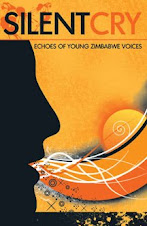
The first Worldreader project in Zimbabwe, providing e-readers and access to over 6000 ebooks to King George VI school, was launched in Bulawayo last week. The event was organised by KGVI, with Michael Smith and Nadja Borovac of Worldreader. Staff and students at the school have been trained in the use of the Kindles, so that they can read books on the devices, half of which are African books. ’amaBooks are the first publisher in Zimbabwe to partner with Worldreader, so that Zimbabwean fiction titles can already be accessed by students. Worldreader have similar existing projects in India and in several other African countries – the most popular ’amaBooks title with Worldreader so far being Silent Cry: Echoes of Young Zimbabwe Voices.

The guest of honour at the event was the Minister of Education, Sport, Arts and Culture, Senator David Coltart.


Jane Morris of 'amaBooks being taught how to use a Kindle
Explaining about ebooks

The Head Boy at KGVI

Learning how to use a Kindle


KGVI choir

Entertainment - the joys of reading

KGVI choir

The Minister of Education speaks

Photographs courtesy of Worldreader.

Sunday, April 14, 2013

Ebooks on phones, from www.forbes.com


This Simple App Could Put E-Books On Millions Of Phones In The Third World

It sounds counterintuitive, but in certain developing nations it’s easier to get hold of a cell phone than a good book.
More than one in three adults cannot read in sub-Saharan Africa, yet almost every home there has access to at least one mobile phone, according to USAID. Developing nations are among the fastest growing mobile markets in the world, but literacy is still a big problem.
David Risher, a former executive at Amazon and c0-founder of non-profit organization Worldreader, thinks there’s an obvious answer here: offer free books through all those cell phones.
On Wednesday Worldreader Mobile comes out of “beta” mode. About a year ago it partnered  with biNu, a mobile app platform for feature phones in developing countries, so that its Worldreader Mobile app would appear on the home screen.
Richer says that in the last year, 10% of biNu’s 5 million-user base have accessed the Worldreader Mobile app. That’s about 500,000 people. Risher hopes to get that number to 1 million by the end of 2014.
Worldreader’s biggest readers are in India (nearly 107,000 users), with 60,800 in Nigeria and 33,100 in Ethiopia.


A screenshot of one of the titles on offer through Worldreader Mobile

Most of them are using low-end, pre-pay Nokia phones with physical buttons, that cost about $50. They will typically spend about $2-3 a month on their data plans. Out of the 6.4 billion active mobile phones in the world today, 5.4 billion are so-called features phones like these, according to Worldreader statistics sourced from Analysys Mason.
The books they’re reading are short, typically taking up 150 screenshots. Though men are early adopters, women are the “power readers,” Worldreader says, reading an average 17 books a month.
The most popular books are romance novels. Among the top five most popular books in the last month, the No. 1 was a children’s book about school, the second an basic algebra book, and No.’s 3 and 4 were entitled My Guy and Can Love Happen Twice?
Risher says it’s not unnatural in sub-Saharan African culture to see people hunched over reading their cell phones for long periods at a time. So pervasive have mobile device become that some elementary schools in Ghana have even started banning them, he notes.
Most of the books on Worldreader Mobile are in English, with a few in local languages like Swahili, French and Spanish, though the number of books overall is increasing. Currently there are 1,200 titles available, donated by local and English-language publishers.
“I think the single biggest thing that will get more people reading is putting more book on there,” says Risher. “Everything form the Bible and Koran, to romance novels.” Books on mobile phones are another way to get health information to people in rural communities, who often have access to pharmacies and relatively cheap, generic drugs, but encounter pharmacists with little sound medical knowledge.
While accessing a book is free, it might cost users 5-10 cents from their data tariff to read. With the program, users don’t download entire books but download a single page at a time, largely to save the cost of data and because low-end phones don’t have much memory to begin with.
“The books are highly compressed,” says Risher, adding that the biNu platform is designed to be thrifty with data consumption.
Readers need a constant 2G data connection to get through a book, but Risher says that basic cell phone coverage is pretty good across Africa. He sees a strong use case for spreading books and literacy through mobile phones, not least because his own service has been picked up so quickly.
“It’s this classic case where the free market isn’t going to solve this problem on its own. Books don’t cost much, they’re heavy, they go out of date,” he says. “I’ve gone to Ghana and on the shelf of a school there I’ll see the a book on the history of Utah. It’s not only easier to get a cell phone, the books that do arrive are often completely irrelevant.”
Risher founded Worldreader with his colleague Colin McElwee, in 2010, after Fisher spent time volunteering in an Ecuadorian orphanage. Initially Worldreader donated Amazon Kindles to schools in sub-Saharan Africa, giving 3,000 children access to digital books. Part of the challenge of that program now is training teachers and children to use the e-readers.


Monday, October 15, 2012

'amaBooks and Worldreader


'amaBooks are working with Worldreader to help make good creative writing available to young people across Africa and elsewhere.


As a first step, stories from Silent Cry: Echoes of Young Zimbabwe Voices, and selected stories from other 'amaBooks collections, are available to read free of charge on mobile feature phones using the Worldreader App.


With the first-ever book application available for feature phones, Worldreader is turning on its head the notion that reading e-books requires an e-reader, tablet or smart phone.


In order to achieve this ground-breaking feat, Worldreader has partnered with biNu, an App developer based in Sydney. biNu’s patented technology effectively turns a feature phone into a smart phone—enabling millions of people in the world’s poorest places access to Facebook, Twitter, Local News, Google—and, now, the Worldreader Book App, and so to stories from Zimbabwean writers.
To give you an idea of the enormous scope and potential: feature phones are the largest and fastest growing segment of the global mobile market, with over 60% of the global mobile market share of almost 5 billion mobile subscribers. As of April 27 2012, the Worldreader App is on 3.9 million mobile phones, mostly in India and Africa, and Worldreader hope to reach 10 million by the end of 2012.
As well as stories from the collection being available through feature phones, Silent Cry: Echoes of Young Zimbabwe Voices will be available on e-readers as part of Worldreader programmes.

Silent Cry: Echoes of Young Zimbabwe Voices is a book of twenty-eight stories and fourteen poems, written by thirty-three young people from Zimbabwe’s second city, Bulawayo. The pieces cover many issues, including family, gender, relationships, race, alienation, disability, AIDS, border jumping and the struggle to survive in Zimbabwe.

Silent Cry: Echoes of Young Zimbabwe Voices is available on a print-on-demand basis or as an ebook through the African Books Collective http://www.africanbookscollective.com/books/silent-cry


More information about the Worldreader programme can be found at http://www.worldreader.org


Photographs of children in school benefitting from the presence of e-readers are reproduced courtesy of Worldreader