Showing posts with label Jane Morris. Show all posts

Friday, May 2, 2025

'The Mad', the translation into English of Ignatius T. Mabasa's Shona novel 'Mapenzi', soon to be published


amaBooks are soon to copublish Ignatius T. Mabasa's The Mad with Carnelian Heart Publishing in Zimbabwe and in the United Kingdom. The award-winning Shona novel Mapenzi has been translated into English by J. Tsitsi Mutiti, edited by Jane Morris and proofread by Samantha Vazhure. To quote Memory Chirere, 'When this novel first appeared, it brought to Shona literature the seduction and tyranny of storytelling. With this translation, the English speaking world will have the opportunity to experience the elegance of Ignatius Mabasa's writing.'

We are also delighted that this translation of Mapenzi has also been chosen as the first translated novel, in 2026, in the University of Georgia Press's African Language Literatures in Translation series, to be published in North America. As the series editor Christopher Ernest Ouma argues, 'The time is right for an initiative that publishes and promotes essential works of world literature written in African languages. As Ignatius Mabasa has said about the inclusion of The Mad in the series, 'I actually see the translation into English as a gain against Western hegemony ... Instead of an African story being forced by the capitalist world system and globalisation into English, the translation is a sign of respect to Shona people in wanting to understand their world view and the issues that trouble them.'

More information about the UGA series can be found here

Tuesday, November 19, 2024

Ignatius Mabasa in conversation with Philani Nyoni about the translation of Mapenzi and its publication in English as The Mad

 Reproduced from South Africa's Litnet  (https://www.litnet.co.za/from-mapenzi-to-madmen-a-conversation-with-ignatius-mabasa/)

From Mapenzi to The Mad

A conversation with Ignatius Mabasa


Ignatius Mabasa (Photo: supplied)

In 1999, a 28-year-old, Ignatius Mabasa, wrote a novel that would not only stake its claim in the Zimbabwean literary canon, but go on to receive international recognition in the form of the Times Literary Supplement calling it “one of the most significant books to have come out of Africa”. It was rumoured that Tanaka Chidora would translate it into English, but sadly that did not come to pass. It is not all gloom, however. In 2025, amaBooks Publishers will publish Tsitsi Mutiti’s translation of Mapenzi into English under the title The Mad, while the University of Georgia Press is set to release the translation in North America. Philani A Nyoni talks to Ignatius Mabasa about this new lease of life on his iconic multi-award-winning book, and what it means to him and the zeitgeist after a quarter century in circulation.

You recently translated Tsitsi Dangarembga’s Nervous Conditions into Shona, and have been a strong advocate for the preservation of native tongues, especially your indigenous language, Shona. You must admit there’s a certain irony to your book being translated into English. What gives, milord?

Irony, because Mapenzi has been translated from its original language into English, and not vice versa – I actually see the translation into English as a gain against Western hegemony, because the mountain has come to Muhammad to acknowledge his existence. Instead of an African story being forced by the capitalist world system and globalisation into English, the translation is a sign of respect to Shona people in wanting to understand their worldview and the issues that trouble them. The Mapenzi story is important for my people’s pedagogy and emancipation, because it encapsulates the historical, cultural and social identity of a nation. It is a kind of extension of Dambudzo Marechera’s House of Hunger and a version of Dangarembga’s Nervous Conditions. Getting Mapenzi translated into English is a coup, because our efforts and works in our own languages are a way of refusing to let the world dominate and silence us ideologically. The Mapenzi translation is giving a bird a branch to perch on, but the bird truly belongs and finds meaning, rest and peace in the nest of its mother tongue.

In 2001, the Times Literary Supplement named Mapenzi “one of the most significant books to have come out of Africa”. In your opinion, why has it taken so long to have it brought to a wider audience in the form of translation?

Personally, I think it has taken this long to have Mapenzi brought to a wider audience in the form of translation because it is not a light read. It reeks with the experiences of marginalised people dealing with issues of poverty, violence, disintegration, fear, coloniality and dejection. It paints huge murals of the brutal nature of African life in the postcolonial era. Such socially realistic issues are like Third Cinema – they don’t sell and are uncomfortable for Western readers, because they are indicators of the long-term impact of colonisation.

Are you worried something might be lost in the process of translation? Something particular and nuanced that may be part of the book’s immortal soul? I mean this in the context of your having said that the lines always come to you in your mother tongue, and that you have found difficulty in translating the words when they come.

Certainly I am. There is something deeply ingrained in the language of the people who are telling their story in Mapenzi. There are issues which don’t need translation, because they are at home in the nest of the language that is telling the story. However, there were cases where the beauty and richness of the Shona idiom, metaphor and way of expressing issues presented a real struggle. It was like trying to get a stubborn donkey to move – you can pull and pull, but it simply will not move, digging its hooves into the ground. Under such circumstances I felt for the translator, because the message that was coming across was, as somebody clever once said, that “each language has its own language”. Mapenzi is a story of ordinary folk in the ghetto who may understand English, but English doesn’t quite define, explain or get tickled by the witty and clever use as the original language.

How involved were you in the process of translation? Did Tsitsi Mutiti and Jane Morris engage you during the process, or did you leave the process to their professional discretion?

I got heavily involved only in the end when I had to work with the editor, who did a fantastic job in pointing out ambiguities and things she felt had the potential to confuse foreign audiences. I also had the task of reading the translated story three times, as we kept discovering things and had to make difficult decisions.

It has been about a quarter of a century since Mapenzi was published. With the time that has passed in your personal and professional life, what does this text mean to you today, now that you are a different man in a different epoch?

I tell you that this was the biggest challenge for me. Literature is shaped by the conditions of the time in which it is created, but it is also influenced by the level of development that the author is at. Mapenzi is my first novel, written when I was aged 28, and I feel that, if I had proper guidance, I would have paid more attention to developing my characters and story. Actually, if I were to be given the opportunity, I would love to rewrite the story, paying more attention to what I now consider amateur ways of handling the story. This is something Tendai Huchu observed and struggled with when he at one time helped me. However, major improvements would have had implications for the original story. I consulted widely, and the sentiment was that if I were to rewrite or embellish the story as the mature writer that I am now, I would be destroying the popular Mapenzi, which was well received and loved with the “flaws” that I was now noticing. Although the TLS called it one of the most significant books to have come out of Africa, Mapenzi also shows how much indigenous literature has potential but requires support. As a budding writer at the time, I benefited immensely from studying the Shona novel as a course for my BA general degree. It was through that course that I understood that for most indigenous books, a sincerely told story matters more than the style. There is a lot of work that still has to go into the aestheticisation of Shona writing. Anyway, I am glad that while Mapenzi may be from a different epoch, it still remains relevant in terms of the themes and issues it deals with.


Monday, September 4, 2023

Interview: Bryony Rheam talks about her new collection of short stories ‘Whatever Happened to Rick Astley?’

Reproduced from Nation Cymru https://nation.cymru/culture/interview-bryony-rheam/


Bryony Rheam is interviewed here by Jane Morris

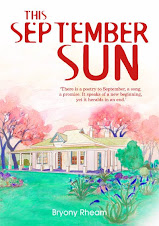
Jane Morris is an editor and publisher originally from Ebbw Vale. She moved to Zimbabwe in the 1980s when her husband Brian Jones took a job in the Applied Mathematics department at the National University of Science and Technology in Bulawayo. They set up amaBooks in the 1990s to publish emerging writers. One of their successes was Bryony Rheam whose novel This September Sun won the best novel award for Zimbabwe and went to No 1 on Amazon kindle.

On moving back to Wales in 2019 amaBooks have continued to be involved in the Zimbabwean literary scene. They are now based in Ceredigion. Here, Jane Morris talks to Bryony Rheam about her short story collection Whatever Happened to Rick Astley? which has just been published in association with Parthian Books of Cardigan.

Bryony, your latest publication, the short story collection Whatever Happened to Rick Astley? has an intriguing title. How did that title come about?

It all began with a Facebook post of mine. It was a Friday night and I was trying desperately to stay up until 9pm so that I could go and fetch my daughter from a party. I was remembering when I was a teenager and how we had to be out doing something on a Friday night and how early 9pm would have been then! It made me think of how quickly time flies, and how you become your mother. I was thinking of different songs that characterised my teenage years, which got me onto Rick Astley and then I wondered where he was and what he was doing. It was really comforting to find out that he had given up his singing career to bring up his daughter, and now she is an adult, he is making a comeback. There seemed to be a message in that for me. Life isn’t over just because you have reached a certain age, and each stage in your life brings different things.

You have said that you ‘don’t want to crush a story with politics’. How do you capture the effect that the economic and political situation has had on the lives of Zimbabweans?

It probably isn’t possible to write about Zimbabwe without bringing in the way in which we live and the way we have been treated by our government in the last twenty or so years. I think there is a difference though between showing how politics has shaped our lives and writing a ‘political’ story. For me, it’s in the background, but the main things in our lives are relationships and friendships and hopes and dreams. We don’t wake up in the morning and think of the government, but our lives are definitely influenced by the decisions that they make.

In what way do you consider that being a writer living in Zimbabwe has influenced your writing?

From a very early age, I have been able to connect with people’s emotions. It’s not always a good thing, believe me, because it can weigh me down. I pick up a lot of pain in people I meet. I know you could say that about people anywhere in the world, but there is this particular feeling that haunts Zimbabweans. We live in a fantastically beautiful country, but our lives are dominated by a haunting sense of loss. It is difficult to describe exactly because it is not as if Zimbabwe is in a war zone but there is definitely a feeling of something working against us. Writing about these things helps deal with the pain, especially if you can see a funny side to the story.

Do you identify with any of the characters in the stories?

There is a bit of me in every single story, but I think I identify most with the main character in ‘Whatever Happened to Rick Astley?’ – after all, it is a story based on my Facebook post! I draw a lot from real life, but I also change the details.

The academic, Professor Thabisani Ndlovu, who interviewed you for the launch of this collection in the UK, noted the level of interiority in a number of your characters as they delve deep to understand their situation and to move on. Could you comment upon this and give examples from the collection.

I have always loved authors such as Virginia Woolf and enjoy showing the inner thoughts of my characters. Often the shift in a story is merely in the thinking of one of the characters. I love taking a particular moment and showing everything that is happening at that particular point. Motivation is another aspect that I find interesting to explore: what takes us to a specific moment? What makes us do a specific thing. Most importantly, perhaps, what do we think, but don’t say? We spend our lives balancing our inner and outer worlds, often unconscious of our motivation for doing so. This is shown more in the stories with female characters: ‘Music From a Farther Room’, ‘The Fountain of Lethe’ and ‘These Things I Have Loved’, for example.

Whatever Happened to Rick Astley?


Wales Arts Review has chosen Whatever Happened to Rick Astley? as one of its summer reads. Why do you think readers in Wales would be interested in reading your collection?

Although the majority of the stories are set in Zimbabwe, I don’t think you need to have been there to understand or engage with them. We all suffer loss, we all feel joy and we all experience fear. It is characters we identify with, not necessarily situations. I hope that readers anywhere would find the stories of interest – and perhaps learn about a place they know little of. Stories can teach us things that TV documentaries and factual articles can’t.

Incidentally, I have a strong Welsh connection through my mother who was from Swansea. Some of the experiences of the narrator in ‘Dignum et Justum Est’ were generated by things she told me: the way the English often put down the Welsh and the use of terms such as ‘boyo’. There is also a Welsh link in ‘The Piano Tuner’ where the main character, Leonard Mwale, has taken over the piano tuning business from a man called Thomas Jenkins. Another character in ‘Last Drink at the Bar’ has moved to Cardiff from Bulawayo and, whilst he is glad that his British roots have enabled him to escape Zimbabwe’s woes and move, he is also incredibly homesick.

Zimbabwe has a strong tradition of short story writing and it could be argued that a short story reflects the spirit of a particular time. The stories in the collection were written over a period of twenty years, starting with the first, ‘The Queue’, and ending with the story that gives the book its title, ‘Whatever Happened to Rick Astley?’. Do you think that your stories trace a time line in the lives of Zimbabweans?

Yes, I think so. ‘The Queue’ was written at the beginning of Zimbabwe’s economic woes and it reflects that awful feeling of desperation that many people, especially those on pensions, were facing. Hyperinflation, petrol queues and food shortages characterised those years. It was quite a terrifying time with many people losing their life savings and ending up on the poverty line.

Many, many people have left Zimbabwe over the last twenty or so years and, for the people left behind, it has been a very sad time and there are many lonely people with no family left here. Sometimes there is a resentment towards those people who have left; sometimes those who have left have struggled to fit into the countries they have moved to.

That feeling of homelessness is in stories such as ‘Moving On’ and ‘The Rhythm of Life’. I would really like Zimbabweans to imagine a new future. Often when we talk of moving forward, what we really mean is that we would like to go back to the past (even though there was no perfect time in the past!). Whatever Happened to Rick Astley? is about accepting the past is gone and that there is still a future to look forward to.


Bryony Rheam’s collection of short stories Whatever Happened to Rick Astley? is copublished by Parthian and amaBooks. It is available from all good bookshops.


Wednesday, February 6, 2019

Open up a world of Zimbabwean storytelling: 20 writers, one powerful message

Moving On and Other Zimbabwean Stories will be released by Parthian Books in the United Kingdom in April 2019.


Moving On bristles with the talent of writers from Zimbabwe. This collection brings together twenty of Zimbabwe’s finest storytellers, from within the country and without. Many of the characters in this anthology are themselves moving on: from the chains of the past, from the loss of loved ones, from long-held beliefs. Some from life itself and others to a brighter future.

Between the covers the reader will encounter the father who uses his take on democracy to name the family dog, the villager who desperately waits for shoes and salt to ward off witchcraft, the young man who flees with the book, the boys who hide from the big noise, and a host of other characters.

The writers in the anthology are: Raisedon Baya,  Patricia Brickhill,  Gamu Chamisa, Murenga Joseph Chikowero, John Eppel, Adrian Fairbairn, T.L. Huchu, Donna Kirstein, Bongani Kona, Christopher Kudyahakudadirwe, Ignatius Mabasa, Barbara Mhangami-Ruwende, Christopher Mlalazi, Mzana Mthimkhulu, Blessing Musariri, Togara Muzanenhamo, Melissa Tandiwe Myambo, Thabisani Ndlovu, Tariro Ndoro, Bryony Rheam.

The editor, Jane Morris, is from Ebbw Vale in Wales and is the editor and co-director of the small independent publisher, amaBooks, which is based in Bulawayo, Zimbabwe.

To pre-order a copy in the UK: www.parthianbooks.com/collections/pre-order/products/moving-on-and-other-zimbabwean-stories

Monday, June 18, 2018

Speculative Fiction Workshop in Bulawayo


The workshop participants along with Walidah Imarisha and Tariro Ndoro

The  African/American Speculative Fiction Workshop took place weekly over the past few months, with sixteen participants chosen through samples of their writing.  Speculative fiction is an umbrella genre encompassing narrative fiction with supernatural or futuristic elements. This includes, but is not limited to, science fiction, fantasy, superhero fictionscience fantasy, horror, utopian and dystopian fiction, and supernatural fiction. 
The workshop, led by Fulbright fellow Dr James Arnett, included required reading of speculative fiction anthologies as well as the participants writings stories for critique. The workshop considered four texts – Blood Child by Octavia Butler, an African-American science fiction writer; AfroSF, an anthology of new African science fiction edited by the Zimbabwean Ivor Hartman; Kabu Kabu by the Nigerian-American Nnedi Okorafor, and Octavia’s Brood, from the US, edited by Walidah Imarisha and Adrienne Maree Brown. Selected stories from the texts were discussed, focusing on style and content and thought was given to the relevance to Zimbabwean social and creative settings. Participants submitted stories to be discussed at the sessions.
Walidah Imarisha
As a separate event, to which members of the public were invited, the American writer and academic Walidah Imarisha delivered a talk “Visionary Fiction and Fantastic African Futures”. The event also featured a short story written and read by Harare-based writer Tariro Ndoro and a personal essay exploring the roots of her interest in science fiction and fantasy. 
Tariro Ndoro
Walidah also hosted a hands-on visionary fiction workshop for the members of the workshop. The purpose, she explained, was to understand how science fiction was a vehicle for imagining more just futures and provided the opportunity for brainstorming creative solutions to real, present problems. Those present were asked to identify issues they were concerned about in Zimbabwe – a list that included universal health care, freedom after expression, the status and belief in African science and medicine, and others. Groups then worked together to create a world and a baseline story from which each participant could branch out.
Walidah, Tariro and James Arnett
Jane Morris and Brian Jones of amaBooks gave a presentation on the different routes to getting published and were able to attend most of the workshop sessions and were impressed by the quality of the writing produced by the participants. It is hoped that an anthology of Zimbabwean speculative fiction will be published in the near future by amaBooks.
The workshop was supported by amaBooks Publishers and the Public Affairs Section of the US Embassy in Zimbabwe.


Working in Stillhaven garden


Tariro Ndoro


The audience at Walidah and Tariro's presentation


Saturday, September 9, 2017

Interview: amaBooks, a Zimbabwean Publisher


Thoughts from Botswana by Lauri Kubuitsile

Writings and thoughts from Motswana writer, Lauri Kubuitsile


Reproduced from https://thoughtsfrombotswana.blogspot.com/2017/09/amabooks-zimbabwean-publisher.html


amaBooks, A Zimbabwean Publisher


amaBooks is a respected publisher located in Bulawayo. They’ve published work by some of the most well-known Zimbabwean writers including Tendai Huchu, John Eppel, NoViolet Bulawayo, and Petina Gappah, among others.  It’s run by the irrepressible Jane Morris and her husband Brian Jones. I had the chance to interview Jane about amaBooks, the conversation is below.


Can you tell me a bit about how you started your publishing house?

We could have called ourselves Accidental Publishers rather than amaBooks as we had not planned to start a publishing company. So, no research, no business plan, little knowledge of publishing. At the time, in 2000, I was working as a social worker and trainer and was involved in training volunteers for a charity involved in helping children. Short of money to run the charity, we approached the Bulawayo-based writer John Eppel who kindly donated a collection of his poems. But how to get it published? My husband and I decided to take on the task and, although I had a background in literature (my husband Brian is a scientist), we had little idea of what publishing a book entailed. It was a steep learning curve – ISBN, paper quality, book format, font type, size of print run, origination, pricing, launch, distribution, promotion… We were lucky to find a sympathetic printer who guided us through many of the steps. And months down the line we ended up with John Eppel: Selected Poems 1965 – 1995. Within six months all 1000 copies of the collection had been sold, with all profits to the charity. We were hooked and when John Eppel suggested starting a publishing house as he had a couple of novels waiting to be published we thought why not? It wasn’t the most propitious time to start the business as Zimbabwe’s economy had started its steady decline but we love books and were excited at the prospect.

How is the trade market in Zimbabwe?

When we began amaBooks the economy hadn’t completely crumbled so there was a better trade market and we could look to selling 1000 copies of a title, sometimes a little more. Our print runs have grown progressively smaller with the decline in book sales. We specialise in fiction and, unlike Germany for instance, where fiction is the strongest segment with 32% of the total market, fiction sales in Zimbabwe are a small proportion. With the high level of unemployment here and the poor economy, people are generally loath to spend any of their income on buying a book. Added to this is the difficulty of finding books for sale, with many bookshops having closed.

What is your approximate percentage of trade sales and educational sales? Do you consider yourselves trade publishers primarily?

We are first and foremost trade publishers and our sales are almost exclusively outside the educational system. A book being accepted as part of a curriculum is an added bonus, but that it not our original intent in publishing a title. As an independent publisher we have the freedom to publish what we choose, though there are, of course, financial constraints that have prevented us publishing all the books we would have liked to bring out.

Do you do a lot of development of writers? If so how do you approach it?

amaBooks don’t tend to give detailed feedback to writers when they submit a manuscript. We have, however, organised workshops for writers who have already had some success in being published and for those who aspire to be published, either run by ourselves or by experienced writers. As well as workshops aimed at improving writing skills, we have organised sessions on reading your own work and on looking at other avenues open to writers to help make a living. Working with new writers has been a significant part of our work as publishers. From the beginning we decided that we wanted to provide an opportunity for new writers to get published. We thought that a good way to do this was to showcase their work, alongside that of more established writers, in collections of short writings. To date we have published around 250 writers. Hopefully the editing process provided an input to the development of the writers and we have gone on to publish books by a number of the writers whose work first appeared in the short writings collections, including Christopher Mlalazi, Bryony Rheam and Deon Marcus. We have also helped to organise reading groups as we strongly believe that writers should be readers; hopefully, by enthusing the participants about literature, some may go on to become writers and some may come our way.
Workshops on publishing, which we have run, with themes such as how to approach a publisher and the difference between traditional publishing and self-publishing and all in between, have attracted much interest.

What do you see as the biggest challenge for publishers on the continent? Do you manage to sell your books in other African countries? This seems to be a real challenge for most publishers.

Distribution is a major problem, both within and outside Zimbabwe. We would love our books to be available throughout the continent and to have more books by African writers available here, but the cost of transport is prohibitive. Being a very small publisher getting our titles onto the shelves of major chains is very difficult so we tend to concentrate on independent bookshops, though that tends to be limited to South Africa. If one of our writers attends a festival, or we attend a book event, that is an opportunity to sell a few copies, and to develop links.
We are keen to sell rights across Africa and have had some success with other African countries – Nigeria and, through Nigeria, the other ECOWAS countries and Cameroon, Kenya with Tanzania, Uganda, Rwanda and South Sudan, South Africa and Egypt.
We continue to try to think of innovative ways of getting our books out there. Our titles are available as ebooks on many sites, and the African Books Collective distribute for us outside of Africa.
 Despite its many challenges, Zimbabwe seems to have quite a thriving literary community and quite a few successful writers especially if you compare it to Botswana. Why do you think that is the case?
Zimbabwe has many good writers, quite a few having received international acclaim; names that come to mind are Yvonne Vera, Doris Lessing, NoViolet Bulawayo, Dambudzo Marechera, Petina Gappah and Tendai Huchu. As to why this is, there is a tradition of valuing education and reading, Zimbabwe still has the reputation of having a high literacy rate. And there is plenty to write about in Zimbabwe, though I guess the same could be said of many other African countries.
When we started amaBooks many of the writers were still in Zimbabwe and there was a thriving literary community here but, sadly, due to a myriad of reasons, including the economic and political climate, many are now based in the diaspora. We have just finished compiling a short story collection, Moving On, and, of the twenty Zimbabwean contributors, more than half live outside Zimbabwe.

What do you think have been the biggest successes for amaBooks?

How to measure success? For me, one success, despite all the stressful times, has been the joy that amaBooks has brought into our lives, being greeted in the streets of Bulawayo with ‘Hey amaBooks’.
Getting good reviews from readers and critics is one of the things we value most. We love what we do and it is heartening when others enjoy the books we have brought out. We enjoy collaboration and getting our books accepted by publishers in other countries is very exciting – the thought of expanding the readership beyond Zimbabwe. As well as selling rights to other publishers in Africa, we have sold rights in Europe, in North America and recently to the Arab world.

Our most successful book has been the prize-winning novel This September Sun by Bryony Rheam. It was accepted for the ‘A’ level syllabus in Zimbabwe and also sold well to the general public. Other publishers have brought the book out in Kenya and the UK, and a publisher in Egypt is having the book translated into Arabic to distribute in the Arab world.

Wednesday, January 28, 2015

'Long Time Coming' reviewed in the Herald - from a very different perspective

‘Long Time Coming’ : hope and the role of the artist
 
January 26, 2015 Features, Opinion & Analysis
@ the Bookstore With Elliot Ziwira in The Herald, Zimbabwe

http://www.herald.co.zw/long-time-coming-hope-and-the-role-of-the-artist/

“LONG Time Coming” (2008), edited by Jane Morris and published by amaBooks, chronicles the mundane and sordid experiences of the common man, as he stoically trudges on along the scalding earth of his existence in a community desperately waiting for the rain.
The book taps into the journalistic function of the artist which complements the didactic nature of literature. As Soyinka (1973:89) observes: “The artist always functioned as the voice of vision in his own time.”
His telescopic eye should capture current and topical issues which burden his people, because it is such concerns that the reader easily identifies with.
This journalistic aspect of the role of the artist is also echoed by Chinweizu et al (1985:89) when they say: “Our job as writers is to be articulate and to present to our audience the stresses and joys of our societies as they take place.”
Such is the role of the competent artist that the collection exploits effectively through chronicling the recession that brings the sovereign nation to its knees, which however strengthens its resolve as the heavy rain bearing clouds gather on the horizon.
Thirty three writers and poets drawn from the African landscape and predominantly Zimbabwean, converge to tell the story of suffering, patience, hope, violence, despondence and deceit in the crises ridden Zimbabwe of the never ending queues, as the nation reels under the burden of Western imposed sanctions.
The bone of contention is the land, a finite resource whose wealth; mineral, aquatic or otherwise, the host country feels obliged to protect for the betterment of its people much to the chagrin of the alien gangsters from the West, who retaliated by imposing an illegal embargo on the sovereign motherland.
But the pious son of the soil, President Robert Mugabe could not allow Western hegemony to continue fettering his fellow countrymen to the colonial yoke, because indeed there is no freedom without ownership of the means of production.
In the ensuing chaos, poverty becomes the order of the day as the majority ekes out a mere existence from the little they could scantily put their hands to, in the vast expanses of empty shops, deserted hospitals, dry taps and a non-existent will on the part of service providers as well as those with the economic stamina for a haul forward.
An aura of desperation pervades the daily toils of the majority as their hope to untangle themselves from the labyrinthine snare of their existence only lie in the promising rains; both literal and metaphorical; the rains that will wash away the pain, sweat and blood from the impoverished and drought stricken land of their being, and leave sprouting seeds of hope in their wake.
Waiting, a dominant motif in the collection, and a commodity abundantly available in the national discourse, seems to be the only way out.
However, in this situation where others are malnourished, ailing and willing to trade their wretchedness for a morsel of bread, the avaricious, corrupt, cunning and obese minority crouch menacingly at their horizon of hope; taking the situation as a self-aggrandising enterprise.
This rationale is aptly captured in Wim Boswinkel’s “Justice” and John Eppel’s “The Awards Ceremony” as well as Sandisile Tshuma’s “Arrested Development”.
The rich use of metaphors; both from nature and Man’s creations, the autobiographical mode, which aptly chronicles the writers’ own experiences, and cultural diversity through the different authorial voices exploited, does not only allow the exploration of a plethora of themes, but also authenticate the fictional experience as the reader is drawn into the nuances of events highlighted, and juxtaposes them with the reality of his or her being.
The frustration, despondence and disillusionment is so real and vividly conjure the reality of lack, as the suffering masses endure whatever comes their way with such stoicism that shames the devil, who desperately prophesises doom and violent disturbances.
The people’s refusal to have their spirits dampened and hope strangled in the face of adversity and hunger, is illuminated through the metaphor of the rain, the encouraging smiles and winks from strangers.
Truly the Zimbabwean cannot be broken that easily.
His or her fighting spirit will spur him or her on to higher resolves, if only chance avails itself and Providence Divine intervenes.
The use of the journey motif taps into traditional folkloric drama, as the search for the ever receding pastures and hope becomes paramount.
There is hope in travelling, yet the means to travel becomes a stumbling block.
Everyone is so much in a hurry to go somewhere away from the painful familiar environs, yet they remain rooted physically and emotionally to the same.
Where physical movement is possible, albeit in a stressful way, emotional movement remains flimsy; because one is never sure what to expect from the unknown hunting grounds; where morality and humane attributes die in the wake of physical satiation.
One has to cling on to hope, for “Who Knows What Season Tomorrow Brings” as Gothataone Moeng quips, as she admires the Zimbabwean women who toil to fend for their husbands and children back home through humiliating encounters in Botswana, her country, yet remaining resolute and proud of their nationality.
In a single journey from the city to one’s abode or to border towns, one would relate a lifetime of experiences about harness-able opportunities and elusive ones, which create categories in society; the “chicken bus clients” and the Landcruiser elite.
The “chicken bus clients” as revealed by Linda Msebele in the story “The Chicken Bus”, are the wretched of the earth, the downtrodden that those with the means seek to punish for the mere reason of them being Zimbabwean, with a right to their ancestral land.
The artist intimates: “It is the cheapest and certainly harshest, way of getting home these days. Such travelling is meant for those like me (believe me, there are millions like me) who cannot afford the emergence taxis that ply the same route and that charge a much higher fare . . .
“It is noisy, stuffy and smelly here . . . It really stinks in here.
“It stinks of poverty.
“It’s nothing like the chic smell of wealthy.”
In her struggle to put a meal on the table as one among the millions wallowing in abject poverty, the artist wonders: “How different the realities of life can be.
Some people drive the latest Mercedes, BMWs and Pajeros.
I wonder how they manage to make money in a country with such an inflationary and depressed economy.” She adeptly takes the reader into the emotionally sutured psyche of suffering in a society where the perverse, callous and greedy mighty strangle the feeble, as she ponders: “Am I doomed to forever board chicken buses?”
In this hubbub where the sexual perverts and mentally deranged impersonations of men quench their carnal desires on unsuspecting women in the packed buses, and are quick to erupt in tantrums if questioned on their intentions, there are some “who refuse to turn sour, the ones who won’t let fear cloud their brows, the ones who still smile.”
Lloyd Robson, who writes from a visitor’s viewpoint in “Rum and Still Waters”, highlights the Zimbabweans’ resilience, warmth and patriotism.
It is in such situations where one finds oneself without bus-fare to go home at 4.45 pm, as in Julius Chingono’s “Bus Fare” and his manly pride inhibits him from accepting alms from his ex-wife, whose star shines while his conspires with the demons of unemployment to wane; where a university post or undergraduate questions whether it is really necessary to be academically knowledgeable when those who make it to the top of the social and economic echelons are school drops-outs, like the Malayitshas, and cross-border traders, where everything seems to be in abeyance; that one begins to question his or her sanity or whether there is really anything called sanity or it is just a subjective idea, as everyone really seems to be sane in his or her own way; or maybe insane, depending on those around.
It is this subject that Ignatius Mabasa hilariously tackles poignantly in the captivating story “Some Kind of Madness”.

Notwithstanding all this suffering, chaos and despondency, glimmers of hope remain visible on the silver lining of the clouds which break into torrents to change the complexion of the Zimbabwean landscape as Pathisa Nyathi alludes to “And the Rains Came”, and Judy Maposa’s “First Rain” celebrates.