Showing posts with label Philani Nyoni. Show all posts

Tuesday, November 19, 2024

Ignatius Mabasa in conversation with Philani Nyoni about the translation of Mapenzi and its publication in English as The Mad

 Reproduced from South Africa's Litnet  (https://www.litnet.co.za/from-mapenzi-to-madmen-a-conversation-with-ignatius-mabasa/)

From Mapenzi to The Mad: 

A conversation with Ignatius Mabasa


Ignatius Mabasa (Photo: supplied)

In 1999, a 28-year-old, Ignatius Mabasa, wrote a novel that would not only stake its claim in the Zimbabwean literary canon, but go on to receive international recognition in the form of the Times Literary Supplement calling it “one of the most significant books to have come out of Africa”. It was rumoured that Tanaka Chidora would translate it into English, but sadly that did not come to pass. It is not all gloom, however. In 2025, amaBooks Publishers will publish Tsitsi Mutiti’s translation of Mapenzi into English under the title The Mad, while the University of Georgia Press is set to release the translation in North America. Philani A Nyoni talks to Ignatius Mabasa about this new lease of life on his iconic multi-award-winning book, and what it means to him and the zeitgeist after a quarter century in circulation.

You recently translated Tsitsi Dangarembga’s Nervous Conditions into Shona, and have been a strong advocate for the preservation of native tongues, especially your indigenous language, Shona. You must admit there’s a certain irony to your book being translated into English. What gives, milord?

Irony, because Mapenzi has been translated from its original language into English, and not vice versa – I actually see the translation into English as a gain against Western hegemony, because the mountain has come to Muhammad to acknowledge his existence. Instead of an African story being forced by the capitalist world system and globalisation into English, the translation is a sign of respect to Shona people in wanting to understand their worldview and the issues that trouble them. The Mapenzi story is important for my people’s pedagogy and emancipation, because it encapsulates the historical, cultural and social identity of a nation. It is a kind of extension of Dambudzo Marechera’s House of Hunger and a version of Dangarembga’s Nervous Conditions. Getting Mapenzi translated into English is a coup, because our efforts and works in our own languages are a way of refusing to let the world dominate and silence us ideologically. The Mapenzi translation is giving a bird a branch to perch on, but the bird truly belongs and finds meaning, rest and peace in the nest of its mother tongue.

In 2001, the Times Literary Supplement named Mapenzi “one of the most significant books to have come out of Africa”. In your opinion, why has it taken so long to have it brought to a wider audience in the form of translation?

Personally, I think it has taken this long to have Mapenzi brought to a wider audience in the form of translation because it is not a light read. It reeks with the experiences of marginalised people dealing with issues of poverty, violence, disintegration, fear, coloniality and dejection. It paints huge murals of the brutal nature of African life in the postcolonial era. Such socially realistic issues are like Third Cinema – they don’t sell and are uncomfortable for Western readers, because they are indicators of the long-term impact of colonisation.

Are you worried something might be lost in the process of translation? Something particular and nuanced that may be part of the book’s immortal soul? I mean this in the context of your having said that the lines always come to you in your mother tongue, and that you have found difficulty in translating the words when they come.

Certainly I am. There is something deeply ingrained in the language of the people who are telling their story in Mapenzi. There are issues which don’t need translation, because they are at home in the nest of the language that is telling the story. However, there were cases where the beauty and richness of the Shona idiom, metaphor and way of expressing issues presented a real struggle. It was like trying to get a stubborn donkey to move – you can pull and pull, but it simply will not move, digging its hooves into the ground. Under such circumstances I felt for the translator, because the message that was coming across was, as somebody clever once said, that “each language has its own language”. Mapenzi is a story of ordinary folk in the ghetto who may understand English, but English doesn’t quite define, explain or get tickled by the witty and clever use as the original language.

How involved were you in the process of translation? Did Tsitsi Mutiti and Jane Morris engage you during the process, or did you leave the process to their professional discretion?

I got heavily involved only in the end when I had to work with the editor, who did a fantastic job in pointing out ambiguities and things she felt had the potential to confuse foreign audiences. I also had the task of reading the translated story three times, as we kept discovering things and had to make difficult decisions.

It has been about a quarter of a century since Mapenzi was published. With the time that has passed in your personal and professional life, what does this text mean to you today, now that you are a different man in a different epoch?

I tell you that this was the biggest challenge for me. Literature is shaped by the conditions of the time in which it is created, but it is also influenced by the level of development that the author is at. Mapenzi is my first novel, written when I was aged 28, and I feel that, if I had proper guidance, I would have paid more attention to developing my characters and story. Actually, if I were to be given the opportunity, I would love to rewrite the story, paying more attention to what I now consider amateur ways of handling the story. This is something Tendai Huchu observed and struggled with when he at one time helped me. However, major improvements would have had implications for the original story. I consulted widely, and the sentiment was that if I were to rewrite or embellish the story as the mature writer that I am now, I would be destroying the popular Mapenzi, which was well received and loved with the “flaws” that I was now noticing. Although the TLS called it one of the most significant books to have come out of Africa, Mapenzi also shows how much indigenous literature has potential but requires support. As a budding writer at the time, I benefited immensely from studying the Shona novel as a course for my BA general degree. It was through that course that I understood that for most indigenous books, a sincerely told story matters more than the style. There is a lot of work that still has to go into the aestheticisation of Shona writing. Anyway, I am glad that while Mapenzi may be from a different epoch, it still remains relevant in terms of the themes and issues it deals with.


Monday, October 7, 2019

'Gonjon Pin' a must-read on a long journey

The Herald, 6 October 2019
https://www.herald.co.zw/gonjon-pin-a-must-read-on-a-long-journey

‘Gonjon Pin’ a must-read on a long journey

-->

by Memory Chirere 

Published by amaBooks of Zimbabwe and several other publishers, The Gonjon Pin and Other Stories is a collection of short stories by African writers shortlisted for the Caine Prize 2014 and from the Caine Prize annual writing workshop held in Vumba, Zimbabwe, during the same year.
On receiving this anthology just before the Harare launch, I quickly noticed that it was a massively solid book.
I was intimidated. I am used to reading the usually thin volumes normally associated with short books in Africa. But since these are stories from one of the most prestigious awards in African literature today, I hoped that quality will pay for the volume.
I do not remember the last time I felt like this about a book. I did not want to start with the shortlisted stories. I wanted to make my priorities right. I had been invited to anchor the discussion at the Harare launch, where some writers would also give readings.
I am attracted to the Zimbabwean stories.
Having been raised on the short stories of Luis Honwana, Charles Mungoshi and other writers from the Southern African sub-region, I find Lawrence Hoba’s “Pam Pam” a very comfortable landing pad. Due to my background, this is the story that speaks most directly to me.
The sensitive child is snooping into the seemingly unusual world of the grown-ups, who are also trying to come to terms with the most “weird” in their midst. Muffled voice. Understatement. Power play. A surprise ending. Hoba’s deft engineering- one soft word on top of the other…and on top of the other, almost like bricks, tells me that this was not easy to write.
“The Sonneteer” must be the “craziest” story in this book! I am hoping that somebody will agree with me. I love the deluge of sonnets towards the end because it is a clever way of flourishing out after such a deep rendition on the tumultuous Zimbabwean condition. The story ends in successive loud spurts like a gas canister unleashed onto a hapless crowd.
I like stories like this one, driven by silences — especially by what characters do not say to one another.
We are no longer reading, but are also writing the story alongside Philani Nyoni. The language is vigorously God forsaken and its rigours remind me of the late Dambudzo Marechera.
Later, at the launch itself, I was impressed by Isabella Matambanadzo’s views.
Her “All The Parts of Mi”, just like Abubakar Adam Ibrahim and Chinelo Okparanta’s stories, is about betrayal, intimacy and courage. During the discussion, I asked Matambanadzo about what she thinks about the use of the erotica in stories. Her candid answer sent the audience roaring in approval. It took us a while to return to silence.
“The Intervention” by Tendai Huchu is part of the Caine 2014 short list. It confirms my thoughts about his previous stories, especially the one which I have been struggling to translate from one language to the other. Here is a writer who has an eye for dramatic irony and the incongruence of human character. His stories challenge the reader to work from many points of view.
In “The Murder of Ernestine Masilo” by Violet Masilo, the protagonist dies slowly from the first time you meet her. Her death is not shocking, but why she dies is riveting.
You are left with a feeling that a flower has withered before anyone could pluck it and place it in a vase. If only there was enough love. Typical character in typical circumstances.
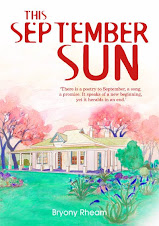
“Music From A Farther Room” by novelist Bryony Rheam is a story filled with utmost colours and sounds and wide spaces. It is a piece of painting or tapestry.
If it were a piece of cloth, this story would flutter in the wind like a kite, landing on its nose until somebody picks it and throws it back into the sky just in order to see it and shout like a toddler! I read it over and over for the sheer serenity that it gives me.
Barbara Mhangami-Ruwende’s “Blood Work” is filled with a delicate tension right from the statement “I don’t like black people” up to the end and you are always on the edge. I hope I am not being prescriptive, but this looks like my favourite story in this book, at least for now.
I then hurry to the winning story itself, “My Father’s Head”. I had read elsewhere that it is a story filled with sad memories. I do not disagree, but I discover that it is full of sweet sadness with more of sweet. Sad but not depressing.
The kind of balance associated with kopjes. On the second and even third reading, I begin to feel that this is about a daughter’s celebration of a father’s not so happy life. The language is syrupy, describing expanses of time and dwelling on tiny-tiny details of life like the paw of a dog and the flutter of a butterfly. I agree with the judges. It was right that this story won. Maybe it is not a story after all. It is life.
Among the shortlisted stories, I also have lots of respect for Billy Kahora’s “The Gorilla’s Apprentice”. Loneliness of people, and of animals too?
A unique and unfulfilled camaraderie between victims from different communities? This story could just have won.
However, in just a few of these stories here, adjectives tend to pile on top of one another; adverbs trip over each other. Colons clog the flow of even short paragraphs, and the plethora of semicolons often cause the reader to throw up his hands in exasperation.
If you are able to forgive the very few overwritten pieces, The Gonjon Pin and Other Stories is something to carry on a journey.


........................


The 2019 Caine Prize anthology, soon to be published in Zimbabwe by amaBooks, celebrates 20 years of the competition with the inclusion of all the winning stories, including those of the Zimbabwean winners Brian Chikwava and NoViolet Bulawayo. It includes an introduction by Ben Okri.

Tuesday, June 6, 2017

Why I Read by Philani A. Nyoni

Philani A. Nyoni. Photo by KB Mpofu


Okay, we can do this, shouldn't be too hard... it's only writing, we've been doing this since we discovered 'AH-AIR-EE-OH-OOH' wasn't some device devised to torture infants. Maybe we discovered that much later because we were in too deep: so in love with words we had to learn the science of language and autopsied languages alive while other childrens were calling corpses cadavers in medical campus.

And why do we keep referring to ourself in plural? Are we possessed?! Legion!

Oh dear, that wasn't very clear at all! You lack grace, no, panache... no... that's not it... what's the other fancy word I'm looking for? It's so cute I could pat it all day. What's it now? It's not lustre, it's something... yes... to do with texture... but... oh darn it! I had it yesterday, I should have written it down. Well yesterday I didn't know I would have to use its absence to ascertain why my writing is appalling today! Now which book did I read it in? My-my. I can't believe this... ah yes, the Rushdie. Which Rushdie? Dear god, look at the size of them! I'll never find a single word in there!

Maybe I should just settle into the task of writing instead of trying to describe a piece of writing that doesn't really exist. I mean, here I am, haranguing (fancy word, we should put it in the story by-any-means-necessary!)... raking my brain...is it raking or racking? This English of theirs. Let me find out but in the meantime, see what I did there? I went from harangue to rake. Because I am Ndebele you see, and we didn't have rakes in our white-man-free-utopia of dysentery and spear-chucking megalomaniacs, so when we finally got one on Amazon we called a rake a hara, etymology: harrow. Oh figured it out, it's racking, comes from some ancient torture device. Well we didn't have that either, why torture people when you can just stab them?

Who am I talking to? It sure made sense when we were using the plural...ah, it appears again; we are sane.

Maybe instead of trying to be all classy and shit, I should focus on that... idiosyncrasies. An African story in African English, not quite pidgin, not creole, more like a dialect and accent on paper... what the fuck am I saying?! I know what I mean anyhow; I'll break that English, be really black about it. It's important to be very black about things sometimes, and mispronounce croissants and Paris; it shows you are not an Uncle Tom. It's important not to be an 'Uncle Tom' (add to reading list, 'Uncle Tom's Cabin'), peculiarity should be the province of characters, not authors. 

Best idea I've had all day! How we will break that English, wrap it in a cute ribbon and send it back to its queen in a coffin (like take that your Queeniness!)! We will use words like kaka in place of 'crap'. Bukowski would probably say that, crap, he's one of my 'Andy Capp' writers; you know, the 'okes whose words read like every line was composed with the author leaning his head to the side trying to keep the ciggy smoke from smarting his one open eye? Squinting at the goddamn thing, coaxing his quill with devil-dick-shrivelling curses to course at the speed of thought. I should read him again soon, just to remind me not to be superficial.

Hey, do you think it's superficial to use words like superficial? I mean...

Yeah, I'll reread that Bukowski alright, but not today, today I want to write something black, bad gramma like skin-tone was a handicap! Oh how about this: use words like kaka, no time for that quote-mark nonsense on dialogue, because I'm gansta and African. Nigroence, that's my new word, my new genre. The arrogance of negroes. Sounds great.

Now about that kaka writing... wait... why does that sound familiar? Where have... oh kaka! that was We Need New Names! Blasted; we need new ideas... and names for characters. Unless you are Brian Chikwava pulling off a literary Fight Club, characters should have names. It's in the bible... somewhere; it has to be one of those commandments that people don't like facing because you read and realise 'you know what, Christianity's not for me, God's probably gonna smite me for choosing catfish over Him but there'. It has to be in there considering some characters got names they didn't even need... the only screen-time they be getting is between the same word: beget. Now that's how you use up that word-count! It's like the guy H. Christ's dad commissioned to holy-ghost-write for Him was billing by the word!

Not naming characters is like being that guy from that book, what's-his-face? Adam. He didn't name his childrens for over a year! Now that was a damn good book, tingles my spine just saying the title... watch me shiver: East of Eden. See?! I didn't cry at the end of it, I don't know why I have to announce that each time I mention the book but I didn't cry. Ruined my prose though, suddenly my characters felt hollow, no depth at all like... I really need to use 'Agamemnon said' each time said Agamemnon says, otherwise readers wouldn't know who was talking. Gourd-dam those characters were sooooo alive! It's like he was writing his dialogue in Dolby Surround! I should never read that book again, makes my writing seem awful, and nobody wants to write awful stuff. Medium-rare I can stomach: never go too deep on some texts, unlike Tendai Huchu; went 'full retard' on his debut now everyone thinks he's a homosexual. Ha! Idiot.

Ignorance is bliss my friend, remember that one time we wanted to do a whole novel set in one day? That was an awesome gimmick until we realised Dan Brown has been doing that since aforementioned holy-ghostwriter's now-famous line: 'In the beginning'. One-trick-pony... two actually, his second trick is transcribing encyclopaedias. Oh dear, my horns are showing, grumpy-grumpy-grumpy. Serves you right for reading popular fiction... sparkling vampires and all that.


Well, clearly this writing thing isn't working out today. I read somewhere you need a ton of patience because you only write cocaine when you're like... super ancient and God sometimes mistakes you for his dad and you need viagra just to sit through a book signing. What's on TV? Programming. Ha! Sounds like we're stuck in a George Orwell novel. Animal Farm, or 1984? Eenie-meany-my-knee-more... Hey what else did that guy write? Maybe I should just get some Borges up in here, get all esoteric and shit. 

Philani Amadeus Nyoni is a writer, spoken word performer and actor. He is the author of three poetry anthologies: 'Once A Lover Always A Fool', which received a National Arts Merit Award in 2013, 'Hewn From Rock', (with John Eppel) and 'Mars His Sword'. 

Sunday, March 15, 2015

'Textures', reviewed by Philani Amadeus Nyoni in Urban Culxure


http://urbanculxure.com/2015/03/textures-by-john-eppel-togara-muzanenhamo-review/
Mar 13, 2015

Textures is a collection of poetry by John Eppel and Togara Muzanenhamo published by Amabooks in 2014. The book launches is at CBC on the 18th of March and at Indaba Book Café on the 19th. Award winning poet Philani Amadeus Nyoni reviews it here.


John Eppel comes into Textures with over a dozen publications under his belt. An unflinching commentator, master wordsmith, tested and validated by time and experience, Textures is once again the breath of a master of traditional English verse.


Togara Muzanenhamo is relatively unknown in Zimbabwe, although he commands a large following abroad. He, along with Tinashe Muchuri, assisted with Julius Chingono’s poetry in Together. His first collection, Spirit Brides,was shortlisted for the Jerwood Alderburgh First Collection Prize in 2006. He is ranked among Zimbabwe’s finest poets on the page having represented the nation at the largest gathering of poets ever in 2012 in London. His poetry is in a world of its own and his unique forms contrast those of Eppel, finely balancing the book as a whole.


Textures is Eppel’s third collaboration; his first was with the late, great Julius Chingono and I will draw a few comparisons between these two works. His second collaboration was with myself, therefore I cannot speak objectively of it.


The first acute difference between the two poets is that Eppel is traditional stylist, and Muzanenhamo quite the opposite. Eppel sticks to traditional forms of English verse; in his own words he uses these forms as a way of self-mockery as a white African.

He is not averse to using forms like the sonnets, terza rima and the villanelle, which he executes with surgical precision. Most interesting is his personalisation of these styles. In ‘Sonnet with a Limp’ he distorts the metre (justifying the title), in ‘Beauty is Truth, Truth Death’ he keeps it Shakespearean, in ‘Not For Laura’ Petrarchan, but in sonnets like ‘Aloes at Hillside Dams’ or ’Giving up on the Rains in Curious Rhyme’ (again justifying the title) he rearranges the rhyme into a semi-invisible but regular scheme. The dexterity in the distortions brings to the fore the self-mockery, the irony in the choice of form.

Muzanenhamo is a fascinating poet. In poems like ‘The Ungiving’ and ’Mercantile Rain’ he rhymes, but he also employs many half-rhymes and in most of his work he is not too eager to stick to Western poetic traditions. He is a poet of the twenty-first century and an African poet, ‘a deliberate antistylist’ as the blurb to Together describes Julius Chingono. His arrangement on the page, the typesetting, is also part of the poem, and of the experience of reading his work.

Muzanenhamo reads like Soyinka: dense. Of his first collection, the Times Literary Supplement said ‘he can be cool but seldom light’. His poetry demands contemplation, which does not always resolve the headache inflicted; he is often esoteric where Eppel is more musical and accessible. This is another contrast.


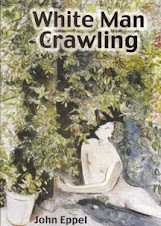
As far as subjects go, Textures is quite radical and defies expectations for two reasons: imprimis, Eppel writes about home and Muzanenhamo writes more about places far removed in time and space. Muzanenhamo, who one would expect to be the more ‘African’, is the less ‘African’ of the two. Secondly, from his more recent works such as Absent: The English Teacher, White Man Crawling and even Together, one would assume Eppel would once again criticise poor governance and the abuse of power. It is these themes that have resulted in him being misconstrued as a racist, something he addresses in the satire Absent: The English Teacher, when, during a police interrogation, the lead character is asked if he hates black people, to which he replies ‘only as far as they are part of the human race’. This time he is mellower, more concerned with his surroundings, particularly flora and fauna, especially the birds.
 Textures Launch

Muzanenhamo has a few pieces that might be interpreted as autobiographical, such as ‘Savannah Chapel’, however most of his work is about places far removed in time and space. He is a voyeur in history in ‘The Texan ’and ’Bluegrass Country’; he draws inspiration from the strangest stories, such as those of Isaac Murphy, Maurice Garin and Charles Péguy.

As a collaboration, this is a fine piece of literature unfurling new petals with every read. Eppel’s focuses on immortal subjects such as nature and human relationships as opposed to current affairs; Muzanenhamo draws inspiration from moments that stand out in the history of the world, lending the collection an air of timelessness.


Saturday, January 17, 2015

The Maestro, The Magistrate & The Mathematician reviewed in Gateway for Africa


From gatewayforafrica.com

Tendai Huchu announced his arrival on the literary scene with his novel The Hairdresser Of Harare, in his second offering, The Maestro, The Magistrate & The Mathematician he follows the precedent he set in his Caine Prize shortlisted story The Intervention by setting it in the diaspora.

The setting is Scotland, Edinburgh; the plot revolves around the lives of three Zimbabwean expatriates so often marred in anguish. The Maestro is a fag blowing, ganja smoking bibliophile who withdraws from the world into a monkish life asking age-old questions like the meaning of life. The Magistrate is an audiophile who maps the city of Edinburg through music. His is a melancholic life, that of a man who was worth something once upon a time in the country he left and now has to stoop low into a life of menial labour and housework. As though the perceived emasculation is not enough, his wife despises his cooking and the intimacy in their marriage withers. The Mathematician is a mid twenties mathematical genius and ruthless pragmatist who laments not investing in Raytheon stock before Bush and Blair went war mongering in the Middle East. He is in pursuit of a PhD whose thesis explores profiteering in hyper inflationary economies which turns out to be a dangerous course.

The Magistrate is a relic of the past burdened by a sense of purpose and worth though the system he is plunged into does not recognise his past. He harbours a burning nostalgia of one trapped away from the home he yearns even after death. The book is itself a cultural experience: a tour of Edinburg’s soul: her streets, and landmarks which he maps with music through his Walkman. He is cleverly juxtaposed with the comical Alfonso, who appears to be the fool of the novel. The Magistrate could represent the first generation expatriates who believe they are only abroad for a while, until things shape up. He finely juxtaposes the detached way of the West with the more intimate and mutli-layered African, particularly Shona. Through him we see the ludicrousness of Western life, at least as perceived through the African lens.

Set during in The Lost Decade of Zimbabwe, the book not only zooms into the too often agonising life of the expatriate but provides some valuable insight into the political and economic landscape, the shaky opposition and the corruption which set into the fabric of Zimbabwean life. It is also a journey into Zimbabwean classics mostly played through The Magistrate’s headphones.

Being a work of literature, a ruthless one at that (The Guardian called Huchu ‘unflinching) it is not without casualties. The Mugabe Regime naturally takes a few shots, like the cringe-worthy moment when a Nomatter Tagarira, a spirit medium convinced them, at the cost of millions, she could draw diesel from a rock. So does Tsvangirai and his MDC, Bush and Blair et al. Fellow countryman, expatriate and novelist Brian Chikwava also takes shrapnel. According to two characters, Harare North is an awful book! According to Chenai, Chikwava “cannae be bovvered to learn proper English”.

As far as style goes it’s pretty clean and free flowing, the prose is compelling and propels the story forward with frequent beautiful turn of phrases like, ‘skeletons on parade’ where he describes naked birches. The final chapter folds with an eerie exchange, I will risk the literati running me out of town with pitchforks and compare it to the conversation between O’Brien and Winston towards the end of Orwell’s 1984.

A novel which deals with fundamental questions of the age such as the nature of ‘democracy - The Maestro, The Magistrate & The Mathematician comes at a time when writers from the continent are protesting the ‘African Literature’ tag and this text goes a long way in making the case. Though majorly concerned with the lives of three Zimbabweans abroad and those around them, it’s a universal and truly illuminating work.

Philani Amadeus Nyoni is a published Zimbabwean poet (“Once A Lover Always A Fool” and “Hewn From Rock”), short story writer and actor. His writings have been published in newspapers and magazines including The Sunday News, Zimbabwe Metro, South Africa Metro, Consciousness.co.za and Ghana Poetry Foundation.

Thursday, August 28, 2014

The Gonjon Pin launched in Harare

Harare’s Book Café attracted a capacity audience for the launch of the 2014 Caine Prize anthology, The Gonjon Pin, where four of the authors – Isabella Matambanadzo, Violet Masilo, Lawrence Hoba and Philani Nyoni – were in attendance to read from their work, sign copies of the book and to discuss issues relating to their writing and the Caine Prize.
The authors responded to a variety of questions, including whether or not the Prize influenced their work, why they wrote short stories as opposed to novels or poetry, how to inject hope into “African stories”, what constitutes an “African story” and the absence of laughter in the “African story”.
The Gonjon Pin features 17 short stories by the writers from across the African continent, including three other Zimbabwean writers who were unable to attend: Barbara Mhangami, Bryony Rheam and Tendai Huchu. The other writers published in the anthology are from Ghana, Kenya, Nigeria and Somalia.
The event was chaired by Roger Stringer of Harare City Library and the discussion facilitated by Memory Chirere. The Guest of Honour was the Kenyan Embassy Consul, Ms Damary Nafula.
The book, published by 'amaBooks in Zimbabwe with the support of the Beit Trust, is available in outlets across the country, and as an ebook through shop.mazwi.co.
'amaBooks would like to thank British Council Zimbabwe, Harare City Library, The Red Fox Hotel, The Book Cafe, Lawrence Hoba and the other writers for their support of the event.


Photographs courtesy of Lawrence Hoba and British Council Zimbabwe