Showing posts with label The Gonjon Pin. Show all posts

Monday, October 7, 2019

'Gonjon Pin' a must-read on a long journey

The Herald, 6 October 2019
https://www.herald.co.zw/gonjon-pin-a-must-read-on-a-long-journey

‘Gonjon Pin’ a must-read on a long journey

-->

by Memory Chirere 

Published by amaBooks of Zimbabwe and several other publishers, The Gonjon Pin and Other Stories is a collection of short stories by African writers shortlisted for the Caine Prize 2014 and from the Caine Prize annual writing workshop held in Vumba, Zimbabwe, during the same year.
On receiving this anthology just before the Harare launch, I quickly noticed that it was a massively solid book.
I was intimidated. I am used to reading the usually thin volumes normally associated with short books in Africa. But since these are stories from one of the most prestigious awards in African literature today, I hoped that quality will pay for the volume.
I do not remember the last time I felt like this about a book. I did not want to start with the shortlisted stories. I wanted to make my priorities right. I had been invited to anchor the discussion at the Harare launch, where some writers would also give readings.
I am attracted to the Zimbabwean stories.
Having been raised on the short stories of Luis Honwana, Charles Mungoshi and other writers from the Southern African sub-region, I find Lawrence Hoba’s “Pam Pam” a very comfortable landing pad. Due to my background, this is the story that speaks most directly to me.
The sensitive child is snooping into the seemingly unusual world of the grown-ups, who are also trying to come to terms with the most “weird” in their midst. Muffled voice. Understatement. Power play. A surprise ending. Hoba’s deft engineering- one soft word on top of the other…and on top of the other, almost like bricks, tells me that this was not easy to write.
“The Sonneteer” must be the “craziest” story in this book! I am hoping that somebody will agree with me. I love the deluge of sonnets towards the end because it is a clever way of flourishing out after such a deep rendition on the tumultuous Zimbabwean condition. The story ends in successive loud spurts like a gas canister unleashed onto a hapless crowd.
I like stories like this one, driven by silences — especially by what characters do not say to one another.
We are no longer reading, but are also writing the story alongside Philani Nyoni. The language is vigorously God forsaken and its rigours remind me of the late Dambudzo Marechera.
Later, at the launch itself, I was impressed by Isabella Matambanadzo’s views.
Her “All The Parts of Mi”, just like Abubakar Adam Ibrahim and Chinelo Okparanta’s stories, is about betrayal, intimacy and courage. During the discussion, I asked Matambanadzo about what she thinks about the use of the erotica in stories. Her candid answer sent the audience roaring in approval. It took us a while to return to silence.
“The Intervention” by Tendai Huchu is part of the Caine 2014 short list. It confirms my thoughts about his previous stories, especially the one which I have been struggling to translate from one language to the other. Here is a writer who has an eye for dramatic irony and the incongruence of human character. His stories challenge the reader to work from many points of view.
In “The Murder of Ernestine Masilo” by Violet Masilo, the protagonist dies slowly from the first time you meet her. Her death is not shocking, but why she dies is riveting.
You are left with a feeling that a flower has withered before anyone could pluck it and place it in a vase. If only there was enough love. Typical character in typical circumstances.
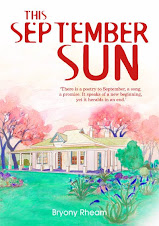
“Music From A Farther Room” by novelist Bryony Rheam is a story filled with utmost colours and sounds and wide spaces. It is a piece of painting or tapestry.
If it were a piece of cloth, this story would flutter in the wind like a kite, landing on its nose until somebody picks it and throws it back into the sky just in order to see it and shout like a toddler! I read it over and over for the sheer serenity that it gives me.
Barbara Mhangami-Ruwende’s “Blood Work” is filled with a delicate tension right from the statement “I don’t like black people” up to the end and you are always on the edge. I hope I am not being prescriptive, but this looks like my favourite story in this book, at least for now.
I then hurry to the winning story itself, “My Father’s Head”. I had read elsewhere that it is a story filled with sad memories. I do not disagree, but I discover that it is full of sweet sadness with more of sweet. Sad but not depressing.
The kind of balance associated with kopjes. On the second and even third reading, I begin to feel that this is about a daughter’s celebration of a father’s not so happy life. The language is syrupy, describing expanses of time and dwelling on tiny-tiny details of life like the paw of a dog and the flutter of a butterfly. I agree with the judges. It was right that this story won. Maybe it is not a story after all. It is life.
Among the shortlisted stories, I also have lots of respect for Billy Kahora’s “The Gorilla’s Apprentice”. Loneliness of people, and of animals too?
A unique and unfulfilled camaraderie between victims from different communities? This story could just have won.
However, in just a few of these stories here, adjectives tend to pile on top of one another; adverbs trip over each other. Colons clog the flow of even short paragraphs, and the plethora of semicolons often cause the reader to throw up his hands in exasperation.
If you are able to forgive the very few overwritten pieces, The Gonjon Pin and Other Stories is something to carry on a journey.


........................


The 2019 Caine Prize anthology, soon to be published in Zimbabwe by amaBooks, celebrates 20 years of the competition with the inclusion of all the winning stories, including those of the Zimbabwean winners Brian Chikwava and NoViolet Bulawayo. It includes an introduction by Ben Okri.

Thursday, March 16, 2017

Why I Read by Barbara Mhangami-Ruwende


Reading is an addiction. I am a slave to words beautifully strung together in eloquent notes. Reading gives me a high akin to the ecstatic experience one might get from a good dance song. As the body winds itself around the rhythm and melody and finds freedom in the deep thud of the base, so my mind gluts itself on the highs and lows, the tension and the tranquility offered up in a deeply satisfying story.

I read because it is from other people’s stories that I learn what works for me and what does not in my own writing. Like cooking, reading fires up and feeds my own creative process. I cook and I read so that I can write. Reading preceded my life as a writer, so I can safely say without reading there would be no writing.

I read because the possibility of somehow being transformed as I immerse myself into the story is so compelling that I cannot pass it up. I read to satisfy a hunger for more and more knowledge. I am intrigued by the complexity of being human and the most satisfying stories for me are those in which the characters, the worlds in which they exist and their interactions are thoroughly explored. I consider myself an active reader: someone who engages with the characters on an emotional as well as intellectual level. I cry with them, feel their anger and frustrations, rejoice in their victories and laugh out loud at the ridiculous.

The reading experience is sometimes a sacred act for me.  This act begins the moment I get a new novel or anthology of short stories. I reverentially inspect the workmanship of the book; the quality of the paper, and the font. It is not uncommon for me to even bring the book to my face and smell it. Then I will delve into the words with the excitement of a child ripping away the wrapping on a gift. Within the first few paragraphs I know what kind of relationship I will have with the book. I know whether it is one that I will sip slowly like a hot cup of tea, prolonging the pleasure or whether I will binge-drink it like a first-year college student, staying up two nights in a row until it is finished.
I read because it allows me some ME time. As a mother of four highly energetic girls, time alone is a rarity. However, if I am reading the girls will usually get their own books and we will read in companionable silence.

Reading is one of life’s exquisite pleasures for me. I have travelled to many worlds, met some interesting people and sat in on their private conversations or even their thoughts. I have sampled various cuisines all through reading. It satisfies the hedonist and voyeur in me    thank goodness  – because who knows what trouble those two character traits might get me into.


Barbara Mhangami-Ruwende is a scholar practitioner in public health, with a focus on minority women’s sexual and reproductive health, and founder/director of the Africa Research Foundation for the Safety of Women. She is originally from Zimbabwe. She holds degrees from University of Glasgow, Scotland, Walden University and attended the Johns Hopkins Bloomberg School of Public Health. She writes opinion editorials on the status of women with a focus on Africa. She consults on policy and has written policy briefs with recommendations on ending violence against women. She has been on panel discussions around the issue of FGM and looking at novel ways to end the harmful cultural practice. Barbara is a vocal activist and advocate on issues to do with gender-based violence, economic justice for women and gender parity in government institutions. 


She is a writer published in the short story anthology Where to Now? published by amaBooks Publishers, Zimbabwe, on Storytime online literary journal, on Her Zimbabwe, feminist website, in the anthology of short stories, Still by Negative Press, London, in the Journal of African Writing, 2014, in the annual short story anthology, African Roar, 2013, the Caine Prize Anthology 2014, the Gonjon Pin and Other Stories by New Internationalist, amaBooks and others, and Guernica Magazine, USA. Her poetry has been published in the anthology Muse for Women, 2013 and African Drum by Diaspora Publishers, 2013. She was a 2014 Hedgebrook Writer in Residence and Caine Prize for African Writing workshop attendee. She is a mentor with the Writivism programme at the Centre for African Excellence (CACE) Foundation and a member of Rotary International.


Wednesday, December 10, 2014

Tendai Huchu's 'The Maestro, The Magistrate & The Mathematician' Published in Zimbabwe

Tendai Huchu's second novel has been published by 'amaBooks, and is available in outlets across Zimbabwe. It will soon be available elsewhere through the African Books Collective.

Set mainly in the Scottish capital Edinburgh, The Maestro, The Magistrate & The Mathematician introduces us to the three Zimbabweans of the title who each struggle to find a place for themselves far from home and the world they knew. The Magistrate tries to create new memories and roots, fusing a wandering exploration of Edinburgh with music. The Maestro, a depressed, quixotic character, sinks out of the real world, preferring novels and fantasy. The Mathematician, a youthful character, follows a carefree, hedonistic lifestyle, until the universes of the three main characters collide.
In this carefully crafted, multi-layered novel, Tendai Huchu, with his inimitable humour, reveals much about the Zimbabwe story as he draws the reader deep into the lives of the three main characters.
The publication of The Maestro, The Magistrate & The Mathematician was supported by the Culture Fund of Zimbabwe Trust.

Tendai’s first novel, The Hairdresser of Harare, was published in Zimbabwe and the UK, and was translated into French, German and Italian. This year, Tendai’s short story, ‘The Intervention’, was shortlisted for the Caine Prize for African Writing. The story was first published in the Indian magazine Open Road Review and is available in Zimbabwe in the Caine Prize anthology The Gonjon Pin and other stories, published by ’amaBooks. The Bulawayo-based publishers are the Zimbabwean publishers of the annual Caine prize anthologies. The collections are published across Africa by other publishers and also in the UK.
Tendai Huchu’s short fiction and nonfiction has been published in magazines all over the world and the quality of his writing has been recognized by his receiving a Hawthornden Fellowship and a Sacatar Fellowship.


'An unusually astute and unflinching writer' The Guardian
 
'Tendai Huchu illustrates universal notions well' The Examiner
 
'Tendai Huchu seems to be the great-grandchild of Jonathan Swift with many voices in his head' Frankfurter Allgemeine Zeitung

Wednesday, November 5, 2014

The Gonjon Pin reviewed

The Gonjon Pin and other stories - Tendai Huchu shortlisted for prestigious Caine Prize award

by Diana Rodrigues

A version of this review appeared in Harare News

Before you turn the first page of ’amaBooks  latest offering to the literary world, The Gonjon Pin and Other Stories, spare a thought for the distinguished panel of judges who will have taken time off from their full-time jobs to read through the 140 short stories from 17 African countries that were entered for the 15th annual Caine Prize. Wasting no opportunity, Zimbabwean journalist and literary judge Percy Zvomuya even perused manuscripts while travelling by commuter buses between Harare and Chitungwiza, much to the interest of fellow passengers. Other judges included South African novelist Gillian Slovo and Nigerian Helon Habila, who won the Caine Prize in 2001, while the Chair of Judges was Jackie Kay MBE, Professor of Creative Writing at Newcastle University.

The Caine Prize for African Writing, now considered to be Africa's leading literary award, provides a great incentive for aspiring writers to have their voices heard. The prize of GBP10,000 is also a considerable attraction, and this year, to celebrate the Prize's 15th anniversary, each shortlisted writer received GBP500.

Every year a selection of talented writers are invited to a Caine Prize workshop, where they can hone their skills, receive inspiration from each other, and benefit from the guidance of dedicated editors and mentors. This year the workshop was held at Leopard Rock Hotel, in the misty Bvumba mountains just outside the border town of Mutare. Zimbabwean writer and activist, Isabella Mtambanadzo, described the recent workshop as 'a gift' and an opportunity to 'stretch creative imaginations and push down literary boundaries.' Stories that emerged from this workshop, as well as entries for the Caine Prize, also appear in The Gonjon Pin and Other Stories.

Although Zimbabwe cannot claim to have a vibrant reading culture, the country has nurtured a phenomenal number of gifted writers. In 2004 Brian Chikwava won the Caine Prize for 'Seventh Street Alchemy', a story about the denizens of the notorious Avenues in Harare; in 2011 NoViolet Bulawayo's 'Hitting Budapest' was the winner. Of the 17 stories appearing in The Gonjon Pin, seven are written by Zimbabwean authors, and among the five stories shortlisted for the prize is 'The Intervention' by Zimbabwean Tendai Huchu. Born in Bindura and educated at Churchill High School, Huchu now lives in Edinburgh and whenever his muse releases him from his desk, he plays chess or browses in bookshops. In 'The Intervention', Huchu highlights the cultural shifts experienced when Shona families leave Zimbabwe and bring up their children in Britain. Shona names like Simba have no significance beyond a reference to the Lion King to children born in England: when Simba attempts to explain that Simbarashe means the Lord's strength, the 'kid just looked at me blankly like I was talking effing Zulu.'

The shortlisted author Efemia Chela, who was born in Zambia to Ghanaian and Zambian parents, grew up in England and studied French and Politics at Rhodes University. Her short story, 'Chicken', describes a farewell party at her parents' house and her move to another city where she 'rented a room in the bum end of town' and 'plotted' her future. Foodies will enjoy the description of the 'culinary event' of her farewell feast. Her parents' 'cross-cultural' marriage inspired a Zambian/Ghanaian fusion of 'slow-cooked beef shin in a giant, dented tin pot' and 'swamp-like spinach stew flooded with palm oil, thickened with egusi, specked with smoked mackerel and quartered hard-boiled eggs.'
Because she hasn't followed her parents' wishes and studied a practical subject such as law, jobs are hard to come by and she works as an unpaid intern. After a one-night stand with a girlfriend who leaves a crumpled R100 note 'on the blue crate I called a nightstand' before leaving, her financial situation becomes desperate. Briefly considering prostitution she eventually resorts to selling her eggs to an ovum bank called FutureChild Inc. Although concerned about the futures of these yet-to-be-born children, there is enough honesty and strength in the narrative for the reader to assume that all things will eventually be well.

'My Father's Head', by Kenyan Okwiri Oduor, was the wining short story. Reminiscent of the magic realism found in Ben Okri's Famished Road, a young woman, mourning the death of her father in an accident with a cane tractor, tries to draw a picture of him, but finds she cannot remember the shape of his head. Eventually his shade appears on the verandah, ' slung over the wicker chair....just like in the old days...'
Unsure how to deal with his presence, she eventually invites him into the house and makes him a cup of tea. As they converse, we realise that Simbi has come to terms with her father's death. Although he says he will leave the house and go north to Eldoret, he will be returning to the spirit world. Oduor stimulates the imagination while continuing to hold the reader in a skilful and satisfying narrative.


Every year the Caine Prize for African Writing brings forth a wealth of talent and an exciting selection of short stories to delight readers everywhere. In the same way that avid readers look forward to the Man Booker Prize, now open to American writers, the public will be pondering 2015 and the inspiration that the Caine Prize brings to African writers.

Saturday, September 13, 2014

Memory Chirere reviews The Gonjon Pin

Published by amaBooks of Zimbabwe and several other publishers, The Gonjon Pin and Other Stories is a collection of short stories by African writers shortlisted for the Caine Prize 2014 and from the Caine Prize annual writing workshop held in Zimbabwe during the same year.

On receiving this anthology just before the Harare launch, I quickly notice that it is a massively solid book. I am intimidated. I am used to reading the usually thin volumes normally associated with short books in Africa. But since these are stories from one of the most prestigious awards in African literature today, I hope that quality will pay for the volume. I do not remember the last time I felt like this about a book.

I do not want to start with the shortlisted stories. I want to make my priorities right. I have been invited to anchor the discussion at the Harare launch. Some of the writers based in Zimbabwe will even give a reading.  I quickly go for the Zimbabwean stories.

Having been raised on the short stories of Luis Honwana, Charles Mungoshi and other writers from the Southern African sub region, I find Lawrence Hoba’s ‘Pam Pam’ a very comfortable landing pad. Due to my background, this is the story that speaks most directly to me. The sensitive child is snooping into the seemingly unusual world of the grownups who are also trying to come to terms with the most ‘weird’ in their midst. Muffled voice. Understatement. Power play. A surprise ending. Hoba’s deft engineering of placing one soft word on top of the other… and the other, almost like bricks, tells me that this was not easy to write.

‘The Sonneteer’ must be the ‘craziest’ story in this book! I am hoping that somebody will agree with me. I love the deluge of sonnets towards the end because it is a clever way of flourishing out after such a deep rendition on the tumultuous Zimbabwean condition. The story ends in successive loud spurts like a gas canister unleashed onto a hapless crowd. I like stories like this one, driven by silences – especially by what characters do not say to one another. We are no longer reading but are also writing the story alongside Philani Nyoni. The language is vigorously god forsaken and its rigors remind me of the late Marechera.

Later, at the launch itself, I was impressed by Isabella Matambanadzo’s views. Her ‘All The Parts of Mi’, just like Abubakar Adam Ibrahim’s and Chinelo Okparanta’s are stories about betrayal, intimacy and courage.  During the discussion, I asked Matambanadzo about what she thinks about the use of the erotica in stories. Her candid answer sent the audience roaring in approval. It took us a while to return to silence.

‘The Intervention’ by Tendai Huchu is part of the short list. It confirms my thoughts about his previous stories, especially the one which I have been struggling to translate from one language to the other. Here is a writer who has an eye for dramatic irony and the incongruence of human character. His stories challenge the reader to work from many points of view.

In ‘The Murder of Ernestine Masilo’ by Violet Masilo, the protagonist dies slowly from the first time you meet her. Her death is not shocking but why she dies is riveting. You are left with a feeling that a flower has withered before anyone could pluck it and place it in a vase. If only there was enough love…Typical character in typical circumstances.

‘Music From A Farther Room’ by novelist Bryony Rheam is a story filled with utmost colours and sounds  and wide spaces. It is a piece of painting or tapestry. If it were a piece of cloth, this story would flutter in the wind like a kite, landing on its nose until somebody picks it and throws it back into the sky just in order to see it and shout like a toddler! I read it over and over for the sheer serenity that it gave me.

Had it come in good time, Barbara Mhangami-Ruwende’s ‘Blood Work’ could have been shortlisted! It is filled with a delicate tension right from the statement ‘I don’t like black people’ up to the end and you are always on the edge.  I hope I am not being prescriptive but this looks like my favourite story in this book. At least for now.

I then hurry to the winning story itself, ‘My Father’s Head’. I had read elsewhere that it is story filled with sad memories. I do not disagree but I discover that it is full of sweet sadness with more of sweet. Sad but not depressing.  The kind of balance associated with kopjes. On the second and even third reading, I begin to feel that this is about a daughter’s celebration of a father’s not so happy life. The language is syrupy, describing expanses of time and dwelling on tiny-tiny details of life like the paw of a dog and the flutter of a butterfly. I agree with the judges. It was right that this story won. Maybe it is not a story after all. It is life.

Among the short listed stories, I also have lots of respect for Billy Kahora’s ‘The Gorilla’s Apprentice’. Loneliness of people, and of animals too? A unique and unfulfilled camaraderie between victims from different communities? This story could just have won.


However, in just a few of these stories here, adjectives tend to pile on top of one another; adverbs trip over each other. Colons clog the flow of even short paragraphs, and the plethora of semicolons often cause the reader to throw up his hands in exasperation. If you are able to forgive the very few overwritten pieces, the Gonjon Book is something to take with you on a journey.


from: http://memorychirere.blogspot.com/2014/09/kwachirere-reads-gonjon-pin-and-other.html