Showing posts with label Ben Okri. Show all posts

Monday, October 7, 2019

'Gonjon Pin' a must-read on a long journey

The Herald, 6 October 2019
https://www.herald.co.zw/gonjon-pin-a-must-read-on-a-long-journey

‘Gonjon Pin’ a must-read on a long journey

-->

by Memory Chirere 

Published by amaBooks of Zimbabwe and several other publishers, The Gonjon Pin and Other Stories is a collection of short stories by African writers shortlisted for the Caine Prize 2014 and from the Caine Prize annual writing workshop held in Vumba, Zimbabwe, during the same year.
On receiving this anthology just before the Harare launch, I quickly noticed that it was a massively solid book.
I was intimidated. I am used to reading the usually thin volumes normally associated with short books in Africa. But since these are stories from one of the most prestigious awards in African literature today, I hoped that quality will pay for the volume.
I do not remember the last time I felt like this about a book. I did not want to start with the shortlisted stories. I wanted to make my priorities right. I had been invited to anchor the discussion at the Harare launch, where some writers would also give readings.
I am attracted to the Zimbabwean stories.
Having been raised on the short stories of Luis Honwana, Charles Mungoshi and other writers from the Southern African sub-region, I find Lawrence Hoba’s “Pam Pam” a very comfortable landing pad. Due to my background, this is the story that speaks most directly to me.
The sensitive child is snooping into the seemingly unusual world of the grown-ups, who are also trying to come to terms with the most “weird” in their midst. Muffled voice. Understatement. Power play. A surprise ending. Hoba’s deft engineering- one soft word on top of the other…and on top of the other, almost like bricks, tells me that this was not easy to write.
“The Sonneteer” must be the “craziest” story in this book! I am hoping that somebody will agree with me. I love the deluge of sonnets towards the end because it is a clever way of flourishing out after such a deep rendition on the tumultuous Zimbabwean condition. The story ends in successive loud spurts like a gas canister unleashed onto a hapless crowd.
I like stories like this one, driven by silences — especially by what characters do not say to one another.
We are no longer reading, but are also writing the story alongside Philani Nyoni. The language is vigorously God forsaken and its rigours remind me of the late Dambudzo Marechera.
Later, at the launch itself, I was impressed by Isabella Matambanadzo’s views.
Her “All The Parts of Mi”, just like Abubakar Adam Ibrahim and Chinelo Okparanta’s stories, is about betrayal, intimacy and courage. During the discussion, I asked Matambanadzo about what she thinks about the use of the erotica in stories. Her candid answer sent the audience roaring in approval. It took us a while to return to silence.
“The Intervention” by Tendai Huchu is part of the Caine 2014 short list. It confirms my thoughts about his previous stories, especially the one which I have been struggling to translate from one language to the other. Here is a writer who has an eye for dramatic irony and the incongruence of human character. His stories challenge the reader to work from many points of view.
In “The Murder of Ernestine Masilo” by Violet Masilo, the protagonist dies slowly from the first time you meet her. Her death is not shocking, but why she dies is riveting.
You are left with a feeling that a flower has withered before anyone could pluck it and place it in a vase. If only there was enough love. Typical character in typical circumstances.
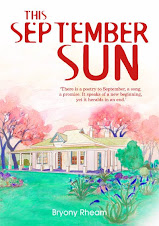
“Music From A Farther Room” by novelist Bryony Rheam is a story filled with utmost colours and sounds and wide spaces. It is a piece of painting or tapestry.
If it were a piece of cloth, this story would flutter in the wind like a kite, landing on its nose until somebody picks it and throws it back into the sky just in order to see it and shout like a toddler! I read it over and over for the sheer serenity that it gives me.
Barbara Mhangami-Ruwende’s “Blood Work” is filled with a delicate tension right from the statement “I don’t like black people” up to the end and you are always on the edge. I hope I am not being prescriptive, but this looks like my favourite story in this book, at least for now.
I then hurry to the winning story itself, “My Father’s Head”. I had read elsewhere that it is a story filled with sad memories. I do not disagree, but I discover that it is full of sweet sadness with more of sweet. Sad but not depressing.
The kind of balance associated with kopjes. On the second and even third reading, I begin to feel that this is about a daughter’s celebration of a father’s not so happy life. The language is syrupy, describing expanses of time and dwelling on tiny-tiny details of life like the paw of a dog and the flutter of a butterfly. I agree with the judges. It was right that this story won. Maybe it is not a story after all. It is life.
Among the shortlisted stories, I also have lots of respect for Billy Kahora’s “The Gorilla’s Apprentice”. Loneliness of people, and of animals too?
A unique and unfulfilled camaraderie between victims from different communities? This story could just have won.
However, in just a few of these stories here, adjectives tend to pile on top of one another; adverbs trip over each other. Colons clog the flow of even short paragraphs, and the plethora of semicolons often cause the reader to throw up his hands in exasperation.
If you are able to forgive the very few overwritten pieces, The Gonjon Pin and Other Stories is something to carry on a journey.


........................


The 2019 Caine Prize anthology, soon to be published in Zimbabwe by amaBooks, celebrates 20 years of the competition with the inclusion of all the winning stories, including those of the Zimbabwean winners Brian Chikwava and NoViolet Bulawayo. It includes an introduction by Ben Okri.

Monday, March 9, 2015

The myth of Marechera has become louder than his literature

from: Sunday Trust, Nigeria
http://www.dailytrust.com.ng/sunday/index.php/the-arts/19736-the-myth-of-marechera-has-become-louder-than-his-literature
Published on Sunday, 01 March 2015 
Written by Abubakar Adam Ibrahim

Zimbabwean author Tendai Huchu, author of the well received The Hairdresser of Harare is at it again. He has a new book out. It is called The Maestro, The Magistrate and The Mathematician and will also be released in Nigeria later this year. He discusses about his novels, writing in Zimbabwe, being shortlisted for the Caine Prize and talks back at Ben Okri. Enjoy!
I have always been curious about how writers are made. You started off studying mining engineering at some point and now you are a podiatrist. How was Tendai Huchu the writer made?
That’s always a tricky question, because there’s no eureka moment. Instead you join up a few arbitrary stars in the constellation which becomes the writer’s origin myth. In my case: well stocked primary school library plus enthusiastic teachers plus high school newspaper, the Churchill Times plus discovering the Russians in my 20s. Then at some point young Huchu went to the book store and couldn’t find the book he wanted to read, so he wrote it.
Interesting. And that book you wrote, your first novel The Hairdresser of Harare was published to critical acclaim in Zimbabwe and elsewhere in the world. How significant do you think it was in opening up discussions about same sex relationships especially in Zimbabwe were it is still considered a taboo subject?
First we have to look at the role and status of literature in Zimbabwean society, and you may agree that it’s not the most popular art form going. A kid on Twitter spouting his views or spray painting graffiti on a wall will probably have a greater reach. I don’t think the book has much significance outside its role as a piece of entertainment for the few middle-class folk who can spare their American dollars on it, while the majority concentrate on the more urgent business of day to day survival.
But the Hairdresser is not just about same sex; it is among many other things a nuanced social commentary on the situation in Zimbabwe as well. Considering how people are afraid to talk because apparently phone messages are being monitored, how important a role do you think literature can play in documenting through fiction the realities of life in Zimbabwe?
Again, I must refer back to the limited role literature plays in the lives of most Zimbabweans. We have only been a literate society for the last 140 years or so; in historical terms that’s the blink of an eye. Literature is an alien art form which must prove its utility for it to claim any significance. As a practitioner of the art form, I’m tempted to play up its importance, but I feel a truer answer, in this regard, would be that literature may continue to play a minor role alongside other art forms and digital media.
Regardless, it is important to document this things and documenting fiction through literature in Zimbabwe’s recent history can be traced to the writer Dambudzo Marechera who still has huge cult-like following and I think a lot of young writers aspire to be the next Marechera, sort of like a writer activist. How big an influence has Marechera been to subsequent generations of Zimbabwean writers?
More people know of Marechera than actually engage with his work. I worry, over time; the myth has become louder than the literature he produced. I view him with a mix of amusement and skepticism. I’m more interested in his unique literary style and technique, his contrarian and multifaceted ideas, than the pornoesque obsession we have with his biography. He is an icon of our new and growing canon who deserves to be read seriously and analysed, but for any young writer who wants to be the next Marechera or ____, I would say find your own voice and be yourself.
So how much influence has Marechera had on you as a writer, assuming your dreadlocks are not inspired by him; and which other writers have influenced you the most?

I think I appreciate him a little more now than I ever could when I was younger feeding off the romantic myth of the mad writer. I paid homage recently by penning a pastiche; The Second Coming of Dambudzo Marechera <http://www.onethrone.com/>. When it comes to my influences, I get a bit confused, because when you read a lot, you can pick and choose from the buffet. For example, Sarah Ladipo-Manyika was my metronome to regulate Vimbai’s voice in The Hairdresser. At other times I might look to Dostoevsky, Jim Thompson, David Mitchell, David Foster Wallace, Mridula Koshy, Tanuj Solanki, I could go on and on here. I pick, choose, discard, pick, choose…

Your second novel, The Maestro, The Magistrate and The Mathematician has just been released in Zimbabwe and will be coming out in Nigeria sometime soon. What more can you tell us about it?

It’s about the lives of three dudes living separate realities in Edinburgh, doing their thing. I don’t think it has a central theme (my work seldom has because real life doesn’t) but the book has stuff about the city, love, music, deception, ideas.
Let’s talk about the Caine Prize now. You were shortlisted last year for your story The Intervention. How did you find the period between the shortlisting and the eventual announcement of the winner?
It was great fun! I enjoyed it immensely and it went by as a blur. Running in Green Park, lots of free food (yeah, I’m Zimbabwean, what’d you expect?), great events, meeting interesting folks interested in interesting stuff. The Caine is a fantastic institution and there should be more like it. Anyone who forks out their cash to support literature gets my vote.
Considering the kind of reception The Intervention received among certain critics, do you think, as Ben Okri seems to think in his recent Guardian article, that there is a certain expectation in the west of what an African writer should be writing about?

I think the contemporary debate about “African Literature” and/or “African Writers” has reached the crescendo of cliché, to which I’m unlikely to add anything useful/meaningful. Name one writer who wakes up in Lagos or Lubumbashi or Lilongwe and goes, “God, I wonder what westerners want me to write?” Of course we poor Africans have no agency; the wicked west has its claws on our literature, on our very powers of imagination. Dude, we’re so, so obsessed with what the west thinks. We go ape when our books are put in the ethnic section, we go insane that our books are read as anthropological documents, we moan when editors italicise text in African languages, we’re in a constant neurotic state about what we produce, how it may be perceived, and what Africa’s image may or may not be. The way I see it, this only masks our deep seated anxieties that we are of little relevance on the continent itself, that it is impossible to actually earn a living from sales on the continent, that our most prominent writers are the ones that sell lots to wicked westerners, ergo, we conclude that they’re pandering to western expectations. I think it is remarkable in and of itself that western consumers actually pay their money to read stuff from outside their borders and engage with it. Maybe we ought to start saying African footballers playing abroad only play for western audiences too.

I think Ben Okri is both highly intelligent and a supremely talented writer, but he could do with reading work by from independent publishers on the continent like Modjaji, amaBooks, Laanga, Kachifo, Kwani? et al  Better still, visit the African Books Collective, before making sweeping pronouncements. I won’t go on because Sofia Samatar <http://www.theguardian.com/books/booksblog/2014/dec/30/african-writers-instructions-ben-okri> already gave an eloquent rebuttal and dropped the mic. Mukoma Wa Ngugi has said before, we’re not tourism officials. As for me, I write whatever the f*** I want, whatever matters to me.
Finally, Tendai, you have developed a style of using humour to address serious issues as we have seen in your two novels. How did you develop this style?
At least from an existential perspective, one can’t help but get the feeling that humanity is the butt of some grand cosmic joke. Humour is one of those things, either you have it or you don’t - either you get it or you don’t, it can’t be forced. I never quite think that I am addressing serious things; it’s just that the world has these interesting dichotomies, like you’re having a pint with your mates and a plane crashes halfway across the world. Those two events co-exist in frightening and disorienting ways. I’m interested in how we live our ordinary lives under the umbrella of these grand events, how we fall in love even as we are aware of the inevitability of our own deaths, how we manage to be engaged and apathetic simultaneously as Schrodinger’s humans.


The Maestro, The Magistrate and The Mathematician has been published in Zimbabwe by 'amaBooks.