Showing posts with label Barbara Mhangami-Ruwende. Show all posts

Monday, October 7, 2019

'Gonjon Pin' a must-read on a long journey

The Herald, 6 October 2019
https://www.herald.co.zw/gonjon-pin-a-must-read-on-a-long-journey

‘Gonjon Pin’ a must-read on a long journey

-->

by Memory Chirere 

Published by amaBooks of Zimbabwe and several other publishers, The Gonjon Pin and Other Stories is a collection of short stories by African writers shortlisted for the Caine Prize 2014 and from the Caine Prize annual writing workshop held in Vumba, Zimbabwe, during the same year.
On receiving this anthology just before the Harare launch, I quickly noticed that it was a massively solid book.
I was intimidated. I am used to reading the usually thin volumes normally associated with short books in Africa. But since these are stories from one of the most prestigious awards in African literature today, I hoped that quality will pay for the volume.
I do not remember the last time I felt like this about a book. I did not want to start with the shortlisted stories. I wanted to make my priorities right. I had been invited to anchor the discussion at the Harare launch, where some writers would also give readings.
I am attracted to the Zimbabwean stories.
Having been raised on the short stories of Luis Honwana, Charles Mungoshi and other writers from the Southern African sub-region, I find Lawrence Hoba’s “Pam Pam” a very comfortable landing pad. Due to my background, this is the story that speaks most directly to me.
The sensitive child is snooping into the seemingly unusual world of the grown-ups, who are also trying to come to terms with the most “weird” in their midst. Muffled voice. Understatement. Power play. A surprise ending. Hoba’s deft engineering- one soft word on top of the other…and on top of the other, almost like bricks, tells me that this was not easy to write.
“The Sonneteer” must be the “craziest” story in this book! I am hoping that somebody will agree with me. I love the deluge of sonnets towards the end because it is a clever way of flourishing out after such a deep rendition on the tumultuous Zimbabwean condition. The story ends in successive loud spurts like a gas canister unleashed onto a hapless crowd.
I like stories like this one, driven by silences — especially by what characters do not say to one another.
We are no longer reading, but are also writing the story alongside Philani Nyoni. The language is vigorously God forsaken and its rigours remind me of the late Dambudzo Marechera.
Later, at the launch itself, I was impressed by Isabella Matambanadzo’s views.
Her “All The Parts of Mi”, just like Abubakar Adam Ibrahim and Chinelo Okparanta’s stories, is about betrayal, intimacy and courage. During the discussion, I asked Matambanadzo about what she thinks about the use of the erotica in stories. Her candid answer sent the audience roaring in approval. It took us a while to return to silence.
“The Intervention” by Tendai Huchu is part of the Caine 2014 short list. It confirms my thoughts about his previous stories, especially the one which I have been struggling to translate from one language to the other. Here is a writer who has an eye for dramatic irony and the incongruence of human character. His stories challenge the reader to work from many points of view.
In “The Murder of Ernestine Masilo” by Violet Masilo, the protagonist dies slowly from the first time you meet her. Her death is not shocking, but why she dies is riveting.
You are left with a feeling that a flower has withered before anyone could pluck it and place it in a vase. If only there was enough love. Typical character in typical circumstances.
“Music From A Farther Room” by novelist Bryony Rheam is a story filled with utmost colours and sounds and wide spaces. It is a piece of painting or tapestry.
If it were a piece of cloth, this story would flutter in the wind like a kite, landing on its nose until somebody picks it and throws it back into the sky just in order to see it and shout like a toddler! I read it over and over for the sheer serenity that it gives me.
Barbara Mhangami-Ruwende’s “Blood Work” is filled with a delicate tension right from the statement “I don’t like black people” up to the end and you are always on the edge. I hope I am not being prescriptive, but this looks like my favourite story in this book, at least for now.
I then hurry to the winning story itself, “My Father’s Head”. I had read elsewhere that it is a story filled with sad memories. I do not disagree, but I discover that it is full of sweet sadness with more of sweet. Sad but not depressing.
The kind of balance associated with kopjes. On the second and even third reading, I begin to feel that this is about a daughter’s celebration of a father’s not so happy life. The language is syrupy, describing expanses of time and dwelling on tiny-tiny details of life like the paw of a dog and the flutter of a butterfly. I agree with the judges. It was right that this story won. Maybe it is not a story after all. It is life.
Among the shortlisted stories, I also have lots of respect for Billy Kahora’s “The Gorilla’s Apprentice”. Loneliness of people, and of animals too?
A unique and unfulfilled camaraderie between victims from different communities? This story could just have won.
However, in just a few of these stories here, adjectives tend to pile on top of one another; adverbs trip over each other. Colons clog the flow of even short paragraphs, and the plethora of semicolons often cause the reader to throw up his hands in exasperation.
If you are able to forgive the very few overwritten pieces, The Gonjon Pin and Other Stories is something to carry on a journey.


........................


The 2019 Caine Prize anthology, soon to be published in Zimbabwe by amaBooks, celebrates 20 years of the competition with the inclusion of all the winning stories, including those of the Zimbabwean winners Brian Chikwava and NoViolet Bulawayo. It includes an introduction by Ben Okri.

Thursday, March 16, 2017

Why I Read by Barbara Mhangami-Ruwende


Reading is an addiction. I am a slave to words beautifully strung together in eloquent notes. Reading gives me a high akin to the ecstatic experience one might get from a good dance song. As the body winds itself around the rhythm and melody and finds freedom in the deep thud of the base, so my mind gluts itself on the highs and lows, the tension and the tranquility offered up in a deeply satisfying story.

I read because it is from other people’s stories that I learn what works for me and what does not in my own writing. Like cooking, reading fires up and feeds my own creative process. I cook and I read so that I can write. Reading preceded my life as a writer, so I can safely say without reading there would be no writing.

I read because the possibility of somehow being transformed as I immerse myself into the story is so compelling that I cannot pass it up. I read to satisfy a hunger for more and more knowledge. I am intrigued by the complexity of being human and the most satisfying stories for me are those in which the characters, the worlds in which they exist and their interactions are thoroughly explored. I consider myself an active reader: someone who engages with the characters on an emotional as well as intellectual level. I cry with them, feel their anger and frustrations, rejoice in their victories and laugh out loud at the ridiculous.

The reading experience is sometimes a sacred act for me.  This act begins the moment I get a new novel or anthology of short stories. I reverentially inspect the workmanship of the book; the quality of the paper, and the font. It is not uncommon for me to even bring the book to my face and smell it. Then I will delve into the words with the excitement of a child ripping away the wrapping on a gift. Within the first few paragraphs I know what kind of relationship I will have with the book. I know whether it is one that I will sip slowly like a hot cup of tea, prolonging the pleasure or whether I will binge-drink it like a first-year college student, staying up two nights in a row until it is finished.
I read because it allows me some ME time. As a mother of four highly energetic girls, time alone is a rarity. However, if I am reading the girls will usually get their own books and we will read in companionable silence.

Reading is one of life’s exquisite pleasures for me. I have travelled to many worlds, met some interesting people and sat in on their private conversations or even their thoughts. I have sampled various cuisines all through reading. It satisfies the hedonist and voyeur in me    thank goodness  – because who knows what trouble those two character traits might get me into.


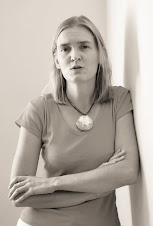
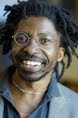
Barbara Mhangami-Ruwende is a scholar practitioner in public health, with a focus on minority women’s sexual and reproductive health, and founder/director of the Africa Research Foundation for the Safety of Women. She is originally from Zimbabwe. She holds degrees from University of Glasgow, Scotland, Walden University and attended the Johns Hopkins Bloomberg School of Public Health. She writes opinion editorials on the status of women with a focus on Africa. She consults on policy and has written policy briefs with recommendations on ending violence against women. She has been on panel discussions around the issue of FGM and looking at novel ways to end the harmful cultural practice. Barbara is a vocal activist and advocate on issues to do with gender-based violence, economic justice for women and gender parity in government institutions. 


She is a writer published in the short story anthology Where to Now? published by amaBooks Publishers, Zimbabwe, on Storytime online literary journal, on Her Zimbabwe, feminist website, in the anthology of short stories, Still by Negative Press, London, in the Journal of African Writing, 2014, in the annual short story anthology, African Roar, 2013, the Caine Prize Anthology 2014, the Gonjon Pin and Other Stories by New Internationalist, amaBooks and others, and Guernica Magazine, USA. Her poetry has been published in the anthology Muse for Women, 2013 and African Drum by Diaspora Publishers, 2013. She was a 2014 Hedgebrook Writer in Residence and Caine Prize for African Writing workshop attendee. She is a mentor with the Writivism programme at the Centre for African Excellence (CACE) Foundation and a member of Rotary International.


Wednesday, March 5, 2014

Caine Prize returns to Zimbabwe in its fifteenth year


The Caine Prize for African Writing will return to Zimbabwe in its fifteenth year to hold its annual workshop this month. The inaugural Caine Prize was awarded to Leila Aboulela in 2000, at the Zimbabwe International Book Fair in Harare.

Thirteen writers from seven African countries will convene at the Leopard Rock Hotel for twelve days (21 March - 2 April) to write, read and discuss work in progress and to learn from two experienced writers, Nii Parkes and Henrietta Rose-Innes who will act as tutors and animateurs.

This year’s participants include four 2013 shortlisted writers; Abubakar Ibrahim (Nigeria), Elnathan John (Nigeria), Chinelo Okparanta (Nigeria) and Pede Hollist (Sierra Leone) and nine other promising writers; Martin Egblewogbe (Ghana), Abdul Adan (Somalia), Clifton Gachagua (Kenya), Nkiacha Atemnkeng (Cameroon) and Barbara Mhangami-Ruwende, Philani Nyoni, Bella Matambanadzo, Lawrence Hoba and Bryony Rheam from Zimbabwe.

During the workshop, the writers will be expected to write a short story for inclusion in the 2014 Caine Prize anthology, which will be published by New Internationalist on 1 July 2014 and subsequently by seven co-publishers in Africa. Each year the stories conceived at the workshops are automatically entered for the following year’s Prize.

The primary supporter of this year's workshop is the Beit Trust. Supplementary funding is provided by the Oppenheimer Memorial Trust, Exotix, Cambria and the British Council.

Dr Lizzy Attree commented on the significance of holding the workshop in Zimbabwe this year: “The Caine Prize is delighted to be back in Zimbabwe for its twelfth workshop. The success of NoViolet Bulawayo has inspired so many writers and we are keen to nurture talent both at the workshop and by visiting local schools.”

The programme will include a visit to local senior schools, giving students the opportunity to interact with the writers.

The workshop will also incorporate two public events in Harare; the first in collaboration with the British Council will be held at Harare City Library on 1st April. It will include a discussion about contemporary African literature after which there will be opportunities to meet the writers and purchase signed copies of the anthology from AmaBooks, over a complimentary glass of wine.

The second event, sponsored by Meikles Mega Market and Meikles Foundation, will be held the following day at 10am at Tambira hub in the new Meikles Mega Market. The open forum entitled “Caine Prize Writers in the Supermarket” will be chaired by Tinashe Mushakavanhu, and is free for the public to attend. The writers will also be treated to a surprise tour of Meikles Hotel.

Monday, June 3, 2013

amaBooks to translate book into isiNdebele


The Chronicle, 27 May 2013


AMABOOKS, the publishers of the story anthology, Where to Now?: Short Stories from Zimbabwe, are working on translating the book from the English language to isiNdebele to help promote the language.
The book would be titled Siqondephi Manje, Indatshana ZaseZimbabwe.
It is a collection of 16 short stories from Zimbabwean writers, the majority of them from Bulawavo.

In an interview, Brian Jones from Amabooks said they decided to translate the book into isiNdebele for the stories to reach a wider audience as well as promoting the language.
"The majority of the stories in the collection were written by Bulawayo writers in and out of the country and we realised that sometimes they think in isiNdebele and some of the words lose meaning in the process of translation into English.
"The stories often read much better in isiNdebele because it's the writers' mother tongue and some of the humour works better in isiNdebele," said Jones.
He said South African based writer Dr Thabisani Ndlovu was translating the book.
"So far, three stories have been translated by Dr Ndlovu, who is based at Wits University, and we are expecting that he would be done by the first of July.
"Zimbabwe has good writers and we want the stories they tell to be available locally as well as reach out to a much wider audience," he said.

The 150‑page anthology is made up of stories that deal with various social issues, among them life in modern day Zimbabwe, traditional values, modern life and the particularly changing role of women in today's society.

Where to Now is the fifth short story collection from Amabooks publishers.
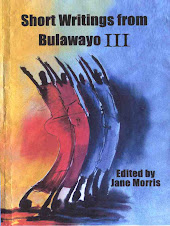
The other books in the series are Short Writings from Bulawayo I, II and III, and Long Time Coming: Short Writings from Zimbabwe.
"The first books were mainly made up of pieces from Bulawayo writers because we were the only publishers in English here at that time, but we have since attracted Zimbabwean writers from all over the globe so we felt we should stop calling the books 'from Bulawayo’," said Jones.

Barbara Mhangami Ruwende's Christina the Colourful has been translated as Itshatshazi ElinguChristina and Mzana Mthimkhulu's I am an African am I? as NgingumAfrica Akunjalo?
Some of the popular short story writers are Raisedon Baya, Caine Prize winner NoViolet Bulawayo, Christopher Mlalazi, John Eppel and Mzana Mthimkhulu, among others.
Jones said they are expecting the book to be available on the market in September.
The project is funded by the Open Society Initiative of Southern Africa.


Auxilia Katongomara, Entertainment Correspondent

Monday, April 9, 2012


Four of the five shortlisted writers for the Literature Award at the 2012 Zimbabwe Achievers Awards had stories published in the 'amaBooks collection Where to Now? Short Stories from Zimbabwe.
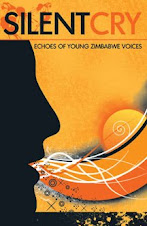
Novuyo Rosa Tshuma was first published by 'amaBooks in Echoes of Young Voices, and subsequently in Silent Cry: Echoes of Young Zimbabwe Voices.
Mzana Mthimkhulu's short stories have appeared in each of the earlier 'amaBooks short writings collections: Short Writings from Bulawayo I, II and III, and Long Time Coming: Short Writings from Zimbabwe.
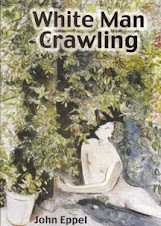
John Eppel's publications with 'amaBooks include the novels The Curse of the Ripe Tomato, The Holy Innocents and Hatchings; the short writings collections The Caruso of Colleen Bawn and White Man Crawling; poems in Intwasa Poetry; and poems and short stories in each of the books in the Short Writings series. His latest publication is the collection of short stories and poems with the late Julius Chingono, Together.
Barbara Mhangami-Ruwende's first published story is that in Where to Now? Short Stories from Zimbabwe.

The fifth shortlisted writer for the award is Lloyd Matowe. The winner will be announced at the Zimbabwe Achievers Awards ceremony on 28 April.

Wednesday, February 15, 2012

Barbara Mhangami-Ruwende interviewed by Pamela Stitch


Barbara Mhangami-Ruwende, whose short story Christina the Colourful was published in Where to Now? Short Stories from Zimbabwe, is interviewed by Pamela Stitch on:

http://www.pamelastitch.com/books/381-talking-diasporan-stories-wtih-barbara-mhangami-ruwende.html

This month, we found ourselves within the realm of short story narratives and who best to speak with but short story author - Barbara Mhangami-Ruwende who is Zimbabwean but based in the United States. It was a fun interview, as we got to talk about life, stories, books and much more.

Why don’t we have your books here in the United States? How did you start writing?

It is because right now I am working on a collection of short stories and I am also working on a novel. My first born is 10, I have an 8 year old and I have twins. So, I am trying to manage my home and my writing life. I started writing at the end of 2010, it was actually Sarah Ladipo Manyika that was actually very instrumental in my starting to write. Sarah has been telling me that I need to write. For some reason in 2010,I actually started. It was in the midst of the craziness that I started putting down my first piece. When I gave it to Sarah, she said, oh my goodness, I can’t believe that you are not writing. Since, I started writing, I have been published in several anthologies. You can find some of my work in Where to Now? Short Stories from Zimbabwe, published by ‘amaBooks and an online journal called Story Time. I have two others which are due out soon in two separate anthologies - one called Liquid Gold and I have another story coming out that was commissioned by a photographer in the UK. I am currently working on a collection of short stories.

What will these short stories be about - will it be about life in the UK, Diaspora or Africa?

I mixmatch of all those things but my life is rooted in the experiences that I’ve had in Zimbabwe, UK, it is an eclectic mix of stories, urban Zimbabwe, rural Zimbabwe and there are some diaspora pieces featuring Nigerian films. I have Gambians, Sierria Leonians, people from all over the continent. So I feel I am more African than Zimbabwean.

I know that you went home to Zimbabwe recently, how was it?

From my personal perspective, there is no place that I’d rather be than in Zimbabwe. What I experienced back home was a greater appreciation of my people than I ever had. Zimbabweans are very hardworking people. Wherever I visited, be it in urban areas or in the rural areas -everyone was emphasizing what to do to make a living. People do not want handouts, they want to work for their money. That has stuck to me and in my own spirit there was a shift from why anyone will want to go to this place to a why not. My love for Zimbabwe is so big.

What was your first story?

The first story I wrote when I seriously started writing was called Christina the Colourful. It was about the life of a young girl. She's the misfit. Her mom and her father had four girls prior to her. In having her, they were attempting to have a boy. She knows immediately that she is unwanted. In this story, she talks a lot in her mind. She tells the story of her favorite aunt who is her father's sister and also the black sheep of the family. She adores her aunt and is fascinated by her. So they try to arrange a marriage for this aunt to tame her and the aunt does the most unheard of thing which makes it impossible for her to come back to the village. You have to get the book to find out what happens.

Your stories seem to be women forward ...

Another thing that I am is a hard core feminist. Always have been. My feminism is an organic type. It is not one bought or adopted from an ideology. I have gotten a lot of criticism from people who tell me that it is adopted. My feminism comes from the fact that I have always refused to be treated less because I am a girl. That has always infuriated me. I am known in the village as someone who could go into a rage if I am treated differently because of my gender. For a long time, I refused to wear skirts and dresses. I don’t know anyone in my family that is like that - in my family I am known for being this way. Another reason that I say that it is an organic kind of feminism is because the women I grew up around were everything that I didn’t want to become. A lot of my uncle’s had second, third wives and a small house. I remember that I saw women that were mere shadows. I remember that I wanted to be a nun because they seemed to be the only ones that seemed to have some form of autonomy. To me marriage meant being caged in, loss of freedom, abuse, and I remember that I didn’t want that.

So what changed:


Nothing changed but as I walked my walk, someone came that loved me the way I was and so there was nothing to change. He has no issues with me. We have been married for 14 years, so that validated who I am. That being pro women and being militant about being pro women doesn’t mean that I can’t be married. You know being a feminist doesn’t necessitate not being married, it is about choice, it is about being able to choose and live with your choices and exercise your choices in freedom. That for me is feminism. 


What will your novel be about?

The novel is set in post colonial Zimbabwe, a middle class family. Not one of those typical African stories. It seems to be out there that the acceptable literature for African writers is the literature of poverty, war and women being abused. So it’s success might be questioned in terms of literary success and readership. I believe I am writing another African story that doesn’t get more play, because a lot of the stories out there are about war. It is really about family life post independence.


What African author inspires your writing?

My mentor - Sarah Ladipo Manyika. She is of grace, beauty. Tsitsi Dangarembga and her Nervous Conditions, Yvonne Vera, Ama Atta Aidoo, Buchi Emecheta. For me those are women that inspire me. They wrote stories that to this day, I can go back and reread. On current authors, Chimamanda Ngozi Adichie, when I read her writing, I seriously need to lie down, get comfortable, get something good to eat and then read. That’s my ultimate my pleasure. Another author is Lola Shoneyin. Her book blew me away but when I picked up her poetry ahhh, this woman has haunting poetry. Other people that I have mentioned, I read, Helon Habila - Oil on Water, and his writing is the kind that relaxes you, it is not verbose. His descriptions are tight, so succinct and his story moves at a pace that I liked. His is a nice pace. You envision it and you go to that place that he is talking about. Tricia Nwaubani- I Did Not Come To You By Chance. Chris Abani, On Becoming Abigail which is a novel.


Writers in Zimbabwe?


I have to give kudos. There are two publishers that are doing a lot to push African writers. One is ‘amaBooks, another is Weaver Press. I think that they do an amazing job in trying to put together an anthology of Zimbabwean writers and they encourage young Zimbabwean writers in Zimbabwe. I really think that’s against all odds, they are trying to keep literature alive and the love of reading. I think writers, publishers, parents in particular have to encourage people to have a love of reading. My prayer is that the written word doesn’t die out. If you have a society of non reading people, it can only put the society at a disadvantage.


What challenges did you face?


Time. You know being a mother of small children, you do not have much of a support system here. I might not write everyday but in my mind I write. Working in my mind is what I have learnt to do as I watch my kids, cook, you know that I have learnt to be super efficient with my time. I walk around with a notebook. Everything is working out in support of my writing. My husband is completely supportive of it. My children love it and they want to be the main character of my writing.

What word of encouragement will you give people who want to be like you?

You know I have been asked this question so many times. If you are passionate about this and you want to write. Get a piece of paper, get a pen and start writing. Another thing, that I will advise is to read other people's works. Read other writers. You are already half way there if you are a reader. Know your voice. Everyone has a story to tell and it is about finding your unique voice to tell it. You will be surprised that if you put those words to paper, you hear the voice that’s you. Submit your work. For the longest time I would write and keep stuff, there is nothing in this world as good as having someone out there validate your writing. Don’t be scared of rejection. Don’t give up.