Published by amaBooks of
Zimbabwe and several other publishers, The Gonjon Pin and Other Stories is a collection of short stories
by African writers shortlisted for the Caine Prize 2014 and from the Caine
Prize annual writing workshop held in Zimbabwe during the same year.
Published by amaBooks of
Zimbabwe and several other publishers, The Gonjon Pin and Other Stories is a collection of short stories
by African writers shortlisted for the Caine Prize 2014 and from the Caine
Prize annual writing workshop held in Zimbabwe during the same year.
On receiving this
anthology just before the Harare launch, I quickly notice that it is a
massively solid book. I am intimidated. I am used to reading the usually thin
volumes normally associated with short books in Africa. But since these are
stories from one of the most prestigious awards in African literature today, I
hope that quality will pay for the volume. I do not remember the last time I
felt like this about a book.
I do not want to start
with the shortlisted stories. I want to make my priorities right. I have been
invited to anchor the discussion at the Harare launch. Some of the writers
based in Zimbabwe will even give a reading. I quickly go for the
Zimbabwean stories.
Having been raised on the
short stories of Luis Honwana, Charles Mungoshi and other writers from the
Southern African sub region, I find Lawrence Hoba’s ‘Pam Pam’ a very
comfortable landing pad. Due to my background, this is the story that speaks
most directly to me. The sensitive child is snooping into the seemingly unusual
world of the grownups who are also trying to come to terms with the most
‘weird’ in their midst. Muffled voice. Understatement. Power play. A surprise ending.
Hoba’s deft engineering of placing one soft word on top of the other… and the
other, almost like bricks, tells me that this was not easy to write.
‘The Sonneteer’ must be
the ‘craziest’ story in this book! I am hoping that somebody will agree with
me. I love the deluge of sonnets towards the end because it is a clever way of
flourishing out after such a deep rendition on the tumultuous Zimbabwean
condition. The story ends in successive loud spurts like a gas canister
unleashed onto a hapless crowd. I like stories like this one, driven by
silences – especially by what characters do not say to one another. We are no
longer reading but are also writing the story alongside Philani Nyoni. The
language is vigorously god forsaken and its rigors remind me of the late
Marechera.
Later, at the launch
itself, I was impressed by Isabella Matambanadzo’s views. Her ‘All The Parts of
Mi’, just like Abubakar Adam Ibrahim’s and Chinelo Okparanta’s are stories
about betrayal, intimacy and courage. During the discussion, I asked
Matambanadzo about what she thinks about the use of the erotica in stories. Her
candid answer sent the audience roaring in approval. It took us a while to
return to silence.
‘The Intervention’ by
Tendai Huchu is part of the short list. It confirms my thoughts about his
previous stories, especially the one which I have been struggling to translate
from one language to the other. Here is a writer who has an eye for dramatic
irony and the incongruence of human character. His stories challenge the reader
to work from many points of view.
In ‘The Murder of
Ernestine Masilo’ by Violet Masilo, the protagonist dies slowly from the first
time you meet her. Her death is not shocking but why she dies is riveting. You
are left with a feeling that a flower has withered before anyone could pluck it
and place it in a vase. If only there was enough love…Typical character in
typical circumstances.
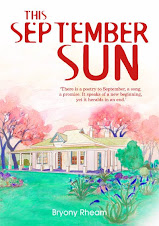
‘Music From A Farther
Room’ by novelist Bryony Rheam is a story filled with utmost colours and
sounds and wide spaces. It is a piece of painting or tapestry. If it
were a piece of cloth, this story would flutter in the wind like a kite,
landing on its nose until somebody picks it and throws it back into the sky
just in order to see it and shout like a toddler! I read it over and over for the
sheer serenity that it gave me.
Had it come in good time,
Barbara Mhangami-Ruwende’s ‘Blood Work’ could have been shortlisted! It is
filled with a delicate tension right from the statement ‘I don’t like black
people’ up to the end and you are always on the edge. I hope I am
not being prescriptive but this looks like my favourite story in this book. At least
for now.
I then hurry to the
winning story itself, ‘My Father’s Head’. I had read elsewhere that it is story
filled with sad memories. I do not disagree but I discover that it is full of
sweet sadness with more of sweet. Sad but not depressing. The kind
of balance associated with kopjes. On the second and even third reading, I
begin to feel that this is about a daughter’s celebration of a father’s not so
happy life. The language is syrupy, describing expanses of time and dwelling on
tiny-tiny details of life like the paw of a dog and the flutter of a butterfly.
I agree with the judges. It was right that this story won. Maybe it is not a
story after all. It is life.
Among the short listed
stories, I also have lots of respect for Billy Kahora’s ‘The Gorilla’s
Apprentice’. Loneliness of people, and of animals too? A unique and unfulfilled
camaraderie between victims from different communities? This story could just
have won.
However,
in just a few of these stories here, adjectives tend to pile on top of one
another; adverbs trip over each other. Colons clog the flow of even short
paragraphs, and the plethora of semicolons often cause the reader to throw up
his hands in exasperation. If you are able to forgive the very few overwritten
pieces, the Gonjon Book is something to take with you on a journey.
from: http://memorychirere.blogspot.com/2014/09/kwachirere-reads-gonjon-pin-and-other.html


.jpg)







.jpg)