Conversations with Writers
[Interview] Novuyo Rosa Tshuma
http://conversationswithwriters.blogspot.com/2011/09/interview-novuyo-rosa-tshuma.html
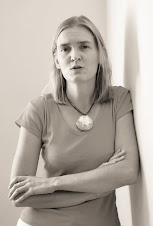
Novuyo Rosa Tshuma is a Zimbabwean writer currently studying at the University of Witwatersrand, South Africa.
In 2009, she won the Intwasa Short Story Competition.
Her short stories have been featured in anthologies that include The Bed Book of Short Stories (Modjaji Books, 2010); A Life In Full and Other Stories: Caine Prize Anthology 2010 (New Internationalist, 2010), African Roar: an Eclectic Anthology of African Authors (StoryTime, 2010) and Where to Now? Short Stories from Zimbabwe (amaBooks, 2011).
In this interview, Novuyo Tshuma talks about her concerns as a writer:
Which authors influenced you most?
The novels of Orhan Pamuk, Chimamanda Ngozi Adichie, Arundhati Roy, Sembene Ousmane, Naguib Mahfouz, Tsitsi Dangarembga, James Baldwin.
A particular piece of short writing which comes to mind is Yvonne Adhiambo Owuor’s "Kin la Belle: In the clear light of Song and Silence" which was featured in the Pilgrimages Project and was about her pilgrimage to Kinsasha. I love descriptive writing, writing that engages one’s surroundings, and in this piece a stark, out-of-the-box creativity merges with the writer’s experiences to create an intensely sensual reading. Absolutely beautiful.
I read an online excerpt of Yvonne Vera’s Butterfly Burning where landscape merges with the emotional state of the protagonist in an intense poetic prose that is just awesome.
Brian Chikwava’s "Seventh Street Alchemy" is a read filled with memorable scenes painted with linguistic prowess.
The short fiction is endless.
Why did these particular writers have this influence? For me, they each offered something new in their readings, something beautifully executed, something I had not previously encountered in my readings.
Arundhati Roy’s gymnastic linguistics in The God of Small Things showed what was possible with language in literature, how words could be bended, stretched, rearranged and created to form a rich literary mosaic. Naguib Mahfouz’s Palace Walk offered intense characterization, as did Tsitsi Dangarembga’s Nervous Conditions.
In Palace Walk I found myself in an intricate love-hate relationship with many of the characters, the father-figure who was the true depiction of chauvinism, his wife Amina who had an irritating blandness, and their son Yasin who embarked on the most mischievous escapades. I formed a complicated bond with these characters, irked often by their complexities, disappointed by their short comings, in love with their 'humanness'.
Nyasha in Tsitsi Dangarembga’s Nervous Conditions is a beautifully complex character with acute perceptions and an original flair.
Orhan Pamuk’s novels offer philosophical characters set in plots that give a great view of the complexities which have plagued Turkey at different points of its history; a lot of tugging between fundamentalism and secularism/westernization.
I became fascinated with Nigerian dishes after tasting them in Chimamanda Ngozi Adichie’s Purple Hibiscus.
There is always something new, something refreshing offered in the memorable reads.
How have your personal experiences influenced your writing in any way?
Hmmm ... I have said before that I like to keep it 'purely fiction'. However, pieces of oneself, one’s experiences are invariably interweaved in one’s writings.
I like to explore characters who may be removed from my direct self, but perhaps whose bits of experiences here and there, are my own. Taking, for instance, my story "Crossroads" in the Where To Now anthology ... it is a fictionalized piece and yet the descriptions at the border are details of characters I have observed, conversations I have overheard and so forth.
It helps in a piece of work to be familiar with setting and to be able to capture the atmosphere of a place, its edge or its bluntness. So, for me, personal experiences function well for setting and atmosphere.
I like to experiment with characters who are not directly linked to me as a writer, characters who I may feel do not exhibit too much of myself. I do not like too much self-examination in a piece of fiction; one becomes self-conscious as a writer, and rather apprehensive of this idea of self-depiction.
People may, nevertheless, link a character to the writer. I have had people read a story and then come to me, agape, and say, "You really did that?!" The excitement lies in stepping into the shoes of a fictionalized character and capturing such a character as though it were you, which then becomes, on some level, a humanizing of the self.
What are your main concerns as a writer?
The biggest, I would say, is the apprehension about one’s writing, capturing a story as best you can. One is ever aware of how much one is yet to learn, how much one does not know. These apprehensions are most easily tackled by ever writing, ever reading, ever exploring.
The biggest challenge is finding a home for your work. One gets more rejections for one’s work than acceptances. Some publications don’t reply. So one needs a persevering spirit.
I remember when I first started sending out my work. I was very bold and persistent in my letters. Got many rejections. I always kept sending.
Another challenge is fighting inertia ... it is important to ever grow in your writing, especially as a young writer. It is crucial to step out of one’s comfort zone and experiment, in order to discover the things one may be able to do in and with one’s writing. Some experiments fail. But that is part of the learning process, isn’t it? To discover what works and what doesn’t. Writing is a constant state of patience.
Do you write everyday?
Not every single day. I would say four to five days a week for several weeks, and then reading takes over for the next week or two and so forth. Some days are busier than others.
The trick, I find, is to allocate writing its space in your life, and to ensure that others respect that space. I usually write early morning, as that is when I feel sharpest.
My sessions usually begin by reading the previous session’s work. This helps me get into the mode of my work. Some editing usually takes place during this time. After reading, one simply delves into the writing. Many times, particularly with first drafts, one feels that one is writing a lot of rubbish – it is as though one is feeling for a thread in the dark, searching for the vein of a story.
Many first drafts end in despair! I find I have many first drafts of different scenes, different stories, and usually the stories that I finish at a point in time are alterations from first drafts written a while ago, which when perused with a fresh eye, offer a gem or two worth pursuing. And so that is how it goes.
If it is during a morning where I have to attend lectures, then time constraints end my sessions. You find that when you have had a good writing session that must end before you want it to, the story stays in your mind, and you ponder sentences and scenes as you go through your day. When you feel you have a particularly good hunch, you are impatient to get back to your writing.
If it is on a day when I do not have lectures, my sessions can carry through the day, which then becomes an intermittent act of writing and revising, and a lot of editing. This is on a good day, when one has tapped into the vein of a story.
Usually such sessions end because one is tired, and feels satisfied with the work one has managed to do on that particular day. And success on any given day is not judged by quantity but by quality – writing is a constant state of patience (unless one is working with a deadline and needs to balance number of words and the quality of the wording.
Time constraints sometimes pull the writer out of a surreal state where all writing can take place forever! So one may write three thousand words, and only a thousand of that three may feature in the final story.
Some sessions end in despair, when one is struggling with a scene, a story, a character. Usually when this happens I just grab a book and read – it helps to calm the mind.
My sessions usually begin and end in solitary space. I deliberately live alone, as I find the space invaluable for the writing. Growing up, I always used to crave the idea of a space to write, as there was always a lot going on around, interruptions and the like. The act of writing is ultimately an act of solitude. So it is good to have a space where you can just wake up and begin writing, and not have to entertain disruptions.
When did you start writing?
I began writing stories for fun when I was nine, thereabouts.
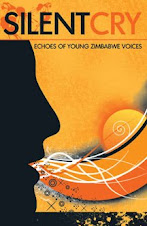
Influences change. It was during the Echoes of Young Voices young people’s anthology project with British Council and amaBooks publishers in 2006 that I acquired an inclination towards what you would call 'African Writing' ... I was eighteen at the time.
How would you describe the writing you are doing?
Realist fiction.
Who is your target audience?
Everybody who loves to read ... but this statement itself carries preconceptions, whether even subconsciously, of what our generic readership is, based on the common culture many of us consume or are invariably exposed to, through technology and other mediums.
It is interesting how the idea of Western influence (through, say, its preconceptions) becomes the focal point around which a reaction is lodged, whether towards or against it. Is the idea of a target audience presupposed by the idea of a commercial concern?
It is interesting ... in certain reviews you hear reference to what we, the readers, think; how we may view this and this, and one wonders who this we is. In lumping a generic readership, the question is, who or what informs the tastes of this readership? From where do the influences stem? And what of the other readership, take the rural masses who may 'love to read' but who do not have the commercial viability? Who or what shapes whatever literature they have access to? The relationship between writer-reader can be a complex one.
What would you say has been your most significant achievement as a writer?
Hmmm ... Achievement ... That word. I am skeptical of it.
There have been wonderful isolated moments, which I would not call achievements: My first story ever to be published. The very act itself of being published. Working with publishers on a piece of work at an intimate level, such as Jane and Brian of amaBooks. Mixing with writers on a whole other 'political' level at the Caine Prize Workshop, and building friendships there. Learning from writers I greatly admired at the Farafina Workshop. Growing, from these workshops and these interactions, into a more solid writer. Interacting with writers online and meeting some great people I hope will be lifelong friends.
I guess the idea of achievement goes back to a question: What is it that one sets out to achieve as a writer? Hmmm ... Interesting question, that.
The more obvious ideas of achievement are just that, too obvious, and therefore immediately boring.
I do know one thing though, which is that probably, this achievement in writing and I, shall always play a cat and mouse game.
Why?
Because it always feels I have not captured what it is I would like to capture in this thing called writing because the element to be captured is ever evolving. There is always a better way to capture a story, a new story to be told, a new story idea to try. The more one reads, the more one meets with freshness, and the more one’s critical horizons are expanded.
I am a young writer, I really cannot speak of achievement, whatever this suspicious thing called achievement is, and whatever it should mean to a writer. There is much work to be done, much writing to do, so little that has been done. The focus is on the future, spurred on by past and present writings.


.jpg)







.jpg)