Showing posts with label Conversations with Writers. Show all posts

Thursday, October 27, 2011

Conversations with Writers: Barbara Mhangami-Ruwende


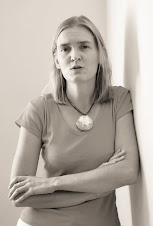
Barbara Mhangami-Ruwende was born in Zimbabwe. She worked in Germany for a number of years before moving to Scotland where she was a student at the University of Glasgow. Currently, she lives in Ann Arbor, Michigan.
One of her short stories has been featured in Where to Now? Short Stories from Zimbabwe (amaBooks, 2011).

In this interview, Barbara Mhangami-Ruwende talks about her concerns as a writer:

Do you write every day?

No. I do not write every day. That is in part due to time constraints but also because I spend a lot of time reading or creating stories in my head so that when I do sit down to write, I write as opposed to thinking.
I am putting together a short story collection and working on a novel.
I create stories while I am chopping vegetables or folding laundry. Then when I have half an hour to sit at my computer, it is to put down something. The writing usually ends because I have something to attend to, like the pot of burning stew!
Often times I have a notebook close by to jot ideas down as I go about my daily activities, including grocery shopping.

What are the biggest challenges that you face?

So far the biggest challenge I face is juggling family life and finding the time to write. My daughters are 10, 8 and 5 (twins) and they require a lot of energy and attention, which leaves very little time for much else.
I have learnt to be extremely efficient in my use of the little time that I do have.

When did you start writing?

I started writing and enjoying it when I was in Grade 7. I was about 12 years old.
Over the years I have written creatively and, also, as a scientist. Currently, I write literary fiction. Short stories mainly.
When I started writing seriously last year, I was doing it mainly for my friends who I went to school with and those who knew me growing up. Over the years many of them have suggested that I write and so I started a blog purely to share stories with friends and family. My friend, Sarah Ladipo Manyika, who I have known for 10 years, read some of my pieces and hooked me up with a couple of editors of literary journals and the journey began.
My most significant achievement as a writer has been to turn a personal passion into something to be shared as a way to entertain and perhaps to enrich others. This, above all else, gives me the greatest satisfaction.
My only hope is that whoever gets to read my stories enjoys them as much as I enjoy writing them. My hope is also that my stories appeal to those who are familiar with the environment and the experiences that inspire the stories as well as to those who enjoy a good, well-written story no matter what the story's context or background.

How have your personal experiences influenced your writing?

My personal experiences have an impact on my writing in many ways. I recognize that my prose style borrows heavily on the oral, story-telling tradition that was very much a part of my childhood. My experiences living in the village provide a rich context for many of my stories.
My extensive travels and living in different countries has shaped many of my views and beliefs and this comes through in some of the characters I create, as does personal loss and challenges that I have had to face.
Being a wife and a mother also feed my writing tremendously.

Which authors influenced you most?

I draw inspiration from many writers from different backgrounds and eras. The ones that come to mind, because I read them over and over again, are: George Orwell, for his crisp uncluttered style; Milan Kundera, for his audacious and oftentimes crazy characters; Toni Morrison, for her uncanny ability to revisit the same subject matter and present it in unique ways through compelling characters and use of language; Chinua Achebe, for telling a story that would have an indelible impact on my young psyche as an African teenager in a predominantly white school; Tsitsi Dangarembga, for weaving an amazing tapestry in which I could locate myself as a Zimbabwean woman, in her book, Nervous Conditions.
There are so many more writers who have influenced my work and my desire to write and share my stories: Chris Mlalazi, Chimamanda Ngozi Adichie, Charles Mungoshi, John Eppel, Amos Tutuola, Wole Soyinka, Ama Ata Aidoo, Yvonne Vera and so on and so forth.

What are your main concerns as a writer?

My one major concern is the fact that there seems to be an expectation that as a writer who is Zimbabwean and therefore African, I cannot create art for art’s or write for writing’s sake. There seems to be this expectation that as a writer I have the responsibility of being a good ambassador for country and for continent.
What concerns me is the definition of good ambassador. Who is articulating it and the parameters that are used to define the 'good ambassador'? I live in angst over the fact that I may be accused of pandering to the west by presenting an Africa that fuels their hunger for sad stories of war, boy soldiers, famine, poverty and corruption. It seems that this is quite an issue based on the criticisms that have been leveled against contemporary writers whose work I identify with.
I think, for me, the best way to deal with this issue is to simply write what I like and to tell stories that help me make sense of my own world. Anything less than this, writing ceases to be the joyful passion through which I can be fully myself.
I also accept that inherent in the decision to get published is the risk of uncomfortable scrutiny and criticism. Not everyone will like what I write ... that is totally fine.


http://conversationswithwriters.blogspot.com/2011/10/interview-barbara-mhangami-ruwende.html

Wednesday, October 12, 2011

Murenga Joseph Chikowero interviewed on Conversations with Writers


Zimbabwean writer, Murenga Joseph Chikowero is a doctoral student in African Literature and Film at the University of Wisconsin-Madison.

In 2010, he collaborated with Annie Holmes and Peter Orner on an oral history project which gave birth to the highly-regarded book, Hope Deferred (McSweeney’s Publishing, 2010).

His short stories have featured in the anthology, Where to Now? Short Stories from Zimbabwe (amaBooks, 2011) as well as on the PanAfrican writers’ blog, StoryTime.

In this interview, Murenga Chikowero talks about his concerns as a writer:

When did you start writing?

Back in primary school, probably in 6th grade.

That year, I moved to a different part of the country, near Guruve in the north, and there a friend told me a story, one of those fantastic tales. When I went back to my old school a year later, our teacher asked everyone to write a story, any fictional story. I wrote down this story about a mythical, one-eyed giant but ... when our books were returned ... mine wasn’t there! Our teacher had misplaced it. When she eventually found it, she asked everybody to stop whatever they were doing to listen to my story.

That, for me, was when writing stories down began although storytelling itself was nothing new in my family and, indeed, other families in the villages.

How would you describe your writing?

I write mainly short stories though I have a novel on the way.

I am fascinated by the 1980s, the time when so many people felt they could dream ... independence was finally here and, for that reason, young men walked with a pronounced swagger, shirts unbuttoned down to the navel and hats worn at fancy angles. Young women wore their over-ironed pleated costumes, stretched out their graceful necks and went about their business. My writing traces the radical and more subtle changes from Rhodesia to Zimbabwe and what ‘Zimbabwe’ meant to different generations and groups. The clamor of the post-2000 politics masks the amazing beauty – and. yes, largely untold trauma – of the 80s and I try to recapture that in my fiction.

Outside fictional writing, I recently collaborated with two writers, Annie Holmes and Peter Orner on an oral history project that gave birth to a book called Hope Deferred. That project basically attempts to bring voices of ordinary Zimbabweans – at home and abroad – to bear on the narrative of Zimbabwean crisis of the last decade. I traveled to Zimbabwe and interviewed some of these witnesses and victims of torture and political persecution.

Hope Deferred is a collection of some of the most remarkable personal stories of ordinary people’s experiences of state-sponsored terrorism, their struggles for a better society and, ultimately, the triumph of the human spirit in the face of adversity.

My short fiction generally targets a mature audience but my novel-in-progress courts younger Zimbabweans although all English speakers will find something to enjoy there too. A lot of our young people today have no clue what the 80s and 90s meant – or promised – to those who lived through them. The beauty and ugliness of that period is unlike anything we have seen since.

In the writing you are doing, which authors influenced you most?

Because my school didn’t have a library, I read whatever I found.

The adolescent detective genre was quite an obsession early on, especially the American variety: the Hardy Boys and Nancy Drew series. Nothing was better than lying on my back before the yellow light of a paraffin lamp after supper and join Frank and Joe Hardy and their friends – and sometimes their father Fenton – as they put together the puzzle pieces of some big crime in their town.

Then, after reading No Longer at Ease, I considered myself a firm disciple of Chinua Achebe. No book made me happier even with its subtle, controlled prose. Achebe’s fiction, though written in English, read like my native Shona and I liked that instant recognition.

I bumped onto a battered copy of House of Hunger by Dambudzo Marechera in between reading the then ubiquitous Pacesetter series that we exchanged in middle school and I was instantly hooked. The problem, though, was that the copy was so battered it had no cover so there was no way of knowing its title or author.

But the Pacesetters series! My very first Pacesetter was called Evbu My Love by a Nigerian writer named Helen Obviagele. It was a somewhat sad story but there was something about love brewed in the African pot that nibbled gently at your heart and made you read the story once, then twice.

The Pacesetter Series was impressive for its vivid language and fast-paced action by African heroes and, occasionally, heroines. Secret service heroes like Benny Kamba in Equatorial Assignment. Some of the heroes had English names such as Jack Ebony in Mark of the Cobra but that didn’t bother us and we were right there with him as he delivered deadly karate kicks to venomous snakes hidden in his wardrobe by enemies of the state.

I also read some South African fiction, most of which I didn’t particularly like at the time, perhaps because the first ever South African novel I read was Alan Paton’s Cry, the Beloved Country. The Pacesetters had introduced me to African heroes who could punch their way out of trouble so I found Cry, the Beloved Country particularly depressing.

Luckily, Dambudzo Marechera saved me around this time. A friend let me borrow his House of Hunger though we didn’t find out what the title was until much later. Unlike anything I had read before, Marechera seized me by the scruff of my neck and thrust me into a violent yet fascinating world of the ghetto slum. I had not stayed in any urban ghetto so the world of House of Hunger shocked me. Another happy problem was the language; I didn’t understand a lot of the more flowery prose but it excited and shocked me in equal measure. A less happy problem was that Marechera, of course, didn’t see anything wrong with describing graphic sexual acts, sometimes even in our native language and so I got a bigger book, a schoolbook actually, planted House of Hunger right in the middle and read and re-read the numbing details of ghetto life while my teachers marveled at my keen academic interest!

Around the same time, we discovered James Hadley-Chase, Louis L’Amour and the British classics – usually the abridged versions.

My older brothers also read anything under the sun and kept personal libraries of sorts. I was allowed to read these books – as long as I was behaving myself. I liked history books the most because they were packed with biographies of larger than life characters, characters who rose from nobodies and turned the world upside down. I liked all of those legendary figures. Our government was then heavy on what is called Gutsaruzhinji or Socialism and there were all these history books detailing the Chinese Revolution of 1947. I would look at a certain picture of a youthful Mao Zedong – then called Mao Tse Tung – and envy his army cap.

My brothers also had collections of Shona language novels, some of which were course setbooks at school. I detested the moralistic variety churned by the sackful by our Literature Bureau but absolutely loved the detective thrillers like James Kawara’s Sajeni Chimedza and Edward Kaugare‘s Kukurukura Hunge Wapotswa. Though targeted at older readers, these novels were not too different from the Pacesetter Series. Above all, I loved the Shona language liberation war novels, the best of which was Kuda Muhondo by a writer whose name I forget. The more overtly partisan ones like Zvairwadza Vasara, I didn’t particularly like.

These books and experiences shaped my early writing and made me feel I could try my hand too.

What are your main concerns as a writer?

Each time I sit down to write down a story, I am always struck by James Baldwin’s assertion that the job of the writer is to look for the question that the answer tries to hide. And yet we often think of the answer itself as a solution to a query.

The ease with which myth passes off as truth in Zimbabwe motivates me to write fiction. My major concern is the place of historical memory in contemporary Zimbabwe. A lot has happened and we have a state that considers it a moral obligation to control this narrative, especially since the year 2000, thanks to a severely – and perhaps deliberately – stunted media landscape. I use different generational voices to interrogate these changes that have happened.

For example, one of the biggest myths in our country is that all Zimbabweans lived happy, comfortable lives before the Mugabe-led farm takeovers which began in earnest around 2000. Few people are honest enough to remember that the ruling elites, led by Mugabe himself, actually colluded with the rich white farmers and industrialists to lord it over an impoverished population.

Who remembers now that the farm takeovers were actually planned and spearheaded by ordinary villagers? Who remembers that these villagers were actually arrested for their efforts before political expediency made it necessary for our politicians to turn round and celebrate these villagers as heroes of the Third Chimurenga? I try to write beautiful stories that bring a more nuanced understanding to these issues.

What are the biggest challenges that you face?

The biggest challenge facing most Zimbabwean writers today is the shrinking publishing industry. This, of course is true throughout Africa with South Africa as a possible exception.

The few, mostly independent publishing houses left in Zimbabwe are forced to put their few resources behind book projects by trusted names so as to recoup their investments. Yes, ours is still a society that views fictional writing as something of an indulgence, a hobby for the educated class. Of course, there is that basic question: Who is going to buy a book when all the money they have can hardly buy a loaf of bread?

You will notice that, contrary to the 20 years leading up to 2000, there are fewer fresh writers whose works are published individually. The tendency has been to produce these anthologies from which some talented voices occasionally emerge, for example, both Brian Chikwava and Petinah Gappah published short stories as part of this short story anthology tradition before launching individual careers as celebrated writers. To date, I have also pursued a somewhat similar path although some of my stories have been published in the form of e-books in South Africa.

Do you write everyday?

Because I balance an academic career with writing fiction, I cannot write everyday. It is also not my style to write everyday. I generally let a story or a chapter ferment in my imagination for days, rather like chikokiyana, our traditional brew, before writing it down. But when I start writing, the story demands that I finish it in one sitting, much like a gourd of frothy chikokiyana. Then I pass it on to my partner to read. She is by far my harshest critic so I usually listen to her opinion before editing my stories.

Ever since I discovered Dambudzo Marechera, Toni Morrison, Njabulo Ndebele, V. S. Naipaul, Charles Mungoshi, Joseph Heller and Ernest Hemingway, I have never liked a story whose conclusion is overwritten, especially if it’s a short story.

My short stories in particular use plenty of silences which estimate real-life African dialogue as I have experienced it.

I have a special dislike for stories that end in formulaic ways ... for example, a relationship that ends with a wedding or a rogue who is caught and jailed. I like my rogues out there, maybe some of them reform or they are chased out of town but I like them better out there and not in jail. Instead of a wedding, I am usually satisfied with lovers looking into each other’s eyes or even doing seemingly small things for each other.

My most recently published short stories include “The Hero”, which was featured in an anthology called Where to Now? Short Stories from Zimbabwe by amaBooks, a Bulawayo-based publisher. I have also published two stories, “When the King of Sungura Died” and “Uncle Jeffrey” on the PanAfrican writers' blog, StoryTime, which is managed and edited by Zimbabwean-born writer, Ivor Hartmann.

How would you describe "The Hero"?

“The Hero” is about an accidental hero who starts off as a rather banal political party thug who falls into a large beer container at a party rally and dies. His party declares him a hero and on the day of burial, he even dislodges the president from the news headlines. "The Hero" is based on a true story that happened in Chitungwiza, Zimbabwe, around 2003.

I wrote it in one sitting, as I usually do with my short stories, and it was published in Where to Now? by Bulawayo-based amaBooks in 2011. My story speaks to other stories in that anthology, all by fellow Zimbabweans. In my story, for example, the ill-fated character is essentially a victim of an economy gone haywire; he takes to partisan politics like one possessed. In NoViolet Bulawayo’s award-winning story in the same volume, “Hitting Budapest”, you find a similar theme of ghetto kids craving for very basic necessities of life which their parents cannot provide, thanks to a crashed economy.

The ghetto setting is something I am very familiar with. I think a story’s power also draws from its ability to evoke a setting that readers recognize.

Which aspects of the work did you enjoy most?

Creating the ghetto scene and the atmosphere of a Zimbabwean political rally are the two things that I enjoyed most. Political rallies in Zimbabwe have a whole life of their own.

I also especially liked working with Jane Morris, the editor of Where to Now?.

What sets "The Hero" apart from other things you’ve written?

The satire ... Some of the so-called heroes and heroines buried at our publicly-funded heroes’ burial sites – heroes’ acres as we call them, including the National Heroes Acre, are no heroes at all ... But because of media censorship, there is little public debate about these kinds of issues outside the columns of the few privately-owned newspapers ... Thankfully, developments in Information Communication Technology have seen a steady rise in online newspapers, blogs and online social forums where a culture of robust debate is slowly taking root.

What “The Hero” shares with my other stories is the fascination with Zimbabwe’s public memory, particularly how it has been edited, suppressed and manipulated at various times to suit the goals of the political class.

Thursday, September 29, 2011

Conversations with Writers: Omen Nyevero Muza

From: http://conversationswithwriters.blogspot.com/2011/09/interview-omen-muza.html

THURSDAY, SEPTEMBER 29, 2011

[Interview] Omen Muza

Omen Nyevero Muza holds an MBA and runs a financial advisory firm he co-founded in Harare.

He is also a financial columnist with a local daily newspaper.

One of his short stories appears in the anthology, Where to Now? Short Stories from Zimbabwe (amaBooks, 2011).

He writes and plays guitar in his spare time.

In this interview, Omen Muza talks about his concerns as a writer:

When did you start writing?

My first serious attempt at writing was while waiting for my O-Level results. I cobbled together a collection of poems which was, however, never published.

Before that, I recall that my Grade 7 teacher put my name to something I didn’t write and submitted it to some obscure publication. Perhaps as some form of poetic justice, the publication misspelt my name to something entirely unrecognizable so in the end it was never attributed to me anyway. I am sure my beloved teacher meant well and obviously had a soft spot for me but I wonder whether she was aware that she was making me an accessory to an act of plagiarism. I certainly wasn’t aware!

How would you describe your writing?

Intermittent and undisciplined.

Although I have attempted a novel before, I now tend to focus only on short stories because they are less demanding, time-wise. The rigour of full-time work and contributing a weekly newspaper column on banking and finance does not leave room for much else, apparently.

I have never consciously thought about who my audience is or should be. I just write, really. Sometimes your audience can come from the most unlikely quarters so it may not be wise to have pre-conceived notions about who constitutes it.

In the writing you are doing, which authors influenced you most?

My pool of influence is quite an eclectic mix. However, if I have to name one person I consciously sought to emulate during my formative years, it would have to be none other than Dambudzo Marechera. With the benefit of hindsight, I was trying to emulate his lifestyle, not his writing style.

And have your own personal experiences influenced your writing in any way?

I would say extensively.

Most of my creative work is based on my personal experiences, sometimes to the point of being crudely autobiographical, I must say.

What are your main concerns as a writer?

To write in a manner that is believable... to be authentic... to write in a manner that people can relate to.

Perhaps this explains why I only write fiction when I have to. I no longer write for the sake of writing.

Like Nhamo, the character in "The Poetry Slammer", from the collection Where to Now? Short Stories from Zimbabwe, my biggest challenge is the balancing act between finding time to write while working full-time in the financial services sector. It’s never an easy road.

Do you write every day?

I don’t write every day but I read every day. And when I write it is never structured - there is no formula. I let the chips fall where they may. At any given time, I usually have several incomplete stories that I am working on.

I haven’t published a full book yet but I have published a number of stories in various online and print media.

My latest short story, "The Poetry Slammer" was published in early August as part of amaBooks' latest collection of short stories, Where to Now? Short Stories from Zimbabwe. I cannot remember how long it took me to write the story but because I wrote it for submission to a literary competition, the story can’t have taken much time to write.

An earlier short story of mine had been one of the top ten stories in the Intwasa Short Story Writing competition in 2007 organized by amaBooks in Bulawayo, so amaBooks was the natural destination for "The Poetry Slammer".

Though largely fictional, "The Poetry Slammer" draws significantly from real events and places. Under those circumstances, the challenge was to be faithful to the zeitgeist – the true spirit of those events and places because some people who went through the experiences on which the short story is based may read the story one day. I had to do quite a bit research in order to deal with that concern. For instance, when I was writing the short story, I actually visited the Book Café for the House of Hunger Poetry Slam in order to get into the right groove, and I remember chatting to Chirikure Chirikure one night in the Mannenberg Jazz Café.

I enjoyed writing every bit of "The Poetry Slammer", not only parts of it. I wanted it to be different from anything I had written before in terms of style, plot and characterization.

What will you be working on next?

Interestingly, or maybe strangely, it will not even be a work of fiction. It will be a collection of my NewsDay banking and finance articles written over a period of more than a year, tentatively titled Banking Insights from an Economy in Transition.

What would you say has been your most significant achievement as a writer?

Not giving up on writing... staying true to my craft in spite of the odds heavily staked against writing.

Monday, September 26, 2011

Conversations with Writers: Novuyo Rosa Tshuma

Conversations with Writers

[Interview] Novuyo Rosa Tshuma

http://conversationswithwriters.blogspot.com/2011/09/interview-novuyo-rosa-tshuma.html

Novuyo Rosa Tshuma is a Zimbabwean writer currently studying at the University of Witwatersrand, South Africa.

In 2009, she won the Intwasa Short Story Competition.

Her short stories have been featured in anthologies that include The Bed Book of Short Stories (Modjaji Books, 2010); A Life In Full and Other Stories: Caine Prize Anthology 2010 (New Internationalist, 2010), African Roar: an Eclectic Anthology of African Authors (StoryTime, 2010) and Where to Now? Short Stories from Zimbabwe (amaBooks, 2011).

In this interview, Novuyo Tshuma talks about her concerns as a writer:

Which authors influenced you most?

The novels of Orhan Pamuk, Chimamanda Ngozi Adichie, Arundhati Roy, Sembene Ousmane, Naguib Mahfouz, Tsitsi Dangarembga, James Baldwin.

A particular piece of short writing which comes to mind is Yvonne Adhiambo Owuor’s "Kin la Belle: In the clear light of Song and Silence" which was featured in the Pilgrimages Project and was about her pilgrimage to Kinsasha. I love descriptive writing, writing that engages one’s surroundings, and in this piece a stark, out-of-the-box creativity merges with the writer’s experiences to create an intensely sensual reading. Absolutely beautiful.

I read an online excerpt of Yvonne Vera’s Butterfly Burning where landscape merges with the emotional state of the protagonist in an intense poetic prose that is just awesome.

Brian Chikwava’s "Seventh Street Alchemy" is a read filled with memorable scenes painted with linguistic prowess.

The short fiction is endless.

Why did these particular writers have this influence? For me, they each offered something new in their readings, something beautifully executed, something I had not previously encountered in my readings.

Arundhati Roy’s gymnastic linguistics in The God of Small Things showed what was possible with language in literature, how words could be bended, stretched, rearranged and created to form a rich literary mosaic. Naguib Mahfouz’s Palace Walk offered intense characterization, as did Tsitsi Dangarembga’s Nervous Conditions.

In Palace Walk I found myself in an intricate love-hate relationship with many of the characters, the father-figure who was the true depiction of chauvinism, his wife Amina who had an irritating blandness, and their son Yasin who embarked on the most mischievous escapades. I formed a complicated bond with these characters, irked often by their complexities, disappointed by their short comings, in love with their 'humanness'.

Nyasha in Tsitsi Dangarembga’s Nervous Conditions is a beautifully complex character with acute perceptions and an original flair.

Orhan Pamuk’s novels offer philosophical characters set in plots that give a great view of the complexities which have plagued Turkey at different points of its history; a lot of tugging between fundamentalism and secularism/westernization.

I became fascinated with Nigerian dishes after tasting them in Chimamanda Ngozi Adichie’s Purple Hibiscus.

There is always something new, something refreshing offered in the memorable reads.

How have your personal experiences influenced your writing in any way?

Hmmm ... I have said before that I like to keep it 'purely fiction'. However, pieces of oneself, one’s experiences are invariably interweaved in one’s writings.

I like to explore characters who may be removed from my direct self, but perhaps whose bits of experiences here and there, are my own. Taking, for instance, my story "Crossroads" in the Where To Now anthology ... it is a fictionalized piece and yet the descriptions at the border are details of characters I have observed, conversations I have overheard and so forth.

It helps in a piece of work to be familiar with setting and to be able to capture the atmosphere of a place, its edge or its bluntness. So, for me, personal experiences function well for setting and atmosphere.

I like to experiment with characters who are not directly linked to me as a writer, characters who I may feel do not exhibit too much of myself. I do not like too much self-examination in a piece of fiction; one becomes self-conscious as a writer, and rather apprehensive of this idea of self-depiction.

People may, nevertheless, link a character to the writer. I have had people read a story and then come to me, agape, and say, "You really did that?!" The excitement lies in stepping into the shoes of a fictionalized character and capturing such a character as though it were you, which then becomes, on some level, a humanizing of the self.

What are your main concerns as a writer?

The biggest, I would say, is the apprehension about one’s writing, capturing a story as best you can. One is ever aware of how much one is yet to learn, how much one does not know. These apprehensions are most easily tackled by ever writing, ever reading, ever exploring.

The biggest challenge is finding a home for your work. One gets more rejections for one’s work than acceptances. Some publications don’t reply. So one needs a persevering spirit.

I remember when I first started sending out my work. I was very bold and persistent in my letters. Got many rejections. I always kept sending.

Another challenge is fighting inertia ... it is important to ever grow in your writing, especially as a young writer. It is crucial to step out of one’s comfort zone and experiment, in order to discover the things one may be able to do in and with one’s writing. Some experiments fail. But that is part of the learning process, isn’t it? To discover what works and what doesn’t. Writing is a constant state of patience.

Do you write everyday?

Not every single day. I would say four to five days a week for several weeks, and then reading takes over for the next week or two and so forth. Some days are busier than others.

The trick, I find, is to allocate writing its space in your life, and to ensure that others respect that space. I usually write early morning, as that is when I feel sharpest.

My sessions usually begin by reading the previous session’s work. This helps me get into the mode of my work. Some editing usually takes place during this time. After reading, one simply delves into the writing. Many times, particularly with first drafts, one feels that one is writing a lot of rubbish – it is as though one is feeling for a thread in the dark, searching for the vein of a story.

Many first drafts end in despair! I find I have many first drafts of different scenes, different stories, and usually the stories that I finish at a point in time are alterations from first drafts written a while ago, which when perused with a fresh eye, offer a gem or two worth pursuing. And so that is how it goes.

If it is during a morning where I have to attend lectures, then time constraints end my sessions. You find that when you have had a good writing session that must end before you want it to, the story stays in your mind, and you ponder sentences and scenes as you go through your day. When you feel you have a particularly good hunch, you are impatient to get back to your writing.

If it is on a day when I do not have lectures, my sessions can carry through the day, which then becomes an intermittent act of writing and revising, and a lot of editing. This is on a good day, when one has tapped into the vein of a story.

Usually such sessions end because one is tired, and feels satisfied with the work one has managed to do on that particular day. And success on any given day is not judged by quantity but by quality – writing is a constant state of patience (unless one is working with a deadline and needs to balance number of words and the quality of the wording.

Time constraints sometimes pull the writer out of a surreal state where all writing can take place forever! So one may write three thousand words, and only a thousand of that three may feature in the final story.

Some sessions end in despair, when one is struggling with a scene, a story, a character. Usually when this happens I just grab a book and read – it helps to calm the mind.

My sessions usually begin and end in solitary space. I deliberately live alone, as I find the space invaluable for the writing. Growing up, I always used to crave the idea of a space to write, as there was always a lot going on around, interruptions and the like. The act of writing is ultimately an act of solitude. So it is good to have a space where you can just wake up and begin writing, and not have to entertain disruptions.

When did you start writing?

I began writing stories for fun when I was nine, thereabouts.

Influences change. It was during the Echoes of Young Voices young people’s anthology project with British Council and amaBooks publishers in 2006 that I acquired an inclination towards what you would call 'African Writing' ... I was eighteen at the time.

How would you describe the writing you are doing?

Realist fiction.

Who is your target audience?

Everybody who loves to read ... but this statement itself carries preconceptions, whether even subconsciously, of what our generic readership is, based on the common culture many of us consume or are invariably exposed to, through technology and other mediums.

It is interesting how the idea of Western influence (through, say, its preconceptions) becomes the focal point around which a reaction is lodged, whether towards or against it. Is the idea of a target audience presupposed by the idea of a commercial concern?

It is interesting ... in certain reviews you hear reference to what we, the readers, think; how we may view this and this, and one wonders who this we is. In lumping a generic readership, the question is, who or what informs the tastes of this readership? From where do the influences stem? And what of the other readership, take the rural masses who may 'love to read' but who do not have the commercial viability? Who or what shapes whatever literature they have access to? The relationship between writer-reader can be a complex one.

What would you say has been your most significant achievement as a writer?

Hmmm ... Achievement ... That word. I am skeptical of it.

There have been wonderful isolated moments, which I would not call achievements: My first story ever to be published. The very act itself of being published. Working with publishers on a piece of work at an intimate level, such as Jane and Brian of amaBooks. Mixing with writers on a whole other 'political' level at the Caine Prize Workshop, and building friendships there. Learning from writers I greatly admired at the Farafina Workshop. Growing, from these workshops and these interactions, into a more solid writer. Interacting with writers online and meeting some great people I hope will be lifelong friends.

I guess the idea of achievement goes back to a question: What is it that one sets out to achieve as a writer? Hmmm ... Interesting question, that.

The more obvious ideas of achievement are just that, too obvious, and therefore immediately boring.

I do know one thing though, which is that probably, this achievement in writing and I, shall always play a cat and mouse game.

Why?

Because it always feels I have not captured what it is I would like to capture in this thing called writing because the element to be captured is ever evolving. There is always a better way to capture a story, a new story to be told, a new story idea to try. The more one reads, the more one meets with freshness, and the more one’s critical horizons are expanded.

I am a young writer, I really cannot speak of achievement, whatever this suspicious thing called achievement is, and whatever it should mean to a writer. There is much work to be done, much writing to do, so little that has been done. The focus is on the future, spurred on by past and present writings.

Thursday, September 8, 2011

Conversations with Writers: John Eppel and Together


Presents interviews with writers, publishers and literary activists.


John Eppel

http://conversationswithwriters.blogspot.com/2011/09/interview2-john-eppel.html

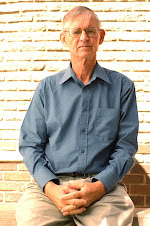
John Eppel is a teacher, an award-winning poet, short story writer and novelist.

His books include the poetry collections, Spoils of War (The Carrefour Press, 1989) and Songs My Country Taught Me (Weaver Press, 2005) as well as the novels, Hatchings (amaBooks, 2006) and Absent: The English Teacher (Weaver Press, 2009).

In this interview, John Eppel talks about Together(amaBooks, 2011), his latest book:

How would you describe Together?

My latest book, Together, is a joint affair, combining poems and short stories by Julius Chingono and me; so it’s our latest book – a poignant phrase since Julius did not live to see it in print.

I wrote my portion of the book in 2008. Since I was earning almost nothing as a teacher, I applied for a year’s leave, and wrote three books: a novel, Absent: the English Teacher, a collection of short stories, White Man Walking, and a collection of poems, Landlocked. I sent them to Weaver Press who accepted the novel but rejected the poems and short stories. It was from these rejected items that my contribution to Together was made.
I sent Landlocked to three other publishers, Snailpress (Cape Town), Bloodaxe (UK),Carcanet Press (UK), all of whom rejected it.

Then Julius and I met with Brian Jones and Jane Morris of amaBooks, and we decided to bring out a joint volume. The title was suggested by Brian, and the project was generously supported by the Zimbabwe Culture Fund Trust. Dr Drew Shaw of Midlands State University agreed to write an introduction, and it wasn’t long before the University of New Orleans Press and the University of Kwazulu-Natal Press agreed to co-publish.

What advantages and/or disadvantages has your choice of publishers presented?

amaBooks of Bulawayo would have been my first choice for all my books, but they seldom have the wherewithal to finance a publication; that is largely because they have the commitment (and courage) to promote new Zimbabwean writing, including poetry, which almost nobody buys. Indeed, more people write poetry than read it!

An obvious disadvantage with a small, underfunded publisher like amaBooks, is distribution; and the sort of promotion you get with big publishers, like book-signings at major retail outlets, appearances on radio and television etc.

A huge advantage for a writer like me, who has a tiny readership, is that small publishers, who are more committed to promoting literature than to profiteering, will accept my books. My most recent, still unpublished novel, The Boy Who Loved Camping, spent more than seven months with Penguin South Africa before it was rejected on the grounds that the publishers did not think they could make a commercial success of it.

One significant way amaBooks has dealt with these problems, in the case ofTogether, has been to persuade publishers from two other countries to co-publish. That can only benefit the distribution and the promotion of the book.

Which aspects of the work you put into the book did you find most difficult?

I didn’t find anything difficult. The publishers, on the other hand, were particularly disturbed by one of my stories, “Of the Fist”, set during the run-up to the 2008 Presidential elections, which they asked me to omit. It’s a very violent story about political rape and murder, based on a real incident. Come to think of it, most of my stories and poems in this anthology are based on real incidents. We replaced “Of the Fist” with a harmless satirical sketch called “The CWM”.

For most of my writing life, I have thought of my predicament as someone who is neither African nor European to be a disadvantage; as if, somehow, I had slipped through a crack; but now that my years as a Zimbabwean have caught up with my years as a Rhodesian, the crack has metamorphosed into a threshold, a magical place where opposites merge, where contradictions become paradoxes. Now I don’t have the bitter thought that I am neither African nor European; I have the sweet sensation that I am African and European. And it is this aspect of my work that I have enjoyed most. I can imagine cutting-edge experts in postcolonial literature snorting at these sentiments, but I’m too old now to care.

What sets Together apart from other things you've written?

The potent symbolism of two elderly Zimbabweans from different cultures, races, regions… coming together and sealing a fissure. It’s a pity one of us isn’t a woman!

In what way is it similar to the others?

It is steeped in irony, which can so easily be misread.

It is frequently funny in the way that a cartoon is funny. When Ranka Primorac said, in an essay entitled “Poised for Literature’s Last Laugh”, that “There is remarkably little laughter resonating across the history of Zimbabwean literature”, she swept Julius Chingono and me under the carpet.

How many books have you written so far?
  • Spoils of War, 1989 (The Carrefour Press, Cape town), poetry.
  • DGG Berry’s The Great North Road, 1992 (The Carrefour Press, Cape Town and Hippogriff, Johannesburg), novel.
  • Hatchings, 1993 (The Carrefour Press, Cape Town), novel. [re-published by amaBooks in 2006]
  • The Giraffe Man, 1994 (Queillerie, Pretoria), novel
  • Sonata for Matabeleland, 1995 (Snailpress, Cape Town and Baobab, Harare), poetry.
  • Selected Poems 1965-1995, 2001 (Childline).
  • The Curse of the Ripe Tomato, 2001 (amaBooks, Bulawayo), novel.
  • The Holy Innocents, 2002 (amaBooks, Bulawayo), novel
  • The Caruso of Colleen Bawn, 2004 (amaBooks, Bulawayo), poems and short stories.
  • Songs My Country Taught Me, 2005 (Weaver Press, Harare), poetry.
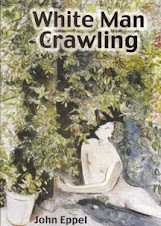
  • White Man Crawling, 2007 (amaBooks, Bulawayo), poems and short stories.
  • The Boy Who Loved Camping, 2008 [awaiting a publisher], novel.
  • Absent: The English Teacher, 2009 (Weaver Press, Harare and Jacana, Johannesburg) novel.
  • Together, with Julius Chingono, 2011 (amaBooks, Bulawayo and UNO, New Orleans and UKZN, Durban), poems and short stories.
What would you say has been your most significant achievement as a writer?

I think, the way I have learned to fuse, mainly through parody, prosody with socio-political commentary.

In my poems in Together, you will find examples of the Blues, the sestina, the haiku, the ballad, the sonnet, the Sapphic, vers libre, dramatic monologue, pure lyric... I even invented a new form, which I (no longer secretly) call duodecadina. It is called “Yet another Flower Poem” and it consists of two ten-line stanzas. Each line consists of fifteen syllables, and the end words of the first stanza are repeated exactly in the end words of the second stanza. If you don’t notice all these details when you read it (with enjoyment!) it succeeds. It is an attempt at the art which conceals art. Of course, a lot of this has to do with healthy self-mockery.

Do you write every day?

I write during school holidays and occasionally over the weekends.

With poetry I get an image or a rhythmic cluster of words, almost never an idea. The moment of inspiration is passive, like a flower awaiting pollination. With prose (most of the time), it’s the other way round, a bee looking for a flower to pollinate.

In a sense, my writing never ends - it stops.