‘Long
Time Coming’ : hope and the role of the artist
January 26, 2015 Features, Opinion &
Analysis
@ the Bookstore With Elliot Ziwira in The Herald, Zimbabwe
http://www.herald.co.zw/long-time-coming-hope-and-the-role-of-the-artist/
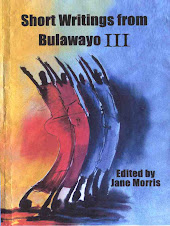
“LONG Time Coming” (2008), edited by Jane
Morris and published by amaBooks, chronicles the mundane and sordid experiences
of the common man, as he stoically trudges on along the scalding earth of his
existence in a community desperately waiting for the rain.
The book taps into the journalistic function
of the artist which complements the didactic nature of literature. As Soyinka
(1973:89) observes: “The artist always functioned as the voice of vision in his
own time.”
His telescopic eye should capture current and
topical issues which burden his people, because it is such concerns that the
reader easily identifies with.
This journalistic aspect of the role of the
artist is also echoed by Chinweizu et al (1985:89) when they say: “Our job as
writers is to be articulate and to present to our audience the stresses and
joys of our societies as they take place.”
Such is the role of the competent artist that
the collection exploits effectively through chronicling the recession that
brings the sovereign nation to its knees, which however strengthens its resolve
as the heavy rain bearing clouds gather on the horizon.
Thirty three writers and poets drawn from the
African landscape and predominantly Zimbabwean, converge to tell the story of
suffering, patience, hope, violence, despondence and deceit in the crises
ridden Zimbabwe of the never ending queues, as the nation reels under the
burden of Western imposed sanctions.
The bone of contention is the land, a finite
resource whose wealth; mineral, aquatic or otherwise, the host country feels
obliged to protect for the betterment of its people much to the chagrin of the
alien gangsters from the West, who retaliated by imposing an illegal embargo on
the sovereign motherland.
But the pious son of the soil, President
Robert Mugabe could not allow Western hegemony to continue fettering his fellow
countrymen to the colonial yoke, because indeed there is no freedom without
ownership of the means of production.
In the ensuing chaos, poverty becomes the
order of the day as the majority ekes out a mere existence from the little they
could scantily put their hands to, in the vast expanses of empty shops,
deserted hospitals, dry taps and a non-existent will on the part of service
providers as well as those with the economic stamina for a haul forward.
An aura of desperation pervades the daily
toils of the majority as their hope to untangle themselves from the
labyrinthine snare of their existence only lie in the promising rains; both
literal and metaphorical; the rains that will wash away the pain, sweat and
blood from the impoverished and drought stricken land of their being, and leave
sprouting seeds of hope in their wake.
Waiting, a dominant motif in the collection,
and a commodity abundantly available in the national discourse, seems to be the
only way out.
However, in this situation where others are
malnourished, ailing and willing to trade their wretchedness for a morsel of
bread, the avaricious, corrupt, cunning and obese minority crouch menacingly at
their horizon of hope; taking the situation as a self-aggrandising enterprise.
This rationale is aptly captured in Wim
Boswinkel’s “Justice” and John Eppel’s “The Awards Ceremony” as well as
Sandisile Tshuma’s “Arrested Development”.
The rich use of metaphors; both from nature
and Man’s creations, the autobiographical mode, which aptly chronicles the
writers’ own experiences, and cultural diversity through the different
authorial voices exploited, does not only allow the exploration of a plethora
of themes, but also authenticate the fictional experience as the reader is
drawn into the nuances of events highlighted, and juxtaposes them with the
reality of his or her being.
The frustration, despondence and
disillusionment is so real and vividly conjure the reality of lack, as the
suffering masses endure whatever comes their way with such stoicism that shames
the devil, who desperately prophesises doom and violent disturbances.
The people’s refusal to have their spirits
dampened and hope strangled in the face of adversity and hunger, is illuminated
through the metaphor of the rain, the encouraging smiles and winks from
strangers.
Truly the Zimbabwean cannot be broken that
easily.
His or her fighting spirit will spur him or
her on to higher resolves, if only chance avails itself and Providence Divine
intervenes.
The use of the journey motif taps into
traditional folkloric drama, as the search for the ever receding pastures and
hope becomes paramount.
There is hope in travelling, yet the means to
travel becomes a stumbling block.
Everyone is so much in a hurry to go
somewhere away from the painful familiar environs, yet they remain rooted
physically and emotionally to the same.
Where physical movement is possible, albeit
in a stressful way, emotional movement remains flimsy; because one is never sure
what to expect from the unknown hunting grounds; where morality and humane
attributes die in the wake of physical satiation.
One has to cling on to hope, for “Who Knows
What Season Tomorrow Brings” as Gothataone Moeng quips, as she admires the
Zimbabwean women who toil to fend for their husbands and children back home
through humiliating encounters in Botswana, her country, yet remaining resolute
and proud of their nationality.
In a single journey from the city to one’s
abode or to border towns, one would relate a lifetime of experiences about
harness-able opportunities and elusive ones, which create categories in
society; the “chicken bus clients” and the Landcruiser elite.
The “chicken bus clients” as revealed by
Linda Msebele in the story “The Chicken Bus”, are the wretched of the earth,
the downtrodden that those with the means seek to punish for the mere reason of
them being Zimbabwean, with a right to their ancestral land.
The artist intimates: “It is the cheapest and
certainly harshest, way of getting home these days. Such travelling is meant
for those like me (believe me, there are millions like me) who cannot afford
the emergence taxis that ply the same route and that charge a much higher fare
. . .
“It is noisy, stuffy and smelly here . . . It
really stinks in here.
“It stinks of poverty.
“It’s nothing like the chic smell of
wealthy.”
In her struggle to put a meal on the table as
one among the millions wallowing in abject poverty, the artist wonders: “How
different the realities of life can be.
Some people drive the latest Mercedes, BMWs
and Pajeros.
I wonder how they manage to make money in a
country with such an inflationary and depressed economy.” She adeptly takes the
reader into the emotionally sutured psyche of suffering in a society where the
perverse, callous and greedy mighty strangle the feeble, as she ponders: “Am I
doomed to forever board chicken buses?”
In this hubbub where the sexual perverts and
mentally deranged impersonations of men quench their carnal desires on
unsuspecting women in the packed buses, and are quick to erupt in tantrums if
questioned on their intentions, there are some “who refuse to turn sour, the
ones who won’t let fear cloud their brows, the ones who still smile.”
Lloyd Robson, who writes from a visitor’s
viewpoint in “Rum and Still Waters”, highlights the Zimbabweans’ resilience,
warmth and patriotism.
It is in such situations where one finds
oneself without bus-fare to go home at 4.45 pm, as in Julius Chingono’s “Bus
Fare” and his manly pride inhibits him from accepting alms from his ex-wife,
whose star shines while his conspires with the demons of unemployment to wane;
where a university post or undergraduate questions whether it is really
necessary to be academically knowledgeable when those who make it to the top of
the social and economic echelons are school drops-outs, like the Malayitshas,
and cross-border traders, where everything seems to be in abeyance; that one
begins to question his or her sanity or whether there is really anything called
sanity or it is just a subjective idea, as everyone really seems to be sane in
his or her own way; or maybe insane, depending on those around.
It is this subject that Ignatius Mabasa
hilariously tackles poignantly in the captivating story “Some Kind of Madness”.
Notwithstanding all this suffering, chaos and
despondency, glimmers of hope remain visible on the silver lining of the clouds
which break into torrents to change the complexion of the Zimbabwean landscape
as Pathisa Nyathi alludes to “And the Rains Came”, and Judy Maposa’s “First
Rain” celebrates.
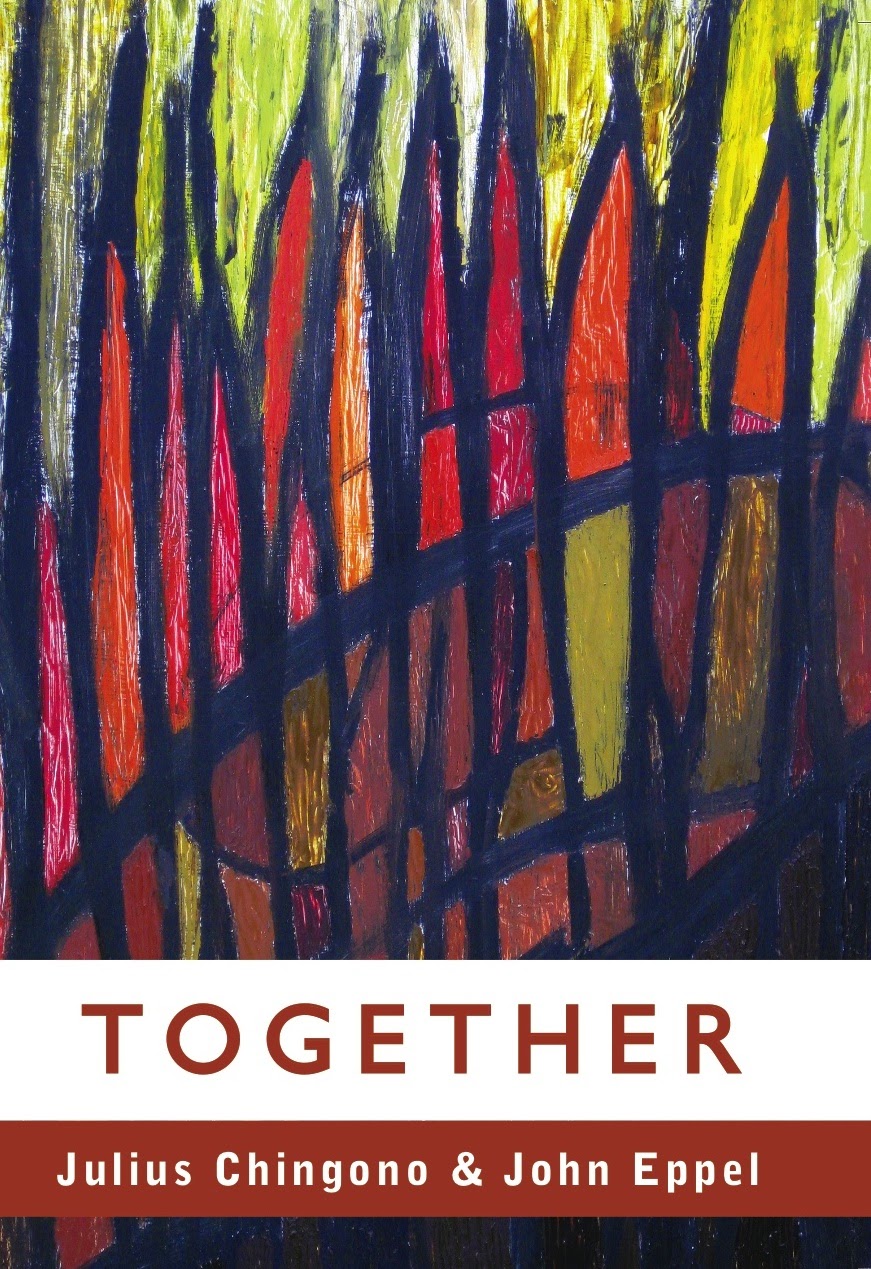
 She comments: 'In some ways, the two authors featured in this collection could not be more different: Chingono, now deceased, was a black Zimbabwean who worked as a rock blaster in the mines, whereas Eppel is a white Zimbabwean who taught English literature. Both, however, were born in the 1940s and lived through every decade of the Mugabe era. In their works of fiction and poetry, one sees their shared love of language, a deep concern for the poor and, in spite of hardships, a great sense of humor. Together, Zimbabwean.'




.jpg)







.jpg)