Showing posts with label Sandisile Tshuma. Show all posts

Monday, July 24, 2017

Why I Write: Sandisile Tshuma


“So what’s your guilty pleasure?” my brother asked one day out of the blue. We had spent the day in my little apartment and I suspect that, as he looked around the barebones space filled with books, CDs and conspicuously missing a television set, he was worried I had no life. “Um, I get my locs treated and go to the spa for a deluxe pedicure?” I ventured, posing my response as a question because I was pretty sure there was a right answer and a wrong answer to his question. “No, that’s basic grooming. You have to do that. What’s a thing that you do that you don’t need to do but that you love to do just for the pure enjoyment of doing it?” Failing to find an answer to a question so simple as “what do you enjoy in life?” I weaseled out of the conversation by offering him another beer from the fridge. But the question lingered in the recesses of my mind for years afterwards.

One day I wrote a blog post about how my inability to put down roots and stick to a single place or activity for long had evolved. I was not supposed to write that post. I was supposed to be working on an assignment for school due the next day. But there is a land called Procrastinatoria and I am their queen. Instead of ten pages on voluntary medical male circumcision, I toyed with the idea of finding myself by doing less and being more. I wrote and wrote and wrote and wrote. Then when my eyelids were so heavy with exhaustion that I could barely keep them open as I clicked on the Publish button, the answer to my brother’s question came to me. I was tired but completely satisfied. I had been so absorbed in what I was doing that I hadn’t noticed time slipping past and the sleep creeping in. I had stolen time from my education and spent it on my immediate happiness. Instant versus delayed gratification. An indulgence. A guilty pleasure, one might say.


Nothing relaxes me the way writing does. Nothing else feels so effortless even when the results aren’t perfect. Nothing validates me the way writing does. Writing gives me wings. My writing needs no audience. It bears witness to itself. I write because it makes me feel alive and significant. I write because I express myself best that way. My brain moves so fast that my mouth can’t keep up. So writing is my one chance at taking what’s on the inside of my mind and manifesting it in the material realm.  In a world with so many distractions that exact a heavy toll on introverts like me, writing is my refuge, a welcome escape. It’s my happy place, my soft place to land. I write because there’s nothing else I would rather do, ever. They say you shouldn’t need a lover; you should want one. So sure, I don’t need to write. I want to write. But I want it badly. I want it all the time like a hot new crush. In my universe, writing is bae.


Sandisile Tshuma is a Zimbabwean storyteller, health, development and human rights practitioner who has studied molecular and cellular biology, public health, disaster management and acting from the University of Cape Town (South Africa), the University of the Witwatersrand (South Africa), the National University of Science and Technology (Zimbabwe) and the London Academy of Music and Dramatic Art (United Kingdom).
Sandisile has a professional background in monitoring, evaluation and communication in sexual and reproductive health programmes with the United Nations and other International Organizations in East and Southern Africa. She is an award winning short story writer, the founding editor of AntuAke online magazine, and has curated a personal blog for five years. Sandisile's short stories, "Arrested Development" and "The Need" were published by amaBooks Publishing in two anthologies of Zimbabwean short stories. "Arrested Development" won an Honourable Mention for the 2010 Thomas Pringle Award in the short story category, has been translated into a number of languages and is included in an anthology titled "When The Sun Goes Down", a set book in the Kenyan English language curriculum at secondary school level. The Need has been translated into isiNdebele. Her first full length book, "Dandelion Dreaming," tells the story of marginalised youth in South Africa using the "photo-voice" methodology. 

Wednesday, January 11, 2017

Why I Read by Sandisile Tshuma


Hi. My name is Sandisile Tshuma and I am an information junkie. More than ten years ago I underwent the Clifton strengths finder assessment as part of a team building exercise at the youth-focused HIV prevention organisation I had just joined.  The test revealed that one of my top five strengths was something called Input. Input was defined as having a craving to know more and people with Input like to collect and archive all kinds of information. While I normally like to convince myself that I am “a riddle, wrapped in a mystery, inside an enigma,” I had to admit that the test was spot on.  

I read because I like to know things. I love knowledge for its own sake and I hoard it in my mind, my electronic devices, journals, notebooks and a book shelf that is so heavily overloaded it teeters precariously on the verge of collapse under the weight of all manner of books, lovingly collected over years.  My insatiable appetite for information and ideas in the form of words is well documented. I can’t help myself. Reading let’s me know things and discovering new things fills my heart with unadulterated joy. Literacy is the greatest gift my parents gave me.


When I was a child my parents kept an old school trunk full of books well older than I. That black trunk was a treasure trove of books, all classics. My mind traveled from The God of Small Things and Coriolanus, to Harvest of Thorns and Petals of Blood, from Gray’s Anatomy to Toohey’s Medicine for Nurses, Charles Mungoshi to William Blake. One day while digging through the old black trunk I found a tatty old exercise book in which my father had written the first few chapters of an autobiographical creative fiction book. I knew it had to be something he wrote in his youth because the pages were almost disintegrating and the ink was faded and blurred making it hard for me to read some of his flawlessly scripted cursive. He had never once mentioned this work or expressed the desire to write. He was a military man, a man of science, a businessman, anything but an author. And yet he wrote beautifully. Lyrically. He was reflective and generous in his descriptions. I was mesmerized. We never discussed it but it completely changed the way I saw him. He revealed his complex layered thoughts and helped me understand my own dark, broody complexity. I recognized myself not only in his words but also even in the very act of writing out his life, documenting his story for an audience of unknown existence.
I read to rekindle the feeling I got when my father unknowingly shared his life with me, as do so many other authors I love. In a world where it’s hard to feel anchored my love for reading showed me a new connection to the source of my being. I read because this is a privilege.


Sandisile Tshuma is a Zimbabwean storyteller, health, development and human rights practitioner who has studied molecular and cellular biology, public health, disaster management and acting from the University of Cape Town (South Africa), the University of the Witwatersrand (South Africa), the National University of Science and Technology (Zimbabwe) and the London Academy of Music and Dramatic Art (United Kingdom).
Sandisile has a professional background in monitoring, evaluation and communication in sexual and reproductive health programmes with the United Nations and other International Organizations in East and Southern Africa. She is an award winning short story writer, the founding editor of AntuAke online magazine, and has curated a personal blog for five years. Sandisile's short stories, "Arrested Development" and "The Need" were published by amaBooks Publishing in two anthologies of Zimbabwean short stories. "Arrested Development" won an Honourable Mention for the 2010 Thomas Pringle Award in the short story category, has been translated into a number of languages and is included in an anthology titled "When The Sun Goes Down", a set book in the Kenyan English language curriculum at secondary school level. The Need has been translated into isiNdebele. Her first full length book, "Dandelion Dreaming," tells the story of marginalised youth in South Africa using the "photo-voice" methodology. 

Sandisile has a special interest in young people, particularly those made vulnerable by HIV and AIDS, and is involved in supporting the work of  Aluwani and COPESSA. Currently, she works in leadership development as the South Africa country manager of the Emzingo Group aiming to inspire responsible leadership, prepare individuals to tackle global challenges and connect business to society.

Monday, November 28, 2016

Morland Writing Scholarship – 2016 Shortlist


The shortlist for the prestigious Morland Writing Scholarship has just been announced. Among the twenty-two shortlisted writers are two Zimbabweans, Bryony Rheam and Sandisile Tshuma, both of whom have been published by amaBooks.
Percy Zvomuya is a previous Zimbabwean recipient of a Morland Writing Scholarship.


Bryony Rheam

Sandisile Tshuma
This year Nigerians dominated the list. Of the twenty-two names, eleven are from Nigeria, three from South Africa, two each from Somalia, Zimbabwe and Kenya, and one each from Gambia and Ghana.

Miles Morland said, “The standard of the shortlist is always high but this year we had an even greater depth of talent than before, making the choosing of a shortlist particularly difficult.  We had over 500 entries, up from 385 last year and they came from 37 countries, compared with 27 last year. We have two Caine Prize winners on it, and a number of writers who have received global recognition. We are pleased also to have writers early in their career who show terrific promise. We have been blown away by the talent, imagination, energy, and humour that characterises African writing. Our only disappointment is that, although we had a number of non-fiction submissions, only one made it to the short list. We are actively trying to encourage non-fiction, Africans telling Africa’s story.”

The judges, with Ellah Wakatama Allfrey from Zimbabwe in the chair, assisted by Femi Terry from Sierra Leone, and Muthoni Garland from Kenya, will meet on Dec 12th to select the five 2016 Scholars. Their names will be announced shortly afterwards. The Scholars will each receive £18,000, paid over the course of a year, to allow them to take time off to write the book they have proposed.

The shortlist follows:

Abdul Adan – Somalia
Jekwu Anyaegbuna – Nigeria
Ayesha Harruna Attah – Ghana
Rotimi Babatunde - Nigeria
Dayo Foster – Gambia
Amy Heydenrych – S Africa
Abubakar Ibrahim – Nigeria
Nneoma Ike-Njoku – Nigeria
Julie Iromuanya – Nigeria
Hamse Ismail - Somalia
William Ifeanyi Moore – Nigeria
Lidudumalingani Mqombothi – S Africa
Nick Mulgrew – S Africa
Otosirieze Obi-Young - Nigeria
Okwiri Oduor – Kenya
Adeola Opeyemi - Nigeria
Olawale Olayemi – Nigeria
Troy Onyango – Kenya
Mary Ononokpono – Nigeria
Koye Oyedeji - Nigeria
Bryony Rheam – Zimbabwe
Sandisile Tshuma – Zimbabwe


Wednesday, January 28, 2015

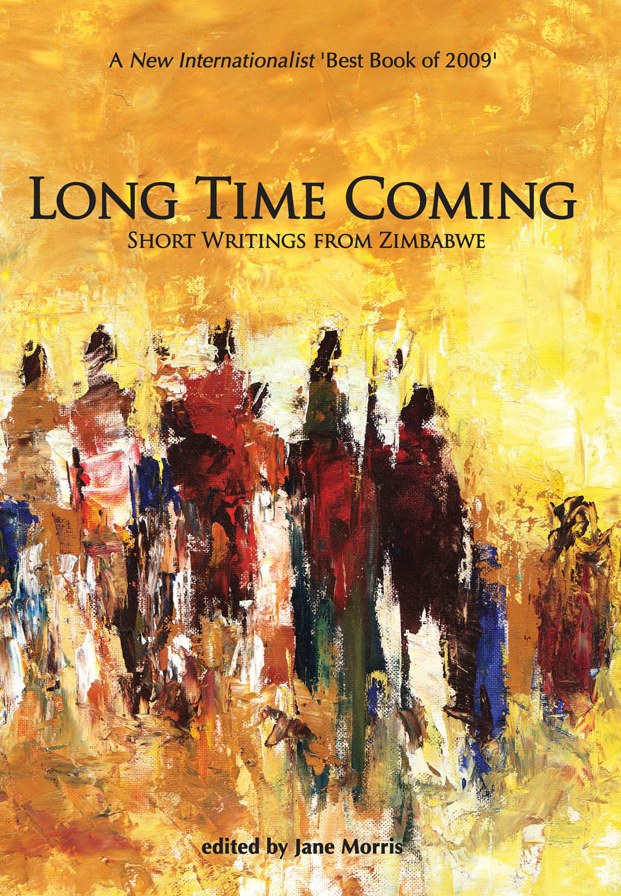
'Long Time Coming' reviewed in the Herald - from a very different perspective

‘Long Time Coming’ : hope and the role of the artist
 
January 26, 2015 Features, Opinion & Analysis
@ the Bookstore With Elliot Ziwira in The Herald, Zimbabwe

http://www.herald.co.zw/long-time-coming-hope-and-the-role-of-the-artist/

“LONG Time Coming” (2008), edited by Jane Morris and published by amaBooks, chronicles the mundane and sordid experiences of the common man, as he stoically trudges on along the scalding earth of his existence in a community desperately waiting for the rain.
The book taps into the journalistic function of the artist which complements the didactic nature of literature. As Soyinka (1973:89) observes: “The artist always functioned as the voice of vision in his own time.”
His telescopic eye should capture current and topical issues which burden his people, because it is such concerns that the reader easily identifies with.
This journalistic aspect of the role of the artist is also echoed by Chinweizu et al (1985:89) when they say: “Our job as writers is to be articulate and to present to our audience the stresses and joys of our societies as they take place.”
Such is the role of the competent artist that the collection exploits effectively through chronicling the recession that brings the sovereign nation to its knees, which however strengthens its resolve as the heavy rain bearing clouds gather on the horizon.
Thirty three writers and poets drawn from the African landscape and predominantly Zimbabwean, converge to tell the story of suffering, patience, hope, violence, despondence and deceit in the crises ridden Zimbabwe of the never ending queues, as the nation reels under the burden of Western imposed sanctions.
The bone of contention is the land, a finite resource whose wealth; mineral, aquatic or otherwise, the host country feels obliged to protect for the betterment of its people much to the chagrin of the alien gangsters from the West, who retaliated by imposing an illegal embargo on the sovereign motherland.
But the pious son of the soil, President Robert Mugabe could not allow Western hegemony to continue fettering his fellow countrymen to the colonial yoke, because indeed there is no freedom without ownership of the means of production.
In the ensuing chaos, poverty becomes the order of the day as the majority ekes out a mere existence from the little they could scantily put their hands to, in the vast expanses of empty shops, deserted hospitals, dry taps and a non-existent will on the part of service providers as well as those with the economic stamina for a haul forward.
An aura of desperation pervades the daily toils of the majority as their hope to untangle themselves from the labyrinthine snare of their existence only lie in the promising rains; both literal and metaphorical; the rains that will wash away the pain, sweat and blood from the impoverished and drought stricken land of their being, and leave sprouting seeds of hope in their wake.
Waiting, a dominant motif in the collection, and a commodity abundantly available in the national discourse, seems to be the only way out.
However, in this situation where others are malnourished, ailing and willing to trade their wretchedness for a morsel of bread, the avaricious, corrupt, cunning and obese minority crouch menacingly at their horizon of hope; taking the situation as a self-aggrandising enterprise.
This rationale is aptly captured in Wim Boswinkel’s “Justice” and John Eppel’s “The Awards Ceremony” as well as Sandisile Tshuma’s “Arrested Development”.
The rich use of metaphors; both from nature and Man’s creations, the autobiographical mode, which aptly chronicles the writers’ own experiences, and cultural diversity through the different authorial voices exploited, does not only allow the exploration of a plethora of themes, but also authenticate the fictional experience as the reader is drawn into the nuances of events highlighted, and juxtaposes them with the reality of his or her being.
The frustration, despondence and disillusionment is so real and vividly conjure the reality of lack, as the suffering masses endure whatever comes their way with such stoicism that shames the devil, who desperately prophesises doom and violent disturbances.
The people’s refusal to have their spirits dampened and hope strangled in the face of adversity and hunger, is illuminated through the metaphor of the rain, the encouraging smiles and winks from strangers.
Truly the Zimbabwean cannot be broken that easily.
His or her fighting spirit will spur him or her on to higher resolves, if only chance avails itself and Providence Divine intervenes.
The use of the journey motif taps into traditional folkloric drama, as the search for the ever receding pastures and hope becomes paramount.
There is hope in travelling, yet the means to travel becomes a stumbling block.
Everyone is so much in a hurry to go somewhere away from the painful familiar environs, yet they remain rooted physically and emotionally to the same.
Where physical movement is possible, albeit in a stressful way, emotional movement remains flimsy; because one is never sure what to expect from the unknown hunting grounds; where morality and humane attributes die in the wake of physical satiation.
One has to cling on to hope, for “Who Knows What Season Tomorrow Brings” as Gothataone Moeng quips, as she admires the Zimbabwean women who toil to fend for their husbands and children back home through humiliating encounters in Botswana, her country, yet remaining resolute and proud of their nationality.
In a single journey from the city to one’s abode or to border towns, one would relate a lifetime of experiences about harness-able opportunities and elusive ones, which create categories in society; the “chicken bus clients” and the Landcruiser elite.
The “chicken bus clients” as revealed by Linda Msebele in the story “The Chicken Bus”, are the wretched of the earth, the downtrodden that those with the means seek to punish for the mere reason of them being Zimbabwean, with a right to their ancestral land.
The artist intimates: “It is the cheapest and certainly harshest, way of getting home these days. Such travelling is meant for those like me (believe me, there are millions like me) who cannot afford the emergence taxis that ply the same route and that charge a much higher fare . . .
“It is noisy, stuffy and smelly here . . . It really stinks in here.
“It stinks of poverty.
“It’s nothing like the chic smell of wealthy.”
In her struggle to put a meal on the table as one among the millions wallowing in abject poverty, the artist wonders: “How different the realities of life can be.
Some people drive the latest Mercedes, BMWs and Pajeros.
I wonder how they manage to make money in a country with such an inflationary and depressed economy.” She adeptly takes the reader into the emotionally sutured psyche of suffering in a society where the perverse, callous and greedy mighty strangle the feeble, as she ponders: “Am I doomed to forever board chicken buses?”
In this hubbub where the sexual perverts and mentally deranged impersonations of men quench their carnal desires on unsuspecting women in the packed buses, and are quick to erupt in tantrums if questioned on their intentions, there are some “who refuse to turn sour, the ones who won’t let fear cloud their brows, the ones who still smile.”
Lloyd Robson, who writes from a visitor’s viewpoint in “Rum and Still Waters”, highlights the Zimbabweans’ resilience, warmth and patriotism.
It is in such situations where one finds oneself without bus-fare to go home at 4.45 pm, as in Julius Chingono’s “Bus Fare” and his manly pride inhibits him from accepting alms from his ex-wife, whose star shines while his conspires with the demons of unemployment to wane; where a university post or undergraduate questions whether it is really necessary to be academically knowledgeable when those who make it to the top of the social and economic echelons are school drops-outs, like the Malayitshas, and cross-border traders, where everything seems to be in abeyance; that one begins to question his or her sanity or whether there is really anything called sanity or it is just a subjective idea, as everyone really seems to be sane in his or her own way; or maybe insane, depending on those around.
It is this subject that Ignatius Mabasa hilariously tackles poignantly in the captivating story “Some Kind of Madness”.

Notwithstanding all this suffering, chaos and despondency, glimmers of hope remain visible on the silver lining of the clouds which break into torrents to change the complexion of the Zimbabwean landscape as Pathisa Nyathi alludes to “And the Rains Came”, and Judy Maposa’s “First Rain” celebrates.

Friday, July 25, 2014

Long Time Coming: Short Writings from Zimbabwe reviewed in Harare News

http://www.hararenews.co.zw/2014/07/long-time-coming-short-writings-from-zimbabwe/
There is more to Zimbabwe than is often portrayed in the media. I recently came across the collection of short stories and poems Long Time Coming: Short Writings from Zimbabwe, there are contributions from thirty-three writers and, although there are pieces about squalor, poverty and the desperate lives of people, there are glimpses of another side to life in the country. What particularly struck me is the capacity for the human spirit not just to survive but to find hope against all odds. Linda Msebele’s protagonist in The Chicken Bus endures a gruelling bus ride home from work, but her spirits are lifted simply by the shared laughter with a fellow passenger, ‘… I am warmed by laughing and smiling at someone who still remembers that it is possible to smile, to laugh and to wink.’ The refrain of hope is again found in Judy Maposa’s First Rain, which reads like a prose poem, ‘I am spent. I am hollow. I am ready to dream, to fill up my mind with hope because without hope tomorrow is stillborn’. In Bhekiliswe Dube’s Loving the Self, sisters draw strength from each other after one escapes an abusive marriage.
There is dark humour too, in John Eppel’s The Awards Ceremony, presided over by the Deputy Minister of Borrowdale Shopping Centre. In Sandisile Tshuma’s Arrested Development, Lihle feels she is entitled to a mid-life crisis given the low life expectancy in the country, but her friend messages , ‘Sori m8. In mid-20s nw so u hav abt 10 mo yrs left 2 liv. Thz r the sunset yrs. 2 l8 4 crisis.’ The conflict between traditional and modern is highlighted with humour in Mzana Mthimkhulu’s Not Slaves to Fashion, as plans for a wedding are discussed.
Although the majority of the stories and poems are by Zimbabwean writers, there are a scattering of pieces from those who have visited the country. Lloyd Robson’s character sits in a bar in mid-town Bulawayo, comparing his experience with that in a bar in mid-town New York, ‘I am at home here, just as I am at home in any bar that serves as a quiet refuge for man.’ The difficulties of living in a country with a collapsing economy have forced many to flee Zimbabwe, and two Batswana writers, Gothataone Moeng and Wame Molefhe, consider the hostile reception that refugees can experience.
Problems that people face within the country are certainly not ignored in this collection. A young woman exacts revenge after she is driven to prostitution and her family to destitution by an unscrupulous businessman in Wim Boswinkel’s Justice. Desperate poverty leads to a desperate search for travel money across Harare in Julius Chingono’s Bus Fare. The issue of HIV and AIDS arises in several of the stories. The bridegroom is discussed by the wedding guests in Petinah Gappah’s The Cracked, Pink Lips of Rosie’s Bridegroom, ‘This is his second marriage, everyone knows. He buried one wife already, even Rosie knows. What Rosie doesn’t know: he also buried two girlfriends, possibly more.’ Finding out her fiancé is HIV positive causes Fungai Machirori’s protagonist in Rain in July to ‘run back to my mother’s kitchen down the hallways of my mind’.
There have been major changes in Zimbabwe since this collection was first published in 2008, but in many ways the lives of the people of Zimbabwe have changed little. There is good writing, humour and ample characterisation in Long Time Coming to temper the recurring themes of poverty and suffering, and there is hope: ‘You know what hope is. It never dies… In the meantime, let’s wait’ muses Sandisile Tshuma’s main character.
Long Time Coming is a great read.

Thursday, June 6, 2013

Telling Zim story through literature


 from Daily News. Sunday May 19, 2013

BULAWAYO‑BASED co‑director of amaBooks Publishers Brian Jones believes they have made a contribution to Zimbabwe's literature industry for the past decade despite a decade of economic hardships in the country.

AmaBooks is one of the few publishing houses in the country that have given space to both upcoming and established writers and the chance to expose their talents.

Daily News on Sunday's Jeffrey Muvundusi spoke to Brian Jones (BJ). Below are excerpts of the interview:

JM: May you briefly tell us about your organization and yourselves?

BJ: AmaBooks Publishers is a Bulawayo‑based book publishing company run by myself and Jane Morris. I am an astrophysicist and presently a Professor Emeritus of Applied Mathematics at the National University of Science and Technology in Bulawayo. Jane's background is in literature, social work and training. She is the editor of AmaBooks.

Brian Jones and Jane Morris
JM: How did you start this project?

BJ: AmaBooks started in 2000, by accident. Jane was involved with training volunteers for the charity Childline in Bulawayo, and the publication of a book of poetry was suggested as a way of raising funds.
The award‑winning Bulawayo poet John Eppel offered a selection of his work, and his Selected Poems. 1965‑1995 was published, with all proceeds going to Childline. It sold well, and so ‘amaBooks was born.

JM: How many books have ‘amaBooks published to date?

BJ: Since then we have published 26 books including novels and collections of short stories, which feature a total of 123 writers.

JM: How do you rate your organisation?

BJ: We have done well despite the economic challenges. Some of he books have won awards, including National Arts Merit Awards and Zimbabwe Book Publishers Association awards.

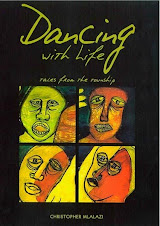
Some have had recognition on a wider scale ‑ Christopher Mlalazi’s short story collection ‘Dancing with Life’ and Sandisile Tshuma's story ‘Arrested Development’ winning honourable mentions in The Noma Award for Publishing in Africa and the Thomas Pringle Awards respectively and ‘Long Time Coming. Short Writings from Zimbabwe’ being selected by the ‘New Internationalist’ as one of their best two books from across the world in 2009.

JM, What are your challenges?

BJ: The reality is there is a small book buying public and over the years the book industry, like any other industry, suffered due to the poor performance of the economy.

People often do not read for pleasure but towards success in their academic studies or for professional purposes.

JM: So what can you say is the major objective of this project?

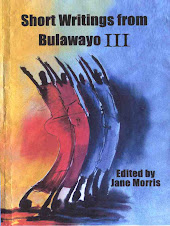
BJ: One of our aims was to give a voice to Zimbabwe writers who had previously been unpublished, publishing them alongside more established authors. We achieved this through the Short Writings series, of which five have been published to date, the first being Short Writings from Bulawayo and the most recent,Where to Now? Short Stories from Zimbabwe.

JM: What's your take on Zimbabwean authors?

BJ: There are many excellent Zimbabwe writers out there, each with wonderful stories to tell. As ‘amaBooks, we wanted these stories to be available to people across Zimbabwe, and across the rest of the world.

JM: What are you doing in terms of uplifting the book industry?

BJ: We have recently entered into co-publishing and rights agreements with several publishers in other countries.
We recently entered into an agreement with World Reader, so that many of our titles and some individual stories from those titles, are available digitally, to be read on e-readers and cell-phones, to children and their families across Africa.
We are also in discussions with publishers in South Africa and the United Kingdom about the co-publication of two further novels and a poetry collection.
Most AmaBooks publications are available outside of Africa through the African Books Collective on a print-on-demand basis and as e-books.
In order to reach a wider readership, we have participated in the Jozi, Cape Town, London and Frankfurt Book Fairs to promote the books.

JM: Any notable progress from your products?

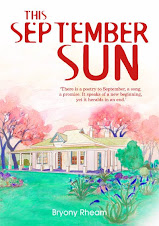
BJ: Bryony Rheam's debut novel, ‘This September Sun’, which won Best First Book at the Zimbabwe Book Publishers Association awards and is a set book for Zimsec 'A’ level Literature in English, and the collection ‘Where to Now? Short Stories from Zimbabwe’ have been published in the United Kingdom by Parthian Books and distributed in North America by the Independent Publishers Group.
The late Julius Chingono and John Eppel's collection of poems and stories, ‘Together’, has been published by the University of KwaZulu-Natal Press in South Africa and the University of New Orleans Press in North America.
For the first time in 2012, the stories from the Caine Prize for African Writing were available in Zimbabwe, ‘African Violet’ being co-published by New Internationalist in the United Kingdom, by ourselves and by six other African publishers.

JM: What does your organisation really intend to achieve?

BJ: The aim of ’amaBooks is also to have Zimbabwe stories available to all within Zimbabwe.
Our books are on sale through many outlets in both Bulawayo and Harare. But the economic problems over the last decade have led to the closure of many bookshops or to them concentrating solely on texts for schools.
To give those outside the main population centres and those who cannot afford to buy books an opportunity to read local stories, ’amaBooks donated more than 400 books to rural and city libraries at a ceremony during the 2012 Zimbabwe International Book Fair in Bulawayo.
To encourage interest in local writing we have taken an active role in literary arts at the Intwasa Arts Festival koBulawayo and  several workshops for young writers. We have also donated books and helped with reading clubs in the high-density areas of Bulawayo.
So far, their publications have all been in English, but, with the support of the Open Society Initiative for Southern Africa, amaBooks is in the process of having ‘Where to Now? Short Stories_from Zimbabwe’ translated into Isi Ndebele, as ‘Siqondephi Manje? lndatshana zasezimbabwe’. The book will be published later this year.

JM: Tell us about the future?

BJ: AmaBooks will keep publishing great Zimbabwean stories, and work hard to get those stories read by as many people as possible in Zimbabwe and in the rest of the world.
We are also keen to have new writers come and have their voices heard through us.