Showing posts with label Long Time Coming. Show all posts

Tuesday, September 9, 2025

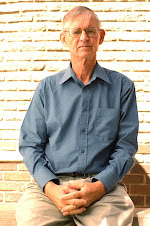
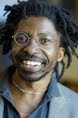
Becoming Digital: A Guest Blog by Fungai Machirori

 Fungai is a storyteller, ethnographer and archivist who weaves digitality into her ways of seeing the world.


Erections don’t mean affection. 

This is obvious, I know. But in the 2010s of my 20s, it feels unprecedented to announce, especially as my first ever blog post. 

It’s an era where the internet still feels like a small community of likeminds; thankfully, trolls are something I am yet to discover and no outspoken patriarchs flock to my blog to pass insidious comments to shame me. 

My blog’s name is Fungai Neni and it is almost eponymous. 

‘Fungai’, my first name, is also a command in Zimbabwe’s Shona language to think or reflect. ‘Neni’ translates to mean ‘with me’. ‘Fungai Neni’ constitutes a double entendre; ‘Think with me’ is one of its meanings, but so too is ‘Fungai and me’. Both are apt because I simultaneously seek intellectual engagement and connection in my  digital foray.

Briefly -  before Fungai Neni -  there exists Banjo Queen, a blog I set up many years before but never publish content on to. 

No, I do not play the banjo. But the moniker somehow seems to fit my look. I wear my hair in a voluminous Afro accompanied by colourful tiered skirts and stacks of bangles whose sonorous chatter precedes my arrival into any room. It seems feasible that I could whip out a banjo and strum it over some of the poetry that finds a home in my journalism notebooks.

Recently, I’ve found an old diary from my undergraduate journalism studies where I write that I feel like I am Walter Mitty. Walter is a fictional character I have encountered somewhere in my earlier life who escapes the monotony of his daily life through elaborate daydreams.  His dissociation becomes relatable as I sit and drift away during my lectures. I don’t care much for the 5 Ws and H, the holy grail of journalism, and am even less inspired by ethics and law. In other diary entries, I write about the entrapment I feel at having to package words in the clinical way that journalism demands. It’s like looking at resin art;  all the wildness and beauty seems trapped beneath a dense glassy finish.  

My poetry and Banjo Queen aesthetic become my silent rebellion. 

I am not enjoying this degree for many other reasons. One of them is that this public university education represents a massive shift from the private high school that I have attended for six years prior. In high school, we have it taught to us that we will soon become intrepid citizens of the world. We learn French and study the classical works of Mozart and Bach. We watch rousing films like ‘Dead Poets’ Society’ and our class of 28 is a mix of black, white and Indian girls. We aren’t taught much local history (or culture) because it is deemed divisive among the racial groups; also, it’s apparently not really useful for a life as a global citizen. 

Even though we are living within the landlocked boundaries of Zimbabwe, it often feels like we inhabit an island. Nothing about what we are taking in reflects the material reality of a nation that is just about to enter its deepest economic freefall.

University moors me to the mainland, however, grounding me in what most of my classmates manage to escape by leaving for studies in the diaspora. The time is the early 2000s and a land reform programme has been hastily brought together by the government to repossess vast tracts of land that have been in the possession of white farmers for a century. Food shortages and hyperinflation ensue and these have a deep impact on all sectors of society. I take my studies in a newly opened but under-resourced department where we journalism majors have to imagine things like the shutter speed on a camera because we don’t have actual equipment to work with. 

In high school, we have a dedicated computer room which we visit every Friday for our computer class. We are still mostly living in an analogue reality and don’t quite see the utility of this medium. So we use the time to play Solitaire and Tetris, or send emails to pen friends navigating this new medium somewhere in the western world. On the best of my university internet’s days, the churlish connection lets you get through a few links on the site you are navigating. If you are really lucky, you might get to send an email too. Otherwise, it’s us mostly writing notes and instructions in hopes of applying these skills sometime later. 

It’s not just infrastructural disparities that are making things uncomfortable. My shift into early adulthood also comes with the discovery of my being Shona and this adds a new and awkward texture to my identity. In high school, we cleave into groups by skin colour. But in university, since we are all black, a new form of difference has to be fomented.  And this time, it is by  tribe. 

The Shonas are the dominant tribal grouping in Zimbabwe. And there is a history of tensions between them and the Ndebeles, the dominant tribal grouping in Bulawayo, the city I am in and which I have grown up in. In the 1980s, a long political massacre of the Ndebeles is waged by a Shona government. Its impact, decades later, is for many Ndebeles to view Shonas as affiliates of massacrists. It might seem strange, but I have never previously  experienced this polarity. My suburban upbringing has shielded me from many aspects of these tensions. 

To survive these new unwelcoming perceptions, I learn to shapeshift across identities. Sometimes, I throw Ndebele phrases around to gain my Ndebele classmates’ approval and other times, I  attempt to debunk the stereotypes that my Shona classmates - who mostly come from outside Bulawayo - hold about the city and Ndebeles. Shona and Ndebele alike, most of my classmates struggle to place me because they imagine I should be continuing my cosmopolitan trajectory by taking my studies somewhere outside Zimbabwe. Code switching is something which my high school experience has already granted me fluency in.  But continuing it into this stage of life makes finding myself even more challenging. 

It is a mystery to me how we get the internet to cooperate the day we have our blogging half-day session. It is a Friday morning and our visiting Fulbright professor has brokered a deal with one of our lecturers to use his double lecture for this training. Our tutor is a young American on a sojourn to Africa who has floppy blond locks, and is clad in shorts and slippers. After introductions, he sits at the head of the cramped room and proceeds to take turns between scrutinising his laptop screen and wrenching his neck to look at the projection of words and images on the wall behind him.  

For many, the session signals an early start to the weekend. But I am having a different experience altogether. As I take down notes and watch the projections he brings up, I feel a long-dormant sense of aliveness awaken within me.

“Does anyone know where the word blog comes from?”

None of us responds. 

Our instructor goes on to write the word ‘weblog’ onto the white board. After he is done, he draws a vertical line between the ‘e’ and ‘b’ to create two separate words.

“It’s a made-up word from people claiming the power of weblogs as a communal act.”

We blog versus weblog.

I am transfixed. 

I create Banjo Queen some time later when I visit an internet cafe. Soon, though, I forget my log in details and return to my well worn practice of writing protest poetry into my notes. 

When my degree programme eventually comes to an end, it feels like salvation. 

Almost immediately after completion, I get a job and begin work in media and communications which – thankfully – steers me away from journalism practice. 

But I never quite forget my kinship to blogging. 

The work I do focuses on sexual and reproductive health and as an organisation, we try to find engaging ways to talk about HIV and AIDS. By this time, the AIDS pandemic has made its way through many Zimbabwean families and with this has come the realisation that pretending that people aren’t having sex is only exacerbating the problem. So we host workshops with journalists and create content like fact sheets and newsletters where we engage creatively to try to break taboos around condom use and HIV testing. I also begin to package my reflections on what are called e-discussion forums. You could think of them as discussion boards, with focused topics and content, sent to a group of email-based subscribers. These forums provide ground for me to question and challenge accepted ideas and ideologies, and build a following of supporters who enjoy my non-conformist take on things. 

Finally, it feels like I am beginning to find my own voice.  

Fungai Neni only comes to life after my contract isn’t renewed. And this is because of a fellowship I decide to take in Germany. The nation is just beginning to come out of its crippling economic downturn and the trauma of the last decade is still raw.  So taking leave of absence from a decent job in 2009 is not an option. 

The previous year, 2008, is the peak of the turmoil and when I begin this job. A memory I have from that time is of walking into an alleyway one evening to buy bread on the black market. Think of it as a speakeasy but for basic commodities. Cooking oil, sugar, soap; you name it, you will find it all there at a markup.  The items are sold by some guy who has a connection to someone who works in a supermarket and figures out how to enter into partnership to siphon stocks whenever they get delivered.  

By 2009, things are significantly different as a result of a coalition government being formed between the opposition and ruling parties. You can now buy bread and sugar in the shops again. Even things like lotion, which you’d have to stockpile from neighbouring nations like South Africa or Botswana, become readily available, so long as you have the US dollars to buy them; something which my salary allows. 

Choosing to go on this fellowship obviously seems like professional suicide. And after three months away, I return to the inevitable news that my contract will not be renewed. 

Experiencing Germany is worth it, though. 

I begin to see why my worldly high school education has made integrating into local Zimbabwean society so challenging. By my teens, I know about Hitler and Nazism and nothing about the tribal unrest that has riven my own nation. I am better equipped with knowledge to navigate an  international world, and not the one that I materially inhabit. I also use the opportunity to visit France and as I stand at the Arc De Triomphe, memories of my high school French classes and text books - which featured the monument -  stir. 

While in Germany, I also write for a few Zimbabwean digital news publications. It is something that I have been doing for some time before the fellowship and one of these publications is a national newspaper that publishes most of my musings. That is, all except when I send copy about attending gay pride. 

During my job, I become aware that the growing liberality that comes with talking about sex and sexuality is not matched when it comes to discussing homosexuality. There is often resistance, and sometimes even revulsion, when it is broached. This is because homosexuality represents abnormality for many. So it is a stretch, I know, to expect a national newspaper to accept my musings.

It is this experience that helps to bring me to clarity that if I want to discuss some topics, I am going to have to create my own space to do so. And this is how, newly jobless, Fungai Neni materialises. 

After my post about erections, I write a blog entry asking other young women whether they know what their vaginas look like. And I accompany the piece with an image that is a collage of vaginas in different hues and shapes. One commenter to the post responds that if a series of vaginas were put together in a police line-up, she would easily identify her own. She is the outlier as most others admit to feelings of shame and disconnection to their sexual bodies given the high proscription of women’s pleasure within Zimbabwean society. 

Being digital feels like a mystical experience. In one moment, I am processing the material realities of my conservative patriarchal society which keeps reinforcing to me that my appearance and existence are ‘too much’. And yet in the next, I enter a non-physical reality where I create meaningful belonging.  Two of my blog’s most ardent followers are women I don’t know who are living in Spain and Cameroon. Others are friends and connections scattered around the world. 

It’s like I leave the wardrobe to enter Narnia every time I write up and publish a post. And there is a freedom and exhilaration there that has been missing from my material life for too long.

I blog my way through my unemployment and into my new job and then my Masters degree for which I get a scholarship to study in the UK. 

It’s not just the spectacle of erections and vaginas that I discuss in my blogs. I write too about deeply personal experiences like when my father dies while I am in the UK and how my network of friends helps me cope. I also share many insecurities,  contradictions and hopes. 

There is a deep irony to the fact that I become this prolific of a  blogger.  In my early life, I am never someone who comes to mind when you mention boldness. In one of my childhood memories, I am sitting on the veranda of our house looking up as my sister employs an intricate strategy to climb up onto the roof. She has positioned a mattress on the ground and proceeds to jump through the sky to her soft landing below. 

I am four years old but my brain’s wiring already reads this activity as risky. I do not participate in it in much the same way I resist my first best friend’s playground strategy to run slowly so that we get caught and kissed when the boys chase us. 

Yuck, I think. 

I have reminded another friend about how she would jump over the railing of their third-floor apartment and dangle her body towards the concrete pavement when we were five years old. She called it a game but I read it as nonchalant precarity that could lead to death. She remembers nothing of this, which baffles me because of the terror I would experience.

By high school and despite my imposing height of almost six feet, I still very much remain the cautious observer who hangs back and doesn’t enjoy overt attention or risk. I like to think I am invisible, except when I walk past a shop window and notice my reflection towering over everyone around me. Or when I see myself in class photographs and notice that I am half a head taller than the next tallest person. 

It is always confronting because it reminds me that I am indeed there. 

School is the island of exploration I have already described. But it is also a site of merciless bullying. Tall and fat, I become a perfect target for many girls’ shaming. In the movie, ‘The Nutty Professor’, Eddie Murphy stars as a quirky overweight scientist. And some girls take to calling me this when they see me. I do not respond and they erupt into laughter as I try to shrink myself to disappear. Other girls raise issue with how much I like to read or make me stand up to offer my seat when I try to hide by sitting in the back of the school bus. 

I want to say certain things in class but I don’t because I doubt that they are of any value. When I do speak, the anxiety of my internal dialogue takes over and I mumble my way through incoherences that sometimes elicit laughter from my classmates. 

Once, in English class, I hear a girl sitting close by use me to explain a word that we have just been asked to make a sentence with.

“Fungai is eccentric.”

‘Eccentric’ is the word we have just been taught  and she shares her use of it to her neighbour in a whisper. She then chuckles softly.

Being academically smart creates a mask to many about how much I am struggling. But I am deeply wounded by all these experiences.

A friend’s mother takes to making unsettling comparisons between us that create more wounds. Reading my good grades as a sign of maturity, she creates a template out of me that she tries to draw her daughter around. 

The day after we get our GCSE results, my friend tells me that she is in the car park waiting to see me. 

“It’s about your results.”

To her mother’s displeasure, my friend has scored four A grades and wants to know how I have done. I have gotten six As. I reluctantly share this information with her mother through the half-open window of her car after an exchange of niceties.  

“You should be more like Fungai.”

My friend’s mother turns to her coolly and with this stern glance, something dies within our bond. We both know I will constantly be a reminder of everything that her mother believes she isn’t. 

Deeply contrasting, these two realities of how I am perceived each provide their own torture. In one reality, I am a source of ridicule and in another, I am the epitome of excellence. I am too young to hold this contradiction with any real grace. And underneath my semblance of composure, my identity fragments.

I am high achieving. But also extremely insecure. If I could, I would braid myself into an unworkable knot and disappear. 

To cope, I turn to writing. And over time, I build up a collection of diaries of all my unspoken thoughts and feelings. It’s where, years later, I write about my difficult university experiences and other issues of my early adulthood that are a continuation of things I have not yet managed to resolve.  

Blogging, in many ways, feels like keeping a diary. But only now, with a desire to speak publicly for the many times that I didn’t trust myself earlier in my life. You might even say that blogging is my attempt to make up for the lack of risk-taking of my earlier years; a bounty of daring thoughts and words that chase my screen’s blinking cursor. 

In my blogging days, there was always a moment just before I pressed the publish button where I’d hesitate. I’d feel like I was sitting in my high school classroom again as a surge of doubt ran through my body. A thought would come over me that what I had just written didn’t make any sense and didn’t need saying. That it was obvious. Or worse, that it could be a source of derision. 

I’d feel it again just after hitting the ‘Publish’ button when my refreshed page confirmed that I had surrendered another part of myself. 

I’d want to become that unworkable knot again and let the earth to devour me. 

I feel it too as I write this, dangling myself over the edge of precarity just like my childhood friend used to. 

To any observer watching her, it looked like she was courting death. But now - with time and the joys and pain of living - I see that she was only chasing freedom. 

---------------------------------------------------------------------------------------------------------


Two of Fungai's stories have been published by amaBooks: 

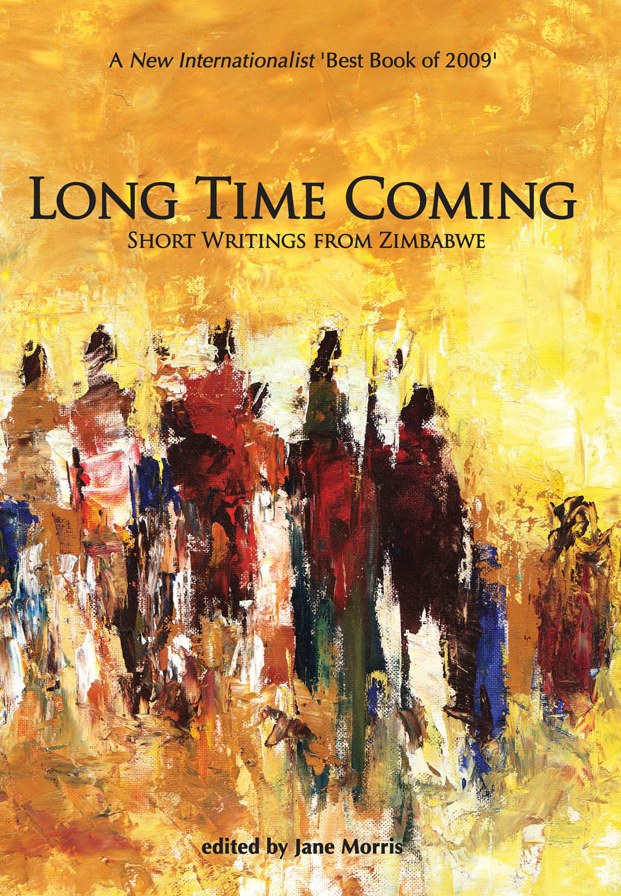
'Rain in July' in Long Time Coming, Short Writings from Zimbabwe

and

'Alone' in Where to Now?, Short Stories from Zimbabwe


Wednesday, December 12, 2018

Why I Read: Mzana Mthimkhulu

As an eight year old, my hero was the swashbuckling picture magazine jungle man Samson the Lion Heart.  I believed that when I grew up, like my hero, I was going to be: ‘strong as an elephant, brave as a lion and fast as a striking mamba.’

So, whilst waiting to grow up, I read and studied everything my hero did. The two weeks I had to wait for the next instalment of True Africa magazine was too long. I filled in the time with other comic magazines – Dandy, Beano and The Archies. Today I often cringe with embarrassment when I read the lofty names of the writers read by other writers in their youth. Not a single classic writer features in my early reading list.

One day after glancing at the first picture of a story in Dandy I made a painful decision – it was time I stopped reading comics. The moment I saw the picture I closed my eyes and recited the whole story. I had read it ten years earlier and still recalled it. The Dandy writers must have believed that the kids who had read the earlier story were no longer reading comics and so it was safe to reprint it. Like Samson after defeating a villain, it was time I moved to the next adventure.

Fortunately by then I had broadened my reading diet. From Njube Library, I borrowed books by the Drum generation of the fifties. I now was reading books by Ezekiel Mphahlele, Can Themba, Bloke Modisane and Lewis Nkosi. These writers spoke to my experience as a boy growing up in the townships. I notice that the writers are now sometimes described as ‘classic.’ May I therefore raise my pedigree as a writer?
For old time sake, I once went  back to Njube Library. I perused and read a few books. A ten year old stared at me in awesome wonder. ‘Look,’ he said to a friend, ‘an adult in the library.’

Recently I renewed my membership at the British Council Library. ‘So, when did you first join the library?’ the librarian asked me.  ‘We may still have your details.’
‘I first joined in 1983 in Harare, and then transferred to Bulawayo library in 1989.’
‘Oh, then you have to give us your details again. I was born in 1996.’

I wonder why I’m taking so long to state why I read. I read because for me it is the greatest source of entertainment and information. Books are my best friend. I laugh, cry, smile and curse in the world of books. Further, writing is a profession in which you are forever an apprentice. I read so that I know what and how others are writing. I then try to adapt the best and avoid the bad.

Mzana Mthimkhulu.  11 December 2018 


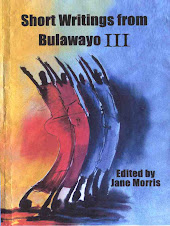
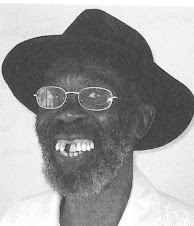
Mzana Mthimkhulu was born on Martin Luther King’s twenty-fifth birthday and was educated at Matshayisikhova and Kuredza Primaries, Inyathi Secondary, Edinburgh College and the then Polytechnic of North London. His short stories have appeared in the amaBooks anthologies Short Writings from Bulawayo III and IIILong Time ComingWhere to Now?Siqondephi Manje? and Moving On, and his short stories and poems have appeared in other anthologies, newspapers and magazines in Southern Africa, United Kingdom and online. An enthusiastic culture activist, Mzana is also a newspaper columnist and a playwright.

Mzana and his wife Naume have three biological children and several other traditional ones. 

Mzana Mthimkhulu has a blog ourevolvingculture.home.blog  


Monday, July 24, 2017

Why I Write: Sandisile Tshuma


“So what’s your guilty pleasure?” my brother asked one day out of the blue. We had spent the day in my little apartment and I suspect that, as he looked around the barebones space filled with books, CDs and conspicuously missing a television set, he was worried I had no life. “Um, I get my locs treated and go to the spa for a deluxe pedicure?” I ventured, posing my response as a question because I was pretty sure there was a right answer and a wrong answer to his question. “No, that’s basic grooming. You have to do that. What’s a thing that you do that you don’t need to do but that you love to do just for the pure enjoyment of doing it?” Failing to find an answer to a question so simple as “what do you enjoy in life?” I weaseled out of the conversation by offering him another beer from the fridge. But the question lingered in the recesses of my mind for years afterwards.

One day I wrote a blog post about how my inability to put down roots and stick to a single place or activity for long had evolved. I was not supposed to write that post. I was supposed to be working on an assignment for school due the next day. But there is a land called Procrastinatoria and I am their queen. Instead of ten pages on voluntary medical male circumcision, I toyed with the idea of finding myself by doing less and being more. I wrote and wrote and wrote and wrote. Then when my eyelids were so heavy with exhaustion that I could barely keep them open as I clicked on the Publish button, the answer to my brother’s question came to me. I was tired but completely satisfied. I had been so absorbed in what I was doing that I hadn’t noticed time slipping past and the sleep creeping in. I had stolen time from my education and spent it on my immediate happiness. Instant versus delayed gratification. An indulgence. A guilty pleasure, one might say.


Nothing relaxes me the way writing does. Nothing else feels so effortless even when the results aren’t perfect. Nothing validates me the way writing does. Writing gives me wings. My writing needs no audience. It bears witness to itself. I write because it makes me feel alive and significant. I write because I express myself best that way. My brain moves so fast that my mouth can’t keep up. So writing is my one chance at taking what’s on the inside of my mind and manifesting it in the material realm.  In a world with so many distractions that exact a heavy toll on introverts like me, writing is my refuge, a welcome escape. It’s my happy place, my soft place to land. I write because there’s nothing else I would rather do, ever. They say you shouldn’t need a lover; you should want one. So sure, I don’t need to write. I want to write. But I want it badly. I want it all the time like a hot new crush. In my universe, writing is bae.


Sandisile Tshuma is a Zimbabwean storyteller, health, development and human rights practitioner who has studied molecular and cellular biology, public health, disaster management and acting from the University of Cape Town (South Africa), the University of the Witwatersrand (South Africa), the National University of Science and Technology (Zimbabwe) and the London Academy of Music and Dramatic Art (United Kingdom).
Sandisile has a professional background in monitoring, evaluation and communication in sexual and reproductive health programmes with the United Nations and other International Organizations in East and Southern Africa. She is an award winning short story writer, the founding editor of AntuAke online magazine, and has curated a personal blog for five years. Sandisile's short stories, "Arrested Development" and "The Need" were published by amaBooks Publishing in two anthologies of Zimbabwean short stories. "Arrested Development" won an Honourable Mention for the 2010 Thomas Pringle Award in the short story category, has been translated into a number of languages and is included in an anthology titled "When The Sun Goes Down", a set book in the Kenyan English language curriculum at secondary school level. The Need has been translated into isiNdebele. Her first full length book, "Dandelion Dreaming," tells the story of marginalised youth in South Africa using the "photo-voice" methodology. 

Friday, January 13, 2017

Stories Invited for a Zimbabwean Short Story Collection

amaBooks Publishers are planning a collection of Zimbabwean short stories, to be published in 2017.  We are inviting submissions by February 14, 2017. There are no restrictions on the length of the stories, and there is no particular theme.
Stories for consideration should be emailed as Word attachments, with no artwork or photographs included, to amabooksbyo@gmail.com. Unfortunately, we will be unable to give feedback on those stories that are not accepted for publication.
The writers whose work is accepted will each receive a copy of the book and they will retain copyright of their stories.

The previous collections of short writings published by amaBooks include Where to Now? Short Stories from Zimbabwe, Long Time Coming: Short Writings from Zimbabwe and Short Writings from Bulawayo I, II and III. Where to Now? was co-published by Parthian Books in the UK and was translated into isiNdebele as Siqondephi Manje?, and Long Time Coming was selected by New Internationalist as one of the two best books from across the world in 2010.


Wednesday, January 11, 2017

Why I Read by Sandisile Tshuma


Hi. My name is Sandisile Tshuma and I am an information junkie. More than ten years ago I underwent the Clifton strengths finder assessment as part of a team building exercise at the youth-focused HIV prevention organisation I had just joined.  The test revealed that one of my top five strengths was something called Input. Input was defined as having a craving to know more and people with Input like to collect and archive all kinds of information. While I normally like to convince myself that I am “a riddle, wrapped in a mystery, inside an enigma,” I had to admit that the test was spot on.  

I read because I like to know things. I love knowledge for its own sake and I hoard it in my mind, my electronic devices, journals, notebooks and a book shelf that is so heavily overloaded it teeters precariously on the verge of collapse under the weight of all manner of books, lovingly collected over years.  My insatiable appetite for information and ideas in the form of words is well documented. I can’t help myself. Reading let’s me know things and discovering new things fills my heart with unadulterated joy. Literacy is the greatest gift my parents gave me.


When I was a child my parents kept an old school trunk full of books well older than I. That black trunk was a treasure trove of books, all classics. My mind traveled from The God of Small Things and Coriolanus, to Harvest of Thorns and Petals of Blood, from Gray’s Anatomy to Toohey’s Medicine for Nurses, Charles Mungoshi to William Blake. One day while digging through the old black trunk I found a tatty old exercise book in which my father had written the first few chapters of an autobiographical creative fiction book. I knew it had to be something he wrote in his youth because the pages were almost disintegrating and the ink was faded and blurred making it hard for me to read some of his flawlessly scripted cursive. He had never once mentioned this work or expressed the desire to write. He was a military man, a man of science, a businessman, anything but an author. And yet he wrote beautifully. Lyrically. He was reflective and generous in his descriptions. I was mesmerized. We never discussed it but it completely changed the way I saw him. He revealed his complex layered thoughts and helped me understand my own dark, broody complexity. I recognized myself not only in his words but also even in the very act of writing out his life, documenting his story for an audience of unknown existence.
I read to rekindle the feeling I got when my father unknowingly shared his life with me, as do so many other authors I love. In a world where it’s hard to feel anchored my love for reading showed me a new connection to the source of my being. I read because this is a privilege.


Sandisile Tshuma is a Zimbabwean storyteller, health, development and human rights practitioner who has studied molecular and cellular biology, public health, disaster management and acting from the University of Cape Town (South Africa), the University of the Witwatersrand (South Africa), the National University of Science and Technology (Zimbabwe) and the London Academy of Music and Dramatic Art (United Kingdom).
Sandisile has a professional background in monitoring, evaluation and communication in sexual and reproductive health programmes with the United Nations and other International Organizations in East and Southern Africa. She is an award winning short story writer, the founding editor of AntuAke online magazine, and has curated a personal blog for five years. Sandisile's short stories, "Arrested Development" and "The Need" were published by amaBooks Publishing in two anthologies of Zimbabwean short stories. "Arrested Development" won an Honourable Mention for the 2010 Thomas Pringle Award in the short story category, has been translated into a number of languages and is included in an anthology titled "When The Sun Goes Down", a set book in the Kenyan English language curriculum at secondary school level. The Need has been translated into isiNdebele. Her first full length book, "Dandelion Dreaming," tells the story of marginalised youth in South Africa using the "photo-voice" methodology. 

Sandisile has a special interest in young people, particularly those made vulnerable by HIV and AIDS, and is involved in supporting the work of  Aluwani and COPESSA. Currently, she works in leadership development as the South Africa country manager of the Emzingo Group aiming to inspire responsible leadership, prepare individuals to tackle global challenges and connect business to society.

Monday, June 22, 2015

Owen Sheers: an interview with contemporary literature’s renaissance man


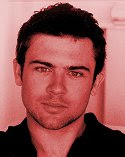
Owen Sheers has been published several times by amaBooks - his poetry in Intwasa Poetry and in Short Writings from Bulawayo III, and a short story, 'Safari', in Long Time Coming: Short Writings from Zimbabwe. He has visited Zimbabwe on several,occasions, and The Dust Diaries, his creative non-fiction account of the life of his great uncle, the 'maverick missionary' Arthur Shearly Cripps,  is mainly set in Zimbabwe. His new novel is 'I Saw a Man'.

from The Guardian, 13 June 2015
http://www.theguardian.com/books/2015/jun/13/owen-sheers-interview-with-contemporary-literatures-renaissance-man


From a distance, Owen Sheers’s new novel appears to be missing a title; the cover looks bare but for the image of a flight of stairs, black against a backdrop of bilious yellow, and it’s not until you have the book in your hands that you make out the words lacquered over the top. Tip it to the light and “I Saw a Man” gleams into view like heat haze over tarmac. Put the book back on the shelf and it sinks back into the picture, leaving you wondering whether you saw anything at all.


The title is taken from the opening verse of Hughes Mearns’s well-known “Antigonish”, which Sheers quotes at the beginning of his novel: “Yesterday, upon the stair,” it goes, “I met a man who wasn’t there./ He wasn’t there again today/ I wish, I wish he’d go away…” It’s a queer little poem, shifting back and forth between witty epigram and soured, creepy nursery rhyme, and the cover realises it beautifully. But it’s also a neat metaphor for the provisional, ambiguous story Sheers has written.

The curtain lifts on the borders of Hampstead Heath on a torpid summer afternoon, at the moment when a man, believing his neighbours’ house to be empty, steps inside. Michael Turner has drifted to London following the sudden death of his wife; in the blank aftermath of the tragedy, he finds himself caught in an oddly accelerated friendship with the family next door. Through the details of their connected lives, interspersed with snapshots of Michael’s inching progress through the house, the novel establishes a network of cause and effect that reaches all the way around the world, from the sub-prime mortgage crisis in the US, which sees a father lose his job in London, to the drone operator in a bunker in Nevada who obliterates a man feeding chickens in Pakistan. It twists and turns and plays its cards close to its chest, showing its full hand only in the final pages, when we are forced to reassess everything that has gone before.

The ambiguity that makes Sheers’s novel so compelling is there in him, too: as a writer, he’s impossible to pin down. He started life as a poet, publishing his first collection fresh out of university, but despite racking up great reviews, a clutch of prize shortlistings and a tour with Carol Ann Duffy, Sheers decided that his next move would be to up sticks for Zimbabwe to research the life of his great-great-uncle, Arthur Cripps. The book that arose from his story, The Dust Diaries, blended fact, fiction and conjecture to the extent that it’s sold as non-fiction in some countries and a novel in others; either way, it snagged him the first of many awards (Wales Book of the Year 2005) and the praise of no less an authority thanDoris Lessing. From there, he doubled back to publish a second poetry collection,Skirrid Hill, followed that up with a one-man play on the life of the poet Keith Douglas, then brought out his debut novel, Resistance – a crowd-pleasing historical epic that sold more than 50,000 copies. The book before I Saw a Manwas Pink Mist, a verse-drama on the Afghan conflict, a stage version of which will have its world premiere at the Bristol Old Vic this July. When we meet he has the first draft of a new play “still warm off the printer. Like a fresh kill” in his bag. And this is just the whistle-stop tour: other highlights include an anthology of British landscape poetry (and a TV series to accompany it), a three-day Passion play co-created with Michael Sheen and a stint as the Welsh Rugby Union’s writer in residence. Truly, he’s contemporary literature’s renaissance man.

With a CV like that, his “natural opposition to categorisation” is unsurprising, but when pressed he concedes that in the past he’s called himself “a poet who writes in other forms”. It was only with I Saw a Man that he consciously sought to change the label; here, for the first time, he “wanted, in quite a geeky way, to feel like a novelist writing a novel”. The fictional elements of The Dust Diaries had given him the taste for invention, but his first novel, which tells the counterfactual story of Wales under Nazi occupation, didn’t ultimately allow him its full licence. “Resistance was based on a piece of history that didn’t happen,” he says, “but to portray it with credibility, every room needed to be properly furnished. This time, I wanted to invent something from scratch.”

I Saw a Man arose entirely from that single striking image of a man easing open his neighbours’ back door, which dropped into Sheers’ head fully formed, “the first time that’s happened to me. Of course it led to a load of questions: who is he, why is he entering like that, where’s he at in his life?” In the end, he borrowed from his own backstory to fill in the blanks: the setting is based on a real street in Hampstead, where Sheers “rented a couple of flats at a time when, like Michael, I was pretty nomadic”, and the book, which he wrote between other projects over seven years, teases out some of the questions he was grappling with in his own life. “When I started it,” he says, “the idea of family felt very distant; I couldn’t work out how people did it.” Three times, he got to 10,000 words before beginning again, “which was a big psychological kick in the teeth; it’s much easier when a poem doesn’t work. But it did mean that by the time I found the right voice, that possibility of the domestic was much closer. My final deadline was my wedding.”

These days, Sheers is a father as well as a husband, and (like Michael and his wife in I Saw a Man) has lately left London for Wales’s Black Mountains. Although he was born in Fiji, where his parents were working for the Ministry of Overseas Development, he did the bulk of his growing up in a small village in Abergavenny, one of just 14 children at the local primary school. Wales – and specifically, that bleak, beautiful corner of it – has been lodestone and muse for him: the Black Mountains’ furthest outlier, Skirrid Hill, provides both title and unifying metaphor for his gorgeously elegiac second poetry collection, and Resistance is set in one of the area’s most remote valleys. Yet though its influence runs through his work, for the duration of his professional life he has lived elsewhere, only recently finding his way home again. Oxford and the University of East Anglia’s creative writing course came first; it took him a long time to find his feet (“There were more kids from Eton in my college than had gone to Oxbridge from my school for a decade, and there seemed to be a secret rule book that everyone else had access to”), and his affinity for his homeland was enhanced through his absence from and longing for it.

By the time he left UEA, he was “skint. So I applied for [TV production company] Planet 24’s graduate programme and ended up working onThe Big Breakfast”. I goggle; he laughs. The contrast with UEA’s rarefied environment was marked; suddenly, he found himself “in a living version of Martin Amis’s Money, inventing puns and booking novelty acts at four in the morning and researching Arthur Cripps in the afternoon. It was a very odd split life.” In the end, a rupture was forced. Arts Council Wales offered him a grant to work on The Dust Diaries, so he quit his job and moved into his parents’ caravan on the Pembrokeshire coast for a winter, where “the day’s main event was walking along the cliffs. The grand idea was that I was going to write and surf, but there weren’t any waves that winter. So I got on with writing.”


The Dust Diaries made a minor impact, but it was with Skirrid Hill that Sheers really hit his stride. As well as cementing his reputation as a writer of Wales, it sowed the seed of what would become his other essential subject. The opening poem, “Mametz Wood”, visits the scene of one of the first world war’s bloodiest battles, where “even now the earth stands sentinel, / reaching back into itself for reminders of what happened”. War – its tolls, its terrors, its physical and psychological scars – has haunted his work ever since; it wasn’t, he says, something he set out to write about, but one poet led him to another, one conflict to the next. He followed up his radio play on Douglas with a second on Alun Lewis, the Welsh poet whose centenary is this year, and approached the task from a novelist’s perspective in Resistance. Then he moved on to contemporary conflicts, publishing The Two Worlds of Charlie F, a play “based on the experiences of very recently wounded service personnel” in 2012, and Pink Mistin 2013. “Post-9/11 conflicts have run in exact parallel with my writing life,” he explains, “and you feel as though you want to reflect that, even if it’s through historical prisms. Plus, growing up where I did, I knew kids who entered the army at 15. Britain’s the only EU country that allows you to join the army as a child soldier. It’s scandalous, and I wanted to make people aware of that. I keep saying I want to stop, though. I’m quite warred out.”

He hasn’t quite managed this with I Saw a Man: war and Wales still feature, but their retreat from the foreground marks a new stage in Sheers’s career – and might explain why he gives the impression of being faintly bemused by his latest creation. “Before this, if you’d asked me which two books I’d never write, I’d have said, a book set in Hampstead and a novel about novel writing, which this turned out to be. Both tend to drive me mad. But having lived in temporary places in Hampstead surrounded by that sense of establishment, there was a tension that I found I wanted to explore. And I did end up thinking, what’s the point in writing in a form if you’re not going to interrogate it? It’s a negotiation, obviously; the book also has to be an absorbing read. The novels I really love are both. I hope,” he frowns slightly, “this is, too.”

It is. I Saw a Man is Sheers’s most mature and coherent work to date; taut as a thriller, but resonant with motifs of intimacy and distance, guilt and redemption, and the nature of stories and storytelling. The only shame is that his name doesn’t appear on the cover.