Showing posts with label Short Writings from Bulawayo. Show all posts

Wednesday, December 12, 2018

Why I Read: Mzana Mthimkhulu

As an eight year old, my hero was the swashbuckling picture magazine jungle man – Samson the Lion Heart.  I believed that when I grew up, like my hero, I was going to be: ‘strong as an elephant, brave as a lion and fast as a striking mamba.’

So, whilst waiting to grow up, I read and studied everything my hero did. The two weeks I had to wait for the next instalment of True Africa magazine was too long. I filled in the time with other comic magazines – Dandy, Beano and The Archies. Today I often cringe with embarrassment when I read the lofty names of the writers read by other writers in their youth. Not a single classic writer features in my early reading list.

One day after glancing at the first picture of a story in Dandy I made a painful decision – it was time I stopped reading comics. The moment I saw the picture I closed my eyes and recited the whole story. I had read it ten years earlier and still recalled it. The Dandy writers must have believed that the kids who had read the earlier story were no longer reading comics and so it was safe to reprint it. Like Samson after defeating a villain, it was time I moved to the next adventure.

Fortunately by then I had broadened my reading diet. From Njube Library, I borrowed books by the Drum generation of the fifties. I now was reading books by Ezekiel Mphahlele, Can Themba, Bloke Modisane and Lewis Nkosi. These writers spoke to my experience as a boy growing up in the townships. I notice that the writers are now sometimes described as ‘classic.’ May I therefore raise my pedigree as a writer?
For old time sake, I once went  back to Njube Library. I perused and read a few books. A ten year old stared at me in awesome wonder. ‘Look,’ he said to a friend, ‘an adult in the library.’

Recently I renewed my membership at the British Council Library. ‘So, when did you first join the library?’ the librarian asked me.  ‘We may still have your details.’
‘I first joined in 1983 in Harare, and then transferred to Bulawayo library in 1989.’
‘Oh, then you have to give us your details again. I was born in 1996.’

I wonder why I’m taking so long to state why I read. I read because for me it is the greatest source of entertainment and information. Books are my best friend. I laugh, cry, smile and curse in the world of books. Further, writing is a profession in which you are forever an apprentice. I read so that I know what and how others are writing. I then try to adapt the best and avoid the bad.

Mzana Mthimkhulu.  11 December 2018 


Mzana Mthimkhulu was born on Martin Luther King’s twenty-fifth birthday and was educated at Matshayisikhova and Kuredza Primaries, Inyathi Secondary, Edinburgh College and the then Polytechnic of North London. His short stories have appeared in the amaBooks anthologies Short Writings from Bulawayo I, II and III, Long Time Coming, Where to Now?, Siqondephi Manje? and Moving On, and his short stories and poems have appeared in other anthologies, newspapers and magazines in Southern Africa, United Kingdom and online. An enthusiastic culture activist, Mzana is also a newspaper columnist and a playwright.

Mzana and his wife Naume have three biological children and several other traditional ones. 

Mzana Mthimkhulu has a blog ourevolvingculture.home.blog  


Sunday, April 14, 2013

Ebooks on phones, from www.forbes.com


This Simple App Could Put E-Books On Millions Of Phones In The Third World

It sounds counterintuitive, but in certain developing nations it’s easier to get hold of a cell phone than a good book.
More than one in three adults cannot read in sub-Saharan Africa, yet almost every home there has access to at least one mobile phone, according to USAID. Developing nations are among the fastest growing mobile markets in the world, but literacy is still a big problem.
David Risher, a former executive at Amazon and c0-founder of non-profit organization Worldreader, thinks there’s an obvious answer here: offer free books through all those cell phones.
On Wednesday Worldreader Mobile comes out of “beta” mode. About a year ago it partnered  with biNu, a mobile app platform for feature phones in developing countries, so that its Worldreader Mobile app would appear on the home screen.
Richer says that in the last year, 10% of biNu’s 5 million-user base have accessed the Worldreader Mobile app. That’s about 500,000 people. Risher hopes to get that number to 1 million by the end of 2014.
Worldreader’s biggest readers are in India (nearly 107,000 users), with 60,800 in Nigeria and 33,100 in Ethiopia.


A screenshot of one of the titles on offer through Worldreader Mobile

Most of them are using low-end, pre-pay Nokia phones with physical buttons, that cost about $50. They will typically spend about $2-3 a month on their data plans. Out of the 6.4 billion active mobile phones in the world today, 5.4 billion are so-called features phones like these, according to Worldreader statistics sourced from Analysys Mason.
The books they’re reading are short, typically taking up 150 screenshots. Though men are early adopters, women are the “power readers,” Worldreader says, reading an average 17 books a month.
The most popular books are romance novels. Among the top five most popular books in the last month, the No. 1 was a children’s book about school, the second an basic algebra book, and No.’s 3 and 4 were entitled My Guy and Can Love Happen Twice?
Risher says it’s not unnatural in sub-Saharan African culture to see people hunched over reading their cell phones for long periods at a time. So pervasive have mobile device become that some elementary schools in Ghana have even started banning them, he notes.
Most of the books on Worldreader Mobile are in English, with a few in local languages like Swahili, French and Spanish, though the number of books overall is increasing. Currently there are 1,200 titles available, donated by local and English-language publishers.
“I think the single biggest thing that will get more people reading is putting more book on there,” says Risher. “Everything form the Bible and Koran, to romance novels.” Books on mobile phones are another way to get health information to people in rural communities, who often have access to pharmacies and relatively cheap, generic drugs, but encounter pharmacists with little sound medical knowledge.
While accessing a book is free, it might cost users 5-10 cents from their data tariff to read. With the program, users don’t download entire books but download a single page at a time, largely to save the cost of data and because low-end phones don’t have much memory to begin with.
“The books are highly compressed,” says Risher, adding that the biNu platform is designed to be thrifty with data consumption.
Readers need a constant 2G data connection to get through a book, but Risher says that basic cell phone coverage is pretty good across Africa. He sees a strong use case for spreading books and literacy through mobile phones, not least because his own service has been picked up so quickly.
“It’s this classic case where the free market isn’t going to solve this problem on its own. Books don’t cost much, they’re heavy, they go out of date,” he says. “I’ve gone to Ghana and on the shelf of a school there I’ll see the a book on the history of Utah. It’s not only easier to get a cell phone, the books that do arrive are often completely irrelevant.”
Risher founded Worldreader with his colleague Colin McElwee, in 2010, after Fisher spent time volunteering in an Ecuadorian orphanage. Initially Worldreader donated Amazon Kindles to schools in sub-Saharan Africa, giving 3,000 children access to digital books. Part of the challenge of that program now is training teachers and children to use the e-readers.


Friday, September 7, 2012

'amaBooks titles now available in South African copy shops

Several 'amaBooks publications can now be legally printed in copy shops across South Africa, through Paperight.

Paperight is a website that lets a copy shop, at present only in South Africa, print books for customers legally and quickly. 
Customers probably already ask the shop to photocopy books for them, but it’s illegal to copy without permission. Paperight gives the outlet a legal way to print books. Paperight have already got the publisher’s permission on your behalf.
The Paperight site is so fast and easy to use that it saves time and money, and is more cost-effective for customers than finding or copying traditional books.
Once the copy shop registers on the Paperight website (which is free and quick to do), it can choose from a whole library of books to print, as customers ask for them.
Publishers charge a small rights fee for each copy printed. When Paperight charges a rights fee, it is just added to the customer’s normal printing and binding charge. The overall cost to a customer is less than buying a traditional copy of a book, it is legal, and writers and publishers get their fair share.


For registered outlets near to you, if you are in South Africa, please look at the Paperight website http://paperight.com/. 

The available titles are:

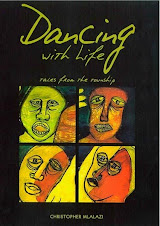
Dancing with Life: Tales from the Township (Christopher Mlalazi)
Hatchings (John Eppel)
Intwasa Poetry
Long Time Coming: Short Writings from Zimbabwe
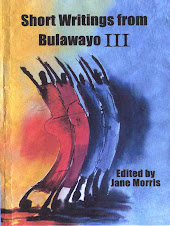
Short Writings from Bulawayo I, II and III
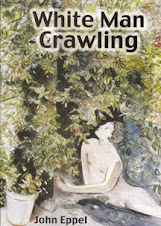
White Man Crawling (John Eppel)
Zimbabwe's Cultural Heritage (Pathisa Nyathi)

Sunday, March 18, 2012

Owen Sheers - the world's first international sports team writer in residence

Owen Sheers, the Welsh writer, was appointed writer-in-residence for the Welsh Rugby Union in January this year, and he now celebrates the success of the Wales Rugby team in winning the Grand Slam in the 2012 Six Nations tournament.
While he’s already written poems for the programme of every home game, he’s also gathering material to use in future.
“I now have a much clearer idea of how the material will take shape. I hope to write across the full range of forms which I’ve used in the past, including non-fiction, fiction, poetry and theatre. But it’s not all going to happen straight away. It’s very natural with this type of project to immerse yourself for a long time so that you can distill the ideas.”
Sheers says the tournament has been an “extraordinary” start to his role for many reasons, including the fact Wales have won every match.
Owen has close links with Zimbabwe, he has visited the country on several occasions and has contributed poems to the 'amaBooks collections Short Writings from Bulawayo III and Intwasa Poetry, and a short story to Long Time Coming: Short Writings from Zimbabwe. The Dust Diaries, for which he won a Wales Book of the Year Award, is an account of his journey through contemporary Zimbabwe in an attempt to better understand his distant relative Arthur Shearly Cripps' devotion to the country. Owen's first novel Resistance has recently been released as a film.

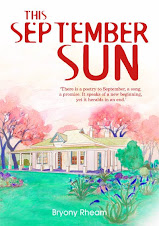
In 2009, Owen visited Zimbabwe and launched Bryony Rheam's debut novel This September Sun. This September Sun is to be published in the United Kingdom by Welsh publisher Parthian Books in May 2012.


Photograph and quote courtesy of the Western Mail.

Monday, March 12, 2012

amaBooks on Kobo and Kindle


Several amaBooks titles are now available as ebooks at $9.99 on the Kobo and Kindle websites (www.kobobooks.com and www.amazon.com/kindlestore).

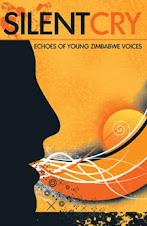
The titles are Short Writings from Bulawayo I, II and III, Intwasa Poetry, Silent Cry: Echoes of Young Zimbabwe Voices, Hatchings, White Man Crawling and Zimbabwe's Cultural Heritage. More to follow.

Monday, December 19, 2011

Short Writings from Bulawayo II: A must have piece


The Herald, Monday, 19 December 2011 00:00
Title: Short Writings from Bulawayo Two
Author: Various
Publisher: 'amaBooks
Pages: 116
ISBN: 0-7974-2896-8

Aristotle said politics is the highest form of art because other goods and services borrow their life from people who bow to the force of whips that are cracked in Parliament. This year the main political parties in the country, Zanu-PF and MDC-T, brought many people to attend their meetings in Bulawayo.
Hotels should have used this opportunity to interest them in reading Short Writings from Bulawayo Two for the benefit of the whole hospitality industry in Zimbabwe. This collection of short stories and poems is about the life of people in the City of Kings and its surrounding rural areas. It deals with how people in high-density suburbs make ends meet in the face of economic hardships.
The guests staying in hotels can borrow books from the reception desk for reading in their rooms. Tourists enjoy reading books like this very much. An increase in sales of indigenous literature would have artists smiling all the way to the bank.
Its time hotels saw themselves as part and parcel of the culture of people. A family can go and watch a play at the theatre or it can go and sample an exotic dish at the local inn. Chefs know best that cooking is an art.
Eco-tourism binds art and culture and the hospitality industry together and books fasten that bond. It's natural for birds of the same feather to flock together for their mutual benefit. People of Bulawayo have a crush on Wim Boswinkel. He was born in Holland in 1947 and 'amaBooks published his first novel, Erina, in 2003. In his short story, 2084, he writes about a future that has no language and no alphabet. People express their feelings using their hands and faces.
The artist sees this weird world through the eyes of 17-year-old John and his sweetheart Nomakha. Theirs is love across the colour divide. As they walk through the park, they reflect on what life was like during the Dark Ages compared with the Light Age in which they live.
"People had all become equal," says the author, meaning equal in material possession. "Terrorism and crime had disappeared from the earth, and so had superstition and prejudice." The artist is good at evoking atmosphere.
"They loved," he says of the two, "to roam through the dense vegetation, to dig with their hands into the moist soil and to bring some to their noses to inhale the fragrant aroma of the top layer. It made them feel part of nature, as once mankind had been, in long forgotten primitive days."
Environmentalists should love this story.
Now, any woman worth her salt would feel what MaSibanda goes through when a gunman rapes her while Ncube is lying prostrate. The title of the story, Between Two Men, sums up the position of the husband. Hwange-born educationist Addlis Sibutha describes how the two of them leave the beerhall at closing time. A lone gunman accosts them along the wasteland and warns Ncube to be sensible.
MaSibanda asks herself why Ncube didn't do something to fight off the rapist. Ncube thinks that perhaps MaSibanda knows this man from somewhere. Children, knowing their parents to be boisterous when they are in their cups, ask them why they are in a sullen mood.
Ncube meets the rapist at the bar and other men help him to mete instant justice on the scoundrel. The artist leaves you to imagine how MaSibanda will revenge herself when she has remained at home.
Rapists in Zimbabwe go to jail for seven years. In other countries it's 40. Plumtree-born Christopher Mlalazi (39) is a product in creative writing from Crossing Borders project of the British Council. He tells, in My Meat, the story of Zama.
He shows off to Nsingo the beer that Marx, who has come from South Africa, has bought for him at the bottle store. A dog makes off with braai meat that Zama had hidden in his jacket from the other guy. Zama runs after the dog as Marx buys himself a quart and talks of his girlfriend. Nsingo wishes he could go and work in Egoli. It's a sad story about youth and unemployment.
Derek Huggins joined the BSAP at 18 in 1959. He was CEO of the National Arts Foundation for 13 years up to 1988. Weaver Press has published his first collection of stories, Stained Earth.
P/O Greg Stanyon, in Crossing the Devine, is driving from Enkeldoorn back to camp in Sabi Valley. He finds workers poking a bird with sticks on the side of the road. Stanyon takes home this giant eagle owl and decides to put it down when he finds out that its wing is broken. He makes a bad shot and the bird takes a long time dying. In his remorse, a poignant past event pricks his conscience.
Seeing the bird fighting for its life becomes unbearable to him. This brings to mind the way the chicken tries to defy death when you have cut off its head. Horrible! The picture that Zambian-born Hezekela Mlilo (30) drew for the cover depicts the ideal woman by any standard - stout as a drum and strong enough to collar four oxen to the span single-handed. He won an award for graphics at the Mbira Art Exhibition and was nominated for Nama award.
The draw-card in the collection is Pathisa Nyathi. This member of the Zimbabwe Academic and Non-Fiction Authors Association has done justice to AmaNdebele culture through his works.
Pathisa Nyathi is first among equals in literary journalism in Zimbabwe. He ran columns in four publications at the same time and is public relations officer at Town House in Bulawayo.
In Illuminating Flames, this prolific writer pays tribute to the ancients who gave him wisdom.

The leaping crimson flames
Of mopane wood fires
Out in rural Kezi
Still flicker large in my city mind.

Another poet is John Eppel, born in 1947. His first novel, Great North Road,

won the M-Net prize in South Africa. In My Dustbin, he says:

These children
have acquired the patience of queuing;
children of neighbourhood; suburban;
queuing at my bin for a lucky dip.

Books, rights activists should have Short Writings from Bulawayo Two on the shelf.


http://www.herald.co.zw/index.php?option=com_content&view=article&id=29414

Wednesday, October 27, 2010

Bulawayo poets featured on Poetry International website


The work of seven Bulawayo poets is featured on this month's Poetry International website. Four of the seven have been published by 'amaBooks: Deon Marcus has had poems in each of the four books in the Short Writings series and his collection Sonatas won the 2005 National Arts Merit Award for Best First Book and the Zimbabwe Book Publishers Association award for Poetry and Drama; Shari Eppel's poem Bhalagwe was first published in Short Writings from Bulawayo; Mgcini Nyoni's When We Were Young and Mthabisi Phili's Sunset In Mzilikazi were both published in Intwasa Poetry.
Information about the poets and samples of their work appear on:
http://zimbabwe.poetryinternationalweb.org/piw_cms/cms/cms_module/index.php?obj_id=18083

Friday, October 8, 2010

Brian Chikwava's love-hate history with Zimbabwe


brian_chikwava
Brian Chikwava, who has contributed short stories to Short Writings from Bulawayo III and Long Time Coming: Short Writings from Zimbabwe, is interviewed in The Zimbabwean about a forthcoming lecture on the theme 'The Past is Another Country':

"I love it for innumerable things, but loathe it for the way it has ceased to care about the plight of its poor and less fortunate."


http://w
ww.thezimbabwean.co.uk/index.php?option=com_content&view=article&id=34625:chikwavas-love-hate-history&catid=57&Itemid=37