Showing posts with label Pathisa Nyathi. Show all posts

Sunday, May 8, 2016

Pathisa Nyathi's 'Zimbabwe’s Cultural Heritage' discussed in the Sunday News


Zimbabwe’s Cultural Heritage (2005, amaBooks, Bulawayo) is a collection of essays on the culture of the Ndebele, Xhosa, Tonga, Shona, Kalanga, Nambya and Venda ethnic groups of Zimbabwe.
The author offers a brief historical background for each group providing the reader with a contextual framework to appreciate and understand the various cultural practices under review. According to Nyathi, in the book’s introduction, “Zimbabwe’s Cultural Heritage was born out of a desire to promote and preserve for posterity our nation’s cultural traditions.”
In the years following Zimbabwe’s independence, literature tended to sketch out grotesque images of colonial rule while also being a conveyer-belt of optimism for the better days ahead (Waiting for the Rain), the constructed history eulogising the newly born “nation”
However, other writers began to express deep disgruntlement, to them all they could see was a “Long Time Coming”, rather a delayed dawn of Uhuru. In the contested terrain of identity and belonging, Pathisa Nyathi, decided to “decriminalise” the subject of ethnicity, thus validating Brilliant Mhlanga’s call for the celebration of ethnicity and not criminalising it through narrow nationalist discourses. Zimbabwe’s Cultural Heritage offers a unique contribution to the subject of belonging in Zimbabwe. It avoids both the idea that “patriotic history” should take the lead in constructing the national image, and the anti-nationalist narratives. Hence Nyathi’s work steps away from the literary norm of this time.
He states on the back cover that “the emphasis of this book is not on the histories of the groups, but on their cultural practices.” This substantiates the unique character of the text and makes it a relevant point of reference in cultural research. It is outstanding discourse compensates for the limited narratives of its kind in Zimbabwe where literature is often politicised and ethnic narratives further polarise the nation. Though Zimbabwe has a variety of cultures, it has inherited a legacy of a domineering culture, resulting in the younger generation being ignorant of their cultural roots. Nyathi’s work clearly sets out the differences and the commonalities of the cultural practices of the groups considered in the text, demonstrating that there is a “Zimbabwean Cultural Heritage”. Nyathi searches into the empirical depths of ethnic values and norms and how these define belonging and identity.
When Nyathi speaks of the Ndebele it is clear that he is an insider. Here oral tradition is still alive in the 21st century and can be used as a research method. At the same time written history validates his submissions. The language and tone is not discriminatory, it speaks to all age-groups. Nyathi’s style of inter-marrying English with local languages helps in articulating the key issues. The indigenous terms used give life to the isiNdebele, Venda, Kalanga and other groups’ practices.
There is more of an emphasis on the Ndebele than on the other groups; perhaps this is to balance their relative absence in other historical narratives of the ‘nation’. Not all ethnic and racial groups in Zimbabwe are considered in this text and one would hope for a second volume to give consideration to these.
Above all, Nyathi has shown that ethnic groups are pillars of national consciousness and that they must be celebrated in order to dismantle any leanings towards intolerance.

by Richard Runyararo Mahomva
Sunday News Online: May 8 2016
An excerpt from http://www.sundaynews.co.zw/nyathi-and-mathema-turning-to-afrocentric-paradigm-of-conceptualising-the-nation/

Wednesday, January 28, 2015

'Long Time Coming' reviewed in the Herald - from a very different perspective

‘Long Time Coming’ : hope and the role of the artist
 
January 26, 2015 Features, Opinion & Analysis
@ the Bookstore With Elliot Ziwira in The Herald, Zimbabwe

http://www.herald.co.zw/long-time-coming-hope-and-the-role-of-the-artist/

“LONG Time Coming” (2008), edited by Jane Morris and published by amaBooks, chronicles the mundane and sordid experiences of the common man, as he stoically trudges on along the scalding earth of his existence in a community desperately waiting for the rain.
The book taps into the journalistic function of the artist which complements the didactic nature of literature. As Soyinka (1973:89) observes: “The artist always functioned as the voice of vision in his own time.”
His telescopic eye should capture current and topical issues which burden his people, because it is such concerns that the reader easily identifies with.
This journalistic aspect of the role of the artist is also echoed by Chinweizu et al (1985:89) when they say: “Our job as writers is to be articulate and to present to our audience the stresses and joys of our societies as they take place.”
Such is the role of the competent artist that the collection exploits effectively through chronicling the recession that brings the sovereign nation to its knees, which however strengthens its resolve as the heavy rain bearing clouds gather on the horizon.
Thirty three writers and poets drawn from the African landscape and predominantly Zimbabwean, converge to tell the story of suffering, patience, hope, violence, despondence and deceit in the crises ridden Zimbabwe of the never ending queues, as the nation reels under the burden of Western imposed sanctions.
The bone of contention is the land, a finite resource whose wealth; mineral, aquatic or otherwise, the host country feels obliged to protect for the betterment of its people much to the chagrin of the alien gangsters from the West, who retaliated by imposing an illegal embargo on the sovereign motherland.
But the pious son of the soil, President Robert Mugabe could not allow Western hegemony to continue fettering his fellow countrymen to the colonial yoke, because indeed there is no freedom without ownership of the means of production.
In the ensuing chaos, poverty becomes the order of the day as the majority ekes out a mere existence from the little they could scantily put their hands to, in the vast expanses of empty shops, deserted hospitals, dry taps and a non-existent will on the part of service providers as well as those with the economic stamina for a haul forward.
An aura of desperation pervades the daily toils of the majority as their hope to untangle themselves from the labyrinthine snare of their existence only lie in the promising rains; both literal and metaphorical; the rains that will wash away the pain, sweat and blood from the impoverished and drought stricken land of their being, and leave sprouting seeds of hope in their wake.
Waiting, a dominant motif in the collection, and a commodity abundantly available in the national discourse, seems to be the only way out.
However, in this situation where others are malnourished, ailing and willing to trade their wretchedness for a morsel of bread, the avaricious, corrupt, cunning and obese minority crouch menacingly at their horizon of hope; taking the situation as a self-aggrandising enterprise.
This rationale is aptly captured in Wim Boswinkel’s “Justice” and John Eppel’s “The Awards Ceremony” as well as Sandisile Tshuma’s “Arrested Development”.
The rich use of metaphors; both from nature and Man’s creations, the autobiographical mode, which aptly chronicles the writers’ own experiences, and cultural diversity through the different authorial voices exploited, does not only allow the exploration of a plethora of themes, but also authenticate the fictional experience as the reader is drawn into the nuances of events highlighted, and juxtaposes them with the reality of his or her being.
The frustration, despondence and disillusionment is so real and vividly conjure the reality of lack, as the suffering masses endure whatever comes their way with such stoicism that shames the devil, who desperately prophesises doom and violent disturbances.
The people’s refusal to have their spirits dampened and hope strangled in the face of adversity and hunger, is illuminated through the metaphor of the rain, the encouraging smiles and winks from strangers.
Truly the Zimbabwean cannot be broken that easily.
His or her fighting spirit will spur him or her on to higher resolves, if only chance avails itself and Providence Divine intervenes.
The use of the journey motif taps into traditional folkloric drama, as the search for the ever receding pastures and hope becomes paramount.
There is hope in travelling, yet the means to travel becomes a stumbling block.
Everyone is so much in a hurry to go somewhere away from the painful familiar environs, yet they remain rooted physically and emotionally to the same.
Where physical movement is possible, albeit in a stressful way, emotional movement remains flimsy; because one is never sure what to expect from the unknown hunting grounds; where morality and humane attributes die in the wake of physical satiation.
One has to cling on to hope, for “Who Knows What Season Tomorrow Brings” as Gothataone Moeng quips, as she admires the Zimbabwean women who toil to fend for their husbands and children back home through humiliating encounters in Botswana, her country, yet remaining resolute and proud of their nationality.
In a single journey from the city to one’s abode or to border towns, one would relate a lifetime of experiences about harness-able opportunities and elusive ones, which create categories in society; the “chicken bus clients” and the Landcruiser elite.
The “chicken bus clients” as revealed by Linda Msebele in the story “The Chicken Bus”, are the wretched of the earth, the downtrodden that those with the means seek to punish for the mere reason of them being Zimbabwean, with a right to their ancestral land.
The artist intimates: “It is the cheapest and certainly harshest, way of getting home these days. Such travelling is meant for those like me (believe me, there are millions like me) who cannot afford the emergence taxis that ply the same route and that charge a much higher fare . . .
“It is noisy, stuffy and smelly here . . . It really stinks in here.
“It stinks of poverty.
“It’s nothing like the chic smell of wealthy.”
In her struggle to put a meal on the table as one among the millions wallowing in abject poverty, the artist wonders: “How different the realities of life can be.
Some people drive the latest Mercedes, BMWs and Pajeros.
I wonder how they manage to make money in a country with such an inflationary and depressed economy.” She adeptly takes the reader into the emotionally sutured psyche of suffering in a society where the perverse, callous and greedy mighty strangle the feeble, as she ponders: “Am I doomed to forever board chicken buses?”
In this hubbub where the sexual perverts and mentally deranged impersonations of men quench their carnal desires on unsuspecting women in the packed buses, and are quick to erupt in tantrums if questioned on their intentions, there are some “who refuse to turn sour, the ones who won’t let fear cloud their brows, the ones who still smile.”
Lloyd Robson, who writes from a visitor’s viewpoint in “Rum and Still Waters”, highlights the Zimbabweans’ resilience, warmth and patriotism.
It is in such situations where one finds oneself without bus-fare to go home at 4.45 pm, as in Julius Chingono’s “Bus Fare” and his manly pride inhibits him from accepting alms from his ex-wife, whose star shines while his conspires with the demons of unemployment to wane; where a university post or undergraduate questions whether it is really necessary to be academically knowledgeable when those who make it to the top of the social and economic echelons are school drops-outs, like the Malayitshas, and cross-border traders, where everything seems to be in abeyance; that one begins to question his or her sanity or whether there is really anything called sanity or it is just a subjective idea, as everyone really seems to be sane in his or her own way; or maybe insane, depending on those around.
It is this subject that Ignatius Mabasa hilariously tackles poignantly in the captivating story “Some Kind of Madness”.

Notwithstanding all this suffering, chaos and despondency, glimmers of hope remain visible on the silver lining of the clouds which break into torrents to change the complexion of the Zimbabwean landscape as Pathisa Nyathi alludes to “And the Rains Came”, and Judy Maposa’s “First Rain” celebrates.

Saturday, October 4, 2014

amaBooks at Amagugu

Pathisa Nyathi has opened the Amagugu International Heritage Centre at the Chapo Business Centre, at Whitewaters in the Matopos, some 60 kilometres from Bulawayo on the road to Kezi. 'amaBooks exhibited some of their books at the event held at the Centre for the Comba Indlu Ngobuciko - My Beautiful Home Prize Giving Ceremony.


Thursday, August 21, 2014

Caine Prize anthologies as ebooks in Zimbabwe


The 2012, 2013 and 2014 Caine Prize anthologies - African Violet, A Memory This Size and The Gonjon Pin - are all available as ebooks in Zimbabwe through shop.mazwi.co. Also on the new website are other 'amaBooks titles by Pathisa Nyathi, Bryony Rheam, John Eppel, Christopher Mlalazi and others. More titles are to follow soon.

Tuesday, April 8, 2014

Siqondephi Manje? launched in Bulawayo


The launch of the translation of ’amaBooks collection of short stories Where to Now? Short Stories from Zimbabwe into the isiNdebele version Siqondephi Manje?Indatshana zaseZimbabwe  took place at the National Gallery of Zimbabwe in Bulawayo on Saturday March 29.
The book launch was supported by Bulawayo Agenda and coincided with the Zimbabwe International Book Fair taking place at the Large City Hall. The audience were welcomed by Voti Thebe, Director of the Gallery, and Debra Mabunda, chair of the board of Bulawayo Agenda.
The book was introduced by the co-director of ’amaBooks, Brian Jones, who explained that the collection is the fifth in the series of short writings that the company have published to date, but that it was the first of their titles to be translated into isiNdebele. The translator of the work, Dr Thabisani Ndlovu, spoke about the process of literary translation and how it is an exacting job to capture the essence of what the writer wanted to say. He went on to discuss how many words that are currently used by people when speaking isiNdebele have been incorporated from other languages but ‘Ndebele-ised’. He felt it important that literature was produced that reflected common usage so that young people could identify with it and want to engage in reading. The language used by the translator should depend on context, for example: a teacher in school would tend to use more formal language than two young men talking in a beer garden.
Dr Ndlovu spoke of the diversity of the pieces in the book that came from a variety of cultures and were written in a number of styles. This diversity is what helps to make Where to Now? such an interesting read, and this is reflected in Siqondephi Manje?.
Following readings from the book by Mzana Mthimkhulu and Thabisani Ndlovu, who have stories in the anthology, and by Pathisa Nyathi and Sithandizile Dube, who read from stories by Sandisile Tshuma and NoViolet Bulawayo respectively, there followed a lively discussion, moderated by Butholezwe Nyathi, about the state of the isiNdebele language, its future and writings in isiNdebele.
The event concluded with a brief explanation by Itai Zimunya of the role of the Open Society Initiative for Southern Africa, the partner with ‘amaBooks for the translation of Where to Now?.
Amongst the audience of about 100 people were academics, students, writers and members of the reading public. It was a well supported event and clearly demonstrated the interest in works in isiNdebele.

The book will be available in outlets throughout Zimbabwe, as well as through www.megabooks.co.za and www.africanbookscollective.com.

Photos courtesy of Mgcini Nyoni (Poetry Bulawayo) and 'amaBooks


Saturday, December 21, 2013

More 'amaBooks titles available in South Africa through Mega Books


9780797437449_cover


Bryony Rheam's novel 'This September Sun', John Eppel's collection of stories and poems 'White Man Crawling' and 'Intwasa Poetry', which features poets who have read at the Intwasa Arts Festival koBulawayo, are now available in South Africa through the website megabooks.co.za.

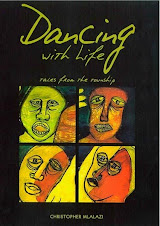
The books join other 'amaBooks titles already on the website - 'Long Time Coming: Short Writings from Zimbabwe', 'Where to Now?: Short Stories from Zimbabwe', Christopher Mlalazi's 'Dancing with Life: Tales from the Township' and Pathisa Nyathi's 'Zimbabwe's Cultural Heritage'.
9780797433908_cover


9780797436459_cover

Monday, September 9, 2013

amaBooks titles from Mega Books in South Africa


Dancing with Life: Tales from the Township, Where to Now? Short Stories from Zimbabwe, Long Time Coming: Short Writings from Zimbabwe and Zimbabwe's Cultural Heritage are now available through print-on-demand from Mega Books. Other titles will follow soon.

Thursday, March 21, 2013

'amaBooks at ZIBF in Bulawayo 2013


’amaBooks are at the Zimbabwe International Book Fair in Bulawayo on Friday 22and Saturday 23 March. The theme of this year’s fair is ‘ZIBF@30: Enabling Creativity, Writing, Publishing and Reading for Africa’s Growth’. We will have a stand throughout the fair at the National Gallery of Zimbabwe in Bulawayo, displaying not only our own publications but also those of other publishers, including Weaver Press in Harare and Jonathan Ball and Pan Macmillan in South Africa.
ZIBF in Harare 2011
On Friday afternoon, at the end of the Fair’s Indaba, we will donate around 400 books to libraries in and around Bulawayo. The distribution of books to rural libraries, and to Bulawayo Municipal Libraries, will be organised through the National Free Library’s Rural Libraries Programme. The donation has been supported by the Open Society Initiative for Southern Africa.
Books to be donated include: This September Sun, Bryony Rheam’s debut novel, which won a Zimbabwe Book Publishers Association ‘Best First Book’ award and is a set book for ZIMSEC ‘A’ level Literature in English; Long Time Coming: Short Writings from Zimbabwe, which was chosen by New Internationalist as one of their two ‘Best Books of 2009’; Dancing with Life: Tales from the Township, by Christopher Mlalazi, which won a National Arts Merit Award and an Honourable Mention at the Noma Awards for African Publishing; John Eppel’s novel, Hatchings, which was chosen for the Times Literary Supplement series on ‘The Most Significant Books to have come out of Africa’; Deon Marcus’ poetry collection; Sonatas, which won both a National Arts Merit Award and a Zimbabwe Book Publishers Award; Intwasa Poetry, a collection of poems by local and international poets who have read at the Intwasa Arts Festival koBulawayo; and Pathisa Nyathi’s Zimbabwe Book Publishers Association Award winning Zimbabwe’s Cultural Heritage.
Two of ’amaBooks’ recent publications are also included. For the first time the Caine Prize for African Writing anthology has been published in Zimbabwe, the 2012 edition being entitled African Violet. Where to Now? Short Stories from Zimbabwe is the fifth book in the ’amaBooks Short Writings series, which started in 2003 with Short Writings from Bulawayo. Where to Now? was co-published with Parthian Books in the United Kingdom, and is to be translated into Ndebele, the translated version will be available in Zimbabwe later this year.
Friday evening, at 7pm in the Gallery, will see the awards ceremony for the Freedom Poetry Competition, organised jointly by ’amaBooks and Poetry Bulawayo. 78 poems have been submitted for the competition, with entries from across Zimbabwe and from South Africa, Nigeria and Europe. This will take place during a literary evening organized by ZIBF.

Photograph shows Jane Morris, Hosea Tokwe, Beaven Tapureta, Ignatius Mabasa and Fungai Machirori at the 'amaBooks stand

Friday, September 7, 2012

'amaBooks titles now available in South African copy shops

Several 'amaBooks publications can now be legally printed in copy shops across South Africa, through Paperight.

Paperight is a website that lets a copy shop, at present only in South Africa, print books for customers legally and quickly. 
Customers probably already ask the shop to photocopy books for them, but it’s illegal to copy without permission. Paperight gives the outlet a legal way to print books. Paperight have already got the publisher’s permission on your behalf.
The Paperight site is so fast and easy to use that it saves time and money, and is more cost-effective for customers than finding or copying traditional books.
Once the copy shop registers on the Paperight website (which is free and quick to do), it can choose from a whole library of books to print, as customers ask for them.
Publishers charge a small rights fee for each copy printed. When Paperight charges a rights fee, it is just added to the customer’s normal printing and binding charge. The overall cost to a customer is less than buying a traditional copy of a book, it is legal, and writers and publishers get their fair share.


For registered outlets near to you, if you are in South Africa, please look at the Paperight website http://paperight.com/. 

The available titles are:

Dancing with Life: Tales from the Township (Christopher Mlalazi)
Hatchings (John Eppel)
Intwasa Poetry
Long Time Coming: Short Writings from Zimbabwe
Short Writings from Bulawayo I, II and III
White Man Crawling (John Eppel)
Zimbabwe's Cultural Heritage (Pathisa Nyathi)

Monday, March 12, 2012

amaBooks on Kobo and Kindle


Several amaBooks titles are now available as ebooks at $9.99 on the Kobo and Kindle websites (www.kobobooks.com and www.amazon.com/kindlestore).

The titles are Short Writings from Bulawayo I, II and III, Intwasa Poetry, Silent Cry: Echoes of Young Zimbabwe Voices, Hatchings, White Man Crawling and Zimbabwe's Cultural Heritage. More to follow.

Monday, December 19, 2011

Short Writings from Bulawayo II: A must have piece


The Herald, Monday, 19 December 2011 00:00
Title: Short Writings from Bulawayo Two
Author: Various
Publisher: 'amaBooks
Pages: 116
ISBN: 0-7974-2896-8

Aristotle said politics is the highest form of art because other goods and services borrow their life from people who bow to the force of whips that are cracked in Parliament. This year the main political parties in the country, Zanu-PF and MDC-T, brought many people to attend their meetings in Bulawayo.
Hotels should have used this opportunity to interest them in reading Short Writings from Bulawayo Two for the benefit of the whole hospitality industry in Zimbabwe. This collection of short stories and poems is about the life of people in the City of Kings and its surrounding rural areas. It deals with how people in high-density suburbs make ends meet in the face of economic hardships.
The guests staying in hotels can borrow books from the reception desk for reading in their rooms. Tourists enjoy reading books like this very much. An increase in sales of indigenous literature would have artists smiling all the way to the bank.
Its time hotels saw themselves as part and parcel of the culture of people. A family can go and watch a play at the theatre or it can go and sample an exotic dish at the local inn. Chefs know best that cooking is an art.
Eco-tourism binds art and culture and the hospitality industry together and books fasten that bond. It's natural for birds of the same feather to flock together for their mutual benefit. People of Bulawayo have a crush on Wim Boswinkel. He was born in Holland in 1947 and 'amaBooks published his first novel, Erina, in 2003. In his short story, 2084, he writes about a future that has no language and no alphabet. People express their feelings using their hands and faces.
The artist sees this weird world through the eyes of 17-year-old John and his sweetheart Nomakha. Theirs is love across the colour divide. As they walk through the park, they reflect on what life was like during the Dark Ages compared with the Light Age in which they live.
"People had all become equal," says the author, meaning equal in material possession. "Terrorism and crime had disappeared from the earth, and so had superstition and prejudice." The artist is good at evoking atmosphere.
"They loved," he says of the two, "to roam through the dense vegetation, to dig with their hands into the moist soil and to bring some to their noses to inhale the fragrant aroma of the top layer. It made them feel part of nature, as once mankind had been, in long forgotten primitive days."
Environmentalists should love this story.
Now, any woman worth her salt would feel what MaSibanda goes through when a gunman rapes her while Ncube is lying prostrate. The title of the story, Between Two Men, sums up the position of the husband. Hwange-born educationist Addlis Sibutha describes how the two of them leave the beerhall at closing time. A lone gunman accosts them along the wasteland and warns Ncube to be sensible.
MaSibanda asks herself why Ncube didn't do something to fight off the rapist. Ncube thinks that perhaps MaSibanda knows this man from somewhere. Children, knowing their parents to be boisterous when they are in their cups, ask them why they are in a sullen mood.
Ncube meets the rapist at the bar and other men help him to mete instant justice on the scoundrel. The artist leaves you to imagine how MaSibanda will revenge herself when she has remained at home.
Rapists in Zimbabwe go to jail for seven years. In other countries it's 40. Plumtree-born Christopher Mlalazi (39) is a product in creative writing from Crossing Borders project of the British Council. He tells, in My Meat, the story of Zama.

He shows off to Nsingo the beer that Marx, who has come from South Africa, has bought for him at the bottle store. A dog makes off with braai meat that Zama had hidden in his jacket from the other guy. Zama runs after the dog as Marx buys himself a quart and talks of his girlfriend. Nsingo wishes he could go and work in Egoli. It's a sad story about youth and unemployment.
Derek Huggins joined the BSAP at 18 in 1959. He was CEO of the National Arts Foundation for 13 years up to 1988. Weaver Press has published his first collection of stories, Stained Earth.
P/O Greg Stanyon, in Crossing the Devine, is driving from Enkeldoorn back to camp in Sabi Valley. He finds workers poking a bird with sticks on the side of the road. Stanyon takes home this giant eagle owl and decides to put it down when he finds out that its wing is broken. He makes a bad shot and the bird takes a long time dying. In his remorse, a poignant past event pricks his conscience.
Seeing the bird fighting for its life becomes unbearable to him. This brings to mind the way the chicken tries to defy death when you have cut off its head. Horrible! The picture that Zambian-born Hezekela Mlilo (30) drew for the cover depicts the ideal woman by any standard - stout as a drum and strong enough to collar four oxen to the span single-handed. He won an award for graphics at the Mbira Art Exhibition and was nominated for Nama award.
The draw-card in the collection is Pathisa Nyathi. This member of the Zimbabwe Academic and Non-Fiction Authors Association has done justice to AmaNdebele culture through his works.
Pathisa Nyathi is first among equals in literary journalism in Zimbabwe. He ran columns in four publications at the same time and is public relations officer at Town House in Bulawayo.
In Illuminating Flames, this prolific writer pays tribute to the ancients who gave him wisdom.

The leaping crimson flames
Of mopane wood fires
Out in rural Kezi
Still flicker large in my city mind.

Another poet is John Eppel, born in 1947. His first novel, Great North Road,

won the M-Net prize in South Africa. In My Dustbin, he says:

These children
have acquired the patience of queuing;
children of neighbourhood; suburban;
queuing at my bin for a lucky dip.

Books, rights activists should have Short Writings from Bulawayo Two on the shelf.


http://www.herald.co.zw/index.php?option=com_content&view=article&id=29414