Showing posts with label Zimbabwean Literature. Show all posts

Sunday, May 31, 2026

The Mad reviewed on Amazon.com in the USA

 A compelling and valuable novel about life in late 20th century Zimbabwe


Reviewed in Amazon.com the United States on April 5, 2026

'Just what goes on in Harare? Is it an aberration or is there perhaps some issue that needs to be fixed using the traditional cleansing rituals? Truly I don't know. Harare barked outside and I thought he must be through with the other dogs. Harare had no problems like us—me, Sekuru Saba and his tart, Mai Jazz, Saru and Eddie. Harare and his fellow dogs know nothing about STDs and AIDS.'

This novel was originally titled Mapenzi and published in 1999, during the second decade of Zimbabwean independence, and it was hailed as a masterpiece of Shona, a language spoken in Zimbabwe and neighboring southern African countries. Despite its acclaim, it was not translated into English until 2025, and it is the first book that has been released in the US by the University of Georgia Press as part of its African Language Literatures in Translation series, although other publishers, amaBooks and Carnelian Heart in the UK and Zimbabwe, released this book last year.

The central character in The Mad is Sekuru Hamundigone, a former teacher, who claims he was fired for not teaching from the syllabus approved by the newly appointed government, although his department states that it did so because he went mad, possibly as a result of being a soldier in the country’s war for independence from the UK. As the book begins, he is a passenger on a kombi, a van that serves as the main form of transportation for impoverished Zimbabweans, as he is headed to one of the ghettos of the capital of Harare to visit his sister, who is close to death, probably from AIDS. During the long van ride Hamundigone talks nonstop to his annoyed fellow passengers about his troubles, and throughout the book he is an anti-hero who occasionally invokes sympathy from his family, and the reader.

The other characters in the book are related to each other in some fashion, although it took some work and a set of personally written notes to determine who was who, a task which was ultimately worth it. Seemingly everyone is engaged in a day-to-day struggle to both get by and to achieve some degree of fulfillment, mainly by drink, drugs, promiscuous sex, or watching football matches with friends. Nearly everyone is out to get money, typically by conning strangers or, in the case of young women, including university students, lovers, as the girls not infrequently prostitute themselves in order to buy clothes or jewelry or get their hair done in modern styles, while hoping to marry someone who will provide them with a better and more stable life.

Violence is another common theme in the book, most often by men who at times brutally assault their wives or lovers, and occasionally are attacked just as badly in return.

HIV/AIDS is a constant fear, although it isn’t necessarily the largest one, given the daily struggles to survive and find satisfaction. The dog ironically but suitably named Harare is perhaps the most sympathetic figure in the book, as he seeks enough food to eat while avoiding abuse from the woman who shelters him but not frequently beats him for trying to take her food.

As life becomes more difficult, the residents of this ghetto, and presumably others in similar neighborhoods in and outside of the capital, also become “mad” in the manner of Hamundigone, who makes an apt claim towards the conclusion of the novel: "You say I am mad but I say it is you who are mad. Which of us is really mad?"

The Mad is a valuable and compelling exploration of life in Zimbabwe in the 1990s, which is filled with deeply flawed people who induced both sympathy and a First World sense of disapproval in this reader. It is a valuable and necessary addition to the limited number of books by African authors that have so far been translated into English, and I look forward to reading more of the books in this series from the University of Georgia Press.


Darryl R Morris 

Monday, May 4, 2026

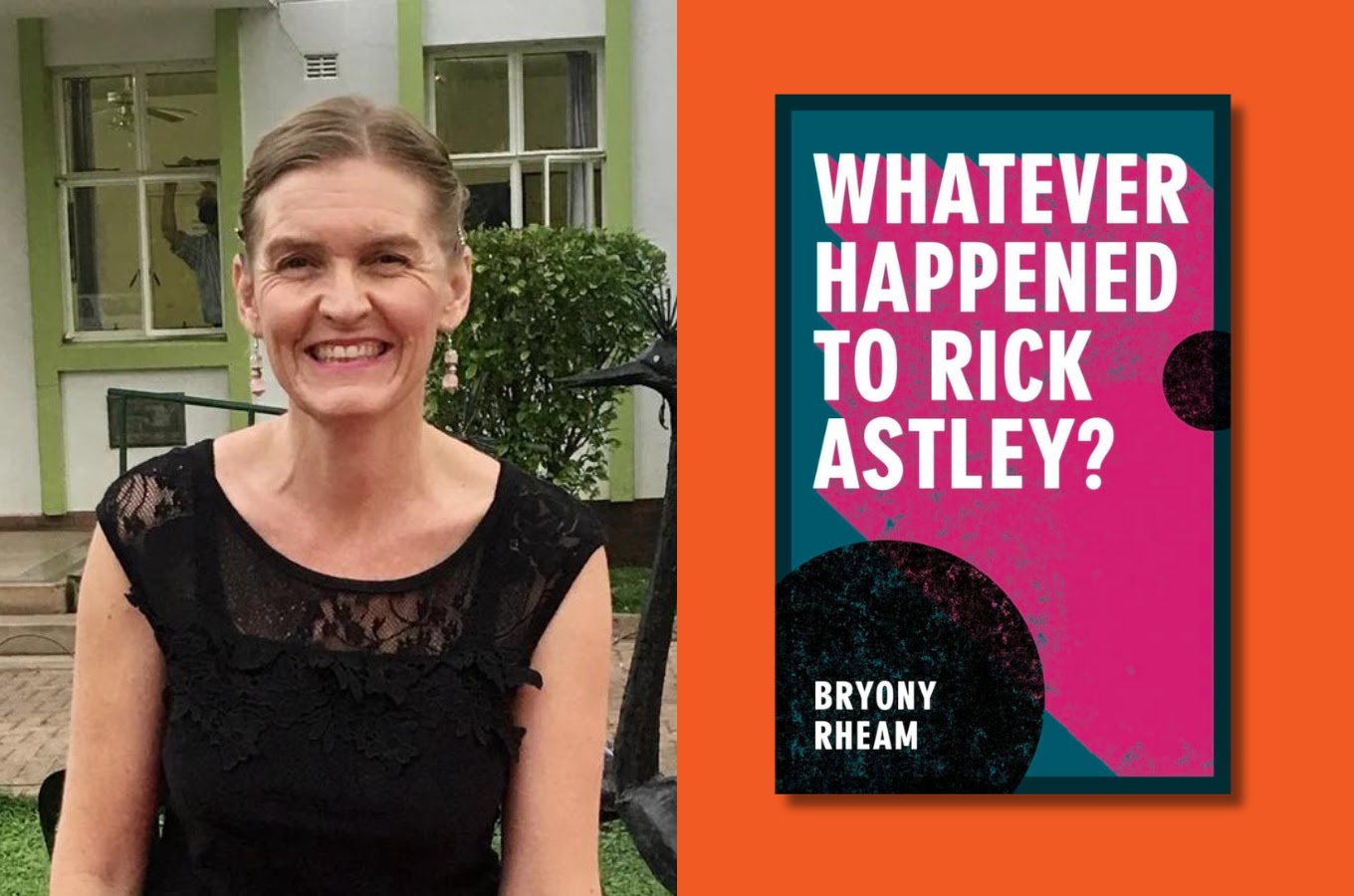
Whatever Happened to Rick Astley? He Grew Up

 Reproduced from https://bryonyrheam.blogspot.com/2026/04/whatever-happened-to-rick-astley-he.html


Whatever Happened to Rick Astley? may be an unusual title for a book of short stories set in Africa. Western expectations of African literature demand something more exotic, something at least with connotations of heat, dust and hardship.  Like every place, Africa has more than one side to it and there are as many different experiences as there are people and places. 

Growing up in Zimbabwe in the 1980s, my life was an interesting mixture of experiences.  I lived on a gold mine out in the bush.  There were snakes and scorpions – and fear. It was an unstable time politically in post-Independence Zimbabwe.  Not everyone wanted the ruling party, ZANU-PF, in power and, in retaliation, the government sent North-Korean trained soldiers to Matabeleland to ‘sort them out’. This time of anxiety left an indelible mark on me. In other aspects, my life was ‘normal’ by Western standards.  I went to school, played sport, belonged to the library and watched television. 

Once a week, I listened to Sounds on Saturday, an hour of music videos of the ‘latest hits’ (some of them weren’t quite the latest), incorporating both Zimbabwean and Western music.  It was on Sounds on Saturday that I first saw Rick Astley with his shoulder pads and his jackets and his baby face, taking the steps two at a time and singing. Never gonna give you up, never gonna let you down …’

Did I adore Rick Astley? Not at all.  Did I like him?  Not particularly.  I was never one to hero worship celebrities. Did he leave any impact on my life whatsoever? No.  So why then did I decide, not only to write a story entitled Whatever Happened to Rick Astley? but to make that the title of my collection of short stories? 

It was a Friday evening. My sixteen-year-old daughter was out a friend’s party, and I was trying desperately to stay awake until ten o’clock, when I had to fetch her. I was drinking jasmine green tea and flicking through Facebook, catching up on who was doing what with whom.  There were the usual posts about food and weight loss; pictures of children and pets and the occasional potted plant; adverts for Indian take aways and plumbing services.  And that’s when it hit me: this was life at forty-five.

              There was a time that does not feel so long ago in memory, yet is at least thirty years ago, that I would never have been found at home on a Friday night.  Never.  If it wasn’t a party, it was a film we went to; if not a film, coffee with friends.  Then, when I was older, those dreaded night clubs, pubs and bars. Friday night was THE night to go out.  Nobody who had an ounce of life in them stayed at home on a Friday night.

              My teenage self swore a million times that I would not end up like my parents when I was older.  No, I would be one of those people who partied their way through life.  Not marriage, not children, not a position or a job was going to stop me, and yet there was nothing more comforting than coming home at the end of an evening and finding my mum still up, pottering around in her blue dressing gown.  An enduring image I have is of her sitting at the kitchen table eating a strawberry yoghurt and flicking through copies of Women’s Weekly.

              Of course, I did change – and I am glad I did.  I discovered I wasn’t half the socialite I thought I was. It’s not just that the thought of being out a night club in my forties, mother of two children and a school teacher to boot, sounds horribly dangerous (I can think of nothing worse than being one of those people who tries to hang around with people half their age, knocking back tequila and pretending they are having the time of their lives), but even parties and barbecues fill me with a kind of dread.  Truth is, I don’t even want to go out to the movies and, if someone would like to pop by for coffee, they are most welcome – as long as they are gone by nine thirty.

              I was therefore surprised by what I felt that night whilst sipping my jasmine tea and planning what I would make for lunch the next day.  I felt fear. Real, hard, cold fear, and it wasn’t because I longed for the past, or that I felt there was something else I should be doing with the present.  It was the next stage that frightened me.  The future. The ‘what now?’

              I had always thought of myself as quite an aware sort of person, not the type to be surprised by sudden revelations about my character or the direction of my life path.  I found I was not at all prepared for the changes I faced in my late forties.

              The first major change was my mother’s death six years ago, something I struggled to come to terms with. My father’s mental health deteriorated as dementia set in. On top of the sadness of witnessing this, I felt I had lost both my parents, and for someone who had always been a ‘home baby’, enjoying living near my parents and having them around as my own children grew up, this was very difficult.  For a long time, I floated in a strange sea of grief, not knowing how to move on.

              Empty nest syndrome loomed as my older daughter began to plan what she would do once leaving school.  It was a couple of years away still, but I began to think about it more.  I struggled to imagine what it would be like not to have children at home.  As much as increased time on my own, the freedom to come and go as I please and a reduced laundry pile were appealing, I felt a terrible emptiness, a death almost.

              Throw in the perimenopause and I was a wreck.  The most overwhelming thing was feeling the change in my life both physically and mentally and knowing there was nothing I could do about it.  I couldn’t stop the world.  I had to go on.

              I could have asked whatever happened to Boy George or Jon Bon Jovi for that matter, but it was exactly Rick Astley’s fresh-faced, unsullied, not-yet-disillusioned mien that made me pick him. What had become of him, and could that kind of optimism stand the years?  Where would I find him?  Had he ditched in his career, or had it ditched him?

              When I googled him, I was interested to find out that, unlike many other pop sensations, Rick Astley had given up his career to bring up his daughter.  A noble move for anyone, a man in particular, and especially someone who could have gone on and on to greater heights – or could he?

              Astley knew when to get out, when to make a change and when to do what he wanted to do.  It may be argued he had the money and the means, but he still managed to make a break and do what he truly wanted.

              Whatever Happened to Rick Astley? is the last story in my collection, and its positioning is deliberate. The anthology brings together twenty years of short stories, from my first story published,The Queue, to more recent ones, such as Moving On. Zimbabweans like to dwell on the past.  We talk about it, long for it, idolise it.  We constantly look back to a time when we were richer, happier and healthier. We are afraid of moving on because there is no clear guidance as to what the future holds. We cannot look forward because that future is hazy; we don’t know if it includes all of us or just the chosen few.

              It is understandable then that our literature also dwells in that gulf between the past and the
future, that uneasy present moment of loss and often despair, that reckoning between what has gone
and what is yet to come.
              I like to think that, like Rick Astley, Zimbabweans are due for a comeback and, as a result, our literature is changing direction.  We are exploring new areas and writing new stories. Whatever Happened to Rick Astley? is an acknowledgement of the past and the power it as to shape us, but it is also marks a turning point for me. As I enter a new phase of my life, I am apprehensive yet excited about what is to come. 


Bryony Rheam, April 4 2026

Friday, March 6, 2026

Zimbabwean writer Philani Nyoni, writes an interesting and candid review of Ignatius Mabasa's book 'The Mad' with its colourful insights of Harare, Africa and... sanity.


The Mad reviewed by Philani Nyoni in teambooktu.com

https://teambooktu.com/harare-is-a-garishly-painted-whore-a-review-of-ignatius-mabasas-the-mad?


TITLE: The Mad

PUBLISHED BY: amaBooks Publishers & Carnelian Heart Publishing

ISBN: 978-1-914287-96-1

PAGES: 235

AUTHOR: Ignatius Mabasa, Translated by J. Tsitsi Mutiti


I received a copy of Ignatius Mabasa’s The Mad with the anticipation of a bottle green fly washing its hands over a pile of human shit. I like shit, good shit, Ignatius usually writes good shit and I hoped this one, J. Tsitsi Mutiti’s translation of his iconic debut, Mapenzi, would fall into that category.

Soon after getting into the text I had the feeling I should read the original book in chiShona. I suppose I wanted to see how far from the original text The Mad  had strayed. I was bothered by the translation of “Shirikadzi inochema-chema” into “The widow sobs” (36).  It felt inadequate, and so I got the original version, in chiShona, and began to read them side by side. I quickly abandoned the comparison, satisfied that language carries a whole world on its shoulders: cosmology, symbols, blood memory and all that juicy stuff. I have, for a while, been speaking to Mabasa about translation, have followed Ngugi’s spectre to Limuru and stood in the Polytechnic raised where his theatre was razed, and one thing I know for certain, is that translation is more an act of rewriting. A simple phrase like “he felt as if a heavy person was sitting on him” when read in chiShona has supernatural connotations which the English does not convey, unless one chooses to over-explain. In the same vein, there are instances where the Shona idiom shines through translation, and the translator’s care is evident when she prefaces with phrases like “the ancients knew about life when they stated…” (51). I abandoned my duel-wielding style and decided to read The Mad for what it is, not the book I had formed up in my head.

In this translation, Mabasa’s timelessness shines through. What seemed to concern the writer in the year 2000 is still contemporary; in the eyes of his characters I saw a Harare that hadn’t changed much in twenty years. Over the course of my reading, I pondered one question: WHAT IS MADNESS? According to Einstein, it is doing the same thing over and over while expecting different results.

“I am not mad, but I know those who are mad” (183). We are offered many definitions of madness throughout the book, blessed with various samples and each invites one to ponder deeply. Sometimes madness is pathological, at times behavioural. It is institutional as well, it is all around us. Stylistically, it is not deployed as a tool with scat and jazzy rhythm like Brian Chikwava’s Seventh Street Alchemy, but appearances can be deceiving. Perhaps the style represents some semblance of sanity, a world that looks ordered and stable, but beneath the surface, fire burns and cauldron bubbles.

The text is acutely aware of its timelessness. On page 15 the narrator laments not being able to read his Mungoshi in an unlit minibus, on page 19 we are offered an insight into the persona’s inner turmoil when he says, “Now I appreciate Dambudzo Marechera’s sufferings as he carried around his idiosyncratic ideas, with those who didn’t think the same way as him calling him insane”. Again, the reader asks, WHAT IS MADNESS? It is interesting to ponder that line in connection with one on page 15, “No, don’t think that I am mad. When I am out of my mind I will let you know.” Or another on the following page: “Where can you find the strength to argue with someone and convince them that you aren’t crazy? It is not possible. That only makes them think your madness has stepped up a notch”.

In these passages, the author not only nods at Marechera and Mungoshi, like books that have literary characters are wont to do, there is hint of legacy and continuation, which justifies the existence of this publication as though answering the question of what has changed from the Harare Marechera sketched in Mindblast, or the place Mungoshi’s Lucifer Mandengu described as a failure’s junk heap in Waiting for the Rain.

Marechera, Mungoshi and Stanley Nyafukudza are often described in Zimbabwean literature as the Unbelievers who were disillusioned early with the liberation struggle. In Mabasa’s offering, the liberation war is a major part of the plot, and this time we see the fortunes of those who faced the bullets turned upside down, mostly through the plight of Hamundigone. “I am no longer a comrade, every other lizard is now calling itself a comrade” (36). The population is vastly disillusioned with the war, those ‘born free’ profess that, “…this war you always talk about has nothing to do with us. I don’t even know what Smith, whom you fought, looks like, so don’t keep irritating us. Were you forced to go to war?” (111). Meanwhile, some are claiming to have fought in the war and it seems to be a currency of power (183).

It is still an Animal Farm, as per a subtle nod to Orwell that references the new elite as not made in the image of God but with hooves to tread on the masses (18). The country seems to have gone to the dogs; and that is why “my brother is a real dog, like Harare” (85), an image that’s a bit on the (wet?) nose, since we have an actual dog named Harare featuring in the novel. Nutters are not welcome near Parliament, “even though the place itself is riddled with lunatics” (23). Although, I dare say, across the world, very few houses of Parliament aren’t nuthouses. Sewage flows in the streets (71), “Harare is worthless. Like bubblegum that has lost its flavour and just wastes your energy in chewing.” (38). Harare is brutal (57). Harare is a witch (35). Harare is a garishly painted whore… Harare is shameless do you know – and heartless. It is immoral like a plate that you dish out on even though it has not been washed… Harare! I fear Harare! (40). The Zimbabwe portrayed here, “has scooped out my spirit, the same way you do when digging a grave” (15). And whose fault is it? “…it’s those who have so pissed on you that even a war slogan has become nauseating” (13).

The pages are heavy with the smell of decay. Not just the piss and sewage drowning out the streets that even the blind know by smell when they have reached, but everyday life itself is in decay, “the life of youths in Harare is much like the heavily polluted Mukuvisi River” (56).  In Harare, “…the truth is that we all prostitute ourselves” (64). Although the characters are well sketched and feshed out, we see people alienated from themselves, transformed by poverty into caricatures in this Harare. They begin “to act like Americans who have no time for others” (25) and even walk headlong into destructive ways through alcohol and substance abuse, after all, “what way is not death?” (219) “Totems and clan names in Harare are the car you drive, the chequebook and MasterCard you carry, the suits you wear and the cellphone you have” (46). 

Humour carries this text a long way, reminiscent of Marechera’s House of Hunger where the horror of the details is saved by the quality of writing. The situations may be tragic but you have to laugh. It is not a damp and morose story of trial and flowing shit, that river of shit has many nuggets in it, sometimes the simple advice, like, “Bunny, do you know that if you steal you’ll be arrested? So let some things alone, like a sister’s breast” (194), because, “you may admire your sister’s breast, but no matter how arousing it may be, there’s not a thing that you as a brother can do about it” (44).

I hate that this book comes at a time when we have become obsessed with African positivity and enjoy labelling critical writers like NoViolet Bulawayo sellouts, a time when we seem to have forgotten that literature is a mirror, and breaking it doesn’t improve your veneer. I think such criticisms do not consider who we are writing for. For me, as it is with Stephen King, “writing is necessary for my sanity. As a writer, I can externalize my fears and insecurities… I’m able to ‘write myself sane'”.

It is still a good story, and for those who have seen sewage flow in the streets who have run out of candles during power cuts, or seen people lose their sanity and still go to work, with nobody stopping them even though they are crazy (34), it stands relevant today as it did back then. If only African writers could choose to write something more positive; right? Well, “…’if only’ is a madman’s philosophy” (55).


Philani Amadeus Nyoni

Philani Amadéus Nyoni is a Zimbabwean writer and actor.  His writings have been published on several platforms and media worldwide. This is his review of Ignatius Mabasa's latest work, 'The Mad'.

Tuesday, December 30, 2025

The Mad chosen as one of the '100 Notable African Books of 2025'


Brittle Paper have included Ignatius Mabasa's The Mad in its list of 100 Notable African Books of 2025
(https://brittlepaper.com/100-notable-african-books-of-2025/), saying 'Originally published in Shona as Mapenzi, this milestone of Zimbabwean literature finally receives a fearless English translation.' The translation, by J. Tsitsi Mutiti, follows the original novel in being recognised - Mapenzi was featured in the Times Literary Supplement as 'one of the most significant novels to have come out of Africa.'

Brittle Paper is an online literary magazine for readers of African Literature. They are Africa’s premier online literary brand inspiring readers to explore and celebrate African literary experience in all its diversity.

The Mad is co-published in Zimbabwe and the United Kingdom by amaBooks Publishers and Carnelian Heart Publishing. The University of Georgia Press are to be publish the novel in North America in April 2026.


UK/Zimbabwe Cover


Sunday, November 23, 2025

John Eppel at the Bulawayo Book Club


John Eppel will be at the Bulawayo Book Club on 29 November to discuss his novel Hatchings.

It is New Year in Bulawayo, and anybody who is anybody is out celebrating.

Based on Alexander Pope's dictum that 'those who are ashamed of nothing else are so of being ridiculous', Hatchings sets out to ridicule people of all races who abuse power - behind the pulpit, the podium, and the paint brush.

The novel, whose central metaphor is baby-dumping, is set on New Year's Eve for good reason: it's the time when powermongers are at their most self-indulgent, most exposed. It is precisely the time when we see how much alike they are. In Hatchings, this similarity between the left and the right, between church and state, between black and white - so obsessed with their own moral worthiness, so quick to inflict their sanctimony on us all - is demonstrated by the fact that they all, quite literally, dance to the same tune.

'Beneath the scurrility, this is a profoundly romantic novel, it tells of a touching love story between a young white couple who are saved from the prevailing Philistinism and corruption by two things - a love of English literature and a love of the Matopos.'
Terence Ranger in The Zimbabwean Review

'The book is about exploitation, meanness; and it's about loveliness'
Southern African Review of Books


amaBooks are fortunate to have published two novels, Hatchings and the translation into English of Ignatius Mabasa's Mapenzi as The Mad, that were chosen in the Times Literary Supplement as two of 'the most significant novels to have come out of Africa.


Saturday, October 25, 2025

Mabasa, Vazhure carry Zimbabwean art to the world

Elliot Ziwira's article in The Herald on the launch of Ignatius Mabasa's The Mad and the opening of Samantha Vezhure's exhibition Nzwisa.

https://www.heraldonline.co.zw/mabasa-vazhure-carry-zimbabwean-art-to-the-world/


THERE are moments when Zimbabwe’s creative spirit refuses to be contained; instants when its words, colours and rhythms transcend borders, languages, and the limits of genre.

The past two weeks offered two such moments.

These are the launch of “The Mad”, Ignatius Mabasa’s English translation of his 1999 Shona classic “Mapenzi” in Harare on October 10, and the opening of “Nzwisa”, the debut solo exhibition by bilingual writer and painter Samantha Rumbidzai Vazhure, a week later.

Though different in medium, with Mabasa’s in the printed word and Vazhure’s in textured acrylic, both events celebrate the same thing. It is the unrelenting will of Zimbabwean artists to speak in their own voices, on their own terms, and to the world at large.

The artists insist that literature and art are not parallel roads but intersecting paths in the ongoing conversation about identity, collective memory, and belonging.

When Mabasa stood before the audience at the launch of “The Mad” book lovers knew that he was not simply introducing a translation. He was introducing a movement.

For a man who did his Doctor of Philosophy (PhD) thesis at Rhodes University, South Africa, in Shona to “decolonise knowledge” and let it “speak to the people,” the translation of “Mapenzi”, his audacious, surrealist exploration of post-independence disillusionment, into English is not a retreat from that principle.

Rather, it is its extension.

Mabasa began writing “Mapenzi” as a student at 22, during the radical ferment of the 1990s at the University of Zimbabwe. Those were the years of radicalism, when students dared to dream of a freer world and writers sought new idioms.

The novel’s title, “The Mad” captured that spirit. It is a kind of madness that equates to rebellion—madness as muse, madness as resistance, and madness as truth-telling.

It reflects on how mental illness, though sensitive and serious an issue, emerges beyond affliction to become a metaphor within the imaginative and often anarchic world of artistic expression.

For both spectacle and insight, artists, especially modernists, like Mabasa, find something almost seductively resonant in the idea of losing one’s mind. 

Madness, in the creative consciousness, is not simply a breakdown of the rational self. It is a way of seeing, an alternative mode of perception that unveils hidden truths.

It offers the artist a lens through which to dissect a diseased society, peel back the veneer of order, and expose the chaos bubbling beneath. In this light, madness is not a condition but a commentary.

As critic Kizito Muchemwa (2002) puts it, “Sanity is a very strange commodity in the fictional world created by the new generation of storytellers.”

This strangeness is rooted in the dissonance between the polished appearance of modern life and its deeper, more fractured reality. To speak truthfully about the human condition today, its loneliness, alienation, and existential disillusionment, artists often turn to madness, both as a theme and a symbolic tool.

Modernists are obsessed with fracture, loss, and dislocation. Their worlds are dream-like, fragmented, sometimes terrifying, and often riddled with the psychic debris of failed utopias.

In Zimbabwean literature, this obsession is profoundly felt. Writers like Memory Chirere, Ignatius Mabasa, Shimmer Chinodya, Clement Chihota, Robert Muponde, Stanley Mupfudza, and Brian Chikwava, among others, channel modernist impulses to probe national identity, despair, and deferred hope.

Their literary worlds are littered with ghosts of colonialism, war, economic quagmire, and betrayed dreams.

That is why Tsitsi Mutiti’s translation of Mabasa’s “Mapenzi” is crucial. 

In “The Mad”, rendered into English by Mutiti after earlier efforts by Tendai Huchu, the madness is not lost but is rather reimagined.

Mutiti explained that her task was “to ferry the spirit of the book,” not just its words.

That phrase alone captures the soul of literary translation: the delicate act of carrying tone, rhythm, and cultural memory across linguistic borders without draining it of its pulse.

Mabasa confessed that early translation drafts felt “too clean, too careful,” stripping away the absurdities that gave “Mapenzi” its wild energy. 

However, in the final version the balance between fidelity and freedom is restored. The English language becomes a new drumbeat for the same song: raw, unpredictable, and deeply Zimbabwean.

Memory Chirere called Mutiti’s translation of “Mapenzi” a “great piece of work” that stands “on its own the way an original piece does”.

He added: “Mutiti’s work is amazing when you realise that she is coming from the sciences, and has little or no training in translation.”

Therefore, the launch of “The Mad” marks more than a literary milestone.

It positions Zimbabwean literature squarely within the global conversation on translation, identity, and decolonial aesthetics. For too long, African literature in English has been framed through the gaze of the outsider—what Chimamanda Ngozi Adichie once called “the single story.”

Mabasa’s act of translating his work, guided by his own vision, asserts agency over that narrative.

It tells the world that Zimbabwe’s stories do not need to be discovered. They only need to be heard.


On October 17, another Zimbabwean voice spoke across continents. This time in colour, texture, and rhythm. In the tranquil setting of PaMoyo Gallery in Harare, Samantha Rumbidzai Vazhure unveiled “Nzwisa”, her debut solo exhibition which ends today.

The title itself, “Nzwisa”, invites the audience into a meditative space where art becomes a form of hearing as much as seeing. Vazhure, a self-taught painter and bilingual author, merges the sacred landscapes of Zimbabwe with the pastoral quiet of the Welsh countryside where she now lives.

In her canvases, past and present, home and exile, converge like echoes in a valley.

Each painting carries a story through visual poems that speak to identity, spirituality, and love.

In “Munhu Wangu” (2025), she captures tenderness and intimacy as communion rather than possession, while “Iwewe neni” delves into togetherness beyond the physical, suggesting a spiritual tether that defies space and circumstance.

Her piece “In the Embraces of Struggle” (2025) revisits Dambudzo Marechera’s “The House of Hunger”, turning his haunting words into a visual metaphor of intertwined histories in which black and white, coloniser and colonised, are locked forever in an unfinished embrace.

Yet, as in Marechera’s prose, there is resilience in the chaos.

In “Vapfuri Vemhangura” (2025) Vazhure honours skilled artisans of ancient Zimbabwean societies. The artwork celebrates craftsmanship, labour, and ingenuity, positioning metallurgy as both cultural heritage and a symbol of human inventiveness through the transformation of raw elements.

In traditional lore, the Soko Vhudzijena clan are praised as expert iron smelters (mhizha) who migrated from Hwedza, Mashonaland East. Similarly, the Shumba clan are said to have travelled from Mutoko through Hwedza to settle in Chivi—possibly Soko descendants who adopted the Shumba totem for strategic reasons.

Drawing inspiration from these ancestral migrations, which coincided with the southward spread of Iron Age farming, the painting depicts three men departing an iron-smelting site under the watchful protection of Chapungu, the sacred Bateleur eagle.

Though modest in scale, “Silence” (2024) communicates deep emotion through texture and tone. Set against a warm yellow background, the composition features a pair of lips—still, yet echoing the weight of words left unspoken. To one side, a mosaic of orange, red, mauve, and violet-blue textures evoke the richness and intricacy of African artistic expression.

The contrast between the vivid detailing and the muted backdrop creates an atmosphere of quiet intensity, suggesting that silence itself can carry strength, depth, and layered meaning beyond what speech can capture.

“Ziroto” (2025) speaks powerfully to Zimbabwe’s cultural psyche. Inspired by the prophecy of Chaminuka, who foresaw the coming of Europeans (those without knees), the artwork becomes a lament for historical silence.

“Who controls remembrance?” the painting seems to ask. “What happens when even our descendants no longer recognise us?”

Vazhure’s art, much like Mabasa’s writing, is an act of remembrance. It is a reclamation of the narrative from erasure. That her limited-edition prints are made from 3D scans of original paintings speaks symbolically to preservation; the attempt to retain texture and authenticity even in reproduction.

Her journey, from literary activist, author and publisher to painter since 2022, testifies to the interconnectedness of Zimbabwe’s creative spheres. Just as Mabasa moves between orality, prose, and translation, Vazhure moves between page and canvas, word and colour, as well as past and future.

Placed side by side, Mabasa’s “The Mad” and Vazhure’s “Nzwisa” demonstrate that Zimbabwe’s arts are entering a new epoch that refuses to separate literature from visual culture, intellect from emotion, or the local from the global.

Both artists confront the politics of visibility. Mabasa translates himself into English not for validation, but to occupy space in a language that once claimed ownership of his world.

On the other hand, Vazhure paints the landscapes of her memory, transforming nostalgia into resistance. In both cases, art becomes both expression and reclamation.

Their works explore a growing recognition that Zimbabwe’s literary and artistic output cannot thrive in isolation.

Collaboration between writers, translators, painters, musicians, and cultural institutions is what builds sustainable creative economies. Live music by Hope Masike at “Nzwisa” provides a sensory bridge between sound and sight—a fitting echo of Mabasa’s call for knowledge that “speaks to the people.”

Both events are crucial cultural signposts, showing how Zimbabwean art is reinventing itself as both local and global, traditional and experimental, as well as reflective and confrontational.

When one listens carefully, as “Nzwisa” urges, and reads deeply, as “The Mad” demands, one realises that both Mabasa and Vazhure are engaged in the same sacred act of translating Zimbabwe’s soul.

Indeed, creativity, like memory, is never static. It shifts form, crosses oceans, and speaks in tongues. Whether through a translated novel that carries the rhythms of Shona madness into English syntax, or through brushstrokes that merge ancestral prophecy with modern abstraction, the message is the same.

Zimbabwe’s stories still matter, and they are still being told, boldly, beautifully, and in full colour.

Even though the applause may fade at book launches and gallery openings, the larger work continues. The collective task is to sustain spaces like the National Gallery of Zimbabwe and PaMoyo Gallery to nurture publishers like Carnelian Heart, to support translators and editors such as Mutiti who make language porous, and to celebrate writers who, like Mabasa, keep pushing the boundaries of possibility.

In the end, every page turned and every canvas unveiled carries a quiet command—listen. Listen to the voices of those who dare to translate dreams into being. Listen to the madness that births meaning, and listen to Zimbabwe speaking to both itself and the world.


The Mad is co-published in Zimbabwe and the United Kingdom by amaBooks Publishers and Carnelian Heart Publishing.

Copies of the book are available in Zimbabwe through Book Fantastics (contact through @bookfantastics on Instagram, or @Book_Fantastics on X) and in the UK through Amazon (https://www.amazon.co.uk/Mad-Ignatius-T-Mabasa/dp/1914287967/) or through carnelianheartpublishing.co.uk. It will be available next year in North America through the University of Georgia Press.


Thursday, October 9, 2025

The Mad reviewed in The Financial Gazette


  'We are all the richer for the penetrative insights and experiences this important novel can give us.'

Read the full review by Diana Rodrigues on p31 of The Financial Gazette of 9 October 2025: (https://epaper.fingaz.co.zw/subscriber/read-mac-publication/205#Thursday%209%20October%202025/31).


Thursday, August 28, 2025

The Maestro, The Magistrate and The Mathematician by Tendai Huchu is August's book at the Bulawayo Book Club

Tendai Huchu's novel The Maestro, The Magistrate and The Mathematician is to be discussed this weekend (30 August) at the Bulawayo Book Club.

Three very different men struggle with thoughts of belonging, loss, identity and love as they attempt to find a place for themselves in Britain. The Magistrate tries to create new memories and roots, fusing a wandering exploration of Edinburgh with music. The Maestro, a depressed, quixotic character, sinks out of the real world into the fantastic world of literature. The Mathematician, full of youth, follows a carefree, hedonistic lifestyle, until their three universes collide.


Friday, May 2, 2025

'The Mad', the translation into English of Ignatius T. Mabasa's Shona novel 'Mapenzi', soon to be published


amaBooks are soon to copublish Ignatius T. Mabasa's The Mad with Carnelian Heart Publishing in Zimbabwe and in the United Kingdom. The award-winning Shona novel Mapenzi has been translated into English by J. Tsitsi Mutiti, edited by Jane Morris and proofread by Samantha Vazhure. To quote Memory Chirere, 'When this novel first appeared, it brought to Shona literature the seduction and tyranny of storytelling. With this translation, the English speaking world will have the opportunity to experience the elegance of Ignatius Mabasa's writing.'

We are also delighted that this translation of Mapenzi has also been chosen as the first translated novel, in 2026, in the University of Georgia Press's African Language Literatures in Translation series, to be published in North America. As the series editor Christopher Ernest Ouma argues, 'The time is right for an initiative that publishes and promotes essential works of world literature written in African languages. As Ignatius Mabasa has said about the inclusion of The Mad in the series, 'I actually see the translation into English as a gain against Western hegemony ... Instead of an African story being forced by the capitalist world system and globalisation into English, the translation is a sign of respect to Shona people in wanting to understand their world view and the issues that trouble them.'

More information about the UGA series can be found here. 

Monday, August 19, 2024

An Authentic Zimbabwean Voice | Nhlanhla Dube reviews Whatever Happened to Rick Astley? by Bryony Rheam in Brittle Paper

 Bryony Rheam's short story collection Whatever Happened to Rick Astley? reviewed by Nhlanhla Dube in Brittle Paper (https://brittlepaper.com/2024/04/an-authentic-zimbabwean-voice-a-review-of-whatever-happened-to-rick-astley-by-bryony-rheam).


Bryony Rheam’s latest collection of short stories is a striking book. Whatever Happened to Rick Astley? shows just how prolific Rheam has become. This is her third book after This September Sun and All Come to Dust, and is a valiant attempt at understanding Zimbabwe.

In her fiction, Rheam is unrepentant about being Zimbabwean. The figure of the white Zimbabwean writer has caused significant discomfort in Zimbabwean literary circles. Zimbabwe’s strained race relations have meant that contributions to the canon by white writers have often faced extra scrutiny. Scrutiny in order to ascertain relevance, aesthetic fit, and maybe most worryingly, patriotic allegiance. Through her books, and more specifically this latest one, Rheam proves that she is an authentic Zimbabwean voice.

In Whatever Happened to Rick Astley?, Bryony Rheam demonstrates an acute awareness of the Zimbabwean landscape and its people. The first story in the collection, “Potholes”, is a beautiful ode to suburban Bulawayo. Gibson Sibanda, the protagonist in that story, fills the potholes that are found along most of suburbia’s roads. In performing this thankless duty, Gibson represents the humdrum nature of life in Zimbabwe. Daily toil without material comfort, Gibson’s duties are a Sisyphean act, but they are nonetheless performed with feverish zeal. Passing motorists don’t acknowledge his hard work – “Hardly anyone stopped to say thank you or toss him a couple of coins”. The story is deeply political. It comments on the political climate because the road Gibson fixes is eventually revealed to be one which leads to the Vice President’s house. City Council funds are eventually directed to fixing the road properly. Rheam generally shies away from overt political commentary in her work. However, this story shows that literary political commentary can be done in subtle ways. Ways which do not provoke the establishment, but which are still perceptive and nimble.

Rheam is often at her strongest when she writes about Zimbabwe’s diaspora. Migration has greatly shaped, to a considerable degree, the Zimbabwean narrative of the past two decades. In “Last Drink At The Bar”, Zimbabwe’s white diaspora is brought into focus. William Floyd moves from Bulawayo to Wales in order to escape what has become the tragic image of Zimbabwe’s elderly whites. White aged Zimbabweans often meet their demise at old people’s homes, abandoned by their children who are overseas and with no family to care for them. William Floyd makes a life for himself in the UK. Returning home often is a way to ameliorate the fact that despite material comforts, the United Kingdom is a bleak, cold and desolate country. “He tried pub after pub after pub after pub, but never did he find anywhere quite like The Bar in Bullies”. There is a spatiotemporal shift that occurs whilst William is abroad. The home he returns to is not the home he left. More so, the people he left behind have changed. William no longer fits in. This is not the first time Rheam has explored this theme. Her novel This September Sun charts this same problem. Once a person leaves home, that home is lost forever.

Rheam has a talent for observing small situations. Seemingly unimportant interactions between characters are focused on, to reveal that there is much more going on beneath the surface. Rheam thus appears to be a writer who follows the molds left by Russian writer Leo Tolstoy. In this collection, the focus is not on fast action or big things, but rather minute detail. The titular short story “Whatever Happened to Rick Astley?” demonstrates this abundantly. In that story, a mother reflects on the passage of time and her grown-up child: “It seemed like just the other day that she had held him as a baby; just the other day that she had lain awake at night, rubbing her swollen belly, contemplating the years that lay before them both”. The central theme of the story is that time moves forward and it waits for no one. Rheam’s central point is that there is a line of connection between generations. Life repeats itself. The young become old, and youth is fleeting. In the story, Rick Astley’s music signifies the passage of time. A musician once at the center of popular culture has now faded into obscurity.

These stories from Rheam are decent for the most part. However, Rheam struggles with consistency in quality. Throughout the collection, there are some stories which are notably underwhelming. “The Colonel Comes By” is one such story. This is a story about family bonds and a tenuous father-and-daughter relationship. One is not sure whether it’s meant to be a children’s narrative, a ghost story, or an exploration of quack new age mysticism. Whatever it is meant to be, Rheam fails spectacularly in demonstrating her point to the reader.

Another deficient story is “The Piano Tuner”. It takes place in Ndola, Zambia. This is an unusual setting far from Rheam’s usual Bulawayo. Leonard Mwale is the piano tuner hired by an Asian couple to do some work. The story seems to hint at racial tension and bigotry but it never quite makes this exposition. Rheam over-deploys her subtlety. The result is that the story’s thematic exploration is unfulfilled. The reader is left with innuendos and hints that are never explained. I pity the undergraduates who will be forced to analyze this story in some English 101 introductory class at university.

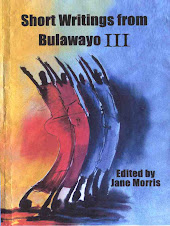
Another exception, albeit a minor one, I take with this collection is the inclusion of “The Queue”. This story was earlier published in the “Short Writings From Bulawayo” anthology. Including it in this latest collection is unfair and the publisher should have done better. There is no value for money for the book buyer if they are paying just to read stories they have come across before. To be fair, Rheam is not the only writer to do this. However, seeing as this is her first collection, it would have been wise to use the opportunity to publish only new stories readers have not come across before.

Whatever Happened to Rick Astley? is a welcome book. Rheam’s writing career is progressing. With many publishers closing shop in the country, we should welcome any new books that aim to qualitatively add to the canon. Zimbabwean literature benefits from voices such as Rheam’s. However, Rheam is now becoming an established writer and the critical acclaim of her first trailblazing novel This September Sun has long worn off. This collection was a chance for her to show off her ambidexterity when she writes between the novel and the short story form. Although there are some glimpses of excellence, I’m not convinced that she has demonstrated her literary excellence through these short stories.


Nhlanhla Dube: Contributor

Nhlanhla Dube is a native of Harare,Zimbabwe. He holds a PhD in English Studies from Stellenbosch University. He is currently a Postdoctoral Research Fellow in English Literary Studies at the University of Cape Town. His research interests are Geocriticism, Spatiality, Literary Bulawayo and John Eppel. He has published peer reviewed papers on Law and Literature and Literary Pornography.


Saturday, September 16, 2023

The Journal of the Britain Zimbabwe Society review of 'Whatever Happened to Rick Astley?'

 Reproduced from the Zimbabwe Review, The Journal of the Britain Zimbabwe Society, Issue 23/3 September 2023. ISSN 1362-3168

Review

WHATEVER HAPPENED TO RICK ASTLEY?

Pat Brickhill reviews a collection of short stories by Bryony Rheam


Bryony Rheam’s latest book is a collection of short stories, each one is linked in some way to Zimbabwe.

Most are set in various suburbs of Bulawayo, where Bryony lives with her family. A handful are set in the UK, and The Piano Tuner, a touching story of prejudice and compassion, is set in Zambia.The subject of each story varies from potholes, to disappearing electricity, to the physical and human neglect of Zimbabwe, but each describes a different facet of loss. 

'The beauty of the ordinary'

I would agree with fellow Zimbabwean writer Siphiwe Ndlovu, who writes on the back cover that Bryony portrays loss 'of identity, memory, country or a loved one' and 'capture(s) the beauty of the ordinary'. 

The writer has a talent for vividly painting with words the world she is writing about. We are drawn into a realm of reflection that arises with the passage of time as we grow older: reliving childhood, or the excitement of joining the world of adults, combined with the loneliness that can come with old age. 

These themes are developed in The Queue and These I have Loved, while the consequences of bad life choices are explored in Dignum et Justum est. 

Bonding

Bryony Rheam has a wonderful talent for bonding the reader with the story, tackling emotions that are familiar, looking at belonging, the loss of country, of husband, or merely the passage of time. Each story left me with a strong sense of the character struggling against the vagaries of life and perhaps attempting to reach a point of resolution or even redemption. 

Castles in the Air was a beautiful descriptive story blending the compassion of motherhood with the magic of childhood, as the mother distracts from a power cut by taking her daughter on a late afternoon walk, enthusiastically joining in her child’s imaginary games. My least favourite story was The Colonel Comes By, which describes the stark, desperate struggle of a single mother, as the ending left this reader rather confused. 

The Big Trip, The Young Ones and Last Drink at the Bar explore the familiar divide that opens with choices, or the lack of them, by those who leave their country and those who remain – as each attempts to justify or acknowledge where they live. Moving On is a touching story of coming to terms with the hidden trauma of loss that surfaces when memory and reality merge. 

Bryony gives a glimpse of her skill at humour with Christmas. The Fountain of Lethe uncovers a memory from childhood perhaps best left buried.

Finally, the title story is a wonderful wistful reflection of a mother inspired by remembering a song from her youth in Whatever Happened to Rick Astley?. 

I found this anthology both touching and entertaining. To some these stories will provoke nostalgia, for many people have endured the trauma of leaving the country of their birth – often leaving loved ones behind. Some tales will leave the reader with a familiar longing and feeling of sadness but every narrative is bursting with warmth and empathy. This anthology provides a poignant glimpse into the lives of strangers who are nevertheless familiar, to all who are fortunate enough to be able read it.

I thoroughly recommend it. 


 Whatever Happened to Rick Astley? by Bryony Rheam

Published by amaBooks, Zimbabwe/ Parthian Books, UK

ISBN 9781779310958/ 9781914595141

224 pages, 2023


Pat Brickhill is a freelance writer and BZS secretary.


Whatever Happened to Rick Astley? is available in the UK through Parthian and all good bookshops and online outlets, in North America through the African Books Collective, and in Zimbabwe through the Orange Elephant in Bulawayo and Bindu Books in Harare.


Wednesday, July 12, 2023

Whatever Happened to Rick Astley? The UK Launch of Bryony Rheam's Short Story Collection


 The launch video features a conversation between Bryony Rheam and Professor Thabisani Ndlovu of Walter Sisulu University in South Africa.

The book is available in the UK through https://www.parthianbooks.com/products/whatever-happened-to-rick-astley as well as in good bookshops and many online stores.

It is available internationally (but not in the UK or Zimbabwe) through https://www.africanbookscollective.com/books/whatever-happened-to-rick-astley 

It will be launched in Zimbabwe on July 22 2023, details to follow.


Friday, March 3, 2023

“A Great Time to Be a Zimbabwean Writer”: A Conversation with Siphiwe Ndlovu in World Literature Today

 from www.worldliteraturetoday.org/2023/march/great-time-be-zimbabwean-writer-conversation-siphiwe-ndlovu-anderson-tepper

Siphiwe Ndlovu is interviewed by Anderson Tepper:

If—as Booker Prize–winner Damon Galgut said—2021 was a good year for African writing, 2022 was especially good for Zimbabwean writers. I spoke with novelist Siphiwe Ndlovu, author of The History of Man, about her work, her contemporaries, and Zimbabwe’s impressive and deep-rooted literary tradition.


Anderson Tepper: This year both you and Tsitsi Dangarembga were awarded the prestigious Windham Campbell Prize for fiction, and NoViolet Bulawayo was shortlisted for the Booker Prize. What do these honors say about the state of Zimbabwean writing today?

Siphiwe Ndlovu: I have said it before and I will say it again: this is definitely a great time to be a Zimbabwean writer. There are just so many writers out there telling the story of a country that is often maligned or, worse still, written off as a “failed state.” These writers often help us think critically about the overly simplified way that the media tends to write about Zimbabwe.
Those of us who come from Zimbabwe understand the complexity, knottiness, and messiness that the many forms of violence and injustice—the product of exploitative and extractive settler colonialism and rampant postcolonial corruption and greed—create. The media narratives and portrayals of Zimbabwe both within the country and internationally tend to be limited and limiting and create the need for alternative narratives—and this is where storytelling comes in.
In Zimbabwe’s fiction, there is anger, outrage, disappointment, disillusionment, hope (and the loss of it), but most importantly, there is a call for reckoning and change that the politics of the country have failed to successfully address. All this makes for a literature that is concerned with many of the issues that globally plague our twenty-first century: the erosion of civil rights; the rise of a dangerous, exclusionary, and myopically inward-looking populism; and the persistence of racism and other forms of hate. The international recognition of Zimbabwean writers, via such awards as the Windham Campbell Prize and the Booker Prize, shows that we are not simply telling stories about a pariah state but about a world living and fighting its way through various crises and inheritances from the past—stories that, although they are about a country, are really of the world.

Tepper: Who were some of the authors who played a role in inspiring you to first write about your country and its history?

Ndlovu: Even though I grew up in Zimbabwe and spent all my years of primary and secondary education there, I didn’t really encounter Zimbabwean fiction until I was a college student in the US. I remember reading Charles Mungoshi’s wonderful collection of short stories, Coming of the Dry Season, in high school for one of the national exams. But I believe that was the sum total of my engagement with local fiction.

In college, when I told one of my professors that I had never read Tsitsi Dangarembga’s Nervous Conditions, she was rightly appalled and aghast that I, a Zimbabwean creative writing student, had never read the book. She immediately gave me her own copy of the novel to read . . . and everything changed. I could relate to the experiences of all the characters in that novel—Tambudzai, Nyasha, Babamukuru, Lucia, Takesure. I knew and was related to people just like them. All of a sudden literature became not just something I loved but something that was familiar. That experience led to a journey of discovery that brought me into contact with such brilliant works as Dambudzo Marechera’s The House of Hunger, Shimmer Chinodya’s Harvest of Thorns, Peter Godwin’s Mukiwa, Doris Lessing’s The Grass Is Singing—these works helped me understand my country and its history.

However, it was not until I devoured Yvonne Vera’s entire oeuvre, especially Butterfly Burning and The Stone Virgins, that I realized that one could write about my city, Bulawayo, a city that I love very much, and make it come alive—make its absolute richness known to the world (see WLT, Sept. 2005, 64). I wrote my PhD dissertation on Rhodesian and Zimbabwean fiction, and thinking critically about the many issues raised within the country’s literature encouraged me to also write creatively about my country and its history.

Tepper: Tell me about the ground you set out to cover in your two novels, The Theory of Flight and The History of Man. How will the final book in the trilogy, The Quality of Mercy, complete the picture?


Ndlovu: The Quality of Mercy was published by Penguin Random House South Africa in September 2022 and is due to be published by Catalyst Press in the US in the latter half of 2023. Together these three novels—The Theory of Flight, The History of Man, and The Quality of Mercy—make up the City of Kings trilogy. The novels all deal with aspects of Africa’s modern history: colonization, decolonization, and postcolonization.

The History of Man deals with the colonial moment and its many (often limiting) narratives. The story of its protagonist, Emil Coetzee, serves as a critique of colonial power and the kind of masculinity it produces.

The Theory of Flight is concerned with the postcolonial moment and its gradual loss of “ease” as it becomes a place of increasing dis-“ease.” The story of its protagonist, Imogen Zula Nyoni, serves as a critique of postcolonial power and calls for a different kind of revolution from the one that led to independence.

The Quality of Mercy actually acts as a bridge between the first two novels and is a story of transition that delineates a country’s journey from being a colonial state to a postcolonial state. The story of its protagonist, Chief Inspector Spokes Moloi, serves as a way to think critically about the institutions, systems and attitudes that a postcolony inherits as it tries to right the many wrongs of the past.

Tepper: Though you’ve studied and lived abroad, you returned to your hometown of Bulawayo in 2018. What have been the challenges and benefits of being based back in Zimbabwe? 

Ndlovu: Bulawayo is a postindustrial city and, like most postindustrial cities all over the world, it is undergoing a crisis of identity brought on by loss of opportunities, devastating levels of unemployment, deterioration of once pride-inducing infrastructure, and the gradual decay of the systems and institutions that once upon a time held it together. These realities create many challenges and difficulties for us, but Zimbabweans are extremely innovative and resilient people who are adaptable, perhaps to a fault.

Even though most factories closed and multinational companies left after the political upheavals, the bad governance and civil unrest of the early 2000s sent the country into a tailspin; paradoxically, the city of Bulawayo continues to grow as more and more people leave the rural areas or other parts of the country and come to settle in the city in search of opportunities. As a result, this is a time of great struggle and change.

Given the state’s control over the narrative of post-2000 Zimbabwe, it is important, as a writer, to live in and witness this period of great change. One of the wonderful benefits of living in Bulawayo at this time is that there are many other writers living in and writing about the city and the country—John Eppel, Bryony Rheam, Violette Kee-Tui, Erica Gwetai, Scottie Elliot, Susan Hubert, Leroy Ndlovu, and Philani Nyoni. This means that the story of what is happening is being captured from many different vantage points and being written in its multifaceted complexity.

As academic Tsitsi Jaji has brilliantly pointed out, Bulawayo’s positionality as the second-largest city, coupled with its rather fraught history with the country’s capital, allows its writers to see and experience the country’s politics differently and, as a result, to write stories that often challenge the dominant narratives. As a writer whose works depict life in Bulawayo, the City of Kings, writing from a position of witness has been very edifying and fulfilling.

Tepper: Has the climate changed for writers and artists since the fall of Robert Mugabe five years ago?

Ndlovu: I think the climate changed for Zimbabwean writers long before the events of 2017. The immediate post-independence years saw a rise in literacy in the country, and it was almost taken for granted that educated Zimbabweans would read—newspapers, magazines, books. Libraries and bookstores thrived, providing readers access to both local and international writing. Mobile libraries traveled to out-of-the-way places—that is how much of a reading culture the country had. But reading is something of a leisurely and privileged pastime, and when people are struggling to make ends meet economically, the time they can devote to reading and consuming other forms of art dwindles. So, post-2000 Zimbabwe has seen a decline in its reading culture and support for its arts in general.

The state, understanding that writers and artists often use their work as critique and counter-narrative, seems to have taken advantage of an already bad situation and dried up or corrupted most means of arts funding. It’s made the taxes on importing books exorbitantly high, which meant that many bookstores had to close; allowed for textbooks to be photocopied, which meant that most publishing houses which relied on textbook publishing in order to publish literature have had to stop publishing local works of fiction, poetry, etc. Whatever gains in its reading culture that Zimbabwe had cultivated in the 1980s and 1990s have greatly diminished.

There is, however, a silver lining to this gray cloud. Post-2000 Zimbabwe has seen the creation of what has come to be known as the Zimbabwean diaspora, as more and more Zimbabweans leave the country and settle in other parts of the world. This diaspora has allowed Zimbabwean writers—NoViolet Bulawayo, Novuyo Tshuma, Sue Nyathi, Petina Gappah, Tendai Huchu, Brian Chikwava, et al.—to seek publication in other countries, which has led to the exponential growth of Zimbabwean literature over the past twenty years. Because of their subject matter, or because of the race or ethnicity or sexual orientation of their writers, many of the books that have been published in the diaspora would probably never have been published in Zimbabwe. The diaspora has allowed for twenty-first-century Zimbabwean literature to be truly diverse. My next series of interconnected novels will actually look at the experience of those living in Zimbabwe’s diaspora.

Anderson Tepper is co-chair of the International Committee of the Brooklyn Book Festival and curator of international literature at City of Asylum in Pittsburgh. His writing has appeared in the New York Times, Los Angeles Times, Vanity Fair, and Words Without Borders, among other places.