Showing posts with label British Council. Show all posts

Wednesday, July 12, 2023

Whatever Happened to Rick Astley? The UK Launch of Bryony Rheam's Short Story Collection


 The launch video features a conversation between Bryony Rheam and Professor Thabisani Ndlovu of Walter Sisulu University in South Africa.

The book is available in the UK through https://www.parthianbooks.com/products/whatever-happened-to-rick-astley as well as in good bookshops and many online stores.

It is available internationally (but not in the UK or Zimbabwe) through https://www.africanbookscollective.com/books/whatever-happened-to-rick-astley 

It will be launched in Zimbabwe on July 22 2023, details to follow.


Tuesday, April 8, 2014

Africa39 List includes Novuyo Rosa Tshuma

We were thrilled to learn today that Novuyo Rosa Tshuma is included in the Africa39 list - a list of 39 of the most promising African writers of fiction from sub-Saharan Africa under the age of 40. The Africa39 Project was set up as a key part of the programmes and celebrations of Port Harcourt UNESCO World Book Capital 2014. The project is a partnership between the Hay Festival of Literature, the Arts Ltd UK and the Rainbow Book Club in Port Harcourt.

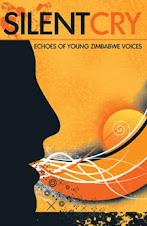
We first got to know Novuyo when we were involved in the British Council Identity and Diversity project. As part of the project we published two anthologies of short stories and poems - ‘Echoes of Young Voices’ and ‘Silent Cry’. Novuyo’s short stories appeared in both the collections. So started a long standing friendship with Novuyo. In 2011 we published ’Where to Now? Short Stories from Zimbabwe’, which included ‘Crossroads’ by Novuyo. This collection has recently been translated into isiNdebele, as Siqondephi Manje?, and the isiNdebele translation of Novuyo’s story is titled 'Kwandlela ziyaphambana’. ‘Crossroads’ later appeared in ‘Shadows’ Novuyo’s first collection - a novella and short stories.

Last year we were fortunate to travel to Kenya with Novuyo as the Zimbabwe representatives to a workshop 
being held there. The programme in Kenya was organised to celebrate the British Council’s partnership with Granta, the UK’s leading literary magazine on their announcement of the “Best of Young British Novelists 4”. One of these “Best of Young British Novelists”, Nadifa Mohamed, is also on the Africa39 list.


Running in parallel with a workshop for publishers on “Promoting New Writers”, which we attended, was a fiction writing workshop in which Novuyo participated. Novuyo joined writers from Kenya, Nigeria, South Africa and Uganda.

Novuyo is currently a Maytag Fellow in Creative Writing at the University of Iowa. There will be many more stories flowing from her pen.


Congratulations also to the other 38 writers on the list, which includes a few other writers we've been  pleased to publish in recent Caine Prize anthologies: Rotimi Babatunde, Tope Folarin, Abubakar Adam Ibrahim, Stanley Kenani and Mehul Gohil; and Clifton Gachagua, who will be published in this year's anthology.

Monday, August 12, 2013

amaBooks in Kenya for a Feast of Literature


In June, we, Jane Morris and Brian Jones, the two directors of ’amaBooks, a small independent publisher based in Bulawayo, visited the bustling city of Nairobi, to participate in a workshop for those involved in promoting literature, as well as a series of literary events.

Luckily when we arrived we didn’t have to battle through rush-hour traffic as this is a foolhardy pursuit if you want to reach your destination in a reasonable time, with matatus zigzagging crazily through the long traffic jams.

The programme in Kenya was devised to celebrate the British Council’s partnership with Granta, the UK’s leading literary magazine on their recent announcement of the “Best of Young British Novelists 4”.

For three consecutive decades Granta has selected 20 young writers who have shown exceptional promise on the British literary scene. As well as the British Council in Kenya, the other local partner in the programme was Kwani Trust, a Kenya-based literary network dedicated to developing quality creative writing.

Running in parallel with our workshop on “Promoting New Writers” was a fiction writing workshop. Novuyo Rosa Tshuma, the Zimbabwe representative, joined writers from Kenya, Nigeria, South Africa and Uganda.

The young writers were able to interact with award-winning British writers Adam Foulds and Nadifa Mohamed (two of Granta’s ‘Best of Young British Novelists’), Granta’s Deputy Editor, Ella Allfrey and Kwani’s Managing Director Billy Kahora.
 Attending the workshop gave us the opportunity to interact with others involved on the literary scene from other African countries and we were particularly pleased to meet up with two of the co-publishers of our next book. Femrite from Uganda and Kwani in Kenya are also publishing the latest collection of short stories from the Caine Prize for African Writing 2013 – “A Memory This Size”. The book has just arrived from the printers and will be in Zimbabwe outlets shortly.

Another highlight was exchanging ideas with the representatives from the Port Harcourt Book Festival, a literary event that takes place every October in the city, referred to as the Garden City, in the Niger Delta. Port Harcourt has had the honour bestowed on it of being elected as the UNESCO World Book Capital for 2014, the first city in sub-Saharan African to be chosen. The organizers of the festival are actively involved in promoting a reading and writing culture.

The workshop gave each participant the opportunity to talk about their experience of events and one of the examples we shared was the launches we had organized for the most recent book in the short writings series “Where to Now? Short Stories from Zimbabwe”, which seemed to fit in well with the theme of the workshop of promoting new writers.

We have used each of the five books in the short writings series to introduce new writers to the Zimbabwean reading public, through including their work with those of more established writers. Because of the scattering of Zimbabwean writers, we, for the first time, launched the book in South Africa as well as in Zimbabwe.

The venue for the launch was the Writers’ Centre at Wits University, where three of the writers featured in the collection, Thabisani Ndlovu, Novuyo Rosa Tshuma and Sandisile Tshuma, read from their pieces and answered questions from the audience. The Zimbabwe launch of the anthology, during the Intwasa Arts Festival koBulawayo and held at the National Gallery of Zimbabwe in Bulawayo, featured readings, as well as a live drawing by the artist Owen Maseko, based on the short story “Snapshots” by NoViolet Bulawayo.

The growing emphasis on the use of social media in attracting and maintaining audiences for literary events was a key part of the workshop. Kwani gave the example of publicizing their events using Twitter and the innovative method of people buying a book prior to a launch by using Mpesa, an East African payment method via cell phones.

After the workshop, we were treated to a variety of literary events organized to celebrate Granta’s Best of Young British Novelists, featuring readings and discussions with Adam Foulds, Nadifa Mohamed and Kenyan writers. Adam Foulds read from several of his books, including his narrative poem, “The Broken Word”, set in Kenya about the Mau Mau uprising.
Nadifa’s readings were mainly from “Black Mamba Boy”, her fictionalized account of her father’s early life in the Horn of Africa. The literary week ended with Granta, Kwani and British Council combining to stage the ‘Best of Young British Novelists 4 Sunday Salon’; on a balmy Sunday afternoon it was a fitting end to what had truly been a literary feast. 
The picture shows Ellah Allfrey, Nadifa Mohamed, Zukiswa Wanner, Adam Foulds and others.
– By Jane Morris and Brian Jones © Panorama Magazine 2013.


from Panorama Magazine (http://www.panorama.co.zw/index.php/archives/115-pan-news/616-a-feast-of-literature)

Tuesday, July 23, 2013

Novuyo Tshuma's Flirtations with Nairobi


from www.panorama.co.zw


It's a sepia tinted afternoon as we speed from Nairobi's Jomo Kenyatta Airport, headed for the Fairview Hotel, situated near the city-centre. There seems to be a lot of activity here; construction everywhere, the skeletons of buildings in progress. Nairobi has the writhing vibrancy of Harare; the hum of traffic, the post-colonial ambitions of glossy architecture and inhabitants who throng the streets with urgent purpose.
The coming week is any writer's treat; five days of literary events organised by The British Council, Kwani, the innovative East African literary initiative, and GRANTA, UK's leading literary magazine.

I am grateful to British Council for sponsoring my trip, and my stay at the sparkling Fairview Hotel; I have flown in from South Africa and am to meet, among others, fellow Zimbabweans Jane Morris and Brian Jones of amaBooks. Jane and Brian are part of the Programmers' Workshop, which runs concurrently with our Writers' Workshop. This literary feast includes the launch of the latest GRANTA Issue 'Best of Young British Novelists 2013', a three-day fiction writing workshop, a lecture by visiting writers Nadifa Mohamed and Adam Foulds as well as a 2013 elections symposium put together by Kwani Trust.

There is a tingling feeling of having been here before, an intimate sense of having experienced this space and its people before; was it in Kenyan writer Binyavanga Wainaina's evocative memoir 'One Day I Will Write About This Place'?

The fiction workshop begins on the morning of the 19th, with Ellah Allfrey, Deputy Editor of GRANTA, chairing the proceedings. With her is Billy Kahora, Managing Editor of Kwani, and the two guest writers, UK based Nadifa Mohamed and Adam Foulds, both of whom are on GRANTA's 2013 Best of Young British Novelists list.

There are 19 workshop participants; 15 Kenyan writers and four visiting writers from Zimbabwe, South Africa, Nigeria and Uganda, myself included. The interaction with high profile editors and experienced writers is like a chipping away from a young writer of the crusty parts, a refining that sharpens writing focus. The workshop hones the craft of building a story, much in the same way one builds a house, building upon the foundation of plot a slab of setting, sturdy walls of language, cemented by effective research and airy windows for that clear-eyed characterisation. The gabbled roof is decorated by a writer's distinct style.

The symposium on Kenya's 2013 elections reminds me of Zimbabwe's own upcoming Presidential elections. Kenya and Zimbabwe seem to follow intersecting trajectories in the history of their elections; in 2008, when Zimbabwe spent an inordinate time without a President, it was dubbed “another Kenya”, seeing as Kenya had had a similar experience.

What is a space for a writer without a taste of its culture? Lunch at Campia, an Ethiopian restaurant - the tongue introduced to new tastes; injera (bitter pan-cake dough, which is eaten like sadza), tibtib (spicy meat dish) and zilzil (roasted meat dish). An evening at a dinner hosted by Kwani spent as a Maasai Woman, in a Kanga and a beaded bracelet which I am told Maasai women never take off; it is a marriage gift, much like a wedding ring. And a bag plump with books; intersections with the cultures of the world, any writer's delight.

What does one take away from the experience? Invaluable teachings, fresh ways of telling stories, new friendships, animating interactions with space... All of these beaded in memory, to one day embroider a fictitious truth.
The musky air, farting traffic and yellow lights as we drive to the airport on the evening of the 24th, remind me of a place called home. Strange, this, as I'm no longer sure where that is. - By Novuyo Rosa Tshuma.

*Novuyo Rosa Tshuma (pictured) is the author of Shadows. Her stories have won the Yvonne Vera Award and been published in various collections, including Where to Now? Short Stories from Zimbabwe.  She has been a participant in both the Caine Prize and Farafina Trust Writing Workshops. 

She holds a BComm in Economics and Finance from the University of Witwatersrand, and is a Maytag Fellow for MFA Creative Writing at the University of Iowa.

Sunday, December 16, 2012

"The best thing I ever applied for... : British Council Crossing Borders Project

From: http://britishcouncilblogs.org/africa/2012/12/13/british-council-crossing-borders-project-the-best-thing-i-ever-applied-for

 Eight years after the British Council engaged creative writers from Zimbabwe and beyond on the Crossing Borders project, it seemed that the immediate impact of the creative writing programme was all there was to see. However to read this moving testimony from a participant of the programme on how it has changed her career gives a feeling of sweet success and an overpowering sense of why we commit our resources to creating opportunities in the first place.

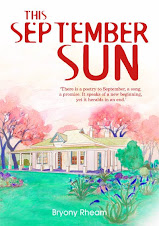
Bryony Rheam was born in Kadoma in 1974 and lived in Bulawayo from the age of eight until she left school.She studied for a BA and an MA in English Literature and taught in Singapore for a year before returning to teach in Zimbabwe. She won the Zimbabwean best first novel award and gives an account of her experience in writing the award winning novel, This September Sun:
 
“The process of writing is never an easy one.  Time and again I read about writers who confess to disliking everything about it: the need to be disciplined, the hours sat in front of a keyboard (even when the ideas are flowing) and the drudge of writing and rewriting paragraphs, scenes and scenarios.  Having the ideas is the easy part.  More than once I have wished for someone to invent some sort of gadget that would allow me to plug my brain into a computer and for the story to download itself.
Unfortunately, as this gadget is still to be invented, I have had to rely on my own reserves of determination and discipline.  There is a popular idea of the writer having a muse, and when the muse is with them, they have to write.  Associated with this, is a feeling that writers are somehow special people – gifted, at least – who need to keep their own hours and express themselves as creatively as possible.
Whilst there may be an element of truth in this supposition, I’m afraid the truth is a lot less romantic in reality.  Writing is a job.  It’s a job that brings the writer an income, however small, and it’s a job that needs to be treated as such.  Of course, not everyone is a writer and not everyone who wants to be a writer can write, but those who can should not delude themselves into thinking that it doesn’t require hard work, constant attention and, until you finally have something published, frequent times of self-questioning.  Is this good?  Is this acceptable?  Will anyone enjoy it?
It took me about ten years to complete This September Sun.  That’s not to say that I was writing every day, or even every month!  I wrote in spurts, carried away at times by a determination to at least get the story down, and at other times hampered by periods of self-doubt and, dare I admit it, laziness.  When I look back, I can see that the times I worked the hardest were the times when I had had some encouragement from someone who read the odd chapter or so, or when I had a deadline to meet.
The best thing I ever did was apply to go on a British Council run writing course, Crossing Borders.  I was lucky in being accepted as it was the last year that the course was being offered.  It was wonderful.  For someone like me who works well to deadlines, it made me work hard at completing unfinished chapters and linking various ideas.  Only a small part of what I had written was sent to my mentor in the UK, but I had to do a lot of work to get to the point of choosing which excerpts to send.
I’m often asked by aspiring writers to read their work and it is a task I try to avoid if possible, not just because it feels like extra work to read through, but because I often find that the kind of people who ask me to read their work are looking for a specific type of response from me.  They want to be told that it’s good, they want me to be overwhelmed with awe at the quality of their writing and tell them to get it published right away.  I know this because I’ve been there myself and I know the awful cringing feeling of embarrassment they feel when told their writing ‘still needs some work’.  So it was also hard for me to send off chunks of my writing to someone in the UK who knew little of Zimbabwe and of the events of the past 50-60 years.  I had to make a conscious effort to send off the parts that I felt genuinely needed comment and assistance, rather than pieces I knew were good.  Like every writer, my work is very personal and I don’t take criticism well, but it actually wasn’t like that.
It was uplifting to find that some of the parts I saw as problematic were actually fine and interesting to see someone else’s point of view on pieces that hadn’t occurred to me needed reworking.  The best thing about the course was that I didn’t have to take on board all or any of the suggestions.  Ultimately, it gave me the confidence to believe that my story would be well-received and I had the impetus to get on with finishing it and stop procrastinating!
It was a great moment for me in November 2009 when I attended the launch of This September Sun at the Bulawayo Club.  The number of people who attended the launch and who bought copies of the book was quite overwhelming.  Owen Sheers, the Welsh poet and writer, who had led a writing workshop I had attended at the Intwasa Festival a couple of years previously, gave the opening speech.  At that moment I felt I had come a long way.  An idea became a story which became a book.  I’m glad I stuck at it.  My next novel, which I’m working on at the moment won’t be quite as long and I hope it won’t take me even half the time it took me to write This September Sun.  I’m on my own now – and I’m employing the muse on a more permanent contract.”

This September Sun’ was published by ‘amaBooks in Zimbabwe and by Parthian Books in the United Kingdom. It is to be published in Kenya by Longhorn. Elsewhere it is available through the African Books Collective. It is now a set book for ‘A’ level Literature in English in Zimbabwe.

Thursday, September 27, 2012

The Business of Writing workshop at Intwasa 2012


Over 50 writers, both established and emerging, attended the Business of Writing workshop on Saturday 22 September in the National Gallery of Zimbabwe in Bulawayo. The workshop was part of the Intwasa Arts Festival koBulawayo and was supported by the British Council. It was facilitated by Jane Morris and Brian Jones of 'amaBooks, with Mgcini Nyoni of Poetry Bulawayo and writer Naison Tfwala.
Mgcini concentrated on online publishing and Naison on the advantages and disadvantages of self-publishing. Brian and Jane led discussion on the relationship between writers and publishers. Among subjects touched on were the changing world of publishing with the growth of self-publishing and the introduction of ebooks and digital printing. Opportunities for writers looked at included joining writers' groups, attendance at workshops, entering competitions, residencies and submitting work to poetry and story websites and blogs. The role of publishers in developing the skills of writers through constructive feedback on their submissions was an area of debate. It was great to see so many writers coming to the workshop and we hope to run more in the future.

Photograph courtesy of Batsirai Chigama

Wednesday, July 21, 2010

'amaBooks at the Jozi Book Fair


'amaBooks will also have a stand at the Jozi Book Fair, which takes place at Museum Africa in Newtown on 7 to 9 August. If you are in or around Johannesburg, please come and have a look at the books we have in stock.

The overall purpose of the Jozi Book Fair is to promote of a culture of reading and writing, and to provide a public and visible platform where three key social partners can come together. These social partners are:

  • readers in the form of the general public and specific constituencies with this broad public,
  • writers and authors, in particular emerging new writers, and
  • publishers – in particular small and emerging publishers

The creation of a common meeting space for all the partners is seen as crucial in strengthening small publishers, creating a market for writers, and in creating an opportunity for readers to speak to authors and publishers about the kinds of stories they are interested in. The JBF project’s overall purpose is therefore to create an ongoing cycle in which each of the parties reinforce each other and create a strong reading and writing culture

Jozi Book Fair offers several platforms for writers, publishers, agents, translators and press to engage, debate, discuss and plan new projects.It offers small and progressive publishers a forum to showcase their publications and activities, network, as well as the opportunity to develop alternative approaches and strategies.

Information about Jozi Book Fair can be found at www.jozibookfair.org.za

'amaBooks at the Cape Town Book Fair


Jane Morris and Brian Jones of 'amaBooks are both, courtesy of the Goethe Institute and the British Council respectively, to be at this year's Cape Town Book Fair, which takes place at the Cape Town International Conference Centre from 30 July to 3 August. The Cape Town Book Fair is the largest in sub-Saharan Africa, with over 220 exhibitors drawn from 31 countries.
Anyone interested in Zimbabwe literature is welcome to come to the stall G5, which 'amaBooks is sharing with other independent African publishers.

For more information about the Cape Town Book fair, visit www.capetownbookfair.com

An article about 'amaBooks and the Cape Town Fair from Bulawayo's Sunday News can be see at http://www.sundaynews.co.zw/inside.aspx?sectid=6732&cat=3