|
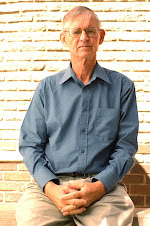
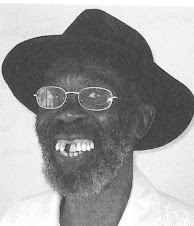
| Tariro Ndoro at the launch of Moving On and Other Zimbabwean Stories Photo courtesy of Mgcini Nyoni |
I’ll begin this talk with a quote from a poem
by Denice Frohman and Dominique Christina. “The quickest way to silence a voice
is to treat is as though none has come before it.”[i]
Growing up, I wasn’t exposed to much African
speculative fiction. In fact, I wasn’t exposed to much African genre fiction
either. Barring a few adventure books that were marketed for children by
Dandaro Press, the vast landscape of what I (and presumably many other African
children) was exposed to was literary fiction.
In her essay, “African Science Fiction is still
Alien,” Dr Nnedi Okorafor blamed this on the success of Chinua Achebe’s
“serious novels” that set a precedent for literary fiction in Africa.[ii]
Sadly, this has been vastly perpetrated by the politics and economics of
publishing. Literary fiction is from Africa is taken as the norm while writers
of genre fiction are generally expected to have a deep reason for writing. In
the words of Wole Talabi, “I don’t think any group of writers is called
upon to justify and defend the existence of their work as often as science
fiction and fantasy writers are.”[iii]
In her essay, “Emerging Trends in African
Speculative Fiction,” Chinelo
Onwaulu points out that the vast majority of African speculative fiction is
open mainly to Nigeria and South African and even within that narrow landscape,
most South Africans in the genre are white and most Nigerians in the genre are male,
owing to historical advantage and patriarchy.[iv]
This state of affairs give us the danger of
perpetuating what Chimamanda Adichie would refer to as the single story i.e. a
single way of looking at black narratives, black characters or black settings.[v]
To make an example of cinema and screenwriting, I’ve watched three different
movies namely, Hotel Rwanda, Shooting Dogs and Sometimes in April that would all fall under the category of literary
fiction if they were books. All three movies are about the Rwandan Genocide. In
the landscape created by these movies, it easy to imagine a violent Africa in
which everyone wields a machete at their neighbour, yet it has taken us many
years to imagine a black superhero flick that casts black people in a positive
light.[vi][vii][viii]
Why
does this matter? Because speculative fiction has the advantage of allowing us
to imagine our futures or to reimagine our pasts. In the words of Dr Okorafor, “the power of imagination and narrative should never be
underestimated. Aside from generating innovative ideas, science fiction also
triggers both a distancing and associating effect. This makes it an excellent
vehicle for approaching taboo and socially-relevant yet overdone topics in new
ways.”
Yet it is unfortunate that we haven’t always
been able to embrace speculative fiction for reasons stated earlier. Ivor
Hartmann puts it bluntly, “If you can’t see and relay an understandable vision
of the future, your future will be co-opted by someone else’s vision, one that
will not necessarily have your best interests at heart.”[ix]
Yet because most would-be speculative fiction
writers have to justify their stories, we are sometimes forced to navigate the
landscape of black speculative fiction as though none had come before us.
Growing up, there were many cartoons I watched
with a hint of speculative fiction, my favourite were about giant robots and
space cowboys. I didn’t realize they contained elements of SFF, I simply
watched them because they were there. In 2001 I watched Harry Potter and the Philosopher’s Stone premiered at with my
sister when I was 9 years old. What I remember most is that the cinema was
packed to capacity.[x]
For the next few years, Harry Potter wouldn’t
leave our lips. Everybody loved it, we gathered to discuss the latest books,
the latest movies. Kids identified as being either Hufflepuffs or Ravenclaws.
We mourned the death of Dumbledore. Yet there were hardly any people of colour
in it barring a few minor black and Indian characters, and Cho Chang who was
Harry Potter’s love interest.
This is how I lost interest in both science
fiction and fantasy genres. I didn’t see myself in those stories and they lost relevance
for me. I didn’t realize this had happened at the time. I concentrated on
reading what was available in school libraries, in bookstores and on my
mother’s bookshelf. In Zimbabwe, that meant a whole lot of literary fiction, a
whole lot of crime paperbacks and the odd mainstream novel. The genre novels
were mostly Western and the literary fiction was mostly African. This created a
subconscious dichotomy in my head – genre fiction of any sort was for Western
writers, if I wanted to be a serious
African writer I had to write like Achebe or Soyinka.
Then 2015 found me in a Creative Writing class
in which some of the readings were speculative. I struggled with them. Not
because of the language or the synopsis. In fact, some of the readings were
brilliant but as I told one of my fiction instructors, I didn’t see the use of
them. Most of these works were written by white writers about white characters
and I was there to write my serious
African novel.
In 2016, I stumbled upon “What it Means when a
Man Falls from the Sky” by Lesley Arimah -- a post apocalyptic sci-fi story set
in Africa featuring African characters by an African writer.[xi]
My heart came alive. Not only was this narrative fresh and relevant to me, it
was also a form of proof that genre fiction by an African writer could be taken
seriously – the story had been nominated for the Caine Prize.[xii]
I scoured the internet for everything she’d written and I wasn’t disappointed.
I’d found a kindred writer.
For the first time I saw that there was someone
writing speculative fiction and it didn’t stop there. I loved that she didn’t
restrict herself to hard fantasy or hard sci-fi, she played around with language
and dabbled with genres picking and choosing what forms to use with each story.
She had escaped the proverbial box and her escape charted a path for me to
follow. Someone had come before me and therefore I was no longer silenced.
I want to stop here and emphasise that this is the
best time to be writing african speculative fiction because although writing
industry hasn’t changed much, the internet has played the role of equalizer.
In this digital age, I discovered that there is
an entire community of african speculative fiction writers engaged in writing
novels, comics and movies. I heard of Octavia Butler and Nnedi Okorafor and
several magazines that support African writing, Omenana being the vanguard. There has never been a better time to
write speculative fiction in Africa.
Earlier this year, I watched a different movie
at the cinema. The room was as full as it was when I watched Harry Potter and the Sorcerer’s Stone 17
years ago. Despite all claims by the men that hold the money, this movie had
the highest grossing opening weekend of all time. I saw myself in many of the
characters and even in the setting. Although the story was flawed, it was
evident that the time for Afro speculative fiction has come and not only is
restricted to a few people in the far reaches of the internet, traditionally
“mainstream” people also queue to watch it.
Shortly after the Black Panther was released,
the remake of a “A Wrinkle in Time” which was directed by a black woman, was
released.[xiii][xiv]
If we add the Janelle Monae’s futuristic music videos and the fact that two
speculative stories were nominated for this year’s Caine Prize short list
(Stacy Hardy’s “Involution” and Wole Talabi’s “Wednesday’s Story”), then I
think we can conclude that there is not only a critical mass of writers interested in speculative fiction
but also a large number of people who are interested in consuming it.[xv]
Is African speculative fiction still alien?
Yes. For the simple reason that if I walk into a Harare bookshop today, I
probably won’t find a copy of Binti
but now that I’ve been exposed to this wonderful storytelling tradition, I
think it is time to write until speculative fiction ceases to be alien. This is
the best time to be writing nuanced and sympathetic stories with African
heroes, African villains and African sidekicks. Let us begin.
[i] Christina, Dominique and Frohman,
Denice (2014, June 9) “No Chlid Left Behind” [Video file] Retrieved from https://www.youtube.com/watch?v=RHSqUyi6GUU
[ii] Okorafor, Nnedi (2014, January 15) African Science Fiction
is Still Alien [Blog Post] Retrieved from http://nnedi.blogspot.com/2014/01/african-science-fiction-is-still-alien.html
[iii]
Talabi, Wole “Why Africa Needs More Science Fiction.” Omenana 03 March 2016 Retrieved
from
[iv]
Onwualu, Chinelo “Emerging Trends
in African Speculative Fiction.” Strange Horizons 29 February 2016, Retrieved
from
[v] Adichie, Chimamanda, N “The Danger of the Single Story.” TED 2009
Retrieved from https://www.ted.com/talks/chimamanda_adichie_the_danger_of_a_single_story/transcript?language=en
[vi]
George, Terry, 2005 Hotel Rwanda Lions
Gate Films.
[vii]
Caton-Jones, Michael, 2005, Shooting Dogs, BBC Films/Adirondack
Pictures, Germany/United Kingdom.
[viii]
Peck, Raoul, 2005, Sometimes in April, HBO Films, Rwanda,
France, United States.
[ix] Hartmann, I.
(2012) Afro SF: Science Fiction by African Writers. A Story
Time Publication.
[x]
Columbus, Chris, 2001, Harry Potter and the Sorcerer’s Stone, Heydey Films/1492 Pictures.
[xi]
Arimah, Lesley Nneka, 2015, “What it
Means When a Man Falls From The Sky” Catapult.
[xii]
Caine Shortlist 2016 Retrieved from http://caineprize.com/previously-shortlisted/
[xiii]Coogler, Ryan and Cole, Joe Robert, 2018, Black Panther, Marvel Studios.
[xiv]
DuVernay, Eva, 2018, A Wrinkle In Time, Walt Disney Pictures/Whitaker Entertainment
[xv]
Caine Shortlist 2018, retrieved from
http://caineprize.com/press-releases/2018/5/15/2018-caine-prize-shortlist-announced
Tariro Ndoro's talk was delivered at the Speculative Fiction workshop held at the NUST American Space in Bulawayo - supported by US Embassy in Zimbabwe, the US
State Department, and amaBooks Publishers.

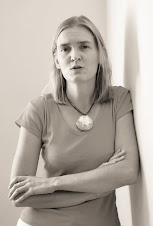
Tariro
Ndoro holds a Master’s degree in Creative Writing from
Rhodes University. Her fiction has been featured in several anthologies, including in Moving On and Other Zimbabwean Stories and in AFREADA, and her poetry has appeared in numerous literary journals and
anthologies including Kotaz, Oxford Poetry and New Contrast.


.jpg)







.jpg)