Showing posts with label African Speculative Fiction. Show all posts

Wednesday, January 16, 2019

TL Huchu's Speculative Fiction

By Stan Mushava
https://www.thestandard.co.zw/2019/01/06/tl-huchus-speculative-fiction/
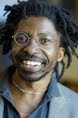
Tendai Huchu
The Zimbabwean canon is not traditionally known for its speculative fiction, but TL Huchu, Ivor Hartmann, Masimba Musodza, Tendai Machingaidze and others have been spreading their footprints in space, the underworld and dystopian futures for a while now.
Late last year, the third volume of the Hartman-curated Pan-African speculative fiction anthology, Afro-SF, dropped, featuring the stories, Njuzu by Huchu and The Interplanetary Water Company by Musodza.
Although the trio boasts notable achievements in the genre -- Musodza's Shona science fiction novel, Muna Hacha Maive Nei, Huchu's 2018 Nommo Award-winning short story, The Marriage Plot, and Hartmann's several gongs and proprietorship of speculative fiction outlets -- it is Huchu's thread that I have been able to sit down to recently.
Who is TL Huchu, by the way? A quick investigation shows TL distancing himself from "his evil twin, Tendai," the author of The Hairdresser of Harare as well as The Maestro, The Magistrate and The Mathematician. But a visit to the registrar shows that the Tendai and TL are one and the same twin.
 It's all a speculative ruse. TL, I assume, is simply Mr Huchu's genre fiction cover. His stories have appeared in Space and Time Magazine, Interzone, Ellery Queen Mystery Magazine and a lot more spaces.
Of the speculatively inclined stories, I have only been able to read The Library of the Dead in the 2017 amaBooks anthology Moving On and Other Zimbabwean Stories, The Sale in the first Afro-SF anthology, and The Marriage Plot and HostBods in the Omenana journal.
I inboxed him to understand where his new thread is going. Although he is interested in different genres, Huchu believes science fiction is an accurate reflection of the world today than is generally credited. "I think the world we live in is already more 'sci-fi' than anything fiction can conjure," he tells the columnist.
"You have ancient religions co-existing with touchscreen phones; cutting edge technology broadcasting signals at the speed of light, while people read news stories about money-spitting snakes; rovers landing on Mars, just as folks in my rural home farm with ox-drawn ploughs. My fiction is but a pale simulation of an infinitely more complex world."
Some of his pieces are, in fact, driven by economic and political verisimilitude. In The Sale, an Asian economic giant is overseeing a hostile takeover of this country, thanks to a bad debt. The citizens are routinely dozed into docility, unable to resist.
Although this story came out a few years back, it is only recently that we have witnessed more sustained discussion about the implications of countries mortgaging national assets and resources, sometimes for prestige projects of questionable developmental value.
When I erroneously credit Huchu as the first Zimbabwean writer to get a speculative fiction-specific award for his Marriage Plot, he is quick to register disapproval.
"I have a particular aversion to the cult of the 'first xxxx', unless it actually refers to something significant. When I see someone called the 'first xxxx' for something trivial, I think it reveals a culture of mediocrity as opposed to the celebration of real merit," Huchu said. 
"Genres been here for hundreds of years, and I'm not the first at anything, rather, I'm remixing pre-existing forms in the same way a deejay doesn't make music, but in the course of his set enables the listener to approach the music in a different way, and [if the deejay is any good] understand it in new ways."
In The Marriage Plot, Huchu's future self lands to advise him not marry a certain woman lest he mess forever-after up for both of them. Another split-persona trick. The only problem with Mr Future Self is that his extra-terrestrial wisdom changes by the minute, so that he comes back two more times with conflicting prognoses of married life, first with missing teeth (presumably at the hands of a mean-spirited alternative bride), second with an unflatteringly rearranged nose.
Whether they made peace with the occupational hazards of the marriage plot, and whoever they ultimately married, Huchu's selves at least got an award for their pains. Hopefully, Huchu's 2017 Nommo Award sparks more Zimbabwean activity in the genre.
In The Library of the Dead, mapped around patriotic Harare, the protagonist falls in love with a sentient book in some underworld at the national shrine. Yeah, bizarre as it gets. Anyway, it all ends badly in a passion suicide. The thing is you never know what to believe in literal suicide reports, much less literary ones.
I ask about the miracles of the righteous twin's conversion to science fiction.
"I didn't covert. I was reading this stuff throughout primary and secondary school. Spec-fic covers the whole gamut from the tsuro nagudo tales your grandma tells you about, all the way to pulp fiction, and, I dare say, even fables from the big book your priest/pastor shoves down your throat every Sunday. I'm not sure it's brought me any 'miracles', but it's a great petri dish for playing with different ideas," Huchu said.
He is currently working on an urban fantasy novel called Ghostalker.
"It's a delightful romp with a girl who talks to ghosts for a living, villainous villains like the Midnight Milkman, childhood for sale, and scientific magic. I'm having an awful lot of fun with it and I hope to have the latest draft back with my agent soon."

Moving On and Other Zimbabwean Stories and The Maestro, The Magistrate and The Mathematician are available through amaBooks in Zimbabwe, Parthian Books in the United Kingdom and the African Books Collective elsewhere.


-->

Monday, August 20, 2018

African Speculative Fiction in a Digital Landscape: Tariro Ndoro


Tariro Ndoro at the launch of Moving On and Other Zimbabwean Stories
Photo courtesy of Mgcini Nyoni

I’ll begin this talk with a quote from a poem by Denice Frohman and Dominique Christina. “The quickest way to silence a voice is to treat is as though none has come before it.”[i]
Growing up, I wasn’t exposed to much African speculative fiction. In fact, I wasn’t exposed to much African genre fiction either. Barring a few adventure books that were marketed for children by Dandaro Press, the vast landscape of what I (and presumably many other African children) was exposed to was literary fiction.
In her essay, “African Science Fiction is still Alien,” Dr Nnedi Okorafor blamed this on the success of Chinua Achebe’s “serious novels” that set a precedent for literary fiction in Africa.[ii] Sadly, this has been vastly perpetrated by the politics and economics of publishing. Literary fiction is from Africa is taken as the norm while writers of genre fiction are generally expected to have a deep reason for writing. In the words of Wole Talabi, “I don’t think any group of writers is called upon to justify and defend the existence of their work as often as science fiction and fantasy writers are.”[iii]
In her essay, “Emerging Trends in African Speculative Fiction,” Chinelo Onwaulu points out that the vast majority of African speculative fiction is open mainly to Nigeria and South African and even within that narrow landscape, most South Africans in the genre are white and most Nigerians in the genre are male, owing to historical advantage and patriarchy.[iv]
This state of affairs give us the danger of perpetuating what Chimamanda Adichie would refer to as the single story i.e. a single way of looking at black narratives, black characters or black settings.[v] To make an example of cinema and screenwriting, I’ve watched three different movies namely, Hotel Rwanda, Shooting Dogs and Sometimes in April that would all fall under the category of literary fiction if they were books. All three movies are about the Rwandan Genocide. In the landscape created by these movies, it easy to imagine a violent Africa in which everyone wields a machete at their neighbour, yet it has taken us many years to imagine a black superhero flick that casts black people in a positive light.[vi][vii][viii]
Why does this matter? Because speculative fiction has the advantage of allowing us to imagine our futures or to reimagine our pasts. In the words of Dr Okorafor, “the power of imagination and narrative should never be underestimated. Aside from generating innovative ideas, science fiction also triggers both a distancing and associating effect. This makes it an excellent vehicle for approaching taboo and socially-relevant yet overdone topics in new ways.”

Yet it is unfortunate that we haven’t always been able to embrace speculative fiction for reasons stated earlier. Ivor Hartmann puts it bluntly, “If you can’t see and relay an understandable vision of the future, your future will be co-opted by someone else’s vision, one that will not necessarily have your best interests at heart.”[ix]
Yet because most would-be speculative fiction writers have to justify their stories, we are sometimes forced to navigate the landscape of black speculative fiction as though none had come before us.
Growing up, there were many cartoons I watched with a hint of speculative fiction, my favourite were about giant robots and space cowboys. I didn’t realize they contained elements of SFF, I simply watched them because they were there. In 2001 I watched Harry Potter and the Philosopher’s Stone premiered at with my sister when I was 9 years old. What I remember most is that the cinema was packed to capacity.[x]
For the next few years, Harry Potter wouldn’t leave our lips. Everybody loved it, we gathered to discuss the latest books, the latest movies. Kids identified as being either Hufflepuffs or Ravenclaws. We mourned the death of Dumbledore. Yet there were hardly any people of colour in it barring a few minor black and Indian characters, and Cho Chang who was Harry Potter’s love interest.
This is how I lost interest in both science fiction and fantasy genres. I didn’t see myself in those stories and they lost relevance for me. I didn’t realize this had happened at the time. I concentrated on reading what was available in school libraries, in bookstores and on my mother’s bookshelf. In Zimbabwe, that meant a whole lot of literary fiction, a whole lot of crime paperbacks and the odd mainstream novel. The genre novels were mostly Western and the literary fiction was mostly African. This created a subconscious dichotomy in my head – genre fiction of any sort was for Western writers, if I wanted to be a serious African writer I had to write like Achebe or Soyinka.
Then 2015 found me in a Creative Writing class in which some of the readings were speculative. I struggled with them. Not because of the language or the synopsis. In fact, some of the readings were brilliant but as I told one of my fiction instructors, I didn’t see the use of them. Most of these works were written by white writers about white characters and I was there to write my serious African novel.
In 2016, I stumbled upon “What it Means when a Man Falls from the Sky” by Lesley Arimah -- a post apocalyptic sci-fi story set in Africa featuring African characters by an African writer.[xi] My heart came alive. Not only was this narrative fresh and relevant to me, it was also a form of proof that genre fiction by an African writer could be taken seriously – the story had been nominated for the Caine Prize.[xii] I scoured the internet for everything she’d written and I wasn’t disappointed. I’d found a kindred writer.
For the first time I saw that there was someone writing speculative fiction and it didn’t stop there. I loved that she didn’t restrict herself to hard fantasy or hard sci-fi, she played around with language and dabbled with genres picking and choosing what forms to use with each story. She had escaped the proverbial box and her escape charted a path for me to follow. Someone had come before me and therefore I was no longer silenced.
I want to stop here and emphasise that this is the best time to be writing african speculative fiction because although writing industry hasn’t changed much, the internet has played the role of equalizer.
In this digital age, I discovered that there is an entire community of african speculative fiction writers engaged in writing novels, comics and movies. I heard of Octavia Butler and Nnedi Okorafor and several magazines that support African writing, Omenana being the vanguard. There has never been a better time to write speculative fiction in Africa.
Earlier this year, I watched a different movie at the cinema. The room was as full as it was when I watched Harry Potter and the Sorcerer’s Stone 17 years ago. Despite all claims by the men that hold the money, this movie had the highest grossing opening weekend of all time. I saw myself in many of the characters and even in the setting. Although the story was flawed, it was evident that the time for Afro speculative fiction has come and not only is restricted to a few people in the far reaches of the internet, traditionally “mainstream” people also queue to watch it.
Shortly after the Black Panther was released, the remake of a “A Wrinkle in Time” which was directed by a black woman, was released.[xiii][xiv] If we add the Janelle Monae’s futuristic music videos and the fact that two speculative stories were nominated for this year’s Caine Prize short list (Stacy Hardy’s “Involution” and Wole Talabi’s “Wednesday’s Story”), then I think we can conclude that there is not only a critical mass of writers interested in speculative fiction but also a large number of people who are interested in consuming it.[xv]
Is African speculative fiction still alien? Yes. For the simple reason that if I walk into a Harare bookshop today, I probably won’t find a copy of Binti but now that I’ve been exposed to this wonderful storytelling tradition, I think it is time to write until speculative fiction ceases to be alien. This is the best time to be writing nuanced and sympathetic stories with African heroes, African villains and African sidekicks. Let us begin.


[i] Christina, Dominique and Frohman, Denice (2014, June 9) “No Chlid Left Behind” [Video file] Retrieved from https://www.youtube.com/watch?v=RHSqUyi6GUU

[ii] Okorafor, Nnedi (2014, January 15) African Science Fiction is Still Alien [Blog Post] Retrieved from http://nnedi.blogspot.com/2014/01/african-science-fiction-is-still-alien.html

[iii] Talabi, Wole “Why Africa Needs More Science Fiction.” Omenana 03 March 2016 Retrieved from

[iv] Onwualu, Chinelo  “Emerging Trends in African Speculative Fiction.” Strange Horizons 29 February 2016, Retrieved from

[v] Adichie, Chimamanda, N “The Danger of the Single Story.” TED 2009 Retrieved from https://www.ted.com/talks/chimamanda_adichie_the_danger_of_a_single_story/transcript?language=en

[vi] George, Terry, 2005 Hotel Rwanda Lions Gate Films.

[vii] Caton-Jones, Michael, 2005, Shooting Dogs, BBC Films/Adirondack Pictures, Germany/United Kingdom.

[viii] Peck, Raoul, 2005, Sometimes in April, HBO Films, Rwanda, France, United States.

[ix] Hartmann, I. (2012) Afro SF:  Science Fiction by African Writers. A Story Time Publication.

[x] Columbus, Chris, 2001, Harry Potter and the Sorcerer’s Stone, Heydey Films/1492 Pictures.

[xi] Arimah, Lesley Nneka, 2015, “What it Means When a Man Falls From The Sky” Catapult.

[xii] Caine Shortlist 2016 Retrieved from http://caineprize.com/previously-shortlisted/

[xiii]Coogler, Ryan and Cole, Joe Robert, 2018, Black Panther, Marvel Studios.

[xiv] DuVernay, Eva, 2018, A Wrinkle In Time, Walt Disney Pictures/Whitaker Entertainment

[xv] Caine Shortlist 2018, retrieved from http://caineprize.com/press-releases/2018/5/15/2018-caine-prize-shortlist-announced


Tariro Ndoro's talk was delivered at the Speculative Fiction workshop held at the NUST American Space in Bulawayo - supported by US Embassy in Zimbabwe, the US State Department, and amaBooks Publishers.


Tariro Ndoro holds a Master’s degree in Creative Writing from Rhodes University. Her fiction has been featured in several anthologies, including in Moving On and Other Zimbabwean Stories and in AFREADA, and her poetry has appeared in numerous literary journals and anthologies including Kotaz, Oxford Poetry and New Contrast.


Monday, June 18, 2018

Speculative Fiction Workshop in Bulawayo


The workshop participants along with Walidah Imarisha and Tariro Ndoro

The  African/American Speculative Fiction Workshop took place weekly over the past few months, with sixteen participants chosen through samples of their writing.  Speculative fiction is an umbrella genre encompassing narrative fiction with supernatural or futuristic elements. This includes, but is not limited to, science fiction, fantasy, superhero fictionscience fantasy, horror, utopian and dystopian fiction, and supernatural fiction. 
The workshop, led by Fulbright fellow Dr James Arnett, included required reading of speculative fiction anthologies as well as the participants writings stories for critique. The workshop considered four texts – Blood Child by Octavia Butler, an African-American science fiction writer; AfroSF, an anthology of new African science fiction edited by the Zimbabwean Ivor Hartman; Kabu Kabu by the Nigerian-American Nnedi Okorafor, and Octavia’s Brood, from the US, edited by Walidah Imarisha and Adrienne Maree Brown. Selected stories from the texts were discussed, focusing on style and content and thought was given to the relevance to Zimbabwean social and creative settings. Participants submitted stories to be discussed at the sessions.
Walidah Imarisha
As a separate event, to which members of the public were invited, the American writer and academic Walidah Imarisha delivered a talk “Visionary Fiction and Fantastic African Futures”. The event also featured a short story written and read by Harare-based writer Tariro Ndoro and a personal essay exploring the roots of her interest in science fiction and fantasy. 
Tariro Ndoro
Walidah also hosted a hands-on visionary fiction workshop for the members of the workshop. The purpose, she explained, was to understand how science fiction was a vehicle for imagining more just futures and provided the opportunity for brainstorming creative solutions to real, present problems. Those present were asked to identify issues they were concerned about in Zimbabwe – a list that included universal health care, freedom after expression, the status and belief in African science and medicine, and others. Groups then worked together to create a world and a baseline story from which each participant could branch out.
Walidah, Tariro and James Arnett
Jane Morris and Brian Jones of amaBooks gave a presentation on the different routes to getting published and were able to attend most of the workshop sessions and were impressed by the quality of the writing produced by the participants. It is hoped that an anthology of Zimbabwean speculative fiction will be published in the near future by amaBooks.
The workshop was supported by amaBooks Publishers and the Public Affairs Section of the US Embassy in Zimbabwe.


Working in Stillhaven garden


Tariro Ndoro


The audience at Walidah and Tariro's presentation