Showing posts with label Fungai Machirori. Show all posts

Tuesday, September 9, 2025

Becoming Digital: A Guest Blog by Fungai Machirori

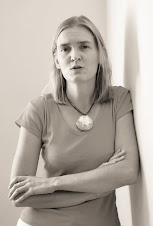
 Fungai is a storyteller, ethnographer and archivist who weaves digitality into her ways of seeing the world.


Erections don’t mean affection. 

This is obvious, I know. But in the 2010s of my 20s, it feels unprecedented to announce, especially as my first ever blog post. 

It’s an era where the internet still feels like a small community of likeminds; thankfully, trolls are something I am yet to discover and no outspoken patriarchs flock to my blog to pass insidious comments to shame me. 

My blog’s name is Fungai Neni and it is almost eponymous. 

‘Fungai’, my first name, is also a command in Zimbabwe’s Shona language to think or reflect. ‘Neni’ translates to mean ‘with me’. ‘Fungai Neni’ constitutes a double entendre; ‘Think with me’ is one of its meanings, but so too is ‘Fungai and me’. Both are apt because I simultaneously seek intellectual engagement and connection in my  digital foray.

Briefly -  before Fungai Neni -  there exists Banjo Queen, a blog I set up many years before but never publish content on to. 

No, I do not play the banjo. But the moniker somehow seems to fit my look. I wear my hair in a voluminous Afro accompanied by colourful tiered skirts and stacks of bangles whose sonorous chatter precedes my arrival into any room. It seems feasible that I could whip out a banjo and strum it over some of the poetry that finds a home in my journalism notebooks.

Recently, I’ve found an old diary from my undergraduate journalism studies where I write that I feel like I am Walter Mitty. Walter is a fictional character I have encountered somewhere in my earlier life who escapes the monotony of his daily life through elaborate daydreams.  His dissociation becomes relatable as I sit and drift away during my lectures. I don’t care much for the 5 Ws and H, the holy grail of journalism, and am even less inspired by ethics and law. In other diary entries, I write about the entrapment I feel at having to package words in the clinical way that journalism demands. It’s like looking at resin art;  all the wildness and beauty seems trapped beneath a dense glassy finish.  

My poetry and Banjo Queen aesthetic become my silent rebellion. 

I am not enjoying this degree for many other reasons. One of them is that this public university education represents a massive shift from the private high school that I have attended for six years prior. In high school, we have it taught to us that we will soon become intrepid citizens of the world. We learn French and study the classical works of Mozart and Bach. We watch rousing films like ‘Dead Poets’ Society’ and our class of 28 is a mix of black, white and Indian girls. We aren’t taught much local history (or culture) because it is deemed divisive among the racial groups; also, it’s apparently not really useful for a life as a global citizen. 

Even though we are living within the landlocked boundaries of Zimbabwe, it often feels like we inhabit an island. Nothing about what we are taking in reflects the material reality of a nation that is just about to enter its deepest economic freefall.

University moors me to the mainland, however, grounding me in what most of my classmates manage to escape by leaving for studies in the diaspora. The time is the early 2000s and a land reform programme has been hastily brought together by the government to repossess vast tracts of land that have been in the possession of white farmers for a century. Food shortages and hyperinflation ensue and these have a deep impact on all sectors of society. I take my studies in a newly opened but under-resourced department where we journalism majors have to imagine things like the shutter speed on a camera because we don’t have actual equipment to work with. 

In high school, we have a dedicated computer room which we visit every Friday for our computer class. We are still mostly living in an analogue reality and don’t quite see the utility of this medium. So we use the time to play Solitaire and Tetris, or send emails to pen friends navigating this new medium somewhere in the western world. On the best of my university internet’s days, the churlish connection lets you get through a few links on the site you are navigating. If you are really lucky, you might get to send an email too. Otherwise, it’s us mostly writing notes and instructions in hopes of applying these skills sometime later. 

It’s not just infrastructural disparities that are making things uncomfortable. My shift into early adulthood also comes with the discovery of my being Shona and this adds a new and awkward texture to my identity. In high school, we cleave into groups by skin colour. But in university, since we are all black, a new form of difference has to be fomented.  And this time, it is by  tribe. 

The Shonas are the dominant tribal grouping in Zimbabwe. And there is a history of tensions between them and the Ndebeles, the dominant tribal grouping in Bulawayo, the city I am in and which I have grown up in. In the 1980s, a long political massacre of the Ndebeles is waged by a Shona government. Its impact, decades later, is for many Ndebeles to view Shonas as affiliates of massacrists. It might seem strange, but I have never previously  experienced this polarity. My suburban upbringing has shielded me from many aspects of these tensions. 

To survive these new unwelcoming perceptions, I learn to shapeshift across identities. Sometimes, I throw Ndebele phrases around to gain my Ndebele classmates’ approval and other times, I  attempt to debunk the stereotypes that my Shona classmates - who mostly come from outside Bulawayo - hold about the city and Ndebeles. Shona and Ndebele alike, most of my classmates struggle to place me because they imagine I should be continuing my cosmopolitan trajectory by taking my studies somewhere outside Zimbabwe. Code switching is something which my high school experience has already granted me fluency in.  But continuing it into this stage of life makes finding myself even more challenging. 

It is a mystery to me how we get the internet to cooperate the day we have our blogging half-day session. It is a Friday morning and our visiting Fulbright professor has brokered a deal with one of our lecturers to use his double lecture for this training. Our tutor is a young American on a sojourn to Africa who has floppy blond locks, and is clad in shorts and slippers. After introductions, he sits at the head of the cramped room and proceeds to take turns between scrutinising his laptop screen and wrenching his neck to look at the projection of words and images on the wall behind him.  

For many, the session signals an early start to the weekend. But I am having a different experience altogether. As I take down notes and watch the projections he brings up, I feel a long-dormant sense of aliveness awaken within me.

“Does anyone know where the word blog comes from?”

None of us responds. 

Our instructor goes on to write the word ‘weblog’ onto the white board. After he is done, he draws a vertical line between the ‘e’ and ‘b’ to create two separate words.

“It’s a made-up word from people claiming the power of weblogs as a communal act.”

We blog versus weblog.

I am transfixed. 

I create Banjo Queen some time later when I visit an internet cafe. Soon, though, I forget my log in details and return to my well worn practice of writing protest poetry into my notes. 

When my degree programme eventually comes to an end, it feels like salvation. 

Almost immediately after completion, I get a job and begin work in media and communications which – thankfully – steers me away from journalism practice. 

But I never quite forget my kinship to blogging. 

The work I do focuses on sexual and reproductive health and as an organisation, we try to find engaging ways to talk about HIV and AIDS. By this time, the AIDS pandemic has made its way through many Zimbabwean families and with this has come the realisation that pretending that people aren’t having sex is only exacerbating the problem. So we host workshops with journalists and create content like fact sheets and newsletters where we engage creatively to try to break taboos around condom use and HIV testing. I also begin to package my reflections on what are called e-discussion forums. You could think of them as discussion boards, with focused topics and content, sent to a group of email-based subscribers. These forums provide ground for me to question and challenge accepted ideas and ideologies, and build a following of supporters who enjoy my non-conformist take on things. 

Finally, it feels like I am beginning to find my own voice.  

Fungai Neni only comes to life after my contract isn’t renewed. And this is because of a fellowship I decide to take in Germany. The nation is just beginning to come out of its crippling economic downturn and the trauma of the last decade is still raw.  So taking leave of absence from a decent job in 2009 is not an option. 

The previous year, 2008, is the peak of the turmoil and when I begin this job. A memory I have from that time is of walking into an alleyway one evening to buy bread on the black market. Think of it as a speakeasy but for basic commodities. Cooking oil, sugar, soap; you name it, you will find it all there at a markup.  The items are sold by some guy who has a connection to someone who works in a supermarket and figures out how to enter into partnership to siphon stocks whenever they get delivered.  

By 2009, things are significantly different as a result of a coalition government being formed between the opposition and ruling parties. You can now buy bread and sugar in the shops again. Even things like lotion, which you’d have to stockpile from neighbouring nations like South Africa or Botswana, become readily available, so long as you have the US dollars to buy them; something which my salary allows. 

Choosing to go on this fellowship obviously seems like professional suicide. And after three months away, I return to the inevitable news that my contract will not be renewed. 

Experiencing Germany is worth it, though. 

I begin to see why my worldly high school education has made integrating into local Zimbabwean society so challenging. By my teens, I know about Hitler and Nazism and nothing about the tribal unrest that has riven my own nation. I am better equipped with knowledge to navigate an  international world, and not the one that I materially inhabit. I also use the opportunity to visit France and as I stand at the Arc De Triomphe, memories of my high school French classes and text books - which featured the monument -  stir. 

While in Germany, I also write for a few Zimbabwean digital news publications. It is something that I have been doing for some time before the fellowship and one of these publications is a national newspaper that publishes most of my musings. That is, all except when I send copy about attending gay pride. 

During my job, I become aware that the growing liberality that comes with talking about sex and sexuality is not matched when it comes to discussing homosexuality. There is often resistance, and sometimes even revulsion, when it is broached. This is because homosexuality represents abnormality for many. So it is a stretch, I know, to expect a national newspaper to accept my musings.

It is this experience that helps to bring me to clarity that if I want to discuss some topics, I am going to have to create my own space to do so. And this is how, newly jobless, Fungai Neni materialises. 

After my post about erections, I write a blog entry asking other young women whether they know what their vaginas look like. And I accompany the piece with an image that is a collage of vaginas in different hues and shapes. One commenter to the post responds that if a series of vaginas were put together in a police line-up, she would easily identify her own. She is the outlier as most others admit to feelings of shame and disconnection to their sexual bodies given the high proscription of women’s pleasure within Zimbabwean society. 

Being digital feels like a mystical experience. In one moment, I am processing the material realities of my conservative patriarchal society which keeps reinforcing to me that my appearance and existence are ‘too much’. And yet in the next, I enter a non-physical reality where I create meaningful belonging.  Two of my blog’s most ardent followers are women I don’t know who are living in Spain and Cameroon. Others are friends and connections scattered around the world. 

It’s like I leave the wardrobe to enter Narnia every time I write up and publish a post. And there is a freedom and exhilaration there that has been missing from my material life for too long.

I blog my way through my unemployment and into my new job and then my Masters degree for which I get a scholarship to study in the UK. 

It’s not just the spectacle of erections and vaginas that I discuss in my blogs. I write too about deeply personal experiences like when my father dies while I am in the UK and how my network of friends helps me cope. I also share many insecurities,  contradictions and hopes. 

There is a deep irony to the fact that I become this prolific of a  blogger.  In my early life, I am never someone who comes to mind when you mention boldness. In one of my childhood memories, I am sitting on the veranda of our house looking up as my sister employs an intricate strategy to climb up onto the roof. She has positioned a mattress on the ground and proceeds to jump through the sky to her soft landing below. 

I am four years old but my brain’s wiring already reads this activity as risky. I do not participate in it in much the same way I resist my first best friend’s playground strategy to run slowly so that we get caught and kissed when the boys chase us. 

Yuck, I think. 

I have reminded another friend about how she would jump over the railing of their third-floor apartment and dangle her body towards the concrete pavement when we were five years old. She called it a game but I read it as nonchalant precarity that could lead to death. She remembers nothing of this, which baffles me because of the terror I would experience.

By high school and despite my imposing height of almost six feet, I still very much remain the cautious observer who hangs back and doesn’t enjoy overt attention or risk. I like to think I am invisible, except when I walk past a shop window and notice my reflection towering over everyone around me. Or when I see myself in class photographs and notice that I am half a head taller than the next tallest person. 

It is always confronting because it reminds me that I am indeed there. 

School is the island of exploration I have already described. But it is also a site of merciless bullying. Tall and fat, I become a perfect target for many girls’ shaming. In the movie, ‘The Nutty Professor’, Eddie Murphy stars as a quirky overweight scientist. And some girls take to calling me this when they see me. I do not respond and they erupt into laughter as I try to shrink myself to disappear. Other girls raise issue with how much I like to read or make me stand up to offer my seat when I try to hide by sitting in the back of the school bus. 

I want to say certain things in class but I don’t because I doubt that they are of any value. When I do speak, the anxiety of my internal dialogue takes over and I mumble my way through incoherences that sometimes elicit laughter from my classmates. 

Once, in English class, I hear a girl sitting close by use me to explain a word that we have just been asked to make a sentence with.

“Fungai is eccentric.”

‘Eccentric’ is the word we have just been taught  and she shares her use of it to her neighbour in a whisper. She then chuckles softly.

Being academically smart creates a mask to many about how much I am struggling. But I am deeply wounded by all these experiences.

A friend’s mother takes to making unsettling comparisons between us that create more wounds. Reading my good grades as a sign of maturity, she creates a template out of me that she tries to draw her daughter around. 

The day after we get our GCSE results, my friend tells me that she is in the car park waiting to see me. 

“It’s about your results.”

To her mother’s displeasure, my friend has scored four A grades and wants to know how I have done. I have gotten six As. I reluctantly share this information with her mother through the half-open window of her car after an exchange of niceties.  

“You should be more like Fungai.”

My friend’s mother turns to her coolly and with this stern glance, something dies within our bond. We both know I will constantly be a reminder of everything that her mother believes she isn’t. 

Deeply contrasting, these two realities of how I am perceived each provide their own torture. In one reality, I am a source of ridicule and in another, I am the epitome of excellence. I am too young to hold this contradiction with any real grace. And underneath my semblance of composure, my identity fragments.

I am high achieving. But also extremely insecure. If I could, I would braid myself into an unworkable knot and disappear. 

To cope, I turn to writing. And over time, I build up a collection of diaries of all my unspoken thoughts and feelings. It’s where, years later, I write about my difficult university experiences and other issues of my early adulthood that are a continuation of things I have not yet managed to resolve.  

Blogging, in many ways, feels like keeping a diary. But only now, with a desire to speak publicly for the many times that I didn’t trust myself earlier in my life. You might even say that blogging is my attempt to make up for the lack of risk-taking of my earlier years; a bounty of daring thoughts and words that chase my screen’s blinking cursor. 

In my blogging days, there was always a moment just before I pressed the publish button where I’d hesitate. I’d feel like I was sitting in my high school classroom again as a surge of doubt ran through my body. A thought would come over me that what I had just written didn’t make any sense and didn’t need saying. That it was obvious. Or worse, that it could be a source of derision. 

I’d feel it again just after hitting the ‘Publish’ button when my refreshed page confirmed that I had surrendered another part of myself. 

I’d want to become that unworkable knot again and let the earth to devour me. 

I feel it too as I write this, dangling myself over the edge of precarity just like my childhood friend used to. 

To any observer watching her, it looked like she was courting death. But now - with time and the joys and pain of living - I see that she was only chasing freedom. 

---------------------------------------------------------------------------------------------------------


Two of Fungai's stories have been published by amaBooks: 

'Rain in July' in Long Time Coming, Short Writings from Zimbabwe

and

'Alone' in Where to Now?, Short Stories from Zimbabwe


Saturday, May 30, 2015

'The Maestro, The Magistrate & The Mathematician' reviewed in The Standard


Book Review: The Maestro, The Magistrate & The Mathematician, by Tendai Huchu
’amaBooks, Bulawayo, 2014          ISBN: 978-0-7974-9500-5

Reviewed by Fungai Machirori
The Standard, Harare, May 17 2015


Tendai Huchu’s latest novel offering is a look into the lives of three Zimbabweans as they attempt, to different extents, to assimilate into Scotland, and make meaning of life and the various questions and experiences it brings their respective ways.

It’s interesting that the Maestro is listed first in the title of the book as it is him whom I feel the reader learns least about. An opaque character going through a tortured search for the meaning of existence, the Maestro decides to place all his faith in books – the works of Kafka, Nietzsche, Sartre and others – to provide him the ultimate insight into what is otherwise unknowable. But as he moves further into this world, he realises that it too – just as his mechanical job packing shelves in a supermarket – has its own restlessness, its own tedium.

Perhaps it is inaccurate that I say he is the character least known of, as it is the Maestro whose deepest vulnerabilities and psychedelic thoughts one becomes most acquainted with. It is he – whose ruminations about life and death, whose detachment from a menial life that has become a death in itself – who adds a necessary darkness and dimension to a narrative that would otherwise relate a tolerable sort of daily Zimbabwean strife, a strife punctuated with the usual humour and forbearance that is either our succour or Achilles heel, depending on the way one sees things.

The Magistrate is a man of high repute who has left Zimbabwe because the political environment has become unfavourable to his practice and principles. With his wife now the family’s breadwinner and his daughter developing into a sharp-tongued teen, he has to forge a way within this new home, Edinburgh, and the distorted roles it yields for him.

Still holding dearly to the artefacts of home and memory, he uses sungura music –playing on the Walkman he moves around with – as the soundtrack to his discovery of this new place with its history and foreign majesty. His new interest in sungura (the Magistrate is described as a jazz aficionado), with its typical exhortations and narrations of personal strife, becomes a way for him to understand and console himself. At the same time, it also represents a collapse of distinct class demarcations and roles, something that would be more prominent back in Zimbabwe where diligent consumption of sungura might be considered ‘low class’ for a man of his stature.

The Mathematician is a product of privilege, in Scotland by choice as he pursues his PhD and hangs out with his group of friends who find themselves with far less stability. His is the happy-go-lucky character, young, sharp and witty; his experience of the diaspora is one of adventure and certainly more comfort than the Maestro and Magistrate. While all of the voices are contemporary, I would say that it is the Mathematician’s that is freshest, and also, most startling in its brashness and bravado. It’s quite clear from the onset that you will either love or hate the Mathematician; or that failing, find him completely incomprehensible.
 
What I found most enjoyable about this novel is Huchu’s ability to make his characters’ language – as well his own – speak to their various circumstances, and to the general theme of change and adaptation. Traffic lights are referred to in Zimbabwean colloquialism as robots, while people are sat next to each other, as per British parlance. There is also a peppering of Scottish English, as spoken for instance by Chenai (the Magistrate’s daughter), which make the characters – and their changes – believable.

Every now and then, the Mathematician’s language features numbers, a reminder to the reader of his cockiness; even his language can’t quite be tamed, or fully accessed. It may also explain the inaccessibility of emotions of rage and anger when they might be suitably justified at pivotal moments in the novel.

The same may be said of the Maestro whose impervious character is accentuated by long blocks of text which never feature paragraphs.

Also, Huchu uses italicisation as a means to convey what I perceive as different extents of comfort within this new setting of home. For instance, when the Magistrate speaks in Shona, this text is never italicised. It is simply a progression of discussion which the reader must accept, whether or not they understand what is being said. With the Mathematician, however, such texts (as well as other points where arrogant emphasis is required) are italicised, giving those points of thought and conversation a character of otherness, or at least potential dispensability. This cleverly shows how artefacts of home – including language – are often negotiated differently depending on a variety of factors including level of comfort in a new space, and level of longing for an old space.

Another striking thing is that by the end of the novel you realise that of all three characters, the Magistrate’s name has never been revealed, his positioning attached to his profession, and social role as Baba Chenai, for “… a name had to mean something, and what more fundamental meaning could be bestowed on person than their relationship to others in the family?” (pg. 241) It is a generational subtlety, in much the same way the Magistrate bemoans the lack of extended family to intervene in sensitive family issues he feels ill-equipped to mediate.   

A lot of effort must have gone into researching Edinburgh as the characters’ ruminations on its terrain are complemented by thoughtful and measured descriptions of the environment and its history. Here, I am reminded of Julius’s contemplative observations of New York city in Teju Cole’s ‘Open City’. In both instances, the writers show a high level of endearment and respect for their settings, as well as a lot of patience and effort in making the scenery as palpable to the reader as possible.

But yet even with all its beauty, Huchu depicts a city with its own dark underbelly where people die alone and lonely, and live in the same way; a place where a shared nationality forms tenuous ties that do not necessarily equate to loyalty or kinship.

The humour is dark; a fracas at an MDC meeting shows up some of the power hunger that manifests even in the desire for change. And a last – and unexpected – twist to the plot in the final pages reveals how so often, the roles and identities we assume are not what they seem at face value.


What I appreciate about Huchu’s writing is that it doesn’t feel like it holds back. You will be surprised and perhaps unsettled at times, but you will have to deal with that or simply stop reading. And stopping, I assure you, would rob you of partaking of a beautifully crafted and poignant world. 

Friday, July 25, 2014

Long Time Coming: Short Writings from Zimbabwe reviewed in Harare News

http://www.hararenews.co.zw/2014/07/long-time-coming-short-writings-from-zimbabwe/
There is more to Zimbabwe than is often portrayed in the media. I recently came across the collection of short stories and poems Long Time Coming: Short Writings from Zimbabwe, there are contributions from thirty-three writers and, although there are pieces about squalor, poverty and the desperate lives of people, there are glimpses of another side to life in the country. What particularly struck me is the capacity for the human spirit not just to survive but to find hope against all odds. Linda Msebele’s protagonist in The Chicken Bus endures a gruelling bus ride home from work, but her spirits are lifted simply by the shared laughter with a fellow passenger, ‘… I am warmed by laughing and smiling at someone who still remembers that it is possible to smile, to laugh and to wink.’ The refrain of hope is again found in Judy Maposa’s First Rain, which reads like a prose poem, ‘I am spent. I am hollow. I am ready to dream, to fill up my mind with hope because without hope tomorrow is stillborn’. In Bhekiliswe Dube’s Loving the Self, sisters draw strength from each other after one escapes an abusive marriage.
There is dark humour too, in John Eppel’s The Awards Ceremony, presided over by the Deputy Minister of Borrowdale Shopping Centre. In Sandisile Tshuma’s Arrested Development, Lihle feels she is entitled to a mid-life crisis given the low life expectancy in the country, but her friend messages , ‘Sori m8. In mid-20s nw so u hav abt 10 mo yrs left 2 liv. Thz r the sunset yrs. 2 l8 4 crisis.’ The conflict between traditional and modern is highlighted with humour in Mzana Mthimkhulu’s Not Slaves to Fashion, as plans for a wedding are discussed.
Although the majority of the stories and poems are by Zimbabwean writers, there are a scattering of pieces from those who have visited the country. Lloyd Robson’s character sits in a bar in mid-town Bulawayo, comparing his experience with that in a bar in mid-town New York, ‘I am at home here, just as I am at home in any bar that serves as a quiet refuge for man.’ The difficulties of living in a country with a collapsing economy have forced many to flee Zimbabwe, and two Batswana writers, Gothataone Moeng and Wame Molefhe, consider the hostile reception that refugees can experience.
Problems that people face within the country are certainly not ignored in this collection. A young woman exacts revenge after she is driven to prostitution and her family to destitution by an unscrupulous businessman in Wim Boswinkel’s Justice. Desperate poverty leads to a desperate search for travel money across Harare in Julius Chingono’s Bus Fare. The issue of HIV and AIDS arises in several of the stories. The bridegroom is discussed by the wedding guests in Petinah Gappah’s The Cracked, Pink Lips of Rosie’s Bridegroom, ‘This is his second marriage, everyone knows. He buried one wife already, even Rosie knows. What Rosie doesn’t know: he also buried two girlfriends, possibly more.’ Finding out her fiancé is HIV positive causes Fungai Machirori’s protagonist in Rain in July to ‘run back to my mother’s kitchen down the hallways of my mind’.
There have been major changes in Zimbabwe since this collection was first published in 2008, but in many ways the lives of the people of Zimbabwe have changed little. There is good writing, humour and ample characterisation in Long Time Coming to temper the recurring themes of poverty and suffering, and there is hope: ‘You know what hope is. It never dies… In the meantime, let’s wait’ muses Sandisile Tshuma’s main character.
Long Time Coming is a great read.

Friday, March 28, 2014

Caine Prize Writing Workshop 2014: Interview with Publisher, Jane Morris

amaBooks holds a lot of significance for me, personally, as the first publisher to accept my work aged 22. Every time Jane Morris (amaBooks co-founder) and I meet, the exchanges are effervescent and full of laughter. Here, I interview her ahead of the currently ongoing Caine Prize for African Writing Workshop. Read an article about the workshop here.
Fungai Machirori (FM): How  is business in the publishing sector lately? What factors are influencing this?
Jane Morris (JM): Our impression is that the general economy of Zimbabwe is in a poor state at the moment, and obviously the book industry is affected by this. People having less disposable income results in less money being spent on buying books. Unfortunately reading, outside school or college syllabi, is not a priority for many people in Zimbabwe. ’amaBooks are publishers of Zimbabwe fiction and there is a very small market for most fiction titles.
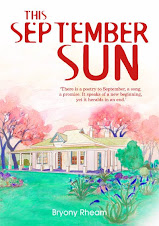
However, there are positives – success stories such as NoViolet Bulawayo’s (We Need New Names)or Bryony Rheam’s (This September Sun) have stimulated an interest in local literature, and the availability of short-run printing in the region means we can continue to make books available even if their sales are fairly limited.
FM: Are you receiving manuscripts? Are they good? Do you have the capacity to publish?
JM: We are receiving manuscripts, and some are of a good standard. Unfortunately with the limited sales for fiction we have to be very selective in what we choose to publish. There have been occasions when we have enjoyed a manuscript and would have liked to accept it for publication but did not have the requisite resources at that time. However, the publishing world is changing. Publishing used to depend on litho printing, which required a large print-run in order to keep unit costs low – hence a large initial investment. New technology has helped in that respect; a smaller print-run is now possible, meaning that publishers can take a chance on books that are not likely to sell in big numbers, including fiction and poetry. e-books add another dimension, with that, and print-on-demand, books can remain in circulation even when numbers selling are small.
FM: Are you selling many copies locally, and why or why not? Are all the books nationally available?
JM: Our books are available in the main centres of Bulawayo and Harare and a limited number in Mutare. We would love our books to be available in the smaller centres, such as Gweru and Kwekwe but most outlets only buy school text books. They are not a great number of bookshops in Zimbabwe and we make an effort to get our books into other outlets, such as shops selling crafts. Anyone having difficulty getting hold of one of our titles can contact us directly. The biggest market for our books still remains Zimbabwe. There are people in the country who do buy new books, but the number of such buyers is limited and discerning. Efforts are being made to encourage an interest in literature through literary events, competitions, reading clubs, workshops and launches
We are endeavouring to enter into co-publishing, or rights selling, arrangements to make our titles more readily available outside Zimbabwe. Most of our books are available outside of Zimbabwe, on a print-on-demand basis through African Books Collective.
FM: You have turned some books into e-books. Are they being bought? Why do you think this is the case? What are you most popular titles currently?
Most of our books are available as e-books on a number of platforms. Outside of Zimbabwe, e-books do seem a good proposition cost-wise for our fiction titles, given the high cost of distribution or the high cost of print-on-demand. Certainly, e-books sales are on the increase, we have been heartened at some of the recent sales figures. It has also been good to be able to bring some of our older titles back as e-books. The good news locally is that a local company, Open Book, will soon be up and running, selling e-books both for the standard e-readers and for cell phones that do not need to be too smart. The option to sell either complete books and individual stories or poems is very exciting and innovative. Worldreader are working in a similar way to promote a reading culture, distributing Kindles in projects in schools and elsewhere across Africa. Worldreader recently launched in Zimbabwe at King George VI School for Children living with Physical Disabilities in Bulawayo, and we are just about to publish a collection of stories and poems by the students there, which will be available as an e-book.
The most successful e-book title we’ve had is Bryony Rheam’s This September Sun, which topped sales on Amazon in the United Kingdom in mid-2013 and remains consistently in the top 100 of Women’s Literary Fiction.
FM: You just translated ‘Where To Now’ into Ndebele? How easy/ hard was it to get backing for this? How do you intend to distribute this version?
JM: We have been encouraged to take the step of publishing in isiNdebele by many writers and academics and we hope that the publication of Siqondephi Manje? will lead to a greater interest in reading literature for pleasure. The emphasis of publishing in indigenous languages again seems to have been on the school market.
Literary translation is a highly skilled activity and we’ve been fortunate in having Dr Thabisani Ndlovu, who is a well-regarded creative writer and academic, to translate the work. Feedback from the writers in the collection about the standard of the translation has been very positive. The funding for the translation was part of a wider project supporting literature in Zimbabwe.
We will distribute the book through our usual outlets, and we hope that local libraries will show an interest in the anthology.
FM: Has the partnership with the Caine Prize in co-publishing the Caine Prize Anthology boosted your profile and profitability?
JM: We are delighted to be the publishers of the Caine Prize anthology in Zimbabwe – we have always been enthusiastic about partnerships across Africa. We wanted to bring some of the best writers from the continent to the attention of Zimbabwean readers and this seemed an ideal opportunity. We would also like our books to be more readily available in other African countries and are pursuing this possibility through selling rights. Publishing the Caine Prize anthology does raise our profile across the continent, though, with the economic situation in Zimbabwe, sales of such collections are limited.
FM: There are prolific writers of fiction in Zimbabwe but most are published first outside of Zimbabwe. Why do you think this is? And how easy/ hard is it to get local publishing rights?
JM: Certainly many of the best-selling fiction writers outside of Zimbabwe are those that are published outside of the country – not surprisingly given the promotion by their international publishers, and given the exodus of so many of the educated population and the writing community. The most prolific Zimbabwean writers are those who tend to be published within the country – John Eppel, Christopher Mlalazi and Shimmer Chinodya spring to mind. With dollarization, it is becoming easier to bring titles from outside the country to Zimbabwean readers, but the situation again means low numbers sold.
FM: What are your hopes for Zimbabwe’s literary sector?

JM: These are exciting times for publishing across the world – with technological changes leading to much more open and varied access to publishing. Zimbabwe has special challenges, due to the economic climate, and to the exodus of many of those who write and who would purchase literary fiction. e-book technology does seem to offer a way of distributing content at fairly low cost to potential readers, but we must ensure that there remains a vibrant local publishing industry that provides high quality local literary content. There are good Zimbabwe writers, both in Zimbabwe and in the diaspora, and we think that the future is safe in their hands. We have always been keen to publish new writers and the ideal platform has been the series of short writings we have published. A number of these writers have gone on to publish their own books – Novuyo Rosa Tshuma, Bryony Rheam, Christopher Mlalazi, Mzana Mthimkhulu, Raisedon Baya, Deon Marcus and we understand that a number of others are working on books. We hope that this gives encouragement to new writers following on. It is really exciting as a publisher when a manuscript from a new writer appears on your screen, and you think … Yes. Initiatives to encourage writing, such as the Yvonne Vera Award and the Writers International Network Zimbabwe manuscript assessment programme are initiatives that support and encourage writing and there is certainly the need for more of these.


http://fungaineni.com/2014/03/28/caine-prize-writing-workshop-2014-interview-with-publisher-jane-morris/

Caine Prize Workshop 2014: Interview With Writer, Tendai Huchu


http://fungaineni.com/2014/03/27/caine-prize-2014-interview-with-writer-tendai-huchu/

Fungai Machirori (FM): As a writer whose book was first published in Zimbabwe and is now being republished internationally, would you say there is a difference in sales/ professionalism/ marketing between Zimbabwe and the international space? If so, please explain.
Tendai Huchu (TH): That is a difficult question because each market is different and so the sales reflect that. My book is a local novel in the Zimbabwean context, which is different from marketing it, say, in the UK where it is a foreign title. Western markets are more affluent and the novel is an established art form there, so you are not comparing like with like. In terms of professionalism, the two publishing houses you have in Zimbabwe that do fiction, Weaver Press and amaBooks, are working in very difficult circumstances but there can be no criticism of their standards, you only need to read through their catalogue to see that. More power to them for what they’ve achieved.
FM: In the post-2000s, you are one of the few Zimbabwean writers who has managed to write a novel that does not pay too much attention to the political situation in Zimbabwe. Do you think there is a market for that sort of writing locally and internationally? Why?
TH: I don’t think in terms of “the market” when I write. In my work, I’m trying to engage with ideas and concepts that interest me, but I do think there is room out there for all sorts of literature from vampire erotica to literary political fiction and everything in between. Ultimately all we are doing is peddling stories, and storytelling is an ancient art form, one that still exists because it answers an intrinsic human need.
FM: Has there been any local resistance to your book for tackling homosexuality which remains a highly divisive issue across the continent?
TH: Certainly none that I’m aware of. The text is open to the reader’s interpretation, so while some people obsess about the fact it has a gay character, other people realise that there is a lot more going on in the book. One also has to think about the kind of person who would go into a book store and spend their hard earned cash buying my work. I keep repeating the fact that books are an art form, and so my audience is probably just as limited as the audience you’d get if you put on opera or a yodelling performance. If a Sungura artist tackled that, then I’m sure they would reach a wider audience, and as a consequence enjoy much more interesting feedback from the public.
FM: The Caine Prize has constantly come under pressure for ‘pigeon-holing’ Africa across a handful of reductive themes. Do you think this is true? Can you explain why or why not?
TH: The Caine Prize comes under a bit of criticism which should be expected for a successful, high profile institution. But the Caine does not and cannot control the work writers across the continent choose to produce. They have different judges from different backgrounds each year, which means you have people with different tastes participating. But judging a literary prize is all about aesthetics; I would like to believe the judges are independent and the Caine doesn’t give them a tick list for what to look for. I confess that I’ve not followed it closely over the last fifteen years, but I’m sure the dynamic is the other way round, that is to say, the prize itself is influenced by what writers on the continent are interested in, because they provide the raw material that enables it to exist.
FM: Do you think the workshop being held in Zimbabwe will herald literary ‘re-engagement’ with Zimbabwe, or has this always been happening?
TH: Literature is about ideas and so I don’t believe it is possible for the world to disengage or re-engage with us, rather you have natural cycles, peaks and troughs, depending on whether the ideas being produced in one canon appeal to readers in another and vice versa. Zimbabwe is just one of many players jostling in the global literary market, and a single workshop is nothing in the grand scheme of things. What I believe though, with no empirical proof, is that, because it has a disproportionately sized diaspora, Zimbabwean literature reaps the benefits of having practitioners who interact with ideas from all across the world and that can only be enriching.


Friday, March 21, 2014

Caine Prize Workshop 2014: Interview with Director Lizzy Attree

from http://fungaineni.com 


Snippets of this interview appeared in an article published this week ahead of the Caine Prize for African Writing Workshop happening in Zimbabwe this year.


Fungai Machirori (FM): Why is the Caine Prize returning to Zimbabwe? How was the decision arrived at?
Lizzy Attree (LA): The Caine Prize has long wanted to hold a workshop in Zimbabwe and support Zimbabwean writers, but has not felt the environment was right until recently.  We also found funders who were supportive of the idea, so we took the plunge.
F:M One of the challenges that has been clearly articulated around the Prize has to do with the dearth of north African winners/ finalists? Why do you think this is?
LA: I think north Africa already has a well-established literary scene and prizes that reward writers from that region, so I think that is one of the reasons we do not receive many entries from north Africa.  Much of the literature is also in Arabic, and so the issue of translation arises.  The International Prize for Arabic Fiction is a sister Prize, also backed by the Booker Trust, so we are confident that IPAF is making great strides in recognising and rewarding north African, as well as Middle Eastern literature.
FM: Wouldn’t the more logical step, therefore, be to try to hold the workshops in north Africa?
LA: We would very much like to do this and a recent visit I made to Morocco and the Casablanca Book Fair was encouraging.  We have plans to approach funders for workshops in north Africa in the near future.
F:M In 2000, when the Prize was first held, Zimbabwe still had a somewhat robust literary scene. But the nation was on the verge of it decline in the early 2000s. Is the return therefore symbolic/ strategic?
LA: There are no strategic considerations when planning workshops, certainly no political aspirations, other than ensuring the country is safe and relatively politically stable. Our only strategic concern, in terms of fairness, is that we try to cover east, south and west Africa evenly, so we have had workshops in Ghana, Cameroon, South Africa, Kenya and Uganda and hope soon to be in Nigeria, Zambia etc.   There is a symbolic link and many of our council members are fond of Zimbabwe for a number of reasons, but really our return is partly based on the high number and quality of entries we receive from Zimbabwean writers, and the funding conditions that make such an expensive enterprise possible.
FM: Two Zimbabweans have won the Caine Prize since its inception with NoViolet Bulawayo particularly enjoying great success since. Do you see the Caine Prize as an important gateway to get more Zimbabwean writers out into the mainstream?
LA: We aim to ensure the Caine Prize is an important gateway for all African writers to get in to the mainstream.
FM: Is the publishing partnership with amaBooks yielding significant benefits thus far?
LA: The partnership with amaBooks is fantastic for us. It is very important to the Caine Prize that the stories are read widely and are therefore locally available.
FM: Can you tell me a bit more about the participants in this year’s workshop? How were they sought and what do you expect from the workshop?
LA: Participants are selected based on the previous year’s shortlist and informed by the previous year’s entries.  So, four shortlisted authors are attending this year, unfortunately the winner, Tope Folarin, couldn’t join us due to work commitments.  We also took recommendations from the judges to invite a number of writers, as well as recommendations from other colleagues and professionals in the field of literature and publishing, as well as past winners, who we listen to closely.  We aim to have a range of writers from different countries, a mix of men and women of different abilities and to include four or five writers from the country in which the workshop takes place.
The workshop will produce 13 publishable short stories, and will involve hard work from the moment we arrive.  Our facilitators, Henrietta Rose-Innes and Nii Parkes will help the writers to shape and edit their work, as will group sessions of readings and criticism which take place daily.  The writers will also visit four senior schools near Mutare, to meet and talk with local school children. There will then be 2 events, one at the Harare City Library and one at Meikles Supermarket on 1st and 2nd April respectively.  The stories will then be published in the 2014 Caine Prize anthology, which will also include this year’s shortlisted stories, which will be announced in late April.
FM: There is often criticism levelled against the Prize for selecting literature that paints Africa in a parochial and formulaic light (hunger, strife, dictatorship, etc). What do you say to this?
LA: Really I think literature is subjective and everyone is entitled to their opinion. I think the stories that have won and been shortlisted for the Caine Prize have been of a very high quality and that unfortunately it makes bigger headlines to critique writing on the basis of subject matter, than on the basis of literary or linguistic style and accomplishment.  Having said that I do hope that Caine Prize stories provide a bright window in to a continent that is often not understood in all its complexity in the West. If this window involves telling tales that are hard to read or which details the often terrible events that occur in countries all over the world, then so be it.  I cannot tell writers what to write, or editors what to publish.  We work with the stories that are sent to us every year.