Showing posts with label Nyevero Muza. Show all posts

Thursday, August 16, 2012

Where to Now? review in The Zimbabwean


Where To Now?

Published by amaBooks
Genre - Fiction

Review by Jerá

from http://www.thezimbabwean.co.uk/entertainment/art-and-literature/60080/where-to-now.html


Where To Now?Short Stories from Zimbabwe, published by ’amaBooks and edited by Jane Morris, is an anthology of 16 potent short stories by Zimbabwean writers. It is the 5th anthology in the short writings series that have been released by ’amaBooks and follows up from the acclaimed 4th collection – Long Time Coming: Short Writings from Zimbabwe.  This latest book is a co-publication with Parthian Books of the United Kingdom and – having been launched at the Jozi Book Fair and the National Gallery of Zimbabwe in Bulawayo, as part of the Intwasa Arts Festival – will be launched in the United Kingdom later this year.

Blessing Musariri.
Blessing Musariri
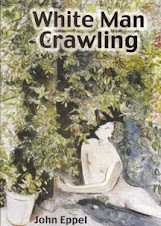
By blending the works of new writers with more established authors, ’amaBooks seeks to promote previously unpublished writers.  Names that are immediately recognizable, among the array of writers, are award winning playwright, Raisedon Baya, award winning author, John Eppel and Oxfam Novib PEN Freedom of Expression award winner and NAMA award winner, Christopher Mlalazi.  Award winning author of children’s books, Blessing Musariri, winner of the Zimbabwe Book Publishers Association’s Best First Book Prize in 2010, Bryony Rheam and woman of the moment, 2011 Caine Prize winner, NoViolet Bulawayo, also grace this collection.


Most of the stories are set against the backdrop of the country’s decade of hyper inflation, economic demise and political strife but, as displayed in this book, Zimbabwean writers do manage to find humour.  It is not all comedy.  The stories in the anthology are divergent in theme – from comic, tragic, social commentary and allegorical.

Caught in a compromising position, a wife outsmarts her husband in Mapfumo Chihota’s comical tale of spousal infidelity - A Beast and A Jete.  Set in rural Zimbabwe, this story leaves a lasting impression for its humour and its clever plot.

Barbara Mhangami’s Christina the Colourful, also within a rural setting, continues the theme of womanly triumph.  However, it is something of a paradox, in that the author illustrates the oppression of women, yet the main character’s chosen profession – prostitution – it can be argued, is one that perpetuates the very same oppression, from which women seek to flee.  However, as a story, Christina the Colourful is well constructed and stands out as one of the best written pieces of the anthology.

The poignant and tragic tale of sexual abuse, Making a Woman, by Thabisani Ndlovu, illustrates the prejudices existing in society, against people with physical disabilities and the social pressure on women to marry and enter into motherhood.  While Mongi, the lead character, a deaf woman, claims a victory of sorts over the men who abuse her, she is left mentally and physically scarred from the ordeal.

Snapshots, set in inflation ravaged Zimbabwe, will draw smiles and chuckles from every reader, before turning into a tragic narrative, in NoViolet Bulawayo’s characteristic style.  The characters, for their names and their quirks, will remain in readers’ minds, long after the story ends.  It is typical NoViolet; uncomplicated yet intense.

Crossroads illustrates the trials and tribulations faced by the Zimbabwean immigrant – from visa application to arrival in Mzansi – in search of a better life.  Precocious talent, Novuyo Rosa Tshuma, in this story – as with all her previous works – is a sculptor of words.  Novuyo, who, at only 21, won the 2009 Intwasa Short Story Competition, is a skillful writer who, by her work, promises to emulate past literary greats, such as Yvonne Vera.

Nyevero Muza’s The Poetry Slammer is an unforgettable piece, whose concept is unique, in that there is a character within a character and a story within a story – Nhamo, the lead character is a writer, who invents the story of a performance poet and it is the latter character who dominates this memorable tale.

In this era, where professional women are forced to choose between boardroom success and family, Alone, by Fungai Machirori, is a relevant piece, which is notable for its superb construction and humour.

In this reviewer’s opinion, Sudden Death, by Blessing Musariri is the most outstanding story.  Musariri’s use of language and her writing style, which appears so effortless, will endear her to most readers. Rosanna, known to her colleagues as Agnes, is a care worker, living in England.  Together with her husband, Simba, they labour tirelessly to save for their dream home, back in Zimbabwe.  An unexpected telephone call brings bad news.  The humour of this tale turns into heartache.  This funny and, in some instances, quirky story deserves special mention among a line-up of 16 beautifully composed, expertly edited, fiction stories.

Where To Now? is a recommended read and would be a worthy addition to the bookshelf of any fan of Zimbabwean literature. 

Thursday, September 29, 2011

Conversations with Writers: Omen Nyevero Muza

From: http://conversationswithwriters.blogspot.com/2011/09/interview-omen-muza.html

THURSDAY, SEPTEMBER 29, 2011

[Interview] Omen Muza

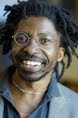
Omen Nyevero Muza holds an MBA and runs a financial advisory firm he co-founded in Harare.

He is also a financial columnist with a local daily newspaper.

One of his short stories appears in the anthology, Where to Now? Short Stories from Zimbabwe (amaBooks, 2011).

He writes and plays guitar in his spare time.

In this interview, Omen Muza talks about his concerns as a writer:

When did you start writing?

My first serious attempt at writing was while waiting for my O-Level results. I cobbled together a collection of poems which was, however, never published.

Before that, I recall that my Grade 7 teacher put my name to something I didn’t write and submitted it to some obscure publication. Perhaps as some form of poetic justice, the publication misspelt my name to something entirely unrecognizable so in the end it was never attributed to me anyway. I am sure my beloved teacher meant well and obviously had a soft spot for me but I wonder whether she was aware that she was making me an accessory to an act of plagiarism. I certainly wasn’t aware!

How would you describe your writing?

Intermittent and undisciplined.

Although I have attempted a novel before, I now tend to focus only on short stories because they are less demanding, time-wise. The rigour of full-time work and contributing a weekly newspaper column on banking and finance does not leave room for much else, apparently.

I have never consciously thought about who my audience is or should be. I just write, really. Sometimes your audience can come from the most unlikely quarters so it may not be wise to have pre-conceived notions about who constitutes it.

In the writing you are doing, which authors influenced you most?

My pool of influence is quite an eclectic mix. However, if I have to name one person I consciously sought to emulate during my formative years, it would have to be none other than Dambudzo Marechera. With the benefit of hindsight, I was trying to emulate his lifestyle, not his writing style.

And have your own personal experiences influenced your writing in any way?

I would say extensively.

Most of my creative work is based on my personal experiences, sometimes to the point of being crudely autobiographical, I must say.

What are your main concerns as a writer?

To write in a manner that is believable... to be authentic... to write in a manner that people can relate to.

Perhaps this explains why I only write fiction when I have to. I no longer write for the sake of writing.

Like Nhamo, the character in "The Poetry Slammer", from the collection Where to Now? Short Stories from Zimbabwe, my biggest challenge is the balancing act between finding time to write while working full-time in the financial services sector. It’s never an easy road.

Do you write every day?

I don’t write every day but I read every day. And when I write it is never structured - there is no formula. I let the chips fall where they may. At any given time, I usually have several incomplete stories that I am working on.

I haven’t published a full book yet but I have published a number of stories in various online and print media.

My latest short story, "The Poetry Slammer" was published in early August as part of amaBooks' latest collection of short stories, Where to Now? Short Stories from Zimbabwe. I cannot remember how long it took me to write the story but because I wrote it for submission to a literary competition, the story can’t have taken much time to write.

An earlier short story of mine had been one of the top ten stories in the Intwasa Short Story Writing competition in 2007 organized by amaBooks in Bulawayo, so amaBooks was the natural destination for "The Poetry Slammer".

Though largely fictional, "The Poetry Slammer" draws significantly from real events and places. Under those circumstances, the challenge was to be faithful to the zeitgeist – the true spirit of those events and places because some people who went through the experiences on which the short story is based may read the story one day. I had to do quite a bit research in order to deal with that concern. For instance, when I was writing the short story, I actually visited the Book Café for the House of Hunger Poetry Slam in order to get into the right groove, and I remember chatting to Chirikure Chirikure one night in the Mannenberg Jazz Café.

I enjoyed writing every bit of "The Poetry Slammer", not only parts of it. I wanted it to be different from anything I had written before in terms of style, plot and characterization.

What will you be working on next?

Interestingly, or maybe strangely, it will not even be a work of fiction. It will be a collection of my NewsDay banking and finance articles written over a period of more than a year, tentatively titled Banking Insights from an Economy in Transition.

What would you say has been your most significant achievement as a writer?

Not giving up on writing... staying true to my craft in spite of the odds heavily staked against writing.