Showing posts with label Lauri Kubuitsile. Show all posts

Saturday, September 9, 2017

Interview: amaBooks, a Zimbabwean Publisher


Thoughts from Botswana by Lauri Kubuitsile

Writings and thoughts from Motswana writer, Lauri Kubuitsile


Reproduced from https://thoughtsfrombotswana.blogspot.com/2017/09/amabooks-zimbabwean-publisher.html


amaBooks, A Zimbabwean Publisher


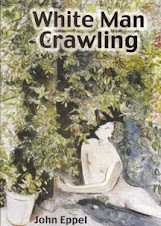
amaBooks is a respected publisher located in Bulawayo. They’ve published work by some of the most well-known Zimbabwean writers including Tendai Huchu, John Eppel, NoViolet Bulawayo, and Petina Gappah, among others.  It’s run by the irrepressible Jane Morris and her husband Brian Jones. I had the chance to interview Jane about amaBooks, the conversation is below.


Can you tell me a bit about how you started your publishing house?

We could have called ourselves Accidental Publishers rather than amaBooks as we had not planned to start a publishing company. So, no research, no business plan, little knowledge of publishing. At the time, in 2000, I was working as a social worker and trainer and was involved in training volunteers for a charity involved in helping children. Short of money to run the charity, we approached the Bulawayo-based writer John Eppel who kindly donated a collection of his poems. But how to get it published? My husband and I decided to take on the task and, although I had a background in literature (my husband Brian is a scientist), we had little idea of what publishing a book entailed. It was a steep learning curve – ISBN, paper quality, book format, font type, size of print run, origination, pricing, launch, distribution, promotion… We were lucky to find a sympathetic printer who guided us through many of the steps. And months down the line we ended up with John Eppel: Selected Poems 1965 – 1995. Within six months all 1000 copies of the collection had been sold, with all profits to the charity. We were hooked and when John Eppel suggested starting a publishing house as he had a couple of novels waiting to be published we thought why not? It wasn’t the most propitious time to start the business as Zimbabwe’s economy had started its steady decline but we love books and were excited at the prospect.

How is the trade market in Zimbabwe?

When we began amaBooks the economy hadn’t completely crumbled so there was a better trade market and we could look to selling 1000 copies of a title, sometimes a little more. Our print runs have grown progressively smaller with the decline in book sales. We specialise in fiction and, unlike Germany for instance, where fiction is the strongest segment with 32% of the total market, fiction sales in Zimbabwe are a small proportion. With the high level of unemployment here and the poor economy, people are generally loath to spend any of their income on buying a book. Added to this is the difficulty of finding books for sale, with many bookshops having closed.

What is your approximate percentage of trade sales and educational sales? Do you consider yourselves trade publishers primarily?

We are first and foremost trade publishers and our sales are almost exclusively outside the educational system. A book being accepted as part of a curriculum is an added bonus, but that it not our original intent in publishing a title. As an independent publisher we have the freedom to publish what we choose, though there are, of course, financial constraints that have prevented us publishing all the books we would have liked to bring out.

Do you do a lot of development of writers? If so how do you approach it?

amaBooks don’t tend to give detailed feedback to writers when they submit a manuscript. We have, however, organised workshops for writers who have already had some success in being published and for those who aspire to be published, either run by ourselves or by experienced writers. As well as workshops aimed at improving writing skills, we have organised sessions on reading your own work and on looking at other avenues open to writers to help make a living. Working with new writers has been a significant part of our work as publishers. From the beginning we decided that we wanted to provide an opportunity for new writers to get published. We thought that a good way to do this was to showcase their work, alongside that of more established writers, in collections of short writings. To date we have published around 250 writers. Hopefully the editing process provided an input to the development of the writers and we have gone on to publish books by a number of the writers whose work first appeared in the short writings collections, including Christopher Mlalazi, Bryony Rheam and Deon Marcus. We have also helped to organise reading groups as we strongly believe that writers should be readers; hopefully, by enthusing the participants about literature, some may go on to become writers and some may come our way.
Workshops on publishing, which we have run, with themes such as how to approach a publisher and the difference between traditional publishing and self-publishing and all in between, have attracted much interest.

What do you see as the biggest challenge for publishers on the continent? Do you manage to sell your books in other African countries? This seems to be a real challenge for most publishers.

Distribution is a major problem, both within and outside Zimbabwe. We would love our books to be available throughout the continent and to have more books by African writers available here, but the cost of transport is prohibitive. Being a very small publisher getting our titles onto the shelves of major chains is very difficult so we tend to concentrate on independent bookshops, though that tends to be limited to South Africa. If one of our writers attends a festival, or we attend a book event, that is an opportunity to sell a few copies, and to develop links.
We are keen to sell rights across Africa and have had some success with other African countries – Nigeria and, through Nigeria, the other ECOWAS countries and Cameroon, Kenya with Tanzania, Uganda, Rwanda and South Sudan, South Africa and Egypt.
We continue to try to think of innovative ways of getting our books out there. Our titles are available as ebooks on many sites, and the African Books Collective distribute for us outside of Africa.
 Despite its many challenges, Zimbabwe seems to have quite a thriving literary community and quite a few successful writers especially if you compare it to Botswana. Why do you think that is the case?
Zimbabwe has many good writers, quite a few having received international acclaim; names that come to mind are Yvonne Vera, Doris Lessing, NoViolet Bulawayo, Dambudzo Marechera, Petina Gappah and Tendai Huchu. As to why this is, there is a tradition of valuing education and reading, Zimbabwe still has the reputation of having a high literacy rate. And there is plenty to write about in Zimbabwe, though I guess the same could be said of many other African countries.
When we started amaBooks many of the writers were still in Zimbabwe and there was a thriving literary community here but, sadly, due to a myriad of reasons, including the economic and political climate, many are now based in the diaspora. We have just finished compiling a short story collection, Moving On, and, of the twenty Zimbabwean contributors, more than half live outside Zimbabwe.

What do you think have been the biggest successes for amaBooks?

How to measure success? For me, one success, despite all the stressful times, has been the joy that amaBooks has brought into our lives, being greeted in the streets of Bulawayo with ‘Hey amaBooks’.
Getting good reviews from readers and critics is one of the things we value most. We love what we do and it is heartening when others enjoy the books we have brought out. We enjoy collaboration and getting our books accepted by publishers in other countries is very exciting – the thought of expanding the readership beyond Zimbabwe. As well as selling rights to other publishers in Africa, we have sold rights in Europe, in North America and recently to the Arab world.

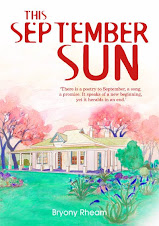
Our most successful book has been the prize-winning novel This September Sun by Bryony Rheam. It was accepted for the ‘A’ level syllabus in Zimbabwe and also sold well to the general public. Other publishers have brought the book out in Kenya and the UK, and a publisher in Egypt is having the book translated into Arabic to distribute in the Arab world.

Wednesday, August 30, 2017

Why Read? by Lauri Kubuitsile

    Serendipity. We have been running a series on our blog, 'Why I Read' and, today, we read Lauri Kubuitsile's column 'It's All Write' in Mmegi, where she asks other writers 'Why Read?'. Lauri kindly agreed for us to post the column here.

In interviews and when I’m on panels at literary festivals I’m often asked about the importance of reading, especially for writers. For me it seems crazy that a person would choose not to read, especially fiction. From as soon as I learned to read I knew that books held thousands and thousands of lives that I could step into just by opening the covers. I’ve never understood a person who would choose to live a single life when they could live hundreds of different lives. And as for a writer who doesn’t read—or me that’s a person who can’t be taken seriously. Books are your school. You can attend as many writing workshops and MFA programmes as you like, but if you don’t read, your writing will show it. It makes no sense to me.
            I decided to ask some of my writing friends the question: “Why read?” Below are their beautiful answers.
“To develop a critical skeleton. As someone who struggles to read recreationally — preferring theory or critical opinion driven writing — I read because it keeps me thinking of multiple approaches to subjects. However, when I do sit with a casual book, it also adds to my conception of self and my library of imagery, metaphors, and expressions. It gives me the opportunity to discover how other people express things that I have felt or experienced but never had the words to use. That's why, for me, reading is necessary.” - Katlego K Kol-Kes, poet, performer, and writer
“Reading is mind-food, and the only key to the encyclopaedia of life. One must read, the same way one eats nutrients. Without a nutritious diet, malnutrition sets in, and so it is with the mind; it deteriorates for lack of feeding. Today’s healthy & successful lifestyle is in the written word; that’s our life manual for raising children, successful relationships, wellbeing, wealth creation etc.
Your mind has limitless growth for success when you read, but when deprived of such feeding, it only grows into a vegetable. Reading is an acquired excellent habit that is easy to develop; start slowly and watch your interest grow.  -Andrew Sesinyi, writer
 "I read stories to widen my ears to the lives I've never lived. Because a person is only given one lifetime, but that does not stop us from living  through the eye's of others." - Tiah Beautement, writer

 “I've been to France under Louis the XVI; the Carribean in the late 19th Century; India in the glory days of the Maharajas; America as it was "discovered" and Botswana before it was a Protectorate of the British Crown. I have also been to the future. And yet I was born in 1976. 
Why read? 
Because reading carries you to lands unknown in the past and worlds not yet seen in the future. In the present though, reading takes you to countries you may not be able to afford to go to and then you realize how we all love, laugh, hurt and ache. Reading shows you that the other may just not so much be another but a lot like you. That someone somewhere has experienced the struggles you have which you assume are unique to you. I read because I seek to understand.”- Zukiswa Wanner, writer
“Reading is especially imperative for writers for the simple reason that you can’t write if you don’t read. Writers must be readers and they must do so intensely… and extensively!”- Barolong Seboni, poet and writer
“Reading is an escape that allows me to travel anywhere in the world and intimately know a people, culture, food and walk with the locals. It is a great workout for the brain, entertaining and greatly increases knowledge”. - Caiphus Mangenela, writer

“Read to understand yourself and others, to investigate human nature, to experience the full spectrum of human emotion, to develop empathy and compassion, to see different perspectives, to learn new things, to explore new places and to stay sane in an insane world.” -Cheryl Ntumy, writer

 Lauri Kubuitsile is an award-winning writer living in Botswana. She has numerous published books for both kids and adults, across various genres, and her short stories have been published around the world. She has won the Pan-African prize for Children's Writing, The Golden Baobab (twice), the Bessie Head Literature Award for short story, the 2007 AngloPlatinum Short Story Contest, and the Botswana's Department of Arts and Culture, 2007 Botswerere Award for Creative Writing. Lauri was shortlisted for the 2011 Caine Prize. 

Wednesday, July 8, 2015

'What Tendai Huchu Can Teach Us'

from It’s All Write, in Mmegi (Botswana)
3 July, 2015

by Lauri Kubuitsile


The Maestro, The Magistrate and The Mathematician is the second novel from Zimbabwean author Tendai Huchu. His first novel, The Hairdresser of Harare, was a big success, but his new book is something all together different.
It is set in Edinburgh Scotland and revolves around the lives of three Zimbabwean men trying to make a new life there as immigrants. The Magistrate is an older man who left his position in Zimbabwe as a respected magistrate to live in Scotland where his wife works as a nurse. At the beginning of the book he is unemployed, spending his days keeping their house clean and caring for their teenage daughter. Later he is forced to take a job as a temporary nursing assistant in a care home for the elderly. Both positions leave him feeling useless and lost.
The Maestro works in a grocery store, at least at the beginning of the book, but then slowly he loses touch with reality. He stops going to work, deciding he wants to spend his time at home reading his books. But eventually even that is too much and he leaves his home and moves about as a homeless person in Edinburgh lost in his thoughts.
The Mathematician is perhaps the most well-adjusted of the three, likely because he comes from a wealthy family that cushions his life in Scotland. He is working on his PhD in economics and spends most of his time with his girlfriend and his flat mates.
The three storylines might work well alone, but are made more by being woven expertly into and through each other. The writing is beautiful, in places stunning. The descriptions of Edinburgh are from the pen of someone who loves that city and it can’t help but show through his words. There are many books about Africans in the diaspora, many books that appear similar after a while, but not this one. This one stands apart.
Within the circle of African writers there is often the discussion about who do you write for. There is the feeling that the authors who are most successful in Europe and the United States are authors who write books not well suited to people in their home countries and the reverse- books that are accepted in their home countries are often not the type wanted by overseas readers and publishers. This discussion and the resulting angst it causes African writers is not to be taken lightly. Is it okay to write a book for overseas eyes that discounts the local readers? And why must these issues weigh heavier on African writers?
This book gets the balance spot on in my opinion. Huchu’s Magistrate has a love for Zimbabwean music and musicians. The writer does not stop and explain what would be readily known by Zimbabwean readers, insulting their intelligence along the way. He uses Shona freely throughout the novel, but does not weigh the narrative down with clunky explanations. He seamlessly integrates these aspects of his character and plot into the story with no apologies. The foreign reader will find their way, just as the Zimbabwean reader will navigate the unknown landmarks of Edinburgh. There is a respect for all readers here that I think is the way that it should be. Huchu stands his ground in this debate. He will write as he wants and I beg African writers to learn from him and do the same.
The other thing that I appreciate about The Maestro, The Magistrate and The Mathematician is that it is published by the independent Zimbabwean based ’amaBooks. Huchu’s first book was critically acclaimed and translated into many languages, published all over the world. He easily might have been grabbed up by overseas publishers, but what that does is make them stronger at the expense of publishers on the continent. Of course, many publishers on the continent do not approach the publishing business with a global eye and concentrate on a very limited parochial point-of-view that makes authors unwilling to stick with them as their careers take off since it becomes difficult to make a proper living.
Some big name authors can be published overseas but then withhold rights in certain areas around the continent to allow local publishers to distribute the book. This can assist the local publishing house. But that is not what’s happening here. ’amaBooks published this book. Now they will be the ones selling the rights to foreign publishers to distribute the book in those countries. This is how local publishers grow as trade publishers and begin to play real roles in the global industry.
’ama Books and Huchu must be congratulated for this. They both took risks. Again they are showing us the new way of doing business in this harsh publishing game on the continent.


Sunday, April 25, 2010

Long Time Coming discussed by Botswana's award-winning writer Lauri Kubuitsile


The following is an extract from 'Thoughts from Botswana', http://thoughtsfrombotswana.blogspot.com/2009/02/two-thin-books.html

The second book is a short story collection, Long Time Coming Short Writings from Zimbabwe published by 'amaBooks. The title is a bit wrong since two Batswana writing friends have stories inside both set in Botswana - Wame Molefhe and Gothataone Moeng. The book is deceptive. I’m not sure if it is the layout or the size, but there are 38 substantial stories and poems inside a very thin looking book. Zimbabweans are masters of economy.

Mma Molefhe’s story
Six Pack is named after the practice of Batswana police collecting illegal Zimbabweans in the country in groups of six they call six-packs. The story is a painful account of a Zimbabwean woman who must work as a prostitute in Botswana to raise money for medicine for her husband back home.

Gothataone Moeng’s story also looks at the plight of Zimbabweans in Botswana. It is called
Who Knows What Season Tomorrow Brings. It is about the xenophobia Zimbabweans must deal with in Botswana. The title alludes to the fact that who knows what the future holds; perhaps tomorrow Batswana will be in the position of Zimbabweans so maybe its time for some empathy.

The Cracked Pink Lips of Rosie’s Bridegroom by Petina Gappah is an excellent tale about HIV/AIDS and the community’s response to those infected with the virus. The First Lady’s Yellow Shoes by Peter Ncube is a lovely take on the day THEY leave. I liked the writing in Brian Chikwava’s story Fiction, though the ending disappointed me. I also liked Miss Parker and the Tugboat by Byrony Rheam.

The stories are always framed in the dire circumstances of political collapse, HIV/AIDS, poverty hunger, and desperation, that is modern Zimbabwe. An eclectic collection that, despite the setting, is not always heavy and depressing which I thought was very nice.