Sunday, December 16, 2012

"The best thing I ever applied for... : British Council Crossing Borders Project

From: http://britishcouncilblogs.org/africa/2012/12/13/british-council-crossing-borders-project-the-best-thing-i-ever-applied-for

 Eight years after the British Council engaged creative writers from Zimbabwe and beyond on the Crossing Borders project, it seemed that the immediate impact of the creative writing programme was all there was to see. However to read this moving testimony from a participant of the programme on how it has changed her career gives a feeling of sweet success and an overpowering sense of why we commit our resources to creating opportunities in the first place.

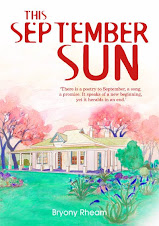
Bryony Rheam was born in Kadoma in 1974 and lived in Bulawayo from the age of eight until she left school.She studied for a BA and an MA in English Literature and taught in Singapore for a year before returning to teach in Zimbabwe. She won the Zimbabwean best first novel award and gives an account of her experience in writing the award winning novel, This September Sun:
 
“The process of writing is never an easy one.  Time and again I read about writers who confess to disliking everything about it: the need to be disciplined, the hours sat in front of a keyboard (even when the ideas are flowing) and the drudge of writing and rewriting paragraphs, scenes and scenarios.  Having the ideas is the easy part.  More than once I have wished for someone to invent some sort of gadget that would allow me to plug my brain into a computer and for the story to download itself.
Unfortunately, as this gadget is still to be invented, I have had to rely on my own reserves of determination and discipline.  There is a popular idea of the writer having a muse, and when the muse is with them, they have to write.  Associated with this, is a feeling that writers are somehow special people – gifted, at least – who need to keep their own hours and express themselves as creatively as possible.
Whilst there may be an element of truth in this supposition, I’m afraid the truth is a lot less romantic in reality.  Writing is a job.  It’s a job that brings the writer an income, however small, and it’s a job that needs to be treated as such.  Of course, not everyone is a writer and not everyone who wants to be a writer can write, but those who can should not delude themselves into thinking that it doesn’t require hard work, constant attention and, until you finally have something published, frequent times of self-questioning.  Is this good?  Is this acceptable?  Will anyone enjoy it?
It took me about ten years to complete This September Sun.  That’s not to say that I was writing every day, or even every month!  I wrote in spurts, carried away at times by a determination to at least get the story down, and at other times hampered by periods of self-doubt and, dare I admit it, laziness.  When I look back, I can see that the times I worked the hardest were the times when I had had some encouragement from someone who read the odd chapter or so, or when I had a deadline to meet.
The best thing I ever did was apply to go on a British Council run writing course, Crossing Borders.  I was lucky in being accepted as it was the last year that the course was being offered.  It was wonderful.  For someone like me who works well to deadlines, it made me work hard at completing unfinished chapters and linking various ideas.  Only a small part of what I had written was sent to my mentor in the UK, but I had to do a lot of work to get to the point of choosing which excerpts to send.
I’m often asked by aspiring writers to read their work and it is a task I try to avoid if possible, not just because it feels like extra work to read through, but because I often find that the kind of people who ask me to read their work are looking for a specific type of response from me.  They want to be told that it’s good, they want me to be overwhelmed with awe at the quality of their writing and tell them to get it published right away.  I know this because I’ve been there myself and I know the awful cringing feeling of embarrassment they feel when told their writing ‘still needs some work’.  So it was also hard for me to send off chunks of my writing to someone in the UK who knew little of Zimbabwe and of the events of the past 50-60 years.  I had to make a conscious effort to send off the parts that I felt genuinely needed comment and assistance, rather than pieces I knew were good.  Like every writer, my work is very personal and I don’t take criticism well, but it actually wasn’t like that.
It was uplifting to find that some of the parts I saw as problematic were actually fine and interesting to see someone else’s point of view on pieces that hadn’t occurred to me needed reworking.  The best thing about the course was that I didn’t have to take on board all or any of the suggestions.  Ultimately, it gave me the confidence to believe that my story would be well-received and I had the impetus to get on with finishing it and stop procrastinating!
It was a great moment for me in November 2009 when I attended the launch of This September Sun at the Bulawayo Club.  The number of people who attended the launch and who bought copies of the book was quite overwhelming.  Owen Sheers, the Welsh poet and writer, who had led a writing workshop I had attended at the Intwasa Festival a couple of years previously, gave the opening speech.  At that moment I felt I had come a long way.  An idea became a story which became a book.  I’m glad I stuck at it.  My next novel, which I’m working on at the moment won’t be quite as long and I hope it won’t take me even half the time it took me to write This September Sun.  I’m on my own now – and I’m employing the muse on a more permanent contract.”

This September Sun’ was published by ‘amaBooks in Zimbabwe and by Parthian Books in the United Kingdom. It is to be published in Kenya by Longhorn. Elsewhere it is available through the African Books Collective. It is now a set book for ‘A’ level Literature in English in Zimbabwe.

Sunday, December 2, 2012

African Violet reviewed in the Financial Gazette


African Violet and other stories

'amaBooks, 228 pp., 2012, 978-0-7974-5069-1

 Africa’s leading literary prize, the Caine Prize for African Writing, was won this year by Rotimi Babatunde from Nigeria, for his short story ‘Bombay’s Republic’. Besides receiving GBP10, 000, Babatunde will take up a month’s residence at Georgetown University Washington DC, as writer-in-residence. In September he will appear at the Open Book Festival in Cape Town, followed in November by a series of events at the Museum of African Art in New York.

Babatunde’s unusual tale appears in African Violet, a volume of short stories published by ‘amabooks of Bulawayo. The four other authors shortlisted with the Nigerian for the award, are Malawian Stanley Kenani, South African Constance Myburgh, Billy Kahora from Kenya and Zimbabwean Melissa Tandiwe Myambo. Stories from ten other African writers who attended a Caine Prize writers’ workshop in South Africa this year, are also included in the anthology.

There is a perception that literature emanating from Africa will always deal with corruption, political violence, rape, poverty and conflict. Most of the continent’s 54 countries have been through political upheaval and suffered varying degrees of drought and famine: but the engaging stories in African Violet offer an outlook on life in Africa that is witty, thoughtful and positive.

Colour Sergeant Bombay, the hero of the winning story, is thoroughly likeable as the ‘veteran… who went off to Hitler’s War as a man and came back a spotted leopard.’ Rotimi Babatunde’s humour and easy style lead us through the adventures of the soldier who battled with the leeches that scarred his body in the Burmese jungles, and Japanese forces that chopped up African cadavers in the belief that ‘black soldiers resurrect’. Returning home, the war hero declared the new Republic of Bombay, raising a flag of a spotted leopard over the old jailhouse. There he remained until ‘death finally unseated him from office’.

In Love on Trial by Malawian Stanley Kenani, law student Charles Chikwanje is discovered by the village gossip, Kachingwe, in flagrante delicto with another young man, in the village toilet. For a tot of kachasu, Kachingwe will provide salacious details of the encounter to curious villagers. The law takes its course, and although Chikwanje’s defence is dignified and articulate he is sentenced to 12 years with hard labour. The domino effect, when angry international donors cut aid, is felt by everyone, including Mr Kachingwe, who has lost the ability to solicit free drinks.

Ex-Arundel schoolgirl Melissa Myambo impresses with her writerly skills in La Salle du Depart, a tale of gender and family obligations set in Dakar. Having spent time in Senegal Myambo has absorbed the culture and atmosphere of this vibrant, largely Moslem country. Readers will look forward to an equally powerful story set in her native Zimbabwe.

The judge’s panel for this year’s Caine Prize, now in its 13th year, included Zimbabwean performance poet and cultural consultant, Chirikure Chirikure. Full of praise for the encouragement it affords African writers, he expressed the hope that the Caine Prize ‘would remain as bold and solid as the baobab tree.’
Previous Zimbabwean winners of this prize include Brian Chikwava (2004) and NoViolet Bulawayo (2011).


Reviewed by Diana Rodrigues
http://www.financialgazette.co.zw/weekend-gazette/15143-chirikure-judges-at-caine.html

Monday, October 15, 2012

'amaBooks and Worldreader


'amaBooks are working with Worldreader to help make good creative writing available to young people across Africa and elsewhere.


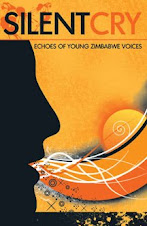
As a first step, stories from Silent Cry: Echoes of Young Zimbabwe Voices, and selected stories from other 'amaBooks collections, are available to read free of charge on mobile feature phones using the Worldreader App.


With the first-ever book application available for feature phones, Worldreader is turning on its head the notion that reading e-books requires an e-reader, tablet or smart phone.


In order to achieve this ground-breaking feat, Worldreader has partnered with biNu, an App developer based in Sydney. biNu’s patented technology effectively turns a feature phone into a smart phone—enabling millions of people in the world’s poorest places access to Facebook, Twitter, Local News, Google—and, now, the Worldreader Book App, and so to stories from Zimbabwean writers.
To give you an idea of the enormous scope and potential: feature phones are the largest and fastest growing segment of the global mobile market, with over 60% of the global mobile market share of almost 5 billion mobile subscribers. As of April 27 2012, the Worldreader App is on 3.9 million mobile phones, mostly in India and Africa, and Worldreader hope to reach 10 million by the end of 2012.
As well as stories from the collection being available through feature phones, Silent Cry: Echoes of Young Zimbabwe Voices will be available on e-readers as part of Worldreader programmes.

Silent Cry: Echoes of Young Zimbabwe Voices is a book of twenty-eight stories and fourteen poems, written by thirty-three young people from Zimbabwe’s second city, Bulawayo. The pieces cover many issues, including family, gender, relationships, race, alienation, disability, AIDS, border jumping and the struggle to survive in Zimbabwe.

Silent Cry: Echoes of Young Zimbabwe Voices is available on a print-on-demand basis or as an ebook through the African Books Collective http://www.africanbookscollective.com/books/silent-cry


More information about the Worldreader programme can be found at http://www.worldreader.org


Photographs of children in school benefitting from the presence of e-readers are reproduced courtesy of Worldreader

Friday, October 12, 2012

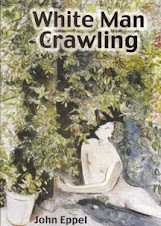
Narrating the Zimbabwean nation: a conversation with John Eppel


John Eppel interviewed in Scrutiny2: Issues in English Studies in Africa

Volume 17. Issue 1, 2012

Abstract


In this interview, John Eppel, a veteran of Zimbabwean writing, confirms his reputation as an “angry jester”, determined to expose what he describes as “humbug”, wherever he sees it. With his satires, Eppel has stirred the national literature with subversive laughter, ridiculing both Rhodesian society under Ian Smith and post-independence society under Robert Mugabe. With his poetry, he innovatively marries European forms with southern African content. During the crisis of the 2000s he refused exile and has been consistently critical of political and social corruption and injustice from within Zimbabwe's borders.


The full interview with Drew Shaw of the National University of Science and Technology in Bulawayo can be found at:

http://www.tandfonline.com/doi/abs/10.1080/18125441.2012.706082

Friday, October 5, 2012

Bryony Rheam interviewed on BBC Focus on Africa


Bola Mosuro interviewed Bryony Rheam about her novel This September Sun on the October 2 edition of Focus on Africa on the BBC World Service.
Please click on the link below to access the podcast of that edition of Focus on Africa.

http://www.bbc.co.uk/podcasts/series/africa

Saturday, September 29, 2012

Violette Kee-Tui wins Yvonne Vera Award at Intwasa 2012


Intwasa Arts Festival koBulawayo has announced this year’s winner of The Yvonne Vera Award for short story writing. This year’s winner is Violette Kee-Tui with her short story Tattered Cloth. The short story was adjudged the best out of 81 short stories submitted this year. The Intwasa Short Story Competition is an annually event organised by Intwasa Arts Festival koBulawayo. Violette Kee-Tui’s Tattered Cloth faced stiff competition from Sipho Mpofu’s A Congenial Man and Nixon Nembaware’s The Rain God of Nyatanga Hill.  For her efforts Violette Kee –Tui won $500. The Yvonne Vera award is supported by Hivos and the Norwegian Embassy and seeks to promote and honour creative writing, particularly short story writing in Zimbabwe.
In short Tattered Cloth is the story of forbidden love, and a relationship that is doomed from the beginning. It is well told and almost seamless. The judges fell in love with the story and heaped praise upon praise on Violette Kee-Tui’s narrative skills. 
Previous winners of the Intwasa Short Story Competition, which has developed into Zimbabwe's leading writing competition, include 'amaBooks writers Thabisani Ndlovu, Bryony Rheam, Chaltone Tshabangu, Novuyo Rosa Tshuma and Bongani Ncube.

Thursday, September 27, 2012

The Business of Writing workshop at Intwasa 2012


Over 50 writers, both established and emerging, attended the Business of Writing workshop on Saturday 22 September in the National Gallery of Zimbabwe in Bulawayo. The workshop was part of the Intwasa Arts Festival koBulawayo and was supported by the British Council. It was facilitated by Jane Morris and Brian Jones of 'amaBooks, with Mgcini Nyoni of Poetry Bulawayo and writer Naison Tfwala.
Mgcini concentrated on online publishing and Naison on the advantages and disadvantages of self-publishing. Brian and Jane led discussion on the relationship between writers and publishers. Among subjects touched on were the changing world of publishing with the growth of self-publishing and the introduction of ebooks and digital printing. Opportunities for writers looked at included joining writers' groups, attendance at workshops, entering competitions, residencies and submitting work to poetry and story websites and blogs. The role of publishers in developing the skills of writers through constructive feedback on their submissions was an area of debate. It was great to see so many writers coming to the workshop and we hope to run more in the future.

Photograph courtesy of Batsirai Chigama