Showing posts with label NoViolet Bulawayo. Show all posts

Thursday, April 21, 2022

Novelist Bryony Rheam on Winning Path

 Reproduced from the newsletter of the Writers International Network of Zimbabwe: 

WIN LITERARY NEWSLETTER, VOL 2, ISSUE 19, which celebrated the winning writers from the 2022 Zimbabwe National Arts Merit Awards.

by Beaven Tapureta


Bryony Rheam shows her recent accolade from the 2022 NAMA Awards.
Her second novel All Come To Dust won the Outstanding Fiction Book award.


EVERY writer dreams of success and success usually happens when one commits him/herself to art. Many writers have fallen by the wayside after their books failed them. No sales, no recognition, no reviews.

But while winning matters, one has to consider working hard with a heart of faith. Writing is an act of faith, so said someone.

For Bryony Rheam, recognition gauges the reader response for a book. And when a book keeps on winning, she says it shows that readers are connecting with the themes tackled. 

After her debut novel This September Sun (2009, AmaBooks) won the Best First Book at the Zimbabwe Book Publishers Association Awards in 2010, she was in 2014 winner of the International ‘Write Your Own Christie’ Competition, a competition dedicated to the international writer Agatha Christie whom Bryony has put on top of her favourite writers list.

“I have been an Agatha Christie fan for a very long time. I enjoy the books because the focus is on the mystery, not the murder. I like solving the puzzle. Modern crime writers focus more on the murder and enjoy lots of gory details, but the actual mystery is not that exciting,” said Bryony. 

This September Sun went on to be selected as set text for ZIMSEC Advanced Level Literature in English in Zimbabwe from 2012 to 2017.

WIN once published a comment by a literature student who said she remembers one day her teacher shed tears while reading to the class a touching passage in the novel. Indeed, such is the power of Bryony’s words as a story-teller.


All Come To Dust (2020, AmaBooks), her second and recent novel, has joined the winning streak.

Late last year it scooped a literary award at the Bulawayo Arts Awards and this February it won the Outstanding Fiction Award at the NAMA Awards.

Bryony told WIN how she feels about the overall success of her books.

“I feel both my novels have been successful, especially in Zimbabwe. Their success shows that readers are connecting with the issues they raise,” she said.

All Come To Dust is a crime thriller, falling in the class of another African novel Five Nights Before The Summit (2019, Weaver Press) by USA-based Zambian author Mukuka Chipanta.

There seems to be an attempt by writers to fill in the gap of crime fiction in English. For example, Sinister Motive by South Africa-based Zimbabwean emerging writer Wellington Mudhluri also uses the crime fiction genre which was once popular with Shona novelists of yore.

However, the use of various genres by Zimbabwean writers to speak about local issues is what Bryony applauds.

“I feel there is a need for Zimbabwean writers to explore different genres and use them as ways to reflect life in this country,” said Bryony.

Her words confirm what renowned writer NoViolet Bulawayo said last month in The New York Times: “We have to insist on imagining the worlds that we want to see.”  NoViolet was speaking about her new book Glory which one critic described as ‘a modern African Animal Farm’, meaning it explores a different ‘Animal Farm approach’ to highlight certain issues affecting Zimbabwe.

Truly, by using the imagination and exploring various forms of writing, writers can deal with issues troubling our motherland.

 (Read an interview with Bryony published in our previous issue, DOWN MEMORY LANE )

Monday, October 7, 2019

'Gonjon Pin' a must-read on a long journey

The Herald, 6 October 2019
https://www.herald.co.zw/gonjon-pin-a-must-read-on-a-long-journey

‘Gonjon Pin’ a must-read on a long journey

-->

by Memory Chirere 

Published by amaBooks of Zimbabwe and several other publishers, The Gonjon Pin and Other Stories is a collection of short stories by African writers shortlisted for the Caine Prize 2014 and from the Caine Prize annual writing workshop held in Vumba, Zimbabwe, during the same year.
On receiving this anthology just before the Harare launch, I quickly noticed that it was a massively solid book.
I was intimidated. I am used to reading the usually thin volumes normally associated with short books in Africa. But since these are stories from one of the most prestigious awards in African literature today, I hoped that quality will pay for the volume.
I do not remember the last time I felt like this about a book. I did not want to start with the shortlisted stories. I wanted to make my priorities right. I had been invited to anchor the discussion at the Harare launch, where some writers would also give readings.
I am attracted to the Zimbabwean stories.
Having been raised on the short stories of Luis Honwana, Charles Mungoshi and other writers from the Southern African sub-region, I find Lawrence Hoba’s “Pam Pam” a very comfortable landing pad. Due to my background, this is the story that speaks most directly to me.
The sensitive child is snooping into the seemingly unusual world of the grown-ups, who are also trying to come to terms with the most “weird” in their midst. Muffled voice. Understatement. Power play. A surprise ending. Hoba’s deft engineering- one soft word on top of the other…and on top of the other, almost like bricks, tells me that this was not easy to write.
“The Sonneteer” must be the “craziest” story in this book! I am hoping that somebody will agree with me. I love the deluge of sonnets towards the end because it is a clever way of flourishing out after such a deep rendition on the tumultuous Zimbabwean condition. The story ends in successive loud spurts like a gas canister unleashed onto a hapless crowd.
I like stories like this one, driven by silences — especially by what characters do not say to one another.
We are no longer reading, but are also writing the story alongside Philani Nyoni. The language is vigorously God forsaken and its rigours remind me of the late Dambudzo Marechera.
Later, at the launch itself, I was impressed by Isabella Matambanadzo’s views.
Her “All The Parts of Mi”, just like Abubakar Adam Ibrahim and Chinelo Okparanta’s stories, is about betrayal, intimacy and courage. During the discussion, I asked Matambanadzo about what she thinks about the use of the erotica in stories. Her candid answer sent the audience roaring in approval. It took us a while to return to silence.
“The Intervention” by Tendai Huchu is part of the Caine 2014 short list. It confirms my thoughts about his previous stories, especially the one which I have been struggling to translate from one language to the other. Here is a writer who has an eye for dramatic irony and the incongruence of human character. His stories challenge the reader to work from many points of view.
In “The Murder of Ernestine Masilo” by Violet Masilo, the protagonist dies slowly from the first time you meet her. Her death is not shocking, but why she dies is riveting.
You are left with a feeling that a flower has withered before anyone could pluck it and place it in a vase. If only there was enough love. Typical character in typical circumstances.
“Music From A Farther Room” by novelist Bryony Rheam is a story filled with utmost colours and sounds and wide spaces. It is a piece of painting or tapestry.
If it were a piece of cloth, this story would flutter in the wind like a kite, landing on its nose until somebody picks it and throws it back into the sky just in order to see it and shout like a toddler! I read it over and over for the sheer serenity that it gives me.
Barbara Mhangami-Ruwende’s “Blood Work” is filled with a delicate tension right from the statement “I don’t like black people” up to the end and you are always on the edge. I hope I am not being prescriptive, but this looks like my favourite story in this book, at least for now.
I then hurry to the winning story itself, “My Father’s Head”. I had read elsewhere that it is a story filled with sad memories. I do not disagree, but I discover that it is full of sweet sadness with more of sweet. Sad but not depressing.
The kind of balance associated with kopjes. On the second and even third reading, I begin to feel that this is about a daughter’s celebration of a father’s not so happy life. The language is syrupy, describing expanses of time and dwelling on tiny-tiny details of life like the paw of a dog and the flutter of a butterfly. I agree with the judges. It was right that this story won. Maybe it is not a story after all. It is life.
Among the shortlisted stories, I also have lots of respect for Billy Kahora’s “The Gorilla’s Apprentice”. Loneliness of people, and of animals too?
A unique and unfulfilled camaraderie between victims from different communities? This story could just have won.
However, in just a few of these stories here, adjectives tend to pile on top of one another; adverbs trip over each other. Colons clog the flow of even short paragraphs, and the plethora of semicolons often cause the reader to throw up his hands in exasperation.
If you are able to forgive the very few overwritten pieces, The Gonjon Pin and Other Stories is something to carry on a journey.


........................


The 2019 Caine Prize anthology, soon to be published in Zimbabwe by amaBooks, celebrates 20 years of the competition with the inclusion of all the winning stories, including those of the Zimbabwean winners Brian Chikwava and NoViolet Bulawayo. It includes an introduction by Ben Okri.

Wednesday, May 15, 2019

African literature disrupting what Western presses prize


By Jeanne- Marie Jackson
From The Herald, 15 May 2019
Jeanne-Marie Jackson
African literature is the object of immense international interest across both academic and popular registers. Far from the field’s earlier, post-colonial association with marginality, a handful of star “Afropolitan” names are at the forefront of global trade publishing. Books like Chimamanda Adichie’s “Americanah” and “Half of a Yellow Sun”, Teju Cole’s “Open City”, Taiye Selasi’s “Ghana Must Go” and Yaa Gyasi’s “Homegoing” have confounded neat divisions between Western and African literary traditions. The Cameroonian novelist Imbolo Mbue captured a million-dollar contract for her first book, “Behold the Dreamers”. That’s even before it joined the Oprah’s Book Club pantheon this year.
Such commercial prominence, though, has attracted considerable and unsurprising push back from Western and Africa-based critics alike. Far from advancing narratives with deep roots in local African realities, such critics fear, many of Africa’s most “successful” writers hawk a superficial, overly diasporic, or even Western-focused vision of the continent.
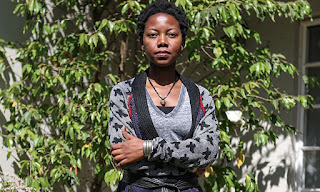
NoViolet Bulawayo
The most visible of these critiques has been directed at the Zimbabwean writer NoViolet Bulawayo’s “We Need New Names” (2013). The Nigerian novelist Helon Habila worried in a review in the London Guardian that it was “poverty-porn”. The popular Nigerian critic Ikhide Ikheloa (“Pa Ikhide”) frequently makes a similar point. Fellow Nigerian writer Adaobi Nwaubani critiqued the West’s hold on Africa’s book industry in a much-circulated New York Times piece called “African Books for Western Eyes”.
Such debates about African writing could, and likely will, go on forever. Questions about Africa’s place in the current global literary marketplace broaden some of the most urgent queries of the postcolonial era. Who gets to document African realities? Who are the “gatekeepers” of African publishing traditions?
It goes on: To what sort of audience does African writing cater? What is the role — and what should it be, if any — of Western institutions in brokering cultural prestige?
All these issues merit concern.
Between the default poles
Too often, though, African writing ends up volleyed between two default poles of “corporate global” and “activist local”. Some onlookers, as in a recent essay by the Canadian scholar Sarah Brouillette, go as far as to name the biases of even Africa-based print outlets. Kenya’s Kwani Trust is exposed as “Western-facing” due to a web of donor relations. “West” here is code for neoliberal. “Western-facing” is for complicity with a market that skews toward British and American interests.
Faced with a “world system” argument like Brouillette’s, African literature would seem trapped between a rock and a hard place.
But, in fact, this tells only a small part of the story of how African writing now makes its way through the world. It is incomplete to the point of being outdated, given the boom over the past five years in new, globally conscious small US literary presses collaborating with African writers.
A “West subsuming Africa” brand of critique works fine for scholars with no real skin in the game of literary publishing. It also denies real agency to a lot of African writers and other literary professionals. On the ground the literary field is far more forward-thinking and diverse.
There is an entire new body of African writing that escapes this closed circuit of damning truisms. A wave of new or recently galvanised independent literary presses in the US and the UK are working in tandem with some of Africa’s most generative outlets. Together they are publishing and promoting work by young and adventurous African writers.
Labours of love
Books published originally by presses like Umuzi (South Africa), amaBooks (Zimbabwe) and Kwani (Kenya) find second lives with international publishers working to defy the constraints of profitability. They’re mostly labours of love with skeleton staffs that speak to a transcontinental commitment to innovative African writing.
Here are a few key examples of African texts published by independent American outlets — “independent” here refers to presses beyond the “Big Five” US trade publishers (Hachette Book Group, HarperCollins, Macmillan, Penguin Random House and Simon and Schuster.
These include Jennifer Nansubuga Makumbi’s Ugandan epic “Kintu” which was originally launched by Kwani. It was the first Anglophone novel put out by the brand-new Transit Books based in Oakland, California. The press seeks maximum visibility for translated fiction alongside texts originally written in English. They advocate for more ethical legal and financial dealings with translators, as well as international writers.
A number of similarly tiny, ambitious ventures have published some of the most acclaimed recent African writing in translation. Deep Vellum Publishing was behind the English translation of Fiston Mwanza Mujila’s Etisalat Prize-winning “Tram 83”.
Also dedicated exclusively to works in translation, LA-based Phoneme Media in 2016 published the first ever Burundian novel in English, Roland Rugero’s deeply contemplative “Baho!”. Phoneme’s tagline, fittingly, is “curious books for curious people”.
In a similar vein, Brooklyn’s Restless Books was founded to combat “parochial, inward-looking, and homogenised trends in American publishing”. Among their forthcoming titles, translated from the French is Naivo’s “Beyond the Rice Fields”. It’s the first novel from Madagascar to see its way to English.
Veteran nonprofit press Archipelago Books is also in Brooklyn. In 2015, it published the translation from the Portuguese of Angolan writer Jose Eduardo Agualusa’s “A General Theory of Oblivion”.
Every one of these throws a wrench in a clear, cynical sense of what kind of novel Western presses prize. That is not to mention the many African writers, publishers, and editors working in concert to promote these same texts.
Small, focused channels
It applies to the Anglosphere too. Books that offer a decidedly more locally textured experience than those of the “Afropolitan” rock stars have made their way abroad through small, focused channels.
These works might include Tendai Huchu’s “The Maestro, the Magistrate, and the Mathematician” (published originally by amaBooks, and in the US by Ohio University Press); Imraan Coovadia’s “Tales of the Metric System” (from Umuzi, and again by Ohio University Press); and Masande Ntshanga’s “The Reactive” (also Umuzi; in the US by family-run Two Dollar Radio.
Clearly, this collection just scratches the surface. But what these works have in common is an investment in stylistic and structural experimentation that confounds rather than caters to an international taste for “digestible” fiction, or to mostly Western points of cultural and institutional reference.
This counter-current of transnational African literary life complicates the equation of culture, geopolitics and economics in more useful ways than stale materialist critiques.
As such titles and presses continue to gain acclaim and recognition by an international readership that is aware of and hostile to shallow representations of Africa — and who crave engagement with challenging fiction, regardless of its origin — critics will need to rethink some of their orthodoxies.
There is more to both African literature and Western publishing than meets an eye too practised in its suspicion. If literature is doomed only to echo the failings of globalisation, then why bother? On the contrary, a new generation of writers and publishers deserve our awareness of the “global literary marketplace” as a meaningfully multidimensional space. — Africa Conversation.


Tuesday, September 18, 2018

All Come to Dust in Bulawayo

Photos courtesy of Violette Kee-Tui
Last week, Bryony Rheam read from some of her published short stories and from her forthcoming novel, All Come to Dust, at Middys Coffee Shop in Bulawayo. The novel follows Chief Inspector Edmund Dube as he investigates the suspicious death of Marcia Pullman. As the investigation unfolds so does the story of Dube's life from his early years as he begins to put the pieces together of why the Scottish couple, for whom his mother worked, left the country in a hurry and Dube with an abiding sense of abandonment.  

The readings at Middys were well attended, with a scattering of other writers published by amaBooks, including Mzana Mthimkhulu, John Eppel and NoViolet Bulawayo. The event was organised by Hubbard's Historical Tours.
NoViolet Bulawayo and Bryony Rheam


John Eppel and friends


Mzana Mthimkhulu

Bryony is an ardent fan of Agatha Christie, a passion inherited from her grandmother. As testimony to this enthusiasm for Christie, she won the international Write Your Own Christie competition, which involved writing a chapter of a novel in the style of Agatha Christie, following on from chapters of previous winners. She was also runner-up for a previous chapter she wrote.
As her prize Bryony travelled to London to have dinner with Christie's grandson and the detective novel writer's British and American publishers. It will be up to Bryony's readers to judge whether she is able to follow in Christie's footsteps and weave as tangled a web as the best-selling author did in her many works.

All Come to Dust, to be published by amaBooks in November 2018, will be available in Zimbabwe through amaBooks and elsewhere through the African Books Collective.

Bryony's short stories have appeared in several anthologies published by amaBooks: Moving On and Other Zimbabwean Stories, Where to Now?, Long Time Coming and Short Writings From Bulawayo I, II and III. Short stories by Mzana Mthimkhulu and John Eppel have also been published in the anthologies, and John Eppel has had several novels, poetry and short story anthologies published by amaBooks. A story by NoViolet Bulawayo was published in Where to Now?.


Tuesday, November 22, 2016

Bongani Kona, shortlisted Caine Prize writer from Zimbabwe, interviewed in the Daily News

This year’s Caine Prize anthology, The Daily Assortment of Astonishing Things has just been published in Zimbabwe for the local market by Bulawayo-based publisher, amaBooks.

The publication of this collection, the fifth of the Caine anthologies published by amaBooks, the anthology, packed with accomplished story-telling, includes pieces by two Zimbabwean writers. NoViolet Bulawayo, who won the Caine Prize in 2011, is featured in the book, as is Bongani Kona with his short-listed short story, “At Your Requiem”, from this year's anthology.

The Weekend Post this week spoke to Kona to about his newly found fame.
Below are excerpts of the interview.


Q: Can you tell us who Bongani Kona is?

A: Firstly, thank you so much for the interview. I’m a writer and editor based in Cape Town. I was born in 1985 and I grew up in Hatfield, Harare, and I lived there until I was 18. When I completed my A’ Levels at Prince Edward School I left Zimbabwe to go and study in South Africa and I worked as a freelance journalist for few years before I decided to go back to the University of Cape Town to study for a Masters in Creative Writing.

Q: Congratulations on being short-listed for the Caine Prize this year, it is quite an achievement. How did it feel to be catapulted onto the literary scene?

A: Thank you. It was really an unexpected gift but one that came at the right time. I think all beginning writers need encouragement. You fail more times than you succeed and it’s important just to keep at it.

Q: Your short-listed story, ‘At Your Requiem’, which appears in the Caine Prize collection for 2016, The Daily Assortment of Astonishing Things, will be available to readers in Zimbabwe through the publication by local publishers, amaBooks. Is this your first publication in your home country? Is it particularly significant for you to have your work available to a Zimbabwean audience?

A: Yes, and it’s an incredible thing that the anthology is available for sale to Zimbabwean readers, and for me personally it means so much. No Violet Bulawayo, who is one of my favourite writers, also has a story in the collection.
Q: I understand that you are presently studying for a Masters degree in Creative Writing at the University of Cape Town. There has been a lot of discussion of late about the usefulness to writers of creative writing programmes. Do you think your studies have played a major part in improving your writing?

A: Yes, I’m currently studying for an MA in Creative Writing at UCT and to be honest, I don’t think anybody will ever be able to give a definitive answer on the usefulness of creative writing programmes.
We’re all different and you know best what you need. I’d been working as a freelance journalist for many years and I signed up to the programme because I wanted to explore writing fiction. And in that respect, it’s helped develop my writing and it’s what I needed to do.

Q: What gave you the idea for ‘At Your Requiem’? It is a dark, painful story.

A: I wrote the story in November 2014 and I’d spent the first seven months of that year documenting cases of sexual violence for an NGO in Cape Town. And I think some of those experiences subconsciously worked their way into the story. But the spark for the story came from a poem with the same title. I don’t remember who wrote the poem, but I found it in an old copy of New Contrast, a South African literary journal. I was really moved by it, and everything else followed from there.

Q: Do you think that writing as a journalist has helped prepare you for being a writer of fiction? Are there any particular lessons that you have learnt as a journalist that you see yourself using in your creative writing?

A: Definitely. One of the most important things that journalism teaches you is to be observant and curious about how other people live and that’s been really useful.

Q: It’s probably a question you have been asked before but here it is again – what advice would you give to an aspiring writer?

A: I would say read as much as you can and just write. Even if a word of what you write never gets published, it doesn’t mean you’re wasting your time.

Q: Are there any particular Zimbabwean writers you particularly admire?
A: I’m a big fan of Petina Gappah and NoViolet Bulawayo. I also admire Brian Chikwava, Panashe Chigumadzi, Tendai Huchu, Percy Zvomuya and of the older writers, Charles Mungoshi, Yvonne Vera and Dambudzo Marechera.

Q: What about in Africa?

A: There are too many but perhaps one way to limit the scope of the question is to say, from the books that I’ve read in the last year, which do I recommend? The Reactive by Masande Ntshanga, The Woman Next Door by Yewande Omotoso, Dust by Yvonne Adhiambo Owuor, Tales of the Metric System by Imraan Coovadia and Tram 83 by Fiston Mwanza Mujila.

Q: What are you working on at the moment?

A: I'm working on multiple projects at the same time and I’m afraid I can’t say more than that.

Q: I’m sure that being short-listed for the Caine Prize resulted in you being interviewed on numerous occasions. Is there one question that stands out in your mind as being a tough one to answer? If so, how did you answer it?

A: Actually, I've been lucky enough to have pretty straightforward questions thrown at me and none stands out as difficult to answer.

Q: Your parting shot?

A: Thank you very much for interview Jeffrey and again, it’s really amazing that The Daily Assortment of Astonishing Things is available to Zimbabwean readers. It's a great collection of short stories by writers from diverse parts of the continent.