with Jeanne-Marie Jackson
http://www.bookslut.com/features/2016_03_021392.php
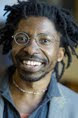
Tendai Huchu hit all the right notes with his
first book The Hairdresser of Harare, published in Zimbabwe in
2010, with a US edition now available from Ohio University Press. Set mainly in
Zimbabwe's capital city (though Huchu himself now lives in Edinburgh), the
novel charts the blossoming love between a male and female hairdresser. Among
its many urgent points of interest, The Hairdresser of Harare treats
African gender roles, queer identity, and the yawning wealth gap between
Zimbabwe's political elite and its poor majority. It is a novel that critics
very much knew what to do with: it ticks every major box of a global pluralist
sensibility, with a laconic, engaging style and roguish wit. This combination
of traits won Huchu a review last year in the New York Times, placing
him in the most visible echelon of African writers published abroad.
But Huchu's work is also formally surprising, and
reading it one has the feeling that its social topicality may be less clear cut
than it appears. His second book, 2014's The Maestro, the Magistrate,
and the Mathematician, only confirms this impression, by abandoning an
issues-based linear plot in favor of three zany novellas braided together. Each
of them follows the daily routine of a different Zimbabwean transplant to
Edinburgh, all of whom discover a bit less than they set out to find. The
story, to the extent one exists, is in the fabric of the novel itself, as it
gets snagged on the vacant opportunities of global mobility (dead-end jobs,
teenage pregnancy, and the perils of European takeout food, to name a few), and
flailing national opposition politics. As characters' mundane paths cross and
diverge with no one, really, the better for it, The Maestro, the
Magistrate, and the Mathematician plots the meaning of the phrase
"the devil is in the details." Huchu thus seems willing to try and
capture -- and play with -- the widespread cynicism of our
moment, in a literary field that sometimes prefers sanguine praise. This rare
intermingling of wry humor and broad vision makes him a great interlocutor and
friend, as my exchange with him below attests.
One of the first things I noted about The
Hairdresser of Harare is that it's not very "diasporic"
in its themes. But you wrote it in Edinburgh, and I have to imagine that a
transnational novel would also have been easier to sell. Why move to Scotland,
then, to write such a local book about Zimbabwe?
My favorite books are often very local in their scope
and concerns, yet, somehow, they manage to capture something universal about
the human condition. I remember watching the last James Bond movie; as the hero
zooms from country to country -- often, I couldn't even tell where the hell he
was -- I kept thinking, what a load of bollocks. Of course, the whole thing was
designed to capture as wide an international audience as possible, so to hell
with anything vaguely resembling logical coherence. It takes an exceptional
storyteller to pull off a transnational narrative without sacrificing
authenticity and diluting their content in some attempt to please everyone.
When I moved to Edinburgh, I already had novelistic ambitions, but everything
I'd written before that was a dud. I had a lot to learn about the craft then,
as I do now. For me, the most important thing was to tell the story I wanted to
tell without diluting it in an attempt to "sell." I'm a fan of
nineteenth-century Russian literature, but I'd be a fool to claim any of that
shit was written for me. The geographic location of where I write from probably
has more to do with the material comforts it affords me than anything else. The
main thing for me is that I am able to write the work that I want, as I see
fit.
You know I have to ask: what's your favorite
nineteenth-century Russian novel, and why?
It has to be Dostoevsky's Demons. I
reread it every two or three years and I come out with something new every
time. This might even be a literal "new," because I first read it as The
Devils, and I believe it has been called The Possessed before,
so we may just be at the mercy of the translators here! Time to learn Russian.
I think it's his best novel, both complex and dense, with that tele-microscopic
vision of his major novels, which manage to show the individual alongside and
in interaction with larger sociopolitical forces. I've always been tempted to
see novels as simulations of real live and I have no idea how many zettabytes Demons is
running on.
The weird thing is that when I read it, I feel I am
reading the Great Zimbabwean Novel. I mean, this thing speaks to the Zimbabwean
experience so directly -- the battles against western influence that have
defined the last twenty or so years of our existence, and the dominance of
ideology over rational thought, compassion and virtue playing out with
disastrous consequences. At a more puerile level I keep seeing these parallels
between the two societies depicted, the social stratification, swap consumption
for AIDS and you have another dynamic going on there, and there is an urgency
in Demons I often find in novels from the Global South but
never in the contemporary western novel. I remember my first attempt at writing
a novel in my early twenties was a goddamned awful piece of plagiarism (I
thought it was a work of monumental genius at the time), riffing off Demons and
just putting the whole damn thing in a Zimbabwean context. (I would like to
thank everyone who rejected that novel.) The point is that this book speaks to
me on so many levels and while we can dissect this and that, we can't also
neglect the dark humor, the incredible cast of wacky characters and awesome set
pieces. It's a rollicking read.
I want to stick with this idea of the Great National
Novel, for a moment. We are frequently told that we're past the era in which
writing one is possible, or even relevant. You know the drill: the nation is
insidious as a form, and slippery/obsolete as a political construct. And yet,
as you suggest, there is something both alluring and impressive about this sort
of project. Consider the widely heralded case of Adichie's Half of a
Yellow Sun, for example, in contrast to the more mixed reception of Americanah.
What's going on, here? Are national epics with us to stay?
If you're ever lucky enough or just talented enough to
write a phenomenal book like Half of a Yellow Sun, you're
gonna have one hell of a time with your next work. You've raised the bar and
now you have to jump over it again. Adichie isn't James Patterson, so she was
never going to try to hit us with more of the same. I don't think one should
try to compare the two books (hard as that may seem); rather take Americanah on
its own terms, and I am sure most people will agree it is a really good book.
Adichie is coming into that really important phase between 40 and 50, where it
is said novelists tend to peak. I'll bet a kidney and a testicle that what she
produces in the next decade will be even more astounding than the great stuff
she has already given us. (Did I just say don't compare her books and then
suggest that we do that with her future works? You figure that one out -- may I
suggest some form of doublethink here? No pressure, Chimamanda.)
But, I think you're onto something when you speak
about the appeal of the national epic. It is easy for the affluent, the winners
in the global capitalist game, who move freely with capital, to think that
nations are slippery and obsolete as they hop from airport to airport
unimpeded. Why would they not? But for the guy with a Third World passport, the
guy with the long beard, the guy who doesn't speak with the right accent, the
guy whose bank account has one zero or he doesn't have a bank account at all,
the nation is very much alive. Look at the rhetoric in Europe and in America
today and try to tell me we are in some post-national phase. Look at the
xenophobia that flares up in South Africa from time to time, and you quickly
see that this is stuff for the elites, not for the rest of us, the great
unwashed masses at the bottom of the food chain, who feel its (the nation's)
boot on our face. The nation is still an important construct (real or imagined)
by which we order the world around us and, more importantly, by which power
interacts with her subjects, and, as such, the novel will continue to respond to
its continued existence/influence.
Are you surprised by the The Hairdresser of
Harare's success? And has its reception differed from what you might
have anticipated, or hoped?
The Hairdresser of Harare succeeds and fails by
how embedded our narrator Vimbai is in the quotidian reality of her local
situation. I now understand that how a work is received is often very different
from the author's original conception of it. The Zimbabwean reader
automatically "gets" what I'm doing in the novel; elsewhere, though,
I fear, it is a matter of "ticking" those boxes you alluded to
earlier. Look, I am a novelist, right, an artist, I make shit up, that's in the
job description, but I am often surprised how, in certain minds, my novel is
not enough: it must allude to my sexuality, I must be an activist, it must be
autobiographical. Frankly, I find these anthropological interpretations of my
work to be dumb to the nth degree. I'd gladly give any reader their money back
if they told me their enjoyment of the work was derived from something external
to the novelistic quality of the work. (Rant over.)
Was I expecting the book to have several translations
and a film option, when I wrote it? No. Am I grateful for that? Yeah. But, in
many ways, the book is independent of its author now, it has a life of its own,
and if that constitutes success, good luck to it. Does the author feel
successful? No. I'm looking at the next work thinking, can I stretch myself,
can I write something better? And so, in many ways, The Hairdresser of
Harare is one of those annoying motherfuckers who tailgate you on an
empty highway, so the only thing to do is stop looking in the rearview mirror
and put the pedal to the metal.
You're right, of course, that writers from the Global
South are often anthropologized. They're read through the twin constructs of
culture and identity, which many people see as related. At the same time,
though, as writers like you resist such readymade filters, conversation about
them continues to drive the boom in "global" writing. There is huge
interest in what we might call "soft" historical texts, books that
use individual stories to give life to recognized social and political issues.
Can you suggest some alternative frames for engaging with contemporary fiction?
If you, as a so-called global novelist, could design an ideal critic, what
other optics for reading might he or she suggest?
I hesitate to make any such suggestion because the
house of literature has so many rooms and criticism itself comes from different
traditions and so forth. What I fear, though, is the type of criticism that
denies the existence of formal innovation and ideas in literature from the
South, treating it as some sort of journalistic appendage meant to confirm
stereotypes already in Western media and/or discourse. In my personal
experience, the results for the authors can then range from downright bizarre
to damned insulting.
I am speaking from personal experience here when I say
I've done events where I go to place X thinking I am an author here to talk about
my book and then I have to spend an hour or more fielding worn questions about
Africa (including places and cultures on the continent I know nothing about)
from a well-meaning liberal audience that has paid for the privilege. You know
something is pretty damned wrong with the show when you do a string of literary
events and not one member of the audience bothers to ask you that most clichéd
of questions any writer must field: "Where do you get your ideas
from?" Now, I'm not a critic and that field is pretty alien to me -- like
most writers, I put my faith in the reader instead. But, I am on very shaky
ground here, I would suggest that the ideal critic start by dealing with these
novels as works of art and evaluating them as such, before attaching any other
bullshit to them.
Where do you position The Maestro, the
Magistrate, and the Mathematician -- which strikes me as much
more playful than The Hairdresser of Harare -- in terms of its
ultimate ambition? Do you see it as an experiment in form, or genre, or perhaps
in social design?
You are correct in your assessment that that novel is
very playful. I tried to embed an intra-textual dialectic within the three
novellas of the novel in which any position taken is undermined by an equal and
opposite truth. The book masquerades as a literary novel, and that is how it is
presented to you, but at the end you realize it is actually a genre novel of a
very specific kind: a spy novel. I also tried to subvert the convention of
having the main character center of the text, so the real hero of this novel is
actually a secondary figure who has far less screen time than the titular
characters.
I am very interested in contradiction, ambiguity,
inconsistency, both as an inescapable function of individual human nature and
how those elements shape events at a wider, societal level. In my initial
conception of the novel, I thought I was going to try to do a work that dealt
with micro-identity shifts within the same characters, but it turned out the
end product was more unwieldy than I initially envisioned, and so, even that
central consideration ended up being a subcomponent of something larger. I
would like to claim this was an experiment with form and genre, but the
structure of the novel was arrived at through trial and error, the form exists
to support the idea that becomes the story. I am already finding through the
failures I am grinding through while working on my next novel that, unless I
find the correct form for that book too, the damn thing won't work. So I am
thinking through my pre-existing toolkit and if I can't find something that
works, I'll have to make something new. You just muddle along and hope. What
else can you do?
It's interesting that your writing starts with a
driving set of concepts, from which you then work to find their most natural
expression. (This is one of my favorite things about you as a writer.) A lot of
writers say the opposite, that they're just "telling stories," with
the specifics of character or setting paramount to any underlying motivation.
Why is it important to you that the big idea, so to speak, gives birth to the
details, rather than the other way around?
When it comes to method, I think it's pretty much a
case of to each their own. We're all striving to find an approach to the art
that best suits us. In my case, it seems to be a journey of constant discovery
and reinvention, because unless I find the right methodology, things just don't
work out. In this, I draw inspiration from the concept of mathematical beauty
in which I substitute the proof for a novel, and so that novel should be the
most succinct expression of an idea, and/or it must be surprising, and/or
provide new, or original, insights. That is what I strive for, whether or not I
succeed is a different matter altogether, but it means that each time I have an
idea, I must figure out how to express it before I put pen to paper. I would
never try to reinvent the wheel, if there is already an efficient way to
express something in the canon, then I'll riff off that, else I must try
something new. It's a messy method and I don't have everything figured out, I
just make it up as I go along.
Going back to the issue of locality, there's a strong
Shona influence on your writing in English. For most Bookslut readers,
Shona -- the indigenous language spoken by the majority of Zimbabweans -- won't
mean much. Can you expound a bit on the particularities of its role in your
work, its rhythms, subcultures, etc.?
I suppose when you think about language as a system of
signs, and with English and Shona I essentially have two very different
software running simultaneously in my mind, the broader your linguistic range,
the more options you have when trying to comprehend things around you. In
trying to capture the world as a novelist, in a sense I'm speaking of a wider
reality here, I unconsciously toggle between the two. Where I'm from, English
is the language of power, commerce, it confers a certain status, but brings
with it a brutal baggage, a savage history of domination and exploitation (we
were caned in primary school by our teachers to force us to speak English).
Because of the brute force it imposes, it misses some of the nuances and
refinement that one can only find in Shona, particularly when I think of social
relationships/ human interactions, which is why I switch between the two as and
when I need to.
Shona is a playful language, too, one signifier can
point to multiple concepts, which can only be deciphered contextually -- I was
laughing with a friend recently about the peculiarity of the word mambaira,
"sweet potato," which, with the added prefix "chi" forms chimbambaira,
which means "landmine" and yet can still refer to a sweet potato
depending on the context. I know which one I'd rather eat. If my memory isn't
playing tricks on me, Oliver Mtukudzi may have done a song in the early '90s
playing with that, too. I think having both in my toolkit is a very powerful
thing to have.
You've used this word "toolkit" a few times,
so let's end there. What would your "dream kit" of literary tools
look like, using those of any other writer working today? Let's go with three
writers, so three tools, that you most admire.
You know how Shang Tsung used to absorb his opponents'
souls to get their knowledge and fighting skills in Mortal Kombat?
Give me David Mitchell's breadth of imagination and formal innovation, Jon
McGregor's ear for language, and the brute thermobaric power of China
Mieville's ideas, and I'd have no reason to complain ever again... Bollocks,
that would never be enough -- let's call it a good starting point, shall we?